


The word "fermented" on a sauerkraut jar doesn't guarantee live cultures. Refrigerated, unpasteurized sauerkraut is more likely to contain living bacteria, but its strains and amounts vary, so it can't promise probiotic benefits for bloating, constipation, diarrhea, or IBS.
Shelf-stable cabbage may be pasteurized or acidified with vinegar rather than traditionally fermented, which changes what remains in the jar. Labels such as raw, unpasteurized, and live cultures, along with refrigeration and a vinegar-free ingredient list, offer useful clues, though none confirm a specific dose. Research is also limited: in a six-week study of 34 people with IBS, fresh and pasteurized sauerkraut produced similar symptom improvements.
A small serving of 1 to 2 tablespoons with a meal is a sensible starting point when your digestion is sensitive. Check sodium on the Nutrition Facts label, increase slowly only if symptoms stay stable, and seek medical advice for persistent, severe, or worsening symptoms.
Sauerkraut Probiotics Key Takeaways
- Refrigerated, unpasteurized sauerkraut is more likely to retain live cultures than shelf-stable or pasteurized products.
- Fermentation alone does not guarantee a tested probiotic strain, dose, or digestive benefit.
- Refrigeration, raw or unpasteurized labels, and no vinegar offer useful clues about live bacteria.
- Sauerkraut's microbial mix varies by recipe, fermentation conditions, storage, and product age.
- Studies do not show fresh sauerkraut consistently outperforms pasteurized sauerkraut for gut symptoms or microbiome measures.
- Start with 1 to 2 tablespoons alongside a meal and increase gradually if tolerated.
- Check sodium carefully and get medical advice for persistent, severe, or worsening digestive symptoms.
Does Sauerkraut Contain Probiotics?
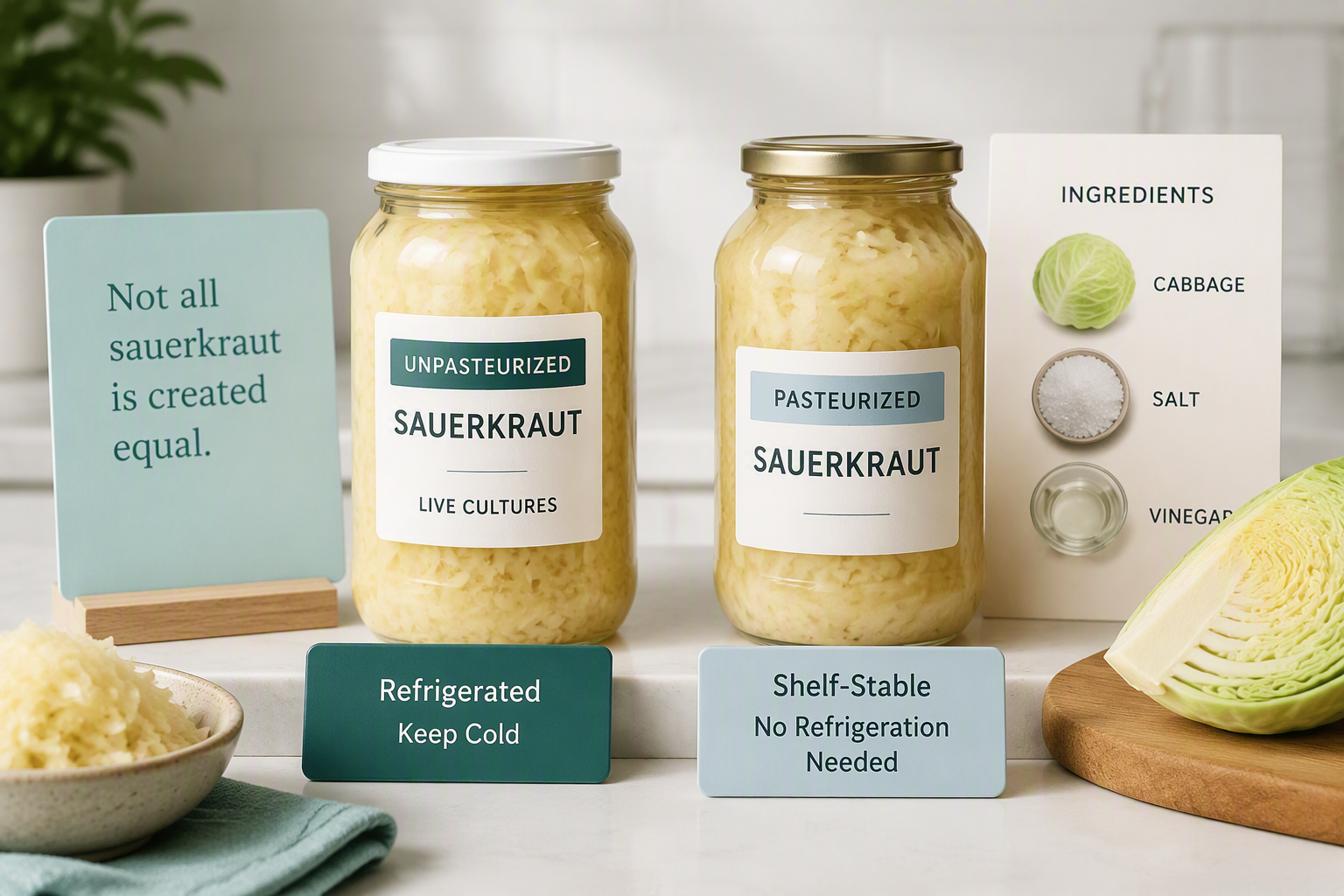
Sauerkraut can contain live microorganisms, but sauerkraut probiotics are not automatically equivalent to a tested supplement. Probiotic foods contain live microorganisms that have demonstrated a health benefit at an adequate amount. Naturally fermented cabbage may contain living bacteria, yet the species, strain identity, and dose can vary widely from one jar to another.
Refrigerated, unpasteurized sauerkraut is the better choice when you want live cultures. Heat used during pasteurization can kill many bacteria formed during sauerkraut fermentation, while refrigeration helps preserve them. Labels that say “unpasteurized” or “live cultures” are useful clues, but they do not confirm how many viable bacteria remain or whether they will affect bloating, constipation, diarrhea, or irritable bowel syndrome (IBS).
Some shelf-stable cabbage products are acidified with vinegar instead of fermented. Traditional fermented sauerkraut is often refrigerated and commonly does not include vinegar on the ingredient list. Vinegar-based cabbage can still add flavor to a meal, but it is not a dependable source of fermentation bacteria. Which foods carry probiotics can help you compare sauerkraut with other options.
Several factors can lower the number of living bacteria after packaging:
- Heat exposure: Warm conditions can reduce bacterial survival.
- Oxygen exposure: Air entering the container may affect some cultures.
- Storage and age: Time and inconsistent refrigeration can lower viability.
Visible bubbling does not prove that a jar has more helpful bacteria or that it will improve digestive symptoms.
Food labels and supplement labels offer different levels of detail:
- Live cultures: This suggests microorganisms may still be alive when eaten.
- Colony-forming units (CFU): This measure estimates viable organisms in many supplements.
- Strain codes: Letters and numbers following a species name can help connect a supplement to research on that specific strain and dose.
Sauerkraut rarely provides standardized CFU counts or named strain codes. Its bacterial mix can shift with the cabbage, salt concentration, fermentation time, temperature, and manufacturer, so it cannot reliably be matched to supplement research or used to predict IBS symptom changes.
Choose refrigerated, unpasteurized sauerkraut without vinegar if you want food-based live cultures. Keep it cold and start with a modest serving if your digestion is sensitive. Results vary by person, and persistent, severe, or worsening digestive symptoms need evaluation from a qualified healthcare professional.
How Does Fermentation Create Live Cultures?
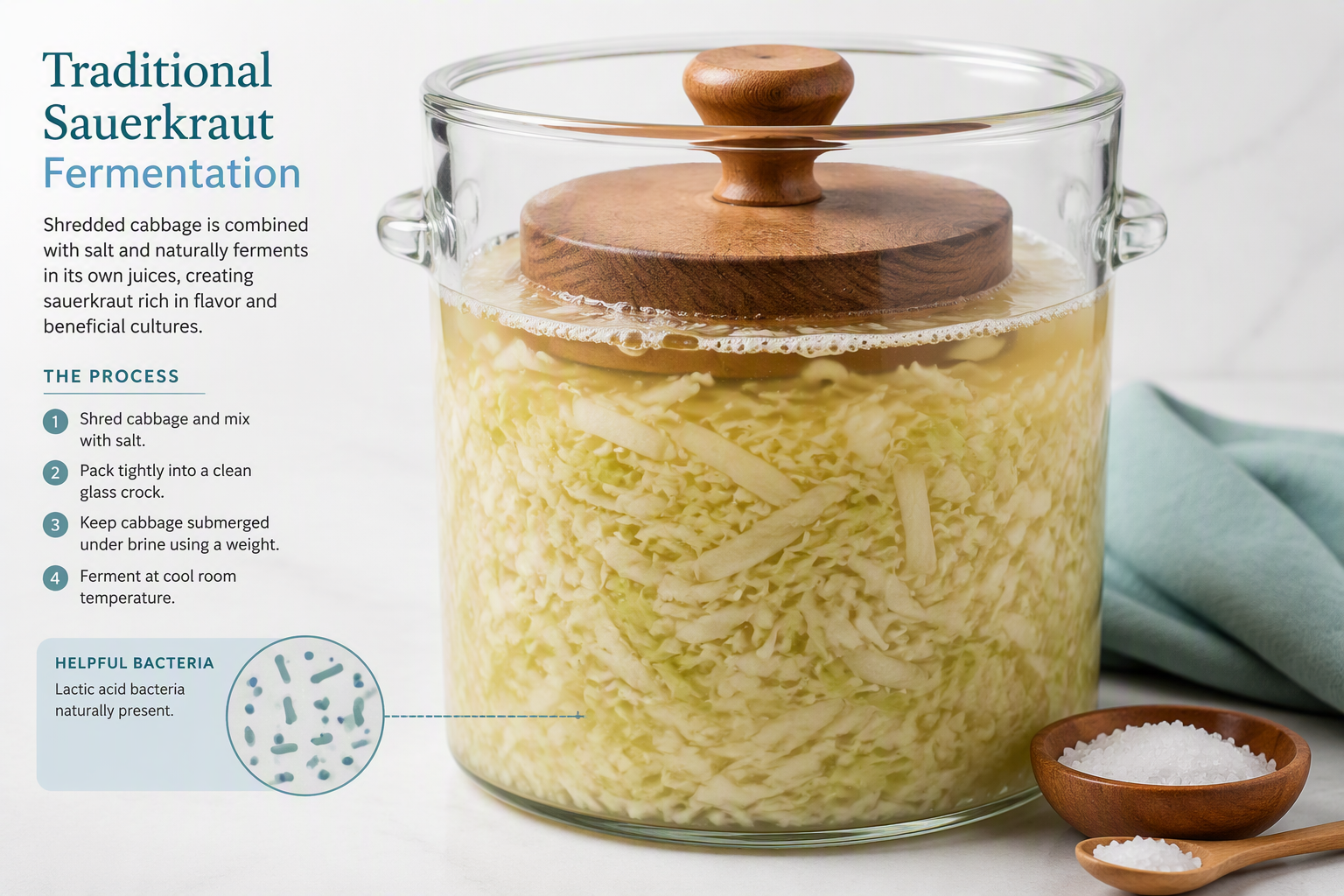
Because processing and storage affect whether live bacteria remain, sauerkraut fermentation creates an acidic, salty food by helping naturally occurring lactic acid bacteria grow. Some jars retain live cultures, but fermentation alone does not mean every product contains the same types or amounts of living bacteria.
The process begins when shredded cabbage is mixed with salt. Salt pulls water from the cabbage to form a brine, which limits many unwanted microorganisms. Cabbage kept beneath the brine has less contact with oxygen, creating favorable conditions for lactic acid bacteria already present on the vegetable. Fermented vegetables like kimchi follow a similar preservation approach, although their ingredients and microbial makeup differ.
As sauerkraut bacteria use the cabbage’s natural sugars, they produce lactic acid, other organic acids, and carbon dioxide. Increasing acidity makes the brine less suitable for many competing microbes and gives fermented cabbage its familiar tang. A crisp texture is possible, though fermentation time and temperature can soften the cabbage.
Sauerkraut fermentation changes over time rather than following one fixed microbial pattern. The final mix of bacteria can differ based on:
- Salt concentration: Salt favors bacteria that can tolerate the brine.
- Temperature: Warmer and cooler conditions affect how quickly acidity develops and which microbes grow most easily.
- Oxygen exposure: Cabbage above the brine is more vulnerable to unwanted surface growth.
- Acidity: As lactic acid accumulates, bacteria better suited to acidic conditions may become more common.
This variation is why fermented foods are not standardized probiotic products. Two batches of fermented vegetables labeled sauerkraut can have different microbial profiles, so neither should be expected to provide an identical probiotic dose.
Live cultures are microorganisms that remain alive in unpasteurized sauerkraut when processing and storage preserve them. Heating or pasteurization can destroy many of these organisms, so a product can be fermented while containing few live cultures by the time you eat it.
Fermentation also produces compounds separate from living microbes, including lactic acid, amino acids, and changed plant chemicals. These substances may remain after heating. Postbiotics are nonliving microbial cells, cell components, or microbial products that can remain when bacteria are no longer alive, but they are not the same as live probiotics.
A jar’s recipe, fermentation conditions, packaging, storage, and heat treatment determine whether it provides live cultures, fermentation-derived compounds, or both. Checking the label and storage instructions is the practical way to assess whether sauerkraut may still contain live bacteria.
How Can You Tell If Sauerkraut Has Live Bacteria?
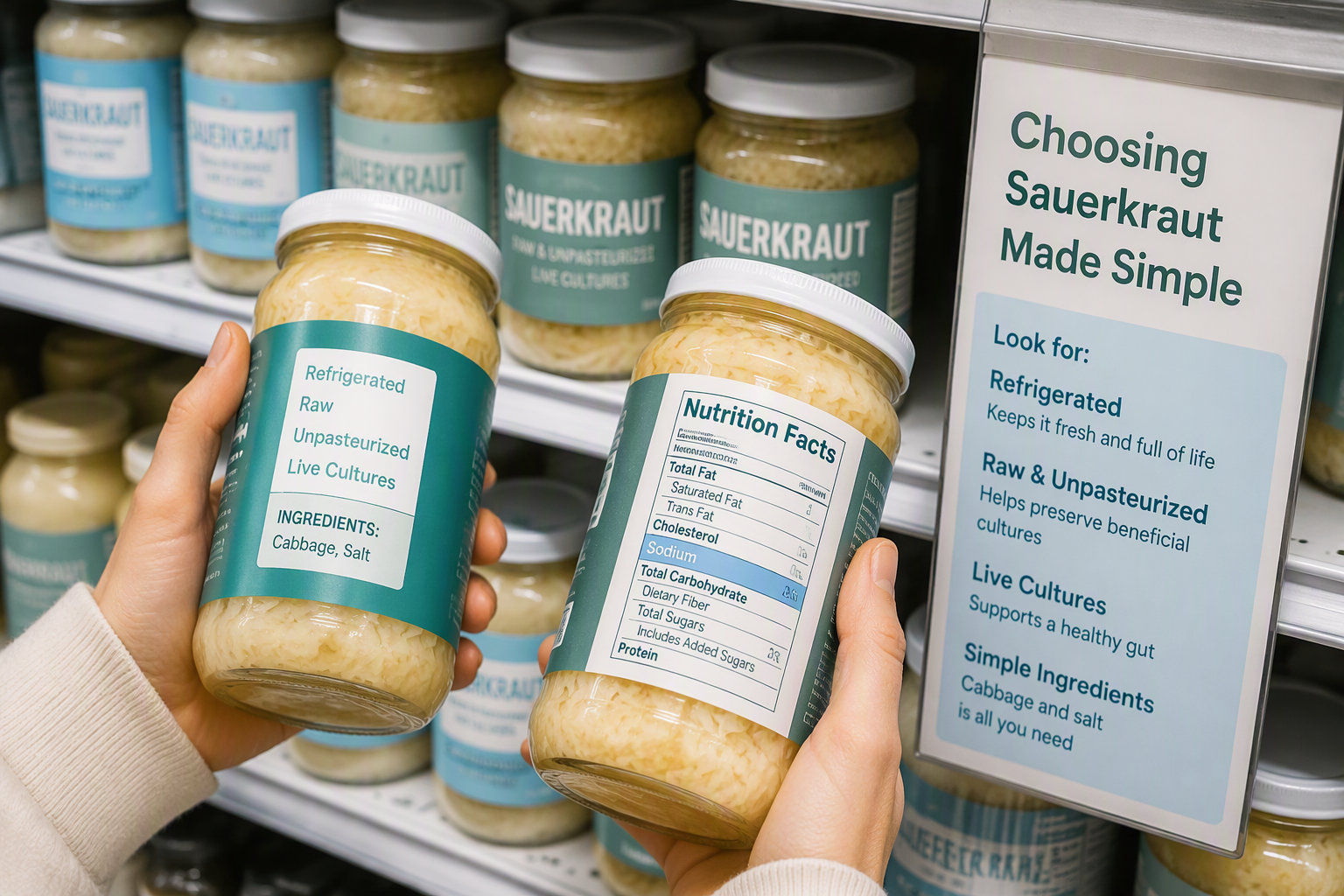
Refrigerated sauerkraut labeled raw or unpasteurized is the best practical sign that live bacteria may still be present. Unlike kefir grains, which are a defined starter culture, sauerkraut can vary by brand and batch.
Choose a product from the refrigerated case rather than a shelf-stable jar or can. Cold storage does not prove live cultures remain, but heat-treated products can usually sit at room temperature. Once opened, keep sauerkraut refrigerated according to its package directions.
Use several label clues together when selecting probiotic foods:
- Storage: Refrigerated packaging is a useful first filter.
- Processing: Favor labels that say raw, unpasteurized, naturally fermented, or contains live cultures. "Fermented" by itself is incomplete because fermentation may occur before pasteurization.
- Ingredients: Cabbage and salt are the traditional base. Vinegar as the primary acidifying ingredient can indicate a product made sour without relying on live fermentation.
- Warnings: Pasteurized or heat-treated products may have far fewer live bacteria, or none.
A vinegar-free ingredient list supports the case for live bacteria only when it appears with refrigeration and unpasteurized language. It cannot confirm that bacteria are still alive when you eat the product, so contact the manufacturer if processing details are unclear.
Colony-forming units (CFU) and active fluorescent units (AFU) measure microbes differently, and a large total alone is not very informative. A useful label states when the count was measured, how the product should be stored, which organisms it includes, and whether the amount is guaranteed through the expiration date. Sauerkraut labels almost never provide any of that.
A named species, such as Lactobacillus, offers more detail than a vague "probiotic blend," yet it is not the same as a strain code tied to research on a specific symptom. A supplement can list many strains and a large total count while still withholding the amount of each one. More strains or a higher count does not establish a better fit for bloating, irregular bowel habits, or IBS-like symptoms.
Persistent, severe, or worsening digestive symptoms deserve guidance from a qualified healthcare professional.
What Does Research Say About Sauerkraut And Gut Health?
Even when label clues suggest live bacteria, research on sauerkraut and gut health is still limited, and the study design matters. Laboratory findings can point to possible biological effects, while human clinical evidence can measure symptoms and stool-related outcomes in people. Neither type can show that sauerkraut treats IBS or predict how your digestive health or sauerkraut gut microbiome will respond.
The available research falls into three main categories:
- Laboratory findings: University of California, Davis researchers found that sauerkraut helped maintain intestinal cell integrity in laboratory testing. Raw cabbage and fermentation brine did not produce the same effect. This suggests a possible mechanism, but cells in a dish cannot establish symptom relief, safety, or changes in sauerkraut gut bacteria in people.
- A small IBS pilot: In a six-week study, 34 people with IBS ate 75 grams of sauerkraut daily. Participants reported less abdominal pain and bloating, better bowel habits, and changes in microbiome measures. The study was short and small, and live and pasteurized sauerkraut produced similar results (source).
- A controlled crossover trial: A randomized crossover trial enrolled 87 healthy adults ages 21 to 69, with 84 completing the study. Each person ate 100 grams daily during separate four-week periods of fresh and pasteurized sauerkraut, allowing researchers to compare the two products within the same participant (source).
In that crossover trial, neither fresh nor pasteurized sauerkraut significantly changed alpha diversity, beta diversity, richness, or evenness. These are different ways researchers assess the variety and balance of microbes in stool samples. Stool pH, stool frequency, and Bristol Stool Form scores, a scale used to describe stool consistency, did not significantly change with either product.
Those findings indicate no broad measurable shift in the tested stool and microbiome measures during either four-week period in healthy adults. They do not mean sauerkraut has no nutritional value, nor do they rule out effects that may occur in other groups, over longer periods, or through parts of the food beyond live cultures. Fermented foods also contain acids and plant compounds that may affect the body apart from probiotic bacteria or stool-test results (source).
Sauerkraut health benefits should not be framed as a guaranteed way to increase healthy digestive flora or fix a microbiome test. Fresh sauerkraut may contain live cultures, but research does not show that it consistently works better than pasteurized sauerkraut for symptoms or microbiome outcomes. This distinction matters if you are choosing a product mainly for potential digestive effects rather than taste or meal planning.
Sauerkraut can still be a nutritious fermented food if it agrees with you, but evidence cannot promise relief from constipation, diarrhea, bloating, or IBS (source). Salty, acidic, or fermented foods can worsen symptoms for some people, especially during a flare. Persistent, severe, or worsening digestive symptoms deserve evaluation from a qualified healthcare professional.
How Does Sauerkraut Compare With Supplements?
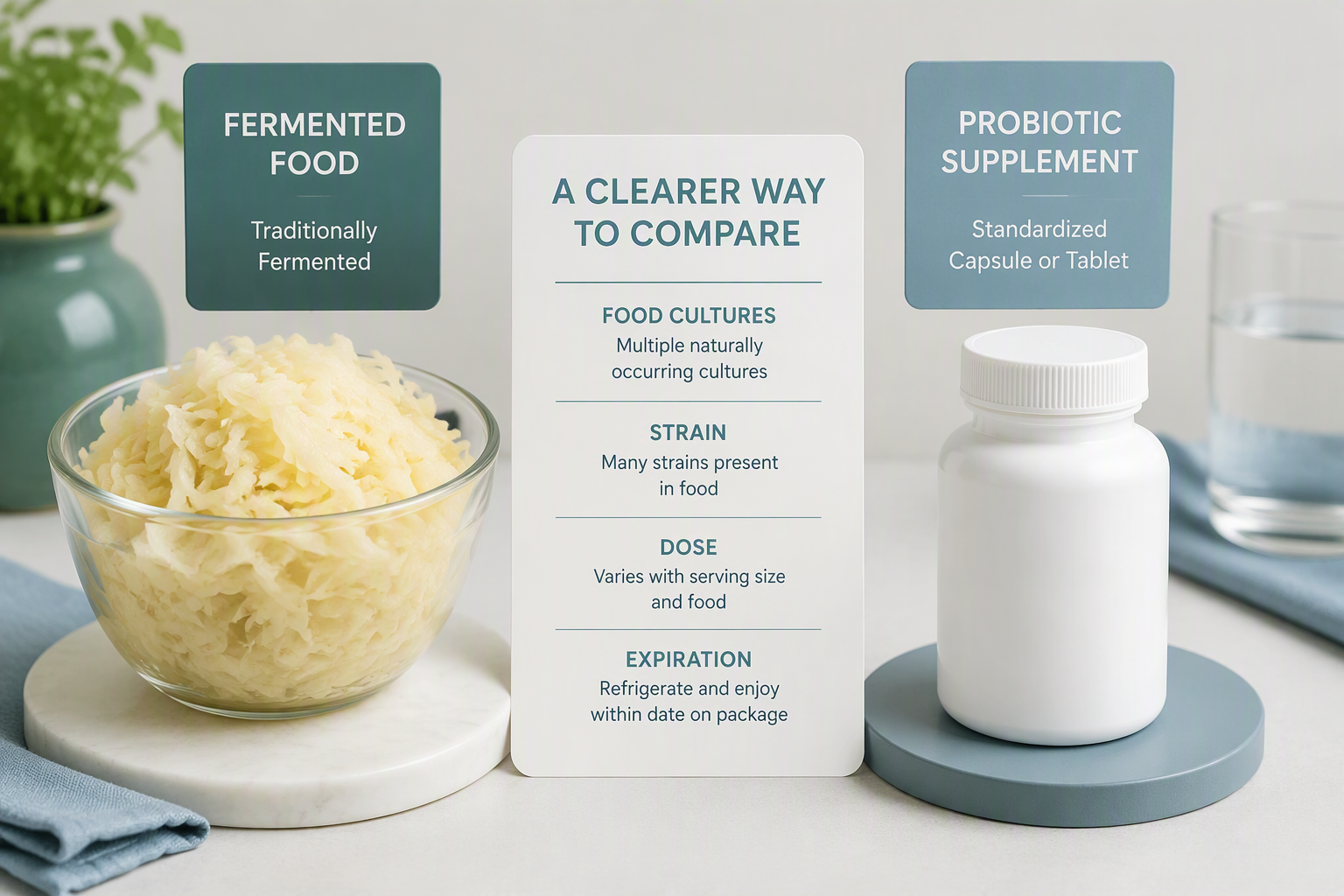
Sauerkraut probiotics may add live microbes to your diet, but they do not offer the same strain and dose information as a researched probiotic supplement. The practical question is which option gives you information that fits your goal and symptoms.
These four questions show the difference:
Question | Sauerkraut | Probiotic supplement |
|---|---|---|
Are live organisms present? | Fresh, unpasteurized sauerkraut may contain live microbes. Pasteurization can remove many of them. | Labels may confirm live cultures and state whether potency is guaranteed through expiration. |
Are the organisms identified? | Cabbage, salt, fermentation, storage, and serving size can change the microbial mix. | Labels may name species and, sometimes, specific strain codes. |
Is the dose disclosed? | A verified microbial amount per serving is generally not available. | Labels can list total CFU or AFU, though totals may not show each strain's amount. |
Has the exact preparation been studied? | Research on a defined probiotic does not automatically apply to a jar of sauerkraut. | A named strain, formulation, dose, and study population can be compared more directly. |
Fermented does not automatically mean probiotic. A name such as Lactobacillus or Bifidobacterium identifies a broad group of bacteria, while a clinical strain code identifies the specific organism tested in research. Sauerkraut rarely provides those codes, so findings for a particular supplement cannot be assumed to apply to its variable food cultures.
When reviewing a probiotic label, look for these details:
- Live-culture statement: The label should clearly state that viable organisms are present.
- CFU or AFU: Colony-forming units and active fluorescent units indicate a total count, but a large number alone does not identify the organisms providing it.
- Named species and strain codes: Species offer useful detail, while strain codes let you compare the product with research on that exact organism.
- Potency through expiration: A count stated only at manufacture may not reflect the amount available when you take it.
A high strain count is not automatically better evidence. When the amount of each strain is withheld, it cannot be matched to the dose used in that strain's study. Evidence for a defined strain, dose, formulation, and population also cannot establish that sauerkraut will produce the same result. This matters for claims involving antibiotic-associated diarrhea, where probiotic research does not specifically demonstrate the same benefit from sauerkraut.
Sauerkraut and gut health can still fit into a varied eating pattern. As a functional food, it may support healthy digestive flora and add dietary variety if you tolerate it. Other fermented foods, including tempeh probiotics, have their own processing and labeling differences.
When you need a disclosed strain and dose, a targeted supplement may be easier to assess, whereas sauerkraut may be the better fit when food variety is your priority. Neither guarantees relief from IBS, constipation, diarrhea, or bloating, and added prebiotic fibers in some supplements can worsen symptoms. Introduce one change at a time and monitor how you feel.
Digestive symptoms can have many causes, so consult a qualified healthcare professional for persistent, severe, or worsening symptoms.
How Much Sauerkraut Should You Eat?
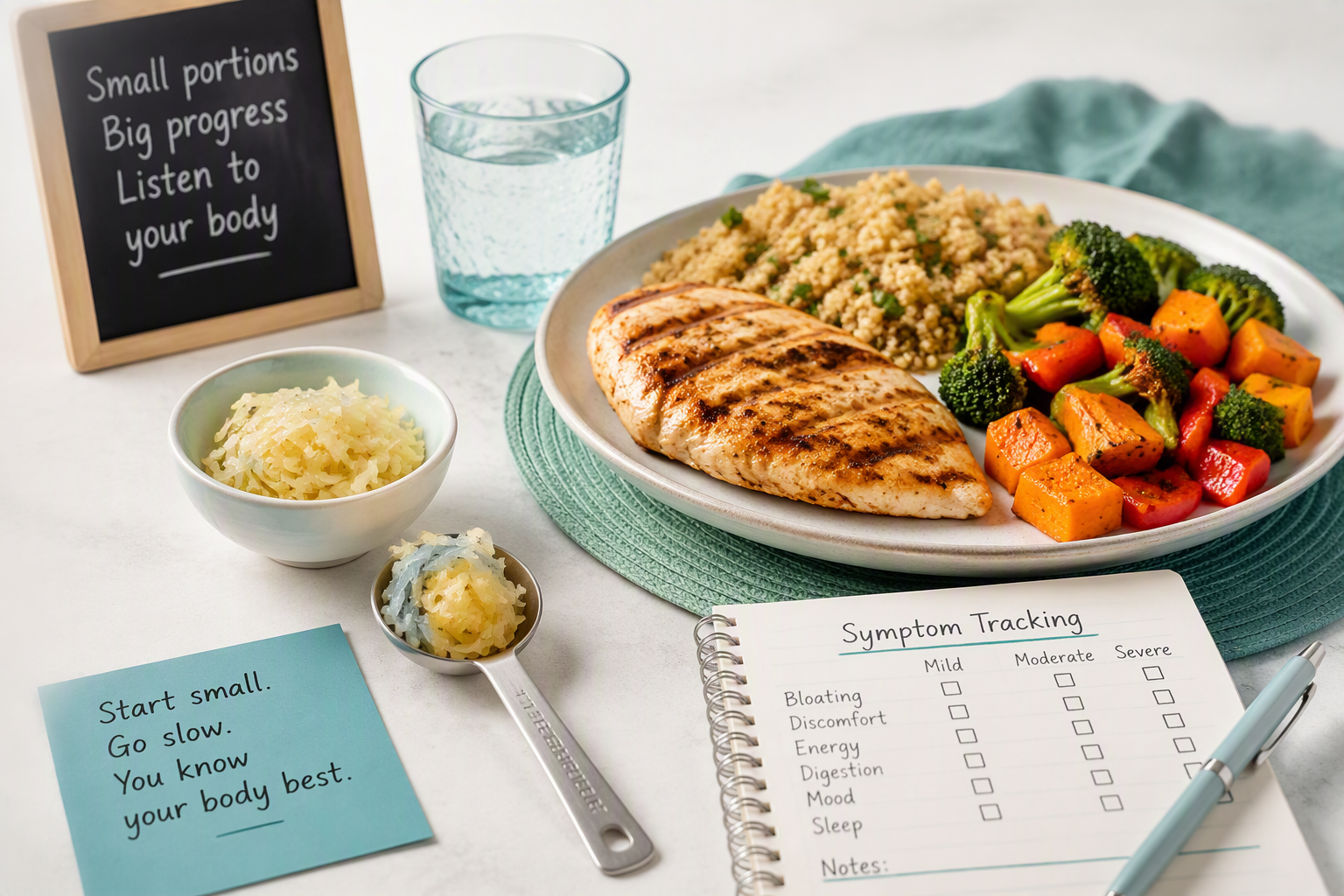
Because research cannot promise symptom relief, a daily serving of 75 to 100 grams has appeared in research, but it is not a required amount or a guaranteed therapeutic dose. For digestive health, the best portion is one that fits your meals and does not worsen your symptoms.
If fermented foods are new to you or your gut is sensitive, begin with 1 to 2 tablespoons alongside a meal. Hold that amount steady for several days before trying more. Increasing too fast can lead to sauerkraut side effects such as gas, bloating, cramping, or diarrhea.
Pay attention to signs that the portion may be too large:
- Bloating or gas: More symptoms may mean your digestive system needs a smaller serving for now.
- Abdominal discomfort: Cut back or pause if cramps or pain become worse after eating sauerkraut.
- Bowel changes: Track stool frequency and consistency, including constipation or diarrhea.
- Irritable bowel syndrome (IBS)-like symptoms: A smaller amount may be more manageable when symptoms are active.
Sauerkraut can add useful nutrients to your diet, but it does not treat digestive conditions. According to USDA FoodData Central, one cup, or about 142 grams, provides about 27 calories, 4.1 grams of fiber, 1.3 grams of protein, and about 21 milligrams of vitamin C, roughly one-quarter of the Daily Value, along with vitamin K1, vitamin B6, folate, iron, and potassium.
The vitamin C in sauerkraut can support your overall intake, although nutrient amounts vary with the product and preparation. Sodium also differs by brand, recipe, and serving size, so the Nutrition Facts label matters more than assuming a small serving is low in sodium. If you follow a sodium-restricted eating plan, a qualified healthcare professional can help you decide on an appropriate portion.
Try adding one measured spoonful to a regular meal, keeping that serving unchanged while you assess tolerance, and increasing only when symptoms remain stable. Persistent, severe, or worsening digestive symptoms deserve evaluation from a qualified healthcare professional.
What Risks Should You Consider Before Eating Sauerkraut?
Even with a modest portion, sauerkraut is well tolerated by many people, but its sodium, acidity, fermentable carbohydrates, and live cultures can aggravate symptoms in some cases. Sauerkraut side effects often involve digestion and can depend on your serving size, health conditions, and the product you choose.
Sodium deserves attention first. Sauerkraut can add a meaningful amount of sodium to a meal, so check the Nutrition Facts label if you have high blood pressure, kidney disease, heart disease, or a salt-restricted eating plan. Smaller portions may fit more easily within your daily sodium needs. A clinician or registered dietitian can help you decide how it fits with the rest of your meals.
Eating a large amount suddenly may cause gas, bloating, cramping, loose stools, or diarrhea. Reactions vary widely between people, and someone without a diagnosed digestive condition can still react to a large serving. Start with a small serving, track symptoms over the next day, and stop if reactions persist or become severe.
Fermented foods can also cause symptoms in people who may have histamine intolerance. Flushing, headache, itching, congestion, and digestive discomfort are possible, but these symptoms do not diagnose histamine intolerance on their own. Histamine-related reactions can be difficult to identify, and a single food response is not enough to confirm the cause (source). Professional guidance can help prevent unnecessarily broad food restrictions.
Extra care is worthwhile in the following situations:
- Weakened immune system: Individual medical advice is helpful before eating fermented foods, especially homemade sauerkraut, because preparation and storage can vary.
- IBS, inflammatory bowel disease, or active diarrhea: Acidity and fermentable carbohydrates may be harder to tolerate during a flare or when bowel habits are already unsettled.
- Unexplained abdominal pain: Persistent pain needs medical evaluation rather than self-treatment with sauerkraut or other dietary changes.
- Allergies or medicines: A clinician or pharmacist can help determine whether your allergy history, medications, or dietary restrictions affect the type or amount that may suit you.
Pasteurized sauerkraut may be easier for some people to tolerate, while refrigerated products with live cultures may not be a good fit for everyone. Neither option is automatically better for every digestive concern. Sauerkraut does not replace prescribed treatment.
Sauerkraut Probiotics FAQs
These FAQs cover sauerkraut probiotics, including how processing affects them and what they may mean for digestive symptoms. They offer practical context for weighing food-based options with realistic expectations and safety in mind.
1. Does Refrigerated Sauerkraut Contain More Probiotics?
Refrigerated, unpasteurized sauerkraut generally has a better chance of retaining live bacteria than shelf-stable or pasteurized products. Although cold temperatures slow microbial activity, refrigeration alone is not enough, so check the label for raw, unpasteurized, or live cultures because heat processing can eliminate viable bacteria.
Storage can also shift the microbial mix. In the crossover trial above, the fresh sauerkraut was dominated by Lacticaseibacillus paracasei at 95.5% mean relative abundance, but after seven weeks of refrigerated storage, still before the expiration date, Limosilactobacillus reuteri had become dominant at 60.8%. The pasteurized product contained no living bacteria at all (source). Both processing and storage time change what is in the jar.
2. Can You Freeze Sauerkraut Without Losing Probiotics?
Freezing sauerkraut may leave some live cultures intact, but it can reduce bacterial viability. Thawed sauerkraut may still contain probiotics, yet it should not be assumed to retain its original count because results vary by product, freezer storage, and thawing method.
Freezing and thawing can also soften its crisp texture. Thaw it in the refrigerator, then check the smell, appearance, and storage history before eating. Choose raw, unpasteurized sauerkraut when live cultures are a priority, since freezing cannot restore bacteria lost during pasteurization.
3. Which Probiotic Strains Are Found In Sauerkraut?
Sauerkraut bacteria can include lactic acid bacteria such as Leuconostoc mesenteroides, Lactiplantibacillus plantarum, Levilactobacillus brevis, Lacticaseibacillus paracasei, and Weissella species. The mix shifts during fermentation and refrigerated storage: one trial found L. paracasei dominant in fresh sauerkraut and Limosilactobacillus reuteri dominant after seven weeks of cold storage (source).
These sauerkraut gut bacteria are not the same as clinically studied probiotic strains. A species name is not a strain code, and a jar does not state how many live cells it contains or guarantee them through the expiration date.
4. Does Homemade Sauerkraut Have More Probiotics?
Homemade sauerkraut is not guaranteed to have more live probiotics than a store-bought product. You have more control over the cabbage, salt, fermentation time, and storage, but a longer ferment changes the microbial community without assuring a greater probiotic benefit. Clean equipment, enough salt, and reliable fermentation instructions matter because unsafe batches can grow unwanted microbes.
Pasteurized commercial sauerkraut may have few or no live cultures, while unpasteurized products, including those made with starter cultures, may retain them. UC Davis found similar protective effects in store-bought sauerkraut and laboratory-fermented cabbage, so choose based on pasteurization and safe preparation, not the assumption that homemade is better.