


A fermented label doesn't guarantee a probiotic benefit. Tempeh may contain living microbes, especially when unpasteurized, but it isn't a reliable source of probiotics with identified strains, known doses, and proven effects for IBS.
The Rhizopus microsporus starter that binds soybeans into tempeh differs from a strain-specific product such as Bifidobacterium longum subsp. infantis 35624. Pasteurization, refrigerated storage, and cooking can further reduce live microorganisms, while ordinary packages rarely list CFU or strain codes. Tempeh can still be a valuable plant-based protein, with about 18 grams of protein and 7 grams of fiber per 3-ounce serving.
For IBS, fermentation may make tempeh easier to tolerate than whole soybeans for some people, but it can still trigger gas, bloating, pain, diarrhea, or constipation. Start with a few bites alongside familiar foods, keep other meal changes simple, and seek professional care for persistent, severe, or worsening symptoms.
Tempeh Probiotics and IBS Key Takeaways
- Tempeh may contain live microbes but is not a standardized probiotic food.
- Probiotics require identified strains, known doses, and demonstrated health benefits.
- Pasteurization, storage, and cooking can reduce tempeh's live microorganisms.
- Cooked tempeh may still contain nonliving microbial components called paraprobiotics.
- A 3-ounce serving provides roughly 18 grams of protein and 7 grams of fiber.
- Tempeh is not a proven treatment for IBS symptoms or microbiome changes.
- Start with a small portion and stop if digestive symptoms worsen.
What Is Tempeh And How Is It Fermented?
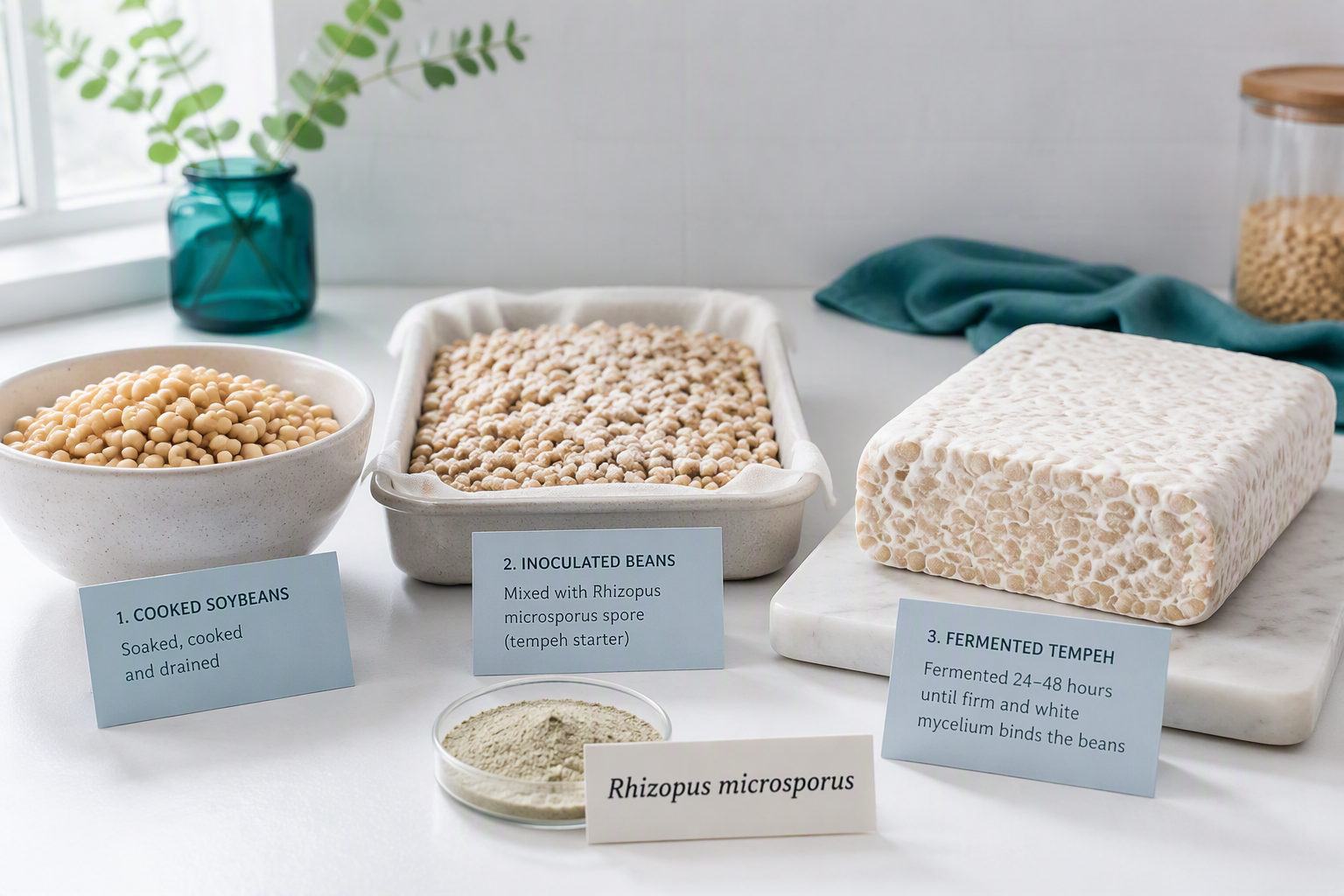
Tempeh is a traditional Indonesian fermented soybean food made mainly from whole soybeans. Some versions include rice or other grains, but unlike tofu, which is made from soybean milk, soy-based tempeh keeps most of the beans intact. As it ferments, the beans form a firm, sliceable cake.
Tempeh fermentation generally follows these stages:
- Bean preparation: Producers wash, soak, dehull, and boil the soybeans. The cooked beans are then cooled and drained.
- Starter culture: The beans are mixed with a culture containing Rhizopus microsporus var. oligosporus, the mold commonly used to produce conventional tempeh.
- Warm incubation: After inoculation, the soybeans are spread out, packaged, and held warm for fermentation over one to several days (source). White fungal threads, called mycelium, grow between the beans, binding them together and contributing to tempeh's mild, savory flavor.
Fermentation changes more than taste. The mold produces enzymes that alter the soybean structure and may affect how available some nutrients are during digestion. These enzymes include:
- Protease: Alters proteins in the beans.
- Amylase: Changes starches.
- Cellulase: Modifies plant fibers.
- Esterase: Acts on certain fats and related compounds.
- Beta-glycosidase: Changes some naturally occurring soybean compounds.
Although this activity affects the texture of fermented soy and its fermentation microorganisms, tempeh is not automatically a dependable source of live probiotics. The starter mold is necessary for production, but the final microorganisms can vary with the starter, incubation conditions, storage, and cooking.
A guide to probiotic foods can help you tell the difference between fermented foods and products that name a specific probiotic strain and dose. Tempeh can be a nutritious food alongside products with clearly labeled strains and doses.
Does Tempeh Contain Probiotics?
Because fermentation does not standardize the organisms or their dose, tempeh is a fermented food that may contain living microbes, especially when it is unpasteurized and minimally processed, but it is not automatically one of the probiotic foods with a defined health benefit. Formally, a probiotic is a live microorganism identified to the strain level, provided at a known amount, and shown to help a specific group of people.
This distinction matters if you are considering tempeh probiotics for bloating or irritable bowel syndrome (IBS). Tempeh's live cultures can differ based on the starter culture, manufacturer, storage, processing, and cooking. Research has assessed how bean and soy tempeh may affect intestinal bacteria, but that does not mean every package contains a measured probiotic dose or produces a predictable benefit (source).
The terms refer to different things:
- Tempeh cultures: Microorganisms used during fermentation. Their identity and amount may differ between products and batches.
- Paraprobiotics: Nonliving microbial cells or parts of cells that may still affect the body. They are not live probiotics.
- Probiotic supplements: Products that often identify a strain and state a dose, usually in colony-forming units (CFU), making the contents easier to evaluate.
Strain identity is especially important with IBS. Evidence for Bifidobacterium longum subsp. infantis 35624 or Lactiplantibacillus plantarum 299v applies only to the exact strain, formulation, amount, study population, and outcome tested. It cannot be assumed to apply to unnamed organisms in tempeh or to every digestive symptom.
Before viewing a food or supplement as useful for a specific concern, consider these questions:
- Is the microorganism identified at the strain level, rather than only by species?
- Does the product state how much of it is provided?
- Were people with your symptoms included in the research?
- Did the study measure an outcome that matters to you?
Limosilactobacillus fermentum A2.8, a strain isolated from tempeh, shows why these details matter. Research on an isolated strain or concentrated preparation does not establish that regular commercial tempeh contains the same organism, delivers the studied amount, survives cooking, or offers the same effect. Tempeh can still fit into a balanced diet, but it should not replace individualized care for digestive symptoms.
How Do Fermentation Cultures Compare With Probiotics And Paraprobiotics?
Tempeh fermentation makes a fermented soy food, not a standardized probiotic product. Its primary starter is Rhizopus mold, often Rhizopus microsporus, which binds cooked soybeans into the firm cake and shapes its flavor and texture. Lactic acid bacteria and acetic acid bacteria may be present too, but their types and amounts vary with the ingredients, producer, temperature, and fermentation conditions.
That variation separates tempeh from probiotic foods designed to deliver a known live microorganism at a stated amount and with a demonstrated health benefit. Unpasteurized miso has the same label-literacy issue because fermentation alone does not confirm the organisms or dose in the finished food. Kombucha, a fermented tea, also varies by product and preparation.
A strain-specific supplement offers a clearer label standard. Bifidobacterium longum subsp. infantis 35624 and Lactiplantibacillus plantarum 299v name organisms down to a strain code, unlike a broad “probiotic blend.” A dose is usually listed in CFU, but a high CFU number or long strain list does not show that a product fits your IBS symptoms. Evidence for either strain cannot be assumed to apply to tempeh.
Use the same questions for ordinary tempeh, supplements, and research on inactivated microbes:
- Strain identity: Is the organism named with a strain code rather than only a species or blend?
- Amount: Is the dose known?
- Human research: Was that exact formulation tested in people?
- Relevant results: Did participants resemble you, and did the study measure symptoms that matter to you?
Tempeh paraprobiotics are a separate possibility. Paraprobiotic properties may come from non-viable microbial cells, fragments, or components that still interact with the body after they cannot reproduce. These materials are sometimes called heat-killed probiotics, but that does not mean cooked tempeh provides a live probiotic dose.
Research has described tempeh microbes in this category, so potential effects may remain after heating. Still, those findings do not validate every commercial serving. Choose tempeh because you enjoy and tolerate it, not as a proven treatment for digestive symptoms.
How Can You Evaluate Tempeh Probiotic Evidence?
With the distinction between fermentation cultures and standardized probiotics in mind, evaluate a tempeh probiotic claim against the product label and the human research behind it. Fermentation by itself does not show that a serving can help bloating, abdominal pain, constipation, diarrhea, or other IBS symptoms.
Use these points to judge a claim:
- Strain identity: A full microorganism name and strain code matter more than the broad word probiotic. Bifidobacterium longum subsp. infantis 35624 and Lactiplantibacillus plantarum 299v are specific examples. Genus names may change with taxonomy, but codes such as 35624 and 299v identify the organism studied.
- Dose and serving: Look for CFU, serving size, and whether the stated amount applies through the product’s shelf life or only at manufacture. Most ordinary tempeh packages do not provide these details, so they cannot be assumed to match a research dose.
- Live organisms: Processing, pasteurization, refrigeration, and storage can affect viability. Fermentation cultures may no longer be alive, while paraprobiotics are inactive microorganisms or their components. Neither is the same as evidence for a live, strain-identified probiotic.
- Study fit: Research should use a similar formulation and dose, include a control group, and involve people whose health concern matches yours. Evidence from a tempeh-derived isolate does not automatically apply to store-bought tempeh, just as findings about unpasteurized sauerkraut do not transfer to every fermented food.
- Measured outcome: Give more weight to controlled human studies that assess the digestive symptom you want to address. Shifts in lab markers or gut microorganisms do not necessarily mean fewer symptoms.
Limosilactobacillus fermentum A2.8 shows why outcome matching matters. In a controlled 12-week study, 93 adults over 60 with memory impairment received about 10^7 or 10^8 CFU/mL of the isolate or maltodextrin, and 91 completed the study. Researchers measured memory, learning, and verbal fluency, not IBS symptoms (source).
Small IBS studies of 35624 and 299v show why strain identity matters, but their findings belong only to the tested strain, dose, population, and outcome. They do not establish that tempeh provides the same benefit.
Tempeh can still be a nutritious food choice, but its probiotic role remains uncertain unless a product identifies live strains and relevant evidence. Results vary by person, and persistent, severe, or worsening digestive symptoms deserve evaluation by a qualified healthcare professional.
What Health Benefits Does Tempeh Provide?
Even though its probiotic role remains uncertain, tempeh health benefits come mainly from its nutrition as a plant-based protein, not from a guarantee that it will treat digestive symptoms or change your gut microbiome. A 3-ounce serving, about 84 grams, provides roughly 160 calories, 18 grams of protein, 12 grams of carbohydrates, 4.5 grams of fat, and 7 grams of fiber. Because soy supplies all nine essential amino acids, tempeh is a complete protein choice for meals without meat, poultry, fish, or dairy.
Protein and fiber may help you feel full and support regular bowel habits as part of a balanced eating pattern. If you manage IBS, however, a large portion or a quick increase in fiber may worsen gas, cramping, or bloating. Starting with a small serving and paying attention to your response is more useful than assuming every fermented food will be digestive-friendly.
Although fermentation can offer a nutritional advantage, it does not establish a medical benefit, and cultures used during fermentation may reduce some phytic acid in soybeans, a compound that can affect mineral absorption. Effects on digestion and nutrient availability differ based on the culture, processing, portion size, and preparation method.
Tempeh may also support cardiometabolic health when it replaces foods higher in saturated fat. It provides protein and fiber, contains little saturated fat, and has no dietary cholesterol. That profile can fit a heart-conscious eating pattern, but tempeh alone does not prevent or treat heart disease, diabetes, or high cholesterol.
Tempeh also contributes nutrients that help support an adequate diet:
- Phosphorus and magnesium: These minerals contribute to normal bone structure and other body functions.
- Calcium: Amounts vary by product and preparation, so tempeh should not replace dependable calcium and vitamin D sources or prescribed care.
- Manganese, riboflavin, iron, and vitamin B6: These nutrients support normal energy metabolism, blood health, and overall nutrition.
Tempeh is sometimes called a functional food because it combines nutrition with fermentation-related features. Its fiber can act as a prebiotic, meaning it provides fuel for beneficial gut bacteria. Fermented tempeh may contain beneficial bacteria or other microbial compounds, but probiotic content varies between products and cooking can reduce the number of live organisms.
Evidence does not show that tempeh reliably changes the gut microbiome or improves digestive symptoms for everyone. Persistent, severe, or worsening digestive symptoms should be discussed with a qualified healthcare professional.
Does Cooking Destroy Tempeh’s Live Microorganisms?
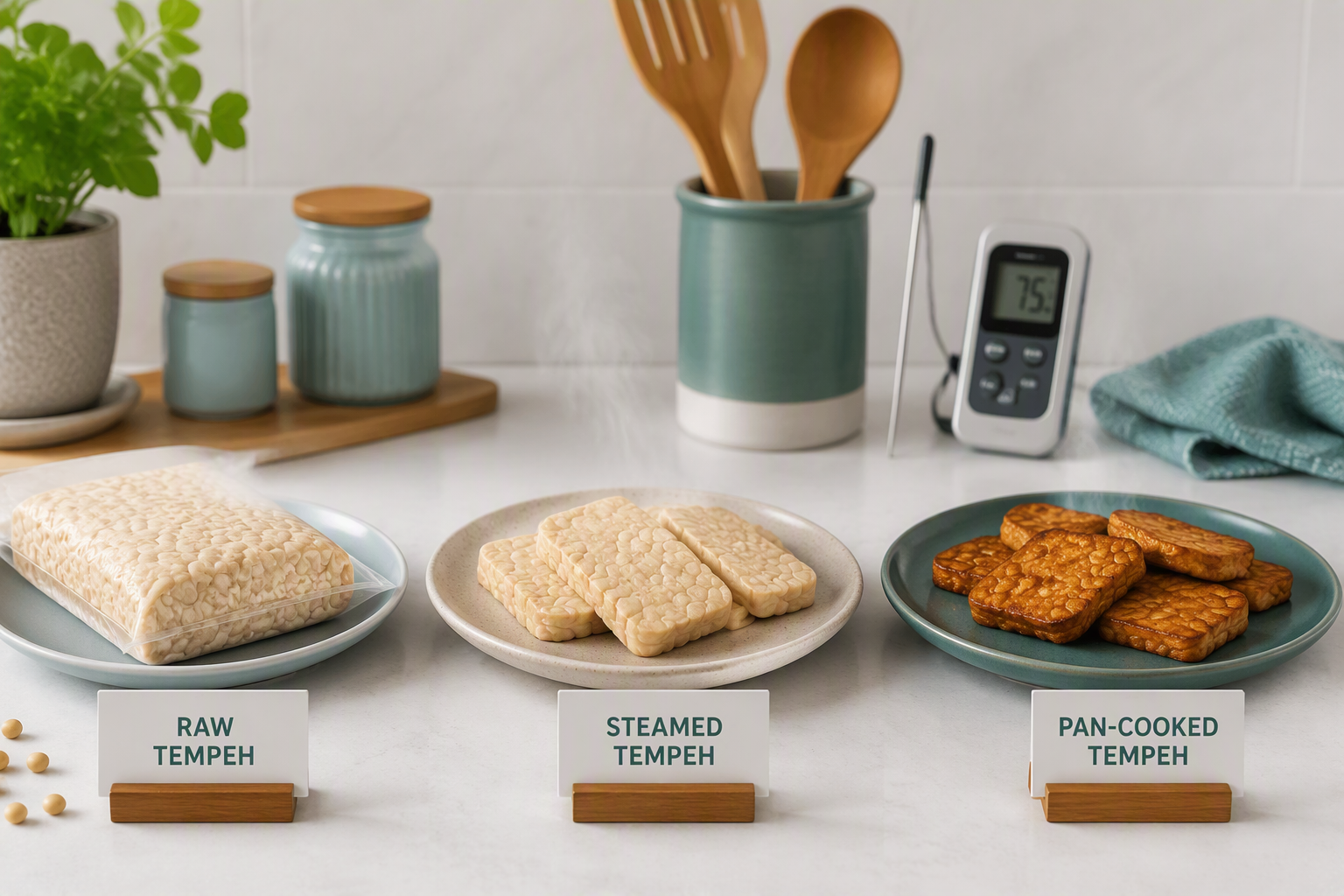
Cooking can reduce tempeh’s live microorganisms, but it does not make tempeh unsafe or nutritionally worthless. Boiling, steaming, frying, baking, and long simmering can lower microbial viability. The extent depends on temperature, cooking time, moisture, prior processing, and how the product was stored.
Not all tempeh starts out with active probiotic cultures. Soybeans are commonly boiled before they receive a starter culture and incubate. Some tempeh is pasteurized after fermentation for safety and a longer shelf life, which can leave fewer viable microorganisms. Storage time, oxygen exposure, warm conditions, and repeated temperature changes can reduce viability further.
Live microbes and nonliving microbial material may act differently in the body. Live probiotics can interact with the digestive tract while they remain viable. Heat-killed probiotics contain inactive cells or cell components that may have paraprobiotic properties, meaning they could still influence digestive or immune processes. Tempeh paraprobiotics are an area of interest, but possible effects from nonliving material do not show that cooked tempeh supplies live probiotics.
If keeping live cultures matters to you, practical choices include:
- Read the package: Choose tempeh labeled unpasteurized or containing live cultures, while recognizing that labels may not name strains or provide live counts.
- Follow storage directions: Refrigerate the product when directed, and use it within the package timeframe.
- Limit prolonged high heat: Brief, gentler cooking may preserve more microorganisms than lengthy frying or baking, though home cooking cannot guarantee that cultures survive.
- Cook for the meal: Thorough cooking can improve flavor, texture, digestibility, and food safety.
With IBS, begin with a manageable portion and pay attention to symptoms over the following day. Tempeh can still provide protein, nutrients, and a fermented soybean matrix even when its microorganisms are no longer alive.
Can Tempeh Support Your Digestive Health With IBS?
Tempeh may be easier to tolerate than unfermented soybeans for some people with IBS, but it is not an IBS treatment. Fermentation can reduce raffinose and stachyose, carbohydrates that are poorly digested and can contribute to gas in the colon. It can also reduce some phytic acid. Still, fermented soybeans contain fermentable carbohydrates, so tempeh health benefits do not guarantee digestive comfort.
Your response may depend on the portion, preparation, and your own sensitivities. A food linked with beneficial bacteria can still cause symptoms in some people, including gas, bloating, abdominal pain, diarrhea, or constipation. What may help support one person's gut microbiome may not work well for yours.
Human research on tempeh and the gut is small and early. A published review describes a study in which people who ate 100 grams of steamed tempeh daily for 16 days showed increased Akkermansia muciniphila, a gut bacterium studied in relation to metabolic health, along with higher IgA production (source).
Read that carefully before treating it as a reason to eat tempeh for symptoms. It was a short study in a small number of people, it measured microbial and immune markers rather than digestive symptoms, and a shift in one bacterium is not the same as feeling better. Much of the remaining evidence comes from laboratory and animal work, which can suggest a mechanism but cannot tell you how tempeh will affect your gut.
A careful food trial can help you assess personal tolerance while keeping other variables steady:
- Choose plain, properly stored tempeh, and begin with a small serving when your symptoms are relatively stable.
- Eat it with familiar foods and use a simple preparation. Onion, garlic, spicy sauces, rich marinades, and similar additions can cause symptoms on their own.
- Make tempeh the only major dietary change at first. Adding several unfamiliar foods in the same week makes a flare harder to trace.
- Briefly note the portion, preparation, meal timing, and symptoms. If you remain comfortable, try a slightly larger serving on another occasion.
Stop the trial and return to foods you already tolerate if any of these symptoms worsen:
- Bloating or excess gas
- Abdominal pain
- Diarrhea
- Constipation
Tempeh's fermentation organisms are not a proven probiotic therapy. Unlike a studied probiotic product, tempeh does not provide a consistent, identified strain and dose, and it cannot replace individualized dietary care, prescribed treatment, or medical evaluation. Seek advice from a qualified healthcare professional for persistent, severe, or worsening symptoms, or before making major dietary restrictions.
How Does Tempeh Compare With Tofu?
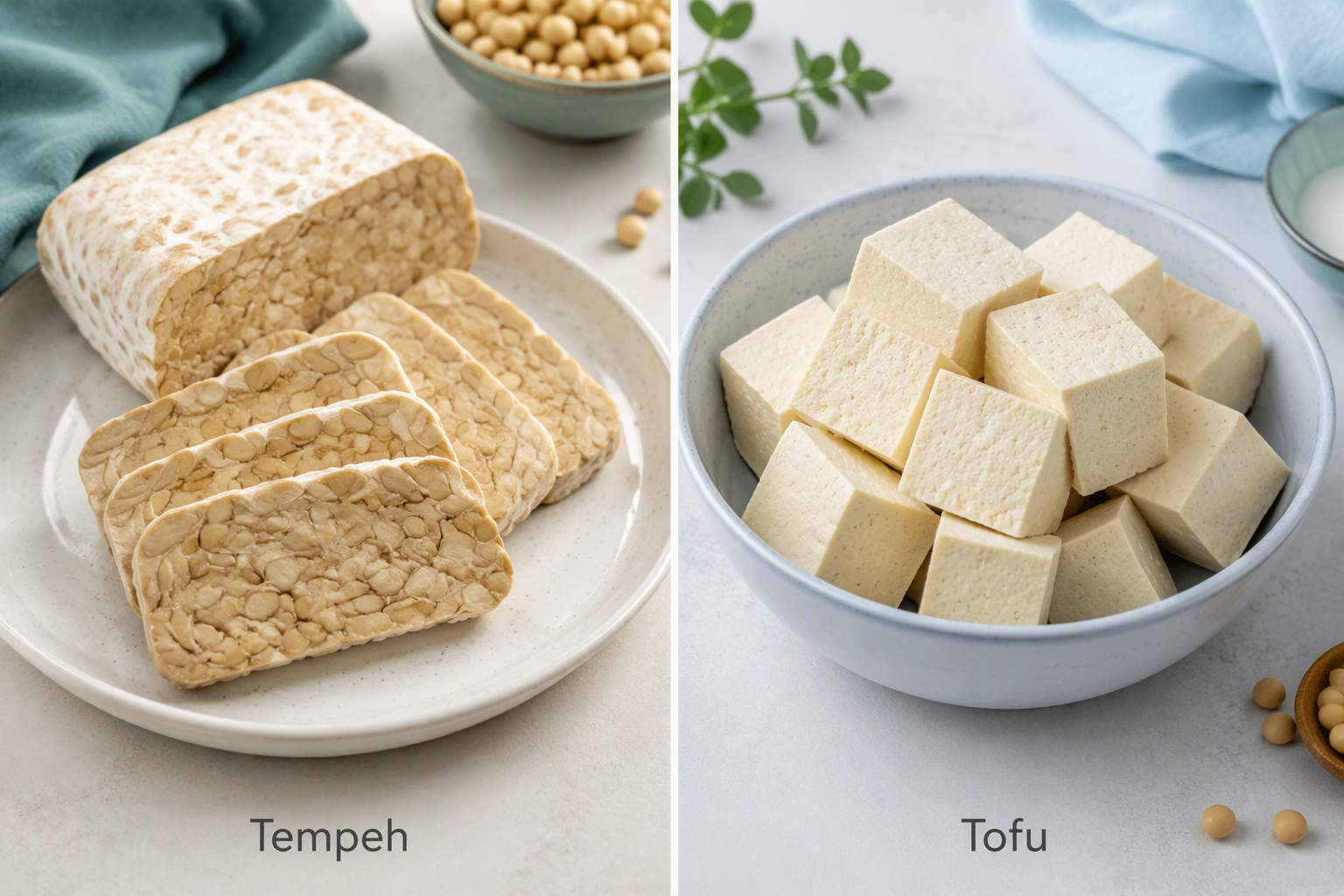
After considering your individual IBS tolerance, tempeh and tofu offer different options for home cooking. Tofu is made by coagulating soy milk into curds, then pressing them into blocks, while tempeh ferments whole soybeans into a firm cake.
Neither option is better for everyone. A 100-gram serving of cooked tempeh provides about 195 calories, 20 grams of protein, 8 grams of carbohydrates, 11 grams of fat, and 14 milligrams of sodium. This fermented soybean food also retains fiber and prebiotics, which feed beneficial gut bacteria and may contribute to short-chain fatty acid production. Tofu's fiber varies by product because its processing and firmness differ.
The main meal differences are straightforward:
Feature | Tempeh | Tofu |
|---|---|---|
Main process | Fermented whole soybeans | Coagulated soy milk |
Texture | Firm, dense, and sliceable | Silken, soft, firm, or extra-firm |
Flavor | Nutty and more pronounced | Mild and neutral |
Best uses | Sandwiches, grain bowls, and stir-fries | Soups, scrambles, sauces, and smoothies |
Choose fermented soy tempeh when you need a hearty plant-based protein that can be sliced, crumbled, marinated, baked, or pan-seared. Its stronger flavor often benefits from a bold sauce or seasoning, especially if you are new to it.
Tofu works better when you want a softer ingredient that absorbs surrounding flavors. Silken tofu blends smoothly into sauces and smoothies, while firm tofu holds up in scrambles and soups.
For IBS, tempeh may be easier for some people to tolerate than whole soybeans, but it does not guarantee less bloating or more regular bowel habits. Start with a small serving and try one soy food at a time to identify your response. Digestive symptoms can have many causes, so consult a qualified healthcare professional for persistent, severe, or worsening symptoms.
How Can You Eat Tempeh Safely And Regularly?

Start with a few bites of tempeh, especially if you already deal with bloating, irregular bowel habits, or IBS. Keep the rest of the meal familiar so it is easier to spot a possible reaction. If you tolerate it well, increase your portion across several meals rather than aiming for a standard serving right away.
Cook tempeh unless the package clearly says it is ready to eat, and follow the label's storage and preparation directions. These preparation methods can make it easier to use in regular meals:
- Steam or simmer: Soften tempeh's firm texture before adding sauces or seasonings.
- Bake, sauté, or grill: Add flavor and use the cooked tempeh in bowls, stir-fries, sandwiches, or salads.
Cooking can improve texture and make tempeh easier to eat consistently, while tempeh processing, including pasteurization and heating, can also affect texture and shelf life.
A few package and storage checks reduce food-safety risks:
- Read the package: Check the use-by date, ingredients, allergen statement, storage directions, and whether the tempeh is pasteurized.
- Keep it refrigerated: Store refrigerated tempeh as directed, and refrigerate leftovers promptly in a sealed container.
- Follow the stated timeframe: Use opened tempeh within the manufacturer's recommended period.
- Discard questionable tempeh: Do not taste it if it has an unusual odor, a slimy surface, or unexpected discoloration.
A fermented label should prompt you to check the manufacturer's preparation advice for tempeh. Follow that advice instead of assuming every fermented tempeh product works like a probiotic food.
Avoid soy-based tempeh if you have a soy allergy, and check the full label for grains, flavorings, and other allergens. Do not use tempeh to test whether an allergy has resolved. Seek urgent medical care for swelling, hives, breathing difficulty, vomiting, or dizziness after eating it.
Pregnant or immunocompromised adults should ask a qualified healthcare professional about appropriate preparations and portions. Persistent, severe, or worsening digestive symptoms also need medical attention because food reactions and IBS symptoms can have many causes.
Tempeh Probiotics FAQs
These FAQs cover tempeh probiotics, the effects of fermentation and cooking, and how tempeh compares with probiotic supplements when you are managing IBS, bloating, or other digestive symptoms.
1. Does Refrigerated Tempeh Retain More Live Cultures?
Refrigerated, unpasteurized tempeh may retain more live cultures than pasteurized or heat-treated versions because heat can reduce microbial viability. Refrigeration slows further change, but it cannot restore cultures or confirm that a food has a probiotic effect.
Packaging, age, storage conditions, and label-verified viability matter more than refrigeration alone. Look for clear storage instructions and credible culture information, while keeping in mind that culture levels can vary and may not be tested throughout the stated shelf life.
2. Can Tempeh Starter Cultures Vary By Brand?
Yes. Soy-based tempeh often begins with Rhizopus microsporus var. oligosporus, but starter cultures differ by producer and may include lactic acid bacteria or Enterococcus faecium. Ingredients, substrate, fermentation time, temperature, humidity, hygiene, and storage conditions all affect the final fermentation microorganisms.
A lab profile from one brand cannot represent all tempeh. Detectable microbes do not automatically provide probiotic benefits, particularly when processing and refrigerated storage alter which organisms remain present.
3. How Should You Store Tempeh For Microbial Quality?
Keep tempeh refrigerated as the package directs, ideally sealed in its original packaging until use. After opening, reseal it or move it to a clean, airtight container, use clean utensils, and follow the use-by date or “use within” instructions. Temperature, moisture, and air exposure can affect microbial quality and food safety. Discard tempeh if it has an unusual odor, slimy texture, unexpected discoloration, or mold that differs from its normal appearance. Fermentation acids do not replace refrigeration or careful handling.
4. Can Tempeh Probiotics Survive Freezing?
Freezing tempeh slows spoilage and can save it for later, but it may reduce or alter live microorganisms from fermentation. Because survival depends on the product, packaging, freezer conditions, and thawing method, frozen tempeh may not offer the same live-culture exposure as refrigerated tempeh. Follow package instructions for storage, thawing, cooking, and safe handling. It may still contain microbial components studied as paraprobiotics, but it is not a reliably probiotic food or a replacement for individualized digestive care.