


More strains and a larger CFU number don’t make YourBiology Gut+ a better probiotic. Its formula is unusually transparent, but the evidence does not support dependable relief for IBS, bloating, or irregular bowel habits, making its premium value hard to justify for symptom-focused use.
All 10 microbes carry strain codes, yet only four have published human randomized controlled trials. None of those trials tested the finished formula or IBS, and the added inulin and fructooligosaccharides may cause gas or bloating in people sensitive to fermentable fibers.
Safety and purchase terms deserve equal attention. Temporary bowel changes can occur, while persistent, severe, or worsening symptoms, pregnancy, immune conditions, or complex medications warrant clinician input. The three-capsule daily serving, direct subscription, and unclear independent third-party testing affect the practical decision.
YourBiology Gut+ Review Key Takeaways
- Gut+ provides 20 billion CFUs across 10 named probiotic strains in a three-capsule daily serving.
- Only four listed strains have published human randomized controlled trials.
- No clinical trial has tested the finished Gut+ formula or its strains for IBS.
- Inulin and fructooligosaccharides may worsen gas or bloating in sensitive people.
- Full strain disclosure is a strength, but independent third-party testing is not clearly disclosed.
- Gut+ is a premium direct-sold subscription, so compare full monthly checkout and cancellation terms.
- Persistent, severe, or worsening digestive symptoms need medical evaluation rather than supplement self-treatment.
What Is YourBiology Gut+?
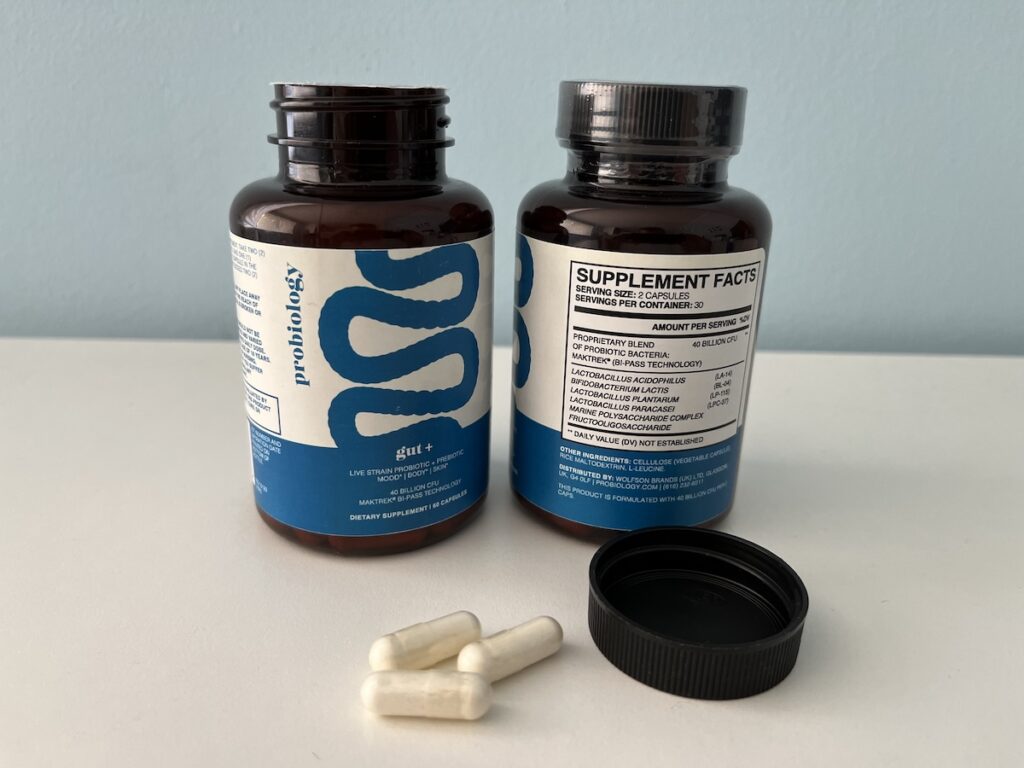
YourBiology Gut+ is a daily YourBiology probiotic that delivers 20 billion colony-forming units (CFUs) across three capsules and 10 named microbial strains. This YourBiology Gut Plus probiotic is a broad option for general digestive support, not a proven treatment for bloating, irregular bowel habits, or irritable bowel syndrome (IBS).
The formula combines Lactobacillus and Bifidobacterium bacteria with Saccharomyces boulardii, a probiotic yeast. Named strain codes are a real transparency advantage, since which probiotic labels identify their strains often comes down to whether a label names the exact strain rather than only the species. The complete ingredient list and other formula details matter too, especially if you react to additives or take other supplements.
A careful YourBiology Gut+ review separates strain disclosure from proof that the finished blend works. Four of its 10 strains have human randomized controlled trials, but six have no human data, and none has been studied for IBS or evaluated in the complete Gut+ formula. Research on a different strain from the same species does not automatically apply, much like results for one medication dose do not confirm another.
Its women-focused marketing reflects formulation preferences rather than a demonstrated women-specific benefit. Gut+ is vegan and free of dairy, gluten, and soy, so it may fit women or people of any sex who prefer those ingredients and a three-capsule routine. The 20-billion-CFU count and claims about the gut microbiome and weight management do not establish a particular result.
Professional guidance is appropriate if digestive symptoms are:
- Persistent
- Worsening
- Severe or otherwise concerning
Supplements cannot replace diagnosis or prescribed treatment, particularly when symptoms may point to an underlying digestive condition.
What Features Does YourBiology Gut+ Offer?

YourBiology Gut+ combines probiotics with prebiotic fibers, digestive enzymes, and vegan vitamin D3 in a once-daily capsule. That broad formula is convenient, but neither a high CFU count nor a long list of probiotic ingredients shows it will improve bloating, bowel regularity, or irritable bowel syndrome (IBS).
A useful strength is formula transparency. All 10 organisms are named with strain codes, allowing you to match the label to research on the exact organism rather than its species alone. Four strains have published human randomized controlled trials (RCTs), but none has been studied in people with IBS, and no trial has tested the finished Gut+ formula. Nearly all available strain research was sponsored or co-authored by Wecare Probiotics, the strain manufacturer, so findings from another strain or multi-strain product should not be treated as proof for Gut+. Biotics 8, the panel marketed to men, reaches a similar conclusion.
The formula’s added ingredients have limited practical weight:
- Prebiotic fibers: Inulin provides 45 milligrams and fructooligosaccharides provide 25 milligrams. This FOS prebiotic combination may feed gut microbes, but these amounts are small beside a high-fiber diet or therapeutic fiber plan. Fermentable fibers can also increase gas or discomfort when they trigger your symptoms.
- Digestive enzymes: Lipase at 25 milligrams, amylase at 20 milligrams, and protease at 10 milligrams help break down fats, carbohydrates, and proteins. The low-dose blend does not establish treatment for food intolerances, ongoing bloating, or IBS.
- Vitamin D3: The capsule supplies 10 micrograms of vegan vitamin D3. This nutrient may be more relevant if your dietary intake or blood level is low than as evidence of broad gut-health benefits.
Although label claims about delayed release, acid resistance, shelf stability, and no refrigeration describe features intended to help live organisms reach the gut, they do not verify how many organisms survive digestion or show that the finished product relieves symptoms. For value, product-specific strain evidence matters more than the modest fiber and enzyme additions.
How Transparent Is the Probiotic Formula?
YourBiology Gut+ offers more detail than many multi-strain supplements by identifying each organism with a full strain code, rather than naming species alone. According to available product reporting, the formula includes these 10 Wecare Probiotics strains:
- Lactobacillus acidophilus LA85
- Lactobacillus paracasei LC86
- Lactobacillus rhamnosus LRa05
- Lactobacillus casei LC89
- Lactobacillus fermentum LF61
- Lactobacillus plantarum N13
- Bifidobacterium breve BBr60
- Bifidobacterium bifidum BBi32
- Bifidobacterium longum BL21
- Saccharomyces boulardii SB01
That level of disclosure is a real strength. Many product listings provide only a partial species list, which makes it difficult to tell whether the organism in a study is the same one in the bottle.
The letter-and-number code matters because probiotic strains within one species can act differently. A study of another L. rhamnosus product, for example, does not automatically apply to LRa05 in Gut+. Taxonomy names can also change over time, while the strain identifier is usually the more dependable detail to match. Added ingredients matter, too. Fructooligosaccharides can affect people who are sensitive to fermentable ingredients.
Still, naming all 10 strains does not establish that the finished formula will help your bloating, irregular bowel habits, or IBS symptoms. It also cannot confirm that each strain appears at the amount used in research, that the combined formula has been tested, or that evidence for a different strain applies to Gut+.
Some details remain hard for shoppers to verify. Available product reporting does not clearly disclose independent third-party testing, potency in colony-forming units (CFUs) through the expiration date, or batch-specific identity and contaminant testing. Those omissions do not show that the supplement is unsafe or ineffective, but they limit what you can confirm before buying.
The full strain list supports a more precise evidence review than a species-only label. The key question is whether research exists for each exact code, in the people and outcomes that matter to you, especially if you hope to help manage IBS rather than rely on broad probiotic marketing claims.
What Do Prebiotics and Enzymes Add?
Gut+ includes inulin and fructooligosaccharides, or FOS, which are fermentable prebiotic fibers. Unlike probiotic ingredients, which are live microorganisms, these fibers can feed some resident bacteria, including Bifidobacterium species. An FOS prebiotic may support shifts in bacterial activity and bowel regularity over time, but not everyone responds the same way.
Your experience may depend on the amount in the formula, your usual fiber intake, your gut microbiome, and your tolerance for fermentable carbohydrates. Someone who normally eats little fiber can react differently than someone whose meals already contain plenty of high-fiber foods.
For bloating or IBS, the same fermentation that may support certain bacteria can also create more gas, abdominal pressure, cramping, or discomfort. Take particular care if high-FODMAP foods such as onions, garlic, wheat, or some beans reliably worsen your symptoms. A prebiotic blend is not automatically helpful for every digestive concern.
The enzyme blend is intended for meal-related digestive support:
- Amylase: Helps break down carbohydrates.
- Lipase: Helps digest dietary fats.
- Protease: Helps break down proteins.
These enzyme functions do not make the supplement a treatment for persistent indigestion, suspected food intolerance, or pancreatic problems. Seek medical evaluation for concerns such as:
- Greasy stools: They can signal poor fat digestion.
- Unexplained weight loss: It needs assessment rather than self-treatment.
- Severe abdominal pain: It can have causes beyond a supplement’s scope.
- Worsening diarrhea: Ongoing symptoms deserve professional guidance.
Research on inulin, fructooligosaccharides, or digestive enzymes in other products, doses, and groups of people cannot establish that Gut+ improves digestion, bloating, or bowel habits. Without well-designed human studies of this exact formula, these ingredients are plausible additions, not reliable reasons to expect symptom relief.
Digestive symptoms can have many causes, so readers should consult a qualified healthcare professional for persistent, severe, or worsening symptoms.
What Does Strain-Level Research Actually Show?
Probiotic clinical evidence is strain-specific. The letters and numbers after a species name matter as much as the species itself, so a familiar label name does not predict the same benefits. Gut+ lists 10 probiotic strains, which is more transparent than many supplements, but disclosure does not prove that the complete formula helps with IBS, bloating, constipation, or abdominal pain.
Evidence for the five strains most likely to stand out on the label is limited:
- Lactobacillus acidophilus LA85: A registered human study examined LA85 for antibiotic-associated diarrhea. That is relevant human research, but it does not show benefits for IBS, bloating, constipation, abdominal pain, or the finished Gut+ product.
- Lactobacillus paracasei LC86: The available evidence review found no published human trial for LC86. Findings for another L. paracasei strain cannot fill that gap.
- Lactobacillus plantarum N13: No published human trial was identified for N13. Lactobacillus plantarum 299v has IBS research, but 299v and N13 are different probiotic strains, so its findings do not apply to N13.
- Bifidobacterium breve BBr60: The review found no published human clinical evidence for BBr60. It is not comparable to B. longum subsp. infantis 35624, a different strain with stronger IBS-specific research that Gut+ does not contain.
- Saccharomyces boulardii SB01: No published human trial was identified for SB01. Research on S. boulardii generally, or on Saccharomyces cerevisiae CNCM I-3856, cannot support SB01 because these are different organisms.
Outside this five-strain group, L. rhamnosus LRa05 has been tested in randomized controlled trials. One pediatric trial assessed acute diarrhea, not IBS or Gut+ itself (source). Another studied LRa05 during Helicobacter pylori eradication treatment, which is also different from routine bloating, constipation, or IBS care (source).
Four of Gut+’s 10 listed strains have some published human randomized controlled trial research: LRa05, LA85, B. bifidum BBi32, and B. longum BL21. None has an IBS trial, and no clinical trial has evaluated the complete Gut+ formula for digestive outcomes, weight loss, or women-specific benefits. Promotional materials that cite MIMBb75, Lactobacillus rhamnosus GG, 299v, BB536, Shirota, HA-196, R0175, or B-3 are citing separate organisms that are not ingredients in Gut+.
Nearly all available research on these strains was sponsored or co-authored by Wecare Probiotics, the strain manufacturer. That does not invalidate the results, but independent replication would provide more confidence. Gut+ is transparent about its strain codes, yet it is not clinically validated as a finished product.
Results vary by person, and supplement decisions should be individualized. Persistent, severe, or worsening digestive symptoms deserve evaluation from a qualified healthcare professional.
How Much Does YourBiology Gut+ Cost?

Given the limited product-specific evidence, Gut+ is a premium, direct-sold probiotic subscription, so its value is best judged by the full cost of a 30-day supply rather than a promotional bottle headline. Pricing can vary by market, bundle, promotion, and checkout terms, which makes any fixed dollar figure unreliable for many readers.
Although one bottle is intended to last a month at the recommended three-capsule daily serving, capsule count alone can make a product look less expensive than it is, especially when the serving requires multiple capsules each day. Compare the monthly cost of taking the full labeled serving, including any shipping charges, instead of the cost per capsule.
Gut+ shoppers should compare the full monthly checkout total with other strain-identified probiotics before buying. Its direct-to-consumer model and disclosure of 10 strain codes help explain part of that difference, although formula transparency does not automatically establish that the product will help a particular symptom.
The cost structure looks like this:
Cost question | What Gut+ offers | What to check before buying |
|---|---|---|
One bottle | A 30-day supply at three capsules per day | The full checkout total, including shipping |
Multi-bottle package | A lower effective daily cost | The total number of months shipped and amount charged |
Subscription | An advertised saving compared with a one-time order | Renewal timing, cancellation terms, and whether the discount changes |
Evidence for the cost | Ten disclosed strain codes | Whether the available research applies to your symptoms or diagnosis |
Those terms determine whether the lower daily price fits your ordering schedule. Before subscribing, check the total supply in the shipment and the cancellation policy. A lower per-day price is not much of a benefit if deliveries arrive faster than you can use the product.
Garden of Life’s 50 billion CFU blend offers a useful contrast, because a high strain count and large capsule total do not reveal whether the strains are identified or studied.
For bloating or irregular bowel habits, weigh the full monthly spend against the product-specific evidence. Gut+ lists 10 strain codes, but only four have published human trials, six have no human data, and none has been studied in IBS. That makes the formula more transparent than many competitors, while leaving limited evidence to support its higher cost for IBS-related symptoms.
Current pricing, the subscription commitment, and the stated CFU count are on the YourBiology Gut+ store, which is the only place to confirm which formula is shipping.
What Are YourBiology Gut+’s Pros and Cons?
Gut+ offers better label detail than many probiotic blends, but the combination formula makes its effects harder to judge. This probiotic supplement review finds a practical advantage in its named strains, with important limits around evidence, tolerability, and independent quality checks.
The label lists 10 strain codes: L. acidophilus LA85, L. paracasei LC86, L. rhamnosus LRa05, L. casei LC89, L. fermentum LF61, L. plantarum N13, B. breve BBr60, B. bifidum BBi32, B. longum BL21, and S. boulardii SB01. It also contains prebiotics and digestive enzymes. Its vegan-friendly, dairy-free, soy-free, gluten-free, non-GMO, shelf-stable format may suit you if you avoid these ingredients or prefer not to refrigerate supplements.
The key strengths and drawbacks include:
- Formula transparency: Naming strain codes, rather than only species, gives you more detail than many digestive supplements provide.
- Convenience: Shelf stability and dietary exclusions can make daily use simpler.
- Mixed tolerability: Some reviewers describe less bloating, easier digestion, or more regular bowel movements. Others report gas, bloating during the first week, or no noticeable benefit. The added prebiotics and enzymes may be especially difficult for sensitive digestion.
- Formula complexity: With probiotics, prebiotics, and enzymes in one product, it can be hard to tell which ingredient is helping or worsening symptoms.
- Limited product-specific evidence: Four strains, LRa05, LA85, BBi32, and BL21, have human randomized controlled trials. Those studies address pediatric acute diarrhea, support alongside H. PYLORI treatment, safety and tolerability, or glycemic control, not Gut+ for bloating or IBS. Six strains lack human research, and none has been tested in an IBS trial. Most available strain research was sponsored or co-authored by the strain manufacturer.
Named strains and GMP-certified production support basic label transparency, but clear disclosure of independent third-party testing is lacking. That means the marketed live-microbe count, purity, and label accuracy have not been independently confirmed, and general probiotic findings do not establish benefits from every bottle.
Probiotic side effects and value also depend on the buying experience. Reported concerns include price, international shipping delays, possible heat exposure in transit, slow customer-service responses, and delayed refunds. Review delivery availability, subscription cancellation terms, and refund policies before ordering, especially when dependable delivery or budget matters.
Is YourBiology Gut+ Worth It?
Weighing those strengths and drawbacks, YourBiology Gut+ may be worth considering if full strain disclosure matters to you, but it is not a clear choice for dependable symptom relief. This YourBiology Gut+ review credits the formula for naming all 10 strain codes, which makes comparison easier than with products that list only species. That transparency does not show that the finished supplement will help bloating, irregular bowel habits, or other digestive concerns.
While four strains, LA85, LRa05, BBi32, and BL21, have published human randomized controlled trials, the other six named strains have no human trial data, and the complete YourBiology probiotic formula has not been studied in people with IBS. LRa05 research involved children with acute diarrhea and people receiving H. PYLORI treatment, so those findings do not transfer to adults with IBS using Gut+.
Nearly all available research was sponsored or co-authored by Wecare Probiotics, the strain manufacturer. That does not make the findings invalid, but it limits independent confirmation. A strain code is useful only when it matches the exact code tested, not merely a similar Bifidobacterium or Lactobacillus species.
Does YourBiology Gut+ work for you? General probiotic research cannot answer that question. A consistent personal trial may improve digestive comfort or regularity for some people, while others may notice no change. If IBS symptom relief is your priority, compare products studied in diagnosed patients and match the precise strain code.
YourBiology Gut+ weight loss claims need extra caution. A 2024 umbrella review found mixed evidence on probiotics for weight management, and the observed weight changes were modest in the studies it summarized (source). Gut+ is not a sensible weight-management purchase.
The main trade-offs are clear:
- Potential benefit: All 10 strain codes are disclosed, allowing a more informed probiotic supplement review than labels that name species alone.
- Evidence gap: Four strains have human research, but Gut+ itself has no IBS trial and six strains lack human data.
- Tolerability: Temporary gas, bloating, or changed bowel habits can occur, especially early in use.
Gut+ is neither opaque nor clearly poor quality, but its premium will not suit everyone without reliable condition-specific results. There is no best probiotic for gut health for every person. Persistent, severe, or worsening symptoms, or conditions affecting immune function, call for a qualified healthcare professional rather than replacing evaluation or prescribed care with a supplement.
Who Should Use YourBiology Gut+?
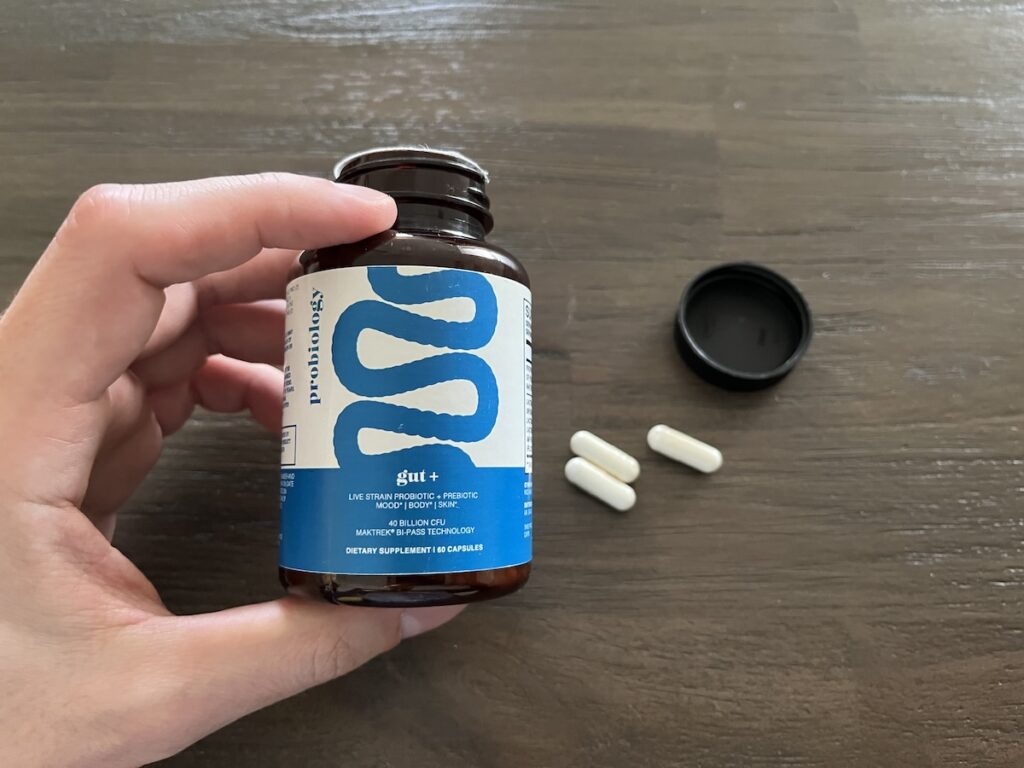
For adults whose needs fit those trade-offs, Gut+ is an optional trial for adults seeking general digestive support for mild, occasional bloating or irregular bowel habits, especially when a shelf-stable probiotic is more practical than one that needs refrigeration, but it is not a cure or a replacement for evaluating ongoing digestive symptoms. Probiotic side effects and value deserve as much attention as the product’s marketing.
The manufacturer markets Gut+ as suitable for several common dietary exclusions:
- Vegan: Contains no animal-derived ingredients according to the product marketing.
- Non-GMO: Marketed as non-genetically modified.
- Dairy-free: May suit people avoiding dairy.
- Gluten-free: May fit a gluten-free diet.
- Soy-free: May work for people who avoid soy.
The suggested serving is three capsules daily, preferably in the morning on an empty stomach with water. Check the full, current label if you have allergies or follow a restrictive diet.
If gas or bloating is a concern, build up slowly rather than starting at the full serving:
- Begin with one capsule daily.
- Increase gradually toward three capsules daily as tolerated.
- Stop use and seek medical advice if symptoms become severe, persistent, or clearly worsen.
Temporary gas, bloating, or changes in bowel habits can occur when starting a probiotic. This women’s probiotic review does not treat Gut+ as a women-only product, since adults of any gender may consider it and your symptoms, diet, and medical history matter more than women’s gut health marketing. Gut+ discloses 10 strain codes, a level of detail that many competing labels do not match.
Only LA85, LRa05, BBi32, and BL21 have published human trials, and no trial has tested Gut+ or its strains in people with IBS. If you have diagnosed or suspected IBS, condition-specific evidence and guidance from a qualified healthcare professional should take priority.
Clinician guidance should come first during pregnancy or breastfeeding, with a weakened immune system, serious gastrointestinal disease, significant medical conditions, or complex medication use. Medical evaluation is more appropriate than self-treatment for:
- Rectal bleeding
- Unexplained weight loss
- Fever or vomiting
- Severe or persistent abdominal pain
- Major changes in bowel habits
These symptoms need an assessment that a supplement cannot provide.
How Does Gut+ Compare for IBS?
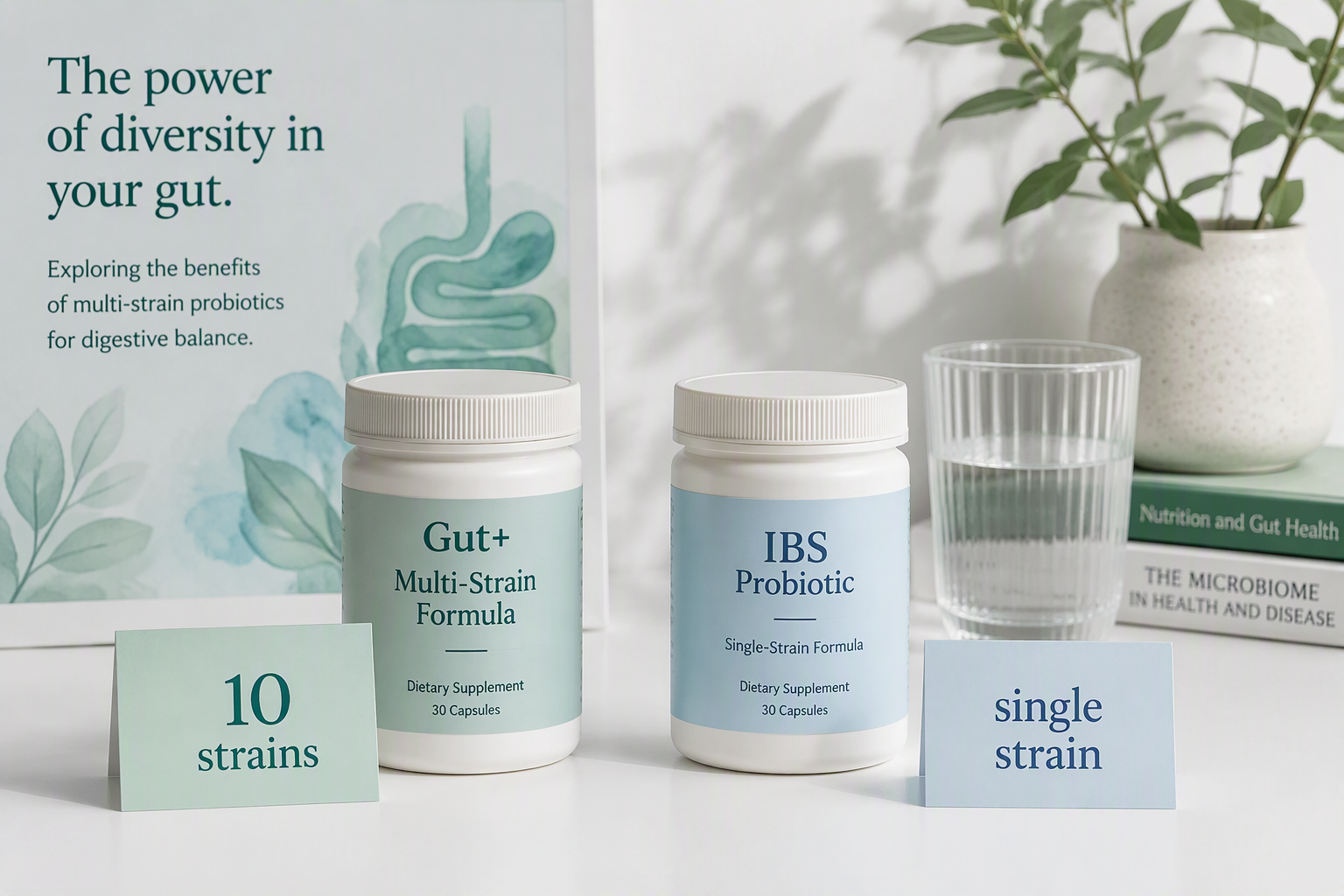
For people considering Gut+ specifically for IBS, the key question is whether the exact strain and finished product were tested in people diagnosed with IBS. Gut+ discloses 10 strain codes, which is more detail than many gut health supplements provide, but neither its full formula nor any listed strain has an IBS-specific clinical trial. It should not be treated as an IBS treatment.
Four of Gut+’s strains have human randomized controlled trials for outcomes other than IBS:
- L. acidophilus LA85: Studied for antibiotic-associated diarrhea.
- L. rhamnosus LRa05: Studied in pediatric acute diarrhea and with H. PYLORI treatment.
- B. bifidum BBi32: Studied for gastrointestinal safety and tolerability over eight weeks.
- B. longum BL21: Studied for glycemic control over 12 weeks.
The other six strains have no human trial data in the evidence reviewed by My Good Gut. This matters because probiotic clinical evidence is strain-specific. A study of one strain does not establish the same effect for another strain in the same species, so research on Lactobacillus plantarum 299v cannot support claims for Gut+’s L. plantarum N13.
For diagnosed IBS, strain codes are more meaningful than a large blend or a high colony-forming-unit count. Bifidobacterium longum subsp. infantis 35624, used in Align, and Lactiplantibacillus plantarum 299v are linked to human IBS trials. Taxonomy can change the genus name on a label, but 35624 and 299v remain the identifiers to match. Why Align’s 35624 is the IBS benchmark explains the difference.
Gut+ also contains fructooligosaccharides, a fermentable prebiotic, and cranberry extract. Fermentable ingredients may increase gas or bloating for some people with IBS. Gut+’s claims around regularity, energy, mood, immunity, skin health, or less bloating go beyond its product-specific IBS evidence. YourBiology vs Biotics 8 side by side can help when weighing similar multi-strain formulas.
Before trying a supplement, note your usual abdominal pain, bloating, gas, bowel frequency, and stool consistency, then review the same symptoms over a defined period instead of relying on one good or bad day. Stop and seek prompt medical advice if symptoms become severe or worsen.
No product is the best probiotic for gut health for every person, particularly when IBS symptoms and triggers vary. Discuss persistent symptoms, pregnancy, medications, immune conditions, or alarm symptoms with a qualified healthcare professional.
How Do Gut+ and Align Compare for IBS?
Gut+ and Align are built for different kinds of probiotic trials. Gut+ combines 10 named strains and added ingredients, while Align centers on a single strain, Bifidobacterium longum subsp. infantis 35624. For IBS, the strain studied matters more than the largest CFU number on the package.
Feature | Gut+ | Align |
|---|---|---|
Core approach | 10-strain formula with fermentable fibers and enzymes | Single named probiotic strain |
Strain disclosure | Names 10 Wecare Probiotics strain codes | Centers on B. longum subsp. infantis 35624 |
IBS evidence | No named strain has an IBS trial | 35624 has published trials in diagnosed IBS patients |
Tolerance variables | Probiotics, fibers, and enzymes | Fewer ingredients to assess during a trial |
Gut+ gives more detail than a species-only blend by naming these strain codes:
- Lactobacillus strains: LA85, LC86, LRa05, LC89, LF61, and N13.
- Bifidobacterium strains: BBr60, BBi32, and BL21.
- Yeast strain: Saccharomyces boulardii SB01.
A strain code works like a model number, identifying a particular organism rather than treating every member of one species as interchangeable. Align’s narrower formula makes it easier to connect its 35624 strain to the published IBS research.
The evidence gap is the deciding difference for an IBS-focused purchase. Four Gut+ strains have human randomized controlled trial data outside IBS, covering antibiotic-associated diarrhea, pediatric acute diarrhea, tolerability, and glycemic control. The remaining six have no identified human data, and none of the 10 named strains has been tested in people with IBS. Nearly all available research was sponsored or co-authored by Wecare Probiotics, and studies of individual strains do not test the finished Gut+ formula.
Formula complexity can matter when bloating or gas is already a concern. Along with its named strains, Gut+ includes inulin, fructooligosaccharides, and lipase, amylase, and protease enzymes. Inulin and fructooligosaccharides are fermentable fibers that may worsen symptoms for some people, whereas Align’s single-strain format leaves fewer possible triggers to sort through.
Gut+ promotional materials have described the formula inconsistently. It is marketed as a 40-billion-CFU product, while label information has also described 20 billion CFU per three-capsule serving. Its public strain disclosure is useful, but a patented delivery-system claim does not establish IBS benefit without IBS research on the strains.
Gut+ costs substantially more per day and is sold directly by subscription, while Align is widely available at retail. Compare official pricing before buying, since supplement costs can change. Align fits a defined IBS trial, while Gut+ may suit you if a disclosed multi-strain blend matters more than IBS-specific evidence.
You can give either YourBiology Gut+ or Align Probiotic.
YourBiology Gut+ FAQs
These FAQs cover common questions to consider before trying YourBiology Gut+, including its ingredients, evidence, possible side effects, cost, and fit for your digestive symptoms and health history.
1. Can You Take Gut+ With GLP-1 Drugs?
Gut+ is not known to have a specific interaction with GLP-1 medicines, but confirm any new supplement with the clinician who prescribes your medication. This is especially important if you have diabetes, use other glucose-lowering medicines, or have had significant digestive side effects.
GLP-1 drugs can cause nausea, early fullness, constipation, diarrhea, bloating, and slower stomach emptying. Gut+ may temporarily cause gas, bloating, or bowel changes, which can make symptoms harder to trace. It is not a remedy for medication side effects. Seek medical advice for severe, persistent, or worsening symptoms.
2. Does YourBiology Gut+ Require Refrigeration?
YourBiology Gut+ is marketed as shelf-stable, so it is meant to stay at room temperature rather than in the refrigerator. A work bag or travel is usually fine, but keep the tightly closed bottle away from hot cars, direct sunlight, and humid bathrooms. Check the storage directions on your bottle and order materials because labels or formulations can change. Contact the seller if capsules arrive damaged or were exposed to extreme heat or moisture during delivery.
3. Can You Take Gut+ With Antibiotics?
Use Gut+ with antibiotics only after your prescriber or pharmacist confirms it fits your medication, condition, health history, and other medicines. It does not replace an antibiotic or medical advice, and its finished 10-strain formula has no direct trial for preventing antibiotic-related digestive symptoms. Lactobacillus acidophilus LA85 has been studied for antibiotic-associated diarrhea, but that result does not automatically apply to Gut+ or every antibiotic regimen.
Ask whether doses should be spaced apart. Gas, bloating, or bowel changes may come from either product. Seek medical advice promptly for severe, persistent, or worsening diarrhea.
4. How Do You Cancel a Gut+ Subscription?
Sign in to your account, or use the order-confirmation email, to find your next renewal date and cancellation option. Cancel before the scheduled charge, because skipping a shipment may not end the subscription. Keep dated screenshots and the written confirmation or reference number. A cancellation and refund request are separate: Gut+ advertises a 100% 60-day money-back guarantee, but review its eligibility window, return instructions, and refund timing. If you cannot access your account or receive confirmation, contact customer service with your order number before billing.