


Rotten-egg burps can be embarrassing, especially when they show up after a meal or alongside bloating. Sulfur burps usually happen when hydrogen sulfide gas forms during digestion, often after certain foods, swallowed air, reflux, or slowed stomach emptying. A single episode is commonly temporary, but repeated symptoms deserve attention when they disrupt meals or come with other digestive changes.
Eggs, garlic, onions, fizzy drinks, large rich meals, constipation, and indigestion can all contribute, though the smell alone cannot identify the cause. To get rid of mild sulfur burps, try fluids, smaller meals, slower eating, and a one-change-at-a-time food and symptom note before cutting out several foods. Symptoms that begin after starting Ozempic or another medicine that slows digestion should be discussed with the prescriber rather than managed by changing the dose yourself.
Diarrhea with nausea, cramping, fever, or unusually foul-smelling stools may point to an infection such as Giardia rather than a food trigger. Seek prompt medical care for severe pain, dehydration, repeated vomiting, blood or black stool, or unintentional weight loss.
Sulfur Burps Key Takeaways
- Sulfur burps smell like rotten eggs because hydrogen sulfide gas forms during digestion.
- A single episode often follows a meal, drink, or temporary digestive upset.
- Eggs, garlic, onions, cruciferous vegetables, beans, and rich meals can worsen symptoms.
- Reflux, constipation, lactose intolerance, and slowed stomach emptying can increase burping.
- Ozempic and other GLP-1 medicines may contribute by slowing stomach emptying.
- Track meals, symptoms, bowel changes, and medication timing before making broad food restrictions.
- Seek care for severe pain, dehydration, vomiting, fever, blood or black stool, or persistent symptoms.
Why Do You Get Sulfur Burps?
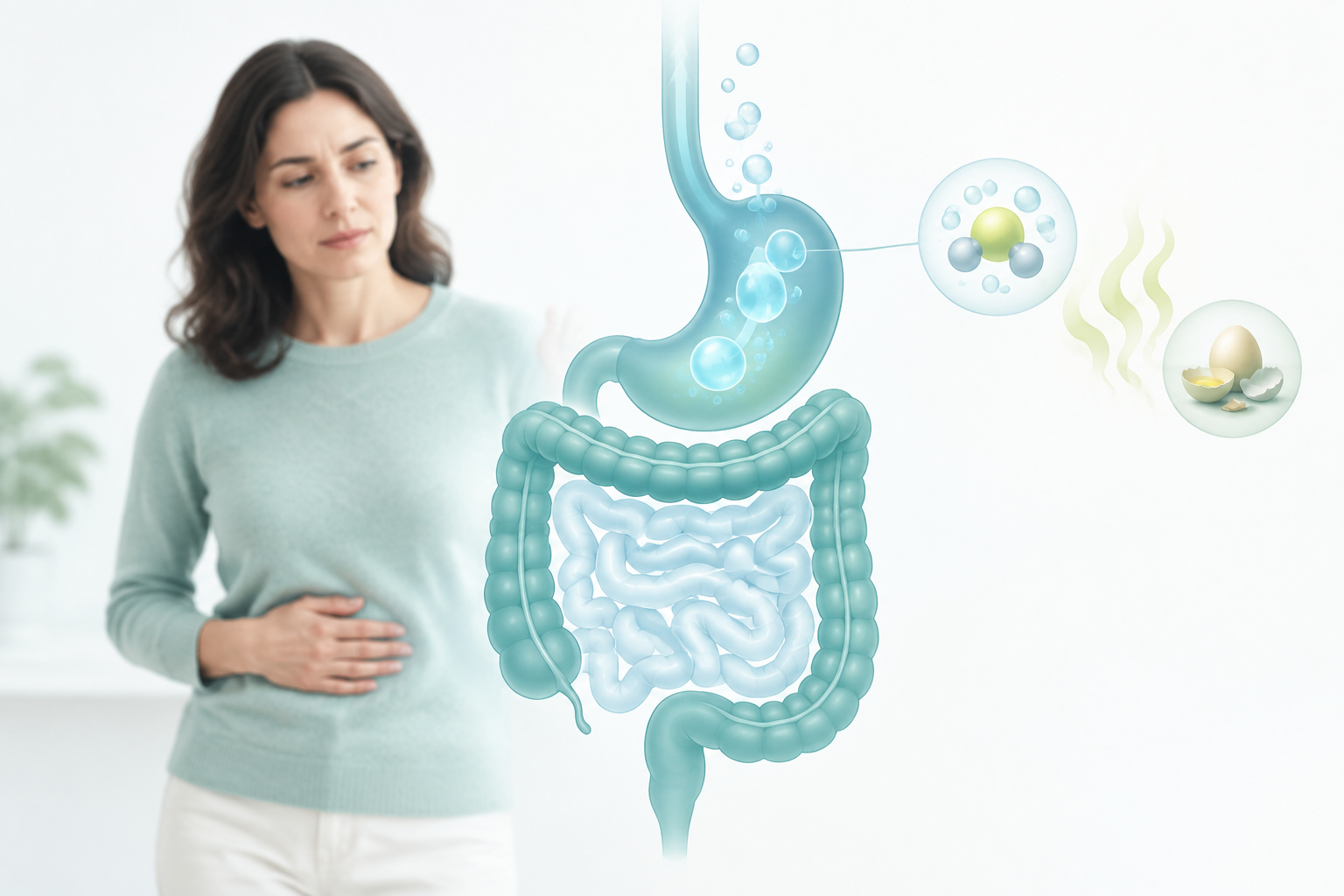
Sulfur burps are burps that smell like rotten eggs. They happen when hydrogen sulfide gas forms during digestion, often as gut bacteria break down food. The guide to common gut symptoms places sulfur burps alongside bloating, reflux, diarrhea, and other digestive concerns.
Everyday burping is normal and common. If you’re wondering, “why do I get sulfur burps,” one episode often points to a recent meal, drink, or temporary digestive upset rather than a diagnosis. Rotten egg burps or other foul-smelling burps deserve more attention when they keep happening, become excessive, or regularly follow meals.
Common patterns that can make belching more noticeable include:
- Sulfur-containing or gas-producing foods
- Carbonated drinks
- Rushed eating that leads to swallowed air
- Changes in your usual routine
- Reflux or indigestion
When working out what is causing sulfur burps, notice whether symptoms follow certain foods, beverages, or routine changes. Slowed digestion can also play a role. Glucagon-like peptide-1 medicines may slow stomach emptying, so food remains there longer and can change belching.
Contact a healthcare professional if burps that smell like rotten eggs continue or occur with bloating, nausea, stomach pain, diarrhea, reflux, or indigestion. Infections and other digestive conditions can cause sulfur burps with ongoing gastrointestinal symptoms, and the timing, severity, and duration help determine whether self-care is appropriate.
What Causes Sulfur Burps?

Because the odor alone is not a diagnosis, sulfur burps can have several digestive causes. The odor identifies a gas, not a diagnosis, so the cause of sulfur burps is better judged by symptom timing and what else is happening. The National Institute of Diabetes and Digestive and Kidney Diseases explains that gas can come from swallowed air or bacteria breaking down undigested carbohydrates (NIDDK on gas symptoms and causes).
Common contributors include:
- Sulfur-rich foods: Eggs, garlic, onions, and cruciferous vegetables may make burps smell stronger for some people.
- Extra air and digestive conditions: Eating quickly, drinking carbonated beverages, indigestion, gastroesophageal reflux disease (GERD), constipation, and lactose or fructose intolerance can increase burping or keep food moving more slowly.
- Medication effects: Glucagon-like peptide-1 medicines may cause slowed stomach emptying, which can increase burping after starting treatment or changing a dose.
Repeated burps with reflux, constipation, or diarrhea deserve a broader review because gas can have several digestive sources (NIDDK on gas in the digestive tract).
Persistent or sudden sulfur burps can also occur with conditions such as:
- Infections: Helicobacter pylori infection or Giardia infection.
- Irritation or disease: Gastritis, peptic ulcer disease, or celiac disease.
- Bacterial overgrowth: Small intestinal bacterial overgrowth (SIBO).
Seek medical evaluation if burps occur with nausea, abdominal pain, vomiting, diarrhea, or meaningful changes in bowel habits.
Could a Sulfur-Rich Meal Be the Trigger?
A sulfur-rich meal can make burps smell or taste like rotten eggs because gut bacteria may produce hydrogen sulfide while digesting it. Common foods that cause sulfur burps include:
- Eggs, dairy, red meat, poultry, fish, and seafood
- Broccoli, Brussels sprouts, kale, garlic, onions, and asparagus
- Beans, lentils, and other legumes
These sulfur-rich foods are nutritious, and many people tolerate them without trouble. The combination and size of a meal can matter as much as any one ingredient. Large, protein-heavy meals that are also high in fat may remain in the stomach longer, while beans and cruciferous vegetables can add gas, bloating, and belching.
A simple food and symptom note can reveal whether there is a repeatable pattern:
- What you ate and the portion size
- When the burps started
- Whether reflux, bloating, diarrhea, or constipation occurred too
Make one modest change at a time, such as reducing a large portion or eating suspected foods separately. Add foods back as tolerated so you can identify personal triggers without cutting out broad food groups unnecessarily.
Could Slowed Stomach Emptying Be Involved?
Slowed stomach emptying can make sulfur burps more likely because food stays in your stomach longer before moving into the intestine. That extra time may increase fullness, nausea, bloating, and burping. It can also allow bacteria more contact with sulfur-containing foods, producing hydrogen sulfide, the gas responsible for a rotten-egg smell.
GLP-1 medicines for diabetes or weight management, including Ozempic, other semaglutide products, and tirzepatide, slow stomach emptying as part of their effects on appetite and blood sugar. GLP-1 side effects can include sulfur burps, particularly with early fullness or nausea. A sulfur burp alone does not mean the medicine is unsafe, and you should not stop a prescribed medication without speaking with your clinician.
A medication-related pattern is more likely when symptoms begin after starting treatment, become more noticeable after a dose increase, or worsen at higher doses. Contact your clinician if burps persist or disrupt daily life, especially with:
- Ongoing vomiting or trouble keeping fluids down.
- Severe abdominal pain.
- A swollen belly that will not settle.
These symptoms need medical review rather than a food or supplement trial.
Could Reflux or Indigestion Be Causing Them?
Reflux and indigestion can contribute to sulfur burps when gas and stomach contents rise into the esophagus. The rotten-egg smell alone does not identify reflux. Excessive belching is more suggestive when it occurs with burning in the chest or throat, a sour taste, or symptoms that worsen after meals or while lying down.
Indigestion can look different. Upper-abdominal discomfort, early fullness, bloating, nausea, and frequent burping after a large or rich meal may signal irritation or poor tolerance higher in the digestive tract. In this pattern, sulfur burps are one part of a broader symptom picture.
Ongoing nausea, gnawing or burning upper-stomach pain, or meal-related discomfort can occur with gastritis or another upper-digestive condition. Avoid self-diagnosis if symptoms persist or worsen. Seek medical care promptly for:
- Vomiting or trouble swallowing
- Black stools
- Unexplained weight loss
- Severe or worsening abdominal pain
Could an Infection Be the Cause?
Sudden sulfur burps and diarrhea with nausea, stomach cramps, fatigue, vomiting, fever, or unusually foul-smelling stool can point to an infection rather than a meal-related trigger alone. Gastroenteritis and food poisoning may follow contaminated food or water, or contact with someone who is sick. Extra gas and foul-smelling burps can occur during these illnesses.
Giardia infection is another concern when diarrhea and cramping persist, especially after travel, untreated water, daycare exposure, or close contact with an ill person. Greasy, pale, or especially foul-smelling stools add to the concern. Giardia can cause bloating and the sulfur burps giardia searches often describe, but symptoms alone cannot confirm the cause. The CDC notes that testing is needed to identify Giardia (CDC on Giardia).
H. PYLORI more often causes ongoing upper-abdominal discomfort, indigestion, nausea, bloating, and frequent burping than a brief episode of food poisoning. An intestinal illness can also temporarily make lactose harder to digest. Milk, ice cream, and other dairy foods may worsen gas, cramps, and diarrhea until your digestive system recovers.
Seek medical care for warning signs such as:
- Persistent symptoms
- Dehydration
- Severe pain
- Blood or black stool
- Fever
How Do You Get Rid of Sulfur Burps?

When symptoms are mild and no warning signs point to infection or another condition, start with fluids, smaller bland meals, and a short food trial based on the likely cause of sulfur burps. Sip water or diluted fluids if diarrhea is present. For a day or two, toast, rice, bananas, and plain potatoes may sit better than large or protein-heavy meals.
Foods that cause sulfur burps vary from person to person, but common suspects include:
- Sulfur-rich foods: Eggs, garlic, onions, and cruciferous vegetables may trigger symptoms for some people.
- Rich meals: Greasy, spicy, heavily processed, or very large meals can worsen fullness and indigestion.
- Drinks and sweets: Alcohol, carbonated drinks, and sugary foods may make belching more noticeable.
Eating more slowly and chewing thoroughly can limit swallowed air. A gentle walk after meals may ease fullness, while vigorous exercise and lying flat can aggravate reflux or heartburn.
A one-change-at-a-time food trial can help you spot a pattern without cutting out too many foods:
- Reduce one suspected trigger, such as fizzy drinks, sweets, processed foods, or sulfur-rich foods.
- Track meals, symptom timing, sulfur burps, bowel movements, and sleep for several days.
- Keep other meals fairly consistent so any change is easier to identify.
This approach to how to get rid of sulfur burps protects dietary variety and gives a healthcare professional clearer information if symptoms continue.
Over-the-counter options should fit the symptom pattern. Bismuth subsalicylate may help short-term indigestion or diarrhea, but it can darken your tongue or stool and is not suitable if you cannot take salicylates. Simethicone may ease gas discomfort, while probiotics have mixed results and can increase gas at first. A clinician can advise on acid-reducing treatment and prescribed glucagon-like peptide-1 medicines.
Knowing when to see a doctor for sulfur burps matters. Get prompt care for:
- Severe abdominal pain, fever, or dehydration.
- Repeated vomiting, blood or black stool, or unintended weight loss.
- Persistent, severe, or worsening diarrhea or sulfur burps.
Track Patterns Before Cutting More Foods
To make the one-change-at-a-time food trial more informative, a short symptom note can help you spot patterns before you cut several foods at once. Tracking meals, timing, and symptoms for one to two weeks can make repeat triggers easier to see. Patterns can guide your next step, but they cannot confirm the medical cause of sulfur burps.
Keep brief notes on:
- Meals and ingredients, including sulfur-rich foods.
- The timing of each rotten-egg burp, plus bloating, nausea, or loose stools.
- Medicines and dose timing, especially a new or increased GLP-1 dose.
- Sleep, bowel changes, and other symptoms that occur around meals.
When loose stools repeatedly follow meals, diarrhea triggered by meals may help you recognize related patterns. Keep the comparison practical, since broad restrictions can make the results harder to interpret and leave your diet needlessly limited.
When Should You Seek Care for Sulfur Burps?
Even when a food and symptom note suggests a trigger, most sulfur burps are not an emergency. If one brief episode follows a clear food trigger and you have no significant pain, vomiting, fever, or other illness, you can watch it for a short time at home. Return to regular meals and fluids rather than cutting out many foods at once.
When to see a doctor for sulfur burps depends less on the smell and more on the pattern and other symptoms. Make a non-urgent appointment if burps become frequent, worsen, continue after simple food or routine changes, or no longer follow a clear food or medication pattern. Recurring burps with reflux, indigestion, chest or abdominal pain, trouble swallowing, unintentional weight loss, or repeated vomiting also need assessment, especially after starting or increasing a glucagon-like peptide-1 medicine.
Prompt medical evaluation is appropriate when sulfur burps and diarrhea occur alongside nausea, vomiting, fever, or a strong feeling of being unwell. Food poisoning is one possible cause, but infections and other digestive problems can cause similar symptoms.
Watch for dehydration signs:
- Very dark urine or urinating much less than usual.
- Dizziness, marked thirst, dry mouth, or unusual weakness.
- Inability to keep fluids down.
Prolonged vomiting or diarrhea can upset electrolyte balance and make it difficult to get enough nutrition.
Seek urgent care for severe or persistent upper-abdominal pain, particularly pain that spreads to your back or comes with repeated vomiting, fever, or yellowing of the skin or eyes. Rotten-egg burps alone cannot diagnose pancreatitis.
Urgent assessment is also needed for vomit that smells like stool along with a swollen belly and no passing gas or stool, which can signal fecal vomiting and bowel obstruction. These symptoms need prompt care rather than watchful waiting.
Sulfur Burps FAQs
These FAQs cover common concerns about sulfur burps, including possible causes, related symptoms, and signs that warrant medical attention. They can help you choose a practical next step with less uncertainty.
1. Can Medications Cause Sulfur Burps?
Yes. Some medicines may contribute to sulfur burps, though they are not always the cause. Repeated antibiotics and metformin can alter gut bacteria and increase gas, particularly when certain foods or a digestive condition are also involved. GLP-1 side effects and other medicines that slow digestion may keep food in the stomach or intestines longer, allowing more gas to form.
If symptoms started after a new medication or dose change, speak with a pharmacist or healthcare professional. Do not stop, skip, or adjust a prescription without medical guidance.
2. Can Ozempic Cause Sulfur Burps?
Ozempic (semaglutide) and other GLP-1 medicines can contribute to sulfur burps because they slow stomach emptying. When food remains in the stomach longer, belching, bloating, nausea, constipation, and a rotten-egg odor may follow, especially after starting treatment or increasing the dose, although sulfur burps are not a direct side effect for everyone. Don’t change or stop your prescription without your prescriber’s guidance. Persistent or worsening symptoms, vomiting, abdominal pain, or trouble keeping fluids down need medical attention, particularly with reflux or stomach-motility problems.
3. Can Probiotics Cause Sulfur Burps?
A new probiotic may briefly increase gas, bloating, and burping as it changes microbial activity in your digestive tract. This can make sulfur burps more noticeable, but probiotics are not a proven direct source of hydrogen sulfide gas. Food triggers, reflux, constipation, infection, or another digestive condition may be the cause.
Pause a newly started probiotic if symptoms are bothersome, persistent, or getting worse. Seek medical care for severe belly pain, ongoing diarrhea, vomiting, fever, dehydration, blood in the stool, or unexplained weight loss.
4. Can Sulfur Burps Happen Without Diarrhea?
Yes. Sulfur burps can occur without diarrhea after a sulfur-rich meal, reflux, indigestion, swallowing extra air while eating or drinking quickly, or slowed digestion that allows gas to build up. A rotten-egg smell alone does not point to diarrhea, so the full symptom pattern matters more.
Contact a qualified healthcare professional if burps are frequent or severe, or occur with persistent nausea, vomiting, stomach pain, fever, dehydration, unexplained weight loss, blood or black stools, or difficulty keeping fluids down.