


A bathroom trip minutes after a meal doesn't mean that meal raced straight through your body. Diarrhea after eating can result from a stronger gastrocolic reflex, food intolerance, infection, IBS, medication effects, or a surgery-related change, and timing helps narrow the possibilities.
Urgency within an hour often reflects colon contractions moving stool already there, while symptoms one to three hours later may follow lactose, sugar alcohols, bile acid diarrhea, or dumping syndrome after stomach or esophageal surgery. A short food-and-symptom log that records meal size, onset, stool consistency, and the Bristol Stool Chart can show whether symptoms follow dairy, fatty meals, or most meals.
Diarrhea lasting four weeks or more is chronic, but care is needed sooner for blood or black stools, fever, severe pain, dehydration, nighttime symptoms, or unintentional weight loss. Tracking timing and warning signs helps separate a short-lived upset from symptoms that need clinical evaluation.
Diarrhea After Eating Key Takeaways
- Diarrhea after meals has several causes, and timing offers clues rather than a diagnosis.
- Symptoms within minutes often reflect the gastrocolic reflex moving stool already in the colon.
- Diarrhea one to three hours later can involve intolerance, infection, bile acids, or dumping syndrome.
- Lactose, sugar alcohols, fatty meals, caffeine, medications, and supplements can contribute to loose stools.
- Track meals, symptom timing, stool changes, medicines, and surgery history before broadly restricting foods.
- Discuss celiac testing before starting a gluten-free diet, because avoiding gluten can affect results.
- Seek prompt care for blood, black stools, fever, severe pain, dehydration, weight loss, or nighttime diarrhea.
What Can Diarrhea After Eating Mean?
Postprandial diarrhea is loose or watery bowel movements after eating, often with urgency. One isolated loose stool is not necessarily diarrhea. Clinicians generally define diarrhea as loose, watery stools three or more times in one day (source). Repeated diarrhea after eating can disrupt daily life, but it does not point to one specific cause.
A bowel movement shortly after a meal may also be a normal gastrocolic reflex. Food entering your stomach signals the colon to move stool that was already there, so the meal has not necessarily passed straight through your body. Repeatedly watery, painful, urgent, or unfamiliar stools deserve closer attention.
Timing offers an early clue, not a diagnosis. Symptoms that begin almost immediately may involve a stronger-than-usual gastrocolic reflex or a reaction to a particular food. Symptoms that start later can involve other digestive processes, while diarrhea after most meals may call for a broader look at your health history, food patterns, and medications.
A few patterns can help narrow the possibilities:
- Stool consistency: Mildly soft stools and fully watery stools can suggest different concerns.
- Frequency: A single episode after an unusually rich meal differs from repeated urgent bathroom trips.
- Pain pattern: Cramping that improves after a bowel movement can occur with irritable bowel syndrome (IBS), but it does not confirm IBS.
- Other symptoms: Nausea, vomiting, fever, marked cramping, gas, bloating, or illness in others who ate the same food can fit an infection or food-related problem.
- Food and medication links: Symptoms that consistently follow dairy or another food may suggest an intolerance, although medicines, infections, and digestive conditions can overlap.
Before cutting out several foods at once, keep a short record of meals, symptom timing, stool consistency, pain, fever, and bloating. The digestive symptoms sorted by cause can help you put those observations in context.
People often ask, why do I get diarrhea after eating? A sudden new watery pattern is more concerning than a familiar mild change. Recurrent yellow stool can add useful context, and diarrhea that turns yellow may have causes that differ from ordinary brown loose stools after meals.
Why Does Diarrhea Start Within an Hour?
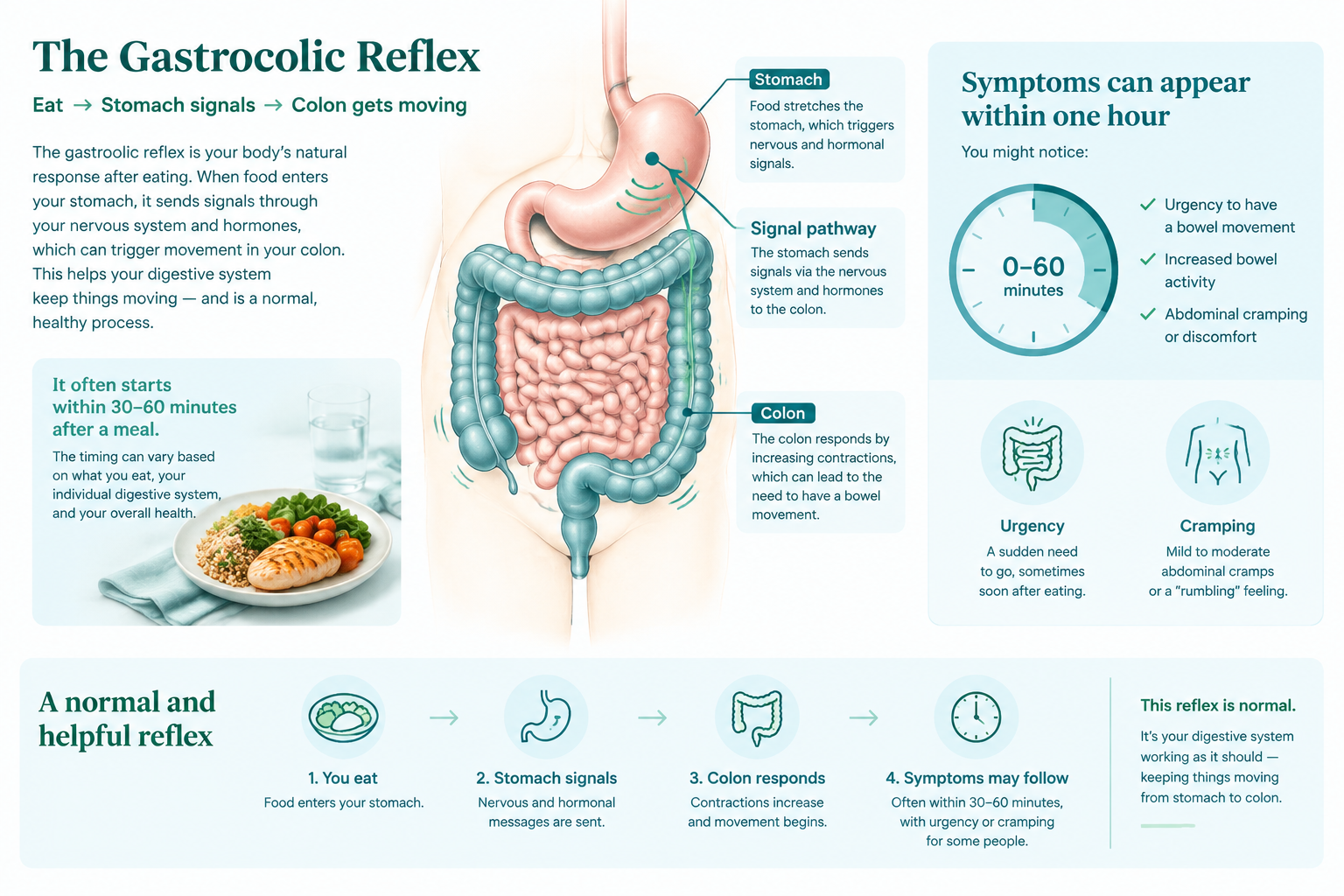
For symptoms that begin almost immediately, diarrhea right after eating usually involves stool already in your colon, not a new meal passing through your body within minutes. The gastrocolic reflex starts when food stretches the stomach, signaling the colon to contract. Those contractions can bring on cramps, urgency, or loose stools after meals, sometimes soon after you eat. MedlinePlus notes that diarrhea can have several causes, including infections, food intolerances, and some medicines (MedlinePlus on diarrhea).
Larger meals usually stretch the stomach more and can trigger a stronger bowel response. Greasy, spicy, or high-calorie foods may add to the effect, especially when paired with coffee, energy drinks, strong tea, or alcohol. Caffeine and diarrhea can be linked for some people, but a drink, meal size, and certain foods may matter in combination rather than as a single trigger.
A brief food-and-symptom log can help you identify repeat patterns without assuming a food is harmful for everyone:
- Meal and drink: Note what you ate and drank, including an approximate portion size.
- Meal size comparison: Compare symptoms after a smaller meal with symptoms after a larger version of a similar meal.
- Timing: Record when cramps, urgency, or diarrhea immediately after eating began.
- Stool changes: Note whether stools were loose, watery, or more frequent than usual.
- Other symptoms: Include bloating, nausea, sweating, lightheadedness, or pain.
Irritable bowel syndrome (IBS) can make normal post-meal contractions feel painful or urgent and may cause diarrhea-like stool soon after a meal. One episode does not confirm IBS. Early dumping syndrome differs from the gastrocolic reflex. After stomach or esophageal surgery, rapid gastric emptying can send stomach contents into the small intestine too quickly. Symptoms may begin shortly after eating and can include:
- Diarrhea or cramping: Loose stool and abdominal discomfort can occur soon after a meal.
- Nausea: Some people feel sick or overly full after eating.
- Sweating or lightheadedness: These symptoms can occur with the body’s rapid response to the meal.
- A racing heartbeat: A fast heartbeat may accompany other symptoms.
Contact your surgical care team if these symptoms occur after surgery, since they are not caused by food moving directly through the colon.
Infection, foodborne toxins, and food intolerance can also cause sudden diarrhea, but fast timing alone does not prove the most recent food caused it. Seek prompt medical care for:
- Severe abdominal pain
- Fever
- Blood or black stool
- Dehydration symptoms
- Rapidly worsening diarrhea
- Unexplained weight loss
What Causes Diarrhea Hours After a Meal?
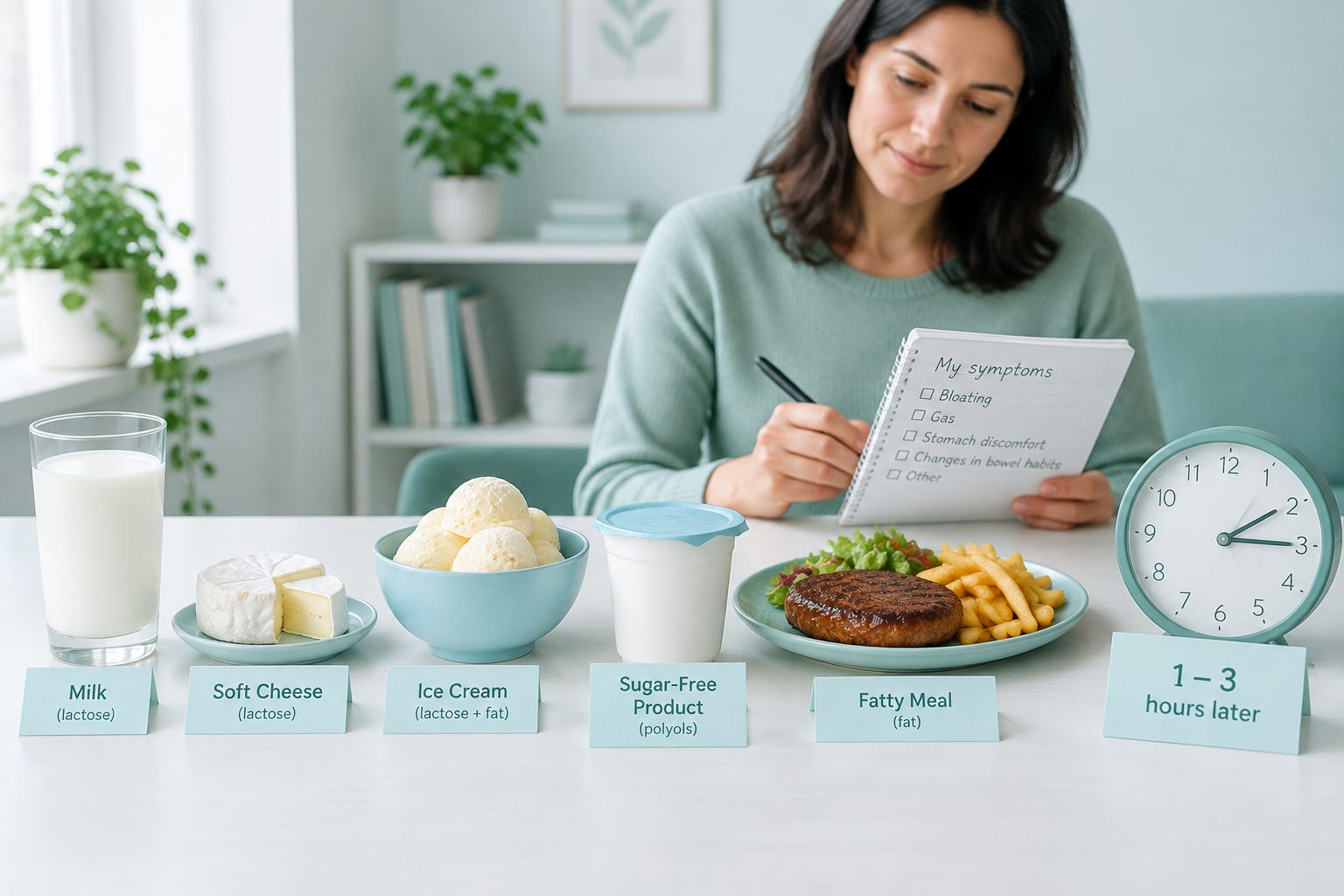
Beyond diarrhea that starts soon after eating, diarrhea that begins one to three hours after a meal may relate to food intolerance, infection, bile acid diarrhea, poor absorption, or a surgery-related change (source). Timing can help narrow the possible causes. A short food-and-symptom log that notes meals, symptom timing, stool changes, cramps, gas, nausea, and bloating can reveal repeat patterns without blaming one meal.
Lactose intolerance can cause loose stools, gas, cramps, and bloating after milk, soft cheese, or ice cream. Unabsorbed fructose, large amounts of sugar, and sugar alcohols such as sorbitol may also draw water into the bowel, which is how fructose malabsorption causes loose stools. Why bloating and distension follow meals can help explain why bloating often occurs alongside diarrhea.
Symptoms after gluten-containing foods need medical assessment before you stop eating gluten. Ongoing diarrhea with fatigue, weight loss, anemia, or abdominal symptoms may warrant testing for celiac disease, because avoiding gluten beforehand can affect test results. Pale, greasy, bulky, floating, or unusually foul-smelling stools can also suggest impaired digestion or absorption and need clinician-led testing.
A brief stomach illness is another common cause, particularly after travel, a questionable meal, contact with someone who is ill, or a shared meal that made others sick. Infection is more likely when nausea, vomiting, fever, or stronger cramping occurs too.
Prompt medical care is important for:
- Bloody or black stools.
- Severe or worsening abdominal pain.
- Fever or repeated vomiting.
- Dehydration signs, such as dizziness, very dark urine, or very little urine.
- Diarrhea that wakes you at night, persists, or occurs with unintended weight loss.
Bile acid diarrhea occurs when too much bile reaches the colon, causing urgent, watery stools. Diarrhea after eating fatty food may fit this pattern, especially after gallbladder removal or with certain digestive conditions, but timing alone cannot confirm the cause. Late dumping syndrome can occur after stomach or esophageal surgery. Rapid gastric emptying after a high-sugar meal may lead, one to three hours later, to diarrhea plus sweating, shakiness, weakness, dizziness, hunger, or a rapid heartbeat. The National Institute of Diabetes and Digestive and Kidney Diseases includes these low-blood-sugar symptoms in dumping syndrome (source). Repeated episodes or trouble maintaining food intake and weight need medical assessment.
Why Does Diarrhea Follow Most Meals for Weeks?
When diarrhea continues beyond occasional meal-related episodes, diarrhea that lasts for four weeks or longer is chronic diarrhea, and brief stomach upset usually follows a shorter course (source). A short food-and-symptom log can make that conversation more useful without pushing you into broad food restrictions.
Helpful details to note include:
- Stool pattern: Watery, urgent, greasy, pale, or nighttime stools may point to different causes.
- Related symptoms: Record cramping, bloating, fatigue, unplanned weight change, thirst, dizziness, or other signs of dehydration.
- Possible triggers: Include meal size, high-fat foods, lactose, sugar alcohols in sugar-free products, stress, new medicines, antibiotics, and supplements.
Recurring abdominal pain linked with bowel movements, plus ongoing changes in stool frequency or form, can fit irritable bowel syndrome, and so can why stool can carry mucus. Larger meals, lactose, high-fat foods, sugar alcohols, stress, and personal food triggers may worsen symptoms. Smaller meals can be a reasonable first step, but long-term elimination diets without evaluation can unnecessarily limit nutrition.
Celiac disease and inflammatory bowel disease (IBD) should not automatically be treated as IBS. Celiac disease may cause diarrhea, bloating, fatigue, or nutrient-related symptoms after gluten-containing foods, and celiac testing should be discussed before starting a gluten-free diet. IBD may involve abdominal pain, blood in the stool, weight loss, or diarrhea that wakes you from sleep.
Microscopic colitis is another possible cause of frequent, urgent watery diarrhea. The bowel can appear normal on imaging or during colonoscopy, and diagnosis requires tissue samples. Persistent watery stools, particularly overnight, deserve evaluation rather than repeated self-treatment for presumed IBS.
A medicine, supplement, or recent dose change can also matter. Antibiotics, magnesium-containing products, and sugar-free products may contribute to diarrhea. After gallbladder removal, bile acid diarrhea can cause urgent watery stools after eating. Bring a complete medication and supplement list to your appointment, but do not stop prescribed medicine without clinical advice.
Prior stomach or esophageal surgery can point to dumping syndrome. With early dumping syndrome, diarrhea often starts within about 30 minutes after eating. Later symptoms can occur one to three hours after a meal, so meal timing and surgical history help guide testing and treatment.
How Can You Track and Test Triggers Safely?

To sort through the possible causes safely, a short food-and-symptom diary gives a qualified healthcare professional more useful evidence than trying to guess the cause from one bad meal. Track your usual eating pattern before removing several foods, since a single episode rarely identifies a trigger.
For each meal or symptom episode, note:
- Foods and drinks, approximate portions, meal time, and symptom onset.
- Bowel-movement number, urgency, accidents, and stool appearance using the Bristol Stool Chart.
- Pain, bloating, nausea, fever, nighttime symptoms, sleep, stress, alcohol, travel or illness exposure, medication changes, and any prior digestive surgery.
Review several weeks of entries rather than overreading one episode. Symptoms within minutes of eating may suggest different causes than symptoms that begin one to three hours later. Notice whether larger or fatty meals, dairy, or certain carbohydrates come before symptoms, or whether diarrhea follows most meals regardless of what you eat. Keep drinking fluids, and use an oral rehydration solution if diarrhea is contributing to dehydration.
Change only one clearly suspected trigger at a time, ideally with guidance from a clinician or registered dietitian. Broad elimination diets can make meals too restrictive and make patterns harder to interpret. Avoid repeated food challenges during severe symptoms, and ask about celiac testing before going gluten-free. Loperamide may help with short-term symptom control when used as directed, but it is not a daily solution for unexplained or chronic diarrhea.
Prompt clinical assessment is important if you have:
- Blood in the stool, fever, dehydration, or severe pain.
- Unintentional weight loss or diarrhea that wakes you at night.
- Symptoms after recent travel, surgery, or a new medication.
Recurrent urgency without these warning signs can fit an IBS pattern, but it cannot confirm IBS. Mucus is another detail that may be worth recording.
Clinicians may use blood, urine, and stool studies to check for anemia, inflammation, infection, thyroid concerns, or other digestive conditions. Celiac blood testing, imaging, flexible sigmoidoscopy, or colonoscopy may be considered for persistent or unexplained symptoms. After stomach or esophageal surgery, glucose testing or a gastric-emptying scan may help assess suspected dumping syndrome. Testing is chosen based on your symptoms, health history, and examination findings.
When Should You Seek Care for Diarrhea?
Brief diarrhea often settles within one or two days. Contact a healthcare professional if it lasts more than two days, keeps returning after meals, becomes worse, wakes you at night, or comes with unintentional weight loss. Diarrhea after eating can have several causes, and recurring postprandial diarrhea does not automatically mean IBS.
Dehydration needs prompt attention, especially when frequent stools or vomiting make it hard to replace fluids. Watch for these signs:
- Intense thirst
- Much less urine than usual or dark urine
- Dry mouth or skin
- Unusual fatigue, dizziness, or headache
- A fast heartbeat
Older adults, children, and people with weakened immune systems can become dehydrated faster. A lower threshold for calling a clinician also makes sense during pregnancy, with a serious chronic illness or immune suppression, after antibiotic use, or during a known infection. The National Institute of Diabetes and Digestive and Kidney Diseases lists these warning signs (NIDDK on diarrhea):
- A fever of 102°F (39°C) or higher
- Severe or worsening abdominal pain
- Blood or pus in the stool
- Black, tarry stools
- An inability to keep fluids down
While symptoms are brief or while you arrange care, replace fluids in small, frequent amounts:
- Sip water, broth, or an oral rehydration solution (ORS) often rather than drinking a large amount at once.
- Choose ORS for substantial fluid loss because it contains a specific glucose-and-sodium balance designed for diarrhea-related dehydration.
- Check labels for sorbitol or xylitol, since these sweeteners can worsen loose stools for some people.
Zero-sugar sports drinks are meant to replace sweat losses and are not the same as ORS. Do not use loperamide to push through unexplained diarrhea with fever, bloody or black stool, severe pain, or dehydration signs. Those symptoms need medical evaluation instead of symptom suppression.
If you are asking, “why do I get diarrhea after eating,” bring a short record to your appointment. Include meal timing, stool changes, fever, medicines, travel, and recent antibiotic use. That pattern can help a clinician distinguish a temporary illness from a food-related issue or another digestive condition.
Diarrhea After Eating FAQs
These FAQs cover common concerns about diarrhea after eating, from symptom timing and possible triggers to signs that need medical attention.
1. What Does IBS Diarrhea Look Like?
IBS-D can cause repeated loose or watery stools, sudden urgency, and cramping or discomfort that may ease after a bowel movement. Bloating and gas often occur too, and symptoms can be especially disruptive after meals. Some people have a stronger gastrocolic reflex, meaning the colon becomes more active after eating, particularly a large meal. Triggers may include sugar alcohols, but this pattern does not confirm IBS.
2. Can Medications Cause Diarrhea After Eating?
Yes. Diarrhea after meals can be a side effect when you recently start, increase, or change a prescription, over-the-counter medicine, or supplement. Magnesium products and sugar alcohols, including sorbitol, mannitol, and xylitol in sugar-free medicines, gum, or candy, may loosen stools. Antibiotics can also disrupt intestinal bacteria during treatment or afterward. Bring your full medication and supplement list to a clinician or pharmacist, and don’t stop prescribed treatment without guidance. An oral rehydration solution may help if diarrhea causes dehydration concerns.
3. What Should You Eat After Meal-Related Diarrhea?
After substantial fluid loss, take frequent small sips of water, broth, or a properly mixed oral rehydration solution. Oral rehydration salts have a specific glucose-and-sodium balance that zero-sugar sports drinks do not, and sorbitol or xylitol may worsen loose stools. As you feel better, eat small portions of familiar foods, such as rice, toast, bananas, potatoes, or plain soup. A gastrocolic reflex episode usually does not call for a long-term restrictive diet. Seek a qualified healthcare professional if diarrhea recurs, persists, or includes blood, fever, dehydration, or weight loss.
4. Can Anxiety Cause Diarrhea After Eating?
Yes. Anxiety and stress can heighten gut-brain signaling, making the gastrocolic reflex more active after meals. This can speed movement through the colon and cause cramping, sudden urgency, or loose stools, especially if you have IBS. These symptoms are real physical responses, not “all in your head.”
Anxiety should not be assumed to be the only cause. See a qualified healthcare professional for persistent or worsening diarrhea, or diarrhea with blood in the stool, fever, unintentional weight loss, dehydration, severe pain, or nighttime symptoms.