


When stool feels close to the rectum and you need relief soon, a suppository can help with occasional constipation. Glycerin is generally better for hard, dry stool low in the rectum, while bisacodyl more strongly stimulates bowel contractions.
The choice isn't only about which product works faster. Glycerin often works in about 15 minutes, while bisacodyl usually works within 15 to 60 minutes, and both must be inserted gently past the sphincter. A second dose shouldn't be used simply because the urge hasn't started immediately.
Repeated rectal treatments can increase cramping, diarrhea, and dependence on laxatives, particularly with bisacodyl. Severe or worsening abdominal pain, vomiting, marked bloating, rectal bleeding, or an inability to pass stool or gas need timely assessment rather than another suppository or enema.
Constipation Suppositories Key Takeaways
- Glycerin may help hard, dry stool sitting low in the rectum.
- Bisacodyl stimulates bowel contractions and is intended for short-term use.
- Insert suppositories gently about 1 inch past the sphincter in adults.
- Glycerin often works in about 15 minutes, while bisacodyl may take 15 to 60 minutes.
- Do not repeat a dose before the product's expected waiting period ends.
- Do not use more than one bisacodyl suppository in 24 hours unless directed by a clinician.
- Seek care for severe pain, vomiting, rectal bleeding, or inability to pass stool or gas.
When Should You Choose a Suppository?

A suppository for constipation can offer short-term, local relief when stool feels close to the rectum and you need help relatively quickly. It is not automatically better than an oral laxative. The best fit depends on where the stool seems to be, how urgent the discomfort is, and whether this is isolated occasional constipation or part of a recurring pattern.
The constipation hub places a single episode in the broader picture of bowel habits and constipation care. Suppositories for constipation may lubricate, soften, or stimulate the lower bowel, depending on the ingredient. They can help when an oral option is impractical, while oral laxatives may be a better match when constipation seems to extend beyond the rectum.
Fluids, regular meals, and gradual fiber changes can support regularity over time, but they will not provide fast constipation relief once discomfort has started. A large, dry stool is different. A suppository may not break it apart or reliably treat possible fecal impaction, meaning stool lodged in the rectum.
Stop self-treatment and seek medical care in these situations:
- Before using a glycerin suppository: You have abdominal pain, nausea or vomiting, a bowel-habit change lasting more than two weeks, or have used laxatives for longer than one week (source).
- After using a suppository: No bowel movement occurs within one hour, symptoms worsen or persist, or constipation becomes frequent.
- With difficult stool passage: You have severe trouble passing stool, increasing rectal pain, or repeated unsuccessful attempts.
Recurring constipation or constipation-predominant irritable bowel syndrome (IBS) needs a healthcare discussion rather than repeated rescue treatment.
How Do Glycerin and Bisacodyl Differ?

A glycerin suppository is usually better suited to hard, dry stool sitting low in the rectum. A bisacodyl suppository provides stronger, short-term stimulation when the immediate goal is to trigger bowel contractions. Neither option is universally better.
Glycerin rectal suppositories work locally. They draw water into the rectum, soften stool, and increase pressure that can prompt a bowel movement. Cleveland Clinic notes that glycerin rectal suppositories may relieve occasional constipation (source). Their role is to empty the lower bowel, not to treat the reason constipation keeps returning.
Bisacodyl is a stimulant laxative that causes the colon to contract and move stool along, and it may also be used to clear the bowel before certain medical procedures. In a suppository vs laxative comparison, “suppository” describes the medication form, while “laxative” describes its effect. Both medications are laxatives delivered rectally.
Oral laxatives and how they differ may be a better fit when constipation does not seem limited to stool near the rectum.
Both products are intended for occasional, short-term use rather than ongoing constipation. Repeated or continued bisacodyl use can lead to laxative dependence and reduce normal bowel activity. If a dose does not produce a bowel movement, do not keep repeating it. Persistent, worsening, or unusual changes in bowel habits need clinical attention.
In practice that means Fleet glycerin suppositories for softening and Dulcolax bisacodyl suppositories for stimulation, each used as its label directs.
How Do You Insert a Rectal Suppository?
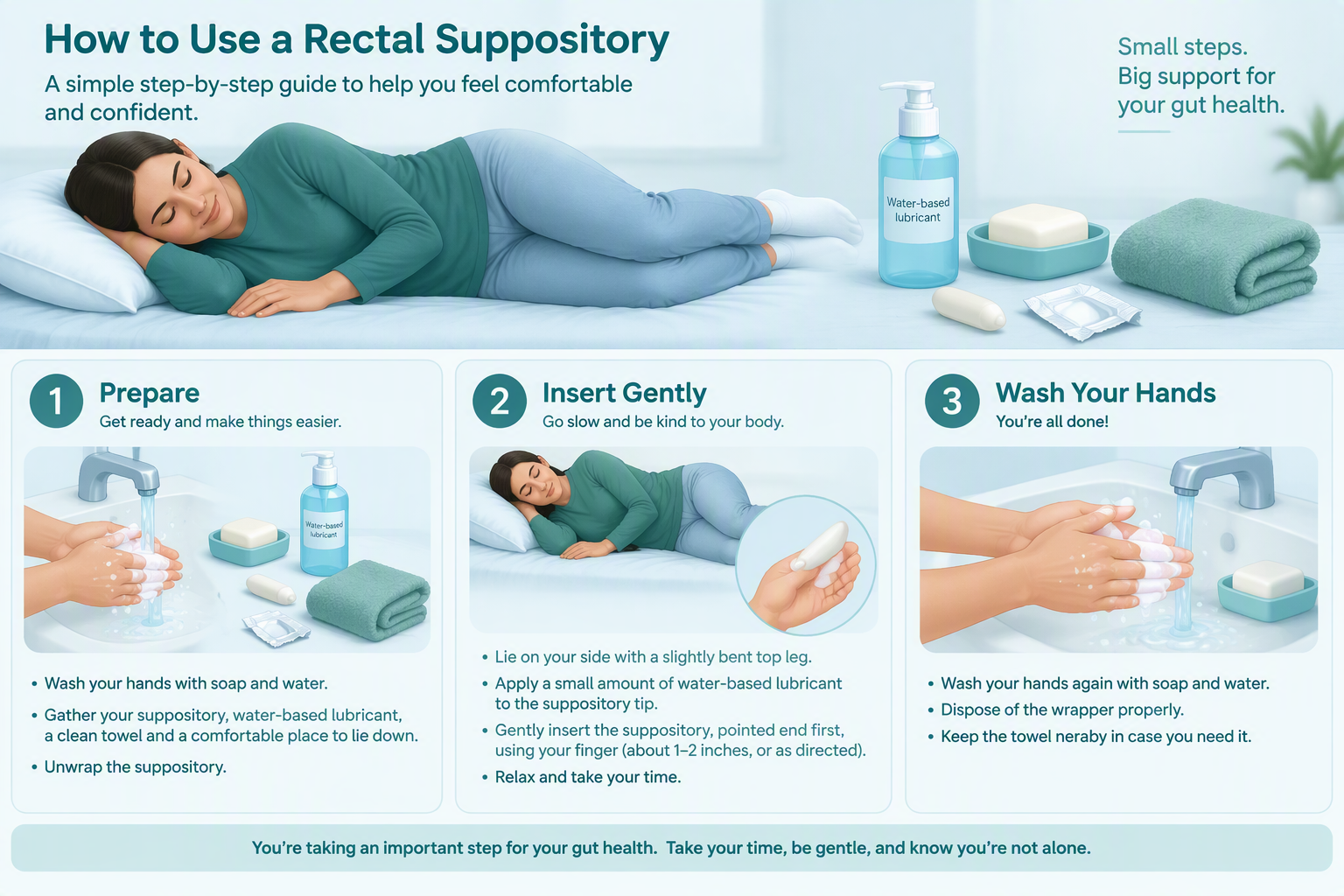
Once you have chosen a rectal option, a rectal suppository should go gently past the sphincter, the muscle ring just inside the anus, so it stays in place to dissolve. Knowing how to insert a suppository can make this uncomfortable task feel more routine, whether you are using it yourself or helping a child or dependent adult.
A careful method for rectal use includes these steps:
- Prepare the product: Check the package label, use a private bathroom, and try to have a bowel movement first. Wash your hands with soap and water. Unwrap the suppository only when ready because body heat can soften it. Follow the label directions if it becomes too soft.
- Choose a comfortable position: Lie on your left side with your right knee bent toward your chest. Another position is fine if it provides easy access without straining. For a child or dependent adult, gently position them on their side with the upper knee bent, while maintaining privacy and a calm pace.
- Insert gently: If the label permits, moisten the pointed tip with cold water or use a small amount of water-based lubricant. Separate the buttocks and insert the pointed end first. A rectal suppository is for rectal use only, not for swallowing.
- Place it past the sphincter: Adults generally insert the suppository about 1 inch, or 2.5 centimeters, beyond the sphincter. This helps prevent suppository leakage. Do not force insertion if you feel resistance, sharp pain, or significant discomfort.
- Wait and wash up: Hold the buttocks together briefly, then remain still for about 15 minutes when possible. Wash your hands afterward. Mild urgency or cramping can occur, but do not use another dose just because it has not worked immediately.
How to use a suppository also means knowing when to stop. Significant pain, bleeding, or an inability to tolerate insertion calls for medical guidance rather than repeated attempts.
How Long Should You Wait for Relief?
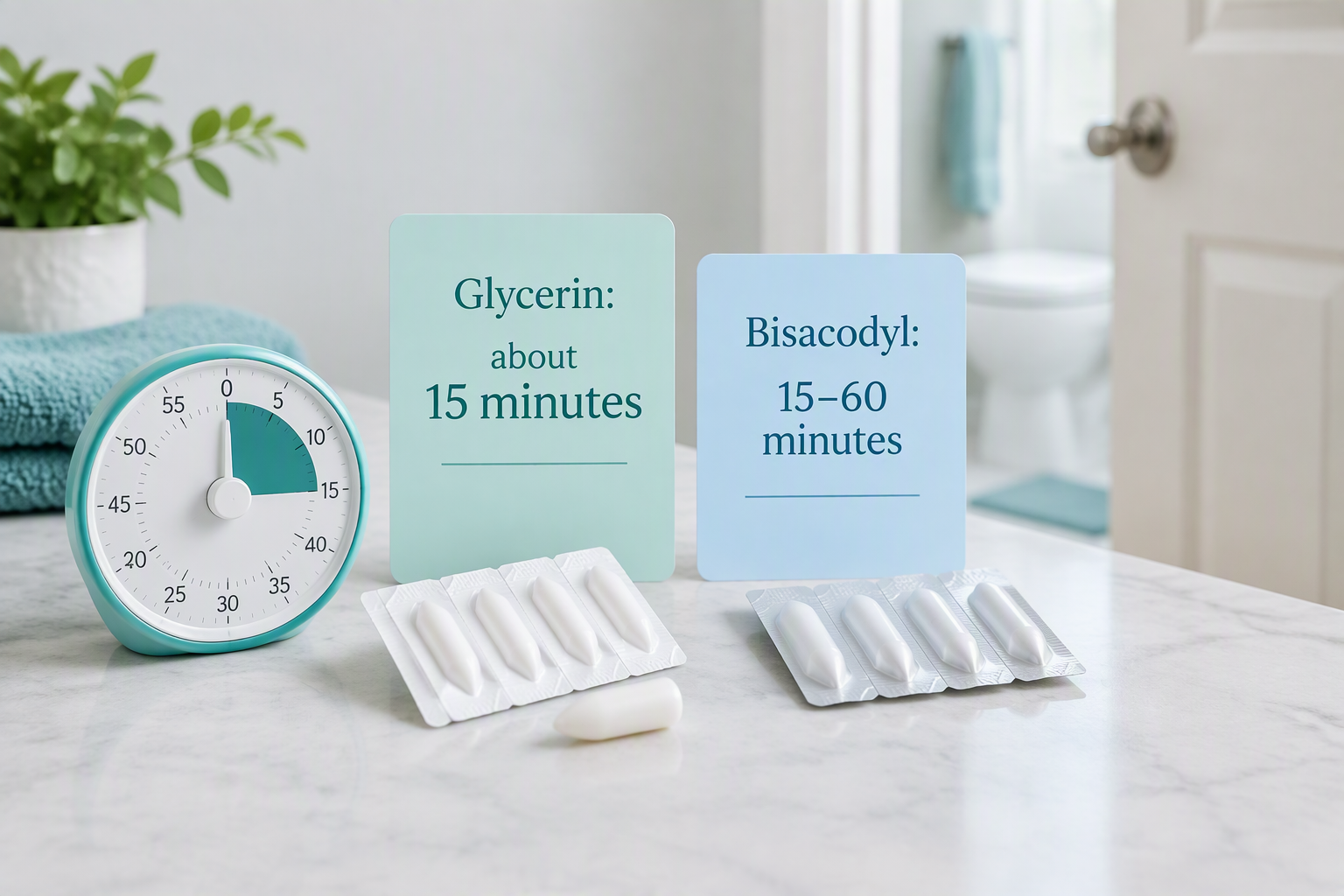
After proper insertion, glycerin suppositories often bring constipation relief sooner than bisacodyl suppositories, but neither works instantly. Stool hardness, how much stool is in the rectum, and your body’s response can all affect the timing.
Typical timing differs by product:
- Glycerin suppositories: Often produce a bowel movement in about 15 minutes.
- Bisacodyl suppositories: Generally work within 15 to 60 minutes.
- Bisacodyl enemas: May work within 5 to 20 minutes and are not the same as suppositories.
After insertion, remain still for several minutes to help the suppository stay in place. When the urge begins, stay close to a toilet and let the bowel movement happen without straining or trying to force it. Do not remove the suppository early just because the urge is not immediate.
The time a suppository takes to work is not a reason to repeat the dose right away. Do not insert a second glycerin suppository or use more bisacodyl before allowing the full expected window. For glycerin, contact a healthcare professional if relief remains incomplete. Seek guidance before repeating bisacodyl after its full waiting period, since ongoing symptoms may need a different approach.
How Often Can You Use a Suppository?
Because waiting for relief does not justify another dose, use glycerin or bisacodyl suppositories only as the product label directs, not as an everyday solution for constipation. With bisacodyl, follow the package directions and do not use more than one suppository in 24 hours unless a clinician tells you otherwise. An extra dose rarely improves relief and can increase cramping and diarrhea.
Bisacodyl is intended for short-term laxative use. Do not use it for longer than one week without speaking with a clinician. The NHS cautions that prolonged laxative use can interfere with normal bowel function (source). Constipation that returns quickly, continues despite short-term treatment, or marks a new change in bowel habits needs assessment rather than repeated self-treatment.
A few limits reduce avoidable problems:
- Avoid mixing laxatives: Avoid combining laxatives unless a clinician tells you to.
- Follow fluid directions: Drinking extra fluids does not make it appropriate to exceed label directions.
- Use suppositories rectally: Follow age-specific directions for children and older adults.
Using more than one laxative on the same day can increase the risk of diarrhea, cramps, fluid loss, and dehydration.
Enemas versus suppositories differ in how they work and how much of the lower bowel they reach. Persistent symptoms may signal chronic constipation or another cause that needs a more tailored plan.
When Should You Choose an Enema or Clinician?

When suppository use remains insufficient, an enema for constipation may offer short-term, label-directed relief when hard, dry stool feels lodged low in the rectum and repeated urges produce only small amounts. This pattern can occur with stools too hard or large to pass. However, substantial discomfort, suspected fecal impaction, or an inability to pass stool or gas calls for prompt clinical advice rather than repeated rectal treatments.
Do not use another suppository, rectal laxative, or enema if you have:
- Severe or worsening abdominal pain
- Marked bloating
- Nausea or vomiting
- An inability to pass stool or gas
Most constipation is not an emergency, but this group of symptoms can signal a problem beyond routine constipation and needs timely assessment. The National Institute of Diabetes and Digestive and Kidney Diseases advises medical evaluation when constipation occurs with persistent pain, vomiting, or blood in the stool.
Rectal bleeding after a bisacodyl suppository means you should stop using it and contact a doctor immediately. With rectal pain, anal fissures, or hemorrhoids, extra care is needed, since insertion can irritate tender tissue. Seek medical guidance before using a rectal product if you have fissures or hemorrhoids, and do not assume bleeding comes from hemorrhoids when it is unexplained, recurrent, or heavy.
Chronic constipation deserves evaluation when a change in bowel habits lasts more than two weeks, constipation returns or worsens, or laxative use continues beyond one week. An enema may clear stool from the rectum in selected situations, but it cannot identify contributing medicines, diet patterns, or health conditions. A clinician can help distinguish a short-term episode from a pattern that needs a different plan.
Short-term constipation treatment is the right frame for any suppository.
Suppositories for Constipation FAQs
These FAQs cover common questions about using suppositories for constipation, including practical concerns about choosing an option and recognizing when symptoms need more attention.
1. Will a Suppository Break Up Hard Stool?
No. A glycerin suppository does not physically break up hard stool. It draws water into the rectum, lubricates the area, and stimulates the urge for a bowel movement, which may help dry stool low in the rectum pass more comfortably. Bisacodyl does not soften stool either, instead stimulating bowel contractions to move stool out. If stool feels firmly stuck, you have severe rectal pain or abdominal pain, or there is no relief after directed use, seek medical advice rather than repeat doses.
A laxative suppository, whether glycerin or bisacodyl rectal, works on stool already in the rectum, not higher up.
2. Can Children Use Constipation Suppositories?
Yes, with caregiver supervision and the product label or a clinician’s guidance. For children’s constipation, suppository dosage should match the child’s age and product strength. Glycerin suppositories come in pediatric and adult strengths, so never substitute an adult product or give one by mouth. Lay your child on their side, insert it gently to the recommended depth, then keep them on their side for about 15 minutes. Do not repeat a dose before the label or clinician allows.
Glycerin suppository dosage for children follows the package by age. Glycerol suppositories are the same product under another name.
3. Are Suppositories Safe During Pregnancy?
Pregnancy does not make every suppository appropriate for constipation during pregnancy. Before using glycerin or bisacodyl, ask your obstetric clinician or pharmacist which option, if any, suits your symptoms, medical history, and other medicines. Follow the selected product’s package directions for dose and frequency. If constipation continues, returns often, or fails to improve as expected, contact your prenatal care team instead of continuing rectal treatment on your own.
4. Can Suppositories Cause Cramping?
Brief cramping or stomach discomfort can occur as a glycerin or bisacodyl suppository stimulates a bowel movement. Suppository side effects can also include short-lived burning, anal irritation, or rectal discomfort after insertion. These symptoms often ease on their own, but do not take another dose if they become severe. Stop using the suppository and seek medical help promptly if you feel faint or notice rectal bleeding (source).
Follow the suppository instructions on the label for timing and position, which keeps cramping mild.