


Thinking about an enema because constipation feels stuck and nothing is moving? An enema can provide occasional short-term relief, but it is usually not the first choice and should not become a regular bowel routine. It places fluid in the rectum to soften or lubricate stool and prompt a bowel movement.
Fluids, gradual fiber changes, gentle movement, and an appropriate oral option often come first, especially when IBS-C makes sudden fiber increases worsen gas or bloating. Sodium phosphate enemas need extra caution with kidney disease, heart problems, dehydration, or fluid and electrolyte concerns. Prepared products differ in timing, dose, and how long to retain them, so one product's directions don't apply to another.
Hard stool that won't pass, watery leakage around a blockage, vomiting, increasing abdominal swelling, or an inability to pass gas can point to fecal impaction or obstruction rather than routine constipation. Severe pain, rectal bleeding, fainting, or marked dizziness after use warrants prompt care, not another dose.
Enemas for Constipation Key Takeaways
- Enemas can offer occasional short-term relief but are not a first-line or daily treatment.
- Start with fluids, gradual fiber, movement, and appropriate oral treatments when no warning signs are present.
- Use only prepared, label-directed products, never tap water, soap-suds, coffee, oils, or homemade mixtures.
- Sodium phosphate enemas require caution with kidney disease, heart problems, dehydration, or electrolyte concerns.
- Insert gently, follow label retention times, and never force the nozzle or repeat a dose.
- Most constipation enemas are held about one to five minutes, unless the product label says otherwise.
- Seek prompt care for severe pain, bleeding, vomiting, swelling, dizziness, or inability to pass stool or gas.
Should You Try an Enema First?
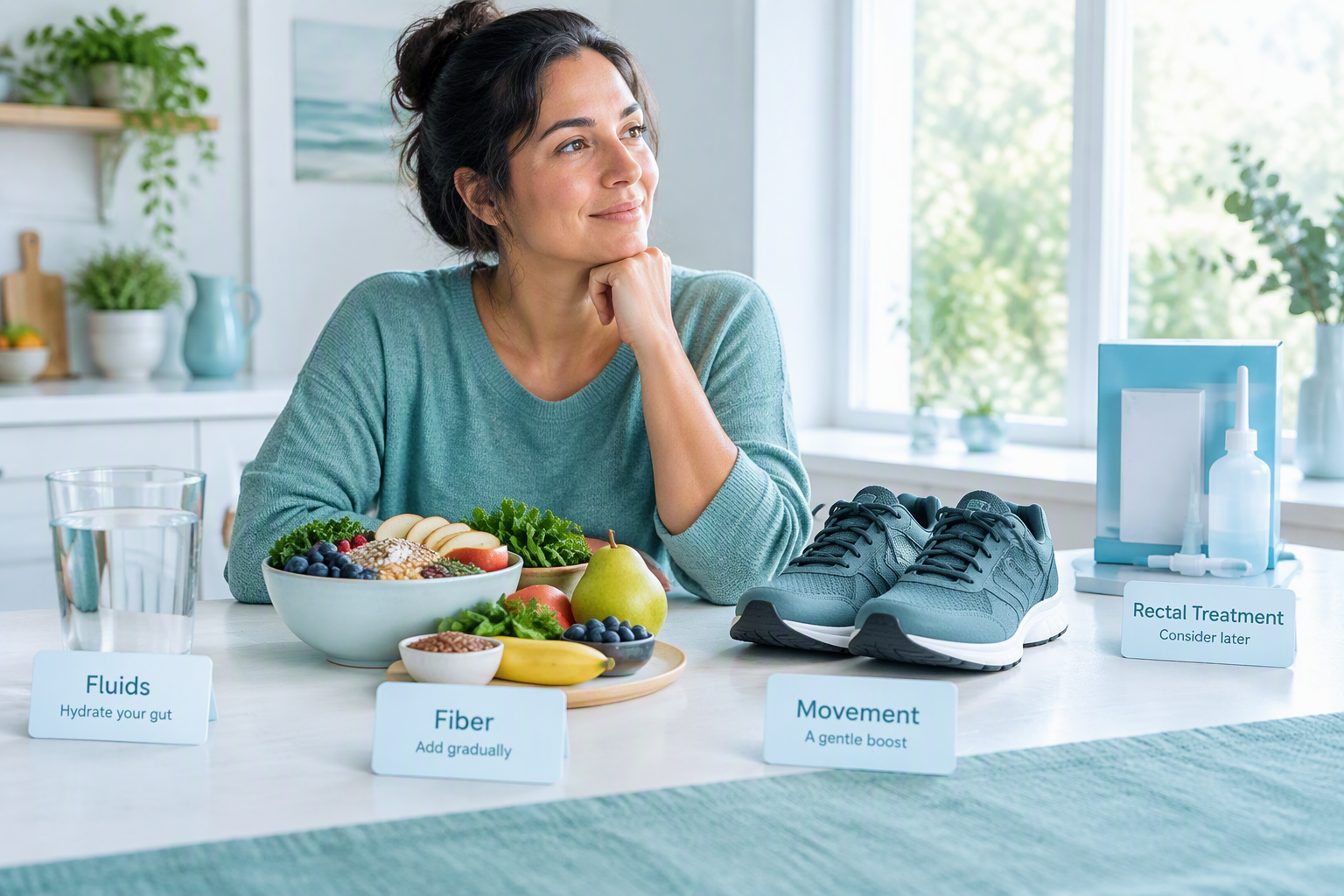
An enema is usually not the first choice for routine constipation relief. How enemas work is simple: fluid placed in the rectum softens or lubricates stool and can trigger a bowel movement. It may help in the short term, but it does not address low fluid intake, food changes, limited movement, or medicines that slow the bowel.
For mild constipation without warning signs, start with simpler measures:
- Drink adequate fluids and include gentle movement, such as walking, if you can.
- Add fiber-containing foods or adjust your fiber intake gradually if tolerated. A sudden increase can worsen gas and bloating with irritable bowel syndrome with constipation (IBS-C), especially without enough fluids.
- If these changes have not helped, consider an oral stool softener, osmotic laxative, or an option suggested by a pharmacist or clinician before using rectal treatment. Oral options are worth weighing against your symptoms, medicines, and health history first.
An enema for constipation may be a short-term, last-resort option when these steps and suitable oral treatments have not worked and no warning signs are present. Relief may come within minutes for some ready-to-use enemas, while other products can take longer, so follow the label for the product you choose (source). Repeated enemas are not a long-term bowel routine, and solution choice and technique affect safety.
Very hard stool that will not pass may signal fecal impaction rather than routine constipation. Prompt clinical assessment is important when you notice:
- Rectal blockage: A hard stool or blocked feeling in the rectum.
- Unsuccessful straining: Repeated effort without passing stool.
- Leakage around stool: Liquid or watery stool escaping around a blockage.
- More serious symptoms: Worsening abdominal pain, vomiting, marked swelling, or inability to pass gas.
Constipation, from causes to treatment can help you recognize when constipation needs more than quick rectal relief, and the main types of laxatives shows what to try before an enema.
Choose an Enema Solution Safely
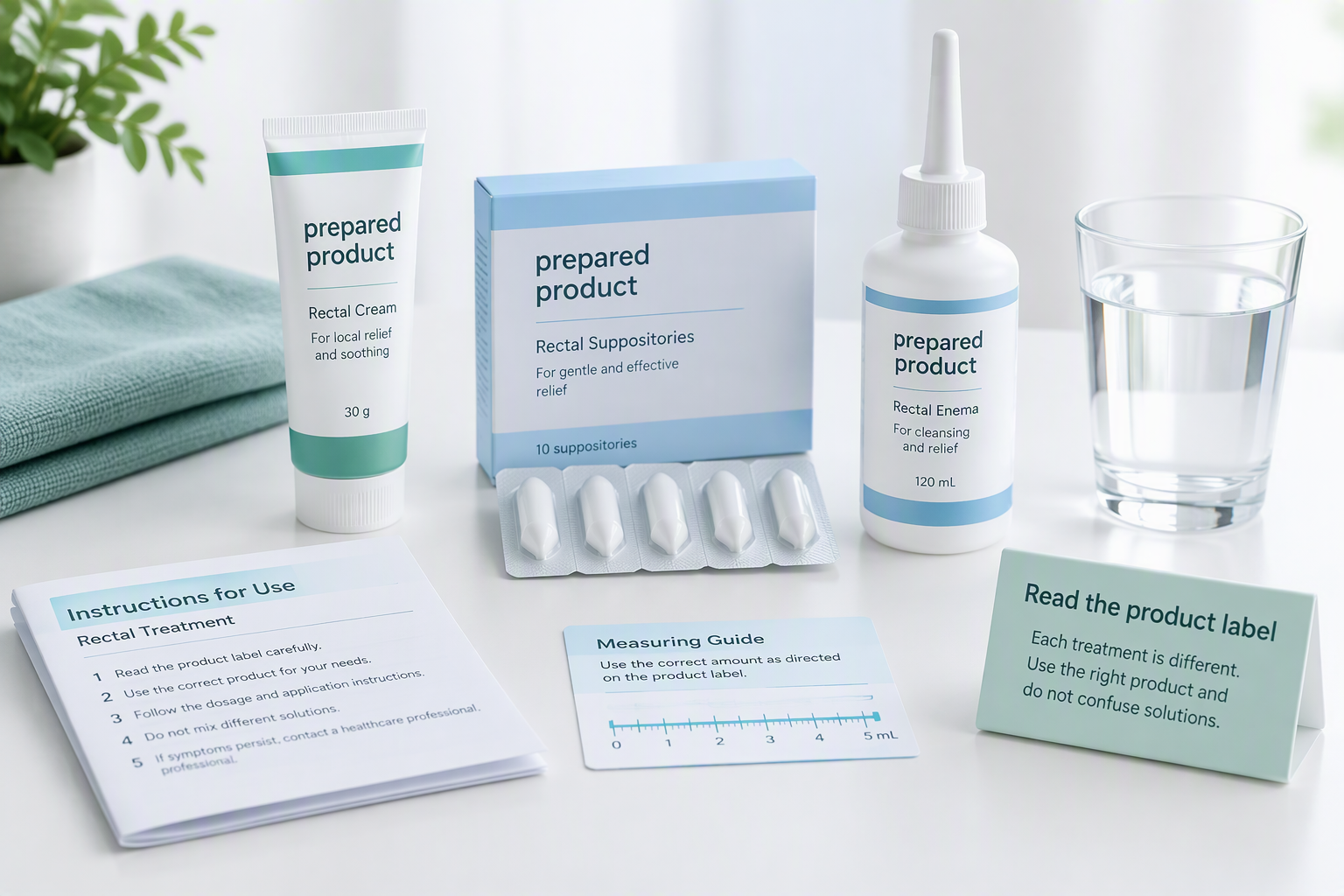
How enemas work depends on the solution: some add water, some stimulate bowel contractions, and others lubricate hard stool when short-term rectal relief is appropriate after simpler measures have failed. Choose commercially prepared enema solutions that match your symptoms, and follow the package directions exactly. How suppositories work can help clarify why rectal medicines have different uses and instructions.
Solution | Main action and intended use | Timing and key cautions |
|---|---|---|
Glycerin | Draws water into stool and may lubricate it, helping it pass more easily. | Often acts relatively quickly, but follow that product’s retention and timing directions. |
Saline enema | Adds fluid to soften stool in the rectum. | Prepackaged saline products may also act quickly, though their expected timing and retention instructions can differ from glycerin products. |
Sodium phosphate enema | Pulls water into the bowel through an osmotic effect for short-term constipation relief. | Check the label for timing, age limits, dose, and maximum use. Do not self-select it if you have kidney disease, heart problems, dehydration, or fluid and electrolyte-balance concerns. |
Bisacodyl | Stimulates intestinal contractions rather than primarily softening stool. | Check the label for timing, age limits, dose, and maximum use. Avoid use with severe abdominal pain, nausea or vomiting, suspected blockage, or unexplained bowel symptoms. |
Mineral oil enema | Lubricates hard, dry stool to ease passage. | Its onset differs from glycerin, saline, sodium phosphate, and bisacodyl products. Seek clinician guidance if you have swallowing or aspiration risk, significant bowel disease, or suspected obstruction. |
Enema safety starts with the specific product label, not assumptions based on another enema you have used, and rectal products can still have whole-body effects, especially when they change fluid or electrolyte balance.
Do not improvise with tap water, soap-suds, oils, or homemade mixtures. These can irritate the rectum or upset fluid and electrolyte balance.
If relief does not occur within the label’s expected time, constipation keeps returning, or the appropriate product is unclear, do not repeat the enema. Contact a healthcare professional to assess causes such as hard stool, medication effects, dehydration, or blockage risk.
For a home kit, a single Fleet saline enema or a Fleet mineral oil enema covers the two common needs: saline for a quick result and mineral oil for hard, dry stool.
Avoid Tap-Water and Soap-Suds Enemas
Improvised enemas are not appropriate for constipation or a so-called digestive reset. Do not improvise with tap water, soap-suds, oils, or homemade mixtures unless a clinician gives specific instructions (source). "Natural" does not make a substance safe or effective for rectal use, and these approaches do not treat disease or improve immunity.
Commercially prepared enemas labeled for constipation are different from household mixtures, but soap and other additives can cause burning, pain, inflammation, and rectal tissue injury. Hot coffee can burn the rectum, while nonsterile liquids or poorly cleaned equipment can introduce bacteria, especially when tissue is already irritated.
Large or repeated amounts of plain tap water can also cause harm. Water absorbed through the rectum may disrupt fluid and mineral levels, contributing to dehydration or an electrolyte imbalance. Forceful insertion, a damaged tip, or pushing through resistance can injure the rectum or colon and, rarely, cause a perforation that needs urgent treatment.
Stop immediately if you feel discomfort. Prompt medical care is needed for:
- Severe or worsening belly or rectal pain
- Rectal bleeding
- Fever, dizziness, or vomiting
- Inability to pass stool or gas
If an enema is appropriate, use only a prepared product labeled for constipation and follow its directions exactly. Do not change the solution or add soap, coffee, oils, supplements, or other ingredients.
How Do You Give an Enema?
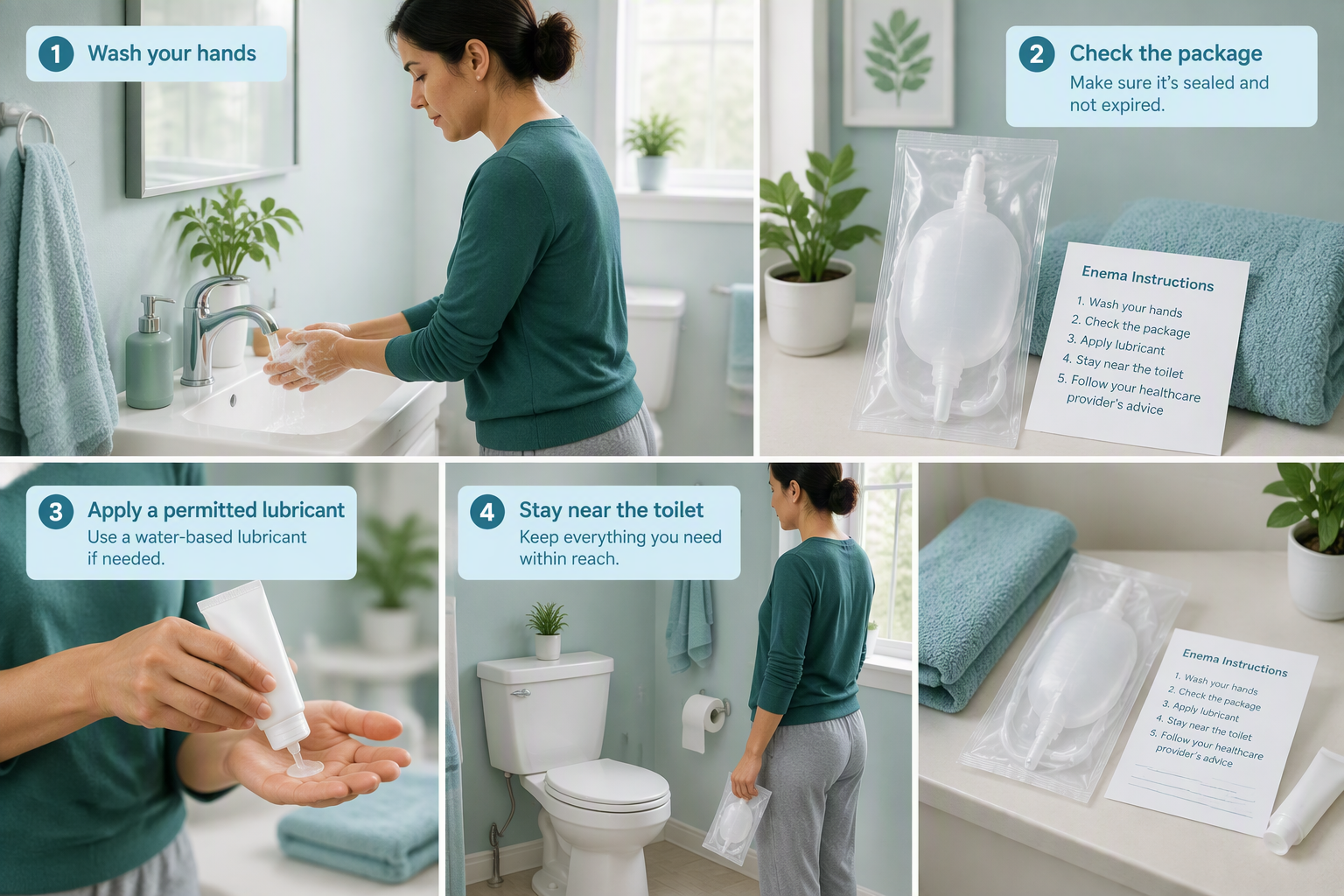
After choosing a prepared solution, an enema for adults should be a ready-to-use, single-use product used exactly as labeled. This enema procedure belongs in a private space near a toilet, with enough time to move slowly. The label, rather than a fixed timeline, determines how long an enema takes. Cleveland Clinic also stresses following product directions to help prevent injury.
These steps support enema safety when using an enema at home:
- Prepare the product and area: Read the instructions before opening the package. Check the expiration date, intact seal, protective cap, and nozzle. Set out a clean towel, toilet paper, and any label-approved lubricant. Use only the stated solution and amount. Do not substitute homemade, tap-water, or soap-suds mixtures.
- Wash your hands and protect privacy: Wash with soap and water before handling the product, then loosen restrictive clothing. If you are helping another adult, keep them covered as much as possible and avoid touching the prepared nozzle.
- Get into position: Lie on your left side with your right knee drawn toward your chest. Remove the cap and apply the supplied lubricant. Add water-based lubricant only if the label permits it. Slow breathing can relax the muscles around the rectum.
- Insert and administer gently: Ease the nozzle in only as far as the instructions specify. Do not force it, use catheter measurements, or insert it farther to make it work. Stop, gently remove the nozzle, and seek medical care for sharp pain, substantial resistance, or bleeding. Mild fullness or cramping can happen, but severe or worsening pain is not expected.
- Use the toilet and clean up: Give the solution and retain it only for the label-directed time. Use the toilet when the urge occurs, discard the single-use product, and wash your hands. Do not repeat a dose or hold the liquid longer for a stronger effect.
Knowing how to use an enema includes knowing when not to repeat it. Contact a clinician if constipation persists, worsens, or does not improve after use.
How Long Should You Hold It?
After administering the product gently, most constipation enemas are held for about one to five minutes, not as long as you can tolerate. The aim is to prompt a bowel movement, so go to the toilet when cramping, pressure, or a strong urge starts. Product directions may differ, so follow the package label.
Stay close to a toilet after use. Many people have a bowel movement within about 15 minutes, though an enema can take anywhere from a few minutes to one hour to bring relief. Let the bowel move naturally, without straining or trying to prolong retention.
Timing depends on the solution, formulation, and purpose. Directions for one type do not automatically apply to another:
- Sodium phosphate enemas: Follow the stated directions and safety limits exactly.
- Mineral oil enemas: These may soften stool rather than stimulate the bowel in the same way.
- Tap-water and soap-suds enemas: Avoid homemade mixtures unless a clinician has given you specific guidance, since the amount and concentration affect safety.
Pain or worsening cramps mean it is time to stop holding the enema and use the toilet.
Limit How Often You Use Enemas
Regardless of how long you hold it, an enema is for occasional, short-term constipation relief, not daily use or an ongoing routine. Follow the product label exactly for how often you can use an enema. Do not repeat a dose because the first attempt did not produce a bowel movement. Another enema can irritate or injure the rectum without clearing stool that is dry, hard, or impacted.
Frequent enema use can delay treatment of chronic constipation. Enema risks are higher if you are ill, dehydrated, or using a sodium phosphate enema. Possible problems include:
- Pain, burning, or rectal irritation
- Injury to rectal or colon tissue, including perforation
- Infection
- Dehydration
- Fluid and electrolyte imbalances
If an enema does not bring relief, pause rather than trying again. Constipation that returns often can be related to medication effects, changes in diet or fluid intake, pelvic-floor muscle problems, or fecal impaction.
Contact a clinician if you need enemas regularly, constipation keeps returning, or stool remains difficult to pass after an enema. An evaluation can identify the cause and support a safer long-term approach than repeated self-treatment. Recurring painful hard stools can increase the chance of impaction, when stool becomes difficult to move without clinical help.
Recognize Side Effects and Stop-Now Symptoms
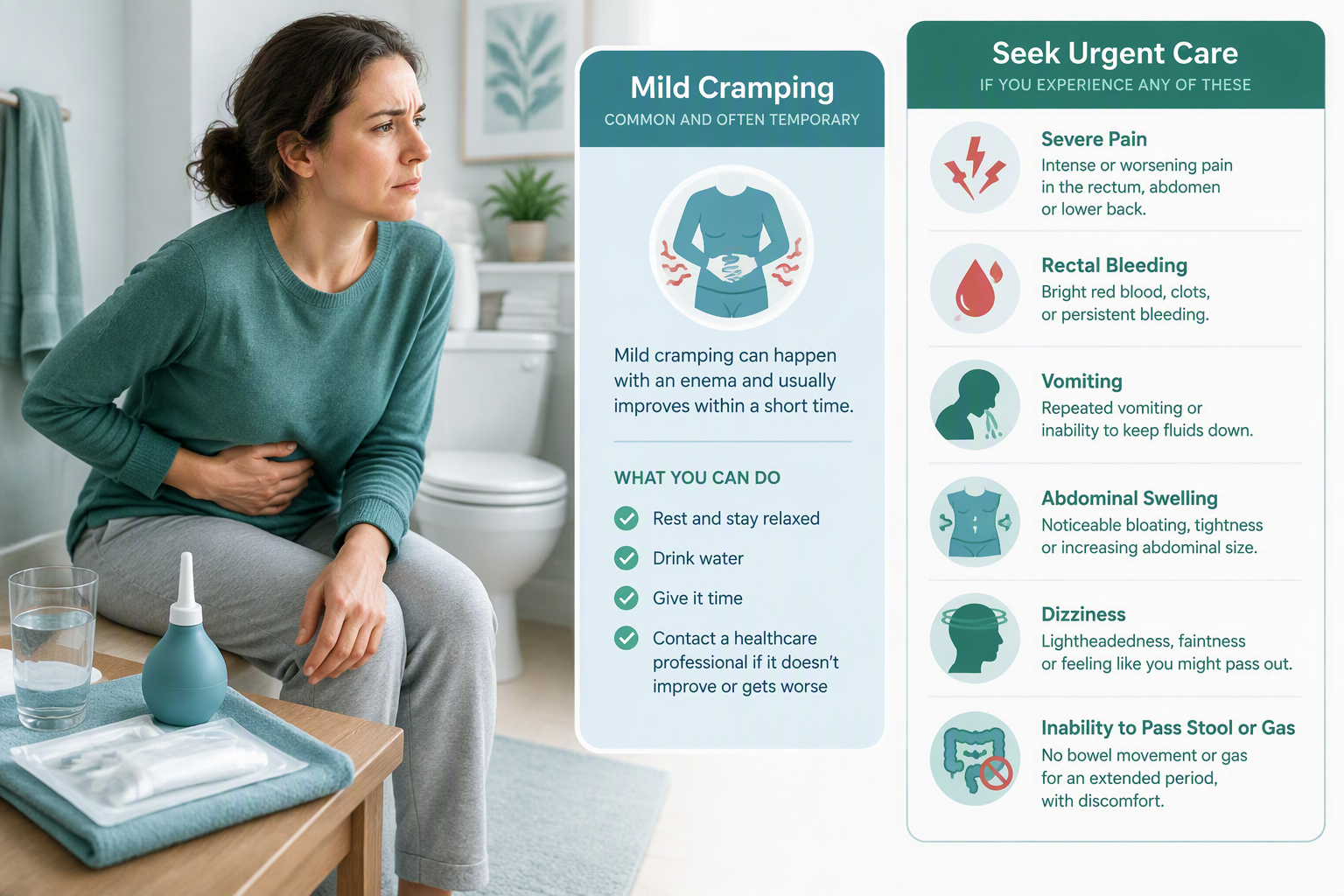
Mild cramping, bloating, rectal fullness, and a strong urge to have a bowel movement are common enema side effects. These sensations should ease after stool passes. Stop rather than pushing through discomfort if it becomes more than mild or does not settle after the enema is removed.
Certain symptoms can signal injury, blockage, dehydration, or an electrolyte imbalance and need prompt medical advice. This is especially important after a sodium phosphate enema, which can disrupt the body’s fluid and mineral balance. MedlinePlus notes that serious fluid or electrolyte problems may include vomiting, weakness, dizziness, fainting, and changes in urination (source).
Stop using the enema and seek care promptly if you notice any of the following:
- Severe or persistent pain: Sharp, deep, worsening abdominal pain or new severe rectal pain is not expected. Improper insertion or repeated use can injure rectal or colon tissue and, rarely, cause a perforation, infection, or worsening constipation.
- Bleeding: A tiny streak of blood may come from a known irritated hemorrhoid, but new bleeding, more than a small streak, or bleeding with pain needs assessment.
- Vomiting or increasing swelling: Persistent nausea or vomiting, a growing swollen abdomen, or being unable to pass stool or gas may indicate a blockage or fecal impaction. Do not repeat the enema or add another constipation treatment. Severe symptoms need urgent care.
- Signs of dehydration: Very dry mouth, intense thirst, little or dark urine, or lightheadedness when standing are warning signs, not evidence that the enema is working.
- Possible electrolyte imbalance: Marked dizziness, fainting, confusion, unusual weakness, or a racing heartbeat need urgent attention, particularly after a sodium phosphate enema.
A second attempt may delay the care the problem needs.
Know When Impaction Needs a Clinician
Fecal impaction is more than ordinary constipation. It occurs when hard, dry stool becomes lodged in the rectum, often after severe or prolonged constipation. You may feel a plug-like blockage, strain without relief, pass only small stool pieces, or be unable to pass stool at all. Repeating enemas is not the usual answer when these symptoms continue.
Overflow leakage can be misleading. Watery stool may seep around trapped stool and resemble diarrhea, but the blockage may still be present. More enemas can irritate the rectum and delay the care needed to clear the stool. The National Institute of Diabetes and Digestive and Kidney Diseases notes that constipation treatment depends on the cause and severity of symptoms (source).
A mineral oil enema may lubricate and soften very dry stool near the rectum, making it easier to pass in some cases. It may not clear a large or firmly lodged fecal impaction. An examination can confirm whether stool is impacted and determine whether another bowel treatment or careful removal is needed instead.
Stop home treatment and contact a clinician promptly if you notice:
- Worsening abdominal pain, cramping, or bloating
- Nausea, vomiting, or reduced appetite
- Trouble passing gas, stool, or both
- Rectal pain or bleeding
- Repeated enemas without meaningful relief
- Watery leakage with continued pressure or a blocked feeling
Persistent constipation with abdominal pain, bloating, or changes in bowel habits needs medical assessment, according to the NHS (source).
Clinician-directed care can prevent rectal irritation or injury and fluid or electrolyte problems from repeated enemas. When impaction is suspected, an assessment is safer than trying to force additional treatment at home.
Prevent Recurrent Constipation
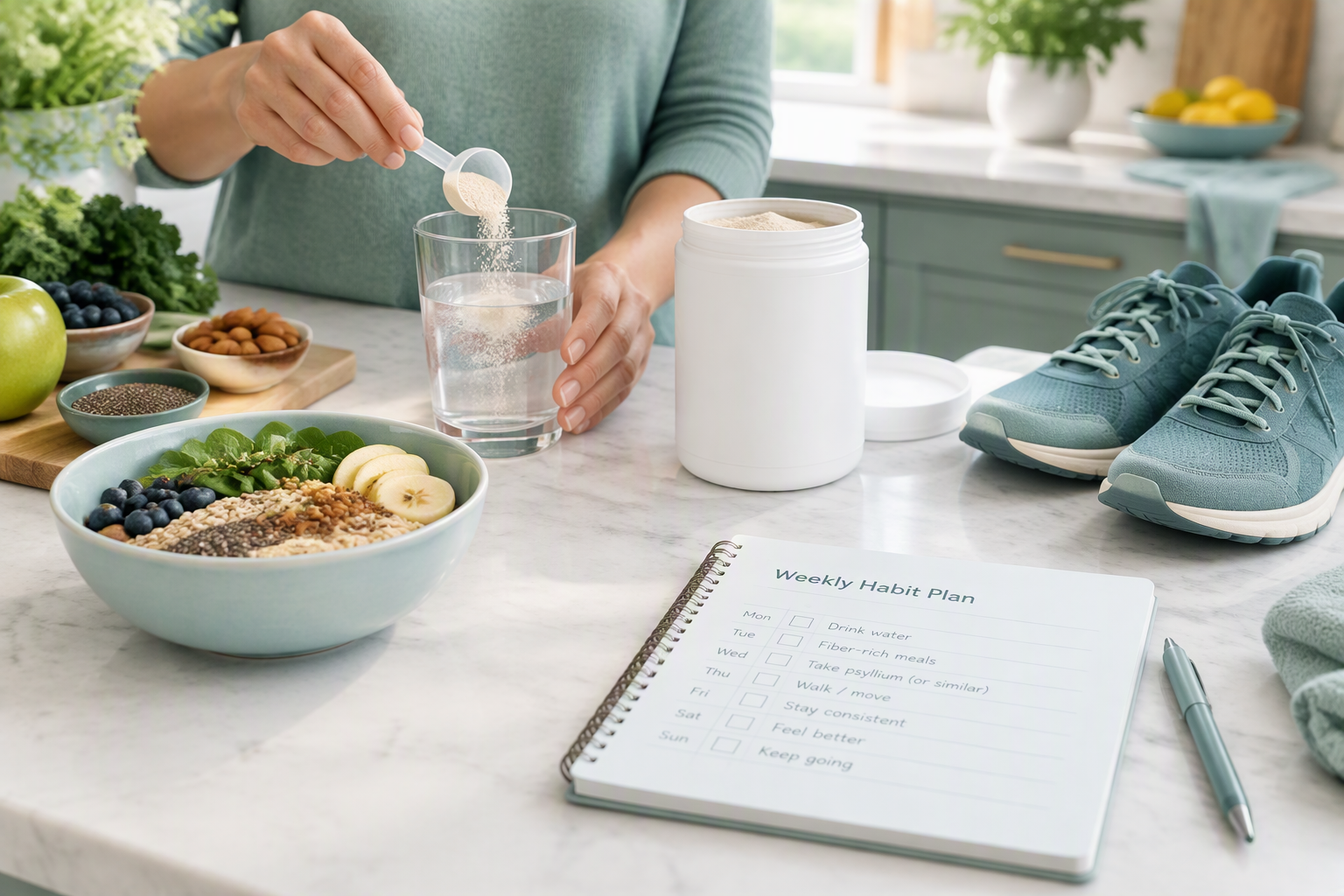
Prevent chronic constipation by building on your daily routine of regular fluids, fiber-containing meals, and movement, adding only one change at a time to see what helps. For adults, reserve an enema for occasional rectal relief while you build sustainable habits.
For IBS with constipation, unflavored psyllium can be a simple option: take a dose with at least 8 ounces of water, follow the product directions, and avoid taking it immediately before bed. If gas stays worse despite a slow increase, methylcellulose or partially hydrolyzed guar gum may be easier to tolerate. Use one fiber product at a time and confirm medicine timing with a pharmacist, often separating fiber and oral medicines by one to two hours.
Clinician review is important when constipation persists, returns despite self-care, or requires frequent laxatives or enemas, especially with ulcerative colitis or possible impaction. Use the urgent stop-now symptoms and impaction guidance rather than trying additional home remedies.
Enemas for Constipation FAQs
These FAQs address common concerns about enemas for constipation, from what to expect to signs that need medical care. The answers can help you make an informed choice with less uncertainty.
1. Is an Enema Better Than a Laxative?
An enema is not inherently better than a laxative because each works differently. Rectal fluid acts locally and may prompt a bowel movement when stool is sitting low in the rectum, while oral laxatives can soften stool and support more regular bowel habits. For occasional constipation, start with fluids, fiber, movement, and an oral stool softener. An enema may be an option if those measures have not helped. Repeated constipation, severe symptoms, or possible fecal impaction needs clinician guidance rather than stronger home treatment.
A normal saline enema, a glycerin enema, a bisacodyl enema, and a sorbitol enema are all short-acting rectal options, and none is meant for routine use. There is no safe saline enema recipe to improvise at home, so use a measured product.
2. Can Children Use Enemas for Constipation?
Do not give a child an adult enema or select an enema solution on your own. Constipation in children needs pediatric guidance, particularly when it continues or occurs with a diagnosed bowel or colorectal condition. A clinician can determine whether an enema is appropriate and tailor the solution, fluid amount, ingredients such as glycerin, castile soap, or phosphate, and body position to the child’s needs. Adult products and instructions are not interchangeable with pediatric care.
3. Can Pregnant People Use Enemas?
Pregnancy is not a time to start or repeatedly use enemas for constipation on your own. Speak with your obstetric clinician first, since the right approach depends on your stage of pregnancy, symptoms, medical history, and other medicines.
Severe or persistent constipation, worsening abdominal pain, rectal bleeding, vomiting, fever, dizziness, or inability to pass stool or gas needs prompt medical advice rather than another home enema. Incorrect use can cause dehydration, electrolyte imbalance, infection, or bowel injury, so escalating symptoms need assessment instead of repeated self-treatment.
4. Can Enemas Worsen Hemorrhoids?
An enema can worsen hemorrhoids when the nozzle irritates swollen rectal tissue or straining follows. Pain, minor tissue injury, or bleeding is more likely during a tender, inflamed flare, particularly with rough insertion. Avoid using an enema during a painful flare unless a clinician recommends it. Stop and contact a healthcare professional if you have significant rectal pain, new or heavy bleeding, or bleeding that continues after use instead of repeatedly treating constipation at home.