


A bowel movement that feels too large to pass can make you want to push harder, but hard, painful stools are safer to manage with a pause, gentle positioning, and the right short-term option. Home relief may be reasonable when you can drink fluids and still pass gas, without vomiting, major bleeding, or abdominal swelling.
Fecal impaction, a tightly packed mass of stool that cannot move normally, can feel similar at first but needs clinical assessment. A toilet footstool, relaxed breathing, and unhurried time after a meal can reduce straining, while fiber, osmotic laxatives, docusate, and rectal treatments each fit different situations and timelines.
Severe or worsening belly pain, repeated vomiting, a swollen abdomen, heavy bleeding, or an inability to pass gas can signal a blockage or serious impaction. Preventing another episode starts with softer stools, responding to urges, gradual fiber changes, enough fluids, and evaluation when constipation keeps returning.
Hard, Painful Stools Key Takeaways
- Seek emergency care for severe pain, vomiting, swelling, heavy bleeding, or inability to pass stool or gas.
- Avoid prolonged straining, breath-holding, and removing stool with a finger or object.
- Use a toilet footstool, lean forward, and take brief, gentle pushes only when the urge is present.
- Suspected fecal impaction may cause pressure, bloating, leakage, and stool that will not pass.
- Choose one label-directed constipation treatment rather than combining or repeatedly redosing laxatives.
- Protect fissures and hemorrhoids by keeping stools soft and using gentle cleanup after bowel movements.
- Prevent recurrence with gradual fiber, fluids, movement, prompt bathroom trips, and medical evaluation for persistent constipation.
Decide Whether You Need Urgent Care
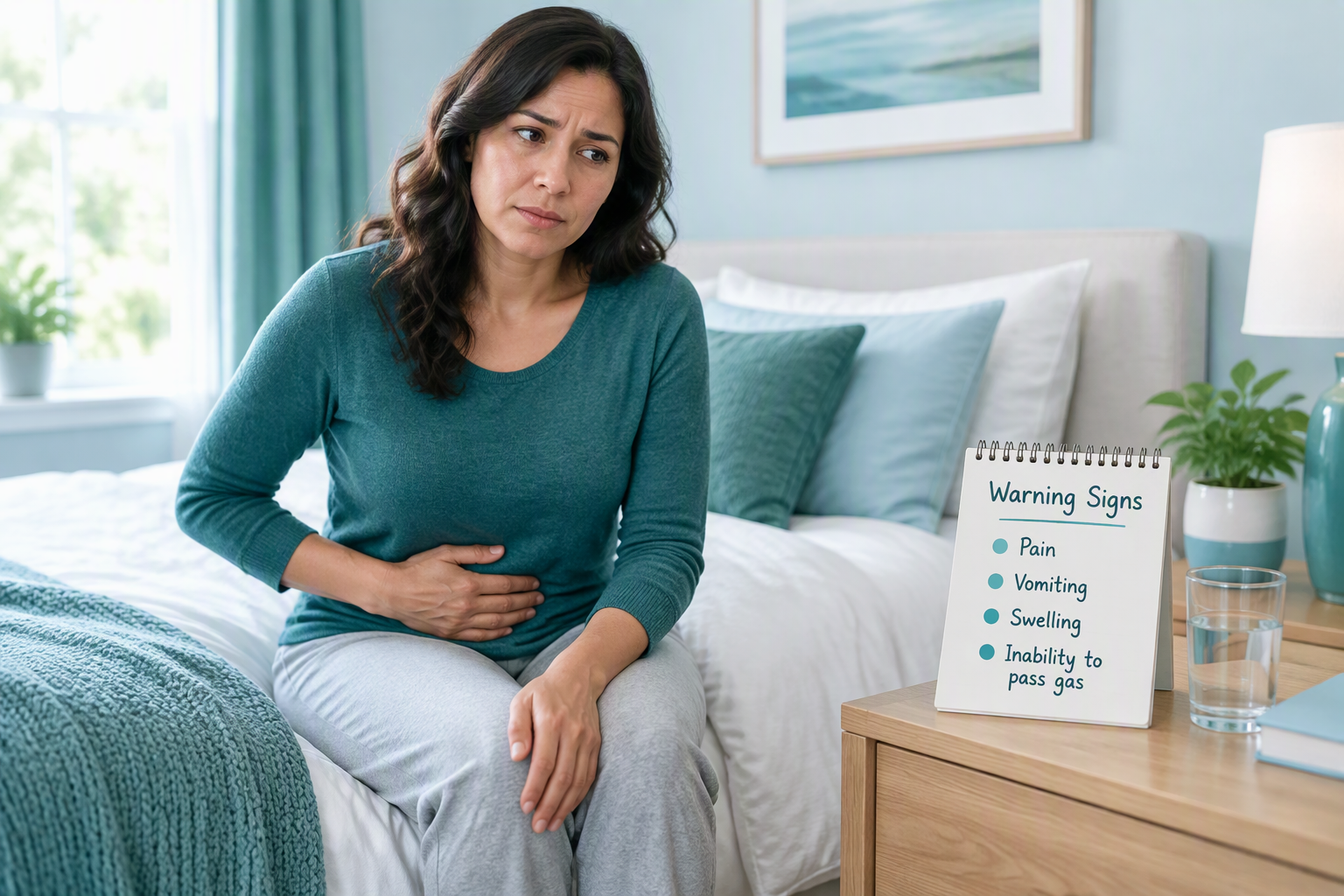
Home relief may be reasonable for hard, dry, lumpy, or unusually large stools if you otherwise feel well. Common constipation symptoms also include straining, pain during a bowel movement, and a sense that the rectum has not fully emptied. This lower-risk pattern applies only if you can drink fluids, are still passing gas, and do not have vomiting, major bleeding, or abdominal swelling. Why constipation happens can help you identify common causes behind these symptoms.
Seek emergency care now if a stool feels stuck and any of these signs are present:
- Severe or worsening belly pain
- Repeated vomiting
- A visibly swollen, firm, or painful abdomen
- Inability to pass stool or gas
- Heavy rectal bleeding
- Black, tar-like stools
- Dizziness, fainting, confusion, or marked weakness
These signs can indicate a bowel obstruction or severe fecal impaction, which means stool is tightly packed and cannot move normally. Do not strain harder, try to remove stool yourself, or keep adding laxatives when pain, pressure, or abdominal symptoms are increasing. The National Institute of Diabetes and Digestive and Kidney Diseases includes blood in the stool, ongoing pain, and vomiting among constipation symptoms that need prompt attention (source).
Same-day medical advice is appropriate when gentle home measures do not help the stool pass, pain prevents sitting or usual activities, or rectal bleeding is more than a small streak on toilet paper. Repeated self-treatment can delay care when symptoms are disrupting your day or changing.
Arrange a medical assessment for constipation lasting more than three weeks, unexplained weight loss, anemia, or any blood or black stool. Stop home care and seek prompt evaluation if mild hard stools shift to worsening pain, vomiting, swelling, or trouble passing gas.
Make a Painful Bowel Movement Easier Now
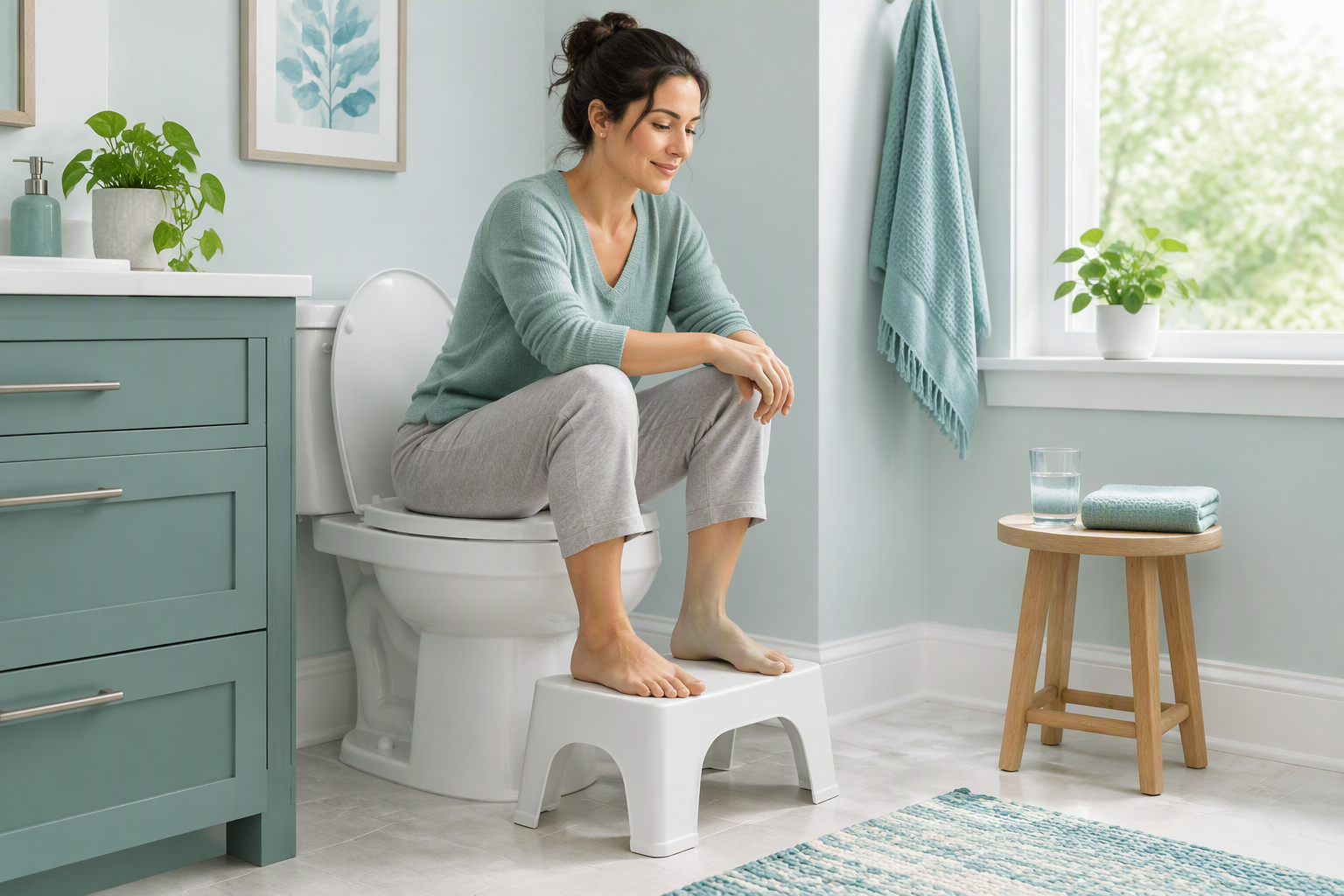
If none of those urgent signs are present, painful bowel movements can be easier when you slow down and help the pelvic muscles relax instead of bracing against the pain. If you have not had much to drink, sip water or another nonalcoholic fluid before trying. Fluids will not soften stool already in the rectum, but they support normal bowel function and may keep constipation from getting worse.
Use a private, comfortable bathroom when you feel a real urge to go. Waiting can leave hard stools that hurt to pass drier and more difficult to move. The bowel may be more active after a meal, so give yourself some unhurried time then. Do not stay seated and push if nothing is happening.
A gentler toilet routine can reduce the need to strain:
- Sit fully on the toilet with both feet on a stable toilet footstool. Keep your knees higher than your hips.
- Lean forward, with your forearms resting on your thighs. Loosen your jaw, shoulders, and back.
- Let your belly expand as you breathe in. As you breathe out, use only a brief, light push if needed. Avoid holding your breath or bearing down hard.
- Stop if stool is not moving, pain is getting worse, or you feel dizzy or faint. Get up, walk gently, drink fluids, and wait for the urge to return.
Difficulty passing stool can feel alarming, especially when it seems like poop is too big to come out. Repeated straining to have a bowel movement can irritate hemorrhoids or cause an anal fissure, a small tear in the skin around the anus. Giving your body a break may prevent one painful trip from becoming a longer problem.
Avoid Straining and Unsafe Stool Removal
To avoid turning a painful attempt into an injury, stop if straining to have a bowel movement becomes painful or unproductive. Holding your breath and pushing hard for a long time raises pressure in the rectum, which can worsen anal fissures or hemorrhoids and may also cause bleeding or leave you lightheaded. Pausing is better than turning a difficult bowel movement into an injury.
Do not try to remove stool with a finger or any object at home. Painful, swollen tissue can tear easily, and limited visibility raises the chance of bleeding, infection, or pushing stool farther in. If manual removal is needed, a healthcare professional can do it gradually and with appropriate positioning.
Use laxatives carefully, even when relief feels urgent. Different types work differently, and repeatedly redosing, combining products, or taking more because nothing happens quickly can disrupt your usual bowel pattern and delay needed care. Follow the package directions, and ask a pharmacist or clinician if the instructions or product choice are unclear.
Prompt medical care is safer when any of these signs are present:
- Stool feels firmly stuck and will not pass after gentle attempts.
- Pain or bleeding makes another attempt intolerable.
- You have bladder pressure or leakage, lower-back pain, a rapid heartbeat, or lightheadedness.
- Gentle measures have not helped and you suspect fecal impaction or a blockage.
Clinicians may use a suppository, enema, or controlled stool removal based on the cause.
Understand Why Stool Gets Hard and Large
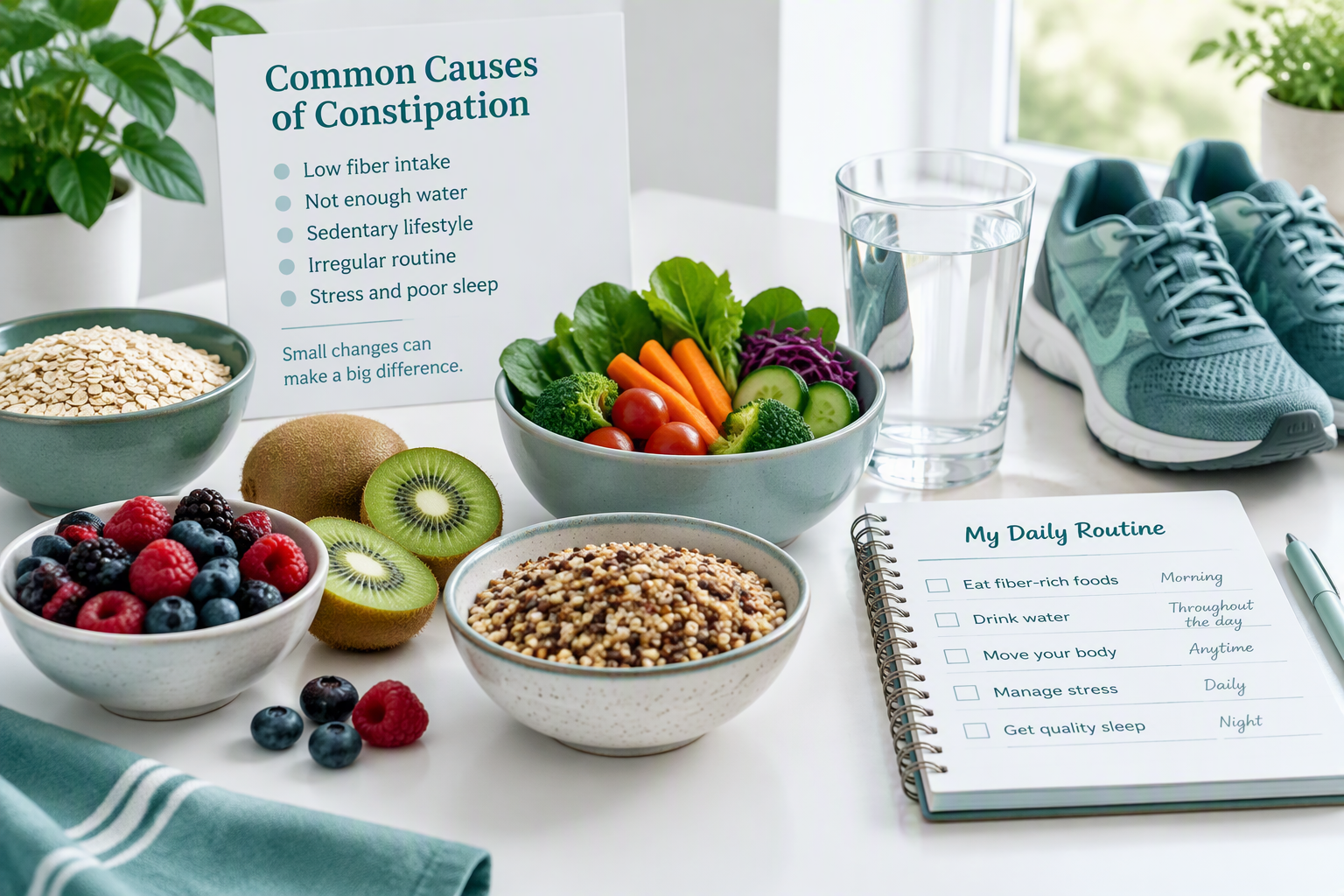
Hard stools usually form when waste moves slowly through the colon. During that extra time, the colon absorbs more water, leaving a hard dry stool that can be painful to pass. Stool that stays behind can also accumulate, making the bowel movement unusually large. These are common constipation causes, although a stool that will not pass needs prompt attention.
Several everyday hard stool causes often pile up during busy days. This is common and does not mean you have done anything wrong:
- Low fiber or fluids: Too few fiber-rich foods or not enough to drink can leave stool drier and harder to move.
- Long periods of sitting: Less movement can slow the normal motion of the bowel.
- High-fat meals: These may slow digestion for some people.
- Irregular meals or activity: Changes in when you eat, sleep, or move can disrupt your usual bowel pattern.
National Institute of Diabetes and Digestive and Kidney Diseases information also lists routine changes, pregnancy, and certain medicines among common constipation contributors (source).
Delaying a bathroom trip can make the problem worse. Holding back an urge at work, during travel, or because a bathroom lacks privacy gives stool more time to lose water. Stress, anxiety, sudden diet changes, and a changed work or sleep schedule can have a similar effect.
Other contributors can include:
- Pregnancy: Hormonal shifts and pressure in the abdomen may slow bowel function.
- Medicines and supplements: Iron, opioid pain medicines, and some prescription or over-the-counter products can lead to hard stools. If symptoms began after a new product, ask the prescriber or pharmacist before changing it.
- Ongoing conditions: IBS with constipation (IBS-C), hypothyroidism, diabetes, Parkinson’s disease, and pelvic floor dysfunction can contribute to chronic constipation.
When hard or large stools keep returning, diet may be only part of the picture. Repeated episodes deserve medical evaluation, especially if changes to food, fluids, and daily routine have not improved the pattern.
Choose a Short-Term Stool-Softening Option
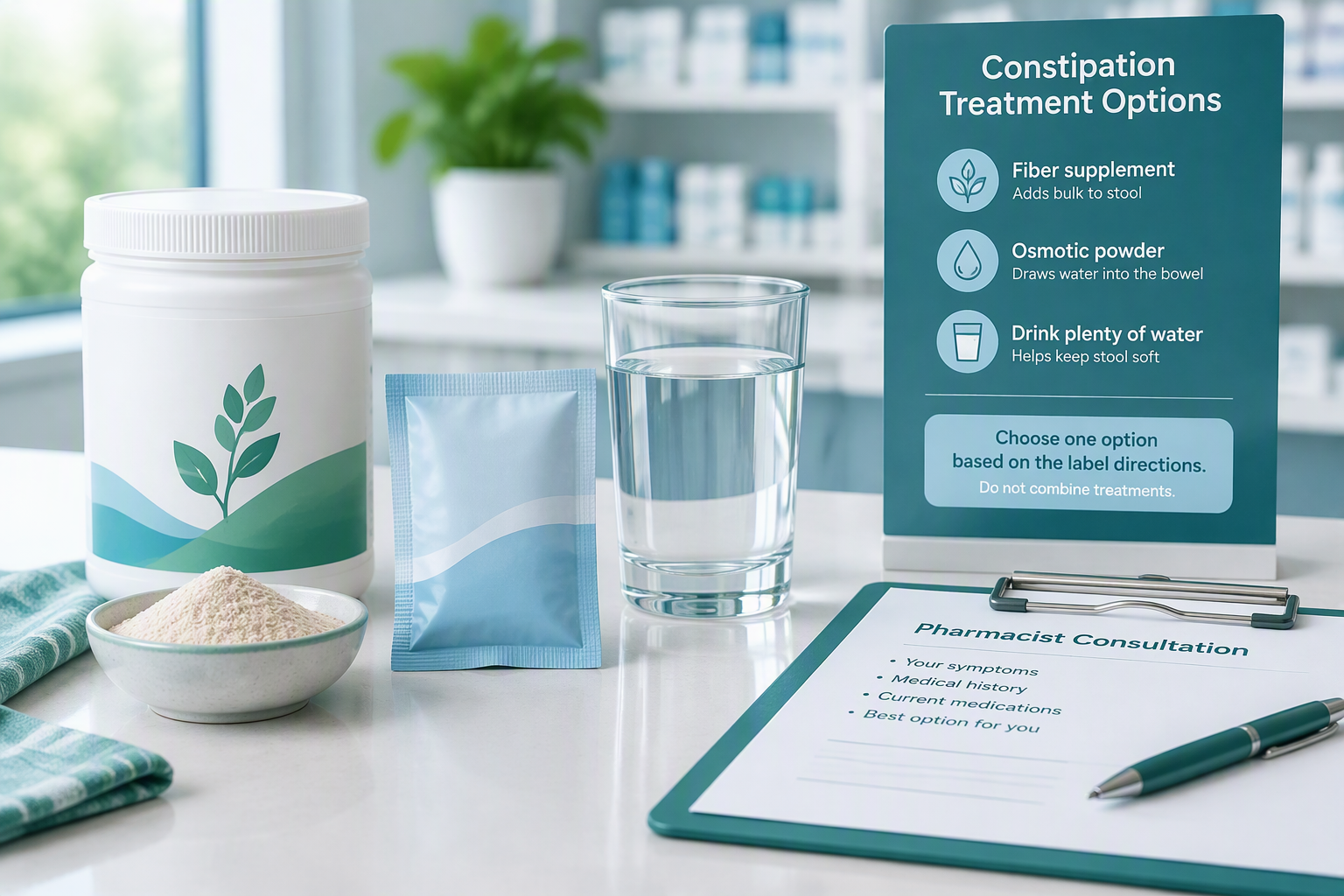
The best constipation treatment depends on whether you have dry stool that is hard to pass or a possible blockage. Oral laxatives may help if you can drink fluids and have no signs of obstruction or fecal impaction, a large mass of stool stuck in the rectum. Seek urgent care rather than continuing home treatment when obstruction warning signs are present. A suspected impaction may need rectal treatment or clinical care because an oral product may not reach stool at the outlet.
For recurring hard dry stool that is not urgently stuck, bulk-forming fiber can support a high-fiber diet. Psyllium may help within 24 hours, though it can take 2 to 3 days. Start with a small amount, increase gradually, and take each dose with at least 8 ounces, or 240 milliliters, of water. Too little fluid can worsen bloating and make stool harder to pass.
Drinking more water for constipation supports fiber’s effect, but it will not quickly soften stool already stuck at the rectum. Psyllium has strong support for IBS-C. If it continues to cause gas or bloating, methylcellulose or partially hydrolyzed guar gum (PHGG) may be easier to tolerate. Fiber can reduce absorption of thyroid medicine, iron, and some antidepressants, so separate doses by about 1 to 2 hours and confirm timing with a pharmacist.
Short-term options work on different timelines:
- Osmotic laxatives: Lactulose and macrogol draw water into the bowel and generally work within 1 to 3 days. They may help when stool stays hard despite fluids, but they are unlikely to quickly relieve painful stool at the outlet. Follow package directions and ask a pharmacist about kidney or heart conditions, fluid limits, or multiple medicines.
- Docusate: Docusate may be useful when avoiding extra straining matters, such as during a fissure or hemorrhoid flare. It usually takes 12 to 72 hours to work.
- Stimulant laxatives: Senna and bisacodyl often work within 6 to 12 hours, but cramps and urgent diarrhea can occur. Use these label-directed options only for short-term relief.
Which laxative fits which problem can help you choose one option that fits your symptoms instead of combining several products at once.
An osmotic powder such as MiraLAX is the gentlest way to soften stool over a day or two.
Use Rectal Treatments Safely for Stuck Stool
When oral options are unlikely to reach stool at the outlet, a suppository or enema may be considered only when hard stool feels very low in the rectum and you have no warning signs. A suppository works locally to prompt a bowel movement, while an enema adds fluid. A suppository for a stuck stool may fit this limited situation, but suspected fecal impaction needs assessment from a pharmacist or clinician. A rectal product does not replace that assessment.
Choose a product labeled for rectal use and follow the package directions for dose, insertion, waiting time, and frequency. Insert the suppository or applicator slowly and gently without forcing it, and stop if you feel sharp pain or notice bleeding. Do not combine products or repeat doses early to speed up constipation treatment.
Get prompt medical care before home treatment if you have any of these symptoms:
- Severe or worsening abdominal or rectal pain
- Rectal bleeding
- Vomiting or fever
- A swollen abdomen
- An inability to pass gas
- Stool that still feels stuck after treatment
Repeated rectal treatments can delay the care these symptoms require. Enemas for impaction may be part of clinician-guided care when stool is tightly packed.
Rectal products are short-term measures, not a regular bowel routine. If the label-directed treatment does not produce a bowel movement or the stool still feels lodged, contact a pharmacist or clinician rather than trying to remove it yourself.
Kidney or heart disease, bowel conditions, dehydration risk, and other ongoing health concerns can make an enema unsuitable. Its ingredients and fluid shifts may also interact poorly with other constipation medicines.
Recognize Fecal Impaction and Blockage Signs
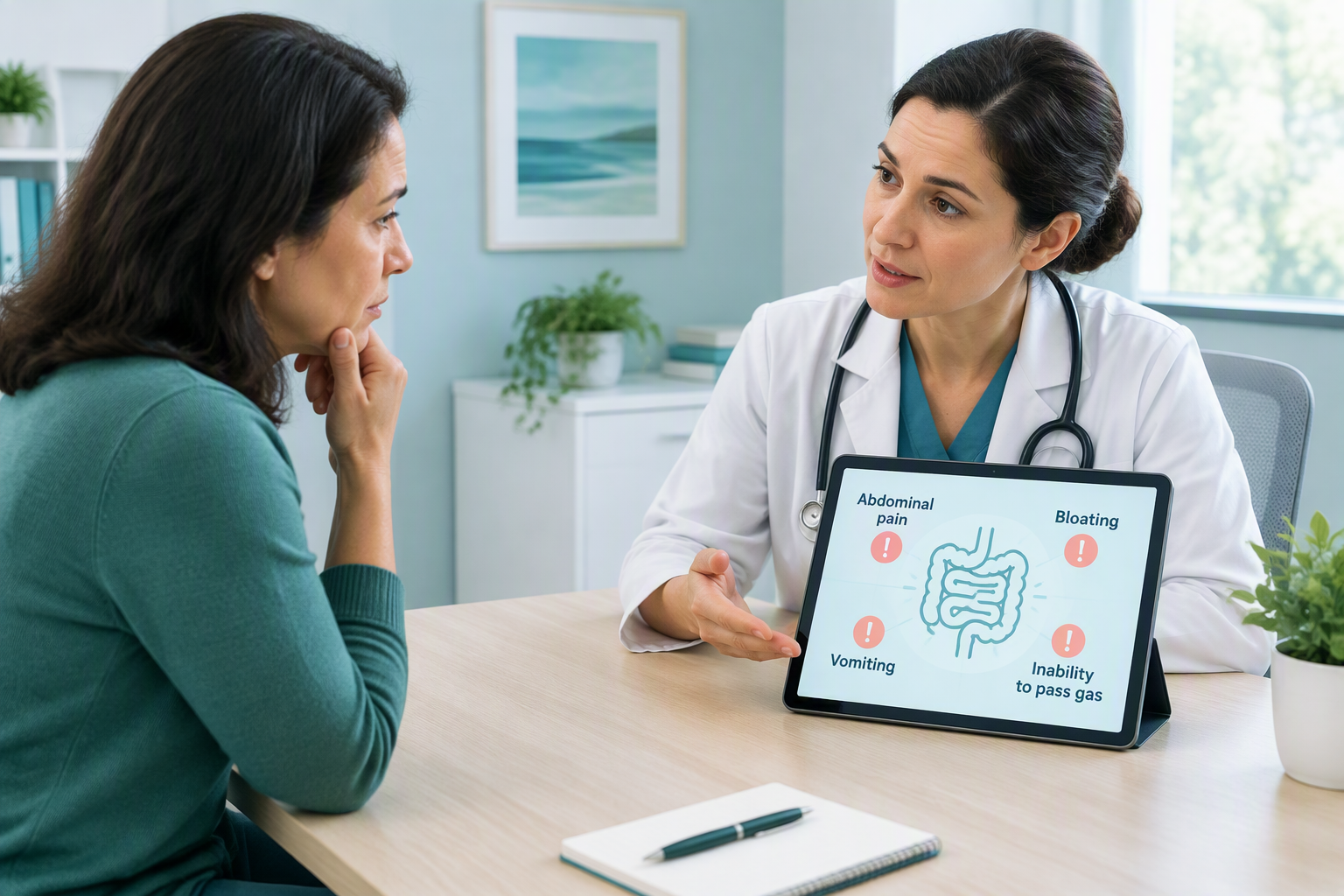
Fecal impaction is a more serious complication of ongoing constipation. Compared with one difficult bowel movement, fecal impaction is more serious. The feeling that poop is too big to come out, especially after repeated straining, is a reason to stop forcing it because straining can increase pain and irritation without moving the stool.
Difficulty passing stool may point to impaction when it occurs with persistent lower-abdominal cramping or pressure, marked bloating, repeated urges with little or no stool, or the sense that stool is present but will not pass. A clinician can identify the cause and may use a suppository, enema, or gradual removal instead of having you push through a painful bowel movement.
Watery diarrhea leakage does not always mean constipation has resolved. Liquid stool or small, semi-formed pieces can leak around a hard stool mass. Rectal bleeding, worsening rectal pain, or low-back pressure with constipation and no normal bowel movement needs prompt assessment. Hemorrhoids may also bleed after straining, but bleeding should not be dismissed as harmless (source).
A large stool burden can press on the bladder, causing trouble starting urination, new urine leakage, or a constant pressure feeling. If straining brings on lightheadedness, a racing heartbeat, or worsening pain, stop attempts to remove stool yourself and get same-day medical guidance. MedlinePlus notes that impaction can cause cramping, bloating, and liquid stool leakage (source).
Some symptoms can signal a bowel obstruction, where stool or gas cannot move through part of the intestine. Seek urgent medical evaluation if you have any of the following:
- Severe or escalating abdominal pain.
- A markedly swollen or rigid-feeling abdomen.
- Repeated vomiting.
- Inability to pass gas or stool.
- Fainting, marked weakness, or abdominal swelling with severe pain.
Prompt evaluation is needed before further constipation treatment (source, source). Severe pain, repeated vomiting, fainting, or swelling with no gas passing needs emergency care before treatment.
A hard stool painful to pass once is common. A difficult-to-pass stool that keeps recurring for weeks is the pattern to evaluate.
Protect Fissures and Hemorrhoids From More Pain

After urgent impaction or blockage signs have been ruled out, protecting irritated tissue means avoiding another hard, forced bowel movement. An anal fissure from hard stool can reopen when another stool is large or dry. Straining, holding your breath, or lingering on the toilet while pushing also increases pressure on swollen hemorrhoids. Focus on making the next stool softer and easier to pass instead of forcing it out.
A stool softener containing docusate may reduce the urge to strain when an anal fissure or hemorrhoid is painful. It will not quickly move stool already stuck low in the rectum, so ask a pharmacist or clinician which short-term option fits your symptoms.
After a bowel movement, keep cleanup gentle and low-friction:
- Soak in a warm bath or warm-water sitz bath, then pat the area dry.
- Rinse with plain warm water or use an unscented, gentle wipe.
- Bag used wipes unless local restroom guidance specifically permits flushing.
- Avoid very hot water, fragranced products, harsh soap, and scrubbing.
A small streak of bright-red blood on toilet paper can happen with anal fissures or hemorrhoids. Still, recurring rectal bleeding should not automatically be blamed on either condition. Prompt medical review is important for these warning signs:
- Persistent or heavy bleeding.
- Blood mixed into the stool or black stool.
- Worsening pain, dizziness, or fever.
- Inability to pass stool or gas.
Softer stools and gentle care can help irritated tissue settle without another painful injury.
Get Evaluated for Ongoing Constipation
Chronic constipation needs medical evaluation when it keeps returning, gets worse, or disrupts daily life. Repeatedly using laxatives or rectal treatments can delay finding constipation causes that need a different approach.
Medicines and supplements can be hard stool causes, so bring a complete list of prescriptions, over-the-counter products, and vitamins to your appointment. Common contributors include:
- Narcotic pain medicines
- Certain antacids
- Antidepressants
- Iron supplements
- Anticonvulsants
- Parkinson’s disease medicines
- Calcium channel blockers
Do not stop a prescribed medicine on your own. A clinician or pharmacist can consider whether a different medicine, dose, or timing may help.
Ongoing symptoms can also point to another condition. Irritable bowel syndrome (IBS) may cause abdominal pain along with changing bowel habits. Pelvic-floor dysfunction occurs when the muscles needed for a bowel movement do not relax and coordinate properly, causing a blocked feeling or trouble pushing stool out. Evaluation may also include checks for hypothyroidism, diabetes, Parkinson’s disease, and other metabolic or neurologic conditions.
The visit is usually straightforward. A clinician may ask about your stool pattern, diet, fluids, activity, routine changes, medicines, and warning symptoms, then examine your abdomen and sometimes perform a rectal exam. A new, unexplained bowel-habit change may lead to testing or a colonoscopy to check for colorectal or rectal disease, which does not automatically mean cancer is suspected.
Seek prompt medical care if you have:
- Severe abdominal pain
- Blood in your stool or black stools
- Anemia
- Unexplained weight loss
- Constipation that becomes disabling
Finding the cause supports safer relief that fits your body and daily routine.
Prevent Your Next Painful Bowel Movement
Return to the daily-routine advice above: add fiber-rich foods gradually to build a high-fiber diet, and pair that change with drinking more water for constipation so stool does not become harder to pass (source)).
That routine also covers how to soften stool with less straining, including regular movement, prompt response to urges, post-meal toilet time, and a toilet footstool. If IBS symptoms worsen with added fiber, slow the change or consider a different fiber type.
Ask a prescriber or pharmacist whether medicines such as iron or opioid pain relievers may contribute, and seek medical care for persistent constipation or frequent painful stools, especially with fissures or hemorrhoids.
Hard Stools That Hurt to Pass FAQs
These FAQs cover common concerns about hard, painful bowel movements, from possible causes and home care to signs that need prompt medical attention.
1. Can Iron Supplements Cause Hard, Painful Stools?
Yes. Iron supplements can contribute to constipation, leaving stools drier, harder, and more painful to pass. If bowel changes began after starting iron, bring them up with your healthcare professional.
Don’t stop prescribed iron on your own, as it may be treating iron deficiency or anemia. A prescriber or pharmacist may suggest a different formulation, dose, schedule, or short-term constipation treatment to improve comfort while you continue addressing the reason you need iron.
2. Can Opioid Pain Medicine Cause Hard Stools?
Yes. Opioid pain medicines, including codeine, methadone, and oxycodone, slow normal bowel movement. Stool stays in the colon longer, where it loses water and becomes hard, dry, and painful to pass. Untreated constipation can sometimes lead to fecal impaction.
Do not stop prescribed opioids on your own. Tell your prescribing clinician early if bowel movements become less frequent, hard, or difficult, so they can recommend a constipation plan that supports your pain treatment and helps prevent impaction.
3. Can Travel Cause Hard, Painful Stools?
Yes. Travel can slow bowel movements when changes in meals, fluids, activity, and your usual bathroom routine disrupt your schedule. Long periods sitting in a car or plane, lower-fiber convenience foods, and drinking less can leave more water absorbed from stool, making it dry, hard, and painful to pass. Holding in the urge because a restroom feels unfamiliar can worsen constipation. Drink regularly, eat fiber-containing foods you tolerate, stretch during breaks, and allow unhurried bathroom time when the urge appears.
4. Can Pregnancy Make Stools Harder to Pass?
Constipation is common during pregnancy. Hormones slow bowel movement, and a growing uterus can press on the intestines. Nausea, less activity, changes in food or fluids, and iron supplements can also make stools drier, larger, and more painful to pass.
Before starting a laxative, fiber supplement, herbal product, or other constipation treatment, check with your obstetric clinician or pharmacist, especially if you take other medicines. Seek prompt care for severe or worsening belly pain, vomiting, fever, rectal bleeding, dehydration, or bloating with an inability to pass stool or gas.