


Greasy stools that keep coming back, especially with weight loss, can signal more than a food sensitivity. Exocrine pancreatic insufficiency (EPI) happens when the pancreas doesn't deliver enough enzymes to digest food properly, especially fat. Bloating and diarrhea can occur too, but symptoms alone can't confirm EPI.
IBS causes the same bloating and loose stools, so EPI is often missed. A fecal elastase stool test sorts it out, with a level under 100 micrograms per gram giving good evidence of EPI and 100 to 200 counting as uncertain. Past pancreatitis, pancreatic surgery, or long-standing diabetes makes a low result more convincing.
When EPI is confirmed, prescription pancreatic enzymes taken with meals and snacks help your body digest food. Ongoing greasy stools or weight loss can mean the dose or timing needs review, or that another condition is contributing.
EPI Symptoms, Tests, Treatment Key Takeaways
- EPI reduces pancreatic enzymes needed to digest food, especially fat.
- Greasy stools, bloating, diarrhea, and unexplained weight loss can be signs of EPI.
- Pancreatitis, pancreatic surgery, cystic fibrosis, and long-standing diabetes raise the chance of EPI.
- Fecal elastase under 100 micrograms per gram offers good evidence of EPI.
- Watery stool can produce a falsely low fecal elastase result.
- Prescription pancreatic enzymes work best when taken with meals and snacks.
- EPI care may include checks of fat-soluble vitamins and bone health.
What Exocrine Pancreatic Insufficiency Is and Who Gets It
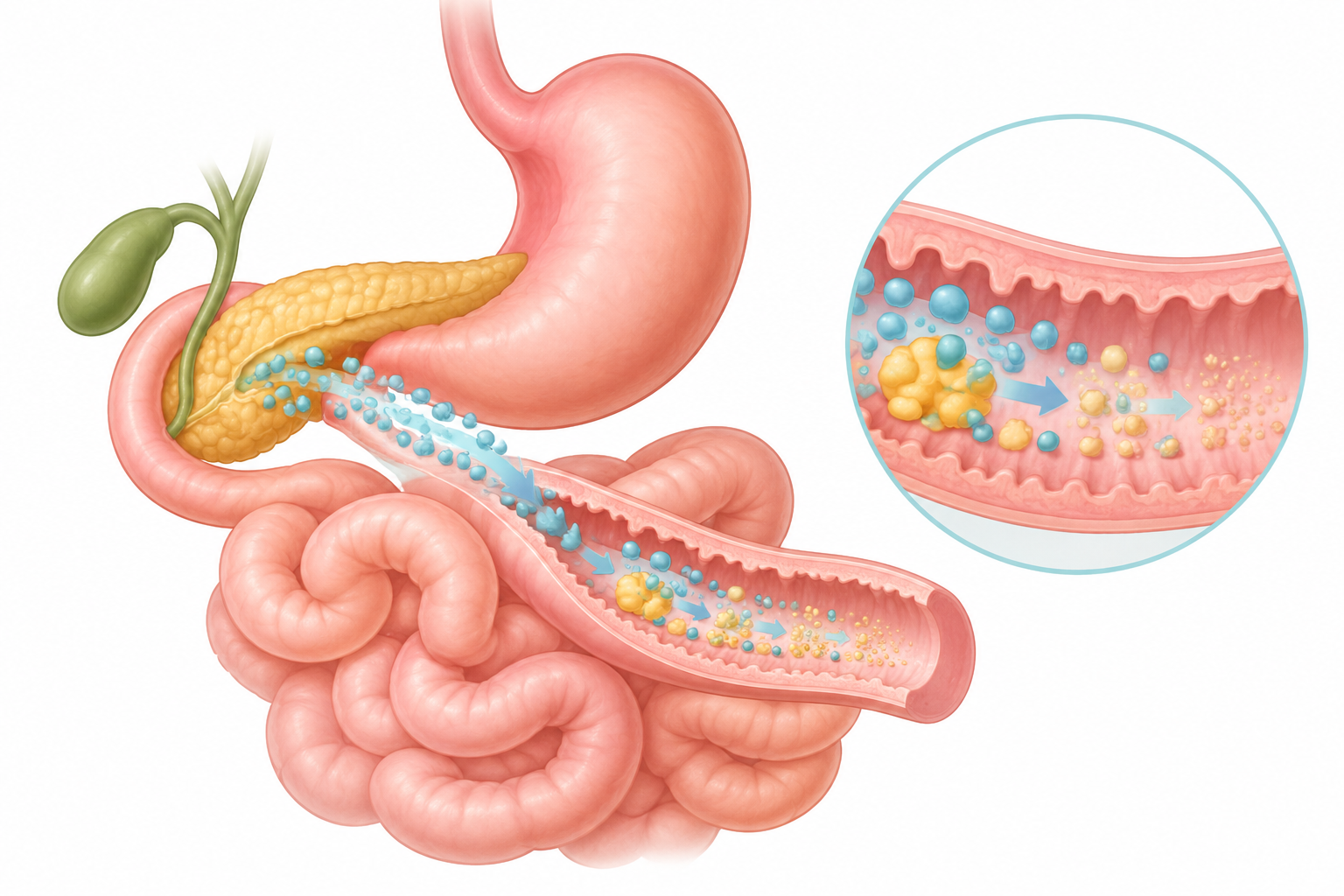
Exocrine pancreatic insufficiency (EPI) occurs when the pancreas delivers too few digestive enzymes to the small intestine. Without enough enzymes, your body cannot fully break down or absorb food, especially fat. The pancreas also makes hormones such as insulin, a separate job from making digestive enzymes, and EPI affects the enzyme side (source).
EPI can develop quietly because symptoms often do not appear until pancreatic enzyme output falls below about 10 percent of normal. That late change helps explain why substantial loss of function may occur before digestive problems become obvious (source).
Fat malabsorption can change your stool and gradually affect your weight. EPI is one route to malabsorption and its many causes, and fat is the nutrient it affects most. Possible EPI symptoms include:
- Greasy, pale, foul-smelling stools that float, called steatorrhea, with or without diarrhea.
- Bloating, gas, or belly pain.
- Unexplained weight loss.
The American Gastroenterological Association groups people by medical history. High-risk conditions include:
- Chronic pancreatitis: Repeated inflammation can damage enzyme-producing tissue.
- Repeated acute pancreatitis: Multiple attacks may leave lasting pancreatic injury.
- Pancreatic cancer or surgery: Disease or removal of pancreatic tissue can reduce enzyme delivery.
- Cystic fibrosis: Thick secretions can block pancreatic enzyme flow.
Moderate-risk conditions include celiac disease, Crohn’s disease, previous intestinal surgery, long-standing diabetes, and conditions that flood the gut with stomach acid, such as Zollinger-Ellison syndrome.
How EPI Is Diagnosed

After symptoms and risk factors raise concern, the fecal elastase test is usually the first step in checking for EPI. It measures a pancreatic enzyme in a solid or semisolid stool sample, and a watery sample can make the level look falsely low. Your clinician may confirm a low result before labeling it EPI.
You can take the test while using pancreatic enzyme replacement therapy (PERT) because treatment does not affect the result. The American Gastroenterological Association (AGA) uses these cutoffs (source):
Fecal elastase level | What it suggests |
|---|---|
Under 100 micrograms per gram | Good evidence of EPI |
100 to 200 micrograms per gram | Uncertain result needing further evaluation |
Over 200 micrograms per gram | Generally considered normal |
A 2025 meta-analysis of 13 studies found that a fecal elastase cutoff of 200 micrograms per gram had 94 percent sensitivity and 69 percent specificity, while a cutoff of 100 micrograms per gram had 88 percent sensitivity and 82 percent specificity (source). Specificity is how often a normal pancreas tests normal, so at the 200 cutoff about 3 in 10 people without EPI get a low result. If you have little reason to suspect pancreatic disease, a borderline reading deserves closer evaluation, not an automatic diagnosis.
Other tests can add context, though none routinely replaces fecal elastase:
- Fecal fat collection: Measures fat in stool but is rarely needed.
- CT, MRI, or endoscopic ultrasound: Can reveal pancreatic disease but cannot measure enzyme output.
- An enzyme trial: Feeling better on enzymes does not confirm EPI.
Blood tests can check fat-soluble vitamins (A, D, E, and K) and other signs of poor nutrition. These findings help your clinician interpret the stool result alongside your symptoms and health history.
Treating EPI With Prescription Enzymes

Once exocrine pancreatic insufficiency (EPI) is diagnosed, pancreatic enzyme replacement therapy (PERT) replaces the digestive enzymes your pancreas does not produce in sufficient amounts. You take PERT with meals and snacks, rather than between them, because the enzymes need to mix with food (source).
For adults, the American Gastroenterological Association recommends starting with at least 40,000 units of lipase per meal and half that amount with each snack. Because lipase breaks down dietary fat, your prescriber may adjust the dose based on the meal’s size and fat content. Take the enzymes with your first bites so they mix with the food. During a long meal, spread the dose through the meal instead of taking it all at once.
All prescription pancreatic enzyme products come from pig pancreas, and they work equally well at equal doses. The brand name does not determine how much lipase you need. Enteric-coated products are protected from stomach acid, while non-enteric-coated products need to be taken with an acid-reducing medicine to work properly.
Over-the-counter digestive enzymes are sold as dietary supplements, not approved medicines. Their enzyme content is not held to the same standard as prescription PERT, so taking more supplement capsules does not replace prescribed treatment.
Signs that PERT is helping can include:
- Less frequent fatty or greasy stools.
- Less bloating after meals.
- Gradual recovery of lost weight and muscle.
Eating Well and Protecting Your Nutrition
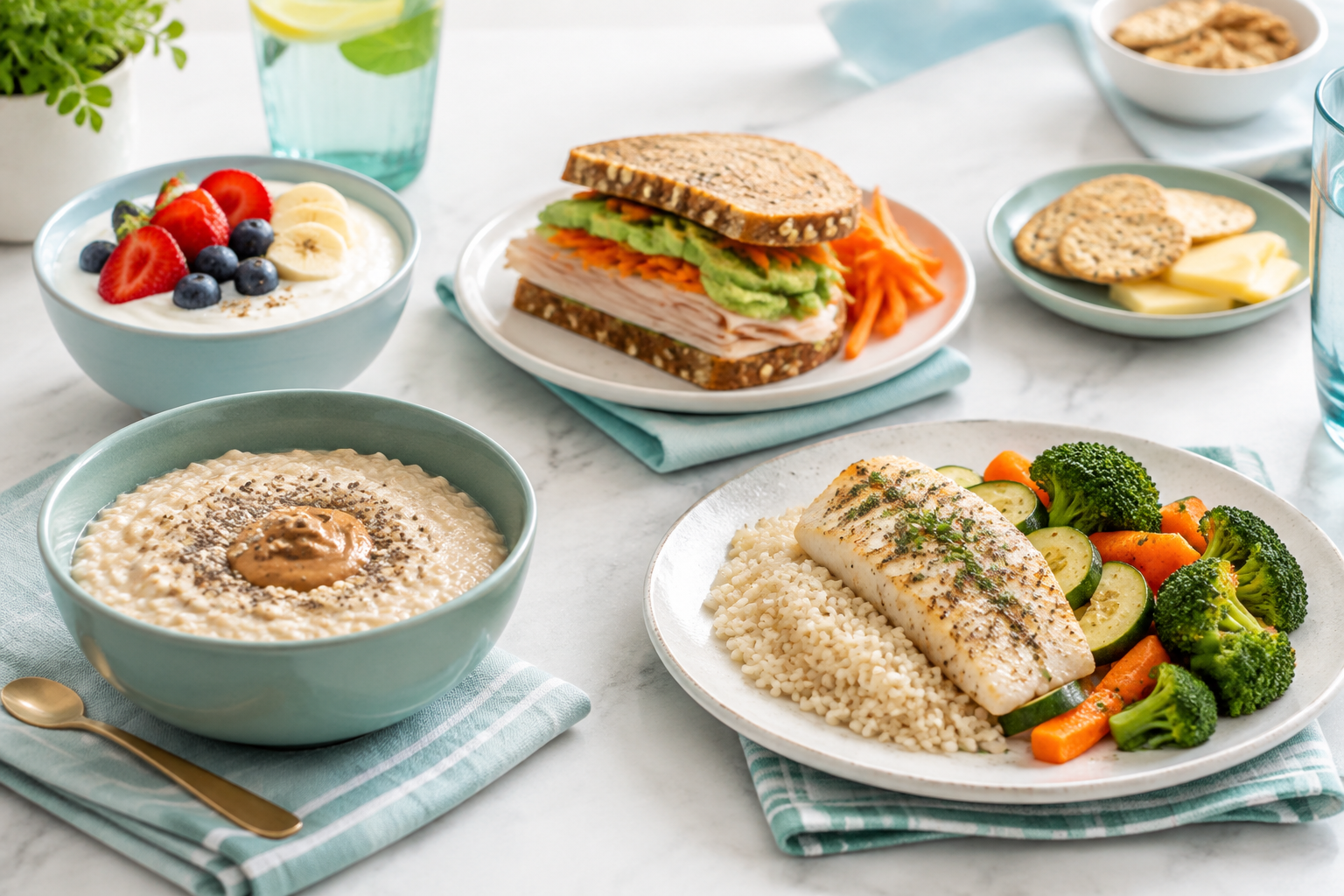
With EPI, eating enough matters as much as easing digestive symptoms. Small, frequent meals are easier to manage alongside enzyme therapy (source). The American Gastroenterological Association advises keeping fat low to moderate rather than very low, because very-low-fat diets make it harder to meet calorie and vitamin needs. Avoiding alcohol and smoking also helps protect the pancreas.
A sample day can spread fat across meals and snacks rather than placing most of it at dinner:
- Breakfast: Oatmeal with milk and a small spoonful of nut butter.
- Midmorning snack: Yogurt and fruit.
- Lunch: A turkey sandwich with avocado and carrots.
- Afternoon snack: Crackers with cheese.
- Dinner: Baked fish, rice, and vegetables with a little olive oil.
Your portions and food tolerance may differ. If you take prescription pancreatic enzymes, a registered dietitian can help match the dose to each meal and snack, including snacks that contain fat. This matters because enzyme needs depend partly on the amount of fat and protein in what you eat.
EPI can reduce absorption of the fat-soluble vitamins A, D, E, and K. These vitamins are routinely checked and supplemented when needed in EPI care. The condition can also affect bone strength, so the American Gastroenterological Association recommends a baseline DEXA scan, with repeat scans every 1 to 2 years.
At an EPI follow-up, ask about vitamin levels and bone health testing. Keeping meals consistent and spreading fat across the day can support nutrition without forcing you into an unnecessarily restrictive diet.
When Symptoms Continue on Enzyme Therapy
Symptoms that continue during PERT don’t always mean pancreatic enzymes aren’t helping. How you take the capsules matters, and another digestive condition may be causing symptoms at the same time.
A few details are worth checking before your follow-up visit:
- Timing: Capsules taken well before a meal or only after you finish may not work alongside the food they’re meant to help digest.
- Snacks: Missing a dose with a snack can leave you with symptoms despite taking capsules at meals.
- Dose: A meal higher in fat may need a different dose than a lighter meal. Persistent greasy stools are worth mentioning to your clinician.
- Coating: Stomach acid can inactivate enzymes that don’t have an acid-resistant coating.
If those details don’t explain the symptoms, small intestinal bacterial overgrowth (SIBO), bile acid diarrhea, celiac disease, or irritable bowel syndrome (IBS) may be present alongside EPI. Bloating after fruit or sweeteners can also point to fructose malabsorption from fruit and sweeteners, even when fat digestion has improved.
At your follow-up visit, bring a simple log of meals, capsule timing and doses, and stool changes. That gives your clinician a clearer basis for deciding whether to adjust PERT or check for another cause.
Why EPI Is Often Mistaken for IBS
EPI is easy to mistake for IBS because both can cause bloating, gas, and loose stools. The American Gastroenterological Association describes EPI as frequently underdiagnosed. Symptoms alone cannot tell you which condition is causing the problem, but certain clues make pancreatic testing worth discussing.
Features that point toward EPI rather than IBS alone include:
- Greasy stools: Stool may look oily or be difficult to flush, which can suggest poor fat digestion.
- Unexplained weight loss: Losing weight without trying may mean you are not absorbing enough nutrients from food.
- Low vitamin levels: Low levels of fat-soluble vitamins can signal trouble absorbing fat.
- Pancreatic history: Previous pancreatitis or pancreatic surgery increases the reason to consider EPI.
Diabetes is another reason to ask about testing. A review published in 2020 found that EPI occurs in people with type 1 and type 2 diabetes, often in a mild form. If you have diabetes and persistent loose or greasy stools, ask whether a fecal elastase test would help. This stool test measures an enzyme made by the pancreas.
When to See a Doctor
Book a doctor’s visit if greasy or floating stools keep returning, you’re losing weight without trying, or diarrhea continues. Because several conditions can cause these symptoms, share any history of pancreatitis, pancreatic surgery, cystic fibrosis, or diabetes so testing can help identify the reason. If results support exocrine pancreatic insufficiency, your care team may discuss pancreatic enzyme replacement therapy (PERT) and appropriate dosing.
Seek prompt medical care for any of these symptoms:
- Severe upper-belly pain that spreads to your back.
- Yellowing of your skin or eyes.
- Vomiting that will not stop.
Exocrine Pancreatic Insufficiency FAQs
EPI raises questions about how long it lasts, who gets it, and what it does to nutrition. These are the ones people ask most.
1. Is EPI Always Permanent?
No. EPI isn’t always permanent. Whether it lasts depends on why your pancreas isn’t making enough digestive enzymes. Chronic pancreatitis, the most common cause of EPI in adults, can cause irreversible damage through long-term inflammation. Other causes may have a different course, so an EPI diagnosis doesn’t automatically mean lifelong treatment. The question for your clinician is whether the underlying cause can be treated and how that might affect your need for ongoing care.
2. Can EPI Develop After Pancreatic Surgery?
Yes. Pancreatic surgery can remove tissue that makes digestive enzymes or change how they reach the small intestine, increasing the risk of EPI. Surgery on the upper digestive tract can also interfere with how food and enzymes mix, even when the pancreas remains intact. Greasy stools, persistent diarrhea, bloating, or unexplained weight loss after surgery may point to poor digestion, but symptoms alone don’t establish EPI. A clinical assessment can help identify the cause and whether testing is appropriate.
3. Does EPI Cause Vitamin Deficiencies?
Yes, EPI can cause vitamin deficiencies, though not everyone with EPI develops one. With fewer pancreatic enzymes, your body may struggle to digest fat and absorb the fat-soluble vitamins A, D, E, and K. That means nutrition matters even if digestive symptoms are your main concern. Your clinician may check your nutritional status, including vitamin levels when appropriate, and recommend supplements if a deficiency is found or your risk is high. Supplements don’t replace treatment for EPI.
4. Can Children Have EPI?
Yes. Children can develop EPI, and cystic fibrosis is a leading cause in children. You may notice greasy stools or diarrhea that keeps coming back, along with poor weight gain or slower growth. These signs can have other causes, so symptoms alone cannot confirm EPI. If they persist, a pediatric evaluation can help identify why, especially if your child has cystic fibrosis. The evaluation may include a stool test and a review of your child’s growth and symptoms.