


Bloating, gas, cramps, or diarrhea after fruit or sweet foods can point to fructose malabsorption, but they don't prove it. Fructose malabsorption occurs when the small intestine leaves some fructose unabsorbed, allowing it to reach the colon and cause symptoms. Most people can still eat fruit once they know how much they tolerate.
A fructose breath test can show whether you absorb a large dose, but it cannot predict your response to an ordinary meal. The North American consensus recommends 25 grams of fructose for testing, while symptoms, portion sizes, and everyday patterns help put the result in context. SIBO can produce a falsely positive result, and hydrogen-only testing may miss methane production.
Food reactions also need to be separated from hereditary fructose intolerance, a rare genetic condition involving aldolase B and potentially serious liver and kidney complications. Measured portions, symptom tracking, and gradual reintroduction can help identify what you tolerate without removing more foods than necessary.
Fructose Malabsorption Key Takeaways
- Fructose malabsorption can cause bloating, gas, cramps, and diarrhea.
- Breath testing measures response to a large fructose dose, not every meal.
- SIBO can cause a falsely positive fructose breath test.
- Hydrogen-only testing may miss methane-producing gut bacteria.
- Hereditary fructose intolerance is a separate genetic condition with serious risks.
- Portion size and glucose content can affect fructose tolerance.
- Gradual reintroduction helps identify your personal fructose threshold.
What Fructose Malabsorption Is
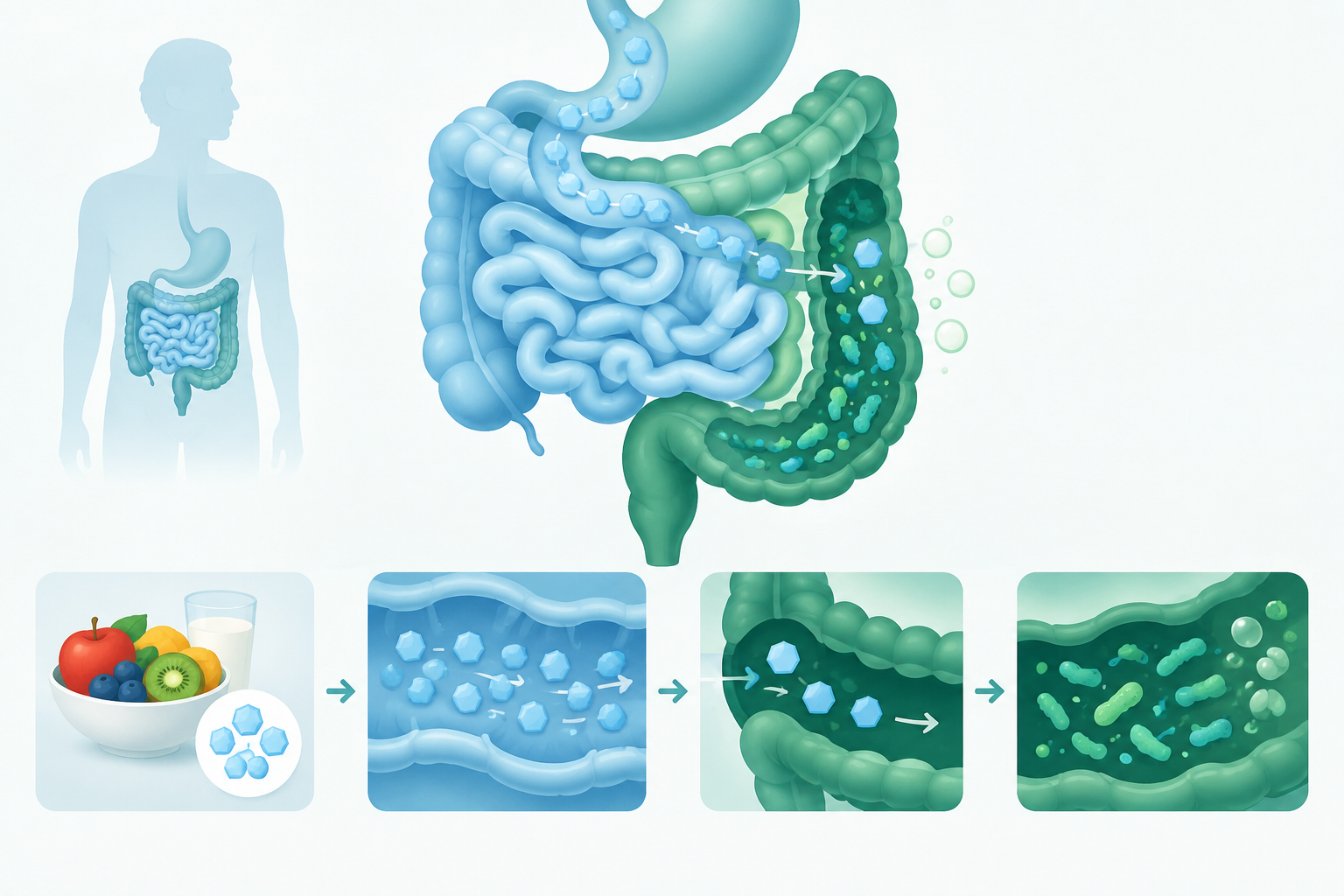
Fructose malabsorption, once called dietary fructose intolerance, means your small intestine doesn’t absorb all the fructose you eat. The leftover sugar reaches the colon, where bacteria ferment it into gas, while the sugar also draws water into the bowel, which can cause loose stools or diarrhea. A 2025 review describes both processes (source).
Fructose absorption relies partly on a gut-wall transporter called GLUT5, which can move only so much fructose at a time. Eating glucose alongside fructose helps your body absorb it (source). Foods and drinks with more fructose than glucose contain excess fructose and are more likely to trigger symptoms. That doesn’t mean every fruit will bother you, because the amount you eat and what you eat with it matter, too.
Fructose malabsorption symptoms often appear within a few hours of a high-fructose food or drink:
- Bloating and gas
- Abdominal cramps
- Loose stools or diarrhea
That timing is a clue, not proof that fructose is responsible. Other digestive problems feel similar, and malabsorption beyond fructose has causes that affect fat, protein, and vitamins too.
The digestive symptoms fructose malabsorption causes are different from the risks of hereditary fructose intolerance. This rare genetic condition occurs when the liver lacks a working enzyme called aldolase B. MedlinePlus estimates it affects about 1 in 20,000 to 30,000 people, and it’s usually found in infancy after fruit or sweetened foods are introduced (source). For someone with hereditary fructose intolerance, eating fructose can cause low blood sugar and damage the liver and kidneys, making strict lifelong avoidance necessary.
The Fructose Breath Test

A fructose breath test can show whether you absorb a large dose of fructose, but it cannot predict how you'll react to a typical meal. To reach a diagnosis, your clinician considers the gas readings alongside symptoms during the test and your experience with everyday foods.
After an overnight fast, you provide a baseline breath sample, drink a fructose solution, then give more samples at set intervals over the next few hours. The lab measures hydrogen and methane, gases gut bacteria can make when fructose goes unabsorbed. The North American consensus recommends 25 grams of fructose, more than a typical serving of fruit contains (source).
A positive result shows fructose malabsorption at the test dose. Interpret the result alongside your symptoms and usual portion sizes. Bloating, pain, or diarrhea during the test can help show whether the gas findings match what you experience after meals.
The reading can also be misleading:
- Falsely positive: Small intestinal bacterial overgrowth (SIBO), or excess bacteria in the small intestine, can raise gas levels during the test.
- Falsely negative: A test that measures only hydrogen may miss a problem when your gut bacteria produce methane instead.
Follow your clinic's instructions about food, antibiotics, and smoking before the appointment because preparation can affect the reading. If the results point toward fructose malabsorption, a conversation about your symptoms and usual portion sizes can guide food changes without assuming you need to avoid every food that contains fructose.
Foods High in Excess Fructose and Better Choices
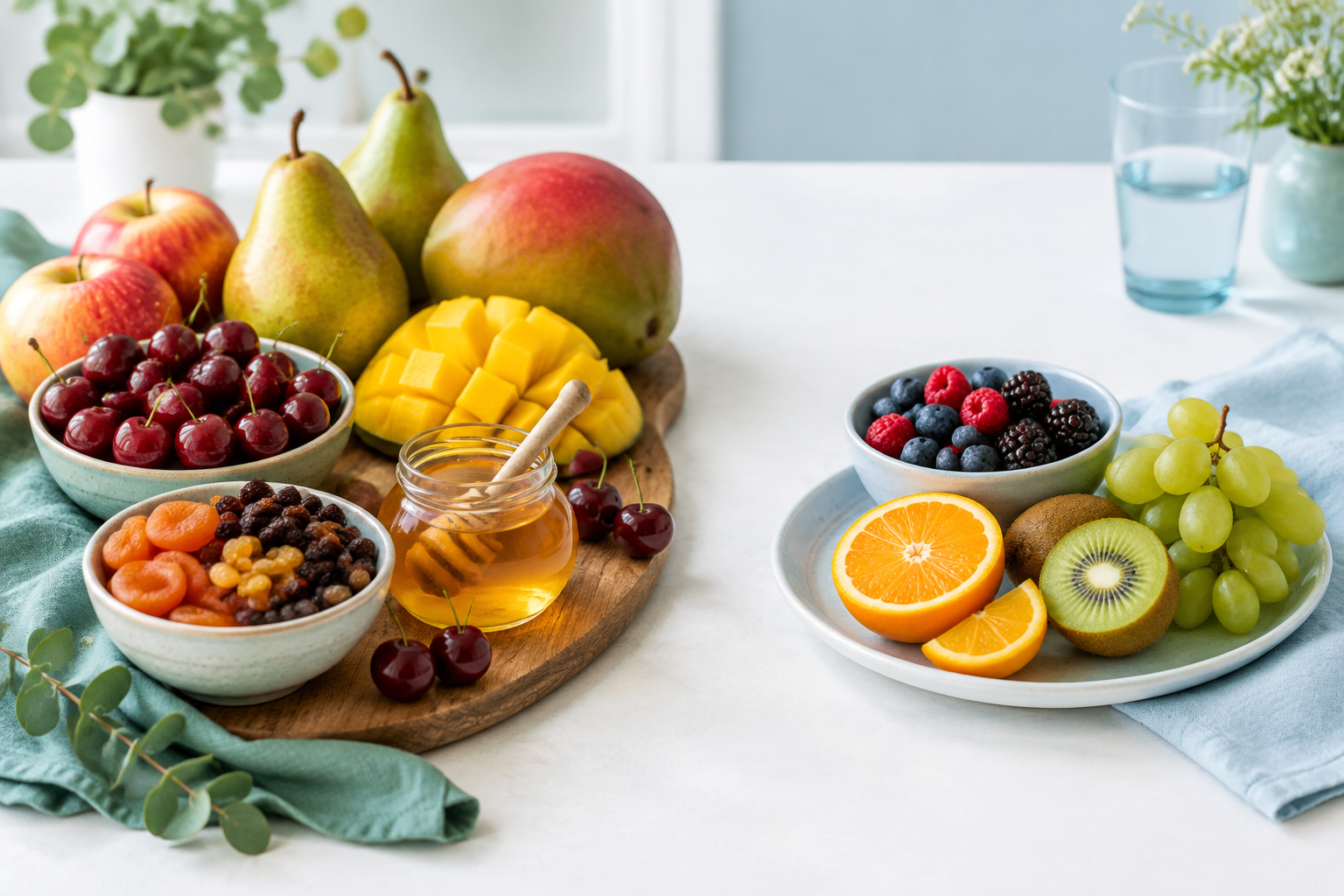
Some foods carry far more fructose than glucose, and those are the ones worth watching. Avoiding every fruit or sweetener usually isn't necessary, and a food that bothers someone else may feel manageable for you in a smaller portion.
Monash University lists apples, pears, mangoes, cherries, figs, watermelon, and dried fruit as fruits particularly high in excess fructose, and honey and high-fructose corn syrup among the high-FODMAP sugars (source). Agave syrup, fruit juice, and fruit juice concentrate are other concentrated sources.
Apples, pears, and cherries may be especially difficult because they also contain sorbitol. This combination can increase gas or diarrhea for some people, and a mixed fruit snack can make it difficult to identify the trigger.
For a fruit option that may be easier to tolerate, try a normal portion of citrus, berries, kiwifruit, or grapes. Maple syrup and a modest amount of table sugar may also work better than honey or agave because their fructose is more balanced with glucose. Portion size remains important:
- Smaller serving: One small serving of fruit may feel comfortable.
- Larger serving: Two servings at once may trigger symptoms.
- Juice: A large glass can deliver more fructose than whole fruit and may be harder to tolerate.
Packaged high-fructose foods can hide in snack bars, yogurt, sauces, drinks, and sugar-free products. Check ingredient lists for honey, agave, high-fructose corn syrup, crystalline fructose, fruit juice concentrate, and sorbitol.
Finding Your Fructose Threshold

Your fructose threshold is the amount you can eat without troublesome symptoms. A brief reduction followed by gradual reintroduction can help you find portions that work for you without giving up fruit indefinitely.
For a few weeks, cut back on foods with excess fructose while keeping the rest of your diet steady. This is one part of a low-FODMAP diet, which uses changes in food intake to help identify symptom triggers. A 2022 review in the British Journal of Nutrition describes this approach (source). Changing several foods at once makes it harder to tell what affected your symptoms.
Once symptoms have settled enough that you can notice a change, try one food in rising amounts over three days:
- Eat half an apple on the first day, and note any symptoms.
- Eat a whole apple on the second day, and note any symptoms.
- Eat a whole apple with another fruit on the third day, and note any symptoms.
Keep your other meals as similar as you can during the test. Record each portion, what else you ate, and when symptoms began. A reaction to the final combination may reflect the added fruit or the total amount eaten, not the apple alone. Repeated reactions at similar portions tell you more than one difficult day, especially if stress or a change in routine might also be affecting your gut.
The aim is to eat as wide a range of foods as you comfortably can, rather than avoid fructose forever. If symptoms continue or your food choices become too limited, a registered dietitian can help you interpret the pattern and plan what to try next.
Fructose Malabsorption and IBS
You can have trouble absorbing fructose without having irritable bowel syndrome (IBS), and the two can also occur together. Either way, fermenting fructose makes gas, which can cause bloating, abdominal pain, or diarrhea.
When IBS is present, the gut may be more sensitive to stretching from gas. The same amount of unabsorbed fructose can therefore cause more pain and bloating than it would for someone without IBS. A painful reaction after eating fruit can’t tell you which condition is involved, or whether both are.
Excess fructose belongs to the FODMAP group of carbohydrates that may trigger IBS symptoms. A low-FODMAP trial can help you find out whether it affects you, but the goal isn’t to avoid every food with fructose forever. The amount you eat matters, so a smaller serving may feel easier on your gut than a larger one.
Lactose intolerance and celiac disease can cause similar symptoms and may occur alongside fructose malabsorption. If symptoms keep returning, ask your healthcare professional whether testing for either condition makes sense before cutting out more foods.
Fructose, Fructans, and Sorbitol Are Different Triggers

Fructose, fructans, and sorbitol are different carbohydrates, so symptoms linked to one don’t automatically point to the others. Identifying the specific carbohydrate can help you make targeted choices instead of avoiding every sweet or high-fiber food.
They appear in different foods:
- Fructose: A single sugar found in fruit, honey, and some syrups. The amount you eat and the rest of the meal can affect symptoms.
- Fructans: Chains of fructose that your small intestine doesn’t fully digest. Wheat, onion, garlic, inulin, and chicory root are common sources.
- Sorbitol: A sugar alcohol found in some fruits and sugar-free products. It can also reduce fructose absorption, so eating both together may intensify symptoms.
If onion and wheat cause problems, fructans may be the shared trigger. That pattern doesn’t mean fruit will cause the same response. A snack containing honey and chicory root is harder to interpret because fructose and fructans are present together.
A meal with several possible triggers can make patterns difficult to spot. Track the food, portion, and timing of symptoms so you can separate likely triggers without turning every meal into a test. A single food reaction is useful information, but it doesn’t identify every carbohydrate your body may handle poorly.
When Symptoms Point to Something Else
Book a medical visit if bloating or diarrhea continues after you reduce excess fructose. Symptoms that need prompt evaluation include:
- Unexplained weight loss
- Blood in your stool
- Diarrhea that wakes you during the night
- Signs of anemia, such as unusual tiredness or shortness of breath
Fructose malabsorption symptoms can overlap with other digestive conditions, so a fructose malabsorption diagnosis requires more than noticing symptoms after certain foods. Greasy, floating stools suggest poor fat absorption rather than fructose malabsorption, a pattern seen with exocrine pancreatic insufficiency and fatty stools that needs a different evaluation.
Seek urgent care if fructose is followed by severe illness, especially:
- Vomiting
- Sweating
- Confusion
This combination can signal hereditary fructose intolerance, a different condition from fructose malabsorption. Note what you ate and when symptoms began so the clinician can assess the reaction and guide the next steps.
Fructose Malabsorption FAQs
Fructose malabsorption can make it hard to tell which foods may be contributing to your digestive symptoms. These are the questions people ask most about SIBO, timing, fruit, and whether it improves.
1. Is Fructose Malabsorption the Same as SIBO?
No. SIBO involves excess bacteria in the small intestine, while fructose malabsorption occurs when fructose isn’t fully absorbed and reaches gut bacteria for fermentation. Both may cause bloating, gas, and diarrhea, but SIBO can make a fructose breath test appear positive because bacteria ferment the sugar earlier than expected. Neither is hereditary fructose intolerance, a separate genetic condition linked to aldolase B deficiency.
2. Can Fructose Malabsorption Develop Later in Life?
Yes. Symptoms are often first noticed in adulthood, and a 2025 review notes that fructose malabsorption becomes more common with age and with higher fructose intake. Eating more fructose than you used to, or only now linking symptoms to certain foods, can also explain a later start. If your symptoms are new or persistent, keep other possible causes in mind rather than assuming fructose is responsible.
3. Do You Need to Stop Eating Fruit?
No. Most people with fructose malabsorption can still eat fruit. Oranges and strawberries have a more balanced mix of fructose and glucose than apples and pears, so they may be easier for you to tolerate. Try one serving at a sitting instead of a large fruit salad or smoothie, then notice whether symptoms change. Your tolerance may differ from someone else’s, and even a fruit that usually works for you may feel different in a larger portion. The aim is to keep fruit in your diet without making every meal a guessing game.
4. Can Fructose Malabsorption Improve Over Time?
Yes, fructose tolerance and symptoms can change over time, although improvement isn’t guaranteed. A reaction to a large serving doesn’t mean every fruit or fructose-containing food must stay off your plate permanently. Symptoms are often dose-dependent, so a smaller portion may be easier to tolerate when the rest of the meal is low in fructose. Gradual fructose reintroduction, ideally with a registered dietitian’s guidance, lets you test measured portions and record symptoms to identify your current tolerance.