


A fizzy drink can trigger bloating, reflux, or IBS symptoms, but carbonation does not damage the digestive tract. Carbon dioxide leaves the liquid as gas in your stomach, creating temporary pressure that may lead to belching, fullness, or discomfort. The same drink may feel fine one day and bother you during a large meal or an IBS flare.
Plain sparkling water mainly adds bubbles, whereas soda, diet soda, and caffeinated drinks can also bring sugar, sweeteners, acids, or caffeine into the picture. NIDDK lists carbonated beverages among common GERD triggers, though individual tolerance still matters. A food-and-symptom diary can help separate the effects of carbonation from drinking speed, meal timing, and other ingredients.
Carbonated Drinks and Digestion Key Takeaways
- Carbon dioxide can temporarily increase stomach pressure, causing belching, fullness, or bloating.
- Plain sparkling water mainly affects digestion through carbonation rather than added ingredients.
- Drinking fizzy beverages quickly or through straws can increase swallowed air and discomfort.
- Carbonated drinks may make heartburn, regurgitation, and upper-abdominal pressure more noticeable with GERD.
- IBS can make normal gas-related stretching feel more painful or uncomfortable.
- Sugar, caffeine, acids, and sugar alcohols can cause symptoms separate from carbonation.
- Tracking beverage type, serving size, timing, and symptoms can identify personal triggers.
Do Carbonated Drinks Hurt Digestion?

Carbonated drinks and digestion can be uncomfortable, but carbonation is not always the only cause. Carbon dioxide is dissolved under pressure and becomes gas after you swallow, which can raise stomach pressure and lead to fullness or belching. As that gas moves through the digestive tract, it may add to bloating or discomfort, but this physical effect does not mean carbonation damages the tract.
Carbonated water and digestion can feel different depending on the setting. Symptoms may stand out when you drink on an empty stomach, with a large or rich meal, or during an irritable bowel syndrome (IBS) flare. A drink that feels fine at one meal may bother you in another situation.
Several details can help separate the effects of bubbles from added ingredients:
- Bloating or belching: Plain sparkling water mainly adds carbon dioxide, especially if you drink a large serving quickly.
- Heartburn or reflux: Carbonation, acidic flavorings, caffeine, and alcohol can each aggravate symptoms. Whether sparkling water is bad for your stomach depends on your own pattern.
- Loose stools or cramps: Some artificial sweeteners and sugar alcohols may cause gas, abdominal discomfort, or diarrhea. Sugar-free does not mean additive-free or symptom-free.
Soda, energy drinks, flavored fizzy beverages, and mixers may also contain sugar, caffeine, acids, alcohol, sodium, or sweeteners. High-sodium mixers may not suit every health need, while caffeine can worsen jitters, bowel urgency, or reflux. These differences matter for digestive health and gastrointestinal health, so bubbles should not receive all the blame.
Compare plain carbonated water with a flavored or diet drink on separate occasions, noting the amount, drinking speed, meal context, and symptoms afterward. Gut-friendly eating from the ground up can help you find patterns without cutting out every fizzy drink at once.
Persistent, severe, or changing symptoms deserve medical attention.
Does carbonated water affect digestion in a way that should worry you? For most people, no. The reaction comes down to gas volume, what else is in the drink, and how sensitive your gut is. Sugary soft drinks add sugar and acid on top of the gas, and that is where most digestive issues start.
How Do Carbonated Drinks Affect Digestion?
With drink ingredients and individual triggers in mind, carbonated drinks can cause temporary digestive symptoms. Sparkling water, seltzer, club soda, and other fizzy drinks contain this gas under pressure, and the stretching is temporary.
Belching can happen almost immediately as gas escapes from the stomach. Bloating and fizzy drinks and gas can feel worse after a large serving or when you drink quickly. Effects also vary with digestive sensitivity, especially if you have reflux, bloating, or irritable bowel syndrome (IBS).
Carbonated drinks and digestion also depend on the drink you choose. Does carbonation cause bloating? Larger or faster servings can make carbonation-related bloating more likely. Plain carbonated water and digestion are linked mostly by the bubbles, while regular soda also contains sugar that may bother some people, particularly when consumed in larger amounts or with a meal.
Other ingredients in carbonated beverages can create separate symptoms:
- Caffeine: It may stimulate bowel activity or make reflux worse for sensitive people.
- Sugar-free sweeteners: Certain sweeteners, including sugar alcohols, may contribute to gas, bloating, or loose stools.
- Acids and flavorings: Cola, citrus-flavored soda, and energy-style drinks may trigger reflux symptoms in some people.
If symptoms follow cola, diet soda, or energy drinks but not plain sparkling water, ingredients besides carbonation may be the stronger trigger. When carbonated water digestion symptoms happen consistently after plain fizzy water, the bubbles are more likely involved.
Sip carbonated drinks slowly and avoid straws, which can increase the air you swallow and add to bloating. Occasional burping is common, but persistent pain, frequent reflux, or symptoms that disrupt daily life deserve closer attention.
How much gas arrives at once matters. A glass of seltzer water or soda water sipped slowly releases most of its gas in the mouth, while a large, cold, fast drink delivers more of it to the stomach. The taste of carbonation matters too: carbonic anhydrase in the tongue's sour-sensing cells turns dissolved carbon dioxide into the mild sting you feel, which is why some people find sparkling beverages refreshing and others find them harsh (source).
What Does Carbonation Do in Your Stomach?
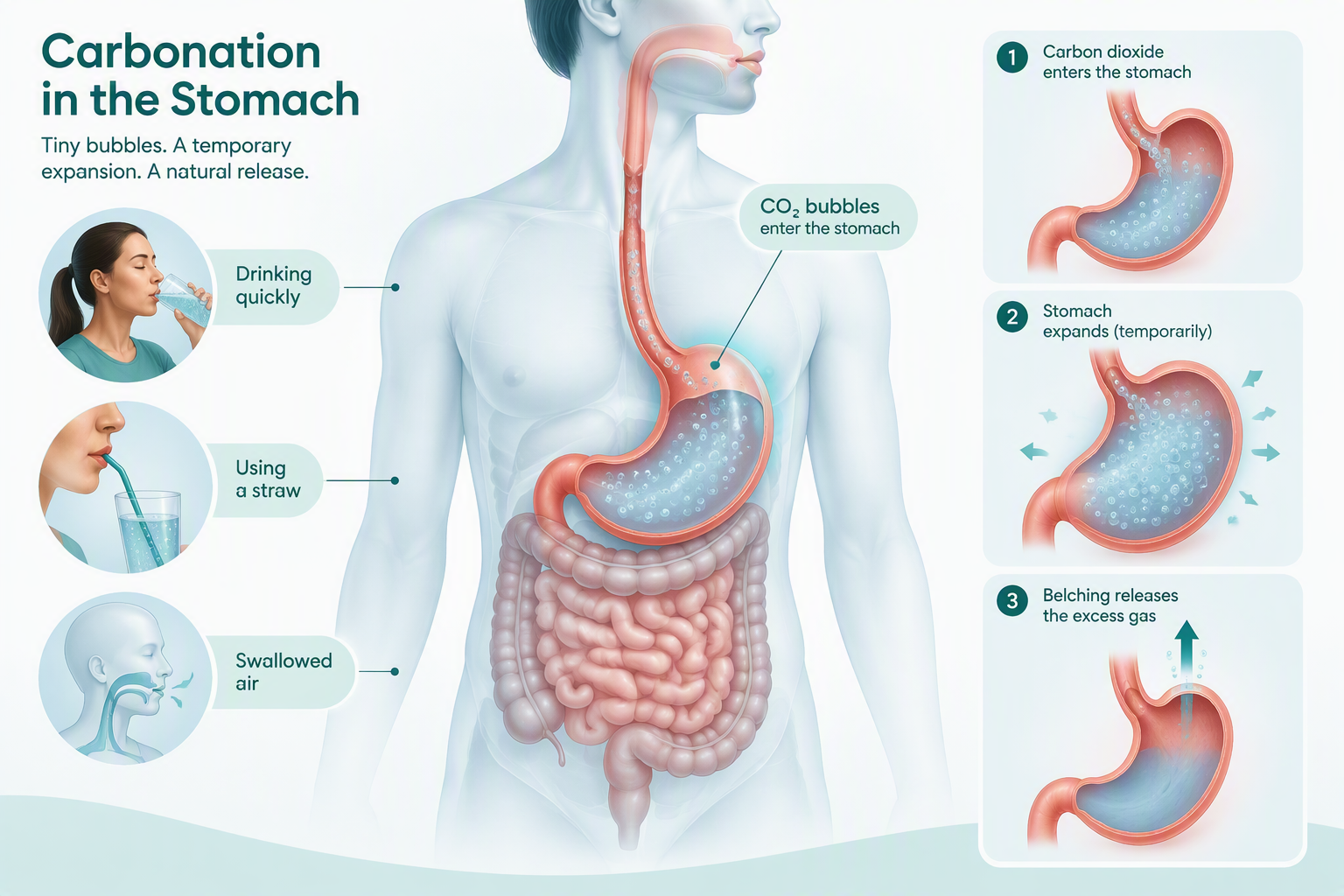
Carbonation can briefly raise stomach pressure. As sparkling water warms in your stomach, dissolved carbon dioxide leaves the liquid as gas. This temporary stretching, called gastric distension, may feel uncomfortable if you are prone to bloating, trapped gas, or upper-abdominal sensitivity.
Belching is the main pressure-release response. Gas from the drink and swallowed air can travel back up the esophagus as a burp, often easing fullness quickly. Frequent belching is more likely with:
- Drinking Quickly
- Using A Straw
- Chewing Gum
- Choosing Highly Carbonated Drinks
Gas that is not released by belching can move through the gastrointestinal tract and add to abdominal pressure, especially with IBS. This differs from gas made later when intestinal bacteria ferment certain carbohydrates (source).
A fizzy drink may also make you feel fuller than the same amount of still water because stomach stretching sends fullness signals. That short-lived effect does not show that carbonation reliably reduces appetite or supports weight change. For some people, the pressure, nausea, or bloating outweighs any sense of fullness.
Research on gastric physiology suggests carbonation may affect how long food remains in the stomach, but those findings cannot predict day-to-day digestive outcomes. One limited study in mice and 20 men linked carbonated water with higher ghrelin, a hunger-related hormone, yet the results have not been replicated enough to support claims about appetite, weight, or digestion (source).
A 2017 study in older hospitalized adults found that carbonated beverages may stimulate the swallow response and improve swallowing ability. This is an early, setting-specific finding, not a home treatment. Medical assessment is needed for persistent symptoms such as:
- Coughing While Eating Or Drinking
- Choking
- Painful Swallowing
- A Feeling That Food Is Sticking
Is sparkling water bad for your stomach? Usually, no, but your own symptom pattern matters. Sugar, sweeteners, caffeine, acidity, and alcohol can affect digestion separately from carbonation, so plain sparkling water that causes bloating when still water does not may be a useful clue about your tolerance.
Chemically, dissolved carbon dioxide forms weak carbonic acid, which is what gives sparkling water its bite. Colas add phosphoric acid on top, and diet versions add sweeteners such as aspartame or sucralose, so the ingredient list matters as much as the bubbles.
Carbonation and stomach pain are usually the same event as bloating: a stretched stomach and a delayed burp. Carbonated water and gas that does not come up as a burp passes into the intestine and is absorbed or passed later, so stomach aches after a big fizzy drink fade as the gas escapes. Carbonated water hydration is not a concern. In a trial comparing common drinks, sparkling water hydrated as well as still water (source).
Carbonated water pH is mildly acidic from carbonic acid, far milder than cola, and the stomach is more acidic than either. Carbonation and constipation is a surprising pairing: in one small trial, carbonated water improved constipation and indigestion symptoms compared with still water (source). Results like that are small and short, so treat sparkling water as a harmless extra fluid, not a treatment. Sparkling water satiety is short-lived too, since the gas stretches the stomach briefly and then leaves.
Is Lemon-Lime Soda Any Gentler?
When the fizzy drink in question is lemon-lime soda, Sprite is not an established treatment for nausea or a sour stomach. Some people may find small, cold sips easier to tolerate than a full meal, but the carbonation and added sugar can still bother sensitive stomachs. That brief comfort does not treat the cause, which may be indigestion, a stomach virus, sprite and an upset stomach, acid reflux, or another digestive problem.
Carbonation is the main tradeoff. Dissolved carbon dioxide adds gas to your stomach, and while belching can briefly reduce pressure, that added stretch may worsen fullness, cramping, nausea, or discomfort for people prone to IBS, gas, or bloating, particularly after a large serving or fast drinking.
Regular Sprite also contains added sugar. Larger amounts can contribute to digestive upset or diarrhea, the same problem as coke when you have diarrhea, while plain sparkling water provides carbonation without the sugar typical of soft drinks. Still, sparkling water can cause symptoms when bubbles are your main trigger.
Sprite is caffeine-free, but its acidity and carbonation may still aggravate heartburn, regurgitation, or upper-abdominal pressure. The National Institute of Diabetes and Digestive and Kidney Diseases lists carbonated beverages among common acid reflux triggers (source). Sparkling water and acid reflux can raise the same individual-tolerance issue.
Your symptoms after slow sips offer a practical guide:
- More burping, burning, fullness, or nausea: Choose still water or another noncarbonated fluid.
- Bloating or cramping: Limit fizzy drinks and avoid drinking quickly.
- Diarrhea after soda: Skip sugary soda and focus on fluids you tolerate.
Sprite is not an established upset-stomach treatment or reliable hydration choice. Persistent vomiting, dehydration signs, severe pain, blood in stool, or worsening symptoms need medical attention.
How Do IBS and Reflux Change Tolerance?

IBS, reflux, and a gas-sensitive gut can make carbonated drinks uncomfortable, though bubbles are not always the only trigger, and the foods worth limiting with IBS include several that usually travel with soda. Carbonation adds gas to the stomach, which can cause pressure, burping, bloating, or visible distension. With IBS, normal stretching from gas may feel more painful or noticeable. That does not mean sparkling water or soda causes an IBS flare for everyone. Some people simply belch and feel little change.
Carbonated drinks and IBS can be harder to pinpoint when caffeine, sugar, or sweeteners are also involved. A caffeinated fizzy drink may add upper-stomach fullness from carbonation and may also affect bowel habits in sensitive people (source). This combination may be especially bothersome when your IBS tends toward diarrhea.
Comparing beverages can help separate likely triggers:
- Plain sparkling water: May cause belching or bloating from bubbles without caffeine, sugar, or sweeteners.
- Sugary soda: A large sugar load may draw water into the intestines and worsen diarrhea for some people.
- Diet soda: Sweeteners may be well tolerated by some people but contribute to gas or loose stools for others.
- Caffeinated fizzy drinks: Can combine carbonation-related pressure with caffeine-related urgency.
Sparkling water and acid reflux can also be an uncomfortable combination. Extra stomach pressure and belching may make heartburn, a sour taste, or regurgitation more noticeable in people with acid reflux or gastroesophageal reflux disease (GERD). Still water offers a useful comparison when reflux already disrupts your day.
Test one change at a time on separate occasions. Compare a small serving of plain sparkling water with still water, then consider drinking speed, whether you have eaten, caffeine, sugar, and sweeteners if symptoms continue. Persistent, severe, or changing symptoms warrant medical evaluation.
Carbonated mineral water and plain seltzer are calorie-free and usually the easiest fizzy drinks to tolerate, and there is some research interest in carbonation helping people with swallowing difficulty (dysphagia) and in sparkling water and satiety, though neither is a reason to drink it for digestion.
Carbonation and IBS is the pairing to watch. If you are sensitive to carbonated drinks, the gas itself can set off pain because a sensitive gut feels normal stretch as pain, and caffeine and IBS add a second layer when the fizzy drink is a cola or an energy drink. Carbonation and GERD is the other pairing: a burp can carry acid upward, and sparkling water after meals is the moment it is most likely to happen, so flat water with meals and fizz between them is the usual fix.
What About Cola and Diarrhea?
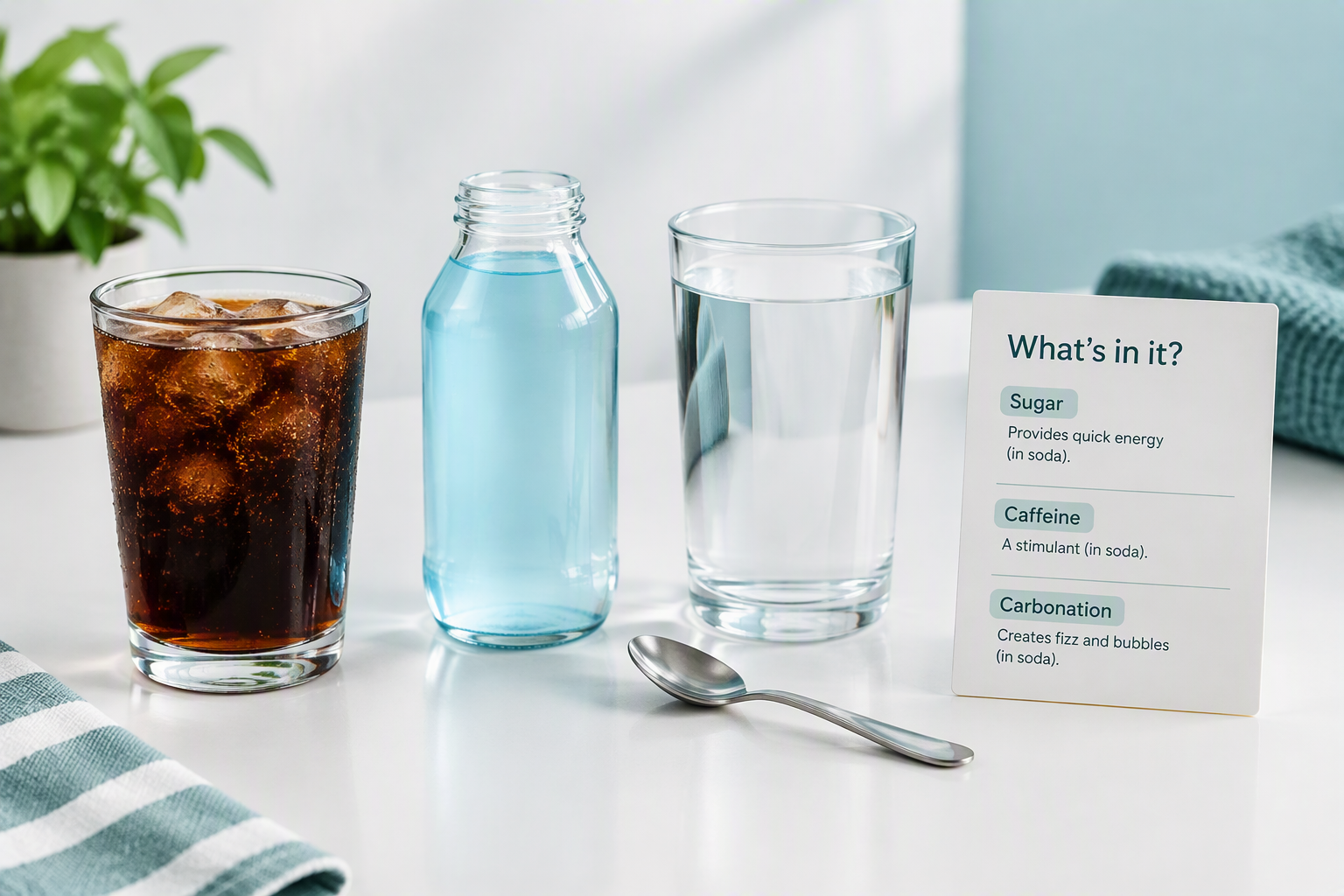
When diarrhea is the active symptom, Coke is usually a poor choice, even if it feels familiar or briefly settles nausea. Carbonation can cause belching, pressure, bloating, and gas, while regular Coke also contains sugar and caffeine. The coke when you have diarrhea guidance explains why it is an occasional beverage, not a way to replace lost fluids.
Sugary soda can worsen diarrhea because drinks with a high sugar content may draw water into the bowel. Oral rehydration solution uses a glucose and sodium balance that supports fluid absorption, and small, frequent sips of still water are a better choice than soda when fluid loss is mild (source, source).
Fizzy drinks can create different problems during a flare:
- Regular soda: Sugar, caffeine, and carbonation may worsen urgency, cramping, or bloating.
- Caffeine-free soda: Removing caffeine does not remove the sugar or bubbles that can aggravate reflux and pressure.
- Diet soda: Sugar is removed, but sorbitol, xylitol, and other sugar alcohols can have a laxative effect. Check the label instead of assuming diet soda will be easier to tolerate.
The adverse effects of carbonated beverages may stand out most when fizzy drinks and gas already tend to go together for you. Choose noncarbonated fluids when cramps, bloating, or reflux are active, and use an ORS for substantial or persistent diarrhea.
Stop drinking soda if urgency, cramping, gas, or reflux worsens. Seek medical care for dehydration signs, severe abdominal pain, fever, blood or black stool, or diarrhea that does not improve.
Fizzy drinks and nausea are a mixed pairing: a few sips can settle a queasy stomach for some people, while a large, sweet drink more often makes it worse.
Which Drinks Are Worth Limiting?
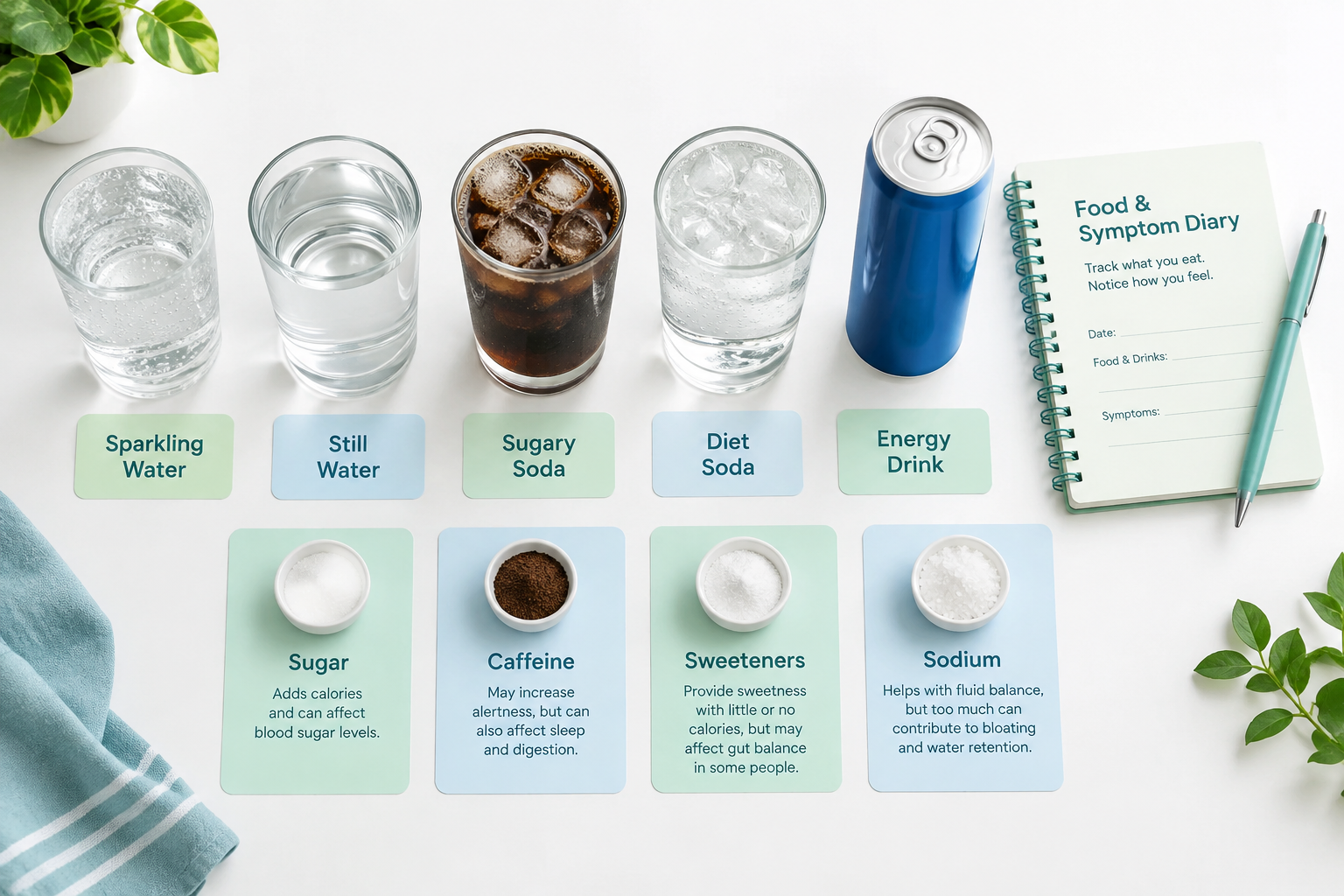
Across the symptom patterns discussed, rather than avoiding carbonated beverages altogether, match the drink to your symptom pattern. Carbonation and bloating can cause quick burping or upper-belly fullness, while heartburn or a sour taste may point to reflux sensitivity. Bloating, cramps, constipation, diarrhea, or other bowel changes that start later may relate to caffeine, sweeteners, a large meal, or accompanying foods. No symptoms are useful information, especially with a gas-sensitive gut.
A food-and-symptom diary can help answer, does carbonation cause bloating? Record the drink or food, portion, timing, meal context, symptoms, and bowel changes. Note whether symptoms begin within minutes, later that day, or the next morning. A paper log or free printable can help separate carbonated drinks and IBS symptoms from other triggers.
Plain sparkling water differs substantially from soda, diet soda, energy drinks, tonic water, alcoholic seltzer, and carbonated tea. Check the full ingredient list for possible adverse effects of carbonated beverages beyond the fizz:
- Carbon dioxide: May increase belching or fullness.
- Added sugar or high-fructose corn syrup: May affect symptoms separately from carbonation.
- Caffeine: May worsen reflux or bowel urgency for some people.
- Sugar alcohols: Sorbitol, xylitol, and erythritol may contribute to gas or diarrhea.
- Sodium, acids, and citrus flavoring: May matter with reflux. For sparkling water, low sodium ideally means under 100 milligrams per can.
Choose drinks without added sugar and with fewer sweeteners when those ingredients match your symptoms. Zero sugar does not mean additive-free. The foods worth limiting may reveal meal ingredients that overlap with beverage triggers.
Keep usual meals and routines steady while replacing one suspected drink or ingredient for several days. Then reintroduce it and watch for the same pattern. Comparing plain still water with plain sparkling water makes the result clearer.
Seek clinical guidance for trouble swallowing, frequent disruptive reflux, persistent diarrhea or constipation, dehydration, severe abdominal pain, unintentional weight loss, or blood or black stool.
The bigger dividing line is sugar. Sugar-sweetened soda carries the carbonation plus a sugar load that pulls water into the bowel, so the benefits of sparkling water over soda have little to do with the bubbles and a lot to do with what is dissolved in them.
Sugar-free carbonated drinks remove the sugar but keep the acid and the gas, and their sweeteners bother some guts. Tonic water sugar surprises people, since it tastes bitter but is sweetened like a soda. Flavored sparkling water and sparkling mineral water are close to plain water for the gut, as long as the flavor is not a sugar or a sugar alcohol. Acidic beverages of any kind are worth limiting if reflux is your main complaint, and sugar-sweetened beverages are the ones to cut first.
Carbonated Drinks and Digestion FAQs
These FAQs cover the questions people ask most about sparkling water, soda, and the gut, from bloating to whether fizzy water is a healthy choice.
1. Is Sparkling Water Good for You?
For your gut, sparkling water is close to plain water. Carbonated water health benefits are mostly about hydration and helping people who dislike still water drink more. The risks of sparkling water are small: belching, a little bloating, and, for people with reflux, a burp that carries acid upward. A calorie-free beverage with no sugar or sweetener is the version to pick.
2. Does Sparkling Water Cause Bloating?
Sparkling water and bloating go together when you drink a lot quickly. The gas that does not leave as a burp stretches the stomach for a while. Sip slowly, choose a lighter carbonation, or let the glass sit for a minute, and bloating and burping usually drop.