


After another lunch leaves you bloated or sends you looking for a bathroom, cutting out every food that seems questionable can make meals harder.
The foods and drinks to limit for better gut comfort are the ones that repeatedly worsen symptoms such as gas, reflux, constipation, diarrhea, or IBS, not every item labeled unhealthy online. Portion size and how often you have it can matter as much as the food itself.
Sugar-free gum may cause cramping from sorbitol or mannitol, while coffee, alcohol, carbonated drinks, and large fried meals can affect digestion in different ways.
A food-and-symptom record, followed by reducing and reintroducing one suspected trigger at a time, can show whether a pattern is repeatable. That approach protects dietary variety while making it easier to choose foods that feel comfortable.
Gut Comfort Foods and Drinks Key Takeaways
- Limit ultra-processed foods when they replace fiber-rich meals and worsen your symptoms.
- Watch sugar alcohols like sorbitol and mannitol, which may cause gas, cramping, or diarrhea.
- Reduce alcohol, excess caffeine, and carbonated drinks if they reliably trigger digestive discomfort.
- Choose smaller portions of fried or fatty meals when reflux, fullness, or loose stools occur.
- Increase fiber gradually, since a rapid change can worsen bloating and gas.
- Test high-FODMAP foods and lactose individually rather than avoiding them permanently.
- Track meals, portions, symptoms, and timing before reintroducing a suspected trigger.
What Foods Should You Limit for Gut Comfort?
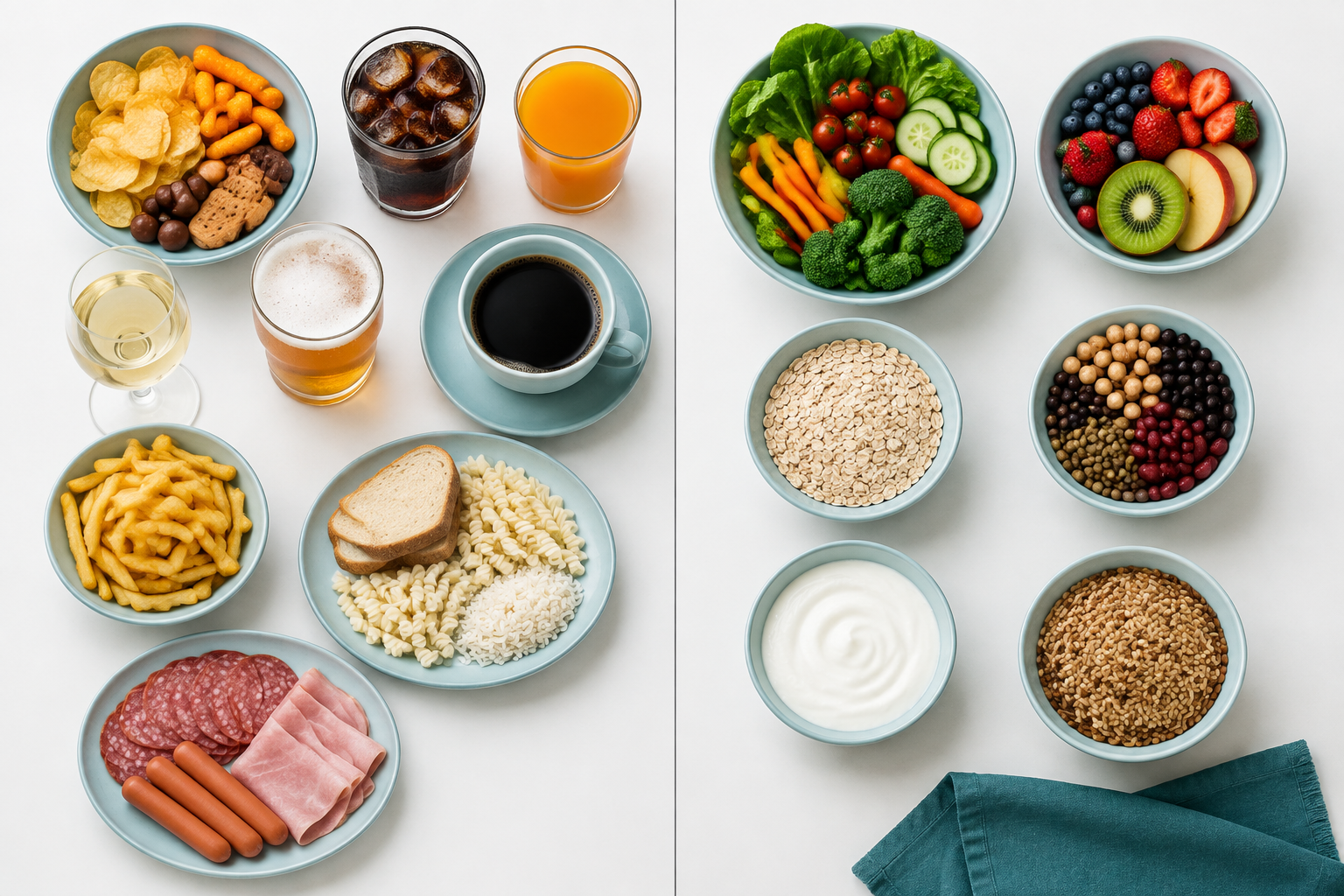
Gut comfort is personal. The foods to limit for gut health are the ones that repeatedly worsen your bloating, gas, constipation, diarrhea, heartburn, reflux, or irritable bowel syndrome (IBS) symptoms, rather than every food labeled “bad” online.
Some foods are worth reducing when they leave you uncomfortable or replace more nourishing choices. Ultra-processed foods and gut health can be a poor match when meals are low in fiber. Common foods that irritate the gut include:
- Added sugars and sugar alcohols
- Alcohol and excess caffeine
- Carbonated drinks and large fatty meals
- Refined grains and processed meats
These are not automatically the worst foods for gut health for everyone. Lactose and high-fermentable carbohydrates, which are carbohydrates that gut bacteria ferment, may trigger IBS symptoms for some people but are not permanent bans. Broad gut microbiome foods to limit should not become an overly restrictive diet.
A simple way to test a suspected trigger is:
- Reduce its portion or frequency while keeping the rest of your meals familiar.
- Track the meal, symptoms, and timing.
- Reintroduce it later to see whether the same reaction returns.
Build most meals around fruits, vegetables, minimally processed protein, whole grains or other high-fiber carbohydrates, and tolerated legumes, nuts, and seeds. The gut health diet in full offers practical meal ideas without treating foods to avoid for digestive health as permanent rules.
Fiber feeds beneficial gut microbes, though increasing it too fast can worsen gas or bloating. Add fiber-rich foods gradually and choose portions you tolerate.
This is a list of foods to avoid for gut health only in the loose sense. Few of them need banning, and the ones that do are personal. Most people do better thinking in two columns: the fiber-rich plant foods, fermented foods, and water that keep healthy gut bacteria fed, and the nine groups below that crowd them out. How to improve gut health then becomes a matter of shifting portions between the two columns rather than cutting whole food groups.
1. Ultra Processed Foods
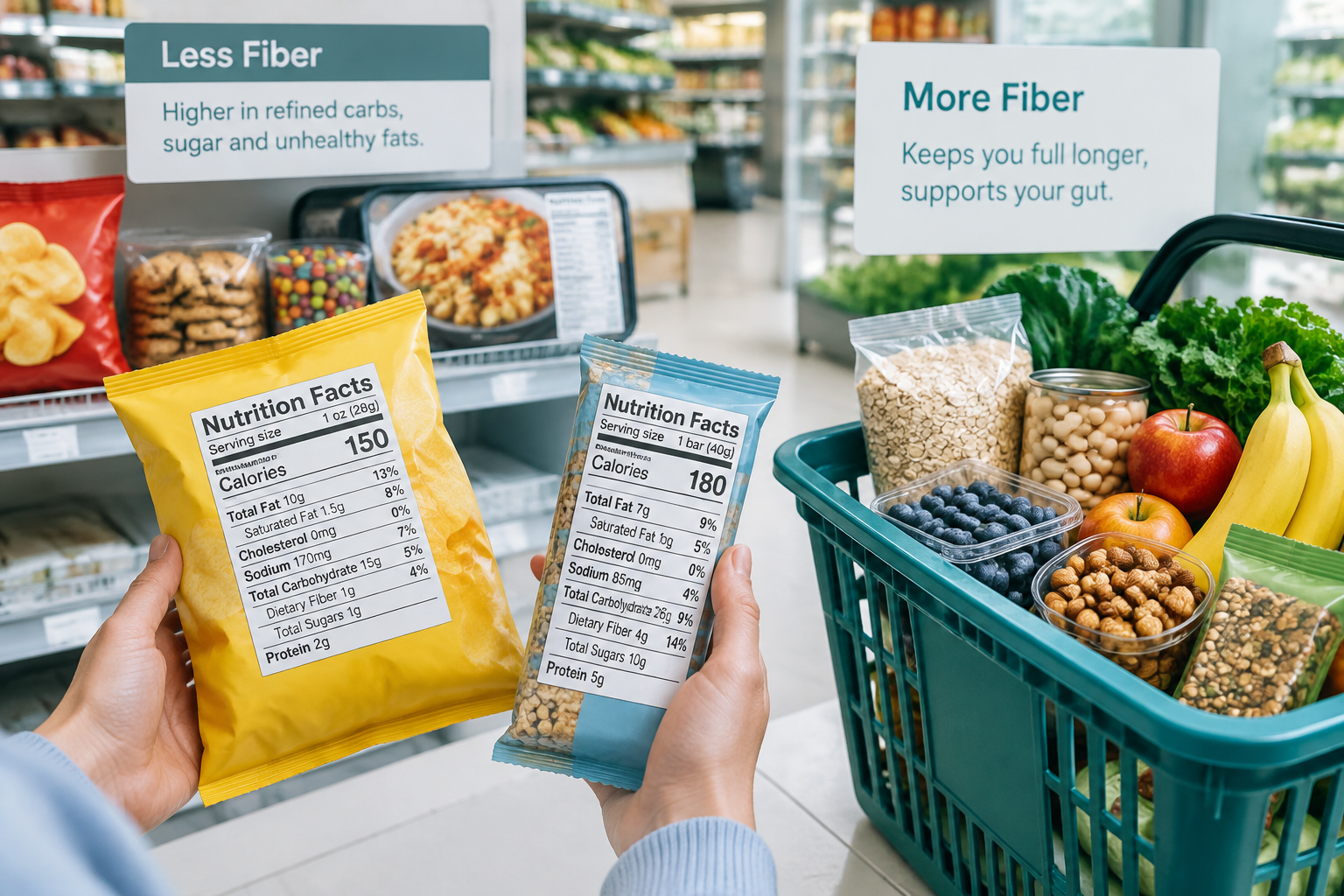
Starting with a common fiber-poor pattern, ultra-processed foods can crowd out the fiber-rich foods that support gut health. Chips, packaged sweets, fast food, processed snacks, and many frozen meals often combine refined grains, added salt, sugar, and fat while offering little fiber. Eating them less often can leave more room for vegetables, fruit, beans, whole grains, and nuts that support a more diverse gut microbiome (source).
Convenience foods do not need to disappear from your routine. With IBS, patterns matter more than perfection. Artificial sweeteners and microbiome changes, high-fructose corn syrup digestion, added sugars and gut health, and refined sugar and gut bacteria can vary from person to person.
A quick grocery-store check can help you choose between similar options:
- Read the ingredients: Ingredients appear from greatest to least by weight. A long list of unfamiliar additives can signal a more heavily processed choice.
- Notice emulsifiers: Carboxymethylcellulose and polysorbate-80 appear in some packaged foods. Food additives and gut lining effects may matter for susceptible people, but these ingredients are worth noticing rather than fearing or avoiding completely (source).
- Compare fiber: Use the Nutrition Facts panel to favor snacks and meals with fiber instead of refined grains and very little fiber. Processed snacks and digestion may be easier to manage when the snack contains fiber.
Make one practical swap at a time, then note your digestive comfort over several days. That record can reveal your personal triggers without turning every grocery trip into a strict test.
Industrial seed oils, chemical preservatives, and emulsifiers in these foods are often blamed for dysbiosis and a weakened gut barrier, and while the human evidence is still mostly association, the practical advice is the same: fewer ultra-processed foods and more prebiotic foods and probiotic foods such as beans, oats, onions, yogurt, and kefir that feed gut flora diversity.
The pattern is what matters: low in dietary fiber, high in refined sugars, additives, and industrial seed oils. Industrial seed oils and gut health are a live research question rather than a settled one, so the practical point is the overall pattern, not one ingredient. Ultra-processed foods also crowd out vegetables, whole grains, and legumes, and that crowding out may matter as much as anything in the packet.
2. Added Sugars and Sugar Alcohols
Beyond ultra-processed foods, added sugars and sugar alcohols can affect digestion in different ways, so it helps to separate them rather than cutting out every sweet food. Added sugars and gut health may be connected through changes in the gut microbiome, while whole fruit also provides water and soluble fiber. Apples and berries usually do not need to be removed simply because they contain natural sugar.
High-fructose corn syrup is one type of added sweetener, not a separate digestive condition. It often appears in soft drinks, fruit drinks, sweet sauces, and packaged desserts, and whether sprite helps an upset stomach turns on the same sugar, so check both the ingredient list and serving size before deciding a food is a problem.
Common places to look include:
- Sweet drinks: Regular soda, fruit drinks, and sweet tea can deliver a lot of added sugar quickly. Whether sprite helps an upset stomach depends more on carbonation and your symptoms than on any soothing effect.
- Packaged foods: Candy, pastries, sweetened cereal, flavored yogurt, dressings, sauces, and desserts may contain added sugar or high-fructose corn syrup.
- Sugar-free products: Aspartame, sucralose, and saccharin appear in diet drinks, snacks, and some protein powders. Research on microbiome diversity, glucose tolerance, inflammation and digestion is still developing.
Sugar alcohols, also called polyols, are different from artificial sweeteners. Sorbitol and mannitol can draw water into the bowel and ferment, making them common foods that cause bloating and gas, cramping, urgency, or diarrhea. Check sugar-free gum, mints, candy, bars, and flavored fiber powders. Sugar-free does not mean additive-free.
If symptoms repeatedly follow a product, try a smaller portion or an unsweetened alternative, such as plain yogurt with berries. Alcohol and digestive tract irritation can also muddy the pattern, so track drinks separately from sweets.
Refined sugar and gut health is a well-worn topic, and the short version is that a steady stream of added sugar feeds the wrong bacteria and starves the ones that live on fiber. Artificial sweeteners gut microbiome effects are less settled: findings on sucralose and aspartame come mostly from small or animal studies, and the saccharin data is older and mixed. Treat all three as worth limiting rather than as proven harms.
3. Alcoholic Drinks
Alcohol and gut health are connected for some people, but alcohol is not an automatic trigger. Heavy or frequent drinking can irritate the stomach and intestinal lining, increase intestinal permeability, disrupt gut microbes and gut-liver signaling, and contribute to inflammation and digestion concerns, according to the National Institute on Alcohol Abuse and Alcoholism (source).
Alcohol can also change gastrointestinal motility, meaning how quickly food moves through your digestive tract. This may lead to urgency, cramping, loose stools, diarrhea, bloating, or irregular bowel habits and can be a personal IBS trigger, while others notice little change.
Alcohol may worsen heartburn by relaxing the valve between the stomach and esophagus and irritating the upper digestive tract. Alcohol-related reflux can occur separately from concerns about high-fat meals and digestion, fried foods and gut health, or processed meats and inflammation.
A short cutback trial can help reveal your pattern:
- Choose smaller servings and drink more slowly.
- Have water between alcoholic drinks.
- Avoid drinks that have caused symptoms before.
- Plan alcohol-free occasions during reflux, diarrhea, or bloating flares.
Track what you drank and whether constipation, diarrhea, reflux, bloating, or general discomfort changed. Persistent symptoms or trouble eating and drinking call for personalized guidance from a clinician or registered dietitian rather than repeated food eliminations.
The damage from heavy drinking is to gut barrier health first: alcohol loosens the junctions between intestinal cells, which is the mechanism behind the phrase leaky gut and intestinal permeability. The barrier recovers when the drinking stops, which is one reason alcohol-free stretches help more than swapping drink types.
4. Large Fatty or Fried Meals
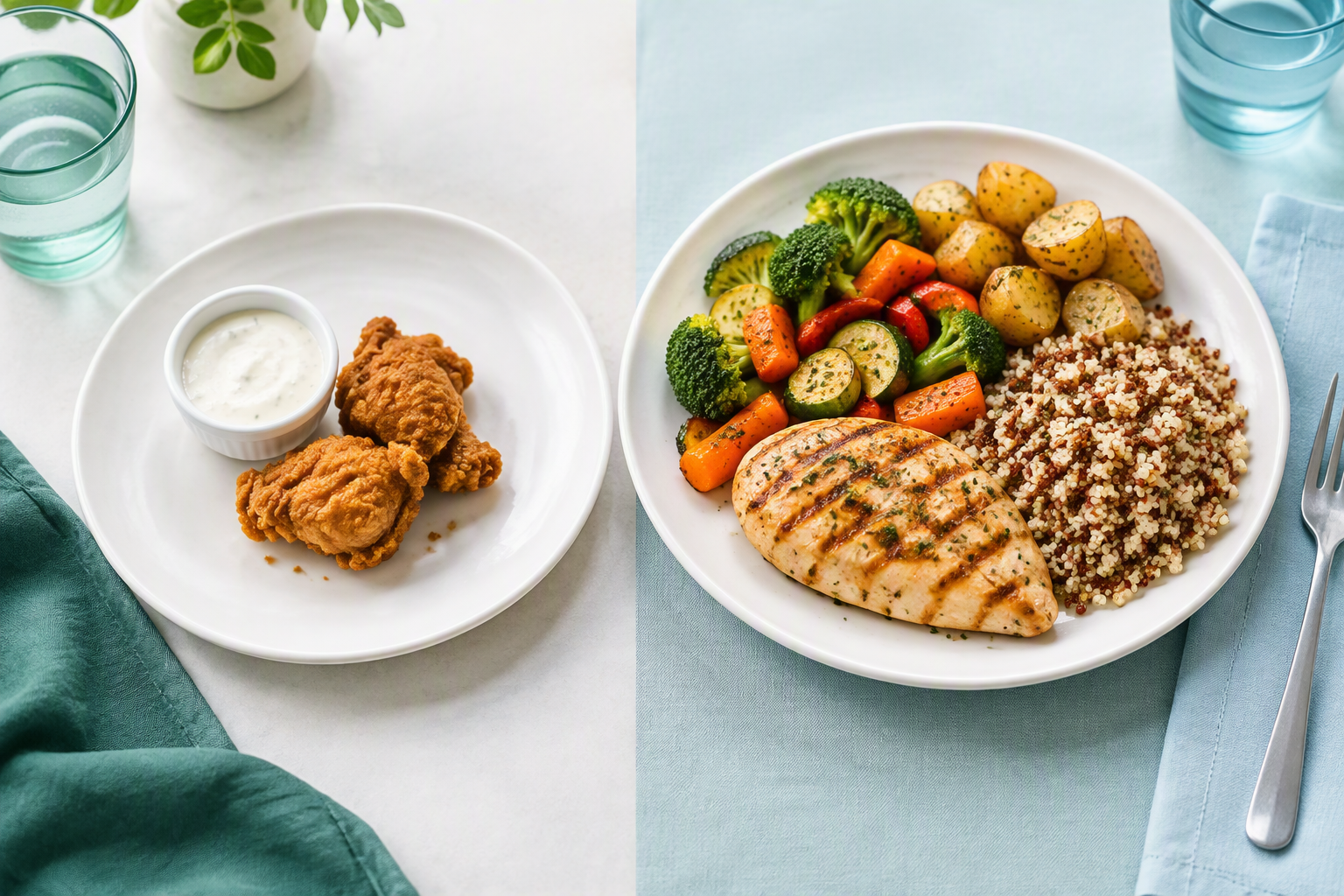
Alongside alcohol-related reflux, fried foods and oversized high-fat meals can leave you uncomfortably full because fat slows stomach emptying. Deep-fried entrées, fast food, rich pastries, and heavily buttery dishes may worsen bloating, gas, stomach pain, loose stools, or reflux. Processed choices can also affect fried foods and gut health because they are often low in fiber and high in sodium, additives, and saturated or trans fats.
Fat does not need to be off-limits. Portion size, cooking method, and your main symptom matter more than any single food. A large, greasy meal may be especially bothersome with reflux or lingering fullness, while fried foods can be more noticeable triggers for diarrhea or irritable bowel syndrome (IBS). Keep meal-fat patterns separate from notes about caffeine and bowel movements or excess caffeine and acid reflux.
Small changes can make familiar meals easier to tolerate:
- Choose a different cooking method: Try baked, grilled, roasted, steamed, or air-fried chicken, fish, potatoes, and vegetables instead of deep-fried versions.
- Control rich extras: Order creamy or buttery sauces on the side, then use an amount that feels comfortable.
- Build a balanced plate: Fill about half your plate with fruits and vegetables, then split the remaining space between protein and whole grains or another complex carbohydrate that fits your tolerance.
At home or at a restaurant, a moderate serving of a rich entrée is often easier than pairing fried sides with a heavy main course and dessert. Save the remainder for another meal, and adjust high-fiber choices if they reliably worsen your symptoms.
Foods that slow digestion are mostly fatty ones, and foods for acid reflux relief are the reverse: smaller, lower-fat meals eaten earlier. Short-term discomfort and long-term microbiome harm are different questions, so keep them separate.
5. Excess Caffeine
Excess caffeine can be a digestive trigger, but it does not mean you need to avoid coffee, cola, or caffeinated tea entirely. In some people, these drinks speed bowel movements, leading to cramping, urgency, or loose stools, and cola and diarrhea is the most common version of that pattern. Excess caffeine and acid reflux can also occur together, with heartburn, a sour taste, or indigestion after coffee, cola, or tea.
Track the symptom that follows each drink. Bloating, gas, and constipation have several possible causes, and carbonation and bloating may be a separate pattern from caffeine. The National Institute of Diabetes and Digestive and Kidney Diseases notes that gas symptoms can have more than one cause (source)).
Try a short caffeine trial for several days:
- Keep your usual meals consistent.
- Reduce the portion size or have caffeine earlier in the day.
- Replace a second coffee or cola with water or caffeine-free herbal tea. Choose a non-mint tea if reflux is a concern, since peppermint can worsen heartburn for some people.
One difficult day does not prove caffeine is the cause. Persistent bloating, diarrhea, constipation, reflux, or IBS symptoms may need individualized assessment.
6. Carbonated Drinks
Separate from caffeine’s effects, carbonated drinks and digestion are highly personal. Fizz adds swallowed gas, which can worsen bloating, belching, or an uncomfortably full feeling, especially when you already have gas or IBS. For some people, carbonation and bloating are linked to larger servings or drinking quickly, while others feel no difference.
Sparkling water and soda can both create pressure from carbonation, but soda has additional triggers. Regular soda adds sugar, some colas and other varieties contain caffeine, and acidity may worsen heartburn or reflux. Sugary cola and diarrhea can also be a pattern worth noticing if stools become looser afterward.
A short trial can help you judge your own tolerance:
- Choose still water instead of fizzy drinks for several days.
- Reintroduce a small serving of plain sparkling water.
- Track bloating, belching, reflux, constipation, diarrhea, and IBS symptoms.
If plain sparkling water feels fine, you do not need to avoid it. When symptoms reliably worsen after fizzy drinks, still beverages may be the more comfortable everyday choice.
7. Refined Grains and Processed Meats
Refined grains are not automatically foods that harm the gut microbiome, but meals centered on them often provide less fiber. White bread, white rice, regular pasta, pastries, and many boxed cereals lose fiber and nutrients during refining. Fiber helps add bulk to stool and feeds beneficial microbes, so a low-fiber pattern can worsen constipation for some people.
Whole-grain versions of bread, pasta, and cereal carry several times the fiber of their refined counterparts, and you can check the exact figures for any food on USDA FoodData Central (source).
Practical swaps can stay simple:
- Breakfast: Choose oats or a higher-fiber cereal instead of a refined cereal.
- Lunch: Try whole-wheat or rye bread when it feels comfortable.
- Dinner: Use whole-wheat pasta, or mix it with regular pasta while your digestion adjusts.
Vegetables, fruit, legumes, and whole grains can support regular bowel habits, but a rapid fiber increase can add to foods that cause bloating and gas. Start with portions you tolerate and drink enough fluids. Some high-FODMAP foods are nutritious but may trigger IBS symptoms, while dairy and lactose intolerance can affect how a meal feels without making grains the cause.
Processed meats and inflammation are often discussed together because bacon, sausage, hot dogs, deli meats, and pepperoni offer no fiber and may contain high amounts of sodium, nitrates, preservatives, and other food additives and gut lining concerns. Gut microbes can turn certain meat-related nutrients into trimethylamine N-oxide, or TMAO, which is associated with cardiovascular and inflammatory concerns. That link does not mean one meal causes illness.
Smaller, less-frequent portions are a realistic middle ground. Poultry, fish, eggs, beans, and lentils can replace processed meats when tolerated, and personal food patterns matter in IBS (source).
Processed meats and gut health is mostly a question of frequency. Refined grains and gut microbiome effects come from what is missing: the bran and germ that carry the prebiotic fiber your beneficial gut bacteria live on. Swapping half of the refined grains for whole grains is the simplest move.
8. High FODMAP Foods and Lactose
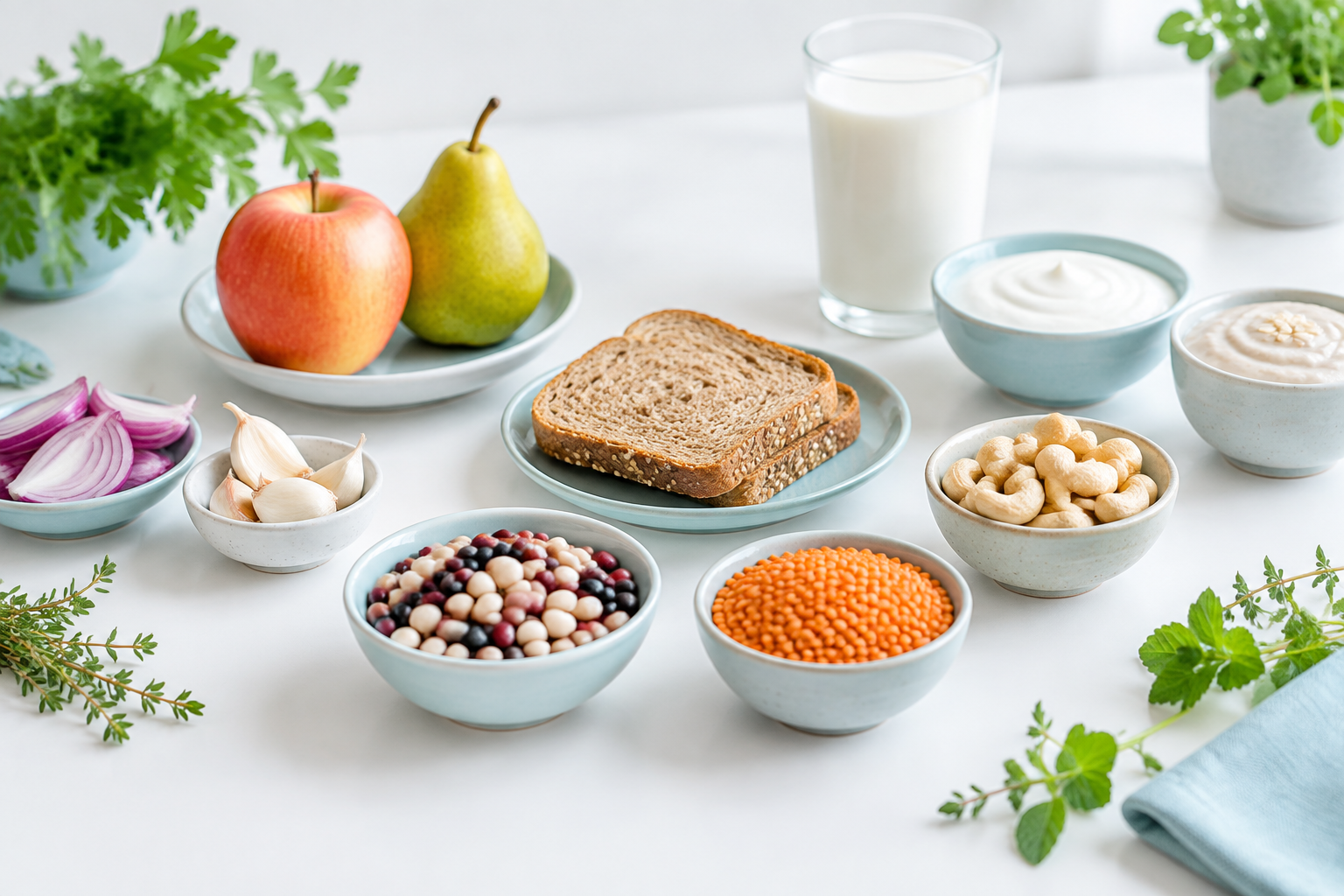
High-FODMAP foods are not “bad” foods. Fermentable oligosaccharides, disaccharides, monosaccharides, and polyols, known as FODMAPs, are carbohydrates that are poorly absorbed in some people, can draw water into the bowel, and can ferment in the gut. For some people with IBS, this may worsen bloating, gas, abdominal discomfort, or diarrhea. Many of these foods also support a healthy microbiome and beneficial microbes when you tolerate them well.
Potential triggers are personal, and portion size matters:
- Onions and garlic: These flavorful staples can cause symptoms for some people with IBS.
- Beans and lentils: A larger portion may lead to more gas than a smaller serving.
- Wheat and rye foods: Bread, pasta, and cereal may bother some people, though gluten is not automatically the cause.
- Selected fruits and nuts: Apples, pears, mango, watermelon, cashews, and pistachios can be harder to tolerate in certain amounts.
- High-fructose corn syrup: Foods and drinks sweetened with it may trigger symptoms for some people.
Rather than treating these as universal foods to avoid for digestive health, notice how each food affects your digestive balance. A smaller serving may work comfortably when a larger one does not.
Lactose deserves separate attention. Regular milk and other lactose-containing dairy products can cause gas, bloating, or diarrhea when lactose is poorly digested, so if symptoms appear mainly after dairy, try lactose-free milk or yogurt, or discuss lactase enzyme use with a healthcare professional. Symptoms after dairy do not mean every dairy food needs to leave your diet.
A food-and-symptom record can help you test suspected triggers without cutting out every fermentable food:
- Record meals, portions, symptoms, and bowel changes.
- Change one likely trigger at a time.
- Reintroduce tolerated foods to protect fiber intake, nutrition, and variety.
Persistent or severe symptoms, unexplained weight loss, bleeding, fever, or symptoms that wake you at night need clinical evaluation rather than broad, long-term restriction.
A structured low-FODMAP diet, built on the Monash University research, is a short test rather than a lifestyle, and food sensitivities identified this way are managed by portion, not by permanent avoidance.
FODMAP triggers are individual, which is why the FODMAP elimination diet developed at Monash University runs in phases: a short elimination, then FODMAP reintroduction one group at a time, then a personalized IBS diet built from the results. Tolerance also changes over time, so a food that failed a year ago is worth retesting. Lactose-free alternatives solve the lactose problem without giving up dairy.
9. Personal Trigger Testing and Reintroduction

A short, symptom-led trial can help you spot patterns without creating permanent food bans. Match the food category to your main concern. Lactose, polyols, and high-fermentable carbohydrates may be worth testing for bloating or IBS. Coffee, alcohol, carbonated drinks, and large fatty meals may matter more with reflux.
For diarrhea or constipation, focus on foods and portion sizes that came before a bowel change. High-fermentable foods are not a problem for everyone and may still fit your gut health routine.
A daily log helps separate a repeatable trigger from a difficult day influenced by stress or poor sleep. Record:
- Each food and drink, its portion, and meal time.
- Symptom type, severity, bowel changes, and time to onset.
- Poor sleep, stress, illness, menstrual-cycle changes, rushed eating, alcohol, supplements, and unusually large meals.
Once symptoms are more stable, reintroduce foods in a structured way:
- Test one food at a time, beginning with a small serving.
- If that serving feels okay, try your usual portion on a separate day.
- Keep other meals and routines consistent, and allow time for delayed symptoms.
Symptoms that appear only with a larger portion may signal a personal limit rather than a food you need to avoid indefinitely.
Testing should still include varied, minimally processed meals and tolerated fiber sources. Yogurt, kefir, sauerkraut, and kimchi can fit into a varied diet when they suit you. Heating and heavy processing can reduce live cultures in fermented foods (source). If psyllium repeatedly worsens gas, methylcellulose or partially hydrolyzed guar gum (PHGG) are options to discuss with a clinician or registered dietitian.
Extra support can help when persistent bloating, IBS, reflux, diarrhea, or constipation leads to broad restriction, several suspected triggers, or too little dietary variety. Individual guidance can keep reintroduction practical.
Individual food triggers show up faster when the rest of life is steady. Sleep and gut health, physical activity and gut health, stress and gut bacteria, and antibiotics and gut health all move symptoms on their own, so a diary that notes them stops you blaming last night’s dinner for a bad week of sleep. Mindful eating, meaning slower meals and stopping before full, is the cheapest test of all: many foods for bloating complaints turn out to be portion complaints.
Foods to Limit for Gut Health FAQs
These FAQs cover common questions about foods to limit for gut health, including ways to spot personal triggers without making meals more restrictive than necessary.
1. Can Spicy Foods Irritate Your Gut?
Spicy foods do not harm everyone’s gut, but they can aggravate heartburn, indigestion, or reflux when you are sensitive to them. Burning in your chest or upper abdomen after a spicy meal is more suggestive of reflux, while bloating, diarrhea, or abdominal discomfort may stem from different triggers.
Rather than avoiding spice automatically, try a small serving and track your symptoms. Adjust the portion or frequency based on whether reflux, IBS symptoms, bowel changes, or general digestive comfort is your main concern.
2. Should You Avoid Gluten for Gut Health?
No. A gluten-free diet is essential for celiac disease and may be appropriate for a diagnosed wheat allergy or non-celiac gluten sensitivity, but it is not the default path to better gut health. Wheat-related bloating or bowel changes can also reflect fermentable carbohydrates or portion size, especially with IBS-like symptoms. Avoid cutting out gluten before celiac testing. Keep fiber-rich, minimally processed foods and focus on your personal triggers, including artificial sweeteners and microbiome concerns or dairy and lactose intolerance.
3. Can Artificial Sweeteners Cause Bloating?
Yes. Sugar alcohols, also called polyols, can cause cramping, gas, bloating, or diarrhea when your body does not absorb them well. Sorbitol and mannitol are common examples. They can be foods that irritate the gut for some people, but that does not mean you need to avoid every sweetener.
Check labels on diet drinks, sugar-free packaged snacks, and artificially sweetened protein powders. Aspartame, sucralose, and saccharin may affect gut microbe diversity and glucose tolerance, though your digestive response may differ. “Sugar-free” products can still contain additives that trigger symptoms.
4. Are Raw Vegetables Hard on Digestion?
Raw vegetables are healthy and not automatically hard to digest. Still, a large salad or a sudden increase in insoluble fiber may worsen bloating, abdominal discomfort, diarrhea, reflux, or IBS symptoms, especially if you do not usually eat much fiber. Portion size, vegetable choice, and your symptoms matter more than avoiding vegetables altogether.
Try a smaller serving, chew thoroughly, or choose cooked zucchini, spinach, or green beans. Ongoing bloating, constipation, diarrhea, or reflux may call for individualized food guidance instead of broad eliminations.
5. Do You Need a Gut Reset Diet?
Most people do not need a cleanse or a long restrictive gut reset diet to support digestion. During a flare, a gentle reset means briefly returning to simple meals with minimally processed protein, tolerated vegetables and fruit, high-fiber carbohydrates, legumes, nuts, and seeds while dialing back known triggers. Add fiber slowly because it feeds beneficial gut microbes. Reintroduce yogurt, kefir, sauerkraut, or kimchi in small amounts if tolerated, then test suspected triggers one at a time. Persistent, severe, or unexplained symptoms deserve medical guidance.
Gut-healing foods and leaky gut cures are marketing terms. What improves gut health over time is the boring list: fiber, plant variety, fermented foods if tolerated, sleep, movement, and fewer of the categories above, which also happens to be the pattern linked with better metabolic health.
6. What Are the Best Foods for Gut Health?
The best foods for gut health are the ones that feed your bacteria: high-fiber foods such as vegetables, fruit, legumes, whole grains, and nuts, plus fermented foods for gut health such as yogurt, kefir, sauerkraut, and kimchi. Dietary fiber for gut bacteria is the common thread, since gut microbiome diversity tends to follow the variety of plants you eat.
7. Which Foods Help Constipation?
Foods for constipation are fiber-rich plant foods, enough fluid, and fruit such as kiwi and prunes. Foods that cause dysbiosis, meaning an imbalance in the gut microbiota, are the ones on this page eaten too often, and constipation is one way that imbalance shows up.
8. Which Foods Reduce Inflammation?
Foods to avoid to reduce inflammation overlap with this list: ultra-processed foods, added sugar, alcohol, and processed meats. Gut inflammation eases when those shrink and vegetables, fruit, legumes, olive oil, and fish grow.