


The right fiber supplement depends on whether constipation, gas, or loose stools is disrupting your day. Psyllium is often the most flexible option for constipation and mild loose stools, while methylcellulose may be easier to tolerate when gas and bloating are the main concern. Soluble fiber holds water, and some types form a gel that can soften hard stool or give loose stool more shape.
A powder that works for someone else can still leave you more bloated, especially when it contains fermentable fibers such as inulin or wheat dextrin. IBS-like symptoms also make flavored blends harder to judge because sweeteners and added ingredients can affect digestion. Comparing psyllium, methylcellulose, wheat dextrin, inulin, and partially hydrolyzed guar gum by stool effects and fermentation gives you a clearer place to start. A gradual trial with one simple fiber source makes changes easier to trace.
Fiber Supplements Key Takeaways
- Psyllium forms a water-holding gel that can help constipation and mild loose stools.
- Methylcellulose is nonfermentable and may cause less gas than fermentable fiber options.
- Wheat dextrin and inulin ferment in the gut and can worsen bloating for some people.
- Partially hydrolyzed guar gum is fermentable but may support regularity with gradual use.
- Food provides fiber alongside nutrients that powders and capsules cannot replace.
- Start with one unflavored fiber source and increase gradually to assess tolerance.
- Keep psyllium and oral medicines apart because it can affect medication absorption.
Which Fiber Types Support Your Digestion?
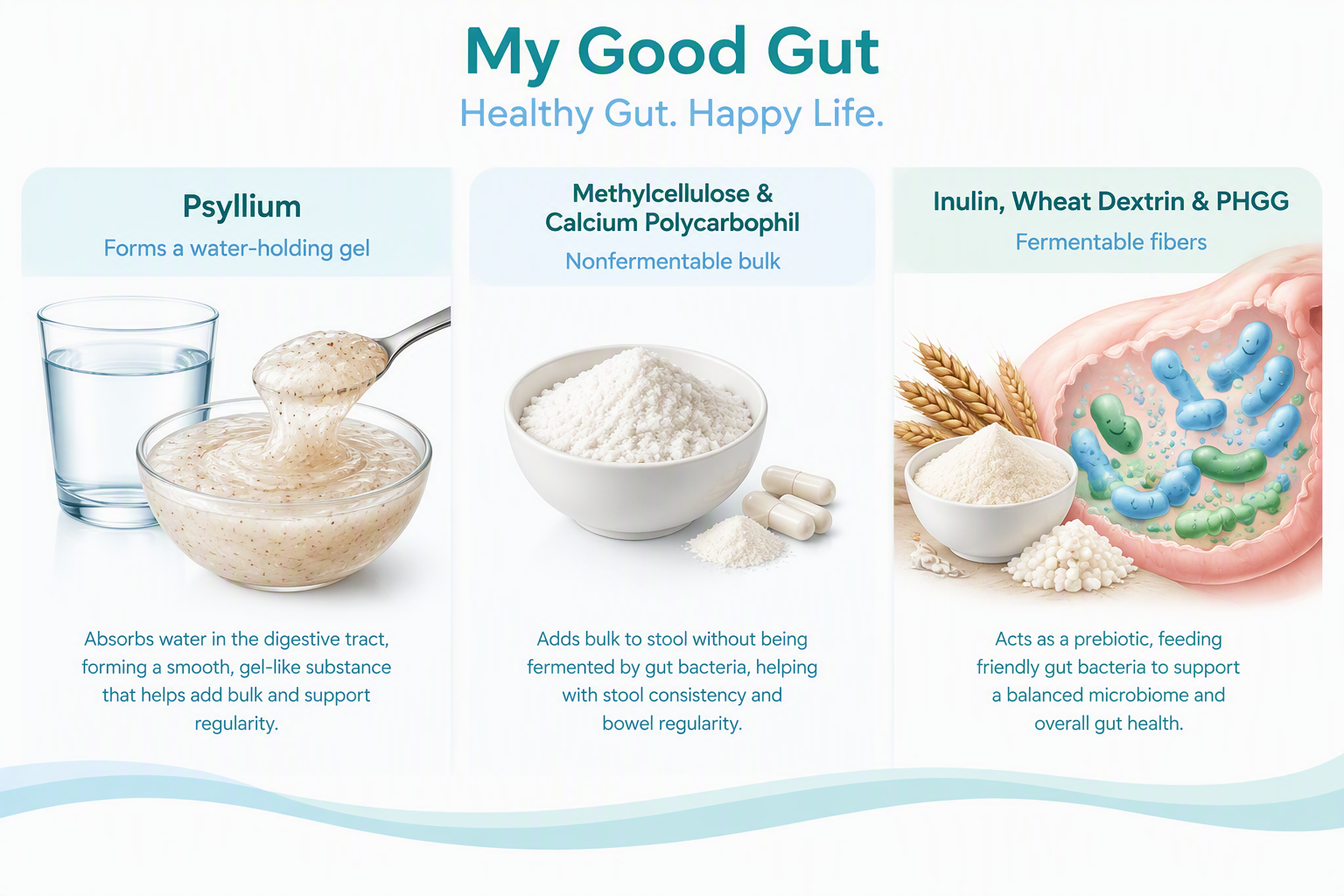
Soluble fiber and insoluble fiber describe how fiber behaves with water, not which type is better. Soluble fiber dissolves and may form a gel, while insoluble fiber does not dissolve and mainly adds stool bulk. Many supplements work in more than one way, so your main symptom and tolerance matter more than the label alone.
Gel-forming soluble fiber holds water in the digestive tract. That can soften hard stool and absorb excess water, giving loose stool more form. Psyllium is the main two-direction option in this comparison, though its benefits and tradeoffs deserve a closer look.
Insoluble fiber increases stool volume and may help waste move through the digestive tract faster. This may suit sluggish transit, but extra bulk is not automatically helpful when urgency or loose stools are the larger concern. Food is the starting point before any of them, and food-first gut health eating covers the everyday sources of total, soluble, and insoluble fiber.
A symptom-first approach can narrow the choices:
- Constipation or loose stools: Gel-forming, water-holding fiber may fit both concerns.
- Sluggish transit: Fiber that adds stool bulk may be worth considering.
- Gas or bloating: Lower-fermentation options can make a clearer first trial.
Fermentability also affects tolerance. Gut microbes break down fermentable fibers, which may support digestion for some people but can also increase gas and bloating. Common options differ in this way:
- Wheat dextrin and inulin: These fibers are fermentable.
- Methylcellulose: This fiber is nonfermentable.
- Partially hydrolyzed guar gum: This is another option to consider for digestive support and day-to-day tolerance.
With irritable bowel syndrome (IBS)-like symptoms, a fiber that helps someone else may still worsen your bloating or urgency. Matching the fiber’s behavior to your symptoms gives you a practical starting point.
How to choose a fiber supplement comes down to one question: do you want a gel, bulk, or food for bacteria? Bulk-forming fiber such as psyllium gives a gel. Synthetic fibers such as methylcellulose and calcium polycarbophil give bulk without gas. Prebiotic soluble fiber such as inulin feeds bacteria and makes gas. That is the whole map, and whether you need a supplement at all depends on fiber targets from food first.
1. Psyllium: Best for Stool Consistency
Best for: hard stools, mild loose stools, and IBS with mixed bowel habits, because the gel works in both directions.
Psyllium fiber is the most versatile choice here because its water-holding gel can help with constipation and mild loose stools. Made from Plantago ovata seed husks, this soluble, viscous fiber can aid softening stool when bowel movements are hard while adding bulk and form when stools are loose.
That flexibility can suit constipation-predominant irritable bowel syndrome (IBS-C), mixed bowel habits, and general irregularity better than a fiber aimed at one symptom alone. The gel-forming action, rather than fiber content by itself, helps maintain stool moisture and consistency. Psyllium may also have prebiotic and cholesterol-support effects, though stool regulation is the main reason to consider it. A clinical review supports psyllium for irritable bowel syndrome symptoms (source).
Adequate liquid matters with every dose. Take psyllium with at least 8 ounces (240 milliliters) of water (source), avoid taking it immediately before bed, and separate it from oral medicines or supplements by a few hours because it can affect absorption, with some medicines needing a 3 hour gap. A pharmacist can help determine whether any medication on your list needs more specific timing.
A simple trial keeps it easier to tell what your body tolerates:
- Choose an unflavored, single-ingredient psyllium husk powder.
- Begin gradually if bloating or cramping is common for you.
- Keep the dose timing and preparation consistent while noting stool consistency and gas.
Sugar-free flavored powders may still contain sweeteners and flavorings, which can muddy an IBS-focused trial. Psyllium husk in practice can help you keep the preparation plain.
For mild loose stools, compare Psyllium with alternatives based on gas tolerance. If gas continues to worsen after a slow start, methylcellulose vs psyllium may favor the lower-fermentation option, while partially hydrolyzed guar gum is another alternative. Wheat dextrin and inulin can be more fermentable, which may be a drawback when bloating is already a concern.
Psyllium husk for constipation is the best studied use, and psyllium and IBS also pair well because the gel is not fermented much. The best-known psyllium powders are Metamucil psyllium fiber powder and plain NOW psyllium husk powder, the unflavored option.
2. Methylcellulose: Best for Gas Sensitivity
Best for: people who get gas and bloating from other fibers and want bulk without fermentation.
Methylcellulose is a synthetic, soluble fiber that gut bacteria do not ferment. Because it creates less bacterial fermentation than inulin or wheat dextrin, it may be easier to tolerate when other fiber powders leave you with uncomfortable gas or bloating.
This fiber can suit you when gentle stool regulation matters more than the prebiotic effects of a strongly fermentable fiber. It may be worth considering for mild constipation or occasional loose stools, although its stool-normalizing effect may be more modest than psyllium’s.
For a methylcellulose vs psyllium decision, methylcellulose may make sense if psyllium repeatedly seems to worsen bloating. Lower fermentation can reduce one possible trigger, but it does not guarantee that cramping, bloating, or flatulence will not occur. Digestive tolerance varies from person to person.
A focused trial is easier to interpret when you keep the formula simple:
- Choose methylcellulose when: Minimizing gas is your main goal and you want mild support for regularity.
- Avoid added variables: An unflavored, single-ingredient formula can help you tell whether methylcellulose itself agrees with you, rather than reacting to sweeteners, flavorings, or a multi-ingredient blend.
- Compare other fibers carefully: Partially hydrolyzed guar gum may be another option if psyllium does not suit you, while inulin and wheat dextrin may be less comfortable if gas is already a concern.
Persistent, severe, or unexplained digestive symptoms need healthcare guidance rather than a supplement-only approach.
Methylcellulose fiber is the one to try when you want fiber less likely to cause gas. Citrucel methylcellulose powder is the common product, and it is a well-tolerated fiber supplement for people prone to gas and bloating.
3. Wheat Dextrin: Best for Clear Mixing
Best for: adding fiber to coffee, water, or soft food without changing texture, when stool form is not the main problem. It is a convenience fiber, and it does not replace getting fiber from whole foods.
Wheat dextrin is a soluble, fermentable fiber that mixes into drinks and soft foods without creating a thick or gel-like texture. Its low viscosity means it dissolves clearly, making it easier to use consistently if thicker powders put you off. Wheat dextrin is widely available in powdered fiber supplements and can blend into:
- Water
- Coffee
- Smoothies
- Soft foods
Its clear texture does not mean it will be symptom-free. As a prebiotic fiber, wheat dextrin is broken down by bacteria in the gut microbiome. That fermentation may support bacterial activity, but it can also lead to gas and bloating when your digestion is sensitive. Some people find it causes less heavy gas than other fermentable fibers, though your response may differ.
Wheat dextrin can suit you when the main goal is an easy, low-texture way to add soluble fiber to meals and beverages. Evidence is limited, however, for reliably improving constipation, loose stools, or predictable stool consistency. Psyllium is usually the more targeted choice for stool regulation, while methylcellulose may be a better fit if fermentable fibers keep causing gas.
Inulin fiber may be harder to tolerate with IBS-like symptoms. Partially hydrolyzed guar gum is another soluble option, but try only one fiber at a time and increase gradually so changes in bowel habits are easier to trace.
Benefiber prebiotic fiber powder is the common wheat dextrin product, sold as a clear fiber supplement that dissolves without thickening. Metamucil vs Benefiber is really psyllium vs wheat dextrin: gel and bulk on one side, fermentation on the other.
4. Inulin: Best for Prebiotic Support
Best for: feeding gut bacteria in a gut that already tolerates beans and onions well, and not for a gas-prone gut.
Inulin, also called chicory-root fiber, is a soluble prebiotic fiber that feeds beneficial bacteria but is often a poor first choice if gas or bloating already disrupts your day. Ingredient lists may also use fructooligosaccharides, or FOS.
Once it reaches the large intestine, bacteria in the gut microbiome ferment inulin and produce short-chain fatty acids, which help support colon health. That benefit does not mean inulin is the best option for constipation, loose stools, or general regularity. Psyllium, methylcellulose, wheat dextrin, and partially hydrolyzed guar gum may better match those symptom-focused goals.
Rapid fermentation is the tradeoff. It can lead to substantial gas, bloating, cramping, or stomach discomfort, particularly with IBS-like sensitivity or when you increase the amount too quickly. In one study, a 30-gram inulin dose was linked to increased systemic inflammation in most participants, which is a reminder that more fiber is not always better (source).
Inulin can be easy to miss in products marketed for digestion, including:
- Multi-ingredient fiber products: Powders, gummies, and blends may contain inulin alongside other fibers.
- Probiotic and synbiotic supplements: Some formulas add FOS or chicory-root fiber as a prebiotic ingredient.
- Digestive supplements: Check for inulin, chicory-root fiber, and FOS before starting a new product.
A small starting amount makes it easier to tell whether inulin agrees with you. If gas or bloating rises and does not settle after reducing or pausing it, a less-fermentable fiber may be a better fit.
Inulin is chicory root fiber in most products. It is the fiber that feeds gut bacteria most readily, which is why fiber supplements that cause bloating so often contain it.
5. Partially Hydrolyzed Guar Gum: Best for Sensitive Guts
Best for: sensitive guts and IBS, when psyllium feels heavy and inulin causes gas.
Partially hydrolyzed guar gum, or PHGG, is a soluble, fermentable fiber that may suit a sensitive stomach when you want to add fiber for gut health. Fiber supplements can make it easier to support regular bowel movements and a more diverse gut microbiome, though tolerance varies more than any label can predict.
Gut microbes ferment PHGG and may produce short-chain fatty acids, which help nourish colon cells and support the gut barrier. This prebiotic action may encourage beneficial bacteria, but it does not mean PHGG will resolve IBS-like symptoms or other digestive concerns for everyone (source).
PHGG may fit best when gradual regularity and tolerability matter more than a strong stool-bulking effect. Psyllium, methylcellulose, wheat dextrin, inulin, and PHGG differ in how they behave in the gut. Inulin and chicory-root fiber can trigger more gas for some people.
A cautious PHGG trial can help you separate the fiber’s effects from changes in meals or stress:
- Choose unflavored when possible: Sugar-free flavored powders may still contain sweeteners and flavoring, adding variables during an IBS-focused trial.
- Begin conservatively: Increase gradually so changes in gas, bloating, cramps, or stool pattern are easier to notice.
- Judge the full response: Better regularity without added abdominal discomfort matters more than a quick change.
Even gentler fermentable fibers can cause bloating or discomfort. If fermentation-related symptoms continue, methylcellulose offers a useful contrast because it does not ferment.
Sunfiber partially hydrolyzed guar gum is the usual product. PHGG is often the well-tolerated choice among fiber supplements for IBS because it ferments slowly.
6. Calcium Polycarbophil: Best for Occasional Irregularity
Best for: occasional irregularity in someone who wants a tablet instead of a powder and no gas at all.
Calcium polycarbophil is a synthetic bulk-forming fiber sold as a laxative for occasional constipation. It absorbs water in the gut and holds it, so stool stays soft and bulky, and it is not fermented by gut bacteria, which is why the label can promise no gas or bloating (source). That puts it next to methylcellulose on the low-gas side of the map, with one practical difference: it comes as a caplet, so there is no powder to mix.
The tradeoff is dose. A caplet carries far less fiber than a scoop of powder, so it suits people who need a small, steady nudge toward regularity rather than a real fiber gap closed. Take each dose with a full glass of water, and skip it if you have trouble swallowing, since a bulk-forming tablet that lodges in the throat can swell there. Like the other non-fermented fibers, it does nothing for gut bacteria, so it is a stool tool, not a microbiome tool. FiberCon calcium polycarbophil caplets is the common product.
When Is Food The Better Starting Point?

When supplements are hard to tolerate or unnecessary, food is usually the better starting point when you can add fiber-rich choices to regular meals. Fruits, vegetables, legumes, oats, and whole grains provide soluble and insoluble fiber along with vitamins, minerals, fluid, and plant compounds that powders and capsules cannot replace. A varied pattern can support regular bowel habits and a diverse gut microbiome.
Adults generally need 25 to 38 grams of fiber each day, depending on age and sex (source). StatPearls lists that daily range. Average US intake is only about 15 to 16 grams, and roughly 5 percent of adults meet recommended amounts (source).
That gap usually points to too few fiber-rich foods in everyday meals, not a failure to choose the best type of fiber supplement. Increasing fiber gradually and drinking enough fluids can also help limit gas and bloating, a practical approach supported by the National Institute of Diabetes and Digestive and Kidney Diseases (source)).
Getting fiber from whole foods gives you flexible ways to vary the fiber on your plate:
- Berries or an apple with the skin for breakfast or a workday snack.
- Cooked Brussels sprouts or artichoke alongside dinner.
- Beans or lentils in soups, salads, and grain bowls.
- Plain oatmeal, oat bran, barley, or other whole-grain foods.
A measured supplement can be a useful bridge when work schedules, food access, appetite changes, or trigger foods make those choices hard to keep up with. Psyllium fiber may fit a fiber supplement for constipation or a fiber supplement for diarrhea, while methylcellulose may be easier to tolerate when fermentable fibers worsen bloating or loose stools.
Chronic digestive conditions or regular medications can affect your fiber plan.
The recommended daily fiber intake is 25 grams for women and 38 grams for men, and most of that should be dietary fiber from high-fiber foods. Fiber for healthy cholesterol levels and fiber for blood sugar regulation come from food and viscous supplements alike.
How Do You Match Fiber To Symptoms?
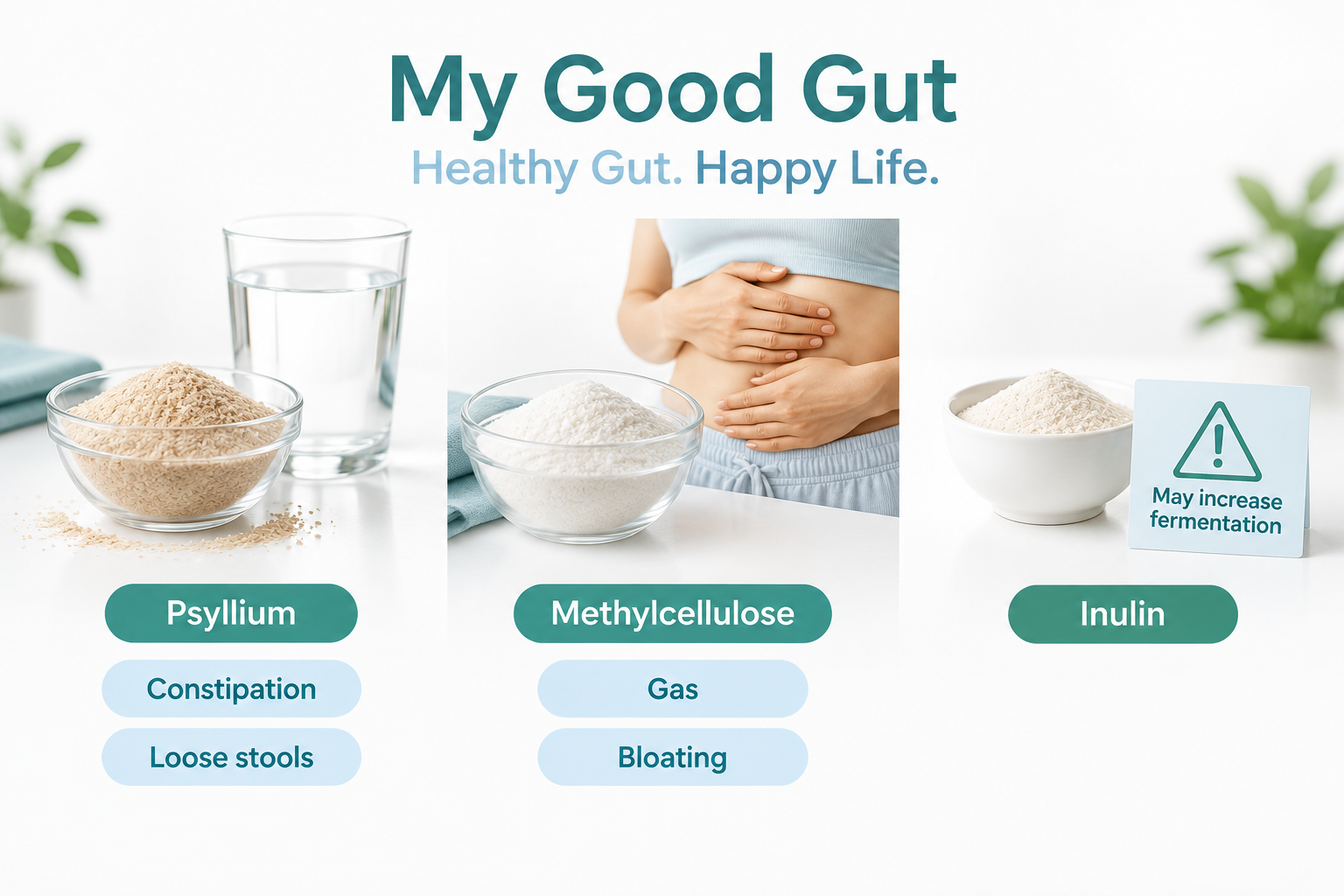
When food alone does not settle the decision, match fiber to the symptom that most disrupts your day, not to a broad gut-health promise. If constipation and loose stools alternate, focus on the harder pattern first and choose an option that is less likely to worsen the other.
Psyllium is often a practical first choice for constipation and changing bowel habits. Its soluble, viscous fiber forms a gel with water, adding moisture and bulk to stool, and that action can also support mild loose stools. Cholesterol support is a secondary benefit, not the main reason to choose it for digestive symptoms.
The main differences between common options are:
- Psyllium: Provides gel-forming bulk that may suit constipation, mild loose stools, and general regularity.
- Methylcellulose: Is soluble and non-fermentable, which may make it a better fit when fermentable fibers cause gas or bloating.
- Inulin and chicory-root fiber: Contain fructooligosaccharides, or FOS, that feed gut bacteria and support short-chain fatty acid production. Their fermentation can worsen gas, bloating, urgency, or IBS symptoms.
If psyllium still causes gas after a gradual start, methylcellulose or partially hydrolyzed guar gum may be gentler alternatives. For an IBS-focused trial, unflavored products make changes easier to interpret because sugar-free flavored options can still contain sweeteners and flavoring.
How to start fiber supplements without confusing the results:
- Start with a low amount of one unflavored product.
- Increase gradually as tolerated while tracking stool pattern, urgency, gas, and bloating over several weeks.
- Make drinking water with fiber supplements part of your routine. How to take a fiber supplement also matters: take psyllium with water, avoid it immediately before bed, and ask a pharmacist about spacing it from oral medicines.
Fiber supplement dosage and fiber supplement side effects are easier to judge when only one change is happening. Seek medical care for persistent or worsening constipation or diarrhea, significant pain, blood or black stools, fever, dehydration, unintentional weight loss, or a meaningful change in your usual bowel habits.
Fiber supplements for constipation: psyllium first. Fiber supplements for diarrhea: psyllium again, since the gel adds form, or methylcellulose. Fiber for bloating and gas: methylcellulose, calcium polycarbophil, or PHGG, and skip inulin. Fiber for stool consistency in general: the gel formers.
How Do You Start A Fiber Trial?
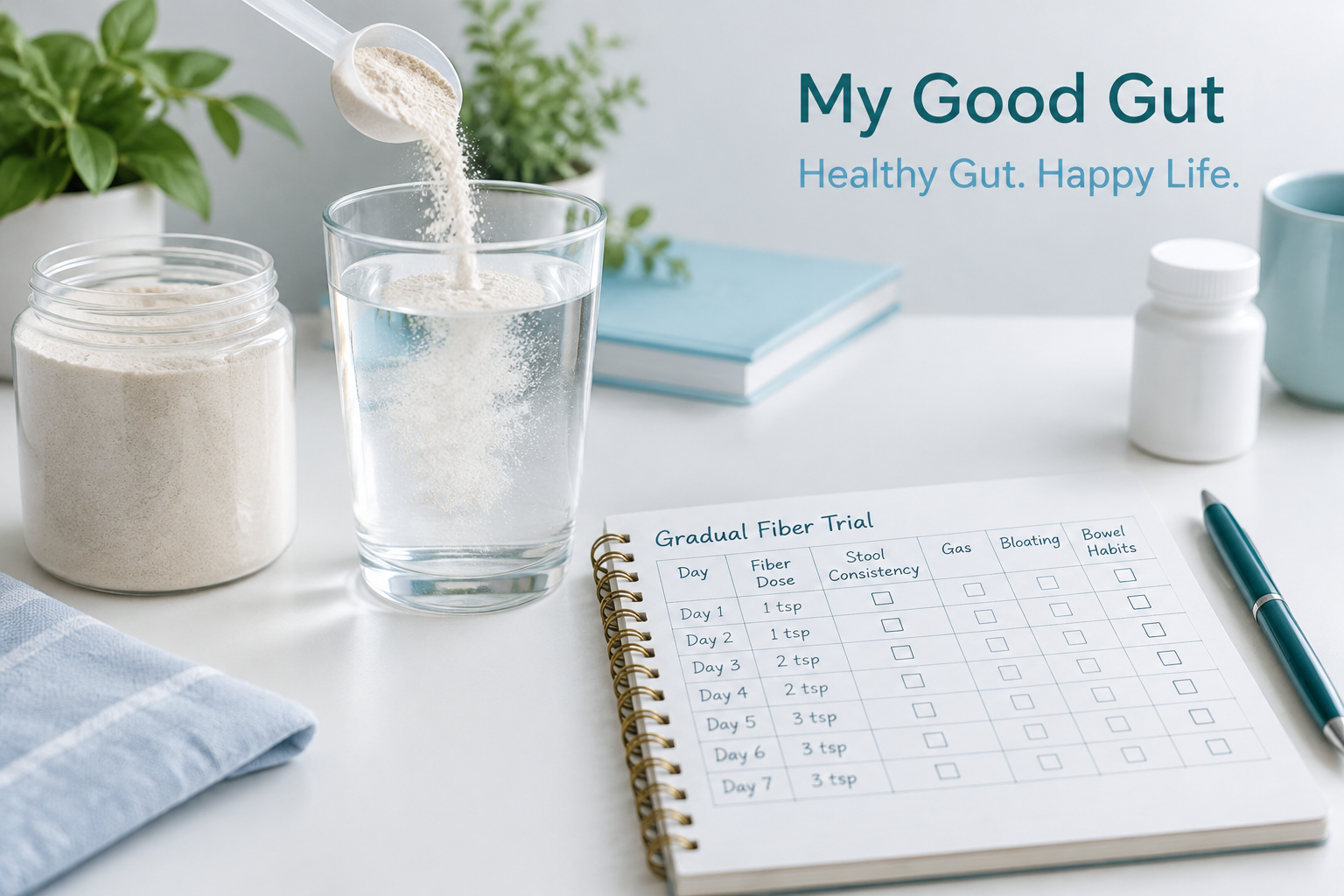
Once you have matched a fiber to the main symptom, a fiber trial works best when it is simple and gradual. Choose one single-ingredient, unflavored fiber supplement without added sweeteners if you have IBS-like symptoms. Sugar-free flavored powders may still contain sweeteners and flavorings, making it harder to tell what is affecting your digestion.
For how to take a fiber supplement, start with the smallest label-supported amount once daily. A typical adult psyllium serving is one packet or one rounded teaspoon, though beginning below a full serving may be easier when the label allows. Mix each dose with at least 8 ounces, or 240 milliliters, of water, and keep drinking fluids through the day.
A low-pressure fiber supplement dosage trial can follow these steps:
- Hold the starting amount: Keep the small once-daily dose for several days. Mild gas or bloating early on can be part of the adjustment period rather than a sign the fiber is unsuitable.
- Increase gradually: Raise the dose only when stool consistency, bowel habits, gas, bloating, and cramping remain tolerable. Work toward the package-directed amount over a couple of weeks (source), and keep fiber a few hours apart from oral medicines.
- Change only one variable: Avoid adding probiotics, digestive enzymes, or multi-ingredient digestive products during the trial. A single change makes it easier to identify what helps and what worsens symptoms.
- Track your response: Record the dose, bowel-movement frequency, stool consistency, urgency or straining, and any gas, bloating, or cramping. Look for a steadier, more comfortable pattern instead of an overnight change.
Avoid taking fiber immediately before bed, since too little fluid can worsen constipation and, uncommonly, contribute to blockage symptoms. If discomfort continues after you hold or reduce the dose, methylcellulose or partially hydrolyzed guar gum may be easier to tolerate because they are less fermentable.
Chronic digestive symptoms, regular medication use, trouble swallowing, vomiting, severe or worsening abdominal pain, or possible bowel-obstruction symptoms need prompt medical attention.
A fiber supplement starting dose is half of what the label says, once a day, and you gradually increase fiber from there. Fiber and hydration go together, so every dose gets a full glass of water.
How Do You Choose A Simple Formula?

To keep that fiber trial clear, a simple formula makes it easier to tell whether the fiber itself is affecting your symptoms. For an IBS-focused trial, an unflavored product with one named fiber source is usually easier to assess than a flavored blend. Sugar-free does not always mean additive-free, since flavored powders may still contain sweeteners and flavorings.
The best fiber supplements for digestion are ones you can take consistently and match to your symptoms:
- Powders: These can provide more fiber per serving and let you start with a smaller amount. They also make it easier to trial one fiber without extra ingredients.
- Capsules: Capsules travel well, but they often provide less fiber per serving than powders. Reaching a similar amount may require several capsules.
- Gummies: Gummies are convenient, but sugars, sweeteners, flavorings, or multiple active ingredients can make symptom changes harder to interpret. They are usually a less clear starting point when bloating, gas, or bowel habits are unpredictable.
The Supplement Facts panel matters more than front-label promises. Compare the fiber grams per serving and identify the active fiber by name. Psyllium may suit constipation, loose stools, or a mix of both because it forms a gel with water. Methylcellulose is a soluble, non-fermentable fiber that may cause less gas or bloating for people who react to fermentable fibers.
A first trial is easier to interpret when the label includes:
- One fiber source: Avoid blends containing inulin, fructooligosaccharides, probiotics, digestive enzymes, vitamins, or fruit flavors.
- A short ingredient list: Plain psyllium husk powder or unflavored methylcellulose leaves fewer possible triggers to sort through.
- Relevant warnings: Added sugar may not fit a diabetes plan, aspartame is unsuitable for phenylketonuria, and sodium may matter if you monitor your intake.
Review medication warnings before choosing a formula. Psyllium labels may carry a Coumadin precaution, while polycarbophil labels may note a tetracycline precaution. Do not repeatedly change products when symptoms persist.
Fiber capsules and fiber gummies carry far less fiber per serving than powders, so they suit people who cannot manage a powder rather than people who need a real dose. Fiber supplement precautions are short: fiber binding medications is the main one, so keep doses a few hours apart.
Fiber Supplements for Digestion FAQs
Common questions about fiber supplements for digestion can help you compare options for constipation, loose stools, bloating, and IBS-like symptoms. The FAQs below focus on matching fiber types to your symptoms and starting simply.
1. Do Fiber Pills Help Digestion?
Fiber pills can support regular bowel movements and digestive health when meals fall short, but they cannot replace the range of fiber-rich foods that also feed your gut microbiome. Capsules and gummies are handy for travel or if you dislike powders, though they often provide fewer grams of fiber per serving. When deciding how to start fiber supplements, compare the Supplement Facts label across formats. Drinking water with fiber supplements may also make the adjustment more comfortable.
2. Can You Take Fiber With GLP-1s?
Fiber can often be used with GLP-1 medications, though both can affect digestion. The best type of fiber supplement is one you can begin in a small, once-daily amount and build up gradually over a couple of weeks, rather than taking a full dose immediately. Take each dose with a full glass of water and keep drinking fluids through the day, since too little can worsen constipation and rarely contribute to blockage. Pause increases and contact your prescriber or pharmacist for persistent or severe nausea, constipation, diarrhea, vomiting, or abdominal pain.
Fiber and GLP-1 medications can work together when the fiber goes up slowly.
3. What Fiber Do Gastroenterologists Recommend?
Gastroenterologists usually match fiber to your main symptom, whether constipation, loose stools, general regularity, or digestive support, rather than recommending one product for everyone. They consider both the evidence for each fiber type and your individual tolerability. Psyllium is a well-studied first choice because its gel-forming fiber can help with hard and loose stools. If it worsens gas or bloating, a different fiber may fit better. A simple, single-fiber formula makes fiber supplement side effects easier to spot. Start slowly and take psyllium with adequate liquid.
4. Can Fiber Supplements Affect Medication Absorption?
Fiber supplements, particularly psyllium, can bind certain oral medicines in the digestive tract, reducing the amount your body absorbs. Possible interactions include levothyroxine, digoxin, some statins, lithium, tricyclic antidepressants, carbamazepine, iron, zinc, calcium, and warfarin (Coumadin), though this is not a complete list. Keep fiber and other oral medicines at least 1 to 2 hours apart. If you take regular prescriptions, use multiple medicines, or have ongoing digestive symptoms, a pharmacist or clinician can help you plan the timing.