


A snack that keeps you full without adding bloating can make a long commute, classroom break, or delayed pickup easier to manage. Portable gut-friendly snacks can provide fiber, protein, or quick energy while fitting IBS and low-FODMAP preferences, but the best choice depends on your usual triggers and portion tolerance. Familiar foods in manageable portions are often more reliable than a heavily marketed bar or an unfamiliar high-fiber option.
Chicory root, sugar alcohols, garlic powder, and onion powder can turn a convenient packaged snack into a source of gas or discomfort for some people. Shelf-stable options like rice cakes with nut butter, pumpkin seeds, firm bananas, and plain popcorn travel well, while eggs and lactose-free Greek yogurt need a cooler pack. Pairing a tolerated fiber food with protein or fat can help bridge long gaps between meals without relying on foods that repeatedly worsen symptoms.
Portable Gut-Friendly Snacks Key Takeaways
- Choose snacks based on symptoms, storage needs, and ingredients you already tolerate.
- Pair fiber-rich foods with protein or fat for a more filling portable snack.
- Roasted chickpeas and edamame offer shelf-stable fiber and plant protein, but may trigger IBS symptoms.
- Check packaged snacks for chicory root, sugar alcohols, garlic, and onion powder.
- Keep higher-fiber snack portions modest and drink water alongside them.
- Use an insulated cooler pack for eggs, yogurt, kefir, and other refrigerated snacks.
- Keep a shelf-stable backup snack available for delayed meals, travel, or schedule changes.
Which Snacks Fit Your Need and Setting?
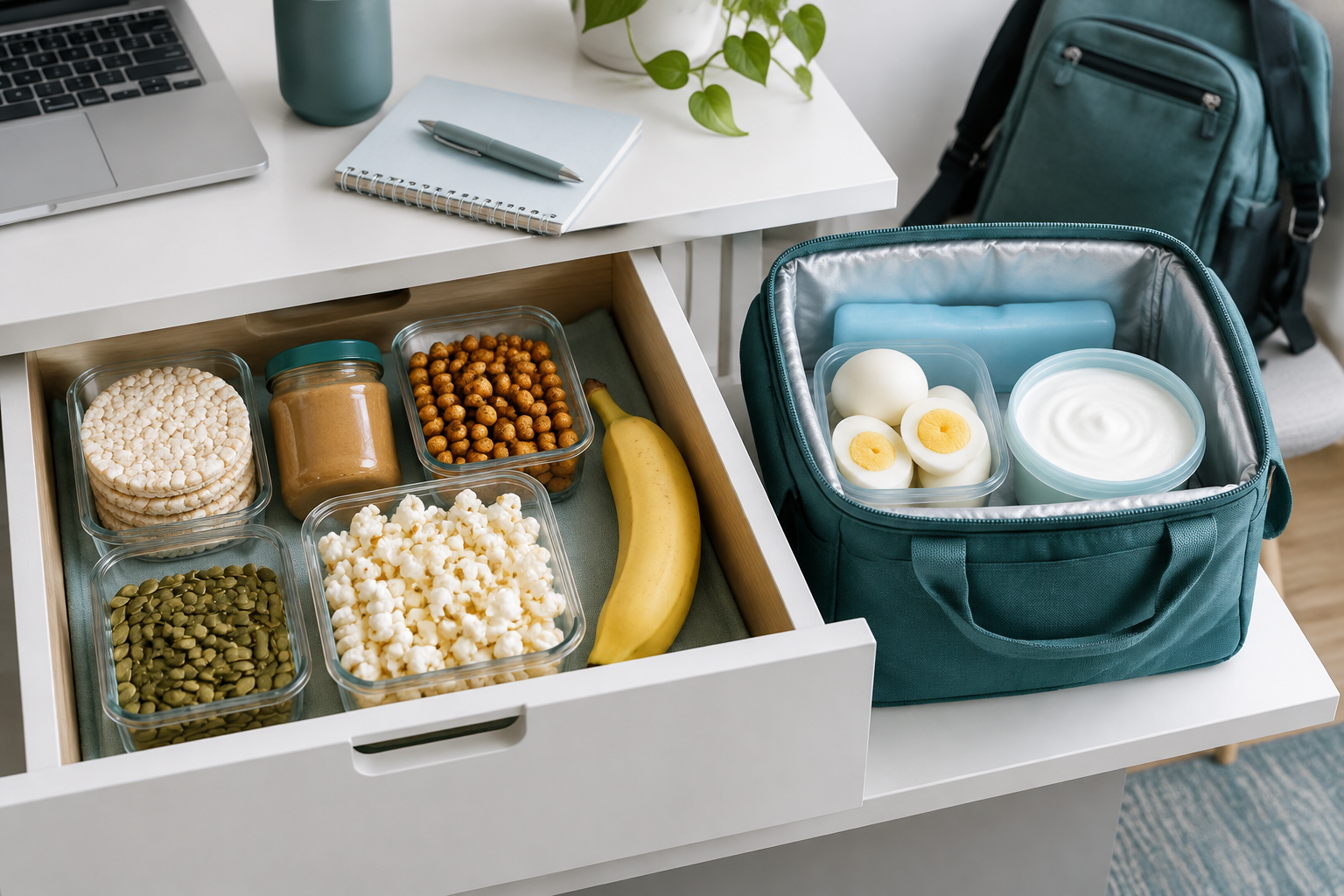
Start with the snack’s setting, then use your symptoms and usual portions to narrow the choice. Irritable bowel syndrome (IBS), bloating, constipation, diarrhea, lactose sensitivity, and fermentable oligosaccharides, disaccharides, monosaccharides and polyols (FODMAP) tolerance can differ widely. Your known triggers remain the final filter for gut friendly snacks.
Shelf-stable digestive-friendly snacks work well in bags and desk drawers when they pair a carbohydrate or gentle-fiber food with protein or fat. A firm banana or rice cakes with nut butter may feel more filling than fruit or crackers alone. Gut-friendly eating beyond snacks also considers how meals, drinks, and food patterns can affect symptoms.
Setting | Snack choices that may fit |
|---|---|
Bag or desk | Rice cakes with nut butter, olives, seaweed snacks, simple trail mix, roasted chickpeas or edamame, pumpkin seeds, walnuts, firm bananas, or popcorn with citrus |
Cooler pack | Chia pudding cups, eggs with crackers, lactose-free Greek yogurt, kefir, or drinkable yogurt |
Hot car | Shelf-stable foods only. Chilled snacks should stay in an insulated cooler pack. |
For constipation, high fiber snacks on the go may help when you already tolerate them and drink fluids alongside them. Snacks for bloating or IBS flares are often simpler, familiar low-FODMAP foods in modest portions. Diarrhea may be easier to manage with lower-fiber choices you know suit you, while dairy-free snacks or lactose-free Greek yogurt can fit lactose sensitivity.
Check packaged snacks for ingredients that may worsen symptoms:
- Bars and granola: Chicory root, dates, figs, honey, or polyols.
- Jerky and trail mix: Added sugar, excess sodium, or saturated fat.
- Snacks for IBS and sensitive digestion: Ingredient lists that match your own triggers.
Healthy snacks for digestion can bridge long gaps between meals, and meal timing for a calmer gut can make those gaps more predictable.
Gut health snacks fall into four groups: high-fiber snacks, protein snacks on the go, low-FODMAP snacks, and quick energy. IBS-friendly snacks usually sit in the third group. Portable fiber snacks and fiber and protein snack combinations hold you longest.
1. Fiber Pick: Chia Pudding Cups
Among the options that fit your setting and symptom pattern, Chia pudding cups are a portable, make-ahead fiber snack for busy workdays. Chia seeds absorb liquid and create a thick gel, providing soluble fiber for digestion that may make a modest serving feel more filling. Some people with IBS tolerate this texture better than dry, crunchy fiber foods, while others find fiber-rich snacks worsen bloating.
A small leakproof jar keeps prepared pudding tidy for commutes, classroom breaks, and desk lunches:
- Keep it chilled: Carry the sealed jar in an insulated lunch bag.
- Pack a spoon: A reusable spoon makes the snack easier to eat away from home.
- Start with less: Choose a small serving if you are adding fiber or often feel bloated.
Drink water with the snack and keep a water bottle nearby, since adequate hydration helps fiber move through the intestines and can help prevent constipation (source). Increase how often you eat chia pudding only if your symptoms stay manageable.
2. Fiber Pick: Roasted Chickpeas
Roasted chickpeas are a crunchy, shelf-stable alternative to sweet snacks that fits a desk drawer, small container, or travel bag. USDA FoodData Central reports that a half-cup serving supplies about 7 grams of plant protein and 6 grams of fiber. That can be more satisfying than refined crackers or chips, but increase fiber gradually to give your digestion time to adjust.
Because chickpeas are legumes, they may cause gas, bloating, or bowel changes with IBS. Start with a small, pre-portioned handful, eat slowly, and let your symptom pattern guide whether they fit your workday routine.
Plain roasted chickpeas are often the easiest choice. Gut-conscious seasonings include:
- Olive oil, salt, and pepper.
- Smoked paprika and cumin.
- Dried herbs without garlic or onion.
Check packaged varieties for garlic or onion powder, plus xylitol, sorbitol, or maltitol, which may worsen gas or bloating.
This is the digestive-friendly chickpea snack people mean when they ask about prebiotic snacks, since chickpea fiber feeds gut bacteria.
3. Protein Pick: Roasted Edamame
As another shelf-stable legume option after roasted chickpeas, Dry-roasted edamame gives you plant-based protein and fiber, making it a steadier between-meal choice than a fiber-only snack. USDA FoodData Central lists edamame at 13 grams of protein per cup. Dry-roasted brands and packed portions vary, so check the Nutrition Facts panel for the serving you’ll actually eat.
Its shelf-stable crunch travels better than yogurt or hard-boiled eggs and is less likely to get squished. Pre-portion a small bag or container for:
- Desk drawers and commute bags
- School days, errands, and car kits
- Busy afternoons away from home
Pumpkin seeds, almonds and walnuts, and olives are other healthy fats and fiber snacks for variety.
Because edamame is soy, choose another protein snack if soy causes an allergy, sensitivity, bloating, or other symptoms.
4. Protein Pick: Pumpkin Seeds and Walnuts
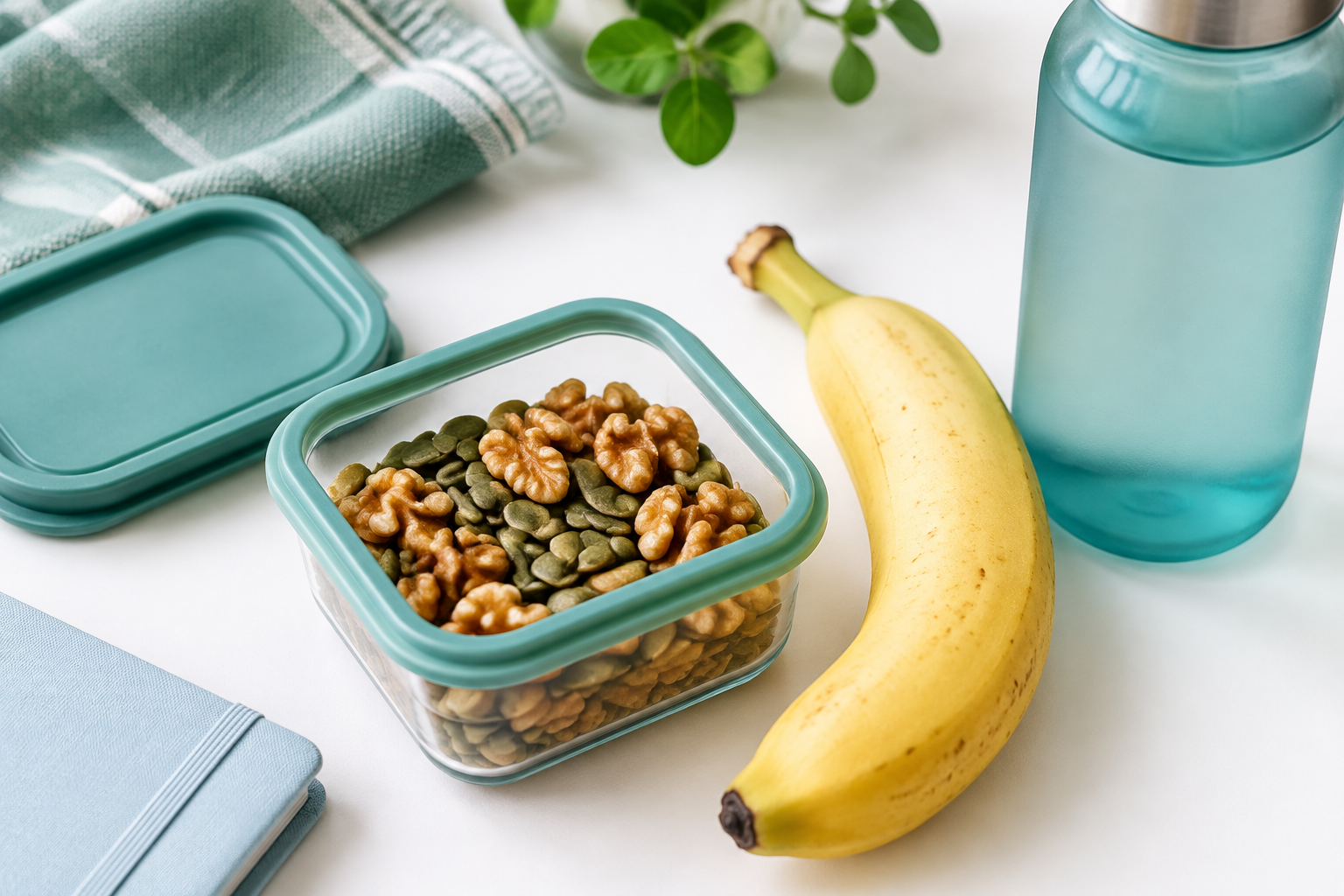
A small, pre-portioned mix of pumpkin seeds and walnuts is a lightweight, shelf-stable snack for your desk drawer, commute, or travel bag. Pumpkin seeds provide plant protein, fiber, unsaturated fats, and magnesium. Walnuts add fiber, unsaturated fats, and plant-based omega-3 fatty acids.
Protein, fiber, and fat can make this mix more satisfying between meals than crackers or fruit alone. Pair a modest portion with a firm banana or another fruit you tolerate for portable energy that is not based on carbohydrates alone.
Keep portions modest because nuts and seeds are calorie-dense:
- Pack a small handful in a reusable container or single-serving bag.
- Choose plain or lightly salted options.
- Check flavored mixes for sweeteners, dried fruit, honey, chicory root, onion and garlic powder, and other ingredients that may worsen IBS or FODMAP tolerance.
Portioning before you leave helps this snack stay comfortable during a busy day.
5. Protein Pick: Eggs and Crackers
Hard-boiled eggs and plain crackers make a portable snack with protein and quick carbohydrate. One large egg provides about 70 calories and 6 grams of protein, according to USDA FoodData Central (source). Eggs contain very little carbohydrate and are nutrient-dense, while crackers provide quick energy. Digestive tolerance differs, so start with one egg and a familiar, simply seasoned cracker if eggs, wheat, or richer foods have caused symptoms.
Cook several eggs for the workweek, keeping the shells on until you eat them to limit moisture, odors, and handling damage. Pack crackers separately so they stay crisp. Check flavored varieties for garlic or onion powder, which may be harder to tolerate on a low-FODMAP approach.
- Hard-boiled eggs need an insulated lunch bag or cooler with an ice pack.
- Yogurt, kefir, and cheese also need cold storage away from home.
- Crackers are shelf-stable and can stay at room temperature until snack time.
6. Protein Pick: Lactose-Free Greek Yogurt
Lactose-free Greek yogurt is a filling chilled snack when dairy agrees with you. Plain single-serve yogurt with berries brings natural sweetness without sugary mix-ins, making it one of many low-added-sugar snacks.
If probiotic snacks appeal, check for “live and active cultures.” These bacteria add to the diet, but evidence for bloating, gas, constipation, diarrhea, and abdominal discomfort remains limited, and responses differ. What fermented foods do for the gut puts yogurt alongside kefir and drinkable yogurt.
It may feel easier when lactose seems linked to gas or bloating, but it does not suit everyone with IBS or dairy sensitivity. Start with a tolerated portion and berries suited to your low FODMAP plan, then keep it cold in an insulated lunch bag with an ice pack, never unrefrigerated.
7. Protein Pick: Kefir and Drinkable Yogurt
Single-serve kefir and drinkable yogurt can be practical probiotic snacks for commutes, school pickup, or travel when the label confirms live and active cultures. Shelf-stable cartons are easier to carry, while refrigerated bottles need an insulated lunch bag with an ice pack. A chilled dairy drink left warm is not a reliable portable option.
Compare the Nutrition Facts panel and ingredient list before buying. Plain or low-added-sugar drinks are a simpler starting point, and fruit can add sweetness without making the drink dessert-like. A short ingredient list also makes rich sweeteners easier to spot.
Tolerance varies, especially with IBS, bloating, constipation, diarrhea, lactose sensitivity, or milk-protein sensitivity. Try a small amount at home, then choose a dairy-free or clearly low-FODMAP alternative if symptoms follow. Rice cakes with nut butter are healthy fats and fiber snacks when fermented dairy does not fit your routine (source).
A drinkable snack also counts toward fluids, which matters on long days when staying hydrated on the go slips.
8. Low FODMAP Pick: Rice Cakes With Nut Butter
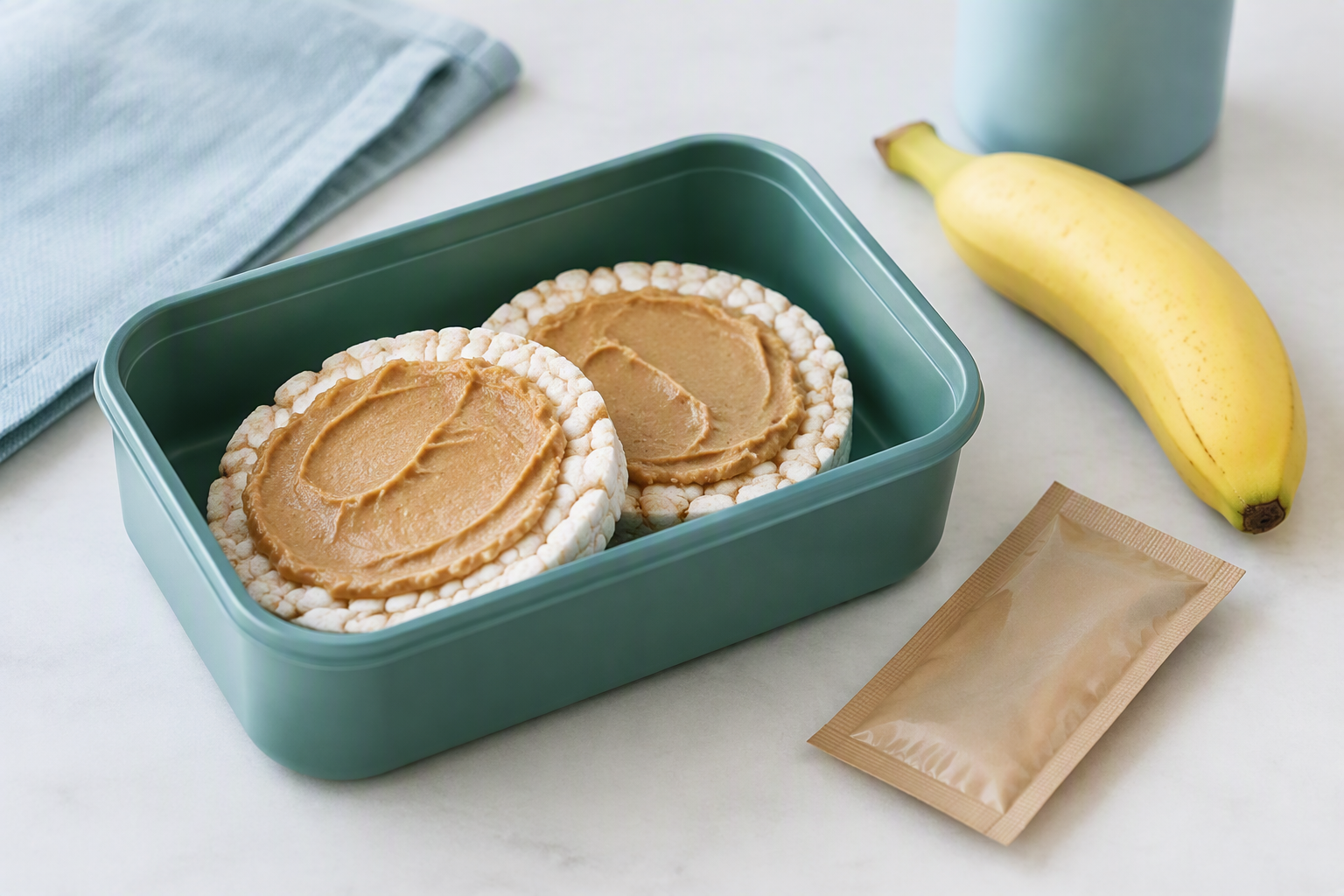
Plain or brown rice cakes with peanut or almond butter may fit a low FODMAP pattern when the portion matches your personal tolerance, but the best choice still depends on your symptoms and the full ingredient list. The rice cakes offer a simple carbohydrate base, while a modest layer of nut butter adds protein and unsaturated fat, making the snack more satisfying than rice cakes alone during a desk break, commute, or school pickup.
Keep the cakes crisp in a rigid reusable container, and pack the spread separately. For nut allergies or nut-free settings, a tolerated seed-based spread may be a better fit. Check labels for ingredients that may not suit your low FODMAP approach:
- Honey
- Inulin
- Chicory root
- Dates or figs
Rice cakes are less messy than olives, but they will not suit every IBS pattern. Start with a comfortable portion before relying on this snack for travel.
Rice cakes are also a gluten-free gut-friendly snack and one of the easiest snacks for sensitive stomachs to keep in a bag.
9. Low FODMAP Pick: Olives and Seaweed Snacks
Plain olives and simply seasoned roasted seaweed may be lightweight, savory snack options if they fit your low FODMAP plan and ingredient list. Small olive containers and seaweed packs fit easily in a desk drawer, purse, or travel bag.
Check the ingredient list before packing either choice:
- Olives: Choose plain varieties without garlic, onion, sweet marinades, or blended seasonings. Their monounsaturated fats may make a modest serving feel more satisfying.
- Seaweed: Select simply seasoned roasted sheets. They provide a crisp texture and small amounts of prebiotic fiber, while flavored versions may contain onion, garlic, sweeteners, or sugar alcohols.
Both snacks can be high in sodium, so avoid eating several packs at once. Pair one with tolerated nuts or a certified low-FODMAP snack bar for a more filling option.
With IBS, bloating, constipation, diarrhea, or reflux, start with a familiar plain version in the portion you tolerate and note how you feel afterward.
10. Low FODMAP Pick: Simple Trail Mix
A homemade trail mix can fit a low fermentable oligosaccharides, disaccharides, monosaccharides, and polyols FODMAP approach when it uses tolerated nuts and seeds with a modest amount of suitable dried fruit. IBS responses differ, so no blend suits everyone. Under-ripe bananas, resistant starch, and other prebiotic foods are not automatic additions if they have triggered symptoms for you.
Keep nuts and seeds as the main ingredients, use dried fruit as an accent, and pack a set serving in a reusable bag or container. Mixed nuts provide protein, fiber, unsaturated fats, and vitamin E, but they are calorie-dense. Pre-portioning makes snacks easier to carry and more predictable.
Packaged mixes need a label check:
- Added extras: Candy coatings, added sugar, sodium, and saturated fat can quickly change a simple mix.
- Sugar alcohols: Xylitol, sorbitol, and maltitol may contribute to gas or bloating for some people.
Short whole-food ingredient lists are easier to assess.
A low-FODMAP trail mix is nuts, seeds, and a few dried cranberries, with no dried apple, mango, or cashews. Almonds and walnuts for gut health bring fiber and healthy fat snacks in one handful.
11. Quick Energy Pick: Firm Bananas
A firm, just-ripe banana gives you portable quick energy for a commute, school bag, or desk drawer because its peel protects it without a container. As a banana ripens, its starch profile can change, so the best choice depends on how your body tolerates it.
Pair banana slices with a small container or single-serve packet of peanut or almond butter for protein and fat alongside the banana's carbohydrate and fiber. Almonds and walnuts may also suit people who tolerate nuts, while seed butter can work with peanut or tree-nut allergies.
Ripeness matters if you manage IBS, bloating, irregular stools, reflux, or a low FODMAP eating pattern. Start with a modest portion and compare firmer and riper bananas, choosing another portable snack if banana or nut butter repeatedly worsens symptoms.
12. Quick Energy Pick: Popcorn and Citrus
Plain, air-popped popcorn is a compact choice for a desk, commute, or school pickup. Its fiber can make it more filling than many crunchy packaged snacks. Keep toppings simple, since butter, cheese powders, and heavily seasoned blends may bother a sensitive stomach. A water bottle helps fiber move through the digestive tract, especially during travel, warm weather, or busy workdays.
Easy combinations include:
- Plain popcorn with an orange, clementine, or mandarin for quick carbohydrates and fresh sweetness.
- Popcorn with a modest serving of almonds, if nuts agree with you.
- Popcorn with pumpkin seeds for extra staying power.
Oranges, kiwi, and firm bananas can fit a low FODMAP pattern, though tolerance may change during IBS symptoms. These portable gut-healthy snacks can be easier to pack than kefir, making them high fiber snacks on the go and practical travel snacks for sensitive stomach. The best snacks for gut health fit your symptoms, schedule, and storage options.
Pack Snacks for Every Setting
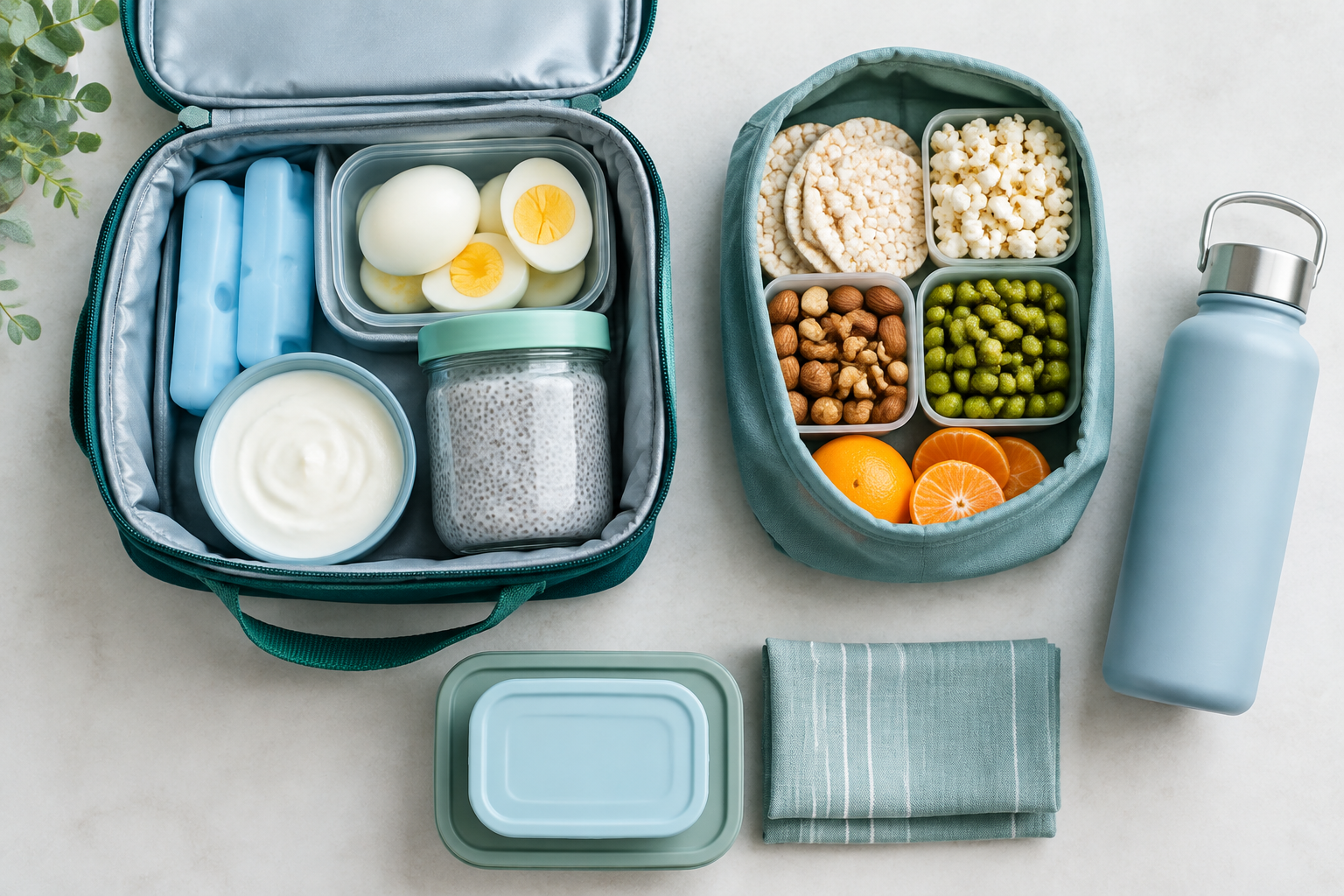
To turn the snack choices above into a reliable routine, do this: Create a 2-zone snack stash so a delayed meeting, school pickup, or traffic keeps you from relying on unfamiliar foods.
Keep shelf-stable choices in a desk drawer, purse, or car:
- Crunchy options: Roasted chickpeas or edamame, pumpkin seeds, walnuts, rice cakes, popcorn, and baked or lightly salted plantain chips. A rigid container keeps chips from getting crushed.
- Quick energy: Firm bananas, citrus, and simple trail mix. Portions and ingredients should fit your personal low FODMAP tolerance for fermentable oligosaccharides, disaccharides, monosaccharides, and polyols.
- Label checks: Bars, trail mix, flavored yogurt, and jerky can contain sugar alcohols, onion and garlic powder, or other ingredients that increase gas for some people (source).
For the same-day commute, pack hard-boiled eggs in their shells in a lidded container. Keep cheese, lactose-free Greek yogurt, kefir, or drinkable yogurt cold in an insulated lunch bag with frozen ice packs, and follow the package storage directions for each item (source). Choose low-added-sugar snacks, and only treat drinkable yogurt as shelf-stable if its unopened label permits room-temperature storage.
A small leakproof jar suits overnight oats or chia pudding. Place heavier foods at the bottom, cushion the jar with a folded napkin, and keep nut-butter packets and olives in a separate zip pouch. Water alongside snacks supports staying hydrated on the go.
Familiar foods, a shelf-stable backup, and a cooler-packed option make healthy snacks for digestion easier to manage when plans change (source).
Gut-friendly travel snacks and healthy snacks for travel are the same list with a cooler bag. Snacks for acid reflux skip citrus and chocolate. Snacks for constipation lean on fruit and seeds. Dairy-free gut-friendly snacks are most of this page once you drop the yogurt and kefir picks.
Check Packaged Snack Labels
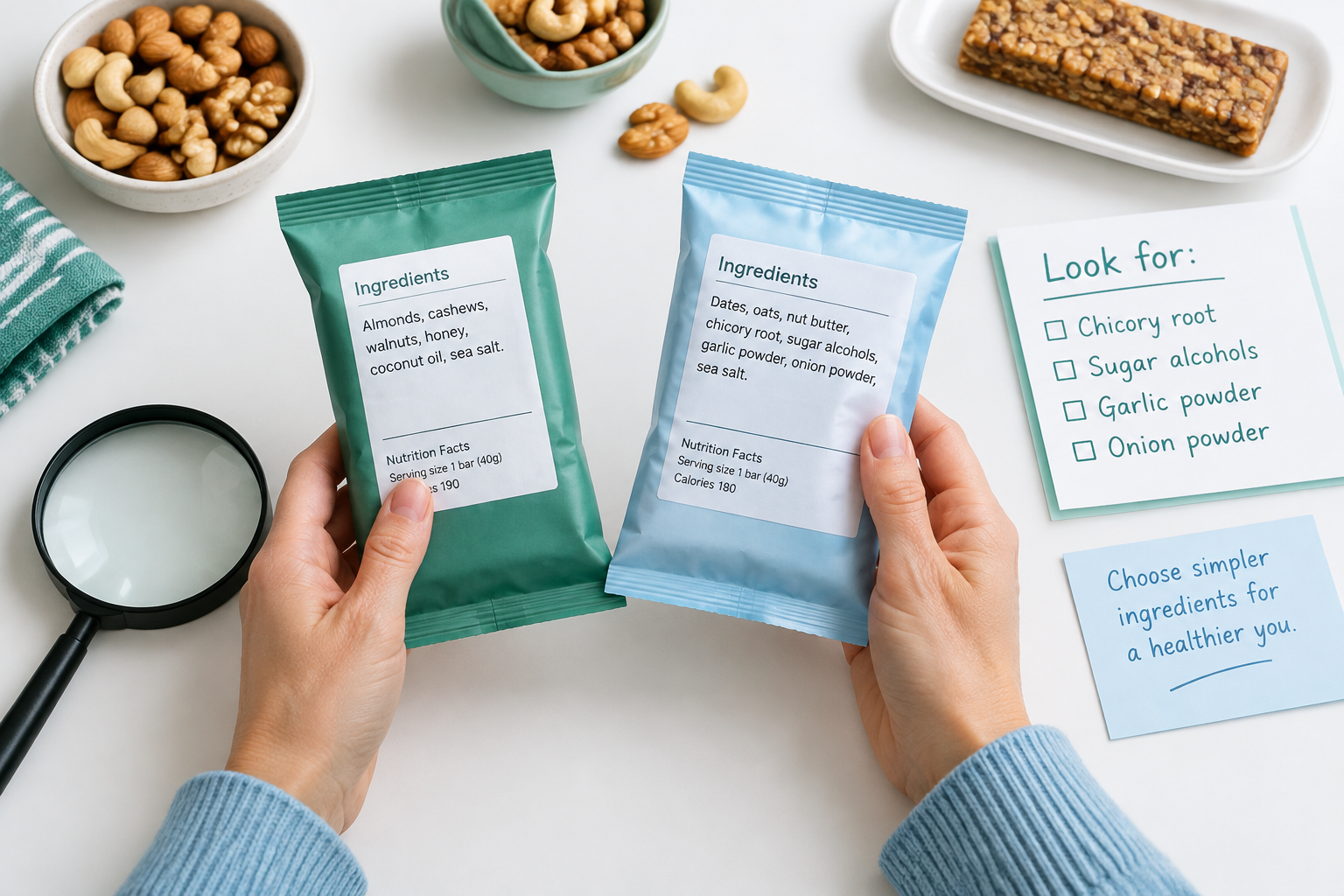
To keep the packed stash aligned with your tolerance, use this first step: Start with the ingredient list, not a front-label promise. Terms such as healthy, low-sugar, and digestive-friendly do not tell you whether a snack fits your usual eating pattern. Ingredients that resemble the food you expect, including nuts, seeds, oats, rice, or fruit, make potential triggers easier to spot.
When comparing bars, jerky, granola, or trail mix, check for:
- Added sugars: Syrups, coatings, and sweet flavors can make a small snack much sweeter than expected.
- Sodium and saturated fat: Savory snacks, especially heavily seasoned meat snacks, may contain more of both.
- Seasonings and dairy: Garlic powder, onion powder, whey, and milk powder can matter with IBS, lactose sensitivity, or a low FODMAP approach.
- Gluten-containing grains: Wheat, barley, and rye may matter if you avoid gluten.
Jerky deserves extra attention because bold flavors can bring added sugar, salt, and seasonings. Low-sodium, nitrate-free, lightly seasoned choices are often simpler to assess than sweet teriyaki-style varieties.
Sugar-free labels also need a full label check. Sugar alcohols ending in “-ol,” such as xylitol, sorbitol, and maltitol, may cause gas, cramping, or bloating.
Portion size and symptoms are the final filter. A higher-fiber snack may help with constipation yet feel uncomfortable during diarrhea, reflux, or a bloating-prone day. Try a modest serving first and carry water with higher-fiber snacks.
Low-sugar snacks and low-added-sugar probiotic snacks are worth the label check, since sweeteners undo the point.
Portable Gut Friendly Snacks FAQs
These FAQs address portable gut-friendly snacks for busy days, including choices that may suit an IBS flare and your usual symptom patterns.
1. Which Snacks Are Easiest on a Sensitive Stomach?
The easiest snacks for sensitive digestion are simple foods you already know you tolerate, chosen around symptoms such as bloating, constipation, diarrhea, or reflux and needs like low FODMAP, dairy-free, or gluten-free eating. For many people, snacks for IBS can include plain or brown rice cakes with nut butter. Rice cakes with nut butter provide protein and fat, though nut portions still matter. A sturdy container and single-serve nut-butter packet make this a practical portable option.
2. How Should You Store Gut Friendly Snacks Safely?
Shelf-stable travel snacks for sensitive stomach, including roasted chickpeas or edamame, seeds, rice cakes, nut butter packets, olives, seaweed snacks, simple trail mix, popcorn, firm bananas, and citrus, can stay in a sealed, dry bag or desk drawer away from heat. Check package directions before leaving any snack in a car.
Hard-boiled eggs, lactose-free Greek yogurt, kefir, drinkable yogurt, and cheese need an insulated bag with an ice pack and refrigeration when you arrive. Keep batch-prepped eggs in their shells until eating, and do not leave cold snacks on a desk or in a warm car.
3. Can You Bring Gut Friendly Snacks Through Airport Security?
Airport security rules differ by country and airport, so check requirements for both flights. Solid snacks such as rice cakes, plain popcorn, nuts, seeds, roasted chickpeas, and under-ripe bananas are usually easiest to carry through screening. Because their resistant starch can affect gut motility differently, bring options you already tolerate and keep them in a reachable pouch.
Nut butter, hummus, yogurt, kefir, drinkable yogurt, chia pudding, and overnight oats may be treated as liquids or gels. Use small, rule-compliant containers. Refrigerated foods need an insulated bag, and ice packs may need to be fully frozen at screening.
4. Which Portable Snacks Help Prevent Travel Constipation?
Pack a familiar fiber-containing snack, such as a firm, just-ripe banana with peanut or almond butter. A slightly green banana provides resistant starch, a prebiotic fiber that supports beneficial gut bacteria, and its peel makes it easy to carry. Keep the portion close to what you tolerate at home instead of adding several high-fiber foods during travel.
Fiber moves through the digestive tract best with regular water intake, so keep a refillable bottle nearby. New constipation, a meaningful change in bowel habits, or constipation that persists despite routine changes needs individualized guidance from a healthcare professional.
5. What Are the Best Snacks for IBS Symptoms?
Snacks for IBS symptoms are the low-FODMAP picks above: rice cakes with peanut butter, a firm banana, olives, a small handful of nuts, lactose-free yogurt, and popcorn. Portable snacks for IBS work best when they are small and eaten at regular gaps rather than grazed.
6. What Are Healthy Snacks on the Go?
Healthy portable snacks are the ones that survive a bag: roasted chickpeas, nuts and seeds, rice cakes, firm fruit, hard-boiled eggs, and shelf-stable kefir. Healthy snacks on the go for a sensitive gut skip sugar alcohols and onion or garlic powder.