


A fermented food doesn't have to leave you with more gas. Small, gradual servings of fermented foods can support gut health for some people, but they do not reliably relieve bloating, constipation, diarrhea, or IBS.
The label "fermented" can describe yogurt, kimchi, or a vinegar-pickled vegetable, even though their live-microbe content differs. In a Stanford trial, 36 healthy adults gradually increased fermented foods over 10 weeks, with greater microbial diversity reported in that group. Live-culture labels, lactose, carbonation, garlic, and FODMAP ingredients can all change how a food feels after you eat it.
Starting with one plain, tolerated option and keeping the portion small makes reactions easier to spot. The food that works best is one you can eat comfortably and consistently with regular meals.
Fermented Foods for Gut Health Key Takeaways
- Fermented foods may support gut health but do not reliably relieve every digestive symptom.
- Fermentation does not guarantee live cultures or a probiotic effect.
- Check labels for live cultures, pasteurization, storage, and added ingredients.
- Start with one fermented food and a small portion to limit gas.
- Lactose, carbonation, spice, sodium, and FODMAP ingredients can affect tolerance.
- Plain yogurt or kefir may be practical starting foods when dairy is tolerated.
- Track portions and symptoms before increasing frequency or trying another food.
How Do Fermented Foods Fit a Gut-Friendly Diet?
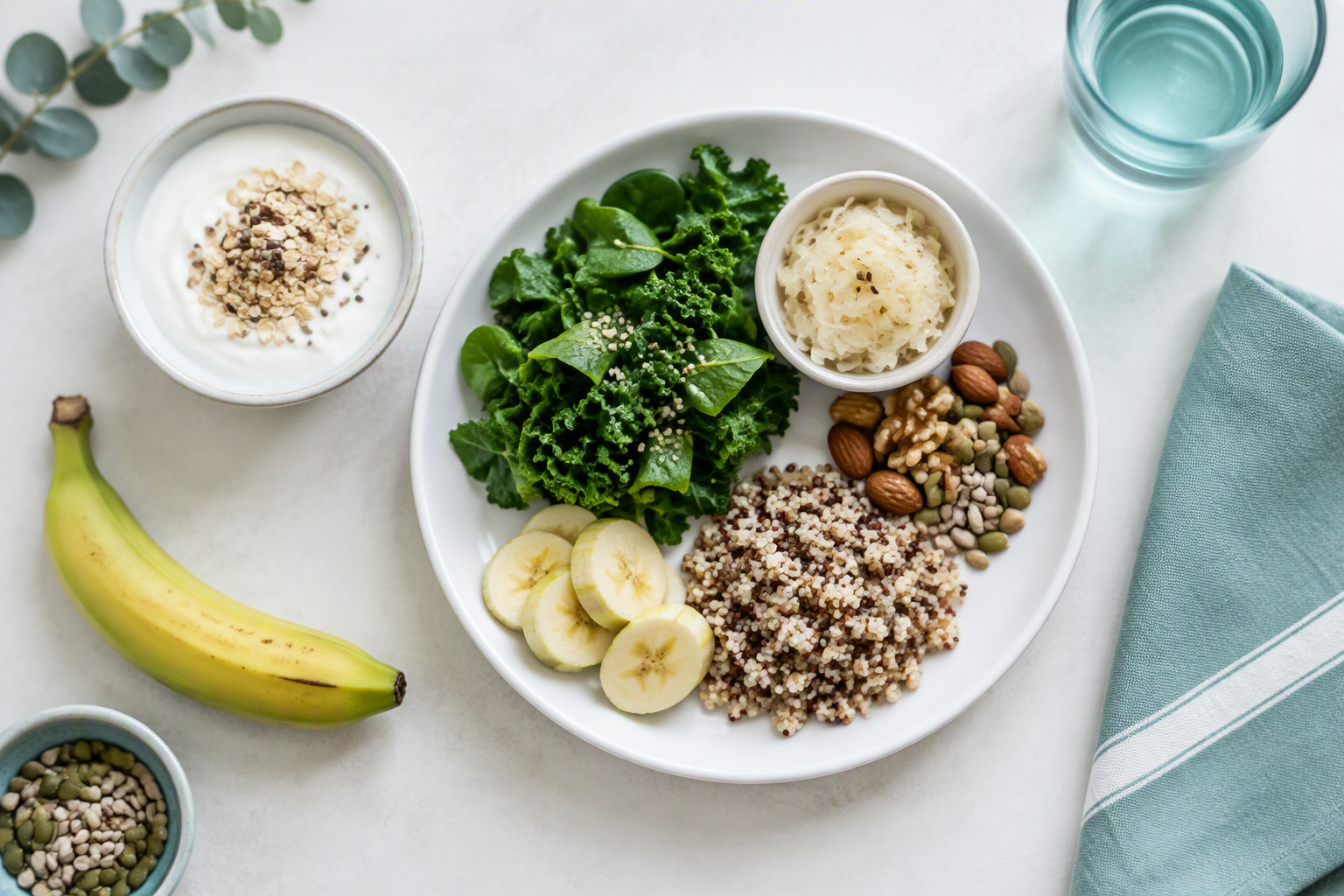
Fermented foods can support gut health as part of a digestive-friendly eating pattern, but they are not a stand-alone answer for bloating, constipation, diarrhea, or irritable bowel syndrome (IBS). They provide nutrients and may affect gut microbes, digestion, or inflammation, though results vary by food, preparation, storage, and the person eating it. Evidence on fermented foods for gut health is promising in some areas, but no single food is proven to relieve every digestive symptom (source).
Fiber-rich meals remain the foundation. The rest of a gut-friendly diet includes vegetables, fruits, beans, whole grains, nuts, and seeds, which feed microbes already living in your digestive tract. Prebiotic fibers, which microbes use as fuel, are found in:
- Garlic, onions, and leeks
- Asparagus and oats
- Slightly underripe bananas
Adding several high-fiber foods at once can increase gas or discomfort, especially if you are sensitive to fermentable carbohydrates. Start with foods and portions you already tolerate, then increase gradually.
Fermentation does not guarantee a probiotic effect. Processing, pasteurization, and storage can leave fermented foods or pickled foods with few or no live microorganisms. A label identifying live cultures offers a practical starting point, but it does not prove that a food will help a specific symptom.
Fermented foods and IBS often require a personal approach. Try one tolerated live-culture food with a familiar fiber-containing meal and note changes in comfort and bowel habits over time. Consider the food’s fermentable oligosaccharides, disaccharides, monosaccharides, and polyols (FODMAP) content, since some choices can worsen bloating rather than support digestion.
The best fermented foods for gut health are the plain ones: yogurt, kefir, sauerkraut, kimchi, miso, and tempeh. They are probiotic foods, not probiotic pills. Fermented foods and fiber work together, since the fiber feeds the microbes the food brings.
What Does Fermentation Do to Food?
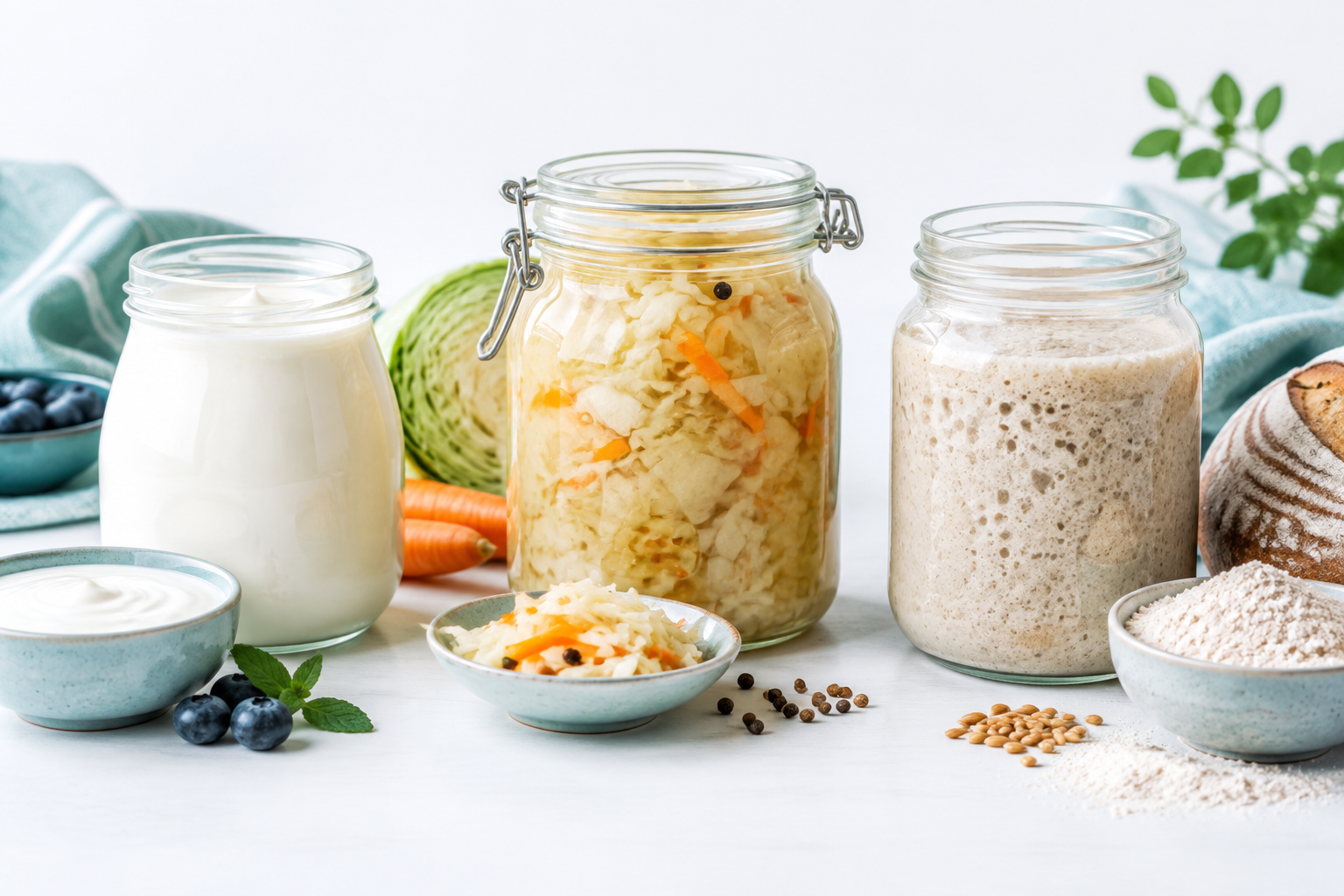
The distinction between fermentation and probiotic effects starts with fermentation, a controlled process in which bacteria, yeasts, or fungi use a food's sugars and starches, producing acids, gases, alcohol, and other compounds. Ingredients and microbes shape the outcome, so yogurt, kefir, kimchi, sauerkraut, and sourdough develop different flavors, textures, and digestion-related changes.
Acids produced during fermentation can lower a food's pH, which can slow many spoilage organisms and help some foods keep longer before refrigeration. That chemistry also creates yogurt's tang, sauerkraut's sour flavor, and sourdough's complex aroma and chewy texture.
Microbes may use some carbohydrates and form organic acids, peptides, vitamins, and other metabolites, sometimes called postbiotics. These changes can affect flavor and may suit some people's gut microbiome, but they do not guarantee less gas, bloating, constipation, or diarrhea. If you have IBS, a small serving can make it easier to notice your personal tolerance.
Fermented foods are not automatically probiotics. Probiotics are specific live microorganisms shown to provide a health benefit at an effective amount. A food can contain live bacteria or other beneficial bacteria without evidence that it helps manage a particular digestive symptom or IBS (source).
Do fermented foods contain probiotics? Sometimes, but fermentation alone does not establish probiotic effects. Heat treatment and pasteurization can kill cultures, while vegetables preserved in vinegar may be pickled rather than fermented. Labels can help you identify foods more likely to retain live microbes:
- Contains live cultures: Indicates that live bacteria may be present at packaging.
- Raw or unpasteurized: May suggest cultures were not exposed to heat treatment.
- Vinegar-pickled: Often means vinegar preserved the food instead of fermentation.
A refrigerated product with live cultures may be a practical choice, but its microbes still need evidence of a specific health benefit to qualify as probiotics.
Naturally fermented foods are foods with live cultures made by good microbes, and those microbes are natural probiotics in the loose sense. Gut microbiota feed on prebiotics, the fiber for gut microbes, so foods that feed gut bacteria and fermented foods do different jobs.
What Does Research Say About Gut Health?
Whether those fermentation-related changes improve gut health is what research on fermented foods has examined across gut microbes, inflammation, and digestive symptoms. The effect can differ based on the food, portion, your usual diet, health status, and the outcome measured. A change in the gut microbiome is not automatically a change you can feel.
In a Stanford randomized dietary trial, 36 healthy adults completed a 10-week comparison of high-fermented-food and high-fiber eating patterns. Participants who gradually added more fermented foods had greater microbial diversity and lower levels of several inflammation markers, while the high-fiber group did not show the same diversity increase during the short study. The research was publicly funded, not manufacturer-sponsored (source).
A 2025 systematic review found that fermented-food interventions may improve bowel frequency, stool consistency, gastrointestinal symptoms, and intestinal transit (source). Still, confidence in many findings was low or variable because the studies differed in foods, portions, participants, study length, and symptom measures. That variation means fermented foods for gut health may help some people without producing the same result for everyone.
A food that clearly identifies live cultures can help you compare products, though those cultures can still be considered alongside the food's overall nutrition profile. Stanford Medicine notes that fermentation is only one part of a food's overall nutrition profile (source)).
A wider, symptom-aware eating pattern also matters:
- Fiber-rich foods: Pair fermented foods with familiar fiber-rich meals.
- Prebiotic foods: Add prebiotic foods gradually when fermentable carbohydrates bother you.
- IBS considerations: Some prebiotic foods can increase gas or bloating when you are sensitive to fermentable carbohydrates, so gradual changes are often easier to assess.
Track gas, pain, bloating, and stool changes as you try a new food. The most useful fermented food is often the one you can tolerate consistently as part of regular meals.
The benefits of fermented foods show up as more diverse gut microbes and lower inflammation markers in the Stanford trial. That is fermented foods and microbiome diversity in one study, not a cure for anything. Fermented foods and inflammation is an active research area, and a 2025 systematic review of fermented foods found modest digestive benefits with wide variation between foods.
Which Foods Retain Live Microbes?
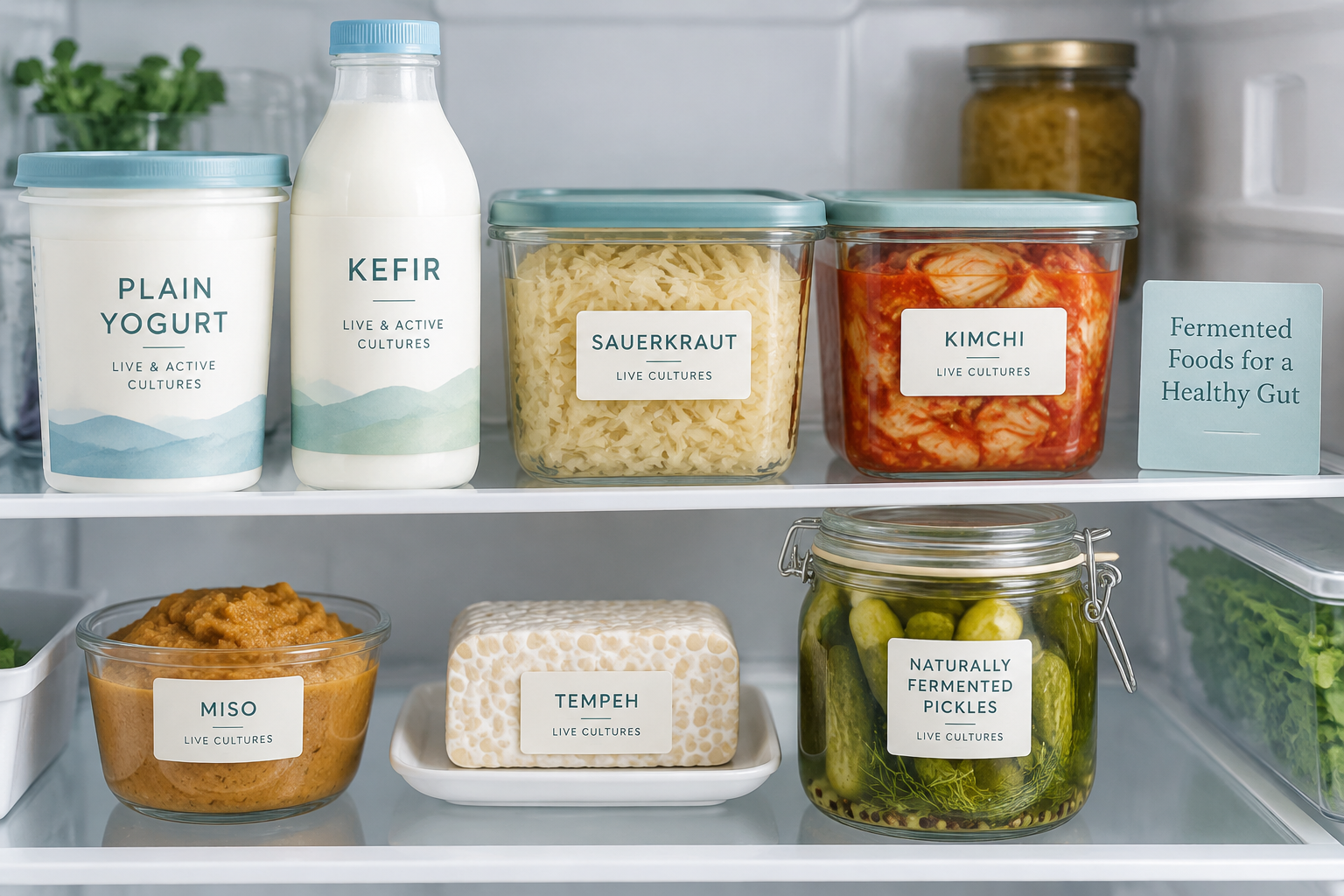
Because research findings do not make every fermented product equally useful, fermentation can leave tangy acids and other byproducts behind even when living organisms no longer remain. Yogurt, kefir, sauerkraut, kimchi, kombucha, miso, tempeh, natto, and pickles may contain live bacteria or yeasts, but “fermented” does not guarantee live cultures or clinically tested probiotic strains. Check the specific package, its storage, and how it was processed.
Dairy labels offer useful clues:
- Yogurt and kefir: Refrigerated products labeled live and active cultures, or those that name cultures in the ingredient list, are more likely to contain living microbes. Plain, unsweetened yogurt with live active cultures also makes it easier to compare sugar content.
- Heat treatment: Heating after fermentation can preserve flavor while reducing or removing living microbes. Refrigeration alone does not confirm that a product contains active cultures.
Fermented vegetables need the same label check:
- Sauerkraut and kimchi: Raw, unpasteurized sauerkraut and kimchi in the refrigerated section are more likely to retain live microbes. Shelf-stable jars, canned products, and pasteurized versions often contain few or none because heat damages the organisms.
- Naturally fermented pickles: Pickles made in a salt brine may retain live cultures, particularly when labeled raw, unpasteurized, naturally fermented, or “contains live cultures.” Vinegar-only quick pickles generally do not go through live fermentation, and jar bubbles are not proof of active cultures.
Sodium matters with fermented vegetables, especially when they become a regular side dish. While kombucha can vary in pasteurization, live-culture status, and added sugar, refrigerated, unpasteurized miso may retain microbes, although boiling reduces them. Tempeh and natto start as fermented foods, but cooking changes what survives.
Start with a small serving of a single food and notice whether it affects gas, bloating, or bowel habits before making it part of your routine.
Pasteurized fermented foods and shelf-stable fermented foods lose their live cultures, so pasteurization and probiotics do not mix. Kefir gut microbiome benefits come from a wider mix of probiotic strains and yeasts than yogurt. Kombucha benefits are less studied, and kombucha is a sugar and fermented foods question as much as a microbe one.
Which Fermented Foods May Suit You?
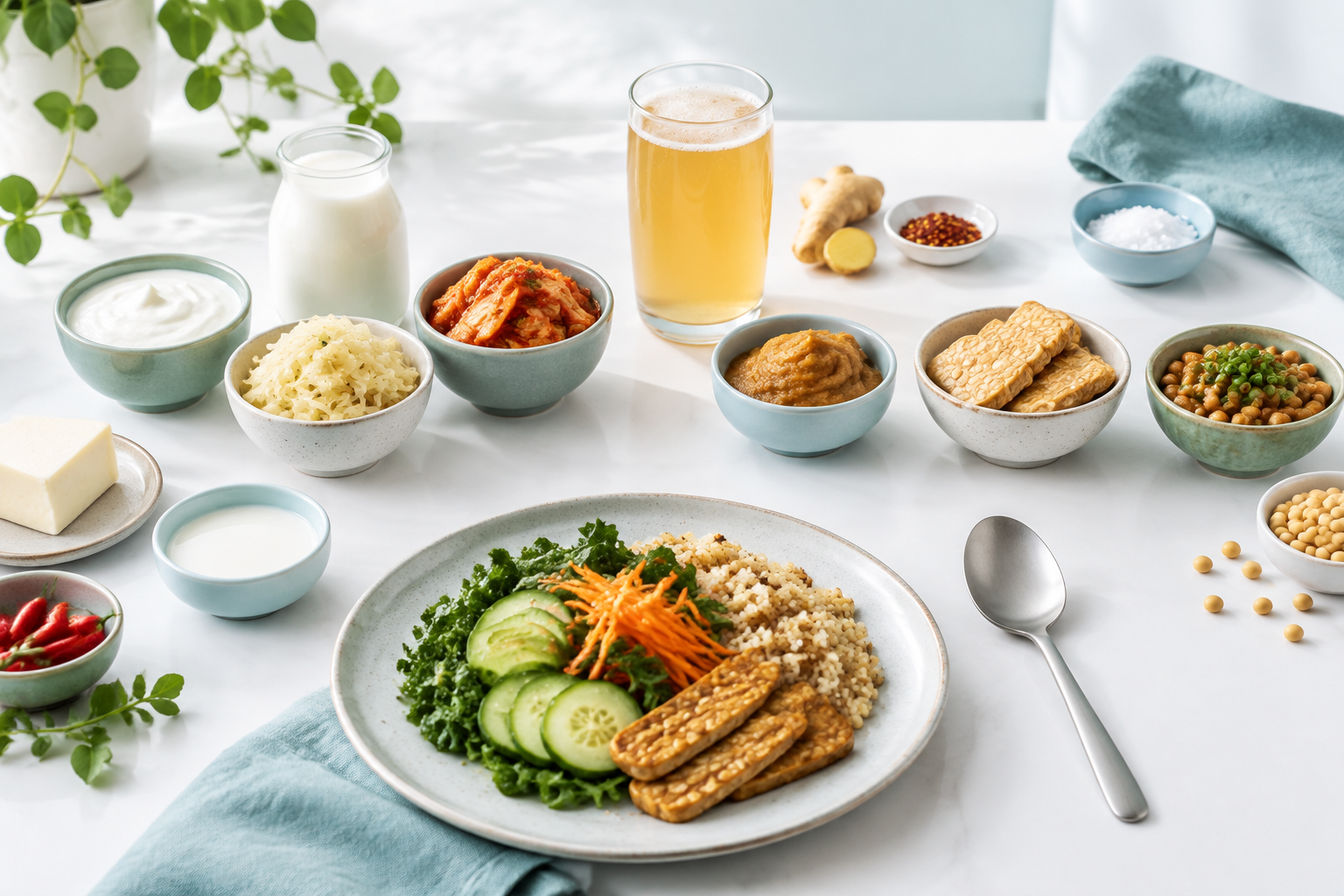
After identifying products that may retain live microbes, the best fermented foods are the ones that fit your symptoms, usual meals, and food preferences. Start with one option at a time, especially if lactose, spice, sodium, sugar, or carbonation tends to worsen bloating, gas, constipation, or diarrhea. Whichever you pick, water and digestion travel together, since fermented foods add fiber and salt at once. One catch applies to all of them: onion and garlic in fermented foods such as kimchi and some sauerkrauts can set off an IBS gut before the microbes matter.
Food | Live-culture likelihood | Meal role | Tolerance considerations |
|---|---|---|---|
Plain yogurt | Look for yogurt with live active cultures, which may include Lactobacillus or Bifidobacterium | Breakfast, snacks, or sauces | Lactose can be a concern, though lactose-free options are available |
Kefir | Often contains a broader mix of bacteria and yeasts than yogurt | Smoothies or a pourable drink | Tart flavor and dairy may not suit everyone |
Kimchi | Refrigerated, unpasteurized products are more likely to retain live cultures | Spicy topping for bowls, eggs, or sandwiches | Chili, garlic, and sodium may trigger symptoms |
Sauerkraut | Refrigerated, unpasteurized products are more likely to retain live cultures | Sandwiches, grain bowls, or sausages | Acidity and sodium can be bothersome |
Kombucha | Culture content varies by product | Occasional lower-sugar beverage | Carbonation and added sugar can worsen bloating |
Miso | Refrigerated varieties may retain live cultures | Soups, dressings, and marinades | Often high in sodium |
Tempeh and natto | Fermented soy foods with different textures and flavors | Savory plant-based meals | Soy tolerance and dietary restrictions matter |
Plain yogurt and kefir are accessible dairy-based starting points. Choose plain or low-sugar yogurt rather than sweetened varieties, and consider lactose-free kefir if dairy sugar causes symptoms. Although yogurt kefir sauerkraut kimchi often appear together in food lists, each has a different flavor, meal role, and tolerance trade-off.
Kimchi is a Korean-style fermented vegetable dish made with napa cabbage or radish, garlic, ginger, chili, and scallions. Sauerkraut is usually milder, but both work best as small condiments when salt or spicy foods bother you. Kombucha is fizzy fermented black or green tea that may contain organic acids and live microbes, so the label matters more than assumptions about its culture content.
For savory meals, stir refrigerated miso into food after cooking when live cultures are a priority. Tempeh is a firm, nutty, protein-rich meat alternative, while natto has a sticky texture and stronger aroma. On busy days, gut-friendly snacks for the road may fit your routine more easily than a refrigerated drink or condiment.
Yogurt for digestive health is the easiest start. Kimchi gut health claims rest on cabbage fiber plus live cultures, but the garlic and chili can bother a sensitive gut before the microbes get a chance. Fermented foods for constipation lean on kefir and yogurt. Fermented foods for bloating means starting small.
How Can You Start Without More Gas?
Start with one fermented food, not several. For fermented foods, bloating can follow a sudden increase in fermentable ingredients rather than mean the food is unsuitable. Begin with about 1 to 2 tablespoons daily of sauerkraut or kimchi, or a comparably small amount of plain yogurt or kefir. This is a cautious trial dose, not a universal serving-size target or a portion you need to reach immediately (source).
There is no single answer to how much fermented food per day works for sensitive digestion. Pair the small serving with a meal you already enjoy, and keep an eye on fluids when fiber intake changes.
A simple trial helps you identify whether fermented foods bloating is temporary or a sign that the food does not suit you:
- Choose one food: Keep tempeh, miso, natto, and other fermented options for separate days rather than introducing several at once.
- Protect live cultures: Use fermented vegetables as toppings or stir them in near the end of cooking when practical, since high heat can reduce live microbes.
- Keep routines steady: Notice whether gas, bloating, stool changes, or discomfort stay mild and brief or increase with each serving.
- Adjust early: Reduce the portion or frequency, try another food later, or pause when symptoms become bothersome.
Lactose tolerance can guide your choice of yogurt or kefir. If dairy already causes symptoms, choose another fermented food rather than forcing a likely trigger.
Ongoing, severe, or changing digestive symptoms need medical evaluation instead of assuming fermented foods are the only cause.
How to add fermented foods to your diet: one spoonful a day, then a serving, over a couple of weeks. Start fermented foods slowly and daily fermented foods become easy. Fermented foods and salt matter too, since sauerkraut and miso carry a lot of it.
How Do FODMAPs Affect Food Tolerance?
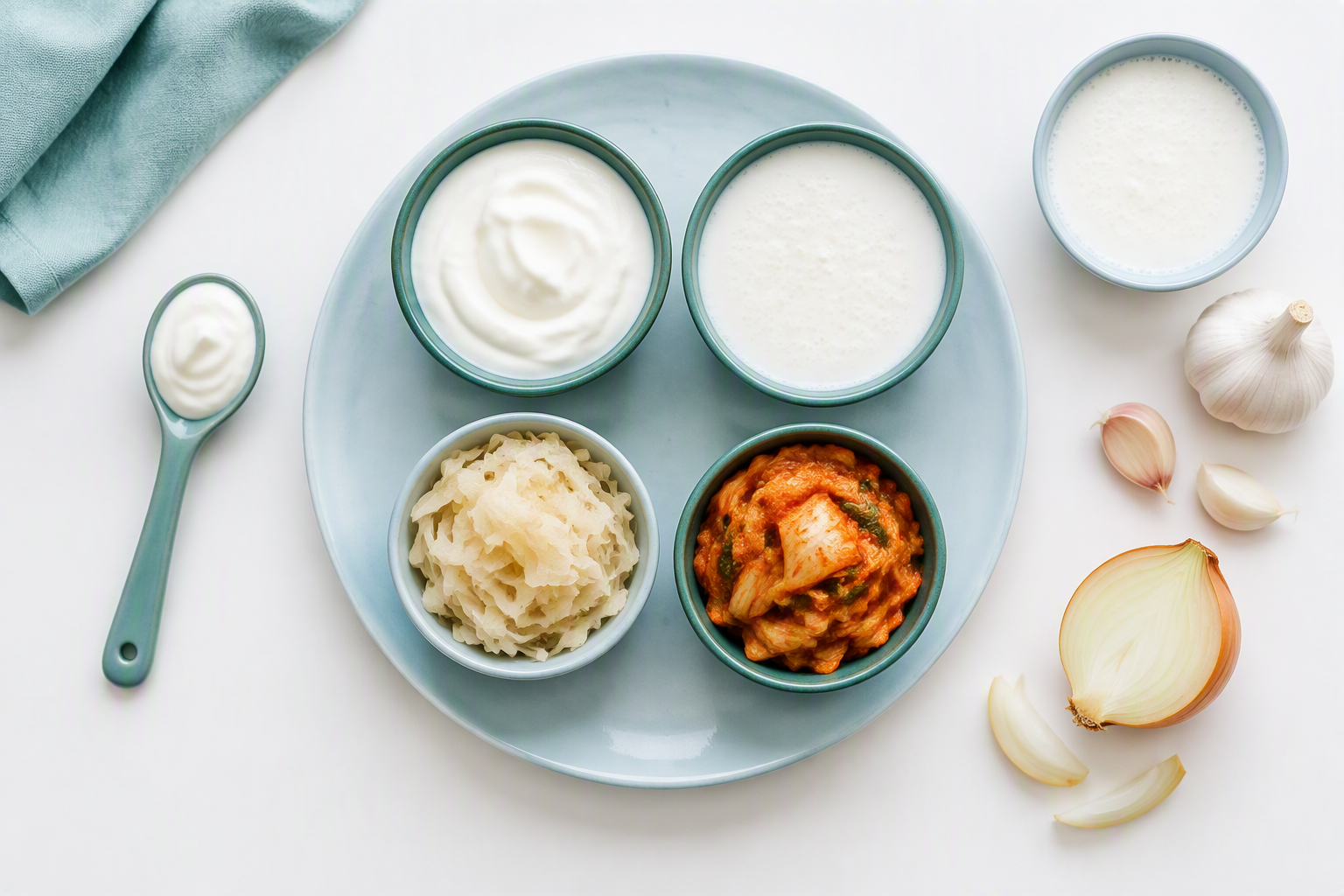
FODMAPs can make fermented foods harder to tolerate, but your portion size, the recipe, and your usual symptoms all matter. Because FODMAP effects vary with individual tolerance, some people with IBS may experience gas, cramping, loose stools, or fermented foods bloating.
Fermentation does not automatically make a food high or low in FODMAPs. Added inulin and fructans can increase gas and bloating, as can onion and garlic in fermented foods. A tolerated amount of fermentable food may help support regular bowel movements when constipation is the main concern (source). With diarrhea or urgency, smaller portions and simpler foods may be easier to manage than broad rules about fermented foods and IBS.
Food tolerance often depends on these details:
- Lactose: Yogurt and kefir cultures break down some lactose, which may make fermented dairy easier to tolerate for some people. These foods are not automatically lactose-free.
- Added ingredients: Fruit concentrates, added sugar, sweeteners, and spicy seasonings can trigger symptoms separately from live cultures, especially during diarrhea or reflux-like discomfort.
- Serving size: A large bowl, glass, or mixed meal can exceed your tolerance even if a smaller portion feels comfortable.
- Sodium: Sauerkraut, pickles, miso, and fermented soybean foods can be high in salt. Smaller portions or rinsed fermented vegetables may better suit a low-sodium eating pattern.
Portion needs depend on the food and your tolerance. Begin with a modest serving of a plain option, then change a single variable at a time. Comparing plain and flavored labels can help separate a reaction to the base food from a reaction to sugar, fruit, sweeteners, or spice.
When dairy reliably causes symptoms, lactose-free fermented dairy or dairy-free cultured alternatives may be a better fit. If you tolerate kefir, use it plain, blended into a smoothie, or stirred into overnight oats. A calm, repeatable food trial can reveal patterns without forcing foods that leave you uncomfortable.
How Can You Track Your Best Starting Food?

The best fermented foods for you fit the digestive concern you most want to track, not a one-size-fits-all rule. Choose one option based on constipation, bloating and gas, loose stools or diarrhea, or general comfort. If you have IBS, account for familiar triggers such as dairy, fermentable carbohydrates, spicy ingredients, carbonation, or high-fiber foods before starting.
Keep the first trial simple by using one clearly defined food and product at a time. Refrigerated products with named live and active cultures can be practical choices, but a live-culture label does not prove symptom relief or a clinical benefit. Avoid introducing another new food or supplement during the same trial.
A dated paper or phone log can make food patterns easier to spot:
- Food details: Record the brand, live-culture information on the label, portion, timing, and preparation.
- Digestive symptoms: Note abdominal pain, bloating, gas, stool frequency and consistency, urgency, constipation, or diarrhea.
- Other influences: Include medications, supplements, alcohol, high-fermentable meals, illness, menstrual-cycle changes, poor sleep, and unusual stress.
- Concerning reactions: Record skin symptoms, throat or chest symptoms, vomiting, or other upper-body discomfort after eating.
If fermented foods are new to you, begin with a small taste rather than a full serving. Keep the food, portion, and timing steady for several days. Increase only when symptoms remain manageable, since a sudden increase can cause temporary gas or bloating and blur the result.
Judge the food by a pattern, not one difficult day. Continue and gradually increase a tolerable food, reduce the portion or choose a plainer preparation for mild symptoms, and pause it if symptoms clearly worsen or persist.
Seek prompt clinical care for:
- Severe pain or vomiting
- Dehydration, blood in stool, or fever
- Unintentional weight loss or major bowel-habit changes
A clinician or registered dietitian can help when the pattern remains unclear.
How many servings of fermented foods per day? One to two servings of fermented foods is the usual range people settle on, and the serving size for fermented foods is small: a few forkfuls of sauerkraut, a half cup of yogurt, a small glass of kefir. Fermented foods and stool consistency and fermented foods and bowel frequency are the two things to watch in the first weeks.
Fermented Foods for Gut Health FAQs
These FAQs address common questions about fermented foods for gut health, including lactose intolerance, bloating, IBS, and other sensitive-digestion concerns. They can help you make small, symptom-aware food choices with more confidence.
1. Can Fermented Foods Trigger Histamine Symptoms?
Fermented foods can cause histamine-type symptoms in some people, but tolerance depends on the food, portion, and your individual sensitivity. Live bacteria, yeasts, and fermentation byproducts may be present, yet fermented foods are not automatically clinically proven probiotics or a certain cause of symptoms. Start with a small portion of one food and record flushing, itching, headaches, nasal symptoms, or digestive changes in a symptom log. Stop eating it and seek prompt care for breathing difficulty, swelling, faintness, or widespread hives. Repeated reactions warrant a conversation with your clinician.
2. Are Fermented Foods Safe During Pregnancy?
Fermented foods can fit into pregnancy meals when they are commercially prepared, pasteurized when appropriate, and stored according to food labels. Heat and pasteurization can reduce live cultures, and vinegar-pickled foods usually do not offer the same cultures as refrigerated, salt-fermented pickles. Prioritize food safety over potential digestive benefits. Avoid raw fermented foods or unpasteurized products if advised, and discard anything with damaged packaging, an unusual odor, or other signs of spoilage. Discuss specific foods, significant symptoms, or probiotic products with your obstetric clinician or pharmacist.
3. Can Children Eat Fermented Foods?
Children can usually enjoy age-appropriate fermented foods with regular meals. Start with a small serving of a familiar, properly refrigerated choice, such as plain yogurt with live cultures or kefir, and watch how they tolerate it rather than expecting symptom relief. Check labels, since flavored yogurt, kefir, and kombucha may contain added sugar, while sauerkraut, pickles, and miso can be high in sodium. Choose options that fit dairy-free or lower-sodium needs, and avoid anything improperly stored. Stop the new food and speak with a pediatric clinician if allergic symptoms or ongoing gas, pain, diarrhea, or vomiting develop.
4. Which Fermented Foods Are Dairy-Free?
Tempeh, natto, kimchi, sauerkraut, and salt-brined lacto-fermented pickles are naturally dairy-free. Miso is a Japanese fermented soybean paste made with salt, koji, and sometimes rice or barley. Natto contains distinctive microbes and vitamin K2. Plain kombucha is generally dairy-free, but creamy, blended, or flavored varieties may contain milk ingredients.
Check ingredient lists and allergen statements, especially if you have a milk allergy and need to avoid possible cross-contact. Vinegar-only quick pickles usually lack live cultures, and dairy-free options can still be high in added sugar or sodium. Start with a small portion that suits your symptoms.
5. Are Fermented Foods Good for Digestion?
Yes, for most people. Fermented foods for digestion bring live microbes and the acids fermentation makes, and the Stanford trial linked a high fermented-food diet to more diverse gut microbes. Fermented foods for diarrhea are a mixed case, since the acids can irritate an inflamed gut, so wait until stools settle.
6. Which Fermented Foods Are Probiotic-Rich?
Probiotic-rich foods are the ones with live cultures on the label: yogurt, kefir, refrigerated sauerkraut and kimchi, miso, and tempeh. Fermented food health benefits depend on those live cultures reaching you, which pasteurized and canned versions cannot do.