


After adding a fiber supplement, gas, bloating, fullness, or mild cramps can make you wonder whether it was a mistake. These fiber supplement side effects are often a temporary response to increasing fiber too quickly, and safer next steps usually mean lowering the dose, drinking enough fluid, and building up gradually.
Rapidly fermented fibers such as inulin, FOS, and GOS can produce more gas, while methylcellulose does not ferment and may cause less bacterial gas. Psyllium, PHGG, and other options can affect stool consistency differently, especially with IBS, so the ingredient list matters more than a general fiber claim.
Severe or worsening pain, persistent vomiting, a swollen abdomen, or inability to pass stool or gas are not typical adjustment symptoms. Trouble swallowing, choking, or allergy symptoms also mean the supplement should be stopped and urgent care is needed.
Fiber Supplement Side Effects Key Takeaways
- Gas, bloating, and mild cramps often follow a sudden fiber increase.
- Start with the lowest label-directed dose and increase only when symptoms settle.
- Drink adequate fluid with bulk-forming fiber to support softer, movable stool.
- Inulin, FOS, and GOS often ferment rapidly and may worsen gas.
- Methylcellulose may cause less bacterial gas because it does not ferment.
- Separate fiber from oral medicines according to label or pharmacist timing instructions.
- Stop fiber and seek urgent care for severe pain, vomiting, choking, or inability to pass stool or gas.
Why Fiber Supplements Upset Your Gut at First

Fiber supplement side effects, the gastrointestinal symptoms that show up in the first days, often happen when your large intestine suddenly receives more fiber than usual, not because fiber is inherently harmful. Most adults fall short of the recommended daily fiber intake, so the jump from a low-fiber diet to a supplement dose is what the gut notices. Some fiber escapes digestion and becomes food for the microbiome fiber feeds. Fiber fermentation by gut bacteria produces gas, which may build up briefly before it passes.
That process is why fiber supplements and bloating can occur together during the adjustment period. Flatulence from fiber, pressure, abdominal tightness, visible abdominal distension, and an overly full feeling can all result when gas collects. Added fiber also increases stool bulk, and both gas and bulk can stretch the intestines and affect their normal contractions.
Common early symptoms include:
- Gas and bloating: A fiber supplement bloating episode may feel like pressure, fullness, or a waistband that suddenly feels tighter.
- Mild cramps or pain: Abdominal cramps from fiber can develop as the bowel stretches or contracts around extra gas and bulk.
- Fullness or nausea: A larger-than-usual amount of fiber can leave you feeling unusually full or mildly nauseated.
These effects are more likely if you begin a fiber supplement suddenly, take more than you tolerate, or raise the amount too quickly. Symptoms often settle once your gut adjusts to a consistent intake, but not every fiber type works well for every person.
Persistent, worsening, or severe cramps, marked bloating, or nausea are signs to reduce the amount rather than push through discomfort. If irritable bowel syndrome (IBS) symptoms reliably worsen with fermentable fiber, a nonfermenting option such as methylcellulose may be worth discussing with a clinician or pharmacist. Switching fiber types is often more useful than taking a larger dose.
What Happens When Fiber Ferments?

The amount and pace of a fiber increase influence how noticeable the adjustment feels. When more fermentable fiber reaches the colon, resident gut microbes break some of it down and release gas. That gas can stretch the bowel, causing pressure, cramps, and fiber supplement bloating. Early discomfort often improves as your gut adapts to the new amount.
Why fiber supplements cause gas at first, including when rebuilding gut bacteria after antibiotics, often relates to the amount of fermentable material arriving in the colon at once. Gas from fiber supplements is more likely when you are increasing fiber dose too quickly or adding a product to an already high-fiber diet.
A slower increase can reduce fiber supplement digestive side effects:
- Start small: Account for the fiber already in your meals before adding a supplement.
- Increase gradually: Build the dose over about two to three weeks, moving ahead only when your digestion feels settled.
- Watch the pattern: Gas, cramps, nausea, uncomfortable fullness, and stool changes can mean the dose is rising faster than your gut can tolerate.
Soluble fibers, including psyllium and inulin, may temporarily lead to softer stools, loose stools, or diarrhea. Bulk-forming fiber can also cause fullness. Psyllium users were about twice as likely as placebo users to report greater fullness, so consider whether the symptom is mild or severe, brief or persistent (source).
Fluid helps bulk-forming fiber form soft, movable stool. Mix each psyllium dose with at least 8 ounces, or 240 milliliters, of water. Too little liquid can worsen fiber supplements and bloating, temporary constipation, nausea related to dehydration, and discomfort.
Mild symptoms that ease after slowing the dose may be manageable. Stop increasing fiber and seek prompt care for substantial pain, vomiting, difficulty swallowing, or symptoms that persist despite a lower dose.
Which Fibers Ferment the Most?

The fermentation rate of each ingredient helps explain why supplements differ in comfort. When bacteria break down certain fibers, they produce gas that can lead to flatulence from fiber, bloating, cramping, abdominal fullness, visible distension, or abdominal tightness. Whether fiber causes gas depends mostly on the active ingredient and your individual tolerance, particularly with IBS, where many fermentable fibers are also FODMAPs and a low-FODMAP diet is sometimes the reason a supplement was suggested in the first place. PubMed Central describes how fermentation can contribute to these symptoms (source).
The ingredient list matters more than a package’s general fiber claim. Inulin and related fructans, fructooligosaccharides (FOS), and galactooligosaccharides (GOS) ferment quickly and often appear in prebiotic blends and gummies. Although they may help regularity, repeated bloating or cramps can mean the formula is not a good fit.
Fiber type | Fermentation tendency | Likely symptom pattern |
|---|---|---|
Inulin, FOS, and GOS | Often rapid | Gas, bloating, cramping |
Psyllium | Moderate | Gas or softer stools at higher amounts |
Wheat dextrin and acacia gum | Variable | Gas or bloating for some people |
Methylcellulose | Does not ferment | Less bacterial gas and added stool bulk |
Insoluble fiber | Limited fermentation | Bulkier stools and faster transit |
Psyllium has strong support for constipation-predominant IBS because it absorbs water and forms a gel. Still, psyllium side effects can include gas, softer stools, or loose stools when the amount is more than you tolerate. Wheat dextrin and acacia gum also ferment to varying degrees, so a clear-dissolving powder is not automatically the best choice for gas from fiber supplements.
Fiber and diarrhea can occur when soluble fiber softens stool too much, while insoluble fiber may speed intestinal transit. Methylcellulose can be a lower-gas switch when psyllium repeatedly worsens bloating, and partially hydrolyzed guar gum (PHGG) may suit some IBS-sensitive people. Check labels for the main fiber, added inulin, FOS, GOS, sweeteners, and flavorings before choosing a gentler formula.
Which Fibers Cause the Least Gas?
Among the fiber options above, methylcellulose is a bulk-forming fiber that may be easier on gas-prone digestion when inulin or other rapidly fermented fibers repeatedly worsen bloating. Methylcellulose may be worth considering when gas is the main concern. Methylcellulose for less gas can be a cautious option if you have irritable bowel syndrome (IBS) and psyllium leaves you persistently bloated.
Less fermentation does not mean no digestive side effects, and dietary fiber tolerability still varies from person to person. Fullness, cramping, loose stools, or constipation can still happen, especially if the starting amount is too high. A lower-gas fiber will not suit every IBS pattern, but it may be a practical alternative when highly fermentable carbohydrates are a clear trigger.
Methylcellulose may help with fiber and constipation because fiber absorbs water and adds bulk to stool, which can support more regular bowel movements and make stools easier to pass for some people. It is not meant to cause an immediate bowel movement, and taking more than the labeled dose can make discomfort worse.
A gradual start and steady fluids can reduce avoidable problems:
- Take each dose with a full 8-ounce (240-milliliter) glass of water.
- Maintain adequate fluid intake with fiber throughout the day so it can move through the digestive tract.
- Follow package directions, avoid dry doses, do not exceed the recommended amount, and do not take it immediately before bed.
Many people remember to drink water with fiber supplements at the time of the dose but forget that fluids later in the day matter too. Consistent hydration supports the fiber’s intended stool-bulking effect.
How Does Fiber Support Microbiome Diversity?
Beyond choosing a tolerable fiber, some intestinal bacteria break down fermentable fiber and release gas along with other byproducts. This activity contributes to the diversity fiber supports, but symptoms alone cannot show whether a particular fiber is benefiting your microbiome.
Tracking these symptoms can help you decide whether to adjust the amount or type of fiber. These effects can be uncomfortable, especially with IBS, and may mean the amount or type of fiber needs adjustment rather than that you should push through.
A varied diet gives different gut microbes different types of fiber to use. Build variety slowly with tolerated fruits, vegetables, beans, whole grains, nuts, and seeds instead of depending on a single fiber powder. Whole foods remain the foundation because they also supply vitamins, minerals, and other nutrients that supplements cannot replace. MedlinePlus notes that fiber-rich foods can help support regular bowel habits (source).
A sudden fiber increase is more likely to bring on digestive discomfort. Common adjustment symptoms include:
- Gas or more frequent flatulence
- Bloating, fullness, or abdominal tightness
- Cramping
- Looser stools, constipation, or other stool changes
Begin with a small, tolerated food addition and increase it gradually over a few weeks if symptoms stay manageable (source). Adding one food group at a time makes it easier to spot what your digestion handles well.
Fiber supplements can support regularity when food intake falls short, but they cannot replace dietary variety or guarantee symptom relief. Compare Psyllium, methylcellulose, inulin, and partially hydrolyzed guar gum (PHGG) based on your own tolerance.
How Should You Start and Adjust Fiber?

Whether you use food or a supplement for fiber variety, start with the lowest label-directed fiber dosage, never exceed the recommended amount, keep medicines two hours away from each dose to avoid fiber supplement medication interactions, and give your gut time to adapt. Whole-food fiber from beans, oats, fruit, and vegetables counts toward the same daily fiber intake and is usually the gentler place to start. That’s how to start a fiber supplement without mistaking mild adjustment effects for a product or dose that does not suit you.
A gradual routine makes symptoms easier to read:
- Start low: Stay at the lowest dose for several days, then increase only by the smallest label-directed step you tolerate. Work toward the intended serving over about two to three weeks.
- Track changes: Record the product, dose, timing, water intake, gas, bloating, abdominal discomfort, and stool consistency, frequency, and ease of passage. This can help show whether increasing fiber dose too quickly is behind a flare.
- Step back when needed: If gas, bloating, cramping, diarrhea, or constipation worsens, return to the last comfortable dose before trying again more slowly. Severe, persistent, or warning-sign symptoms call for the safety guidance rather than another increase.
Build water into your routine with every dose and throughout the day, and make a habit to drink water with fiber supplements, since adequate fluid intake with fiber helps it move through the digestive tract. Avoid dry powder and doses immediately before bed, especially if swallowing is difficult, because too little fluid can raise choking or blockage risk.
Fiber and medication absorption can change when fiber binds some oral medicines. Keep medicines at least one to two hours before fiber or two to four hours afterward, unless the label or pharmacist directs a different interval. Fiber supplement medication interference matters for fiber supplements and prescription medications, including levothyroxine, digoxin, lithium, carbamazepine, diabetes or heart medicines, and iron, calcium, or zinc supplements.
Product choice can also affect comfort:
Fiber type | When it may fit |
|---|---|
Psyllium | A common starting option, though gas or bloating may continue for some people. |
Methylcellulose | A nonfermenting choice when psyllium consistently causes gas. |
Partially hydrolyzed guar gum (PHGG) | Another option when psyllium is not well tolerated. |
For an IBS trial, choose an unflavored, single-fiber product so symptom triggers are easier to spot. Sugar-free products can still contain additives, while blends with inulin, fructooligosaccharides, probiotics, sweeteners, vitamins, or iron can make your response harder to interpret.
When Should You Stop Taking Fiber?
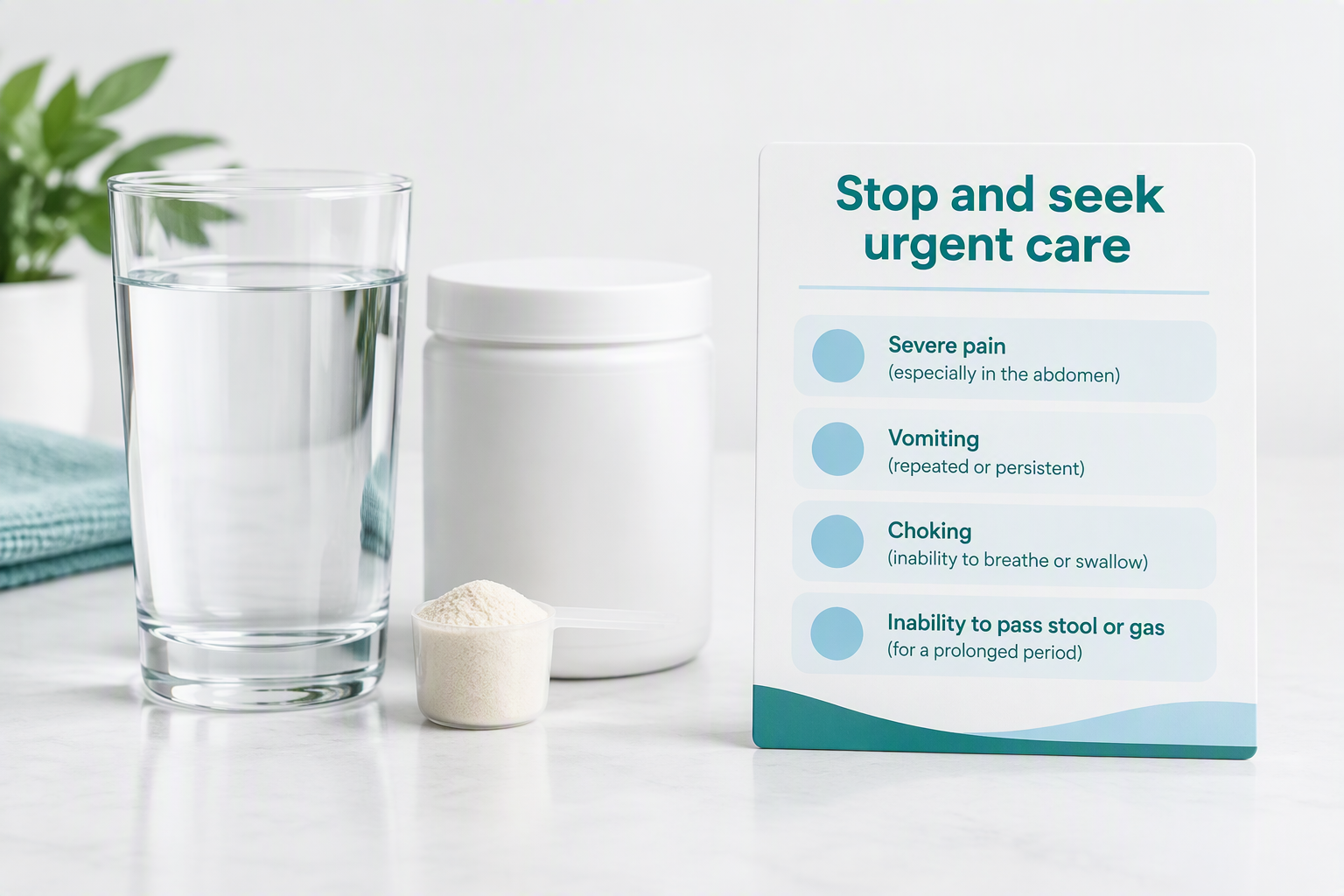
Even with the gradual routine and medication spacing above, mild gas, bloating, and short-lived cramping are common fiber supplement side effects while your digestive system adjusts. Severe or worsening pain, persistent vomiting, a visibly swollen abdomen, or an inability to pass stool or gas are different. Stop the supplement and seek urgent care for these warning signs, which can signal obstruction. Fiber supplement contraindications include trouble swallowing and any known gastrointestinal narrowing, because a dose taken with too little water can swell in the esophagus. Choking or a feeling that the fiber is stuck in the throat or chest, a possible esophageal obstruction, needs immediate attention (source, source).
Psyllium and similar fibers absorb liquid and expand, so take each dose with at least 8 ounces (240 milliliters) of water, following the label directions. Do not try to drink through trouble swallowing, chest discomfort after swallowing, choking, or a feeling that the product is stuck.
Stop the product and get emergency care for allergic symptoms such as:
- Skin symptoms: Hives, widespread itching, or a rash.
- Swelling: Swelling of the lips, face, tongue, or throat.
- Breathing symptoms: Wheezing, chest tightness, coughing, or trouble breathing.
Avoid handling fine psyllium powder if it causes coughing, wheezing, or breathing discomfort.
Professional guidance is important before restarting if you have swallowing problems, a prior bowel obstruction or fecal impaction, intestinal narrowing, adhesions, ulceration, inflammatory bowel disease, unexplained stomach pain, significant kidney dysfunction, or heart failure with fluid restrictions. Fiber should not be used during fecal impaction because the impaction must be cleared first.
Fiber and medication absorption concerns are best reviewed before restarting. Use the product label or a clinician's advice to set the timing before restarting. If symptoms started after you began a supplement, pause it and ask a pharmacist or clinician about the safest spacing for your medicines. Severe pain, vomiting, or no stool passage is urgent, not a timing issue.