


When stress worsens bloating, cramps, or irregular bowel habits, it's natural to wonder whether the gut microbiome is affecting your mental health. Gut microbes may influence mood and stress through the gut-brain axis, but current research shows associations rather than proof that specific bacteria cause anxiety or depression. This two-way system includes nerve signals, immune activity, microbial compounds, and the HPA axis.
Serotonin made in the gut helps control digestion, yet it does not simply travel to the brain and determine how you feel. Studies of psychobiotics, including certain probiotic strains, have mixed results because formulas, doses, and participants differ. Regular meals, tolerated fiber, sleep, movement, and established support for anxiety or low mood offer a steadier foundation than chasing a perfect stool test or supplement.
Microbiome and Mental Health Key Takeaways
- The gut-brain axis sends signals in both directions between digestion, immunity, nerves, and the brain.
- Microbiome research links gut patterns with mood but does not prove bacteria cause anxiety or depression.
- Stress can change sleep, appetite, bowel habits, gut sensitivity, and microbial conditions.
- Gut serotonin supports digestive function but does not directly enter the brain.
- Psychobiotic results depend on the exact strain, formula, dose, study group, and outcome measured.
- Gradually adding tolerated fiber may support microbial activity without worsening IBS symptoms.
- Stool tests and probiotic labels cannot diagnose mental health conditions or explain every digestive symptom.
How Does the Microbiome Reach the Mind?
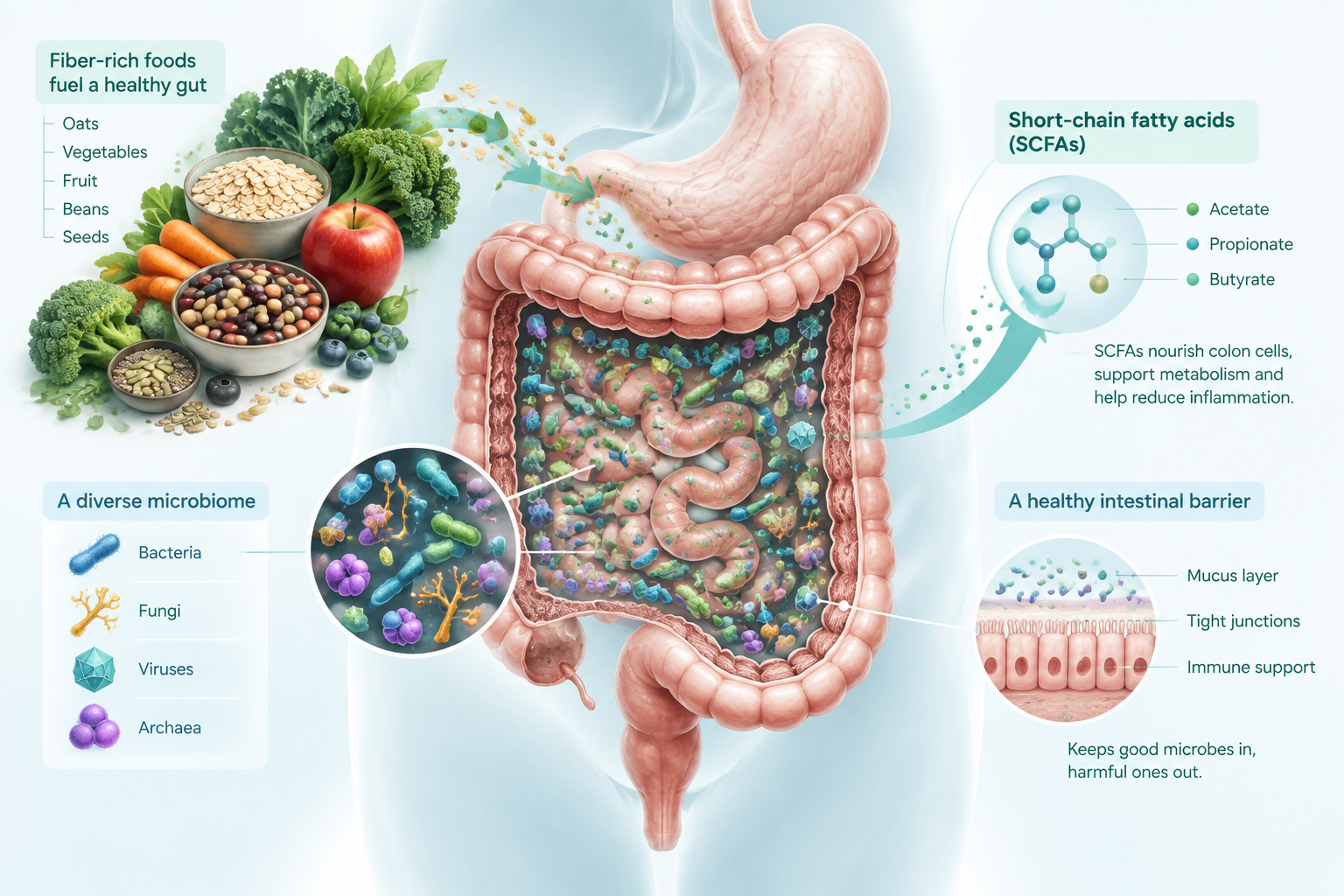
The gut microbiome and its jobs begin with a living community in your digestive tract, not a single germ to increase or a score to perfect. It includes about (3.8 times 10^{13}) bacteria, and bacterial genes outnumber human genes by more than 100 to 1. Its members include:
- Bacteria: Help break down certain food components and produce compounds your body can use.
- Fungi: Form a smaller but normal part of the community.
- Viruses: Often interact with bacteria and other microbes.
- Archaea: Microorganisms that differ from bacteria but also live in the gut.
Healthy microbiome composition naturally differs from person to person. A profile that supports one person’s digestion may not be the right benchmark for someone else.
Microbes process parts of food that human enzymes do not fully digest, especially certain fibers. The relationship between fiber and beneficial gut bacteria can produce short-chain fatty acids, compounds that interact with intestinal cells and energy-use processes. The ecosystem’s shared activity matters more than finding one supposedly ideal bacterium.
A diverse, well-functioning community can help support gut lining integrity. The intestinal barrier is the selective gut boundary that keeps most digestive contents in the intestine while allowing nutrients to enter circulation. Dysbiosis, meaning disruption in the microbial ecosystem, may affect this barrier and increase exposure to inflammatory molecules or signals.
The immune response and gut microbiome influence one another, but neither can fully explain an individual’s bloating, irregular bowel habits, anxiety, or depression. Microbial activity also contributes to the gut-brain axis through connected nervous-system, immune, and metabolic signals relevant to mood and neurological health.
A varied eating pattern that supports microbial diversity is more useful than chasing a perfect test result or targeting one organism. Small, consistent food choices give this complex community a better foundation.
How Does the Gut Communicate With the Brain?
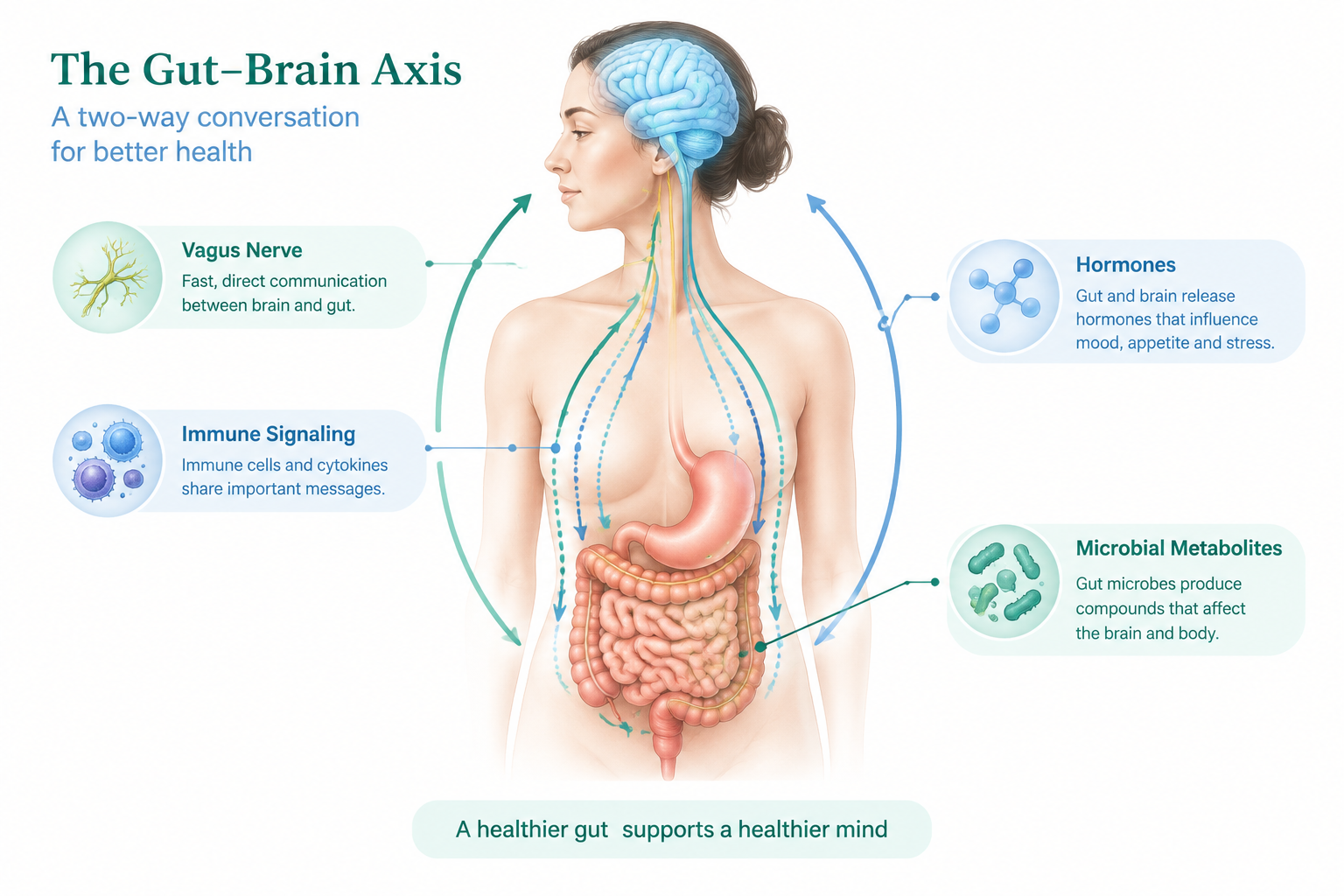
From this microbial community, the gut brain axis is a two-way communication network, not a one-way route from digestion to mood. Also called the gut-brain axis or microbiota-gut-brain axis, it links your gut microbiome with the enteric nervous system in the digestive tract, the central nervous system, immune activity, hormones, and the brain. This helps explain why stress can change bowel habits and why persistent bloating or irregularity can add emotional strain, without making every digestive symptom a mental health problem.
The vagus nerve is a fast communication route between the gut and brainstem. It carries information about gut stretching, nutrient availability, and inflammation, while signals traveling from the brain can affect digestion, sensitivity, and bowel patterns. Vagus nerve signaling is an important part of the gut-brain connection, but it does not prove that bacteria directly cause anxiety or depression. Harvard Health describes this back-and-forth communication between the digestive system and brain (source).
Other messages move through immune, metabolic, and hormonal pathways:
- Immune signaling: Gut microbes help train immune defenses. During inflammation, cytokines, or immune messenger proteins, can circulate and influence brain function and stress responses. the microbiome and immune health are connected, though inflammation is only one possible contributor to digestive symptoms.
- Microbial metabolites: Microbes break down parts of food into compounds that can affect the gut lining, immune cells, and nerve signaling. Food patterns may matter more than any single supplement.
- Hormones and stress: Gut hormones help regulate hunger, fullness, and digestion. Ongoing activity in the hypothalamic-pituitary-adrenal (HPA) axis, the body’s stress-response system, may alter gut movement, sensitivity, and the microbial environment.
When considering how gut bacteria affect the brain, keep both directions in view. Stressful periods can disrupt sleep, appetite, digestion, and bowel patterns, while disruptive symptoms can create real emotional strain.
Researchers call this two-way traffic the microbiome-gut-brain axis. Short-chain fatty acids (SCFAs) made from fermented fiber are one of the messengers being studied for effects on brain health and cognitive function, alongside immune signaling and the vagus nerve.
How Do Gut Bacteria Affect Serotonin?
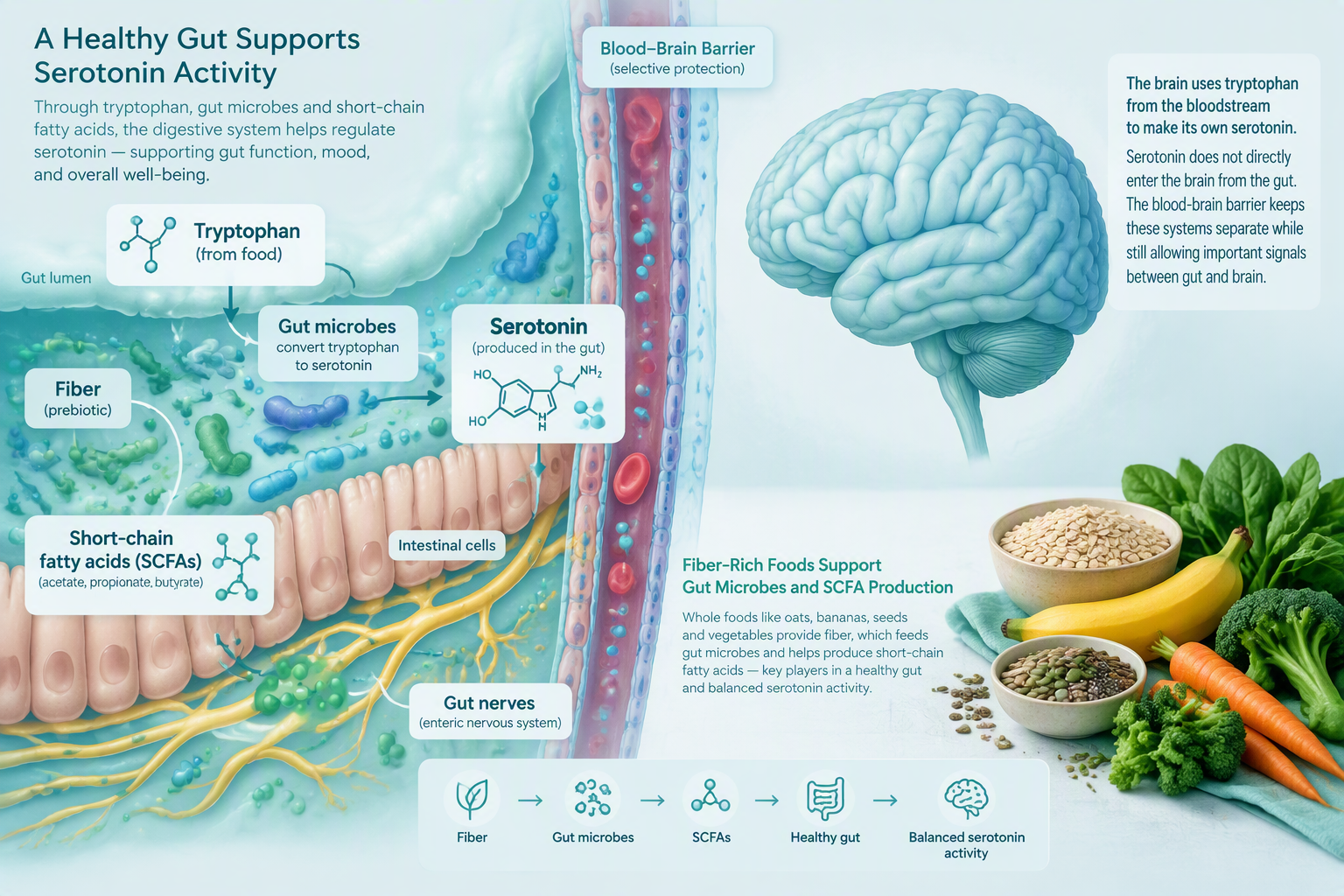
Within this two-way network, gut bacteria and serotonin are linked, but serotonin production in the gut does not mean that gut serotonin enters the brain or directly controls your mood. Enterochromaffin cells, specialized intestinal cells, make most of the body’s serotonin. In your digestive tract, this chemical helps regulate movement, secretion, and nearby nerve signals. How gut bacteria affect serotonin also depends on the blood-brain barrier, which keeps serotonin made in the gut from simply passing into the brain.
Gut microbiome neurotransmitters involve several chemical pathways that microbes may produce, respond to, or influence:
- Serotonin: Supports intestinal movement and local signaling.
- Dopamine, GABA, and norepinephrine: May affect nerve activity, immune signaling, and messages carried along the gut-brain axis.
- Tryptophan: This dietary amino acid helps your body make serotonin, while microbes can affect its availability and the byproducts formed from it.
Tryptophan byproducts may influence inflammation, blood-brain-barrier function, and immune cells that support the brain. Still, human research has not shown that changing one bacterial species reliably changes anxiety, depression, or gut bacteria and mood.
Fiber offers another indirect connection. When microbes ferment a variety of dietary fibers, they produce short-chain fatty acids, including butyrate, acetate, and propionate. These compounds support the intestinal barrier and may affect inflammation, brain signaling, and neuroplasticity, or the brain’s ability to adapt. Increasing fiber too quickly can worsen gas or bloating, especially with IBS.
The microbiome may also influence the HPA axis, part of your stress response. Germ-free animal studies show stronger cortisol responses that introduced bacteria can sometimes lessen, but how gut bacteria affect the brain in people is more complicated. Sleep, stress, food tolerance, and digestive symptoms all shape that two-way connection.
What Does Evidence Show About Anxiety and Depression?
Despite these proposed pathways, research on microbiome and mental health finds recurring associations, not a test that can diagnose anxiety or depression. A 2025 systematic review of 24 studies found differences in gut microbial composition among people with anxiety or depression, sometimes including lower diversity. Those findings were heterogeneous, so diversity cannot identify an individual’s mental health status (source).
Studies of gut health and depression sometimes report lower levels of Faecalibacterium, Bifidobacterium, and Lactobacillus, plus differences in bacteria that make short-chain fatty acids. Research on gut health and anxiety has also noted lower microbial richness and changes in broader bacterial groups. No dependable set of “anxiety bacteria” or “depression bacteria” has emerged.
The evidence is best viewed in three parts:
- Established: The gut and brain communicate through nerve signals, immune activity, and microbial metabolites, which are chemicals made as microbes process food.
- Promising: Dysbiosis and systemic inflammation may affect brain signaling. This is one possible link between gut inflammation and mental health.
- Uncertain: Research has not shown that one harmful bacterium directly causes depression or that changing the microbiome treats anxiety or depression.
The relationship also runs in both directions. Stress can disrupt sleep, appetite, digestion, and food choices, and each of those changes can reshape the gut microbiome. A single stool sample is a snapshot, not proof of what caused a symptom.
Microbiome comparisons are difficult because many influences overlap, including:
- Diet and fiber intake
- Antidepressants, other medicines, and recent antibiotics
- Geography and cultural food patterns
- Activity, sleep, alcohol use, smoking, and life stress
These factors can make gut bacteria and mood appear linked even when the sequence of changes is unclear (source).
If bloating, IBS symptoms, or irregular bowel habits occur with anxiety or low mood, support your digestion with regular meals, fiber you tolerate, sleep, and movement. Evaluate probiotic trials by the specific strain studied, and use established mental-health care when symptoms persist or become severe.
What Do Psychobiotic Studies Actually Show?
Psychobiotics are being studied for mood and stress, but they are not proven treatments for anxiety or depression. Germ-free and other animal research suggests that gut microbes can affect stress responses, anxiety-like behavior, social behavior, and cognition. Observational studies also find associations between microbiome patterns and mood, yet neither type of research can show that changing your gut bacteria will treat a mental health condition. Stanford Medicine describes several ways stress and the microbiome may influence one another (source).
Human trials are more useful, though their findings are not interchangeable. Studies have tested probiotics, prebiotics, synbiotics, and dietary changes in different groups, with different formulas, doses, diets, and treatment periods. Some report improvements in depression, anxiety, perceived stress, sleep, or related outcomes, but gut health and depression research does not point to one supplement for everyone.
Study details matter as much as the headline result. The trials so far are small, single-strain or multi-strain, and short, and one randomized trial of a single Bifidobacterium breve strain in people with major depressive disorder illustrates the pattern (source): a signal worth studying, not a treatment. Study summaries rarely report completion rates or funding ties, which limits how confidently any result can be judged.
Three checks help you assess psychobiotic claims:
- Strain identity: A species name such as Lactobacillus or Bifidobacterium is not enough. Look for the specific strain code.
- Formula match: A high live-culture count does not mean a product matches the studied dose or blend.
- Relevant outcome: Digestive findings do not automatically apply to mood, anxiety, or depression.
Symptoms of a disrupted microbiome can overlap with stress-related symptoms without sharing one cause. A probiotic may complement established mental-health care, but it should not replace therapy, prescribed medication, or sleep support.
How Can Stress Affect Digestive Symptoms?

Beyond supplement claims, stress can change digestive symptoms, while uncomfortable gut signals can also intensify your stress response. This two-way gut-brain connection may make IBS-related cramping, bloating, urgency, diarrhea, or constipation more noticeable during difficult periods. These flares are physical, not imagined, and they do not prove a psychiatric condition is causing them.
The hypothalamic-pituitary-adrenal (HPA) axis is the body’s stress-response system within the gut-brain axis. When stress is prolonged, HPA activity may affect gut movement, immune signaling, the intestinal barrier, and microbial communities. In germ-free animal studies, researchers have not established how bacterial changes translate to stress-related digestive symptoms. Those results do not show the same effect in people or establish bacteria as a treatment for anxiety or depression.
Research on chronic stress and gut microbiome changes also overlaps with gut inflammation and mental health, but neither inflammation nor barrier changes explain every case of IBS. A 2024 study of 116 adults without mental health diagnoses linked resilience with microbiome activity associated with lower inflammation and better intestinal barrier integrity (source). This was an association, not proof of cause, a diagnostic test, or an explanation for your individual symptoms.
Stress and gut health involve more than one pathway. Other influences on the microbiome include:
- Food patterns: Low fiber intake, ultra-processed foods, refined sugars, and some additives may affect microbial activity.
- Medications: Antibiotics can be necessary, but unnecessary use may disrupt microbial communities. Other medications can matter as well.
- Daily context: Sleep, movement, geography, and lifestyle factors can shape gut conditions.
Gut health and anxiety may affect each other, but dysbiosis is not a single disease or a hidden explanation for every mood or digestive concern. Tracking stress, meals, sleep, bowel changes, and pain can help you discuss practical whole-person support with a healthcare professional. Persistent, severe, or changing symptoms need medical assessment rather than self-diagnosis from microbiome claims.
How Can You Support Your Gut Gently?
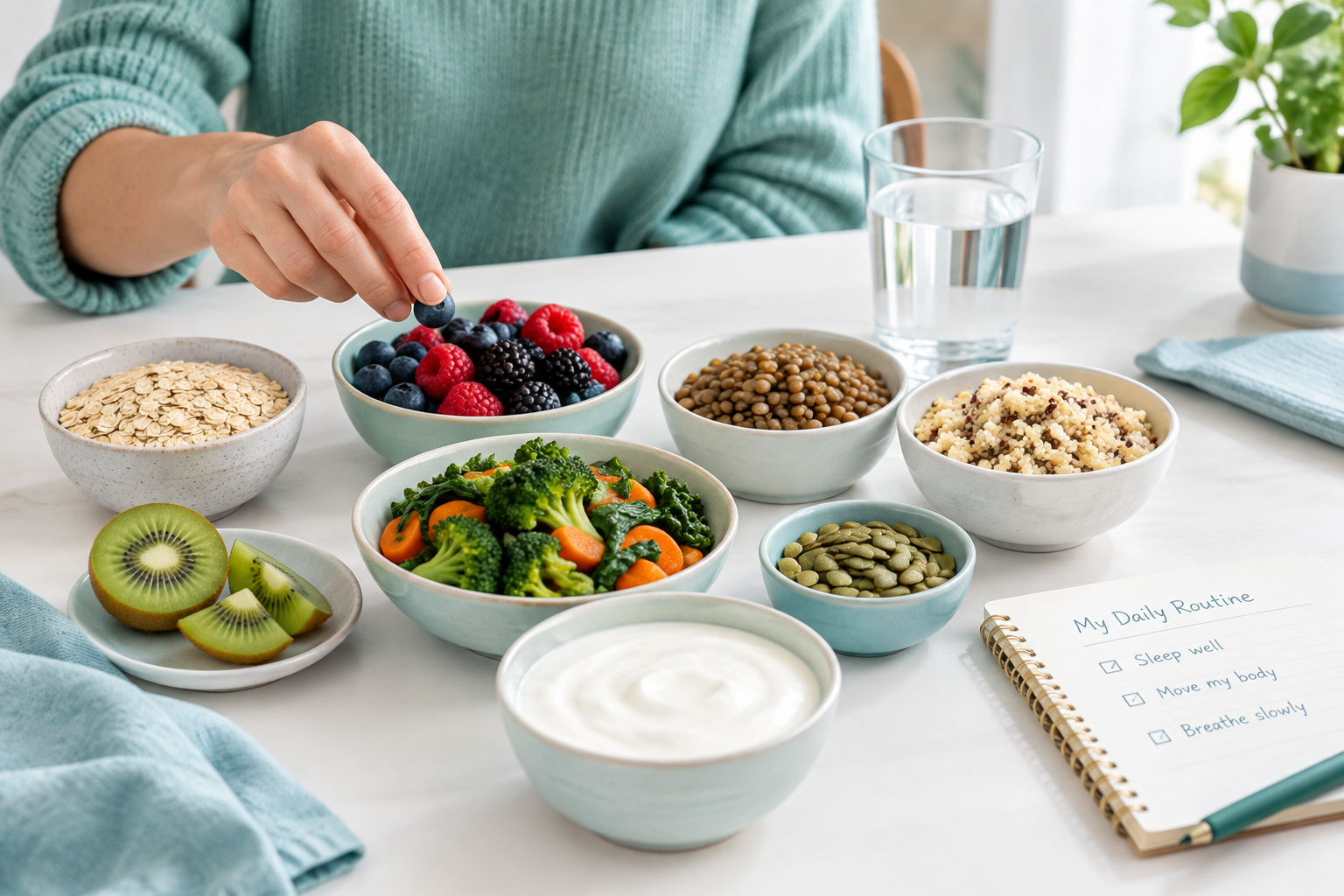
A flexible routine is usually more helpful than a gut reset. Instead of chasing a "perfect" microbiome, cutting out entire food groups, or focusing on one "good" bacterium, build eating and lifestyle patterns that keep IBS symptoms manageable. Tolerance differs from person to person, and a symptom flare does not erase your progress.
Plant variety gives fiber and beneficial gut bacteria more chances to interact. If you have been eating little fiber, add one small, tolerated food or slightly increase a portion at a time. Temporary gas, bloating, or bowel changes can mean the increase was too fast, so it may help to slow the change instead of avoiding plant foods altogether (source).
A practical way to add variety is to rotate tolerated foods from these groups:
- Vegetables and fruits: Start with familiar choices, then try another color, type, or preparation when symptoms are calmer.
- Beans and lentils: Use small portions at first because they can be highly fermentable.
- Whole grains, nuts, and seeds: Oats, rice, quinoa, chia, and pumpkin seeds can widen your choices without relying on the same few foods.
Prebiotics are nondigestible fibers that reach the colon, where certain gut bacteria use them for fuel. Garlic, onions, leeks, asparagus, oats, bananas, and legumes are common sources, though several also contain fermentable carbohydrates that may aggravate IBS. Reducing the portion, choosing another source, or trying again later is often more useful than pushing through discomfort or avoiding all plants.
Fermented foods are optional. Yogurt, kefir, kimchi, sauerkraut, fermented vegetables, kombucha, and miso may contain live microbes, but lactose, spice, carbonation, sodium, and serving size can affect tolerance. Begin with a modest serving of a familiar food, and put more attention on whole-food patterns than probiotic supplements, which have not consistently improved mental-health outcomes.
Consistent sleep, gentle movement, slow breathing, and a pause before meals can make the two-way gut-brain connection feel easier to manage. During a flare, smaller adjustments are often more realistic than strict rules, and support for anxiety, low mood, food fear, or symptoms that disrupt daily life can help you feel steadier.
Stress management for gut health belongs on the list too. Mindfulness, meditation, and cognitive behavioral therapy have evidence for digestive symptoms in IBS, and any effect on the microbiome comes along for the ride rather than being the target.
How Should You Interpret Microbiome Health Claims?
The gut microbiome communicates with the brain, but a test result or supplement label cannot identify the cause of depression, anxiety, or digestive symptoms. Established biology includes two-way signaling through the vagus nerve, immune pathways, and microbial metabolites, which are substances microbes produce. Studies find associations between the microbiome and mental health, but they do not show that one bacterium causes depression in people or is a treatment target.
Research in mice offers a useful clue: In mouse studies, microbiota associated with depression can trigger depression-like behavior, but that finding does not prove the same effect in people (source). Human causation remains unproven. If you live with IBS, bloating, or irregular bowel habits, gut-brain findings can help explain why stress and symptoms may affect each other without proving a single microbial cause.
A probiotic or psychobiotic claim is easier to assess when the label and study answer these questions:
- Strain identity: Does it name the genus, species, and full strain code?
- Dose: Is the amount guaranteed through the expiration date rather than only at manufacture?
- Exact formula: Was the finished combination studied, not just some of its ingredients?
- Participants: Were they healthy adults, people with digestive symptoms, or people diagnosed with anxiety or depression?
- Outcome and duration: Did the study measure the claimed result, and for long enough to matter?
A named strain and a transparent colony-forming unit dose make psychobiotics easier to evaluate, not automatically effective for stress, anxiety, or depression. More strains or a higher count does not show a better fit, and a long list without per-strain doses cannot be matched to research because AFU and CFU are not interchangeable measurements.
Some Lactobacillus and Bifidobacterium formulas have encouraging but mixed findings. Differences in formulas, doses, participants, and study length mean no universal mental-health probiotic or strain can be recommended.
Commercial tests may detect bacterial signals, but presence or absence cannot diagnose an "imbalanced" microbiome, anxiety, or depression. Fiber-rich meals, sleep, movement, digestive care, and appropriate mental-health support remain the practical foundation when symptoms persist.
Microbiome and Mental Health FAQs
These FAQs address common questions about the microbiome and mental health, including what research can and cannot tell us when stress, mood, bloating, or IBS affect daily life.
1. Can Antibiotics Affect Mood Through Gut Bacteria?
Antibiotics can temporarily reduce gut bacterial diversity, affecting helpful microbes as well as bacteria causing an infection. Because gut microbes communicate with the brain, this change could affect how some people feel, but routine antibiotic-related shifts have not been shown to directly cause anxiety or depression in most people. Take antibiotics exactly as prescribed, including finishing the course and avoiding leftover medication. Persistent mood changes warrant a conversation with the prescribing clinician, and fermented foods or a targeted probiotic may be worth discussing after treatment.
2. Do Probiotics Work Differently for Everyone?
Probiotic effects can differ based on the strain or strain combination, dose, duration, your diet, baseline microbiome, symptoms, and the people studied. Some research links probiotics, prebiotics, synbiotics, and dietary changes with improved anxiety or depression symptoms in certain groups, but these approaches are not interchangeable. Bifidobacterium longum subsp. infantis 35624 has IBS evidence, yet an IBS-focused probiotic is not automatically helpful for anxiety or depression. Lactobacillus and Bifidobacterium psychobiotics need strain-specific evidence.
3. Can Gut Problems Cause Brain Fog?
Digestive symptoms and brain fog can occur together, but symptoms alone cannot show that a microbiome imbalance is the cause. Poor sleep, ongoing stress, dehydration, restrictive or inadequate eating, medication effects, and some medical conditions can affect concentration and energy while also worsening digestion.
Gut microbes help regulate immune activity. Intestinal inflammation or increased permeability, when the gut barrier is less selective, may add to body-wide inflammatory signaling that affects brain function and stress responses. This is a possible pathway, not proof that dysbiosis or a specific bacterium directly causes brain fog, anxiety, or depression.
4. Should Children Take Psychobiotics for Anxiety?
A child should not start a probiotic marketed for anxiety, sometimes called a psychobiotic, without pediatric guidance. Studies differ in strains, doses, age groups, and outcomes, leaving no child-specific basis for recommending a particular product or bacterial strain. A clinician can consider your child’s health, medicines, digestive symptoms, and the label’s exact strain. Microbiome research also examines ADHD, autism spectrum disorder, stress, cognition, Alzheimer’s disease, Parkinson’s disease, and schizophrenia, but associations and animal findings are not anxiety treatments. A pediatric anxiety evaluation and therapy remain established supports.