


Boosting your immune system isn't something a probiotic does, and the phrase oversells what any supplement can offer. What some strains may do is influence the gut lining and immune signaling, which is a narrower and less satisfying claim.
Respiratory infections are where the human evidence runs strongest, and even there it stays modest. A Cochrane review of 23 trials covering 6,950 participants found fewer acute upper respiratory infections and episodes roughly two days shorter, with the certainty of that evidence rated low. Matching a full strain code such as Lactobacillus rhamnosus GG to the outcome studied is what separates a credible claim from a sticker on a box.
Biological plausibility and demonstrated benefit are different standards. A shift in an immune marker tells you something happened, not that you'll fall ill less often.
Probiotics and Immune Health Key Takeaways
- Probiotics do not broadly boost immunity or guarantee protection from illness.
- Some strains may affect the gut lining, immune cells, and antibody production.
- Respiratory infection research is the strongest human evidence, and it stays modest.
- A Cochrane review of 23 trials rated the certainty of that evidence low.
- Immune-marker changes are not the same as fewer infections.
- Match a full strain code to the outcome that was actually studied.
- Probiotics never replace vaccination, sleep, nutrition, or medical care.
What Does Immune Support From Probiotics Mean?
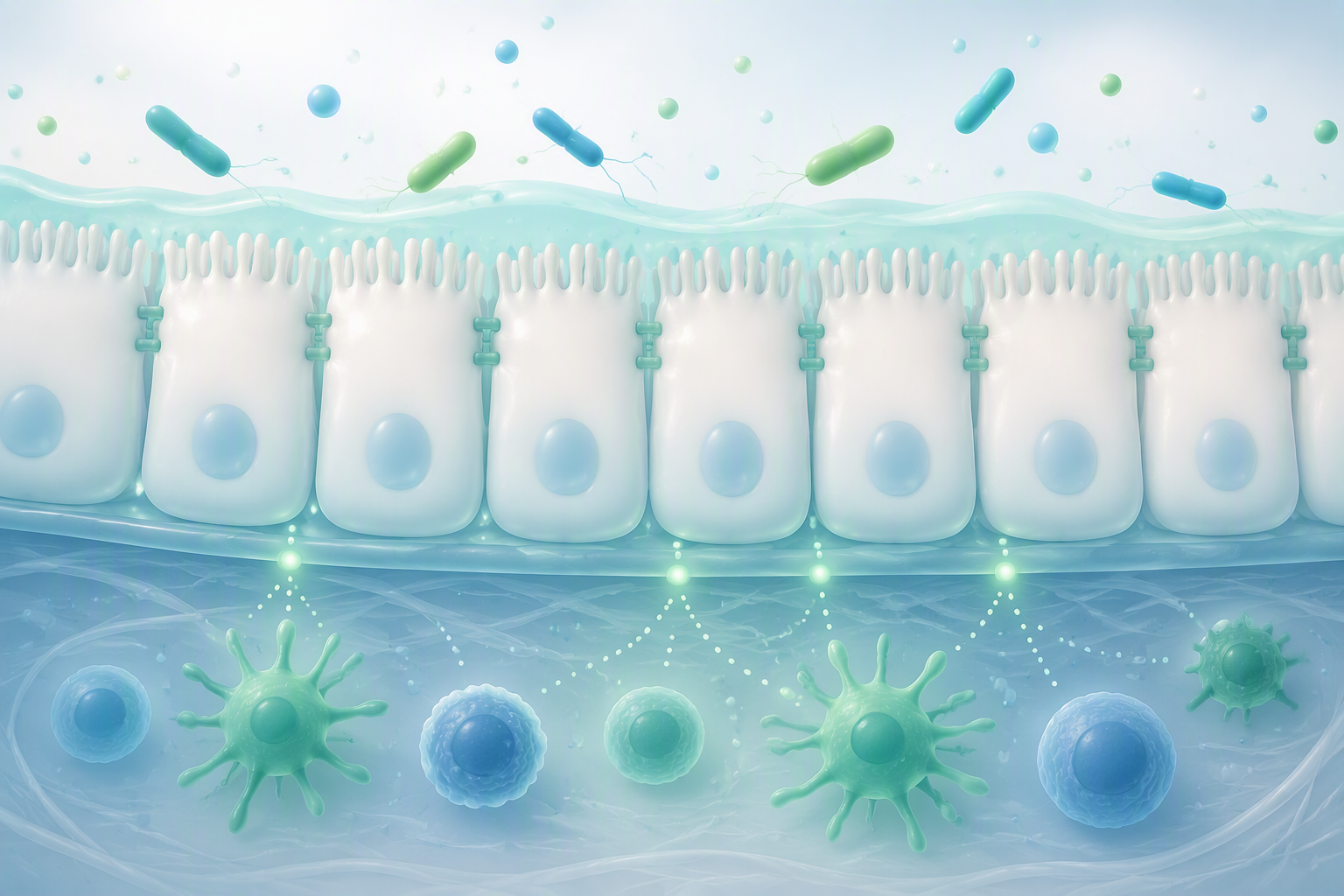
Probiotics may influence immune-related activity in the gut, but they do not guarantee protection from colds, infections, allergies, or other illnesses. The International Scientific Association for Probiotics and Prebiotics defines probiotics as live microorganisms that may provide a health benefit when consumed in adequate amounts (source). A product labeled “probiotic” is not automatically effective for every purpose.
The intestinal lining acts as a selective boundary, keeping digestive-tract contents in place while exchanging signals with nearby immune cells. Some probiotics may help support that barrier or affect immune communication. This helps explain how probiotics support the immune system, but a biological change does not prove that a supplement prevents illness.
Lactobacillus, Bifidobacterium, and Saccharomyces are broad probiotic groups, not guarantees of a particular result. Think of the group name as a last name, with the exact strain identifying the specific organism studied. Potential effects can depend on:
- Strain designation: A full name and strain code identify the organism studied.
- Dose: The amount should match the dose used in relevant research.
- Product quality: Organisms need to remain viable through storage and digestion.
- Study population: Results in one group may not apply to children, older adults, or people with digestive conditions.
Look for a complete strain designation rather than the word “probiotic” alone. Evidence for one strain cannot be applied to another strain in the same species, and labels may use either older or newer genus names while retaining the same strain code.
Probiotic benefits can be strain-specific, and research on probiotics and immune system outcomes remains mixed. Changes in gut-barrier function or immune signaling do not, by themselves, establish fewer respiratory infections, lower allergy risk, or better vaccine responses.
Probiotics can complement vaccination, sleep, balanced nutrition, and medical care, but they cannot replace them. If bloating or irregular bowel habits are part of the picture, do I need probiotics is a more useful question than assuming any product will fit your needs. Persistent, severe, or worsening symptoms warrant guidance from a qualified healthcare professional.
How Do Probiotics Interact With Gut Immunity?
Probiotics may interact with intestinal immunity through microbial competition, the gut lining, and immune-cell signaling. These proposed mechanisms do not show that a probiotic can prevent infection, treat illness, or replace medical care, and effects can differ by strain, dose, health condition, and person.
The relationship between gut microbiota and immunity starts partly at the intestinal surface. Some probiotic strains may compete with potentially harmful microbes for nutrients and attachment sites on the intestinal lining, and that competition may support a more resilient gut environment, but it does not remove an established infection.
Intestinal barrier function refers to the protective lining that keeps food, microbes, and digestive contents separated from the rest of the body. Laboratory studies and early research in people suggest that certain strains may support the mucus layer and the tight connections between lining cells. Whether these changes produce meaningful health outcomes still requires confirmation in human clinical trials.
Mucosal immunity includes immunoglobulin A (IgA), an antibody that can bind microbes and make it harder for them to attach to intestinal cells. Roughly 70–80 percent of the body’s IgA-producing B cells are found in the intestine, although that figure refers to these specific antibody-making cells, not to all immune cells or all immune activity. Some studies associate probiotics with changes in secretory IgA, but findings vary with the strain, dose, population, and study design.
Probiotic immune modulation is better described as targeted communication than broad “immune boosting.” Potential pathways include:
- Innate immune cells: Dendritic cells and natural killer cells may respond to signals from particular probiotic strains.
- Adaptive immune responses: Regulatory T cells help limit overly strong immune reactions, which can matter because inflammation is not automatically harmful.
- Cytokine patterns: Cytokines are chemical messengers involved in inflammation, tissue repair, and immune-cell activity. A strain may affect cytokine release, but the most appropriate balance depends on your health needs and condition.
- Toll-like receptors: These sensors on intestinal and immune cells recognize microbial signals. Probiotic components may influence Toll-like receptors involved in barrier defenses and cytokine activity.
Much of the evidence behind these pathways comes from cell studies, animal research, and early mechanistic studies rather than clinical trials. That distinction matters because a biological effect does not, by itself, prove fewer respiratory infections, better allergy outcomes, or a universal immunity benefit.
Probiotics for digestion may fit into a symptom-aware plan when you consider food tolerance and the complete strain code on the label. Speak with a qualified healthcare professional before making changes if digestive symptoms are persistent, severe, or getting worse.
What Benefits Have Human Studies Shown?

Moving from proposed mechanisms to clinical evidence, human studies suggest that certain probiotics may influence immune regulation, but they do not show that every probiotic prevents illness. Research has examined the gut barrier, local immune signaling, and secretory IGA. These findings help explain interest in the gut–lung axis, but a change in an immune marker does not automatically mean fewer colds, less eczema, or better vaccine protection.
The clearest clinical signal is modest and strain-specific. In some populations, selected strains with complete identifiers have been associated with fewer, shorter, or less severe common respiratory infections. This may reflect a lower risk, not proof that a supplement prevents colds, influenza, or other infections. Respiratory findings are most relevant when the strain, dose, duration, and participants closely resemble the product and situation you are considering.
Evidence for allergies, eczema, and vaccine responses is less settled. Some studies report favorable changes in selected groups, yet results vary widely across trials. Higher IGA levels or shifts in other laboratory markers may be meaningful to researchers, but they are not the same as symptom relief, prevention of allergic disease, or stronger real-world vaccine protection.
The strain code, not the broad category, is what connects a probiotic to its research. Lactobacillus and Bifidobacterium labels need a strain code before you can match them to a study. For IBS, Bifidobacterium longum 35624 and Lactiplantibacillus plantarum 299v have strain-level symptom evidence. Bifidobacterium bifidum MIMBb75 has also been studied in a randomized, placebo-controlled IBS trial. Those digestive findings do not establish immune benefits for these strains, much less for every product carrying a Lactobacillus or Bifidobacterium label.
A practical way to assess a probiotic claim is to check four details:
- The full identifier: Look for the genus, species, and strain code, such as 35624 or 299v. A species-only label leaves an important evidence gap.
- The people studied: Age, baseline health, diet, recent antibiotic use, and immune status can affect whether a result applies to you.
- The exact routine: Dose, formulation, and daily-use duration are part of the intervention. Changing any of them can make a study less applicable.
- The outcome measured: Distinguish laboratory markers from symptom changes and documented infections. Each endpoint answers a different question.
The same claim-checking approach applies beyond immunity, including questions about probiotics for anxiety. Keep expectations realistic, especially when a product’s label does not match the strain and study details.
Can Probiotics Prevent Respiratory Infections?
Some probiotic strains may modestly improve certain upper respiratory tract infection outcomes, but they cannot guarantee that you will avoid a cold or another respiratory illness. Gut-lung signaling is biologically plausible because gut microbes can interact with immune cells and affect signals involved in the adaptive immune response. That possible probiotic immune modulation is not the same as dependable infection prevention in daily life.
A Cochrane review of 23 trials involving 6,950 participants found that probiotics outperformed placebo in reducing the number of people who developed an acute upper respiratory infection. Among participants who became sick, illness episodes were roughly two days shorter on average. Because the review rated the evidence as low certainty, that average does not predict how long any one person will be ill (source).
The findings do not show universal prevention. Respiratory infections reflect many factors beyond the gut, including virus exposure, sleep, stress, age, underlying health conditions, and vaccination status. Some probiotic strains may influence the gut barrier and pathways involving regulatory T cells, which help keep immune responses balanced, but these biological effects do not automatically lead to fewer infections.
Results also vary because the studies differed in important ways:
- Probiotic used: Trials tested different organisms, strain codes, formulas, doses, and treatment periods rather than one interchangeable product.
- Participants: Findings in children, healthy adults, older adults, or people under particular stress may not apply to you.
- Setting and illness definitions: Respiratory seasons, living environments, and methods for counting infections were not consistent across studies.
A label that lists only Lactobacillus or Bifidobacterium does not identify the organism studied. Look for the full genus, species, and strain code, then check whether that exact strain has been researched for respiratory outcomes in people similar to you. Evidence for one strain does not transfer to every member of the same genus.
Practical prevention still rests on established habits:
- Sleep and nutrition: Regular sleep and adequate, varied meals support overall health.
- Hand hygiene: Washing your hands helps reduce opportunities for respiratory viruses to spread.
- Recommended vaccines: Vaccination remains an important protection against vaccine-preventable respiratory illness.
- Medical care: Severe, persistent, or worsening respiratory symptoms need evaluation from a qualified healthcare professional.
A probiotic can be a supporting food or supplement choice, not a replacement for these measures or for medical care.
Do Probiotics Affect Allergies or Vaccine Response?
Beyond respiratory infections, probiotics may affect immune signaling, but that does not mean they prevent allergies or improve vaccine protection. In laboratory and animal models, certain probiotic components and engineered strains have changed cytokine release, including lower interleukin-12 and tumor necrosis factor and higher interleukin-10 and regulatory T-cell activity. These findings make immune modulation biologically plausible, but they do not establish clinical protection from an over-the-counter probiotic in people.
Evidence on allergies is limited and variable. Research has focused largely on eczema, with results differing by strain, participants’ age and allergy risk, when supplementation began, and the outcome measured, and a favorable result in one study cannot show that a probiotic will prevent or help manage food allergy, hay fever, asthma, or eczema for everyone.
Vaccine research needs the same caution. A small body of research suggests that prebiotics or probiotics taken before seasonal influenza vaccination may affect antibody levels or other measures of the adaptive immune response. Those lab measures do not necessarily mean fewer influenza infections, less severe illness, or stronger real-world vaccine protection. Probiotics do not replace recommended vaccines.
Broad immune-support claims are easier to assess when a product and its study include:
- The full strain name: A genus-only label, such as Lactobacillus or Bifidobacterium, does not identify a specific immune product. Look for the genus, species, and strain code.
- The population studied: Findings in infants at higher allergy risk may not apply to healthy adults or people with existing allergic conditions.
- A meaningful outcome: Allergy diagnoses, eczema symptoms, or infection outcomes matter more than a change in an immune marker alone.
Strain codes still matter when a probiotic has digestive research. Strains such as 35624, 299v, and Bifidobacterium bifidum MIMBb75 have been studied for IBS-related symptoms, but that evidence does not transfer to allergy or vaccine benefits.
Continue recommended vaccines and seek qualified allergy care for symptoms or concerns.
How Do You Read a Probiotic Label?
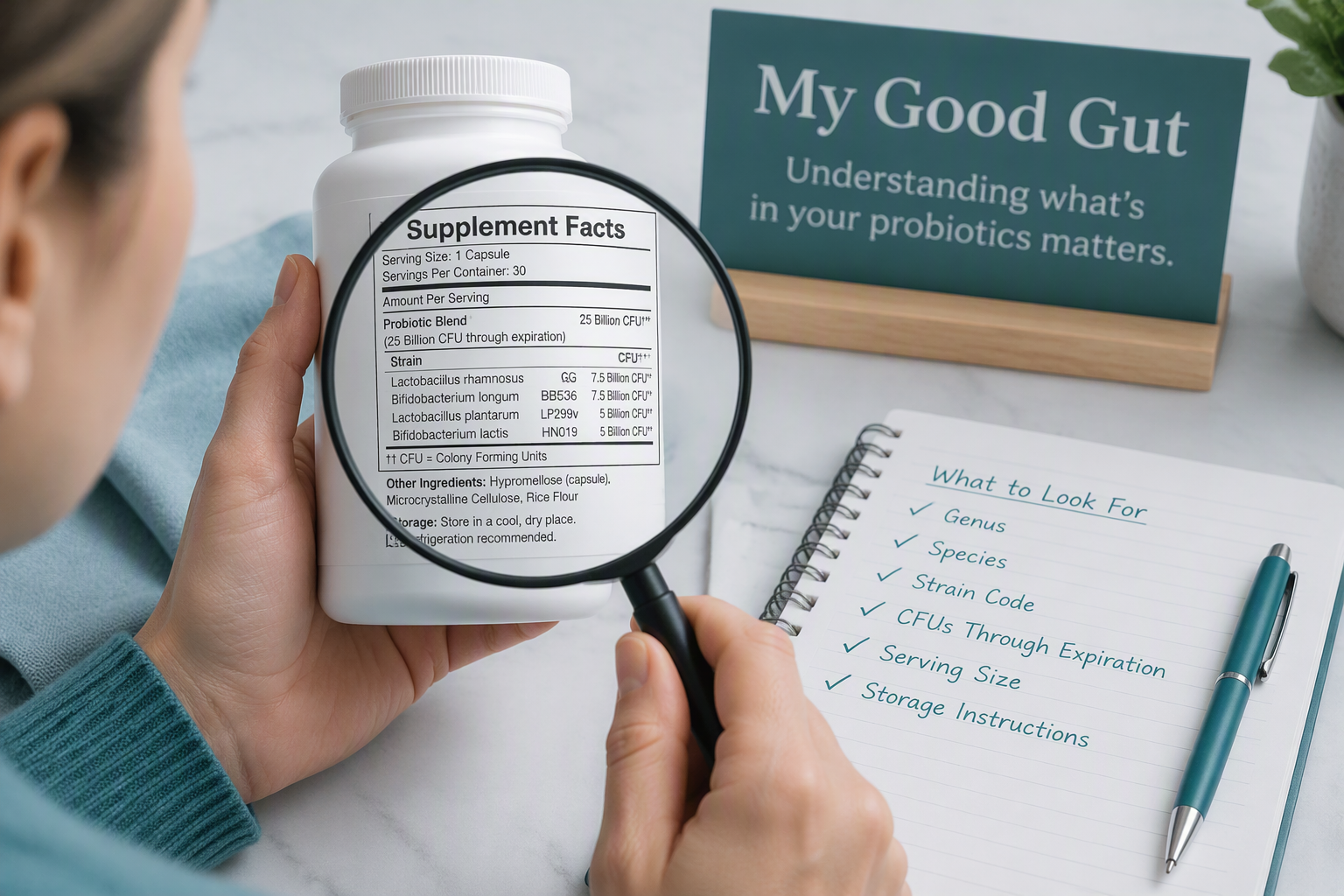
Because allergy and vaccine findings remain strain-specific, a probiotic label is useful only when it names the exact organism, dose, and formula connected to the outcome you want. A front-label "immune support" promise is not enough. Start with the Supplement Facts panel, where probiotic strains should be identified clearly enough to compare with the research.
A biological name includes a genus, species, and strain code. Lactobacillus rhamnosus GG, often called LGG, identifies a particular strain, while "Lactobacillus" or "L. rhamnosus" does not. Genus names can change as organisms are reclassified, but the strain code is usually the steadier research marker. For example, 299v remains the key identifier whether a label says Lactobacillus or Lactiplantibacillus.
A thorough label check includes these details:
- Genus, species, and strain code: Look for a full name, such as Bifidobacterium longum subsp. infantis 35624, Lactobacillus plantarum 299v, or Bifidobacterium bifidum MIMBb75. A product labeled only Bifidobacterium infantis cannot assume the research behind 35624, even if the names seem similar.
- The studied outcome: Match the strain's research to your goal and circumstances. Evidence from an IBS study, a bowel-regularity study, or research on antibiotic-associated diarrhea does not establish immune support. Immune-related studies should examine outcomes such as respiratory infections, allergy measures, or vaccine response.
- CFUs through expiration: Colony-forming units, or CFUs, estimate viable microorganisms per serving. A label listing 50 billion CFUs is not automatically more useful than one with a lower amount. The meaningful question is whether the named strain or complete formulation was studied at the labeled daily dose and remains viable through its expiration date, not only when it was manufactured.
- Serving and storage instructions: Check whether the listed CFUs apply to one capsule, one scoop, or the full daily serving. Refrigeration, heat, and moisture can affect live cultures, so storage guidance matters.
- Complete blend information: A multi-strain blend is not automatically better. Stronger labeling identifies every strain code and, ideally, the amount of each, rather than offering a long list of Lactobacillus and Bifidobacterium species without specifics.
The full formula must match the one studied. Research attached to a familiar brand name may not apply after its strain list or manufacturing changes. Studies published before 2016 evaluated the original VSL#3 formulation, and later studies should not be assumed to describe the reformulated product sold under the same name afterward (source). Compare the study date, complete strain list, dose, and label before relying on a claim.
Careful label reading helps you avoid paying for a broad promise when the evidence belongs to a different organism, dose, or formula.
How Can You Use Probiotics Safely?

To put that label check into practice, choose a probiotic by matching a fully identified strain to the outcome you want to support, not by picking the highest colony-forming unit count, the longest species list, or a broad “immune support” promise. That distinction matters for how probiotics support the immune system: findings for one strain do not automatically apply to another strain, blend, dose, or reformulated version of a familiar brand.
Use the label to compare the product with the research. For Bifidobacterium longum subsp. infantis 35624 and products labeled only B. infantis, compare the full study conditions as well as the code. Search for 35624 and 299v exactly as written when comparing products with studies. In a scan of roughly 30 popular digestive products, almost none displayed a clinical strain code.
When comparing a product with a study, focus on these details:
- Complete strain identity: Match the full name and strain code, not only a familiar genus or species.
- Relevant outcome: Look for research related to your specific concern, such as an IBS symptom, rather than assuming one result applies to every digestive or immune goal.
- Same formulation: Evidence for one blend does not establish the same result for another blend, even when several species overlap.
- Food labels: Yogurt, kefir, miso, kimchi, sauerkraut, kombucha, and pickles may contain live cultures. Fermentation alone does not guarantee they remain alive when you eat them, since heating, pasteurization, and processing can reduce them. Packaging that says “live and active cultures” is more informative.
Gas, bloating, cramping, and bowel-habit changes can happen when you start a probiotic. For people with IBS, these effects can look much like a flare. Discomfort does not mean a supplement is working, and a new symptom is not always caused by the supplement. Stop using it and seek medical guidance if symptoms are severe, persistent, or getting worse.
Safety research on probiotics and immune system outcomes also needs careful context. Across 81 randomized controlled trials involving 9,253 participants, adverse-event reports occurred in 11.62 percent of probiotic users and 10.61 percent of placebo users (source). Serious events were uncommon. These are raw pooled reports, not a formal comparison of safety or causation, because many studies did not determine whether probiotics caused the reported symptoms and may have recorded ordinary digestive symptoms as adverse events.
Talk with a qualified healthcare professional before giving a probiotic supplement to a child or using one with serious illness, a weakened immune system, medications, recent treatment, or persistent digestive symptoms. Probiotics do not replace diagnosis or prescribed care.
Probiotics and Immune Support FAQs
These FAQs offer plain-language context on probiotics and immune support, helping you interpret research alongside your digestive symptoms. They also address practical food choices and when guidance from a qualified healthcare professional may help.
1. Is Most of Your Immune System in Your Gut?
No. Your intestine is a major immune interface, where food, microbes, and potential pathogens interact with intestinal immunity and mucosal immunity. Immune tissues and intestinal barrier function help sort harmless exposures from threats, but the gut does not direct immunity by itself. The “70%” claim is an oversimplification: roughly 70–80% of the body’s IGA-producing B cells are in the intestine. IGA production can help neutralize germs and limit their attachment to the lining, but this does not represent 70% of all immune cells or activity. Gut microbiota and immunity research explains why probiotics are studied, not why any probiotic prevents illness.
2. Can Antibiotics Affect Probiotic Immune Benefits?
Antibiotics can reduce helpful bacteria as well as infection-causing bacteria, temporarily changing the gut environment where probiotics act. Some strains may lower the risk of antibiotic-associated diarrhea, but they do not replace your prescribed antibiotic, prevent every side effect, or guarantee immune benefits.
Choose a product that lists its genus, species, and strain code, since evidence for one strain does not transfer to another. Follow the label and ask a pharmacist about dose spacing. Seek medical advice promptly for severe, persistent, or worsening diarrhea, dehydration, fever, bloody or black stools, or significant abdominal pain.
3. Should You Take Probiotics With Food?
Whether you take a probiotic with food depends on the specific strain, delivery format, and manufacturer’s formulation. Follow the product label’s timing and storage directions instead of assuming meals improve its effects. Taking a probiotic with food is not a universal immune-health strategy, since research findings are strain-specific. If digestive symptoms persist, worsen, or leave you unsure whether a supplement suits your needs, speak with a qualified healthcare professional.
4. Can Children Take Probiotics for Immune Support?
Probiotics are not a general immune booster for every child. Specific strains may have a role in infectious diarrhea, antibiotic-associated diarrhea, or certain allergy-related conditions, but results differ by strain, product, dose, age, and outcome. Findings from adult immune studies should not be assumed to apply to children.
Speak with a pediatric clinician before trying one, especially for infants or children with chronic conditions, weakened immunity, serious illness, or medical devices. A higher CFU count does not mean a probiotic is safer or more effective. The label should name the exact strain, and the choice should fit your child’s health needs.