


Feeling less bloated can change how your waistband sits without changing your body fat at all. That distinction runs through this whole topic, because probiotics have a small, strain-specific role in weight management and no reliable one in fat loss.
The largest pooled analysis makes the ceiling clear. Across 20 randomized controlled trials in 1,411 adults, probiotic supplementation produced no significant change in body weight, while waist circumference fell by an average of 0.71 centimeters. Findings for Lab4P or Bifidobacterium animalis subsp. lactis 420 belong to those exact formulations rather than to anything sharing a species name.
Marketing blurs that line deliberately. A claim about belly fat usually rests on a waist measurement, which moves with bloating, digestion, and the time of day.
Probiotics for Weight Loss Key Takeaways
- Probiotics are not a reliable treatment for weight loss or belly fat.
- A pooled analysis of 20 trials found no significant change in body weight.
- Waist circumference fell slightly, which is not the same as losing fat.
- Results belong to the exact formulation tested, such as Lab4P or B. lactis 420.
- A high CFU count does not compensate for a missing strain code.
- Less bloating can change how clothes fit without changing body composition.
- Check with a clinician before starting if you take immune-affecting medicines.
Can Probiotics Help You Lose Weight?
Probiotics may play a small supporting role in weight management for some people, but they are not a direct or reliable weight-loss treatment. Evidence on probiotics for weight loss is mixed, and better digestion does not automatically translate to fat loss. A probiotic studied for irritable bowel syndrome (IBS), diarrhea, or bloating needs separate research before it can be connected to changes on the scale.
A broader approach matters more. Eating patterns, physical activity, sleep, medical care, and prescribed obesity treatment remain central when appropriate. The World Health Organization describes overweight and obesity as complex conditions with many contributing factors (source). Less bloating or more regular bowel movements can improve comfort, but those changes do not necessarily mean your body fat has decreased.
Research on probiotics and obesity has found favorable changes in body weight, body mass index, waist circumference, body-fat measures, or visceral fat in some studies, while other trials show little or no dependable benefit. Differences in participant health, probiotic products, doses, study length, and diet changes make it impossible to promise that weight loss probiotics will work the same way for everyone.
Any benefit depends on the exact strain or strain combination, dose, and your individual response. A species name, such as Lactobacillus plantarum or Bifidobacterium longum, is not enough to identify what was studied, just as knowing a medication category does not tell you the exact medicine or dose.
The full strain code, usually letters and numbers after the species name, is what allows you to compare a supplement with a human trial. That detail matters because evidence for one strain does not carry over to another strain in the same species. The human-study guidance that follows examines named strains rather than treating all probiotics as interchangeable.
Product labels can make this harder than it should be. Many digestive supplements highlight large colony-forming unit (CFU) counts or long lists of species while leaving out the strain codes needed to match the product to research. A high CFU number, a lengthy ingredient list, or a claim about metabolism does not show that a product reduces body fat.
What are the benefits of probiotics helps separate broad digestive-health benefits from claims about weight change. Similarly, how probiotics support digestion explains why better bowel comfort may not affect body fat.
For probiotics for overweight, a supplement may be worth considering as a small, individualized addition when digestive symptoms and food habits are also relevant. Choose a tolerable product with a clearly stated strain and human evidence related to your goal, rather than rapid-loss marketing. No single probiotic has been established as a reliable choice for weight management.
Persistent, severe, or worsening digestive symptoms need medical evaluation rather than self-treatment.
What Do Human Studies Actually Show?
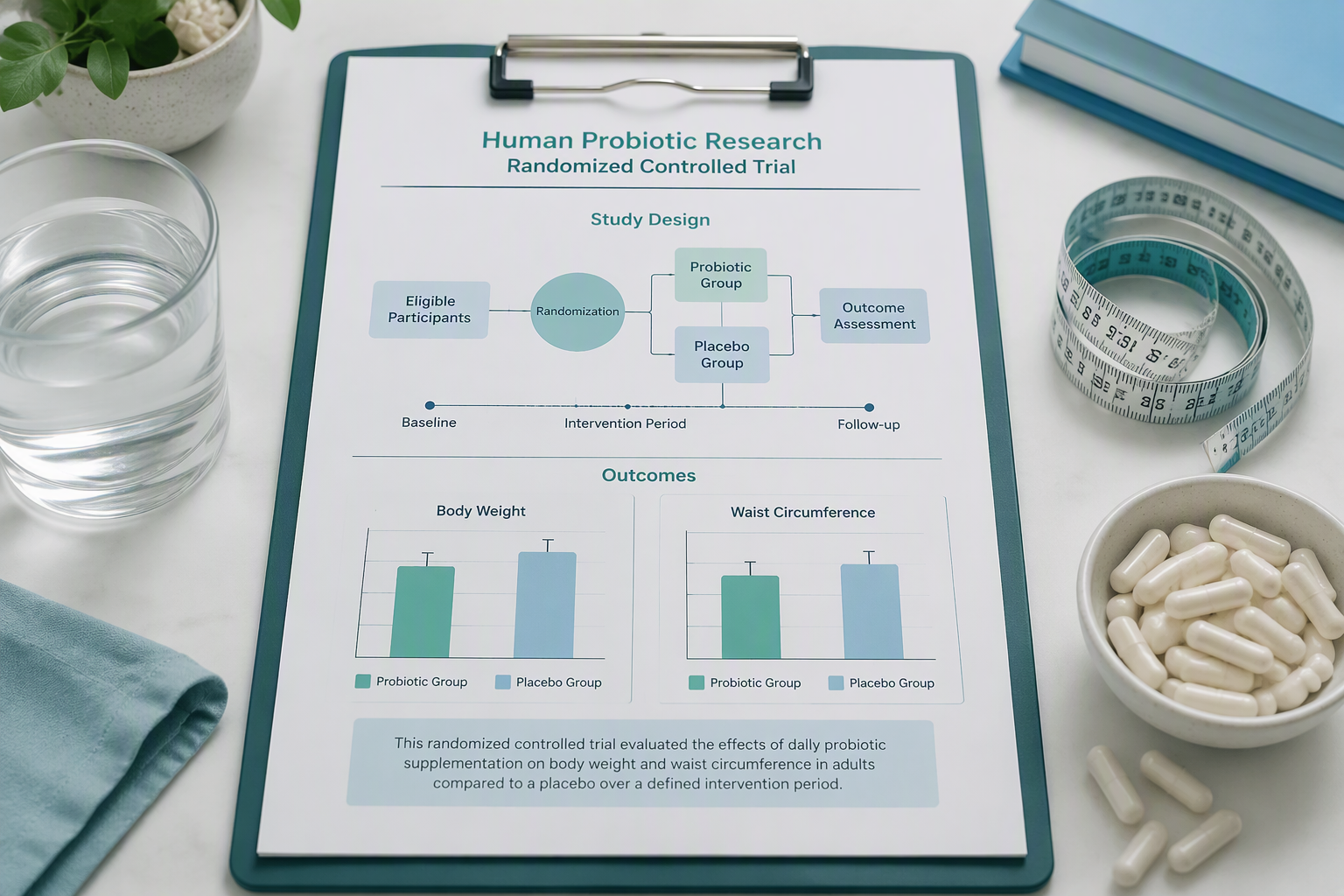
Against those cautious product claims, human studies use different weight-related measurements, so small findings require careful interpretation. Study design also shapes how much confidence you can place in a result.
One systematic review and meta-analysis combined 20 randomized controlled trials involving 1,411 adults with overweight or obesity and a metabolic-related disease. Probiotic supplementation did not significantly change body weight, with an average difference of −0.26 kg and a p-value of 0.30. The analysis did find small, statistically significant changes in other measures:
- Body mass index: Decreased by 0.73 kg/m², p = 0.01.
- Waist circumference: Decreased by 0.71 cm, p = 0.008.
- Hip circumference: Decreased by 0.73 cm, p = 0.0008.
The authors said more research is needed before probiotics can be recommended as a standard weight-management strategy (source).
That pattern matters because the measure most people notice, scale weight, did not change significantly. A BMI reduction can be statistically significant without making a noticeable difference in daily life. Likewise, a modest waist change does not prove visceral-fat loss, meaning a reduction in fat around internal organs.
Waist measurements can shift for reasons unrelated to fat loss:
- Bloating or constipation: Both can temporarily increase abdominal size.
- Meals and fluids: Food intake and normal fluid changes can affect the measurement.
- Measurement method: Tape position, posture, breathing, and tape tension can change the result.
A supplement’s label also cannot tell you whether its results will match another product’s. Probiotic effects are strain-specific, so a species name alone does not identify the exact microorganism studied. The full strain code, dose, formulation, and study duration all matter.
Study results can also reflect more than the probiotic itself. Some trials pair supplements with calorie restriction, exercise advice, fermented foods, or a prebiotic. A synbiotic contains both a probiotic and a prebiotic, making it difficult to credit any change to the probiotic alone. A placebo-controlled randomized controlled trial offers a stronger comparison, but the participant group, completion rate, product-maker funding, and author affiliations still affect how broadly you can apply its findings.
For example, research on a strain for irritable bowel syndrome (IBS), diarrhea, or constipation does not automatically show that it supports weight management. Evidence for digestive symptoms and evidence for obesity are separate questions, even when the same probiotic strain is involved.
The should I take a probiotic guide can help you weigh your digestive symptoms, health goals, and supplement-label details before trying one.
Treat any change in weight or body shape as a possible modest secondary effect, not a promised outcome.
Which Probiotic Strains Have Weight-Loss Trials?
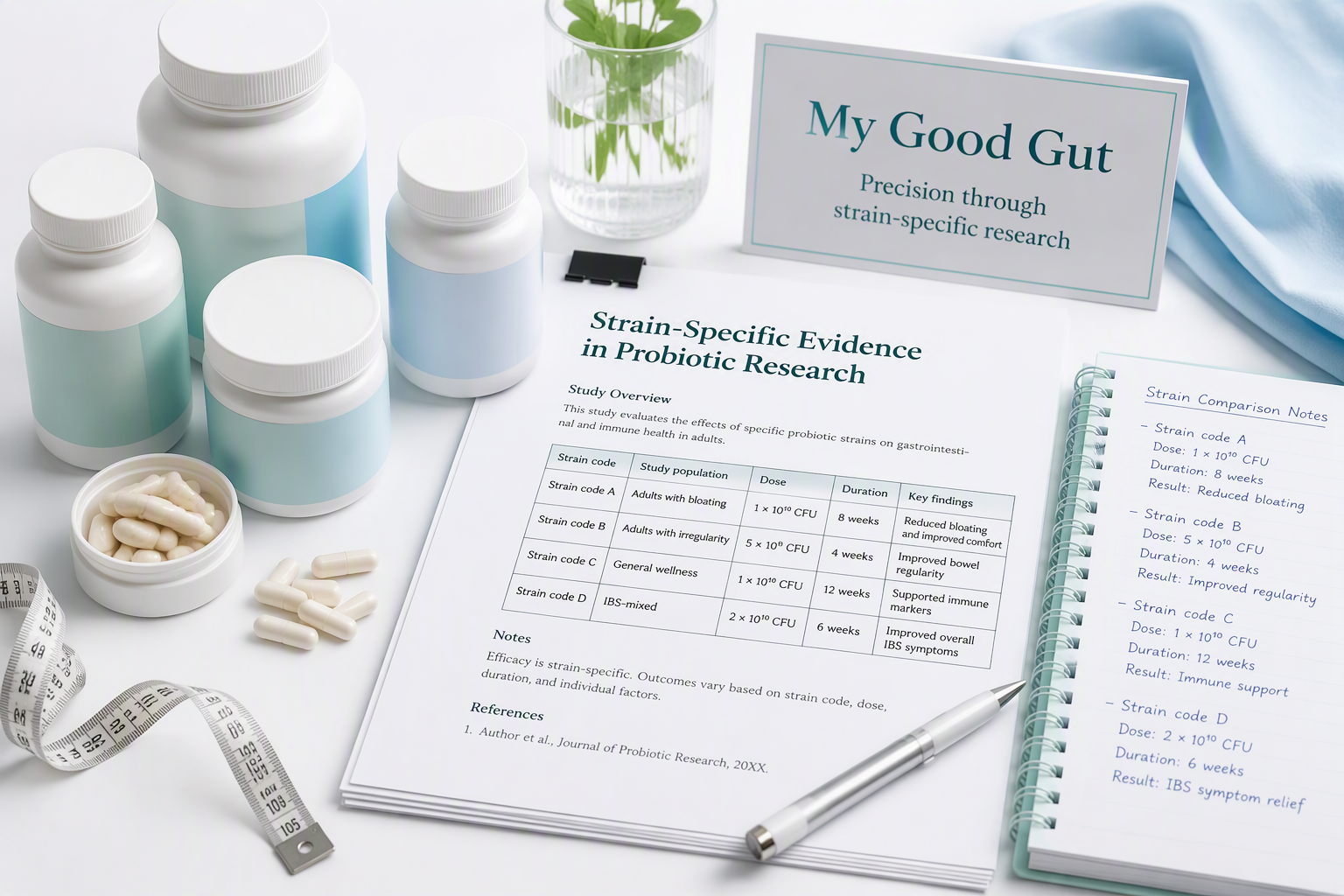
Within those mixed human-study results, weight-related findings apply only to the probiotic strains, dose, formulation, and study conditions that researchers tested. Results for one Lactobacillus or Bifidobacterium product do not transfer automatically to another strain in the same species, a higher-CFU product, or a different blend. Before trying a supplement, match its full strain code or proprietary blend name, daily dose, delivery format, and study length to the human trial.
The Lab4P probiotic consortium has one weight-focused randomized, placebo-controlled trial running nine months in 70 overweight adults aged 45 to 65. Those taking the formulation lost 3.16 kilograms more than the placebo group (source). The paper reports participant completion and includes authors affiliated with the product manufacturer, factors that matter when judging how much confidence to place in the result. This evidence belongs to Lab4P as tested, not to its individual ingredients or other multi-strain products.
Bifidobacterium animalis subsp. lactis 420 showed a different pattern in a human trial. Compared with placebo, the tested strain was linked to a 2.4-centimeter smaller waist circumference and lower total body fat mass, without a statistically significant difference in body weight. A smaller waist or change in body composition may still matter, but it is not the same as meaningful scale-weight loss (source).
Lactobacillus sakei CJLS03 is a named strain first isolated from kimchi, not proof that kimchi or fermented foods broadly cause weight loss. In its 12-week body-composition trial, adults with obesity had improvements in waist circumference and total body fat. The primary study also reports participant completion and funding details, so its findings should remain tied to that specific product, dose, population, and study design (source).
A few details can help you assess supplement claims:
- Look for the full strain code: A label that lists only Lactobacillus or Bifidobacterium leaves out the identifier used in clinical research.
- Treat CFU as incomplete information: Colony-forming units, or CFU, describe the stated number of live organisms, not whether a strain has been studied for your goal.
- Match the formulation: A capsule, powder, or blend may differ from the tested product even when a species name overlaps.
- Separate symptom goals from weight goals: Research on bloating, bowel habits, or antibiotic-associated diarrhea does not automatically support weight management.
Lactobacillus gasseri has appeared in weight-related research, but outcomes belong to particular strains and doses. The same is true for mixed Lactobacillus-Bifidobacterium formulations. One six-month placebo-controlled trial enrolled 220 adults with overweight or obesity and found greater weight loss with one specific blend without required diet changes (source). Diet pattern, baseline health, treatment length, and the population studied can all affect the outcome.
This strain-specific approach also applies to other health concerns. Evidence on probiotics and depression does not establish a blanket benefit for every probiotic product.
These trials identify a limited set of formulations, not a best probiotic or a replacement for nutrition, physical activity, sleep, or medical care. Keep expectations modest, and speak with a qualified healthcare professional if you take medications or manage a health condition.
Can Probiotics Cause Weight Gain?
The worry is reasonable, and the honest answer is that it depends on the species rather than on probiotics as a category. A comparative meta-analysis covering 17 randomized trials in humans, 51 farm-animal studies, and 14 experimental models found that Lactobacillus acidophilus was associated with significant weight gain in both humans and animals, while Lactobacillus gasseri was associated with weight loss in people with obesity and in animals (source).
Two things keep that from being a verdict on any particular bottle. The effects ran in opposite directions between species in the same analysis, which is the same strain-specificity that governs the weight-loss evidence above. And a large share of the underlying data comes from livestock, where weight gain is the goal of supplementation rather than an unwanted effect, so those results do not transfer cleanly to a person taking a daily capsule.
What follows from this in practice is narrow. Read the species and strain code rather than assuming any Lactobacillus is neutral for weight, and treat a product containing L. acidophilus as worth a closer look if weight is your main concern. Weigh yourself on the same schedule you used before starting, give any trial a defined length, and stop the product and speak with a clinician if weight changes in a direction you did not expect or cannot explain.
How Might Gut Bacteria Affect Weight?
Beyond the limited strain-specific trials, gut bacteria may influence appetite, calorie handling, and metabolic signaling, but those pathways do not show that changing the microbiome causes meaningful weight loss. Research on gut microbiota and obesity includes many laboratory and animal studies. Human findings are largely associations that can also reflect diet, sleep, activity, medications, digestive symptoms, and underlying health conditions.
Fiber fermentation is one possible pathway. Certain bacteria break down fibers the body cannot fully digest and produce short-chain fatty acids (SCFAs), including acetate, propionate, and butyrate. SCFAs can fuel cells lining the colon and interact with metabolic and fullness signals, but they also provide energy. They are not fat-burning compounds, and their overall effect on body weight remains uncertain.
Several other pathways are under study:
- Appetite and gut-brain signaling: Microbial byproducts may affect hormones involved in hunger and fullness, including glucagon-like peptide-1 (GLP-1), peptide YY (PYY), leptin, and ghrelin. Nerve, immune, and hormonal signals between the gut and brain may also shape cravings, stress eating, and satiety. Changes in these hormones do not show that a probiotic reduces your usual food intake or leads to weight loss.
- Energy extraction: Different microbial communities may break down otherwise indigestible parts of food in different ways, potentially changing how much energy is available from a meal. This is a calorie-handling hypothesis, not evidence that bacteria reliably prevent calorie absorption in everyday life.
- Fat absorption: Some strains have been proposed to reduce dietary-fat absorption and increase fat excreted in stool. Even when this occurs under specific study conditions, it may not be large or consistent enough to reduce body weight in people.
- Inflammation and fat metabolism: The microbiome may affect intestinal barrier function, which describes how well the gut lining separates its contents from the rest of the body. Barrier and immune signaling have been linked with low-grade inflammation, metabolic problems, visceral fat, and obesity. Researchers are also studying angiopoietin-like 4 (ANGPTL4), a protein involved in fat metabolism, but these early links do not establish lasting weight reduction.
A more diverse microbiome may still support digestion, nutrient production, immune function, and appetite-related signaling. If bloating, constipation, or irregular bowel habits improve, regular meals and food choices may feel easier for some people. That individual benefit should not be treated as proof of a weight-loss effect.
Separate a plausible biological mechanism from a real-world result. A probiotic that helps manage digestive symptoms may be worth considering for that specific goal, but strain-specific evidence does not automatically extend to weight management.
How Do You Audit a Probiotic Label?
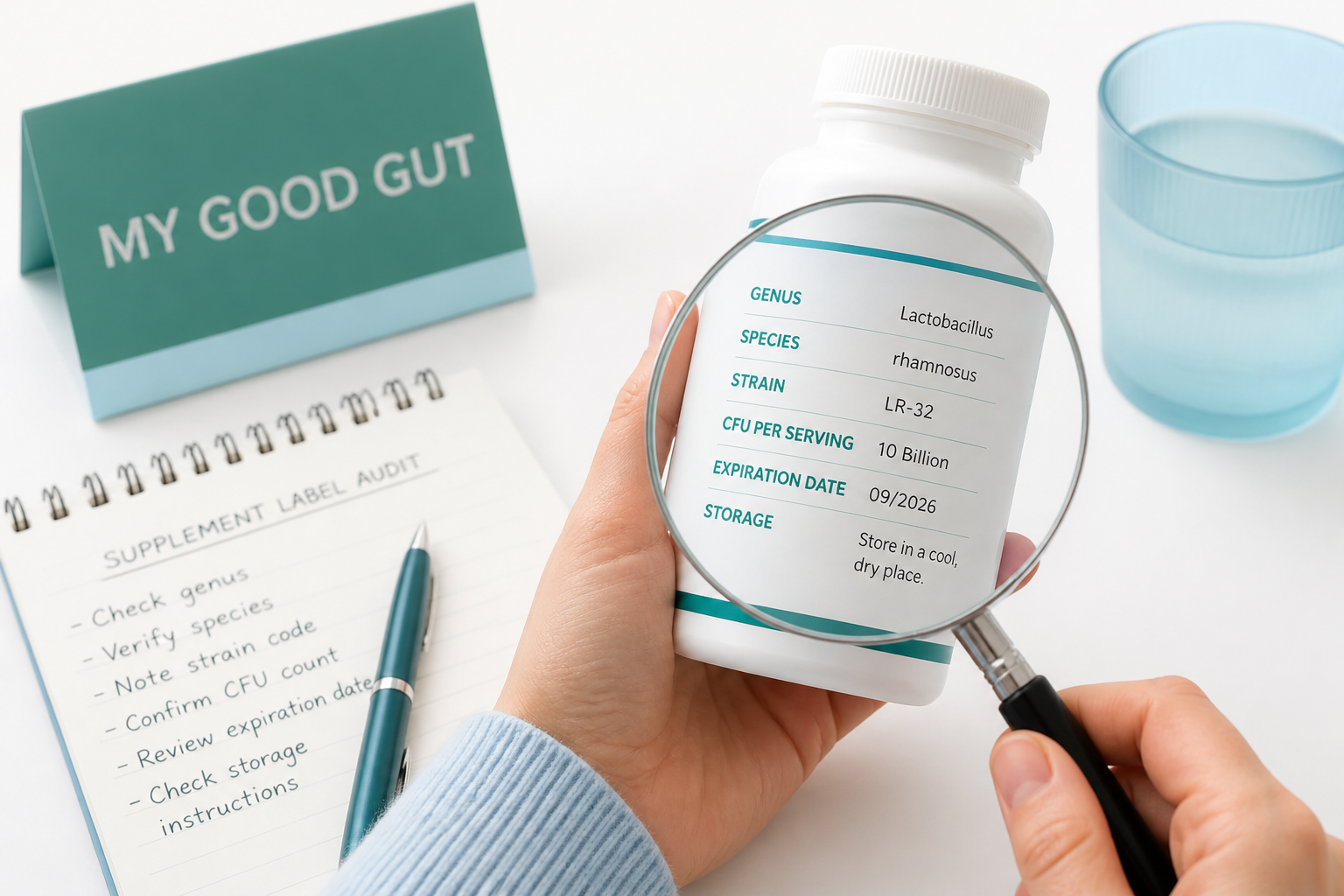
To match a product with the strain-specific evidence discussed above, begin with the full scientific identity, not the promise on the front label. A probiotic should name its genus, species, and strain code, because the code is what connects a product to a specific study. Labels may use Lactobacillus plantarum 299v or the newer name Lactiplantibacillus plantarum 299v, but 299v remains the key identifier. A label that lists only Bifidobacterium or Lactobacillus cannot be matched reliably to clinical research.
A useful label review focuses on four details:
- Strain identity: Look for the complete name and exact code, such as 299v, 35624, or Bifidobacterium animalis subsp. lactis 420. Findings for one Bifidobacterium bifidum strain do not automatically apply to another strain, even when the species name is the same.
- CFU dosage: Check the Supplement Facts panel for the daily CFU dosage and the number of probiotic strains. Weight-related studies have used roughly 1 million to 50 billion CFU per day, so a larger total on the label does not mean a stronger effect on weight.
- Expiration and storage: Potency should be guaranteed through the expiration date, rather than only at manufacture. Refrigeration, heat, and moisture instructions matter because the studied dose is only relevant if the organisms are still viable when you take them.
- Trial match: The strongest match is a human randomized controlled trial of the same strain code, daily dose, and formulation that measured body weight, body fat, or waist circumference. Studies of digestion, diarrhea, immune function, animal models, or microbiome changes cannot establish a weight-loss effect.
A large CFU number deserves extra caution when the label leaves out strain codes, expiry-guaranteed potency, or clear storage directions. Those gaps make it hard to tell whether the supplement resembles a formulation tested in people.
Evidence for digestive symptoms and evidence for weight management are separate questions. Bifidobacterium longum subsp. infantis 35624 and L. plantarum 299v have been studied for certain digestive symptoms, but that does not show they cause weight loss. The same limitation applies to multi-strain blends, where research on one organism cannot be carried over to the rest of the blend.
When a weight-focused study is available, look beyond the headline. Its duration, comparison group, completion rate, and any diet or exercise program affect how the results should be interpreted. Many probiotic weight studies have run for at least eight weeks, and 12 weeks is a common study length (source). A combined lifestyle program may make it impossible to separate the probiotic’s contribution.
An exact strain code, a daily dose that remains viable through expiration, and a matching human weight-outcome study make a product claim worth discussing with a qualified healthcare professional. A species-only label, broad digestive-health promise, or total CFU count alone does not verify a weight-loss claim.
How Do Foods Compare With Supplements?

Foods, prebiotics, synbiotics, and supplements can serve different digestive goals, but none is a proven treatment for weight loss. Findings on body weight, belly fat, and visceral fat apply only to the specific strain and product studied. A food’s probiotic reputation does not show that it will reduce body fat.
Yogurt, kefir, and probiotic-containing fermented milk offer live cultures along with protein and calcium, which capsules do not provide. In one trial, consuming 200 grams of fermented milk daily for three months was linked with visceral-fat loss. That finding does not apply to every fermented-milk product because culture amounts, storage conditions, serving sizes, and strain identification differ widely.
Option | What it may offer | Main limitation |
|---|---|---|
Probiotic foods | Live cultures plus nutrients from the food itself | Culture amounts and strains may be variable or unclear |
Prebiotic-rich plants | Fermentable fiber that feeds microbes already in your gut | A rapid increase can cause gas, cramping, or bloating |
Synbiotics | A probiotic paired with a prebiotic | A 2020 study found no effect on weight loss or body composition |
Supplements | A label-stated dose that may match a studied strain | Many labels list species or blends without a clinical strain code |
Fermented foods can add variety to an eating pattern when they agree with your digestion:
- Dairy-based choices: Yogurt, kefir, and fermented milk can be convenient sources of protein and calcium.
- Other fermented foods: Kimchi, sauerkraut, miso, tempeh, kombucha, and selected cheeses offer different flavors and textures.
- Practical tradeoffs: Some products are high in sodium, added sugar, or alcohol. Carbonation or sweetness in kombucha may also aggravate bloating for some people.
Enjoyment, convenience, and overall dietary quality are better reasons to choose these foods than an expectation of fat loss. If gas, bloating, or irregular bowel habits are already troublesome, small portions give your gut time to adjust.
Prebiotics work differently from probiotics. Beans, whole grains, onions, garlic, asparagus, and some fruits are common sources of prebiotic-rich fiber. Beans, whole grains, onions, garlic, asparagus, and some fruits are common sources. Build fiber-rich foods into your routine as tolerated, since a quick increase can trigger cramping, gas, or bloating in sensitive digestion.
Supplements, including multi-strain probiotics, are easier to evaluate when the label names an exact strain code and dose. A species name or a high CFU count alone cannot show that a product matches a clinical study. Evidence for one strain, such as Lactobacillus plantarum 299v, does not transfer automatically to another product labeled only Lactobacillus plantarum.
Choose fermented foods you enjoy, add fiber gradually, and consider a supplement only when its precise strain and dose fit the outcome you want to assess. Persistent, severe, or worsening digestive symptoms deserve advice from a qualified healthcare professional.
How Can You Try Probiotics Safely?

A probiotic trial is safest when it is simple, time-limited, and focused on one digestive concern rather than weight loss. Probiotics are not a weight-loss treatment, and any changes in appetite, bowel habits, bloating, or body weight may be small, absent, or unrelated to the supplement.
Speak with a qualified healthcare professional before starting a probiotic if any of these apply:
- Health status: You are immunocompromised, seriously ill, hospitalized, pregnant, or managing a complex medical condition.
- Medical device: You have a central venous catheter.
- Medication use: You take prescribed medicines, including biologic therapies such as infliximab.
- Treatment decisions: You are considering a probiotic instead of prescribed treatment or individualized medical care.
Where trials do report a change, the average difference is often well under a kilogram and not clearly separated from placebo. Diet or activity changes can also affect the scale, while daily weight shifts do not show whether you have lost body fat.
Choose one product that names the exact clinical strain code and fits the digestive concern you want to address. A species name, such as Lactobacillus plantarum, or a high colony-forming unit (CFU) count does not identify the strain studied. Findings for one named strain do not automatically apply to another product in the same species.
Keep your usual diet, activity level, and fiber intake as steady as practical during the trial. Avoid starting digestive enzymes, another probiotic, inulin, fructooligosaccharides, new sweeteners, or major fiber changes at the same time. Multiple changes can make it difficult to tell whether the probiotic helped or triggered a flare.
Mild digestive effects can occur in the first few days:
- Gas or bloating: Symptoms may briefly increase before settling.
- Stomach discomfort: Mild cramping or uneasiness can occur.
- Stool changes: Bowel movements may become looser, firmer, more frequent, or less frequent.
A 2023 report covering 81 randomized controlled trials and 9,253 participants found adverse events in 11.62% of probiotic users and 10.61% of placebo users (source). These are raw pooled counts, not a formal safety comparison, because studies differed in whether ordinary digestive symptoms were recorded as adverse events and whether symptoms were linked to treatment.
Try one product for four to eight weeks unless your clinician recommends a different plan. Before starting, record your usual weekly bowel-movement frequency, stool pattern, bloating or abdominal discomfort on a zero-to-10 scale, and body weight under consistent conditions. Weekly symptom patterns are more useful than reacting to a single bad day or scale reading.
Stop the product rather than raising the dose or combining products if symptoms clearly worsen or there is no meaningful benefit by your planned reassessment. Seek prompt medical care for:
- Severe abdominal pain
- Persistent vomiting or diarrhea
- Fever
- Allergic-reaction symptoms
- Blood in the stool
Persistent or worsening digestive symptoms need medical evaluation because their cause may extend beyond the gut microbiome.
Probiotics for Weight Loss FAQs
These FAQs cover what probiotics may and may not do for weight loss, how to interpret strain-specific research, and how digestive symptoms can influence your choices. They can help you set realistic expectations before changing your routine.
1. Can Probiotics Reduce Belly Fat?
Some probiotics may be linked to small changes in waist circumference, total body fat mass, or body fat percentage, but they do not reliably reduce abdominal fat or visceral fat. A smaller waist can also result from less bloating or modest overall weight change. In one review, four of five studies found lower waist circumference, and a 12-week placebo-controlled trial of 114 adults with obesity associated Lactobacillus sakei CJLS03 with lower body-fat mass and waist size. Findings from one strain do not apply to every product or person.
2. Do Any Probiotics Work Like Ozempic?
No probiotic works like Ozempic or substitutes for a prescribed GLP-1 medicine. Ozempic directly activates GLP-1 receptors under medical supervision, while probiotics are live microorganisms with no comparable drug action or established medication-level weight-loss effect.
Research on gut microbiota and obesity suggests bacteria may indirectly affect GLP-1, peptide YY, appetite signals, metabolism, and fat storage. These pathways remain uncertain, so products marketed as “natural Ozempic” should be viewed skeptically.
3. How Long Do Probiotic Weight Studies Usually Run?
Most run at least eight weeks, and 12 weeks is a common length (source). The two Lab4P trials ran longer still, at six and nine months.
A few weeks is rarely enough for a weight change to show above normal day-to-day variation, which is why short self-trials tend to end inconclusive. Decide the length before you start and weigh yourself the same way throughout.
4. Can Probiotics Change Waist Size Without Changing the Scale?
It can happen, and it has been measured. The six-month trial of 220 adults reported a reduction in waist circumference alongside a small change in body weight (source).
A meta-analysis makes the same point from the other direction, noting that a change in body composition is not the same as meaningful scale-weight loss (source). If waist is what you care about, measure it the same way each time rather than relying on the scale alone.