


Seeing miso described as a probiotic can make a bowl of soup seem like an easy answer for bloating or irregular bowel habits. Miso may contain live cultures, especially when unpasteurized, but it is not a reliably dosed or clinically tested probiotic for IBS symptoms. Miso is a salty fermented paste made from soybeans, salt, and koji, a starter made with Aspergillus oryzae.
An unpasteurized label does not identify the organisms, show how many remain alive, or establish a digestive benefit. Pasteurization, storage time, and simmering in soup can reduce viability, while stirring miso into food after cooking limits heat exposure without guaranteeing culture survival. Strain-tested organisms such as L. plantarum 299v are not interchangeable with the variable microbes in a jar of miso.
Portion size matters as much as live cultures because 1 ounce of miso can provide about 43% of the recommended daily sodium intake. Soy, barley, and other ingredients can also affect safety and tolerance.
Miso Probiotics Key Takeaways
- Miso is a fermented food, not a standardized probiotic product.
- Unpasteurized miso may contain live microorganisms, but amounts and types vary.
- Pasteurization, storage, and prolonged cooking can reduce microorganism viability.
- Adding miso after cooking may limit heat exposure without guaranteeing live cultures.
- Miso microbes lack the strain identity and dose needed for IBS-specific claims.
- Miso can add flavor and nutrients but does not treat digestive symptoms.
- One ounce of miso can provide about 43% of recommended daily sodium intake.
What Does Miso Probiotics Mean?
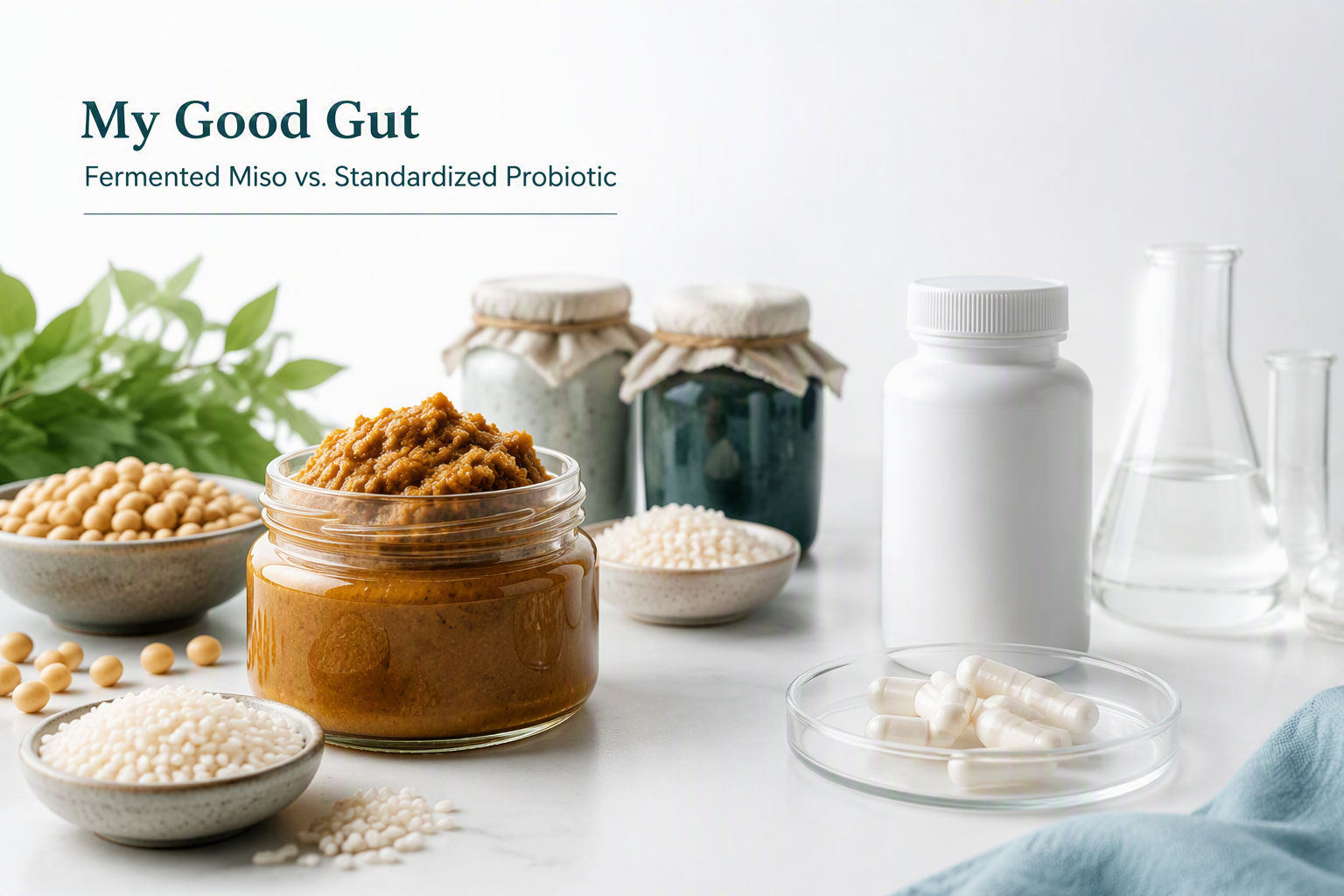
Is miso probiotic? Miso may contain live microorganisms, but miso probiotics is an informal phrase rather than a standardized probiotic product. Miso is a salty fermented food made with fermented soybeans, salt, and a koji starter. Recipes can also use rice, barley, rye, buckwheat, peas, beans, or other grains and legumes, so the finished product can vary widely.
During fermentation, Aspergillus oryzae grows on cooked soybeans or grains to make koji. This mold breaks down starches and proteins, helping create miso’s savory taste. It is primarily a fermentation organism, not a conventional probiotic bacterium, so it is not accurate to treat all koji or miso as probiotics.
Whether miso contains living microbes depends on its recipe, aging period, storage, and pasteurization. Some varieties retain viable yeasts or bacteria, especially if unpasteurized, but their type, amount, and survival through digestion are uncertain. Probiotic foods that contain live cultures can fit into a varied diet, though live cultures alone do not establish a health benefit.
These terms separate food from clinical research:
- Fermented food: A food changed by microbial activity, such as miso.
- Live microorganism: A microbe that remains alive when the food is eaten.
- Named probiotic strain: An organism identified by genus, species, and strain, such as Lactobacillus rhamnosus GG or Lacticaseibacillus paracasei 299v.
- Clinical evidence: Research testing a particular strain and dose in people for a defined outcome.
For irritable bowel syndrome (IBS)-like symptoms, finding microbes in miso does not show that they reach the gut at an effective dose or help manage bloating, constipation, or diarrhea. Miso’s sodium may also matter if you are limiting salt. Treat it as a flavorful food and pay attention to your individual tolerance.
How Do Miso Varieties And Processing Affect Live Cultures?
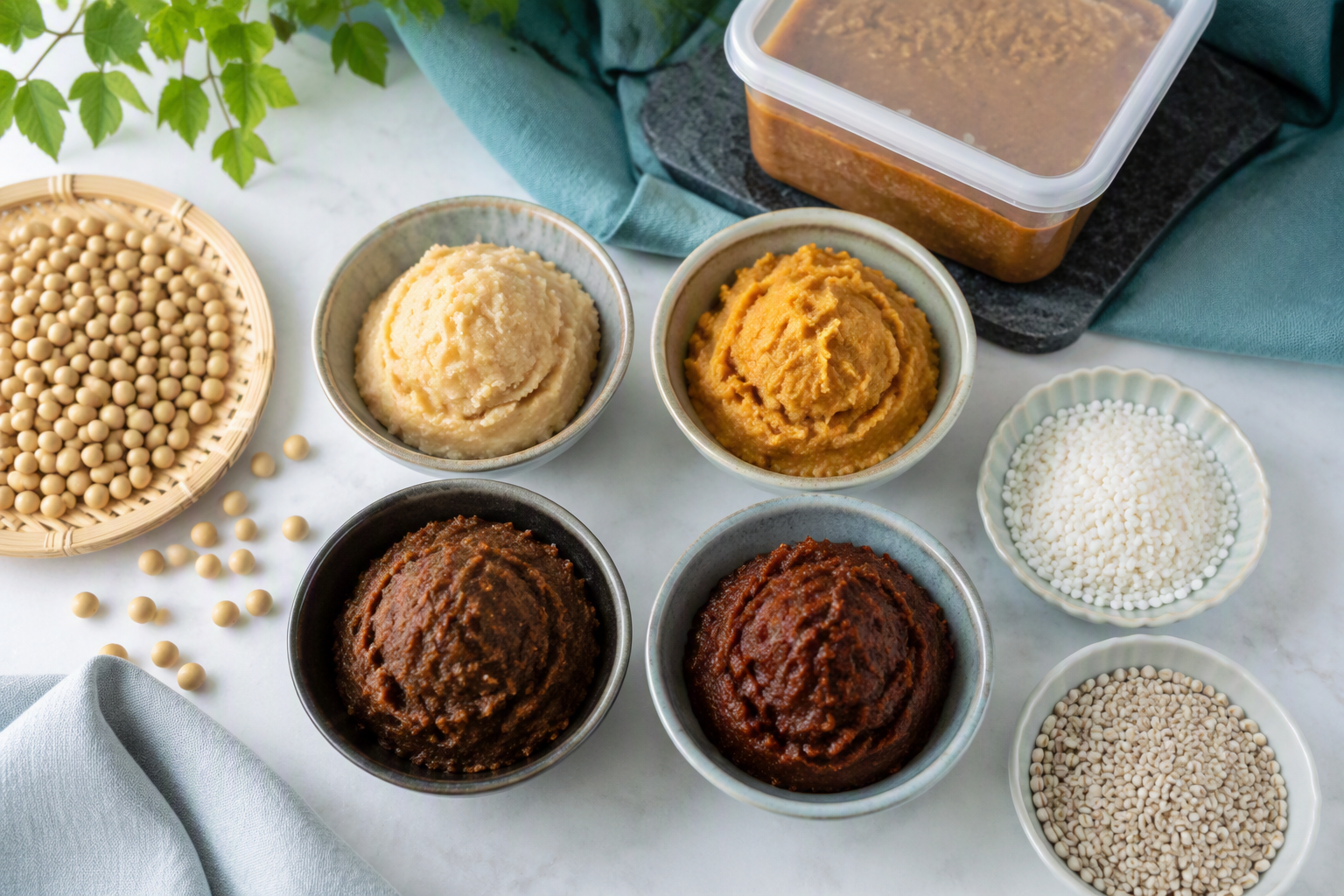
Miso varieties differ in flavor and composition, but color cannot tell you how many live microorganisms are in a jar. White miso is usually milder and fermented for less time. Yellow, brown, and red miso tend to be darker, richer, saltier, and more strongly flavored. That color spectrum may reflect differences in miso fermentation, but no variety is automatically better for IBS symptoms.
Miso commonly combines soybeans, water, salt, and koji, a mold culture that begins fermentation. Rice or barley may also be used, affecting the finished miso’s texture, acidity, flavor, and microbial makeup. Fermentation can reduce some antinutrients, which may improve absorption of certain nutrients, but miso is not automatically a clinically studied probiotic.
Several factors matter more than color when it comes to live cultures:
- Fermentation conditions: Time, temperature, oxygen exposure, salt concentration, and the specific koji culture affect which microorganisms develop and survive.
- Ingredients: Soybeans, rice, and barley create different conditions, so two misos of the same color can have different microbial profiles.
- Processing: Pasteurization and high heat after fermentation can reduce viable, or living, microorganisms. Traditionally fermented, unpasteurized miso may retain more cultures at purchase, though the label does not confirm a probiotic dose or digestive effect.
- Storage and packaging: Culture survival can change during storage, even in an unpasteurized product.
A longer fermentation period or stronger taste does not guarantee more live cultures. Sodium remains important, especially if you limit salt or find that salty foods worsen thirst or bloating.
To reduce heat exposure, stir miso into warm food after cooking instead of boiling it for a long time. Similar preparation considerations apply to fermented foods such as kimchi's live cultures. Start with a small serving to gauge your own tolerance.
How Do Pasteurization And Storage Change Viability?
Unpasteurized miso is more likely to retain viable microorganisms because it has not been heat-treated through pasteurization. Heat can reduce or destroy bacteria, so unpasteurized miso may contain live cultures formed during fermentation. Still, that label does not establish a probiotic effect. The organisms and their amounts can vary by batch, and their survival through digestion is uncertain.
Refrigeration slows quality changes after purchase and may help preserve microorganisms. For how to preserve probiotics in miso, keep the container tightly sealed, return it to the refrigerator promptly after use, and use a clean, dry spoon to limit moisture and contamination.
Several storage factors can reduce viability over time:
- Temperature swings: Repeated warming and cooling can make living organisms less detectable.
- Air and moisture exposure: A loose lid or wet utensil can affect texture and create less stable conditions.
- Product age: Older miso may still look and taste normal while containing fewer detectable microorganisms.
- Packaging: A well-sealed container offers better protection than one left open or loosely covered.
Follow the package’s storage directions, especially for refrigerated products. Consider unpasteurized miso a fermented food that may provide live cultures, not proof of a specific digestive-health benefit.
How Does Heat Affect Miso Microorganisms?
Heat can reduce the number of viable microorganisms in miso, particularly when miso is added to boiling water or left to simmer in soup. No single temperature, including 120°F, predicts survival for every organism. The dish’s temperature and the length of heat exposure both affect how many microorganisms remain alive.
Miso soup probiotics are difficult to measure or compare because survival varies by strain and product. A heat-sensitive microorganism may decline sooner than one with greater heat tolerance. Pasteurized miso may contain few or no viable cultures before it reaches your kitchen, while storage conditions also affect what remains.
The surrounding food, often called the food matrix, can also change heat survival. Important factors include:
- Salt: Higher salt levels may affect microorganism survival.
- Moisture: Water content can influence heat exposure.
- Acidity: A more acidic environment may change how well cultures withstand heating.
- Other ingredients: Components of the miso or meal can offer some protection or add stress.
For a practical approach, stir miso into soup after turning off the heat and allowing the broth to cool somewhat, rather than boiling it for several minutes. This may preserve more viable microorganisms, but it does not guarantee a particular live-culture amount or probiotic effect. A fermented appearance or label claim also does not confirm that live cultures remain.
If miso worsens symptoms such as bloating, pain, or diarrhea, your tolerance and the meal’s overall ingredients matter more than preserving microorganisms.
Do Miso Microbes Count As Clinically Proven Probiotics?
Even if preparation retains live microorganisms, miso is a fermented food, but fermentation alone does not make it a clinically proven probiotic. A koji starter often includes Aspergillus oryzae, plus yeasts and beneficial bacteria that shape miso's flavor. Still, is miso probiotic has no simple yes because its microorganisms and their survival vary by product and preparation.
Researchers would need to identify the organisms precisely, confirm they remain viable through processing, storage, cooking, and digestion, and show a health benefit in well-designed human trials. Finding microbes in a lab does not reveal how many are alive in your bowl, whether they reach the intestine, or whether they improve bloating, constipation, diarrhea, or IBS symptoms. One review described miso as a fermented food with possible probiotic potential, but it did not establish that miso reliably delivers live probiotics or measurable gut health benefits (source).
Stronger claims about probiotic foods require details that miso labels rarely provide:
- Strain identity: A species name alone is not enough because findings apply to a specific strain.
- Viable dose: The number of live organisms when you eat the food matters.
- Product handling: Pasteurization, storage, and stirring miso into boiling soup may reduce live microorganisms.
- Human outcomes: Controlled trials must measure digestive symptoms, not only detect organisms in food.
Evidence for yogurt cultures or a tested supplement cannot be transferred to miso. Strain, dose, delivery format, and preparation all affect whether a result applies.
Until miso-specific studies report viable counts and digestive outcomes, treat miso as a flavorful ingredient rather than a proven treatment or guaranteed source of live cultures. Its sodium content also matters if you follow a sodium-restricted eating plan or eat several salty foods each day.
How Do Fermentation Organisms Differ From Probiotic Strains?
Koji organisms help make miso, but they are not the same as clinically studied probiotic strains. In miso, the mold Aspergillus oryzae breaks down rice, soybeans, or other grains. This process creates the food’s savory flavor, softer texture, and many chemical changes during fermentation. Its presence does not show that it works as a standardized probiotic for digestive health or IBS symptoms.
Yeasts and bacteria may also take part in miso fermentation. Unpasteurized miso can contain live microorganisms, yet the types and amounts vary based on ingredients, fermentation conditions, storage, and pasteurization. Microorganisms may affect human health in complex, context-dependent ways, so they cannot be treated as one interchangeable group (source).
A probiotic claim calls for more detail than a “live cultures” label:
- Strain identification: The label names the microorganism’s strain code, not only its species. For example, different strains of Lactobacillus plantarum can act differently.
- A measurable amount: The product states how much of the strain it contains and whether that amount is guaranteed through its expiration date.
- Human research: Studies ideally test the exact strain, at a relevant dose, for the specific outcome discussed. Findings for one strain do not automatically apply to another.
For gut health, this difference helps keep expectations realistic. Finding A. oryzae, yeast, or bacteria in miso does not mean the food functions like a consistently dosed probiotic supplement or will help manage IBS symptoms. Treat unpasteurized miso as a fermented food you may enjoy and tolerate, rather than a reliably dosed intervention. Visible fermentation activity also does not reliably mean greater digestive benefit.
Why Do Strain Identity And Dose Matter For IBS?
IBS claims require a named strain, a tested dose, viable delivery, and research in people with IBS. The word "probiotic" alone cannot show whether a food or supplement may help manage your symptoms. Closely related microorganisms can work differently, so the full designation, such as B. longum subsp. infantis 35624, L. plantarum 299v, or B. bifidum MIMBb75, matters more than a species name alone.
Useful label details include:
- Strain code: Match the letters and numbers, such as 35624 or 299v. Genus names may change, but the strain code remains the key identifier.
- Tested dose: IBS trials evaluate a specific amount of a specific organism, not an unspecified number of microbes.
- Viability at use: Living microorganisms need to remain present when you consume the product, not only when it was made.
- Relevant human evidence: The most useful studies are randomized, placebo-controlled trials in people with IBS that test the same strain, dose, and symptom outcomes.
Trials of 35624, 299v, and MIMBb75 reported benefits for some IBS symptoms, but each finding applies only to the strain studied. It does not transfer to another Bifidobacterium or Lactobacillus product with a different code, a species-only label, or a generic probiotic blend.
Miso nutrition can still have a place in your meals, but miso health benefits are not the same as a strain-tested IBS intervention. Fermentation, pasteurization, storage, serving size, and cooking can all change miso's microbial content. Even unpasteurized miso may contain live organisms without providing a known dose or a strain used in an IBS trial.
IBS-specific outcomes remain uncertain. Heat adds another source of uncertainty for miso soup health benefits, since viable organisms may decline when heat reduces them. Miso sodium also matters if you are limiting salt.
Foods such as fermented soy like tempeh can be nutritious choices, but they are not interchangeable with studied IBS treatments.
Digestive symptoms can have many causes, so consult a qualified healthcare professional for persistent, severe, or worsening symptoms.
What Gut Health Benefits Can Miso Support?
Separate from strain-tested IBS interventions, miso can add savory flavor and modest nutrition to meals, but it does not treat bloating, constipation, diarrhea, or IBS-like symptoms. Fermentation may make some components easier to digest and may improve the availability of certain nutrients. Your response may vary with portion size, sodium intake, and sensitivity to fermented foods.
Miso contributes small amounts of several minerals and vitamins, including manganese, vitamin K, copper, and zinc. Because a typical serving is a spoonful used as seasoning, those amounts are modest, and they vary with the recipe, grain, and fermentation time. Check the Nutrition Facts panel on the product you buy rather than relying on a general figure, and treat miso as a flavoring rather than a nutrient source you are counting on.
These nutrients support normal body functions, but miso is not a digestive treatment or a replacement for a varied diet.
For how to use miso, add a modest amount for flavor rather than increasing portions in hopes of greater gut benefits:
- Soups: Miso soup is a simple option for a quick meal.
- Dressings: Whisk miso into a dressing for salads or roasted vegetables.
- Marinades: Use it to season fish, chicken, tofu, or vegetables.
- Grain-and-vegetable meals: Stir it into rice, quinoa, or noodle bowls.
Miso can be high in sodium, so check the label if you monitor blood pressure or total daily sodium. Miso soup probiotics, miso soup temperature, and how to preserve probiotics in miso are separate preparation concerns, not proof that a serving will improve symptoms.
Research on fermented and probiotic-rich foods cannot show that miso alone prevents infections or relieves digestive symptoms. Microorganisms, strains, processing, and serving amounts differ across products. Persistent, severe, or worsening symptoms deserve evaluation from a qualified healthcare professional.
How Can You Use Miso Without Overheating It?

To use miso for flavor while limiting heat exposure, treat miso as a finishing ingredient when preserving live cultures matters. Cook your soup, sauce, or grain bowl first, remove it from the heat, let it cool slightly, then stir in the miso. This limits prolonged heat exposure, though it cannot ensure that every microorganism remains viable.
For smooth miso soup, make a slurry before adding the paste:
- Put the desired amount of miso in a small bowl.
- Whisk in a ladleful of warm, not boiling, broth until lump-free.
- Stir the slurry into the pot after the heat is off.
This distributes miso evenly and prevents scorched clumps. Avoid using 120°F as a universal cutoff for culture survival. Pasteurization, storage, the food mixture, temperature, and exposure time can all affect what remains alive.
No-cook options are often the simplest choice when live cultures are a priority:
- Stir a small amount into a salad dressing with oil, vinegar, and water.
- Blend it into hummus, a dip, or mashed vegetables.
- Use it as a toast spread or mix it into cooled sauces, marinades, vegetables, grains, and blended meals.
Add miso gradually and taste as you go. Miso nutrition includes some protein and minerals, but miso sodium can build quickly, especially alongside broth, soy sauce, or other salty foods.
For people with IBS-like symptoms, miso risks often relate more to personal tolerance than fermentation itself. Portion size, sodium needs, and the other ingredients in the meal can all matter. Results vary by person, and persistent, severe, or worsening digestive symptoms warrant advice from a qualified healthcare professional.
Who Should Limit Miso And How?

Alongside preparation and tolerance, miso can fit many eating patterns, but its sodium level may limit the portion that works for you. A 28-gram, or 1-ounce, serving can provide about 43% of the recommended daily sodium intake. If you have hypertension, kidney disease, heart disease, or a prescribed sodium limit, treat miso as a concentrated seasoning and include soy sauce, salty broth, and other salty meal ingredients in your total.
A lower-sodium way to use miso includes:
- Start with 1 teaspoon rather than 1 tablespoon, which is often enough to season a full pot of soup.
- Dissolve the smallest amount that gives you enough flavor in a larger soup or vegetable dish.
- Compare labels, since sodium varies by product, and confirm portions with a qualified healthcare professional if you follow a prescribed sodium limit.
Miso probiotics do not make every miso product appropriate for everyone. Most varieties contain soy, and some also contain barley or other grains. Review the full ingredient and allergen label if you have a soy, grain, or gluten-related allergy, and avoid known triggers.
Severe allergic-reaction symptoms need urgent medical help:
- Swelling of the face, lips, tongue, or throat
- Trouble breathing or wheezing
- Fainting, severe dizziness, or widespread hives
Fermentation does not guarantee digestive comfort. With IBS-like symptoms, bloating, constipation, or diarrhea, try a small amount with a familiar meal and stop if pain, bloating, stool changes, or diarrhea worsen. Persistent, severe, or worsening symptoms warrant evaluation by a qualified healthcare professional.
Miso Probiotics FAQs
These FAQs cover miso probiotics, live cultures, digestive symptoms, and IBS, helping you separate practical food choices from claims that go beyond the available evidence.
1. Can Miso Probiotics Survive Stomach Acid?
Some microorganisms in miso may survive stomach acid, but this is not guaranteed. It depends on the organism’s acid tolerance, the amount you eat, and whether the miso food matrix offers protection during digestion. Survival alone does not prove that beneficial bacteria reach the intestine, change gut flora, or have a measurable probiotic effect. Unpasteurized, traditionally fermented foods may contain live cultures, but clear evidence of gut-health benefits from miso is lacking.
2. Does Miso Contain Prebiotics Besides Probiotics?
Miso may supply fiber and fermentable carbohydrates from soybeans and, in some varieties, rice or barley. These compounds may nourish parts of your gut flora, and fermentation may make certain nutrients easier to digest or absorb. Still, miso is not a clinically tested prebiotic.
Live cultures are a separate feature. Ingredients, fermentation methods, filtering, and pasteurization affect the amount of fiber, fermentable material, and viable microorganisms in each miso.
3. Can Miso Probiotics Help After Antibiotics?
Miso can be a reasonable food to try after antibiotics if you tolerate it, but it has not been shown to restore the gut microbiome or prevent antibiotic-associated diarrhea. Unpasteurized miso may contain live cultures, unlike pasteurized miso, and adding it after cooking may help preserve them. Findings on specific probiotic strains do not automatically apply to miso. Contact a qualified healthcare professional for persistent, severe, or worsening diarrhea, pain, fever, dehydration, or other concerning symptoms.
4. Does Unpasteurized Miso Guarantee Probiotic Benefits?
No. Unpasteurized miso is more likely than pasteurized miso to contain live microorganisms because heat can reduce or destroy them. Still, storage and handling can affect how many organisms remain alive when you eat it.
Live cultures are not automatically a clinically meaningful probiotic dose. Miso often does not identify organisms at the strain level, and survival through stomach acid is uncertain. It can add flavor to meals, but it cannot guarantee measurable digestive or IBS symptom benefits.