


Prebiotic foods can support gut health, but starting with concentrated choices can leave sensitive stomachs bloated or uncomfortable. These fibers and carbohydrates reach the large intestine, where selected gut microbes ferment them for fuel and produce short-chain fatty acids.
Chicory root, Jerusalem artichokes, garlic, and onions are rich in fermentable fructans, yet they aren't always comfortable first choices. Half a cup of cooked black beans carries 6.1 grams of fiber while half a cup of asparagus carries 2.8, so the serving matters as much as the food. Oatmeal, a slightly green banana, or cooled potatoes give a gentler place to begin.
For IBS, especially IBS-D, rapid increases in inulin-type fructans can worsen gas, urgency, or loose stools. Small portions, one new food at a time, and gradual increases make it easier to find foods that fit your digestion.
Prebiotic Foods for Gut Health Key Takeaways
- Prebiotic fibers feed selected gut microbes and produce SCFAs such as butyrate.
- Chicory root and Jerusalem artichokes are concentrated inulin sources that may trigger bloating.
- Oats, green bananas, cooled starches, and ground flaxseed are gentler starting options.
- Cooking does not remove fructans from garlic, onions, leeks, or other alliums.
- Cooling cooked potatoes, rice, and pasta increases resistant starch that reaches the colon.
- Add one prebiotic food at a time and increase portions gradually as tolerated.
- IBS-D symptoms may worsen with rapidly fermented fructans, legumes, and chicory fiber.
What Are Prebiotic Foods?
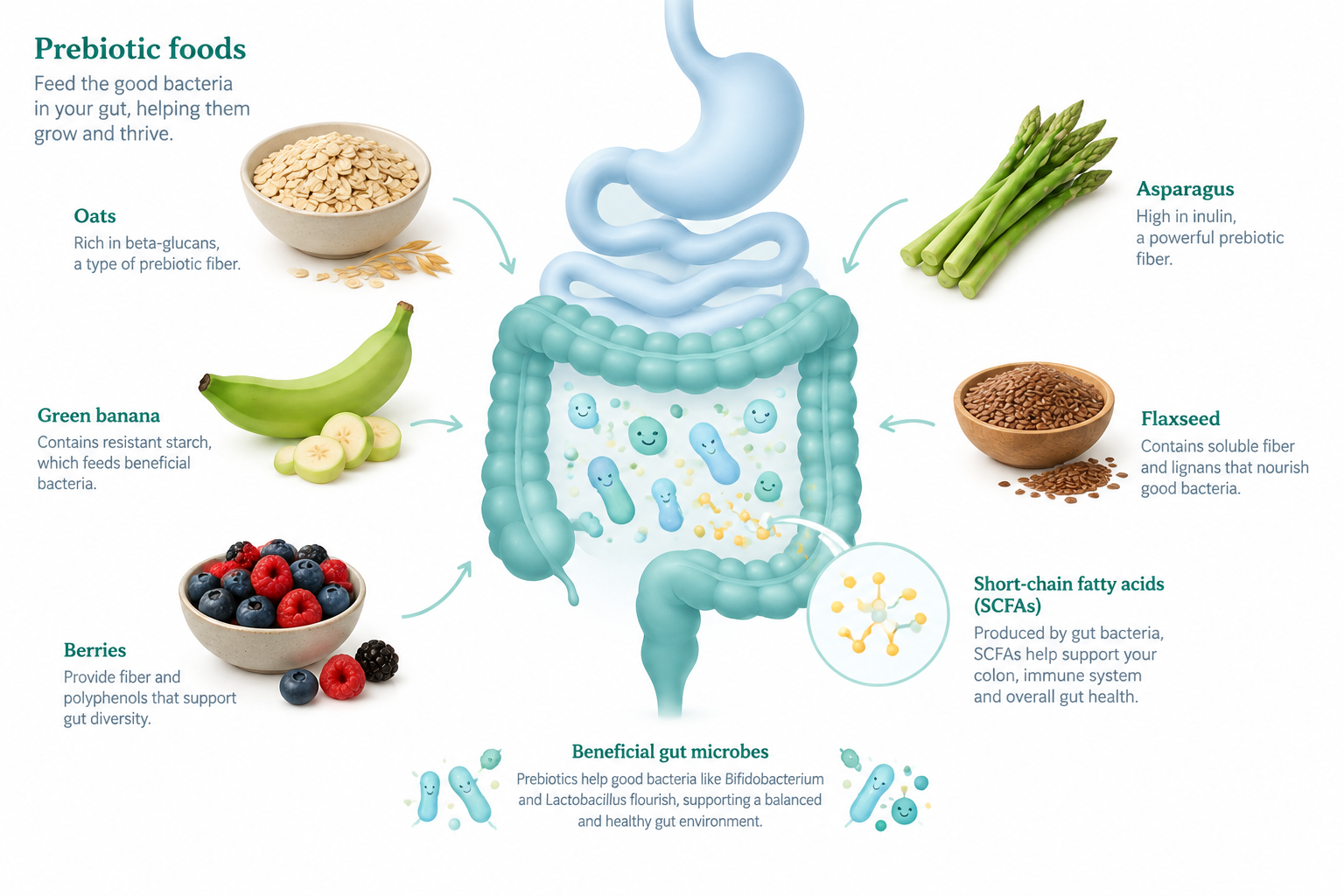
Prebiotic foods contain nondigestible fibers and carbohydrates that pass through the upper gastrointestinal tract to the large intestine. Prebiotics are selectively used by certain beneficial gut microbes, making them a subset of dietary fiber rather than every type of fiber. This selective-use definition comes from the International Scientific Association for Probiotics and Prebiotics (source).
In the large intestine, gut bacteria ferment prebiotic fiber for fuel. That process can help maintain a balanced microbial community, which is why these foods are often described as feeding good gut bacteria.
Fermentation creates short-chain fatty acids (SCFAs), including butyrate. Butyrate supports the cells lining the colon and may contribute to mineral absorption and metabolic health. The benefits of prebiotics can vary with the food, portion size, and your tolerance.
Prebiotics feed microbes already in your gut, while probiotics are live microorganisms found in some fermented foods and supplements. The foods below are fiber sources, not live-culture products.
A rapid increase in fermentable fiber can cause gas or bloating, especially with sensitive digestion or irritable bowel syndrome (IBS). Begin with a modest portion and increase gradually so your digestive system has time to adjust.
1. Garlic, Onions, and Leeks
Garlic, onions, and leeks supply prebiotic fiber, and they are also the foods on this list most likely to bring on gas or bloating when IBS symptoms are sensitive. Their prebiotic effect comes largely from fructans, including inulin and fructooligosaccharides (FOS), which feed microbes such as Bifidobacteria. Laboratory research suggests garlic compounds may limit the growth of some harmful bacteria, but this does not mean garlic relieves symptoms.
Flavor, portion size, and your personal tolerance can guide how you use them:
- Garlic: Add a small amount to sauces, dressings, or roasted vegetables.
- Onions: Use them as a flavor base for soups, egg dishes, and grain bowls.
- Leeks: Stir their milder flavor into soups, omelets, or potato dishes.
Both raw and cooked alliums retain prebiotic fiber. Cooking softens their texture but does not remove the fermentable fructans that can trigger symptoms. If your gut is easily irritated, start with one small cooked portion of a single allium after gentler foods are tolerated, so it is easier to identify the source of any discomfort.
2. Jerusalem Artichokes (Sunchokes)
Jerusalem artichokes, often sold as sunchokes, are knobby underground tubers, not globe artichokes. They are among the most concentrated whole-food inulin-rich foods. Their inulin can feed beneficial gut microbes, while their mild, nutty flavor and potato-like texture offer a practical change from onions and garlic.
Small portions work well in familiar preparations:
- Roast: Scrub, chop, and roast until tender.
- Boil: Cook a few pieces in water and serve them alongside potatoes.
- Mash: Mix a small amount into mashed potatoes before trying a larger serving.
Because Jerusalem artichokes are high in fermentable fiber, even a small serving can trigger gas, bloating, cramping, or bowel-habit changes, especially if you have IBS. Try only a few pieces after gentler prebiotic foods are comfortable, then reduce the portion if symptoms become bothersome.
3. Asparagus
Asparagus is an approachable way to add inulin and other fiber to everyday meals without relying on more concentrated sources. Half a cup of cooked asparagus provides 2.8 grams of total fiber, including 1.7 grams of soluble fiber and 1.1 grams of insoluble fiber, according to My Good Gut's food-and-fiber chart.
Preparation stays flexible:
- Shave raw asparagus into salads for a crisp texture.
- Briefly steam spears until tender, then add them to eggs, grain bowls, or pasta.
- Serve lightly steamed asparagus with lemon and olive oil as a simple side.
For bloating or IBS, cooked asparagus is often a reasonable early vegetable to test because its fructans are less concentrated than those in garlic, onions, or sunchokes. Begin with a small serving and increase only if symptoms remain manageable.
4. Dandelion Greens
Dandelion greens are a nutrient-dense leafy vegetable that provides fiber and naturally occurring inulin, a fermentable fiber that supports certain gut bacteria. Fresh bunches are common at many grocery stores and farmers markets, and mature leaves have a more noticeable bitter taste.
Young, tender leaves are easy to use raw, while mature leaves usually taste better cooked:
- Mixed salads: Pair tender leaves with citrus, sliced fruit, or a mild dressing to balance their bitterness.
- Warm greens: Sauté or gently braise larger leaves with olive oil and garlic.
- Meal additions: Stir cooked dandelion greens into beans, eggs, or whole grains.
Leafy greens generally cause less fermentation than inulin-rich roots and alliums. If bloating or IBS makes new foods feel risky, start with a small cooked serving and increase only if it feels comfortable.
5. Chicory Root
Unlike the whole-food sources above, chicory root is the plant used to make most inulin supplements and added-fiber ingredients. That’s why “chicory root fiber” and “inulin” appear on bars, cereals, and yogurts marketed for digestive health, even when they don’t resemble typical inulin-rich foods.
People often consume chicory root in these forms:
- Caffeine-free coffee-style drinks
- Ground-chicory coffee blends
- Packaged foods with added fiber
Checking ingredient lists is usually more useful than seeking out chicory root as a vegetable.
If you have IBS, added chicory fiber can be a hidden trigger. One high-fiber bar can pack concentrated fermentable fructans, causing bloating even when you tolerate fiber from whole foods. Chicory-fortified products are best saved for a careful later test rather than used as an everyday default. My Good Gut’s low-FODMAP snack guidance avoids chicory root for this reason.
6. Green Bananas
Green bananas are among the gentlest prebiotic foods to try first because their firmer flesh contains more resistant starch than soft, fully yellow, or spotted bananas. As the fruit ripens, its starch turns into simple sugars. Slightly unripe bananas also contain some FOS, fermentable compounds that feed gut bacteria.
Choose a banana that is mostly yellow with a little green near the stem. A fully green banana can be unpleasantly starchy, so it does not need to be your target. The My Good Gut food-and-fiber chart lists half a small banana as providing about 1.1 grams of fiber.
For bloating or IBS, begin with half a banana and increase only if it feels comfortable. Easy ways to use it include:
- Slice it over oatmeal, yogurt, or cereal.
- Eat half as a simple snack.
- Pair it with berries at breakfast.
7. Cooked-and-Cooled Potatoes, Rice, and Pasta
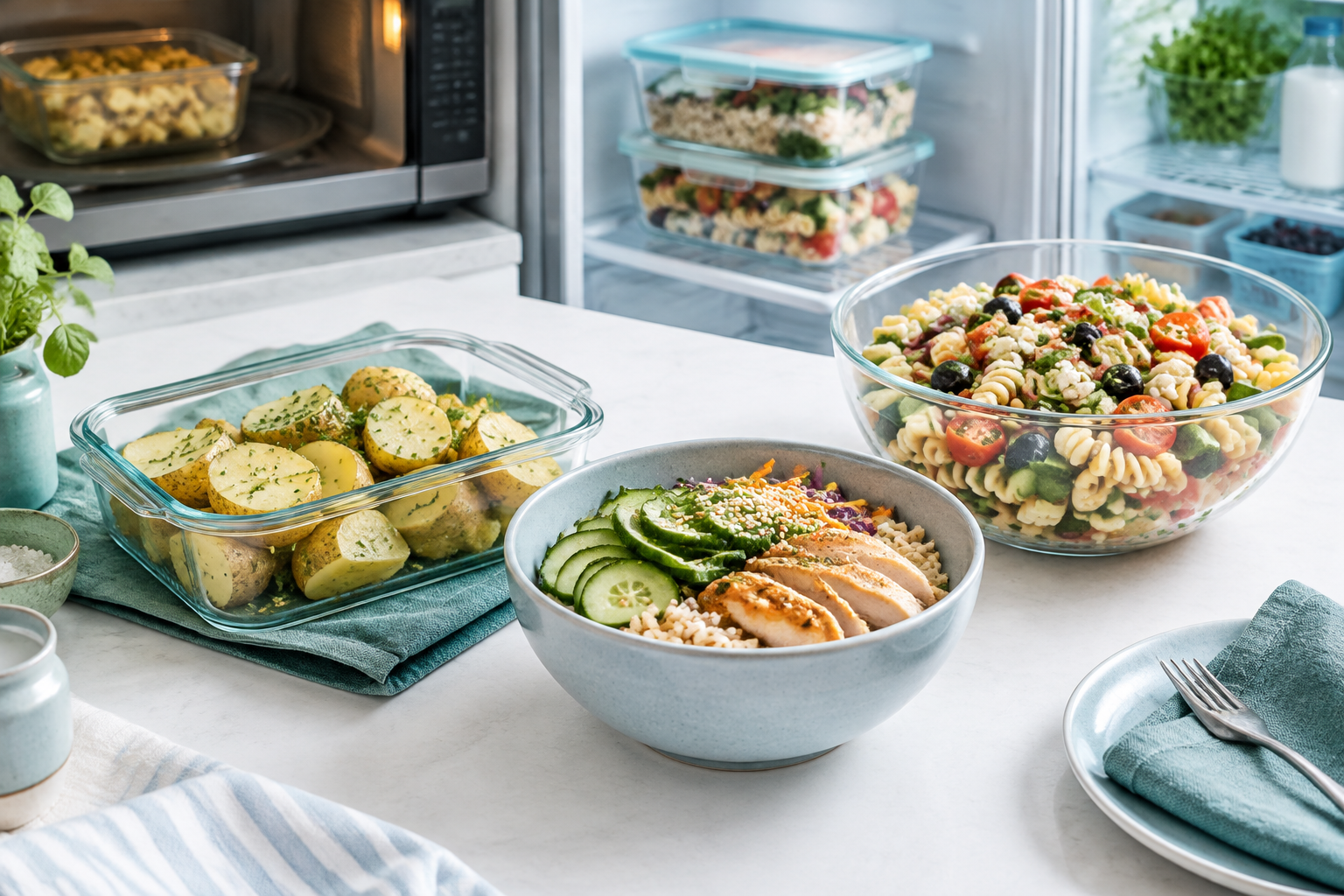
Cooking and then cooling potatoes, rice, or pasta can increase resistant starch, and reheating may still leave some of that change in place (source). Chilling changes some digestible starch into resistant starch, which reaches the colon and is fermented by gut bacteria.
Practical meal ideas include:
- Potato salad made with cooked, chilled potatoes.
- A chilled rice bowl with cucumber, protein, and a simple dressing.
- Leftover pasta salad for lunch.
- Roasted potatoes from the day before, gently reheated with vegetables.
If bloating or IBS symptoms flare with garlic, onions, or chicory, cooled starches may be a lower-fermentation prebiotic option. Begin with a modest portion and add only one new cooled-starch meal at a time, which makes it easier to notice how your body responds.
8. Apples and Berries
Apples supply pectin, a soluble prebiotic fiber that reaches the colon, where gut microbes ferment it into short-chain fatty acids. A small unpeeled apple is a practical choice, with 2.8 grams of total fiber and 1 gram of soluble fiber in My Good Gut's food-and-fiber chart.
Easy apple routines include:
- Pack a small whole apple for later.
- Stir sliced apple into oatmeal.
- Pair apple slices with peanut butter, yogurt, or cheese.
Applesauce can be easier to manage when chewing is difficult, but a half-cup has 2 grams of total fiber and 0.7 grams of soluble fiber, less than a small apple with its skin.
Frozen berries add convenience and beneficial plant compounds. Three-quarters cup of blackberries provides about 2 grams of soluble fiber, while 1 cup of raspberries provides 0.9 grams. If bloating or IBS is sensitive, start with one small serving instead of combining several high-fiber foods in one meal.
9. Oats and Barley
Oats and barley are everyday whole grains that supply fermentable beta-glucan, a viscous soluble fiber, plus insoluble fiber. In oats, beta-glucan can slow digestion, and the grain also contains some resistant starch. Barley's beta-glucan fits into a food-based eating pattern, and beta-glucan intake has a recognized role in supporting healthy cholesterol.
My Good Gut's food-and-fiber chart separates their fiber types:
Food and serving | Total fiber | Soluble fiber | Insoluble fiber |
|---|---|---|---|
Plain oatmeal, 1/3 cup | 2.7 g | 1.4 g | 1.3 g |
Cooked barley, 1/2 cup | 4.2 g | 0.9 g | 3.3 g |
Soluble fiber helps stools hold water, whereas insoluble fiber adds bulk. Both contribute to regularity, but neither replaces the other.
Whole-wheat foods and wheat bran differ: a slice of whole-wheat bread has 1.9 grams of fiber, while 1/4 cup of dry bran has 6 grams. Wheat bran is largely bulk-forming, although it contains some fermentable arabinoxylans, so it is not primarily a prebiotic.
For bloating or IBS, plain oatmeal is often the most practical first prebiotic food. Begin with a small bowl, increase gradually, and drink enough fluids. If bloating or bowel changes worsen, reduce the portion or pause, then use the amount you tolerate.
10. Lentils, Beans, and Chickpeas
Lentils, beans, and chickpeas are high-fiber foods that can help feed gut bacteria, especially when they are eaten in normal serving sizes. Their galactooligosaccharides (GOS) and resistant starch reach the colon, where gut bacteria ferment them. This fermentation can also produce gas, especially if your digestive system is not used to legumes.
A half-cup serving adds a meaningful amount of fiber:
Food and serving | Total fiber | Soluble fiber | Insoluble fiber |
|---|---|---|---|
Cooked lentils, 1/2 cup | 5.2 g | 0.6 g | 4.6 g |
Cooked chickpeas, 1/2 cup | 4.3 g | 1.3 g | 3 g |
Cooked black beans, 1/2 cup | 6.1 g | 2.4 g | 3.7 g |
For IBS, legumes are often a later food to try after gentler options. Build tolerance gradually:
- Start with a few spoonfuls in soup, a grain bowl, or a salad.
- Rinse canned beans well, or soak dried beans and discard the soaking water.
- Cook dried legumes until very tender, and cut back if bloating, pain, or bowel changes worsen.
Variety across whole plant foods matters more than a dedicated product, which most people do not need. If you are considering one, prebiotic fiber supplements can help you weigh the options.
11. Ground Flaxseed
Ground flaxseed is a practical prebiotic add-in for small meals and snacks. Its fermentable flaxseed fiber and gel-forming mucilage may feed gut microbes while supporting softer, more regular stools. It also contains beneficial plant compounds called lignans. Choose ground flaxseed, since whole seeds can pass through largely intact.
If bloating or IBS is a concern, start with a small amount of ground flaxseed and increase gradually as your digestion allows. Drink fluids as you increase fiber. Easy ways to use it include:
- Stirring it into oatmeal, yogurt, or a smoothie.
- Mixing it into pancake or muffin batter.
- Adding it to warm cereal.
Chia seeds also form a gel when hydrated and may be easier to tolerate when stirred into liquid and left to soak instead of eaten as a large chia pudding.
Nuts offer fiber and fat in a satisfying snack, though portion size and personal tolerance still matter.
Which Prebiotic Foods Fit Your Symptoms?
No prebiotic food is best for everyone. These foods work best as small, symptom-aware trials because the same fiber can affect each person differently. Prebiotic fiber feeds beneficial gut bacteria and may help with regularity, but how much it helps, and whether it causes gas along the way, depends on the food, the portion, and your gut.
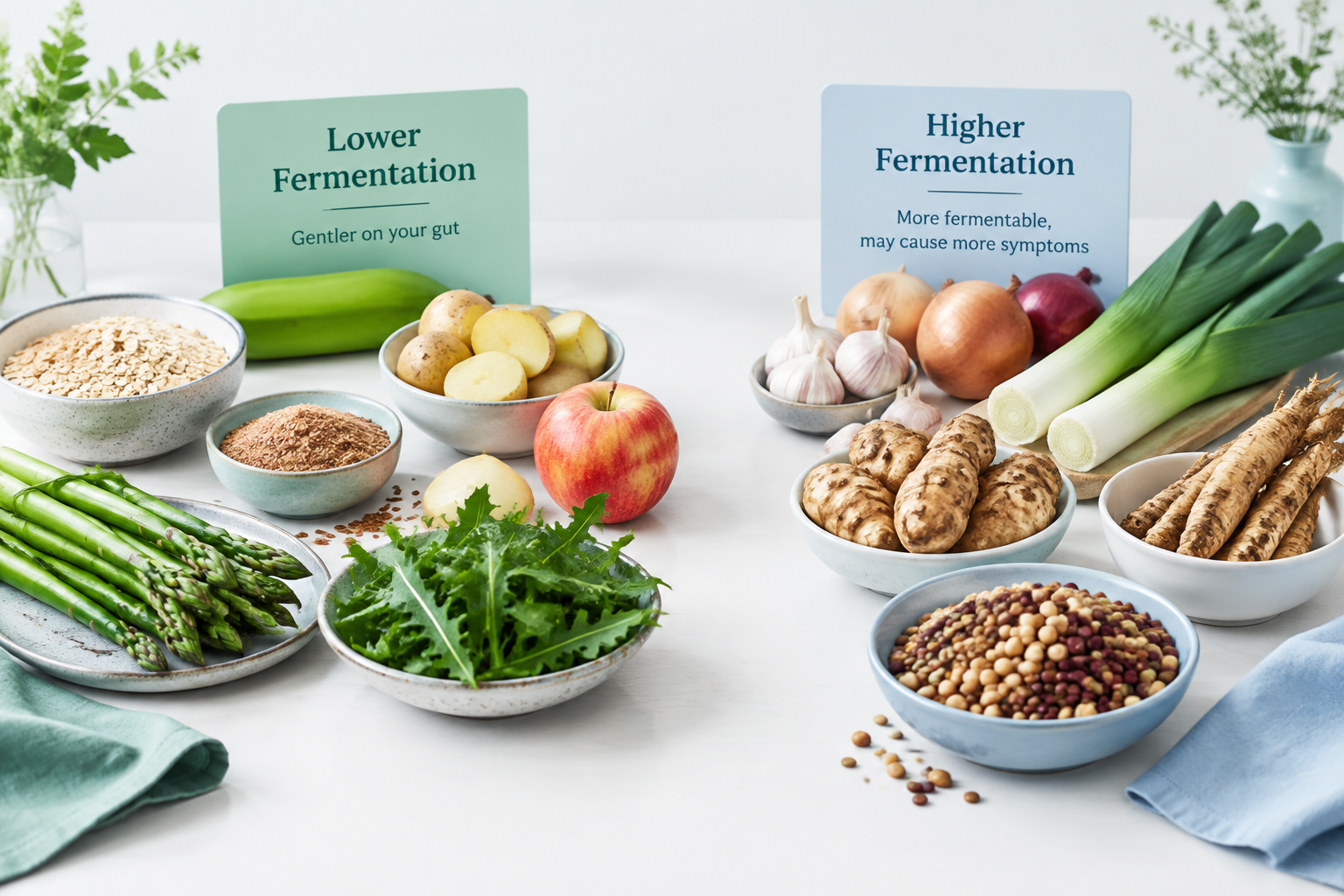
Fermentation level can help you choose a starting point:
- Lower-fermentation options: Oats, green banana, cooled potato or rice, a small apple, ground flaxseed, dandelion greens, and asparagus.
- Higher-fermentation options: Garlic, onions, leeks, Jerusalem artichokes, chicory root, and legumes.
If bloating or a sensitive gut is your main concern, try one lower-fermentation choice at a time before adding foods from the higher-fermentation group. Several fermentable foods in the same meal can cause symptoms even when you tolerate each one separately.
For constipation, useful choices include oats or barley, ground flaxseed, pectin-rich fruit such as apples, and legumes if they agree with you. These foods provide fermentable and stool-bulking fiber, so increase portions gradually and drink enough fluid.
IBS-D requires extra caution. Rapidly fermented fructans can worsen urgency, loose stools, or bloating, and a 2019 meta-analysis of prebiotic trials in IBS found that inulin-type fructans increased flatulence (source). Start with small servings of oats, green banana, cooled potato, or chia, and switch foods if symptoms flare instead of pushing through legumes, alliums, or chicory.
A realistic rotation is oats at breakfast, cooled potato at lunch, and a modest serving of lentils at dinner if tolerated. For fullness or weight goals, prebiotics and weight management offers added context. Persistent, severe, or worsening symptoms need qualified healthcare guidance.
How to Add Prebiotic Foods Gradually

Once you have chosen a symptom-aware option, add prebiotic foods one at a time, starting with a modest serving and holding it steady for several days. Plain oatmeal, half a firm banana, or a small apple can be easier starting choices. If you have irritable bowel syndrome (IBS), a slower pace often makes fermentable fiber easier to tolerate.
Use the serving sizes in the My Good Gut food-and-fiber chart to build fiber intake at a pace your gut accepts:
- Start small: Choose a few spoonfuls of lentils, half a banana, a small apple, or a small bowl of oatmeal.
- Build gradually: Work toward usual meal-sized portions only when symptoms remain manageable.
- Add one food at a time: Keep the first food steady before trying another prebiotic food.
Drink fluids through the day, and note each new food alongside bloating, gas, pain, or bowel changes. If symptoms clearly worsen, pause or reduce the newest addition. The parent prebiotics guide has the full symptom log, response rules, and warning signs.
A food-first day might include oatmeal with banana and berries for breakfast, a lentil bowl with cooked onion and asparagus for lunch, an apple snack, and cooled, reheated potatoes with sautéed dandelion greens for dinner. Many people can get prebiotic fiber from varied whole plant foods without a dedicated supplement.
Seek evaluation from a qualified healthcare professional for persistent, severe, or worsening digestive symptoms.
Prebiotic Foods FAQs
These FAQs cover common prebiotic food questions, including everyday sources, portion sizes, and ways to approach dietary changes when your digestion feels sensitive.
1. What Food Has the Most Prebiotics?
Chicory root and Jerusalem artichokes, or sunchokes, are among the most concentrated inulin-rich foods. Inulin used in supplements is commonly extracted from chicory, while sunchokes can be roasted, boiled, or mashed like potatoes. For a sensitive gut, the highest-inulin choice is not always the easiest place to start. Begin with a small portion you tolerate, then add variety through garlic, onions, leeks, asparagus, slightly green bananas, oats, and legumes.
2. Do Cooking Methods Reduce Prebiotic Fiber?
Ordinary cooking does not remove the fructans, galactooligosaccharides, or pectin that give foods prebiotic effects, so cooked onion and garlic may still trigger symptoms if you are fructan-sensitive. Heat mostly changes texture and may improve comfort. Cooking and chilling potatoes, rice, or pasta forms some resistant starch, and gentle reheating retains much of it. Choose raw, cooked, or cooled foods based on what your digestion tolerates best.
3. Can Prebiotic Foods Cause Gas?
Yes. Adding prebiotic foods too quickly can cause temporary gas or bloating, especially when your usual diet is low in fiber. These fermentable fibers reach the large intestine, where gut bacteria break them down, so discomfort does not automatically mean the food is harmful or unsuitable.
Begin with a small serving of one prebiotic food and increase it gradually as tolerated. Drinking enough water helps fiber move through your digestive tract. Track whether symptoms settle, persist, or worsen, and seek guidance from a qualified healthcare professional for persistent, severe, or worsening symptoms.
4. Are Prebiotic Foods Safe During Pregnancy?
Prebiotic-rich whole foods are generally safe during pregnancy, and most people do not need a dedicated prebiotic supplement. Oats, beans, fruits, vegetables, and whole grains provide fermentable fiber as part of a varied diet.
Because nausea, constipation, bloating, or IBS can affect tolerance, keep portions comfortable and add more fiber gradually. Discuss major dietary changes, supplements, or persistent, severe, or worsening digestive symptoms with your obstetric clinician or a registered dietitian.