


Choosing a prebiotic supplement when you have IBS shouldn't mean pushing through more gas to "feed your gut." A safe start usually means selecting one fiber for your main symptom and using a low dose rather than trusting a broad microbiome claim. Prebiotics are nondigestible fibers that reach the colon and are fermented by selected gut microbes.
Inulin and FOS ferment quickly and can worsen bloating, while acacia fiber and PHGG tend to ferment more slowly. The American College of Gastroenterology recommends soluble fiber for overall IBS symptoms, with psyllium offering the strongest practical support for stool consistency and constipation. Starting at 2 to 5 grams a day of a single named fiber, and reading the Supplement Facts panel rather than the front label, separates a manageable option from a multi-ingredient product that makes symptoms harder to track.
Prebiotic Supplements Key Takeaways
- Prebiotics feed existing gut microbes, while probiotics add live microorganisms.
- Fiber type, dose, and fermentation speed matter more than supplement format.
- Psyllium supports regularity and IBS-C but is not a classic prebiotic.
- Inulin and FOS may worsen gas and bloating because they ferment quickly.
- Acacia fiber and PHGG may be gentler choices for sensitive digestive systems.
- Choose a single-ingredient product and check the Supplement Facts panel for fiber grams.
- Start with 2 to 5 grams daily and increase only if symptoms remain manageable.
What Are Prebiotic Supplements?
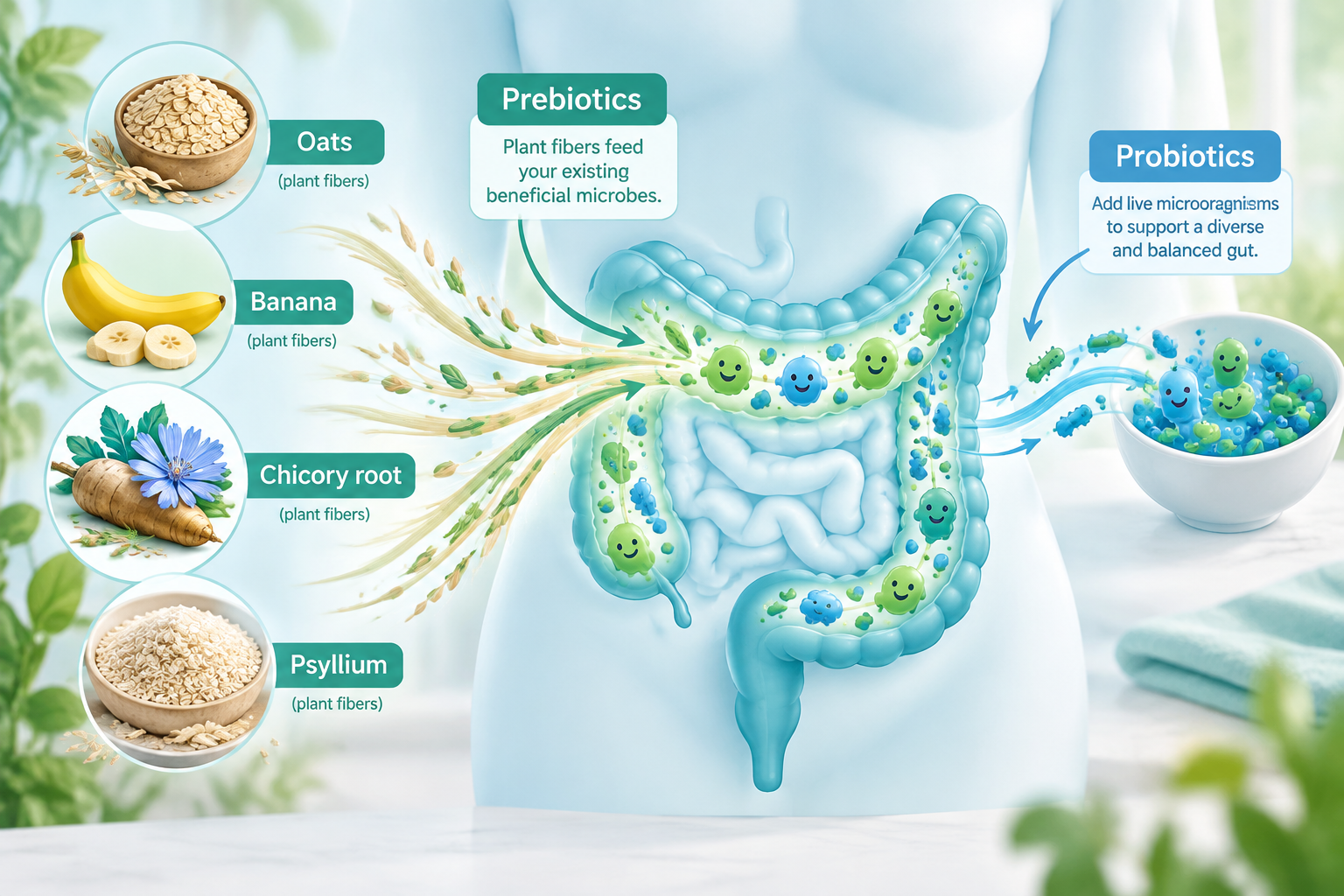
Prebiotic supplements are concentrated nondigestible plant fibers or carbohydrates that reach the colon, where selected gut microbes ferment them in ways associated with a health benefit. How prebiotics work also helps explain why a fiber that suits one person may increase gas or bloating in another. Not every dietary fiber is a prebiotic, and the response depends on the ingredient, dose, and your digestive system.
The distinction from probiotics matters on a label. Prebiotics feed beneficial gut bacteria already living in your digestive tract, while probiotics are live microorganisms added through foods or supplements. A synbiotic contains both, so the label should make clear whether you are choosing a standalone fiber or a blend with live cultures.
Common prebiotic fiber types on supplement labels include:
- Inulin and chicory-root fiber
- Fructooligosaccharides (FOS)
- Galactooligosaccharides (GOS)
- Resistant starch
- Xylooligosaccharides (XOS)
- Acacia fiber
- Partially hydrolyzed guar gum (PHGG)
Fructans, galactooligosaccharides, and resistant starch have the most human evidence among these categories, according to a review by Carlson and colleagues in Current Developments in Nutrition (source). These ingredients do not produce interchangeable effects. Fermentation speed and serving size can shape tolerability, especially if you have irritable bowel syndrome (IBS), where rapidly fermented fibers may worsen symptoms for some people.
Prebiotic supplements are sold as powders, capsules, gummies, and combination products. Fiber type, dose per serving, and added ingredients usually matter more than the format itself. Powders can make small dose adjustments easier, while gummies and multi-ingredient blends can make it harder to identify what is affecting bloating, bowel habits, or discomfort. When symptoms are unpredictable, a single-ingredient product often gives you a clearer starting point.
Which Prebiotic Fiber Fits Your Goal?
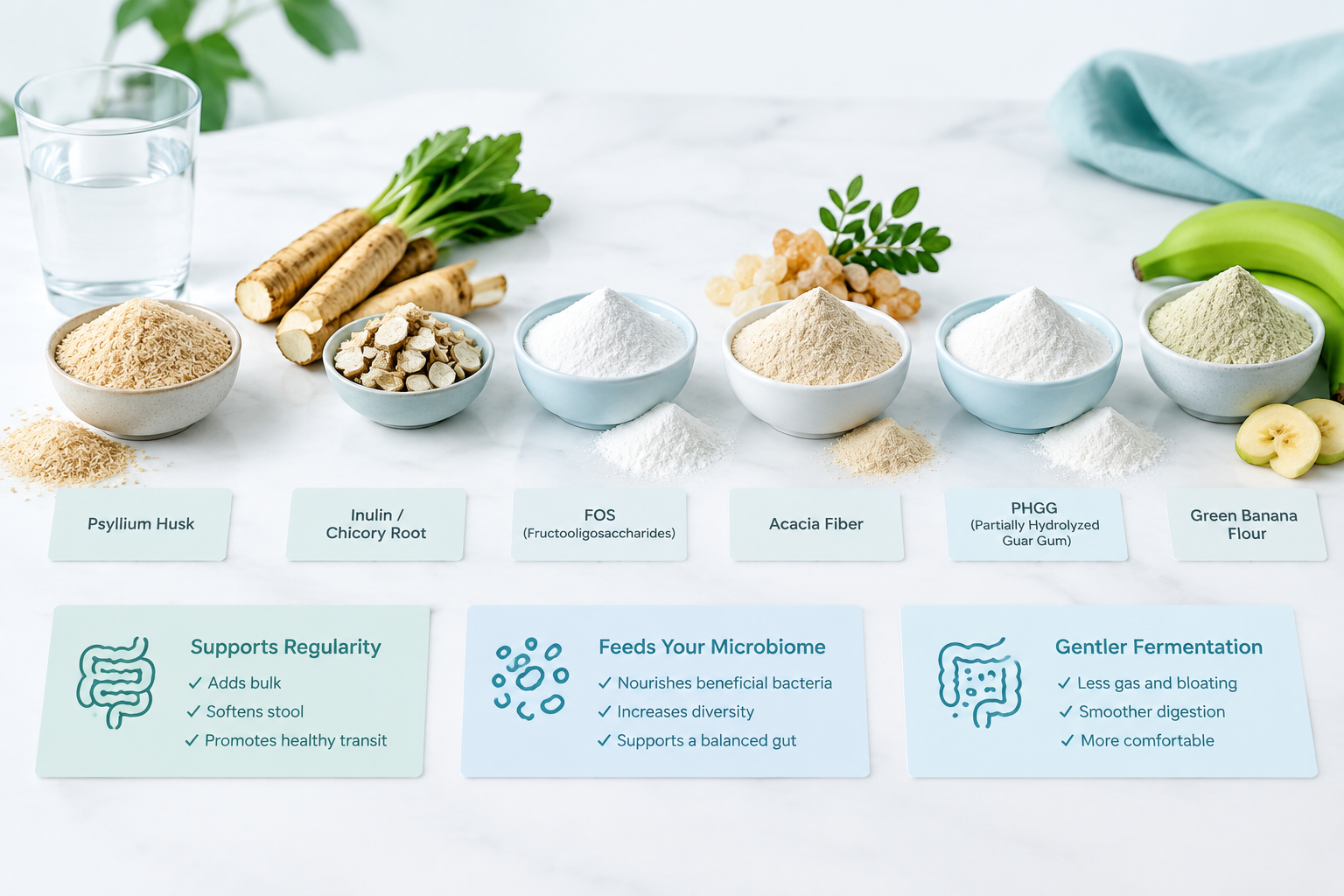
No single option is the best fit for every digestive goal. The right prebiotic fiber depends on whether you want more regular bowel movements, broader microbiome support, or a gentler starting point. The evidence for prebiotic benefits offers more detail on these uses.
Prebiotic fiber type | Intended use | Fermentation speed | Typical gas risk | Clinical advice is especially important for |
|---|---|---|---|---|
Psyllium | Stool bulk, constipation, inconsistent stool form | Minimal | Lower | Persistent constipation, pain, bleeding, or bowel changes |
Inulin and FOS | General microbiome support | Fast | Higher | IBS or marked bloating |
GOS | Bifidobacteria support | Fast | Higher | IBS or highly reactive symptoms |
Resistant starch | Food-connected microbiome support | Moderate | Moderate | Active bloating or changing bowel habits |
XOS | Bifidobacteria support at lower amounts | Moderate | Lower to moderate | IBS or prior supplement reactions |
Acacia fiber | Sensitivity-aware fiber trial | Slow | Lower | Persistent or worsening symptoms |
PHGG | Gentle regularity and microbiome support | Slow | Lower | IBS with complex symptoms |
Psyllium is often the regularity-first choice when constipation or inconsistent stools are the main concern. It holds water and adds bulk instead of fermenting quickly, so it is not a classic prebiotic. Among common fiber supplements, it has particularly strong guideline support for stool consistency and regularity, but it does not address the underlying cause of constipation.
For microbiome-focused goals, inulin, FOS, and GOS can feed bifidobacteria and produce short-chain fatty acids. Fast fermentation can also worsen gas and abdominal distention. In an eight-week trial of 32 adults, XOS at 1.4 or 2.8 grams daily increased bifidobacteria without reported gastrointestinal side effects (source). A smaller dose still cannot guarantee comfort for everyone.
Resistant starch products, including green banana flour, reach the colon before fermentation and may support butyrate-producing bacteria. Existing microbiome patterns affect the response, and active bloating may make this option harder to tolerate.
Acacia and PHGG ferment more slowly, making them practical choices for a cautious trial. Some PHGG products have a low-FODMAP designation, meaning low in fermentable oligosaccharides, disaccharides, monosaccharides, and polyols, though that label does not make a product suitable for every person with IBS.
Choose unflavored, single-ingredient products so reactions are easier to identify. For weight-related goals, do prebiotics help with weight loss addresses a different question. Persistent, severe, worsening, or strongly reactive symptoms warrant guidance from a qualified healthcare professional.
Which Fibers Have Evidence for Constipation?
Psyllium has the strongest support for constipation-predominant IBS (IBS-C). The American College of Gastroenterology recommends soluble fiber for overall IBS symptoms, with psyllium the best-supported practical option (source). It absorbs water and forms a gel that can soften stools and make them easier to pass. Unlike most prebiotic fibers, psyllium is only weakly fermented, which may make it easier to tolerate when gas is a concern.
A 2022 meta-analysis of 16 randomized trials involving 1,251 adults with chronic constipation found that fiber supplements improved treatment response, stool frequency, and stool consistency. Benefits were clearest with psyllium, doses above 10 grams per day, and use for at least four weeks. Flatulence also increased, so a gradual start can be more comfortable (source).
Fructooligosaccharides, known as FOS, may also support regular bowel movements in functional constipation. A 2024 meta-analysis of 17 trials found that FOS supplements increased bowel-movement frequency and softened stools, although mild bloating was the most common side effect. The most helpful dose and duration have not been established, and evidence does not show that prebiotic supplements broadly improve all gut symptoms (source).
If gas does not settle with psyllium or a fermentable prebiotic, tolerance-focused alternatives include:
- Methylcellulose: This fiber does not ferment, so it may be a better fit when fermentation seems to trigger gas.
- Partially hydrolyzed guar gum (PHGG): This fiber ferments more slowly and is available in a low-FODMAP-designated formulation.
Neither alternative has stronger constipation evidence than psyllium. The following section addresses gas and bloating in more detail.
Consider Gas and Bloating Risk
Gas and bloating reflect how quickly a fiber ferments, not whether a prebiotic is working better. Inulin supplements and fructooligosaccharides, often made from chicory root extract, can support Bifidobacteria but are rapidly fermented by gut bacteria. Starting with a large serving can create a sudden rise in gas, especially if your digestive system is already sensitive.
A 2019 meta-analysis of trials in people with IBS found that inulin-type fructans worsened flatulence, while non-inulin prebiotics at doses of 6 grams daily or less slightly improved it (source). More gas is not a reason to keep increasing your dose.
Early effects can include:
- Flatulence or increased gas.
- A full, stretched, or bloated feeling.
- Abdominal cramping.
- Mild diarrhea.
These symptoms often ease as your system adjusts, but gut comfort matters. Stop the product and speak with a qualified healthcare professional if you have intense pain, persistent diarrhea, worsening bloating, or symptoms that interfere with eating, sleep, or daily activities.
Acacia fiber, also called gum arabic, and PHGG ferment more slowly than fructans and may be easier to tolerate when gas is your main concern. They are not guaranteed to be symptom-free, particularly if the serving is large.
Your reactions to fructan-rich prebiotic foods can help guide the choice. If onions, garlic, or chicory reliably trigger bloating, an inulin- or FOS-based supplement may aggravate symptoms. Acacia, PHGG, or non-fermenting methylcellulose may be better options to discuss with a clinician who knows your symptoms, medications, and health history.
Should You Try Prebiotics With IBS?

Given the gas and bloating risks that guide fiber selection, prebiotics are not a general treatment for IBS. A 2019 systematic review and meta-analysis of 11 randomized trials involving 729 patients found no overall improvement in IBS symptoms, abdominal pain, bloating, or quality of life versus placebo, though prebiotics did increase bifidobacteria (source). A supplement may still be a monitored option for one goal, such as constipation, rather than a treatment for IBS itself.
Fiber type and dose matter more than a prebiotic claim. In the reviewed trials, 6 grams daily of oligofructose for four weeks and 20 grams daily of fructooligosaccharides, or FOS, showed no benefit. Improvement was associated with 5 grams daily of short-chain FOS for six weeks and 3.5 grams daily of galactooligosaccharides, or GOS, for 12 weeks. Across the review, doses at or below 6 grams daily and non-inulin fibers tended to be easier to tolerate.
That pattern is worth keeping in mind when comparing products. More fermentable fiber does not necessarily improve gut comfort, especially when bloating, urgency, or pain are already prominent. Rapidly fermented fibers, including inulin, can worsen:
- Gas and distension: Fermentation may increase pressure and visible bloating.
- Cramping: Quick fermentation or fluid shifts in the bowel can aggravate discomfort.
- Loose stools: This can be particularly disruptive when diarrhea or urgency is part of your IBS pattern.
Suspected small intestinal bacterial overgrowth (SIBO), severe FODMAP sensitivity, and strong reactions to high-FODMAP foods call for extra caution. Symptoms that worsen after adding a fiber are useful feedback that the ingredient or amount is not a good fit.
A sensible choice matches your main symptom and keeps variables to a minimum. Constipation may justify trying a single fiber, while bloating, pain, or urgency are reasons to avoid assuming that more fiber will help. Multi-ingredient powders, gummies, and synbiotics can combine several potential triggers, making it harder to tell what affects your symptoms.
These options prioritize simple formulas and different tolerance needs:
Option | May suit | Key consideration |
|---|---|---|
Regularity with few added variables | Flavored sugar-free Metamucil still contains sweeteners. | |
Regularity at a lower cost | It has the same active ingredient as the branded psyllium product. | |
Gas that does not settle with psyllium | Methylcellulose does not ferment. | |
A slowly fermented option | It carries a low-FODMAP designation. |
Confirm the current Supplement Facts panel before buying, since formulas can change. My Good Gut does not recommend a specific inulin, FOS, or GOS product for IBS.
Individualized guidance matters most when SIBO is suspected, FODMAP sensitivity is severe, symptoms shift unexpectedly, or IBS remains hard to control. A qualified healthcare professional or registered dietitian can help you choose a fiber that fits your symptoms and routine.
How Do You Read a Prebiotic Label?
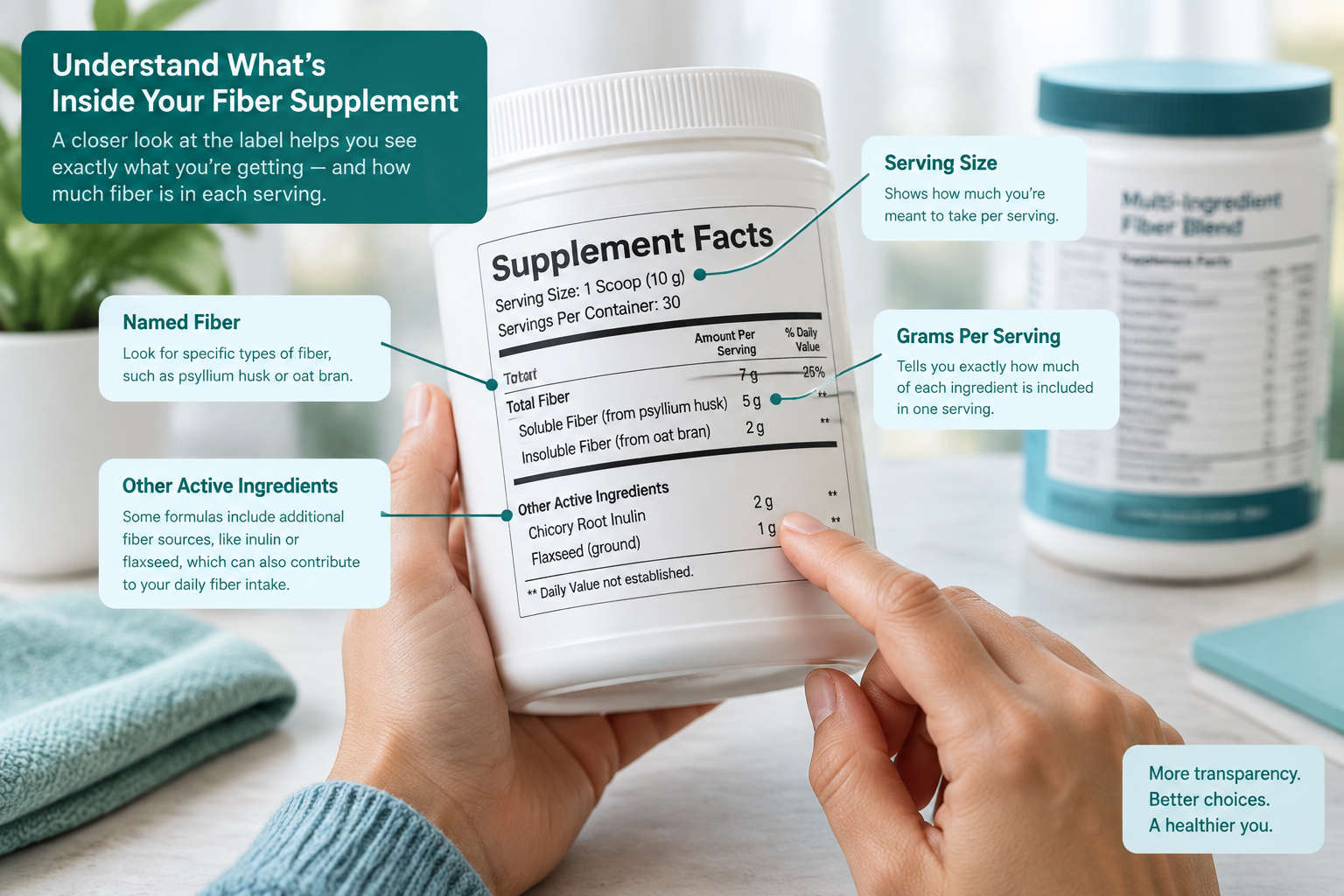
To compare the simple formulas that can limit IBS triggers, start with the Supplement Facts panel, not front-label language such as "microbiome support." A useful label names the fiber, such as psyllium, FOS, or inulin, and gives its grams per serving. Total dietary fiber does not necessarily match the featured prebiotic amount, while proprietary blends and unnamed "prebiotic complexes" prevent a meaningful comparison.
A practical label check includes:
- Named fiber and dose: Find the ingredient and the grams supplied in one serving. That amount matters most when comparing products or starting cautiously if IBS-related gas or bloating is a concern.
- Serving size and format: A prebiotic powder can make it easier to begin with less than a full scoop. Prebiotic capsules may require several pills to reach the labeled daily dose. Prebiotic gummies often provide less fiber per serving and may include added sugar or other ingredients.
- Other active ingredients: Review the full ingredient list for sweeteners, sugar alcohols, flavorings, probiotics, postbiotics, vitamins, enzymes, greens, or protein. A short formula with quantified amounts is easier to evaluate when fermentable fibers tend to worsen symptoms.
Combination products are difficult to assess during a careful trial. A 9-in-1 probiotic fiber gummy combines psyllium, FOS, inulin, and a probiotic strain, so any change in gas, cramping, or bowel habits cannot be tied to one ingredient. Combination prebiotic and probiotic products belong in the synbiotics section, where their tradeoffs can be weighed separately.
Compare value by dividing the price shown by the number of servings that deliver the stated fiber dose. A greens or synbiotic powder that costs more per serving may not provide more usable prebiotic fiber.
Quality signals can help, but they have limits. The FDA does not review dietary supplements for safety or effectiveness before sale, and product quality can vary by brand (source). Clear ingredient amounts, lot and expiration details, and accessible third-party testing or a certificate of analysis are more useful than vague "clinically tested" language or a high probiotic count. Recheck the label and product details before buying because formulas, stock, and prices can change.
Separate Standalone Fibers From Synbiotics
The Supplement Facts or Nutrition Facts panel tells you more than a front-label "gut health" claim. A standalone prebiotic should name a fiber ingredient and state grams per serving, without live microbes as its main active ingredient. These nondigestible carbohydrates reach the colon largely intact, where they feed bacteria already present in your microbiome.
Common standalone prebiotic fibers include:
- Inulin, FOS, and GOS: Fermentable fibers that can trigger gas or bloating in some people.
- Resistant starch and XOS: Carbohydrates that support existing gut bacteria rather than introduce new organisms.
- Acacia fiber and PHGG: Options often available in simple powder or capsule formulas.
For a synbiotic, compare the prebiotic fiber with the live probiotic organisms. Its label should identify the fiber type and amount, along with the individual microbial strains, ideally including strain codes. A large colony-forming unit (CFU) or active fluorescent unit (AFU) total does not show whether the strains or doses match available research. Seed Daily Synbiotic lists 24 strains and 53.6 billion AFU, while Ritual Synbiotic+ lists two strains at 11 billion CFU alongside prebiotic and postbiotic ingredients. Neither is a standalone fiber supplement.
Powders, capsules, gummies, and greens blends are formats, not ingredient categories. Gummies may offer modest fiber with sugar or sweeteners, while greens powders can include vitamins, enzymes, protein, or probiotics. If bloating is a concern, a single-fiber formula can make it easier to identify what your body tolerates.
Results vary by person, and dietary or supplement choices should be individualized.
How Should You Trial a Prebiotic Safely?
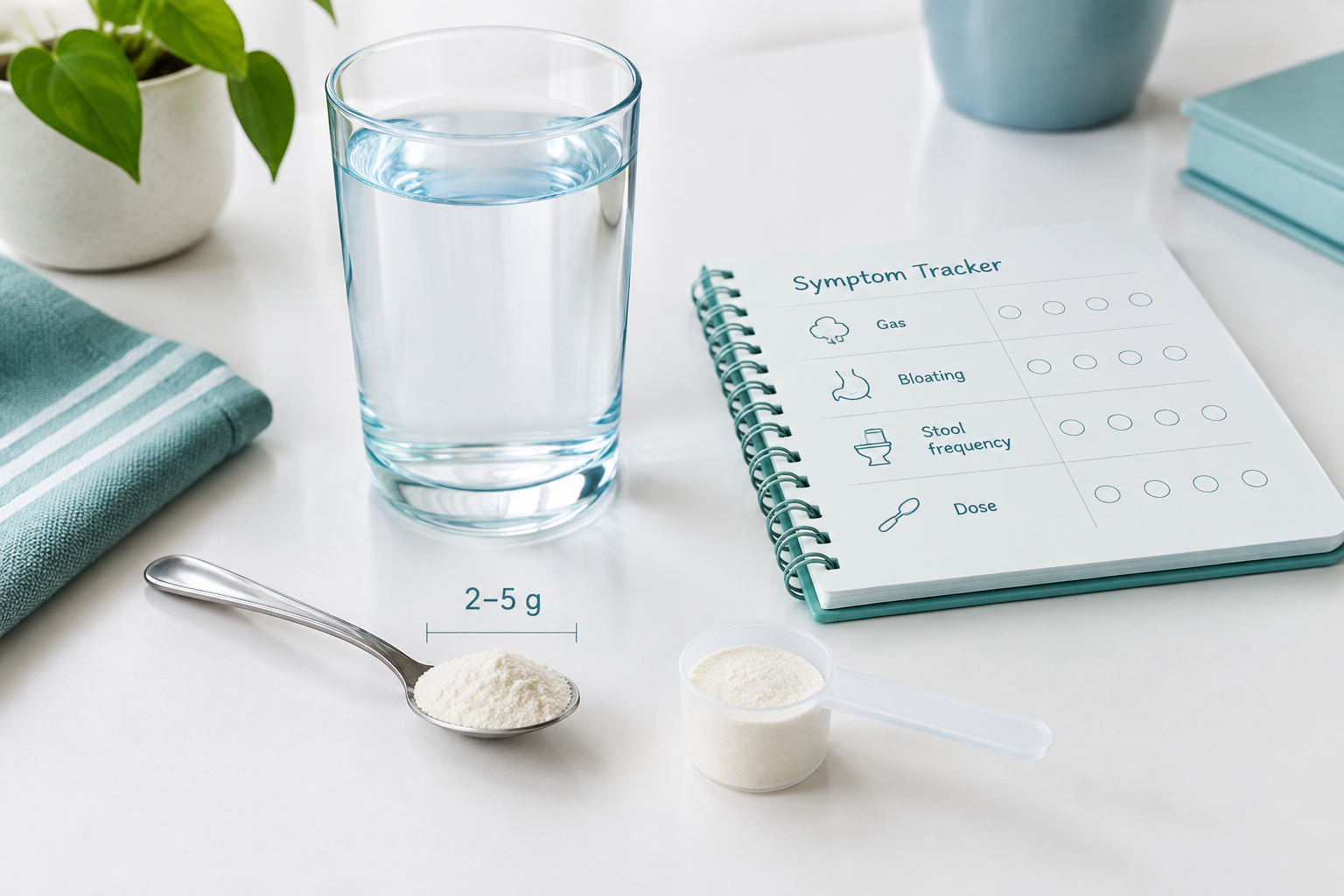
Once label review identifies a standalone option, a safe prebiotic trial uses one standalone fiber chosen for your main goal, preferred format, and digestive sensitivity. Powders, capsules, and chewables can all fit, but a single-ingredient product is easier to assess than synbiotics or multi-active blends. That clarity matters when you are looking for constipation relief, more regular bowel habits, or general digestion support.
A cautious trial includes:
- Begin low: Begin with about 2 to 5 grams once a day, with a meal if better tolerated. That keeps the starting dose below the 6-grams-a-day amount better tolerated in the IBS trials discussed earlier. Check the label carefully, since a full scoop may exceed that amount and a partial scoop may be needed.
- Titrate gradually: Stay at the starting dose long enough to judge your response, then move slowly toward the label amount over several weeks only if symptoms remain manageable. Gas, flatulence, bloating, cramping, and mild diarrhea are more likely after a rapid increase or a higher dose.
- Keep other variables stable: Avoid changing dietary fiber, probiotics, laxatives, or other prebiotic supplements during the same trial. Multiple changes can make it difficult to identify what is helping or causing discomfort.
- Take fiber with fluids: Use a full glass of water, mix powders thoroughly, and keep fluids up throughout the day. Too little fluid can worsen constipation or make stools harder to pass.
Track stool frequency and form, bloating, gas, cramping, urgency, and effects on daily activities for four to eight weeks. The symptom log and response rules in the parent prebiotics guide can help you recognize whether symptoms are settling, worsening, or improving in a meaningful way.
Return to the last comfortable dose or pause the product if bloating, diarrhea, or pain remains disruptive. Stop the trial and seek prompt medical advice for:
- Severe or worsening abdominal pain
- Vomiting
- Blood in stool
- Unexplained weight loss
- Dehydration
- A major change in bowel habits
Persistent or worsening digestive symptoms deserve assessment from a qualified healthcare professional.
When Should You Choose Foods or Clinical Advice?

For mild, familiar symptoms that are not changing, prebiotic foods are usually a better first step than a standalone supplement, even when a cautious trial seems manageable. Foods provide fermentable fiber along with vitamins, minerals, antioxidants, and other fibers that support digestive health. Some prebiotic fibers may also help calcium absorption, but increasing fiber too fast can worsen discomfort.
Start with a small serving of oats, a firm banana, or cooled potato, and give your gut time to adjust before adding more. The prebiotic foods article linked above has portions and additional options, so you can build variety without making a supplement your default.
Prebiotics feed certain gut microbes, while fermented foods may contain live microbes. Yogurt or kefir labeled “live and active cultures,” along with foods such as sauerkraut, fit the latter category. Neither approach is a cure, and either can increase gas or bloating, particularly with IBS.
Clinical advice takes priority when symptoms are persistent, worsening, severe, new, unexplained, or interfering with daily life. Seek prompt medical evaluation for:
- Rectal bleeding or black stools
- Unexplained weight loss
- Fever, vomiting, or dehydration
- Symptoms that wake you from sleep
Foods and supplements cannot diagnose a condition or replace prescribed care. A qualified healthcare professional or registered dietitian can help determine whether fiber changes suit your symptoms, medications, IBS pattern, and other health conditions.
Prebiotic Supplements FAQs
These FAQs address common questions about prebiotic supplements, from choosing a format to considering symptoms, routines, and healthcare needs. They can help you weigh your options before deciding what may fit your situation.
1. Is Psyllium a Prebiotic?
Psyllium is not a classic prebiotic. Only partly fermented by gut bacteria, this soluble, gel-forming fiber often causes less gas than other prebiotic fiber types, and it appears here because IBS guidelines support psyllium for constipation, stool bulk, and regularity. Choose psyllium for bowel-movement goals, and choose fermentable fibers such as inulin when supporting bifidobacteria is the priority. An inulin product may aggravate bloating, while psyllium does not offer the same microbiome effects.
2. Can Prebiotic Supplements Cause Diarrhea?
Yes. A prebiotic supplement may cause mild diarrhea, gas, bloating, flatulence, or cramping if the dose is too high for you or increased faster than your digestive system can adapt. These effects often pass, but IBS symptoms and fiber tolerance vary. If diarrhea starts, pause the supplement or return to the last dose you tolerated, then consider a slower restart at 2 to 5 grams daily after symptoms settle. Seek advice from a qualified healthcare professional if diarrhea is persistent, severe, or worsening.
3. Do Prebiotics Work With Antibiotics?
You can often continue prebiotic foods or a tolerated prebiotic supplement during antibiotics, but neither is established for preventing antibiotic side effects or reliably restoring the microbiome. A balanced microbiome and intact gut barrier may limit inflammatory compounds entering the bloodstream, though that benefit has not been shown during a specific antibiotic course.
The right choice depends on your antibiotic, symptoms, health history, and other medicines. Ask your prescriber or pharmacist before adding a supplement, especially if you have IBS, severe bloating, diarrhea, or immune-system concerns. Fermentable fiber can worsen symptoms, and supplement quality varies by brand.
4. Can Children Take Prebiotic Supplements?
Children should not automatically take an adult prebiotic supplement, even a fiber powder or gummy. Food sources of prebiotic fiber are a better starting point for most children because age, diet, digestive history, symptoms, and the ingredient all affect fit. FOS are plant-based short-chain sugars, while GOS come from lactose and appear in some infant formulas, but adult FOS or GOS powders are not interchangeable with pediatric products. Bring the exact label to a pediatric clinician or registered dietitian instead of estimating a child-sized serving. Bloating, pain, diarrhea, constipation, or poor growth need evaluation first, and supplement quality can vary between brands.