


Buying Culturelle for bloating or irregular stools can seem straightforward when the label names LGG and promises digestive support. The evidence supports LGG more clearly for antibiotic-associated diarrhea and certain acute diarrhea settings than for broad IBS symptom relief. Culturelle Digestive Daily provides 10 billion CFU of LGG, while Pro Strength provides 12 billion CFU but may add prebiotic ingredients.
A higher CFU number does not make the strain more likely to ease abdominal pain, stool changes, or daily bloating. The formula comparison separates Digestive Daily from synbiotic options containing inulin or chicory root, which may increase gas or discomfort for people sensitive to fermentable fibers. Strain-specific evidence, the full Supplement Facts panel, and the symptom you want to address matter more than brand familiarity.
Culturelle Probiotic Review Key Takeaways
- Culturelle products center on the named probiotic strain LGG.
- LGG has stronger evidence for antibiotic-associated diarrhea than overall IBS symptom relief.
- Digestive Daily contains 10 billion CFU of LGG per capsule.
- Pro Strength contains 12 billion CFU but may include prebiotic fibers.
- Inulin or chicory root may worsen gas and bloating in sensitive people.
- Higher CFU counts do not guarantee better results for digestive symptoms.
- Persistent, severe, or worsening symptoms warrant advice from a qualified healthcare professional.
What Is Culturelle Probiotic?
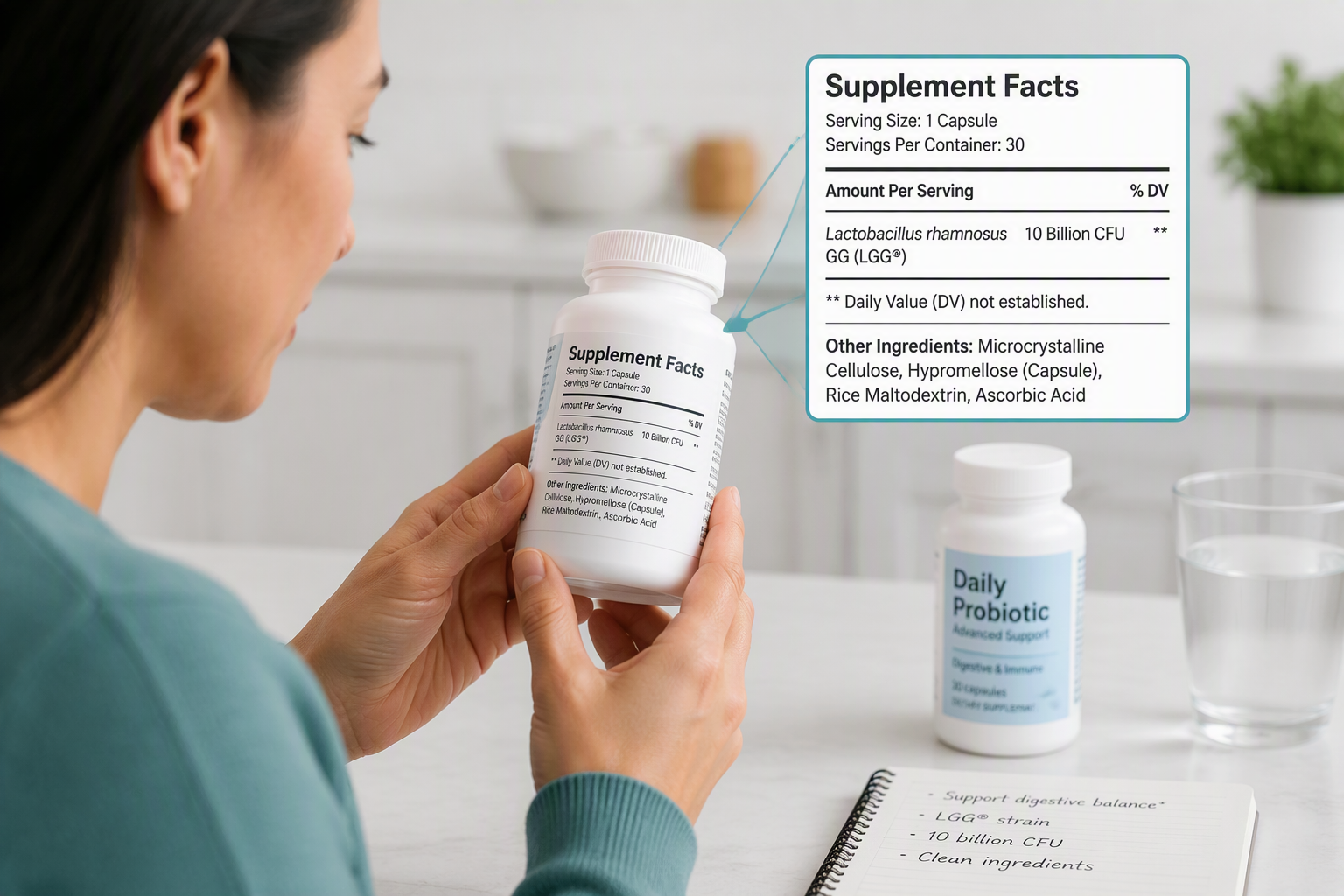
Culturelle is a family of over-the-counter probiotic supplements centered on Lactobacillus rhamnosus GG (LGG), not one interchangeable product. A Culturelle probiotic review should identify the exact formula first, because the brand name alone does not reveal its ingredients, probiotic dosage, or intended use. Older flagship capsule labels guaranteed 10 billion live cells per capsule.
Culturelle benefits are marketed around digestion, regularity, and restoring digestive balance. Those are dietary-supplement claims, not Food and Drug Administration-approved medical treatment claims. Culturelle is not a cure for irritable bowel syndrome (IBS), and it cannot guarantee relief from bloating.
LGG is the starting point when considering a probiotic for digestive health, rather than proof that a product fits your symptoms. Its stronger evidence relates to antibiotic-associated diarrhea and diarrhea in children, not broad IBS symptom control. That distinction matters because probiotic research applies to the specific strain and outcome studied.
Formula details can change both the evidence question and tolerability. Culturelle Digestive Daily supplies 10 billion colony-forming units (CFU) of LGG per capsule, while Pro Strength supplies 12 billion CFU and is marketed as a synbiotic, meaning it combines a probiotic with a prebiotic. Inulin or chicory-root fermentable fibers in some formulas may worsen gas or bloating for sensitive readers.
Before buying, check the label for:
- Product name: Confirm the specific Culturelle Digestive Health formula.
- Named strain: Look for LGG rather than only a general probiotic blend.
- CFU amount: Compare the live-cell amount per serving.
- Added ingredients: Note prebiotics and other active ingredients that could affect tolerance.
A Culturelle review should assess the exact bottle, not front-label promises or customer ratings. Probiotic formulas measured against their evidence all face the same test of strain, formula, and symptom fit. Results vary, and persistent, severe, or worsening digestive symptoms warrant advice from a qualified healthcare professional.
What Features Does Culturelle Probiotic Offer?
Once the exact formula is identified, Culturelle offers capsules, chewables, gummies, powders, and infant drops across its Culturelle Digestive Health, Health and Wellness, Pro-Well, Kids, and Baby lines. Format and age labels do not make these products interchangeable. Before choosing a probiotic for digestive health, compare each Supplement Facts panel for named organisms, CFU, and added ingredients.
Product or line | Format and audience | Organisms and CFU | Label details to weigh |
|---|---|---|---|
Culturelle Digestive Daily | Adult capsule | LGG, 10 billion CFU | A simpler LGG option in a 30-count bottle |
Culturelle Pro Strength | Adult capsule | LGG, 12 billion CFU | A synbiotic probiotic formula that may include inulin or chicory root |
Culturelle Kids | Chewables, gummies, and powders | Varies by product | Check sweeteners, flavors, vitamins, prebiotic fiber, strain count, and CFU |
Baby Immune and Digestive Support Drops | Infant drops | LGG, Bifidobacterium animalis BB-12, and vitamin D | Five daily drops create a distinct infant formula |
If you want LGG with fewer added variables, Culturelle Digestive Daily is the clearer adult starting point. Culturelle Pro Strength requires a tolerance-focused comparison beyond probiotic dosage. Its prebiotic ingredients may aggravate gas or bloating in people sensitive to fermentable fibers.
Kids products can be easier to take, yet they are not simply child-sized adult capsules. Prioritize ingredients that could affect your child's tolerance, especially if your child has a sensitive stomach. A Kids label does not show condition-specific effectiveness.
The same label-reading standard applies to Seed’s 24-strain synbiotic and its label, since a larger strain count does not reveal the amount of each strain. Baby Immune and Digestive Support Drops need age-specific label review.
Results vary by person, and persistent, severe, or worsening digestive symptoms, including infant symptoms, warrant guidance from a qualified healthcare professional.
Does LGG Meet the Strain Standard?
Culturelle meets a meaningful strain-identification standard because its label names Lactobacillus rhamnosus GG, commonly called LGG. The “GG” is the strain identifier, meaning you can connect the organism in the bottle with research on that specific strain. A label that lists only Lactobacillus, or even only Lactobacillus rhamnosus, does not provide the same evidence trail.
That clear labeling makes Culturelle a named strain probiotic in a market where many products name broad species or list blends without strain codes. Still, identification is not a guarantee of symptom relief. Probiotic strains within the same species can have different effects, and research on LGG does not automatically apply to every Lactobacillus rhamnosus product.
Across Culturelle formulas, the strain should remain identifiable as LGG, even when the product name, capsule count, CFU guarantee, and added ingredients differ:
- Culturelle Digestive Daily: This formula lists 10 billion CFU per capsule of LGG.
- Culturelle Pro Strength: This option lists 12 billion CFU of the same Lactobacillus rhamnosus GG strain.
- Added ingredients: Some formulas include prebiotic fibers such as inulin or chicory root, which may worsen bloating or discomfort if you are sensitive to fermentable fibers.
The higher CFU count in Pro Strength does not make it a different strain or automatically produce stronger results than Culturelle Digestive Daily. For someone who wants LGG with fewer variables to consider, checking the full ingredient panel matters as much as comparing CFU numbers.
LGG’s traceable identity is a real strength, but it is separate from condition-specific effectiveness. Its named status does not mean it will help manage every digestive concern, including IBS symptoms, so the relevant evidence must match the strain, formula, and symptom you hope to address.
Which Formula Has Fewer Added Variables?
Culturelle Digestive Daily offers a direct way to assess LGG without extra probiotic strains. Its 30-count capsule provides 10 billion CFU of LGG per serving, with no added probiotic strain or highlighted prebiotic. That makes it the closest practical match between LGG research and the product in your hand, although LGG evidence does not apply equally to every digestive symptom.
Rather than simply being a higher-dose option, Culturelle Pro Strength is a distinct product. This 60-count formula supplies 12 billion CFU and is marketed as a synbiotic probiotic, meaning it pairs probiotic bacteria with a prebiotic. Several Culturelle formulas include inulin or chicory root fiber, which can be a meaningful tolerability variable if fermentable fibers worsen your gas, bloating, or discomfort, but a higher CFU count does not automatically make Culturelle Pro Strength a closer match to LGG evidence.
Other Culturelle formats also deserve separate consideration. Capsules, chewables, gummies, powders, and infant drops may contain sweeteners, flavorings, allergens, vitamins, age-specific nutrients, or additional organisms. Baby Immune and Digestive Support Drops combine LGG with Bifidobacterium animalis BB-12 and vitamin D, so any change cannot be attributed to LGG alone.
When comparing labels, check these details:
- Active ingredients: Match the named strain to the strain studied for your concern, and note any additional organisms.
- Added fibers: Look for inulin or chicory root if fermentable fiber tends to aggravate symptoms.
- Other additions: Review vitamins, sweeteners, flavorings, and inactive ingredients that could affect your experience.
A simpler formula is not automatically more effective, but it makes symptom changes easier to interpret.
What Does LGG Evidence Actually Support?
LGG has its clearest clinical history in certain diarrhea settings, not as a broad answer for every digestive symptom. A named strain is useful because it can be matched with probiotic clinical studies, but the condition, population, dose, and outcome studied still determine what a product may reasonably help with. Culturelle’s lactobacillus rhamnosus GG evidence does not automatically extend to IBS, daily bloating, or recurring abdominal pain.
The most relevant LGG findings involve prevention or short-term acute illness:
- Travelers’ diarrhea prevention: A 1997 placebo-controlled study of 245 adults traveling internationally found that participants taking LGG had about half the risk of travelers’ diarrhea. This older result is encouraging for prevention, but it does not mean a probiotic for diarrhea will prevent illness on every trip or help with IBS symptoms.
- Antibiotic-associated diarrhea prevention: In a 1999 pediatric study, diarrhea occurred in 8% of children taking LGG and 26% of those taking placebo. That makes LGG a more evidence-aligned probiotic for antibiotic-associated diarrhea when antibiotics temporarily disrupt the intestinal microbiome. A review of LGG and antibiotic-associated diarrhea supports this narrower use case (source).
- Acute infectious diarrhea in children: A 2000 study of 287 children in 10 countries found that LGG shortened infectious diarrhea by about one day compared with placebo. This was a pediatric acute-illness outcome, not evidence that LGG treats unexplained ongoing diarrhea, recurring pain, or a possible gastrointestinal infection.
If you are considering a probiotic for antibiotic associated diarrhea, ask a clinician or pharmacist whether LGG suits your medication schedule and health history. For abdominal pain specifically, UltraFlora’s 299v and its abdominal-pain trial is the closer strain match. Prevention during an antibiotic course is different from treating an established, chronic digestive pattern.
According to Culturelle product labels, Digestive Daily provides 10 billion CFU, while Pro Strength provides 12 billion CFU. A higher CFU amount does not turn diarrhea-focused research into reliable evidence for IBS-related bloating, abdominal pain, stool frequency, stool consistency, or overall symptom relief. The same principle applies when comparing Culturelle with Physician’s Choice, the high-CFU budget pick: quantity does not replace strain-specific, condition-specific evidence.
Culturelle may fit better when travel-related, antibiotic-associated, or acute infectious diarrhea is the concern. Its role is less certain when bloating, pain, and irregular stools are your main symptoms. Results vary by person, and persistent, severe, or worsening digestive symptoms deserve evaluation from a qualified healthcare professional rather than self-treatment with a probiotic.
How Does Culturelle's Cost Compare?
Beyond condition-specific evidence, Culturelle generally falls at the lower-cost end of retail strain-identified probiotics. In a probiotic cost comparison, it costs a fraction of many practitioner-channel formulas and subscription-focused synbiotics, though the shelf tag alone does not determine Culturelle value.
Daily supply matters more than the largest CFU number on the front label. A higher CFU count does not guarantee a better fit for your symptoms. Divide the bottle’s capsule count by its recommended serving size to see how long it will last. A larger bottle is only better value when it contains the formula you want to try.
A useful label comparison includes:
- Daily supply: Check the number of capsules recommended each day before comparing bottle sizes.
- Named strain: Culturelle identifies Lactobacillus rhamnosus GG, or LGG, for strain-specific comparison.
- Added ingredients: Some Culturelle formulas are marketed as synbiotics and include prebiotic inulin or chicory root. These fermentable fibers can worsen gas, bloating, or discomfort for sensitive people.
For an LGG trial with fewer added variables, plain Digestive Daily is the cleaner option. A higher-strength product is not automatically the better buy if added prebiotics make it harder to tell what affects your symptoms.
The most useful formula matches the outcome you care about and fits a consistent trial. Shelf stability and a routine you can maintain often matter more than a small difference in price.
You can confirm the current LGG dose, capsule count, and storage guidance on the Culturelle Digestive Daily listing before you buy, since formulas and pack sizes get revised.
What Are Culturelle Probiotic’s Pros and Cons?
Culturelle’s use of Lactobacillus rhamnosus GG (LGG) supports strain-specific comparison. That makes this Culturelle review easier to evaluate because research can be tied to the organism on the label. LGG has better support for antibiotic-associated and pediatric diarrhea than for IBS symptom relief, so Culturelle benefits should not be assumed to include dependable relief from bloating, pain, or irregular bowel habits.
Practical advantages include:
- Clear strain identity: LGG gives you more useful label detail than a product that names only a species.
- Shelf-stable options: Most Culturelle products are shelf-stable when stored as directed on the package, which can simplify probiotic storage compared with refrigerated products.
- Broad daily-use formats: The range includes capsules, chewables, gummies, powders, and infant drops. These formats and their formulas are not interchangeable.
- Formula choice: Digestive Daily contains 10 billion colony-forming units (CFU), while Pro Strength contains 12 billion CFU. A higher CFU count alone does not make Pro Strength the better fit.
Formula details matter if fermentable fibers worsen your symptoms. When you want LGG with fewer added variables, Digestive Daily is the simpler starting option, while Pro Strength is marketed as a synbiotic and may include prebiotics such as inulin or chicory root, which can aggravate bloating for people sensitive to fermentable fibers.
Potential limitations include:
- Uncertain IBS benefit: A named strain helps you assess the evidence, but it does not promise that the product will improve IBS symptoms.
- Adjustment effects: Culturelle side effects may include gas, bloating, loose stools, nausea, upset stomach, and occasional allergic reactions, especially early in use.
- Limited oversight: The Food and Drug Administration (FDA) does not review probiotic supplements for effectiveness before sale as it does prescription medicines.
Stop use and seek medical advice for severe or persistent effects. Persistent, worsening, or severe digestive symptoms deserve individualized evaluation, since a named strain and shelf-stable packaging cannot confirm that a particular Culturelle formula suits your symptoms or tolerance.
Is Culturelle Probiotic Worth It?
After weighing those practical advantages and limitations, Culturelle can be a reasonable purchase when you specifically want LGG for an evidence-matched purpose. In this Culturelle probiotic review, the main takeaway is simple: brand familiarity and a large colony-forming unit CFU number do not show whether a formula fits your symptoms.
LGG has better support for preventing antibiotic-associated diarrhea, infectious diarrhea, and travelers' diarrhea than for broad digestive complaints. Culturelle's digestion, regularity, and immune-support marketing should not substitute for evidence tied to the concern you want to address.
For irritable bowel syndrome, the limitation matters. LGG does not have strong enough evidence for overall IBS symptom control to make Culturelle a reliable choice for bloating, abdominal pain, stool changes, or global symptom relief. Diarrhea-prevention findings do not show that LGG will help manage IBS. Persistent, severe, or worsening symptoms need evaluation from a qualified healthcare professional.
The specific product matters more than the Culturelle name. Check that the Supplement Facts panel identifies LGG, guarantees CFUs through the expiration date, and lists all added ingredients.
Formula | Practical fit |
|---|---|
Digestive Daily | A simpler LGG starting point when you want fewer added variables. |
Pro Strength | A synbiotic with a prebiotic, which may worsen symptoms if you are sensitive to fermentable fibers such as inulin or chicory root. |
For an IBS-focused purchase, compare the named strain and the symptom studied, not the brand or CFU count alone. Align's Bifidobacterium longum subsp. infantis 35624 has stronger IBS trial support. Metagenics UltraFlora Intensive Care is relevant only if its label specifically identifies Lactiplantibacillus plantarum 299v, since similarly named formulas can contain different organisms.
Probiotic drug interactions are uncommon, but speak with a clinician or pharmacist if you take prescription medicines, are immunocompromised, or have a serious medical condition.
Who Should Use Culturelle Probiotic?
Culturelle Digestive Daily may fit adults who specifically want LGG instead of a broad blend of probiotic strains without clearly identified clinical strain codes. Each serving provides 10 billion CFU of LGG, making it a reasonable option for a modest digestive-support trial, including during or after antibiotics. LGG has more relevant evidence in that setting than for overall IBS symptom control, and results vary by person.
Formula details matter if gas or bloating is already a concern. Digestive Daily has fewer added variables, while Culturelle Pro Strength provides 12 billion CFU and is marketed as a synbiotic, meaning it combines a probiotic and prebiotic. Inulin or chicory root in some formulas may aggravate symptoms in people sensitive to fermentable fibers, so check the Supplement Facts panel for the exact product.
LGG can be a strain-specific trial for irritable bowel syndrome, but it is not as well supported for broad IBS relief as Align, the best-evidenced IBS strain. Probiotic clinical studies apply to the specific organism and formula tested, not every product on the shelf. If symptoms disrupt meals, work, sleep, or daily routines, a clinician or registered dietitian can help determine whether a probiotic, dietary change, or another treatment better fits your bowel pattern and triggers.
A probiotic for diarrhea may be worth discussing with a healthcare professional, particularly when diarrhea began with antibiotics or keeps returning. Follow package directions and consider starting cautiously. Keep these boundaries in mind:
- Possible effects: Gas, bloating, diarrhea, nausea, or allergic reactions can occur.
- Extra guidance needed: Children, people who are pregnant or breastfeeding, and those with weakened immune systems or short bowel syndrome should consult a qualified healthcare professional before use.
- Medical evaluation: Seek care for severe, persistent, worsening, or unexplained symptoms, especially weight loss, bleeding, fever, or dehydration.
Culturelle does not replace diagnosis, prescribed treatment, or medical care.
How Does LGG Compare With Other IBS Strains?
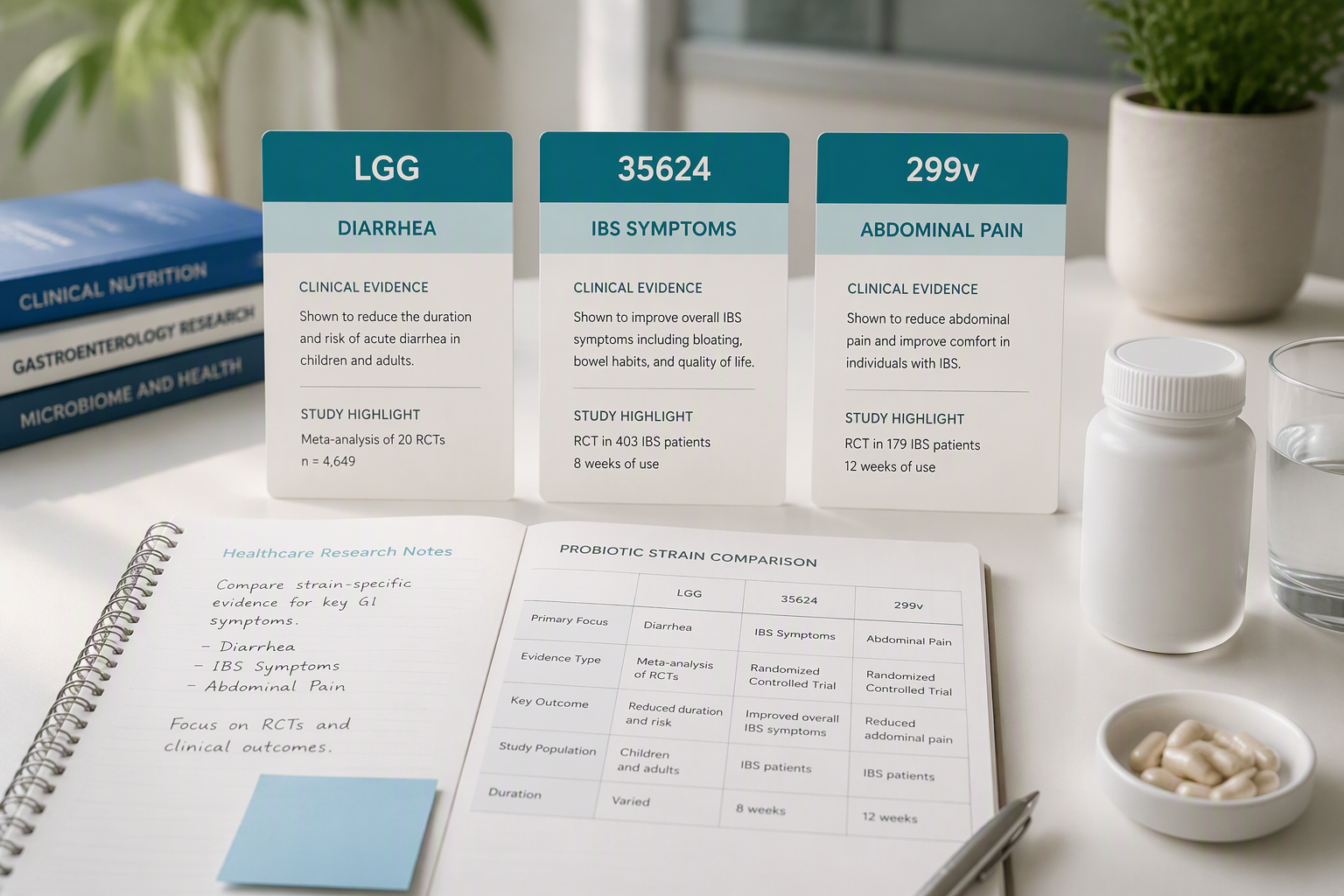
When IBS is the focus, Culturelle’s LGG is neither automatically better nor worse than Align for IBS. Each uses a different identified strain, so the most useful choice depends on your main symptom and the research behind that strain, not brand recognition, user ratings, or colony-forming unit counts.
LGG has its strongest evidence for acute diarrhea and antibiotic-associated diarrhea, with less certain relevance to travelers’ diarrhea. Those findings do not show that LGG improves broad IBS symptoms such as bloating, abdominal pain, constipation, diarrhea, or changing stool patterns. Culturelle is not an evidence-equivalent substitute for a strain tested directly in people with IBS.
The strain-level comparison is more useful than the brand name:
Strain | Primary outcome studied | Key limitation |
|---|---|---|
Lactobacillus rhamnosus GG (LGG) | Acute and antibiotic-associated diarrhea | Limited direct evidence for overall IBS symptom relief |
Bifidobacterium longum subsp. infantis 35624 | Multiple IBS symptoms | Evidence is strain-specific and cannot guarantee individual relief |
Lactiplantibacillus plantarum 299v | Abdominal pain | Small study focused on pain, not all IBS symptoms |
In an earlier placebo-controlled IBS trial, 77 adults received 35624, another probiotic strain, or placebo, and 75 completed the study. The 35624 group did better than placebo on every measured symptom except bowel-movement frequency and consistency. Several authors were affiliated with University College Cork, while two were affiliated with Procter & Gamble, the strain’s manufacturer. That makes the result useful but worth reading as supportive evidence rather than a promise that Align will work for everyone.
Lactiplantibacillus plantarum 299v has narrower, pain-specific evidence. In a randomized trial of 40 people, all 20 participants receiving 299v reported abdominal-pain resolution, compared with 11 of 20 receiving placebo (source). The difference is striking, but the small study does not establish relief for bloating, stool changes, or IBS as a whole.
A few label details can help you avoid an unhelpful purchase:
- For IBS-related pain: Discuss the evidence for 35624 or 299v with a qualified healthcare professional rather than assuming LGG is the best fit.
- For diarrhea during or after antibiotics: LGG evidence is more relevant.
- For Culturelle formulas: Digestive Daily contains LGG with fewer added variables. Formulas containing inulin or chicory-root prebiotics may worsen symptoms if fermentable fibers trigger bloating or pain.
Labels may use older or newer genus names, so LGG, 35624, and 299v are more reliable identifiers than genus names alone. Persistent, severe, or worsening digestive symptoms deserve medical evaluation.
If you want to try Culturelle Digestive Daily, you can get it here.
Culturelle Probiotic Review FAQs
These FAQs cover Culturelle’s LGG strain, potential benefits, side effects, safety considerations, and how its formulations compare with other probiotics for digestive symptoms.
1. What Side Effects Can Culturelle Cause?
Culturelle side effects may include temporary gas, bloating, nausea, or looser stools when you first start taking it. Bloating and gas from probiotics can be more noticeable with formulas containing inulin or chicory root, especially if fermentable fibers trigger your symptoms. Digestive Daily has fewer added variables than some Culturelle formulas.
Stop use and seek urgent care for hives, trouble breathing, or swelling of the face, lips, tongue, or throat, which may signal an allergic reaction. Talk with a healthcare professional before use if you have a weakened immune system or short bowel syndrome, or if you are pregnant, breastfeeding, or considering it for a child.
2. Is Align or Culturelle Better?
Neither brand is automatically better, and neither can guarantee relief. Align’s Bifidobacterium longum subsp. infantis 35624 has stronger randomized-trial evidence for IBS-related bloating, pain, and bowel changes. Culturelle Digestive Daily contains 10 billion CFU of LGG, a simpler probiotic for antibiotic-associated diarrhea and pediatric diarrhea. Culturelle Pro Strength has 12 billion CFU but adds prebiotics that may worsen fermentable-fiber sensitivity. A probiotic for antibiotic associated diarrhea is not necessarily an IBS option, and probiotic drug interactions deserve a pharmacist’s review.
3. Can You Take Culturelle With Antibiotics?
Culturelle Digestive Daily contains LGG, which has stronger evidence for antibiotic-associated diarrhea than for IBS symptom control. In one pediatric study, diarrhea occurred in 8% of children taking LGG compared with 26% taking placebo, but adults may not have the same outcome. Culturelle does not treat an infection or replace your prescribed antibiotic course.
Follow the product label, and ask a pharmacist or healthcare professional whether probiotic and antibiotic doses should be separated. Confirm it is appropriate if you are seriously ill, immunocompromised, have a central venous catheter, or develop severe, persistent, or worsening diarrhea.
4. Does Culturelle Need Refrigeration?
Many Culturelle products are shelf-stable and generally don’t need refrigeration. Proper probiotic storage still matters, so keep the bottle sealed and away from heat and moisture. Check the directions on the exact package you buy, because Digestive Daily and Pro Strength may have different instructions and manufacturer guidance can change. If the label requires refrigeration, follow it. Bloating and gas from probiotics are more often related to the formula or your individual response than routine storage.