


When bloating, constipation, or unpredictable bowel habits are already disrupting your day, an expensive probiotic can look like a practical fix. Pendulum Akkermansia is not supported for IBS relief, although it is marketed around metabolic health. It is a refrigerated synbiotic that combines live Akkermansia muciniphila with chicory inulin, a fermentable fiber.
Its label lists 100 million AFU, a measurement that cannot be directly compared with CFU totals on other probiotic labels. The 12-week randomized trial in 76 adults with type 2 diabetes tested Pendulum's five-strain Glucose Control blend, not Pendulum Akkermansia. That trial's 0.6 percentage-point A1C difference versus placebo was not statistically significant.
Chicory inulin can increase gas, bloating, or abdominal discomfort in people sensitive to fermentable fibers. Persistent, severe, or worsening digestive symptoms need assessment from a qualified healthcare professional rather than self-treatment with a supplement.
Pendulum Akkermansia Key Takeaways
- Pendulum Akkermansia targets metabolic health, not IBS, bloating, constipation, or diarrhea.
- The product contains Akkermansia muciniphila and chicory inulin in a refrigerated capsule.
- Its 100 million AFU count cannot be directly compared with CFU label totals.
- Chicory inulin may worsen gas, bloating, or discomfort in people sensitive to fermentable fibers.
- A 12-week diabetes trial tested Pendulum's five-strain blend, not standalone Akkermansia.
- The trial's 0.6 percentage-point A1C difference versus placebo was not statistically significant.
- Refrigeration and using the bottle within six months of opening are practical requirements.
What Is Pendulum Akkermansia?
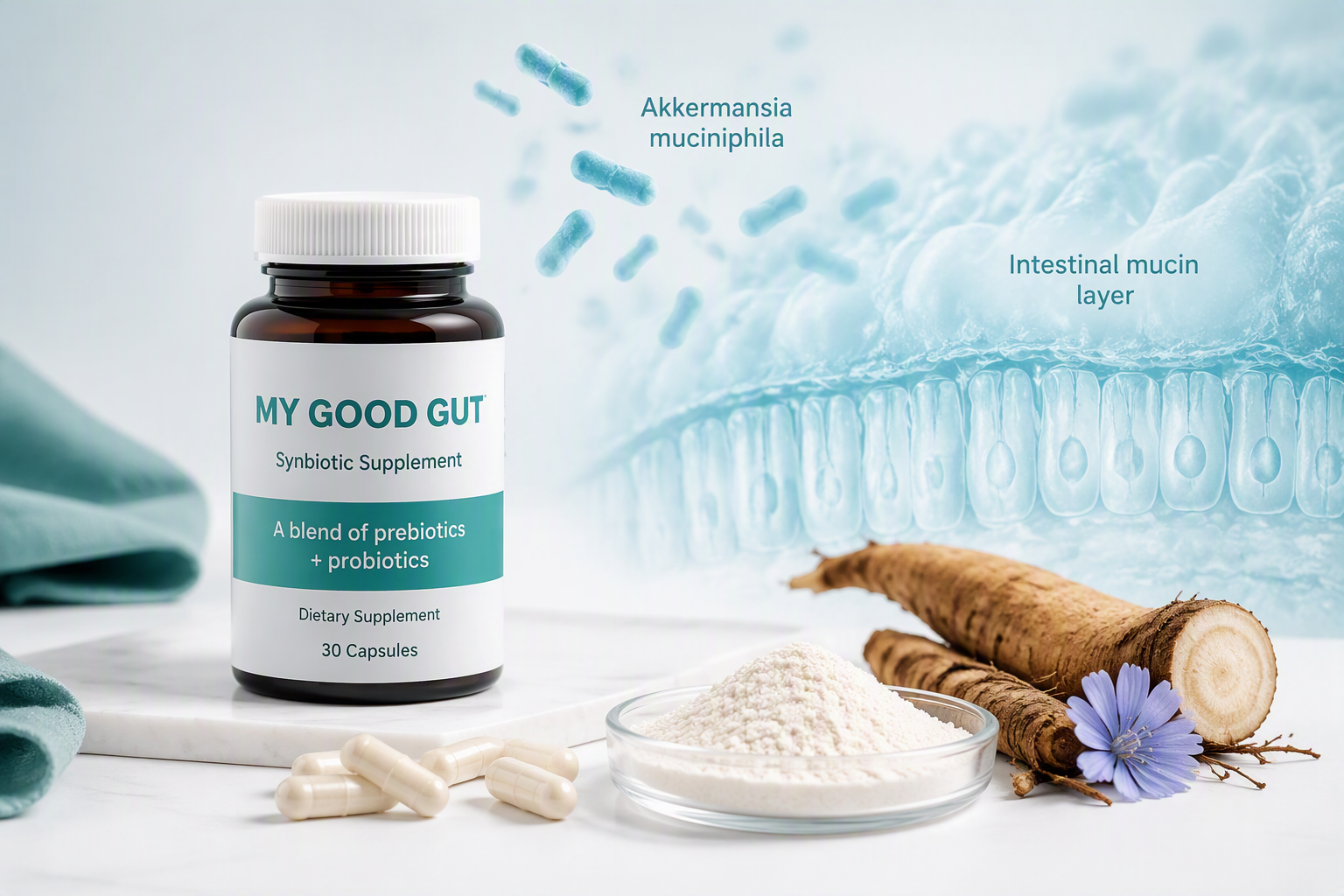
Pendulum Akkermansia is a refrigerated daily synbiotic that pairs live Akkermansia muciniphila with chicory inulin, a fermentable prebiotic fiber that can feed certain beneficial gut bacteria. This akkermansia muciniphila supplement is designed around metabolic health, not as a treatment for irritable bowel syndrome (IBS), bloating, constipation, or diarrhea. Pendulum Akkermansia is best considered if metabolic-health support is your goal, rather than relief from specific digestive symptoms.
Pendulum’s product messaging highlights GLP-1 production, referring to a hormone involved in appetite and blood sugar regulation. Research involving the gut mucin lining, metabolic markers, and Akkermansia does not show that this retail formula relieves day-to-day IBS symptoms. That distinction matters when bloating or irregular bowel habits are the reason you are considering a next generation probiotic.
The label lists 100 million active fluorescent units (AFU) and requires refrigeration. Refrigeration supports proper product handling, but it does not demonstrate greater effectiveness. AFU and colony-forming units (CFU) measure microbes differently, so this number should not be compared directly with the CFU totals on other probiotic labels.
Evidence also depends on the preparation studied. Research on Akkermansia muciniphila may examine live bacteria, pasteurized bacteria, or products prepared in other ways, and findings from one form do not automatically apply to another. A useful buying question is whether a study matches both Pendulum’s formulation and the outcome you want, especially metabolic markers versus digestive symptom relief.
Chicory inulin is a practical limitation for people who are sensitive to fermentable fibers. It may be well tolerated by some people but can worsen discomfort when bloating or irregular bowel habits are already active. Digestive probiotics beyond metabolic formulas puts this kind of label detail alongside other products.
Persistent, severe, or worsening symptoms need evaluation from a qualified healthcare professional rather than self-treatment.
What Features Does Pendulum Akkermansia Offer?

Pendulum Akkermansia is positioned around metabolic health. Pendulum’s label identifies Akkermansia muciniphila and uses AFU per serving. Without a disclosed strain code, you cannot match this product precisely to research on a particular organism.
Pendulum’s 100 million AFU and CFU labels need product-specific context. A useful label review considers:
- Named organism: Whether the species matches your health goal.
- Strain identity: Whether a strain code is available for comparison with published research.
- Dose format: Whether the listed measurement system is meaningful for that product.
- Evidence: Whether studies apply to the exact organism and intended outcome.
- Personal fit: Whether the formula suits your symptoms and tolerance.
Pendulum Akkermansia and Pendulum Glucose Control differ in both complexity and added fermentable ingredients:
Product | Organisms | Added ingredients | Practical consideration |
|---|---|---|---|
Pendulum Akkermansia | Akkermansia muciniphila only | Chicory inulin | A streamlined refrigerated probiotic with a fermentable prebiotic ingredient |
Pendulum Glucose Control | A. muciniphila, Clostridium butyricum, Clostridium beijerinckii, Anaerobutyricum hallii, and Bifidobacterium infantis | Chicory inulin and oligofructose | Its added prebiotic fiber may worsen symptoms for people sensitive to fermentable fibers |
The acid-resistant capsule is intended to help protect its contents through the stomach. Refrigeration can complicate travel or an inconsistent routine, and Seed, a broad synbiotic with a prebiotic, illustrates why more strains do not automatically create clearer evidence.
Amazon lists about 4.3 stars from roughly 1,300 reviews, but customer ratings cannot predict whether a supplement will help your symptoms. Garden of Life’s high-potency blend offers another reminder that organism counts and storage needs alone should not drive a purchase.
Pendulum’s glucagon-like peptide-1 (GLP-1) marketing also needs context. GLP-1 helps regulate appetite and blood sugar, but supporting its production does not make this product equivalent to a GLP-1 medication or establish IBS symptom benefits. Follow the package directions, and seek advice from a qualified healthcare professional for persistent digestive symptoms, especially when they are severe or worsening.
Does the Label Identify the Exact Organism?
Pendulum’s label identifies more than many probiotic labels: it names Akkermansia muciniphila and gives the strain code WB-STR-0001. That level of detail matters because strain-specific evidence applies to the particular organism studied, not automatically to every product carrying the same species name. Still, the code reflects what Pendulum says is in the capsule. It does not establish that the finished product will deliver a particular result for you.
The main limitation is dose transparency. Pendulum Metabolic Daily lists 300 million AFU across five strains:
- Akkermansia muciniphila: WB-STR-0001
- Clostridium butyricum: Included in the blend
- Clostridium beijerinckii: Included in the blend
- Anaerobutyricum hallii: Included in the blend
- Bifidobacterium infantis: Included in the blend
Pendulum does not disclose how much of the 300 million AFU comes from WB-STR-0001 alone. Without that number, you cannot determine whether the product provides the same strain dose used in a specific study. AFU and CFU also measure different things, so an AFU total should not be compared directly with CFU counts on other probiotic labels.
Similar product names add another chance for mix-ups. Pendulum Akkermansia is the single-organism formula with 100 million AFU, while Pendulum Metabolic Daily is the five-strain blend. Neither a product name, species name, nor the WB-STR-0001 code establishes clinical equivalence unless the tested formula, dose, participants, and outcome match. Its metabolic-health marketing does not establish relief for IBS, bloating, constipation, or diarrhea.
Why Can’t AFU and CFU Be Compared?
AFU and CFU are different measurement systems, not shared potency grades for comparing probiotic brands. CFU estimates microbes able to form colonies under specified lab conditions. AFU is Pendulum’s viability-related count. Pendulum Akkermansia’s 100 million AFU therefore cannot be converted to billions of CFU or ranked against those labels by number alone.
A refrigerated probiotic labeled 100 million AFU is not automatically weaker than a refrigerated formula labeled 85 billion CFU. The larger CFU count also does not make that formula a better fit for your goal, whether you are considering metabolic markers such as postprandial blood glucose and glucose spikes or hoping for digestive symptom relief. Label counts need context:
- Measurement method: AFU and CFU rely on different laboratory testing systems.
- Organism and formulation: Microbes can behave differently in a capsule and after they are taken.
- Storage through expiration: Refrigeration and testing through the expiration date affect what a viability statement means.
- Product-specific evidence: Research should apply to the named organism and the outcome that matters to you.
Total count and strain count are only starting points. A blend may list many strains but withhold the amount of each, so you cannot compare a specific strain with the dose used in human research.
An AFU or CFU claim also does not show that a product reaches the gut in a meaningful amount or improves bloating, bowel habits, or IBS symptoms. Pendulum is marketed for metabolic health, not as a treatment for IBS, constipation, diarrhea, or bloating, so weigh evidence for Akkermansia muciniphila against your specific goal rather than making cross-brand count comparisons.
What Do GLP-1 Claims and Research Show?
Pendulum’s “natural GLP-1” message refers to normal, meal-related hormone signaling, not an effect comparable to GLP-1 medications. Specialized gut cells release GLP-1 after you eat. Fermentation and shifts in the gut environment may influence that short-lived signal, making GLP-1 production a plausible area of metabolic research. It does not show that this supplement reliably changes appetite, weight, blood sugar, or digestive symptoms for every person.
Prescription GLP-1 receptor agonists work differently. These medicines are designed to activate GLP-1 receptors more strongly and for longer than the body’s usual hormone release after a meal. Pendulum Akkermansia is a dietary supplement, not a replacement for prescribed diabetes care, medication-based weight management, or other medical treatment.
The proposed connection between Akkermansia muciniphila and metabolic signaling is biologically plausible but indirect for this specific product. Research links the organism with the gut mucin lining, gut-barrier function, and microbial activity that may support short-chain fatty acid production (source). Those fatty acids may affect satiety-related pathways, insulin release, liver glucose output, gastric emptying, and GLP-1 release. A possible mechanism is not the same as a demonstrated benefit from one capsule.
Chicory inulin is the formula’s other relevant ingredient. This prebiotic fiber can be fermented by certain gut microbes into short-chain fatty acids, including propionate, which may contribute to GLP-1 signaling after meals. The response depends on your existing microbiome and tolerance for fermentable fiber. If you are prone to gas, bloating, or abdominal pressure, inulin may be a drawback rather than a benefit. Culturelle’s LGG without an added prebiotic is a simpler starting point when fermentable fiber is the problem.
Pendulum identifies A. muciniphila at 100 million AFU, along with chicory inulin. AFU and CFU are different measurements, so 100 million AFU cannot be directly compared with the billions of CFU listed on other products. That matters when weighing probiotics for metabolic health.
The key evidence limits are:
- Formula match: Research on Akkermansia as a species, inulin alone, or a different multi-strain product does not automatically apply to Pendulum’s exact combination and dose.
- Symptom relevance: Direct human outcome research on the finished formula is limited or unavailable, and its metabolic-health positioning does not establish relief of IBS, constipation, diarrhea, or bloating.
- Purchase fit: This metabolic health probiotic may suit you if you specifically want a refrigerated synbiotic and accept variable results. It is not a well-supported purchase for treating IBS symptoms.
Digestive symptoms can have many causes, so persistent, severe, or worsening symptoms warrant a qualified healthcare professional’s assessment. Results vary by person, and supplement advice should be individualized.
What Do Storage and Marketplace Feedback Mean?
Refrigeration is a practical requirement for Pendulum Akkermansia, not a minor label detail. As a refrigerated probiotic, it needs dependable cold storage at home and during travel. Check the package soon after delivery, especially if it arrives warm, damaged, or poorly sealed. Temperature problems can affect product quality, but they do not show that the supplement is ineffective or unsafe for every person.
Pendulum’s published formulation guidance recommends refrigeration and using the bottle within six months of opening. This is a freshness and handling window, not a promise of metabolic changes or relief from bloating, constipation, diarrhea, or IBS symptoms. Contact the seller or manufacturer before using a bottle that is past its use-by guidance, stored improperly, or has a changed seal or appearance.
A few practical details matter before you buy:
- Home storage: Keep the bottle refrigerated rather than on the counter between doses.
- Travel: Consider whether you can maintain refrigeration during flights, hotel stays, or frequent overnight trips.
- Delivery condition: A warm or compromised package warrants a replacement inquiry, not an assumption that the product will harm you.
Pendulum says its products undergo third-party testing. That claim is most useful when the company shares what was tested and the results, including organism identity, potency, contaminants, and testing dates. ConsumerLab tested two Pendulum Therapeutics products, approving one and not approving the other. That finding does not rate Pendulum Akkermansia specifically or establish clinical benefit.
Amazon reports 4.3 stars from about 1,300 reviews and roughly 5,000 recent monthly purchases. Reviews can help identify patterns around shipping, capsule convenience, taste, cost, and tolerability, but they cannot establish GLP-1 effects, metabolic improvements, IBS treatment, or safety for everyone. Pendulum Metabolic Daily is a separate product, so its marketplace feedback does not apply to Akkermansia.
How Does Pendulum Akkermansia's Cost Compare?
Beyond the storage and marketplace considerations, Pendulum Akkermansia may be a premium-priced single-organism probiotic, so compare its cost with current retail capsule prices before deciding whether the formula is worth it. Its value is strongest if you specifically want Akkermansia muciniphila and its metabolic-health positioning, not if you are testing a supplement for bloating, constipation, diarrhea, or IBS.
The related Pendulum formulas are not interchangeable:
- Pendulum Akkermansia: A single-strain probiotic containing the named Akkermansia organism.
- Glucose Control: Five probiotic strains plus chicory inulin and oligofructose, prebiotic fibers that may aggravate symptoms for people sensitive to fermentable fibers.
- Metabolic Daily: The same five strains as Glucose Control, but with a much lower AFU count.
For Pendulum Akkermansia value, use AFU and CFU figures only alongside formulation transparency and outcome-specific evidence. Pendulum's AFU count should not be compared directly with the billion-CFU figures on other labels. Although naming the organism clearly is a real advantage for Pendulum Akkermansia value, formulation transparency does not establish digestive symptom relief.
Convenience matters, too. This refrigerated probiotic needs cold storage, insulated shipping, and delivery timing that avoids a package sitting out too long. That can make travel, missed deliveries, and limited refrigerator space more of a concern than with a shelf-stable capsule.
Pendulum's Amazon listing may reflect customer interest, packaging, or individual experiences. Those figures may reflect customer interest, packaging, or individual experiences, but reviews cannot show that the product works for a medical symptom.
Before purchasing, verify the subscription cancellation policy and the product-specific money-back window. A guarantee and third-party testing can lower purchase risk, yet neither confirms benefits for IBS, bloating, constipation, or diarrhea. Marketing claims about metabolism, appetite, mood, or energy also lack clinical-trial confirmation.
Verify the current subscription terms, refund window, and cold-chain shipping details on the Pendulum Akkermansia listing before you order, since these terms change.
What Are Pendulum Akkermansia’s Pros and Cons?
Beyond cost and convenience, Pendulum Akkermansia is a transparent, metabolism-focused supplement, not a treatment for IBS, bloating, constipation, or diarrhea. This Pendulum Akkermansia review finds that its clearest strength is the named-organism label, while refrigeration and limited research on the exact product matter if digestive symptom relief is your goal.
Its main strengths include:
- Named organism: Pendulum identifies Akkermansia muciniphila and lists 100 million active fluorescent units (AFU) instead of placing it in a proprietary blend.
- Clear metabolic positioning: Interest in A1C reduction, postprandial blood glucose, and glucose spikes helps explain why Akkermansia is marketed for metabolic health.
- Shopper interest: The marketplace listing reports a 4.3-star average from about 1,300 reviews and roughly 5,000 recent monthly purchases. Those ratings do not show that it relieves IBS or bowel symptoms.
AFU and colony-forming units (CFU) use different measures of viability, so 100 million AFU cannot be fairly compared with labels reporting billions of CFU. A useful Pendulum probiotic review looks for strain-specific evidence and interpretable doses, not the largest-looking number.
Pendulum Akkermansia itself is the single named-organism product. The five-strain, multi-prebiotic design belongs to Pendulum’s Glucose Control or Metabolic Daily sibling formula, where complementary organisms and fermentable substrates are intended to support Akkermansia rather than serve as a complete gut-health solution.
Its limits deserve equal weight:
- Prebiotic tolerance: Fermentable fibers may increase gas or bloating, especially during a symptom flare.
- Refrigeration: Cold storage can make travel, warm-weather delivery, and a low-maintenance routine harder.
- Unclear per-strain amounts: A total AFU count does not let you match each organism to a studied dose.
- Limited finished-product evidence: Human research on the complete five-strain blend is short, small, lacks major vascular outcomes, and has no additional trials of the full formulation. Metabolic research does not establish digestive-symptom relief.
One independent quality review approved one of two tested Pendulum products, which makes current, product-specific quality information worth checking. Consult a qualified healthcare professional for persistent, severe, or worsening digestive symptoms.
Is Pendulum Akkermansia Worth It?
Weighing those pros and cons, Pendulum Akkermansia is a premium, low-certainty option if you specifically want Akkermansia muciniphila for metabolic-health goals and can refrigerate it. It is not a high-confidence choice for broad digestive wellness, and it should not be purchased to treat IBS, bloating, constipation, or diarrhea.
The label contains one organism, Akkermansia muciniphila, at 100 million AFU. AFU and CFU are different measurement systems, so you cannot compare this count with billion-CFU labels to judge potency or likely benefit. A clearly named strain is helpful, but a named organism still needs research that fits the result you want.
Pendulum's metabolic-health claims partly draw on a 12-week randomized proof-of-concept trial in 76 adults with type 2 diabetes. The study tested Pendulum's five-strain Glucose Control blend, not Pendulum Akkermansia, and compared with placebo, the blend lowered post-meal glucose response and total glucose exposure, but this does not show that this single-organism metabolic health probiotic improves digestive symptoms or insulin sensitivity.
The trial reported an A1C reduction difference of 0.6 percentage points versus placebo, but the finding was not statistically significant. Because A1C reflects average blood sugar over roughly three months, a 12-week study is also a limited assessment window. All authors worked for Whole Biome, Pendulum's predecessor, and no further human trials of that exact blend were reported. That makes the GLP-1 marketing frame more speculative than the label may suggest.
For an IBS-focused purchase, the key limits are clear:
- Symptom relevance: Metabolic research does not demonstrate relief for IBS, bloating, constipation, or diarrhea.
- Evidence match: Probiotics for metabolic health are not automatically supported for digestive symptom control.
- Alternative strains: Bifidobacterium longum subsp. infantis 35624 has randomized, placebo-controlled IBS evidence, although individual results vary.
A marketplace rating of about 4.3 stars from 1,300 reviews and the refrigerated, single-organism format may appeal if Akkermansia is your specific goal. Reviews cannot confirm metabolic or symptom benefits, so they are not a substitute for clinical evidence.
Digestive symptoms can have many causes, so seek a qualified healthcare professional for persistent, severe, or worsening symptoms rather than replacing evaluation or prescribed care with a supplement.
Who Should Use Pendulum Akkermansia?
For the narrower group for whom it may be worth considering, Pendulum Akkermansia may suit adults discussing insulin resistance, weight, or cardiometabolic risk with a qualified healthcare professional. It is marketed for metabolic health, not broad digestive support. A 2019 randomized trial studied 50 adults with overweight or obesity and insulin resistance, and 10 billion Akkermansia muciniphila organisms daily for three months were associated with better insulin sensitivity and modest body-composition changes.
Although overall gut microbiome structure did not meaningfully change, it may complement individualized nutrition, activity, and medical care but is not a stand-alone metabolic solution.
Pendulum Akkermansia is a poor match if you want direct relief from IBS, bloating, constipation, diarrhea, or abdominal discomfort. Marketing about GLP-1 production does not establish treatment for these symptoms. Naturally produced GLP-1 is not equivalent in potency or clinical use to GLP-1 receptor agonist medications, and this supplement cannot replace prescribed diabetes care.
Practical considerations include:
- Symptom relevance: Metabolic-health support should be your main reason for considering it, not expected IBS symptom relief.
- Label details: The product contains one named organism, Akkermansia muciniphila, at 100 million AFU. AFU and CFU are different measurement systems, so the count cannot be compared directly with CFU totals on other labels.
- Storage and ratings: Refrigeration is required. Marketplace listings report approximately 4.3 stars from 1,300 reviews and roughly 5,000 recent purchases, which reflect buyer interest rather than clinical effectiveness.
If cost, cold storage, or uncertain symptom relevance feels burdensome, skipping it is reasonable. Digestive symptoms can have many causes, and persistent, severe, or worsening symptoms need evaluation from a qualified healthcare professional.
If you want to try Pendulum Akkermansia, you can get it here.
Pendulum Akkermansia FAQs
These FAQs address common questions about Pendulum Akkermansia, including its metabolic-health focus, label, safety, digestive symptoms, and whether it fits your expectations.
1. How Long Does Pendulum Akkermansia Take to Work?
Akkermansia metabolic studies ran for about 12 weeks, not a few days. One three-month randomized, double-blind, placebo-controlled trial tested pasteurized Akkermansia, while a 12-week study of 76 people with type 2 diabetes tested Pendulum’s five-strain product, not standalone Pendulum Akkermansia. Neither timeline predicts IBS relief or an immediate GLP-1 effect. For bloating, bowel changes, or probiotic side effects, Align, a strain matched to IBS trials, may be more relevant, and persistent or worsening symptoms need medical guidance.
2. What Side Effects Can Pendulum Akkermansia Cause?
Pendulum Akkermansia may cause temporary gas, bloating, abdominal discomfort, or changes in stool frequency or consistency. Its chicory inulin is a fermentable fiber that feeds gut microbes but can also produce gas, especially during an IBS flare or if you’re sensitive to fermentable fibers. Oligofructose is associated with Pendulum’s separate Glucose Control product. For probiotic safety, these digestive changes do not prove the product is treating or worsening IBS, constipation, diarrhea, or bloating. It is marketed for metabolic health, not established symptom relief. Stop use and seek medical guidance for severe, persistent, worsening, or allergic symptoms.
3. Can You Take Pendulum Akkermansia With Antibiotics?
Ask the clinician who prescribed your antibiotic or a pharmacist before starting or continuing Pendulum Akkermansia. They can review the specific drug, your health history, and whether symptoms need medical assessment. This is an important part of probiotic safety, and the supplement does not replace prescribed treatment.
Antibiotics may reduce the viability of bacterial supplements, while Pendulum Akkermansia also needs refrigeration. A clinician or pharmacist may suggest separating doses, but spacing does not establish effectiveness or prevent antibiotic-related digestive symptoms. Research on Pendulum’s complete formula has not shown benefit for antibiotic-associated diarrhea, bloating, or constipation. Seek qualified medical advice for new, severe, persistent, or worsening diarrhea during or after antibiotics.
4. Is Pendulum Akkermansia Safe During Pregnancy?
There isn’t enough pregnancy-specific research on refrigerated Pendulum Akkermansia, which contains Akkermansia muciniphila, to consider it safe during pregnancy. Marketing for metabolic health and use in nonpregnant adults do not establish safety for you or a developing baby. It is not a treatment for pregnancy-related bloating, constipation, diarrhea, or IBS.
A 2013 mouse study cannot predict human pregnancy safety, and findings on other Akkermansia products or probiotic strains do not automatically apply. Ask your obstetric clinician before starting or continuing this supplement instead of self-treating digestive symptoms.