


No, IBS is not an autoimmune disease. That's worth saying plainly, because the question usually carries a quieter one behind it. If the tests keep coming back normal, why does it feel this bad, and is something being missed?
Those are two separate worries with two different answers. IBS is a disorder of gut-brain interaction, meaning the signalling between your gut and nervous system amplifies sensations that shouldn't hurt. It causes real pain without leaving what an autoimmune condition leaves behind, such as antibodies, measurable inflammation, or visible tissue damage.
The second worry deserves more room than most articles give it. Some conditions genuinely are autoimmune, and several of them resemble IBS in the early stages. Below you'll find the hallmarks that separate IBS from IBD, ten look-alike conditions with the clue and first test for each, and seven questions worth bringing to your next appointment.
IBS vs IBD Key Takeaways
- IBS is not classified as an autoimmune disease.
- IBS affects gut function and sensitivity without typically damaging intestinal tissue.
- IBD causes ongoing inflammation, ulcers, and possible structural damage.
- Celiac disease, microscopic colitis, and thyroid disease can resemble IBS.
- Local immune activation in some IBS cases does not establish autoimmunity.
- Blood, weight loss, fever, anemia, and nighttime symptoms warrant medical evaluation.
- Targeted tests help distinguish IBS from inflammation, celiac disease, and other conditions.
Is IBS an Autoimmune Disease or a Functional Disorder?
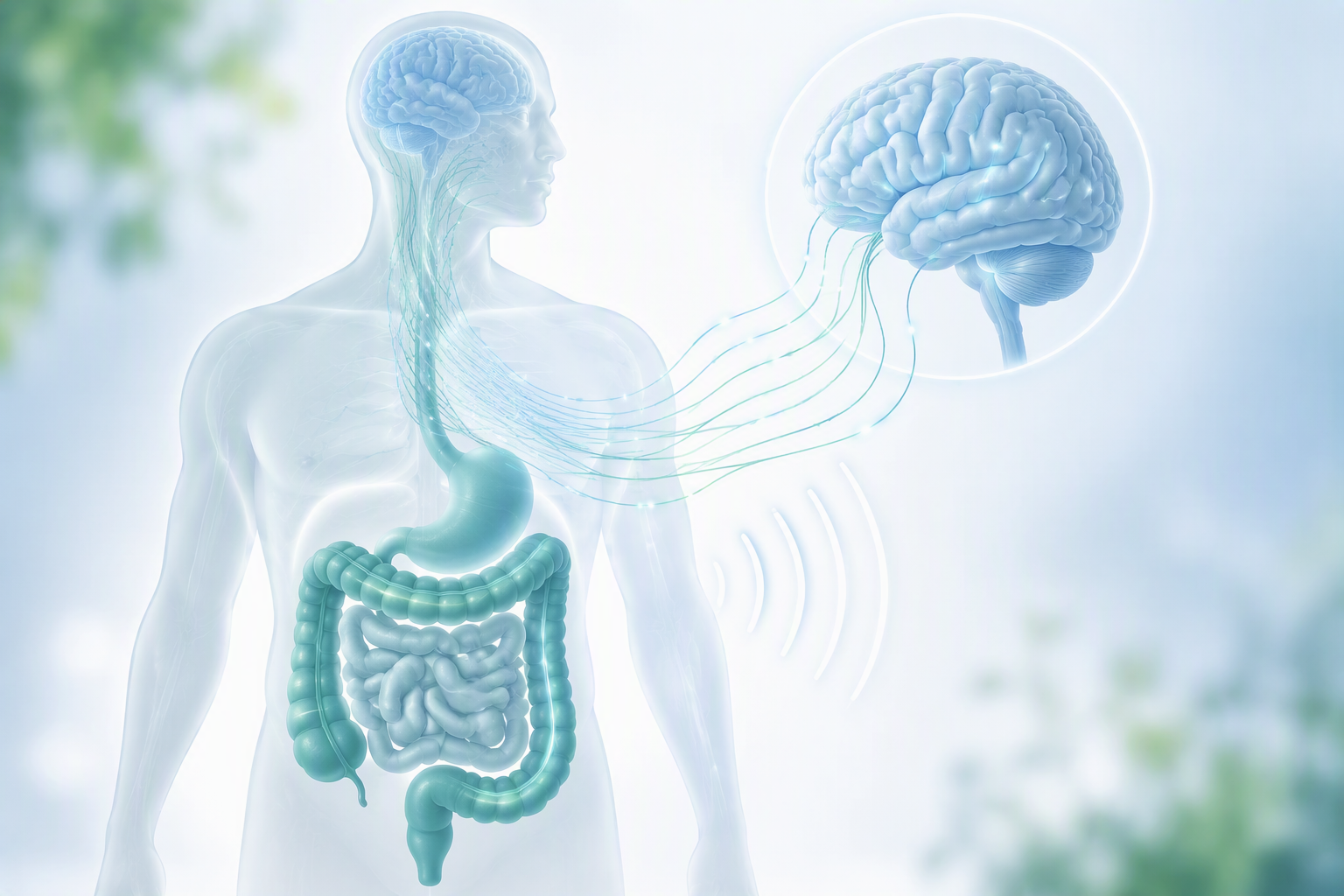
Irritable bowel syndrome (IBS) is not classified as an autoimmune disease. It isn't caused by an ongoing immune attack that destroys intestinal tissue. Instead, symptoms result from how the intestines, nerves, and brain respond to triggers.
IBS is a functional gastrointestinal disorder, also called a functional GI disorder. The intestines may look normal under a microscope, yet their function is disrupted. IBS is also a disorder of gut-brain interaction. The gut-brain axis can become extra sensitive, making ordinary sensations from gas, movement, or stretching feel painful.
Common IBS symptoms include:
- Belly pain or cramping
- Bloating and gas
- Diarrhea, constipation, or alternating bowel habits
IBS changes gut function but typically doesn't cause ulcers, ongoing intestinal bleeding, or permanent structural damage. That difference is the core distinction between IBS and autoimmune disease, although similar symptoms can occur in several conditions.
Autoimmune disease develops when the immune system mistakenly targets healthy tissue, causing ongoing inflammation and organ damage. Some people develop post-infectious IBS after a stomach infection. Immune activation may play a role in lingering changes to gut sensitivity or movement, but this isn't the same as the continuing tissue attack seen in classic autoimmune disease. That gap between "some immune involvement" and "autoimmune disease" is where most of the confusion comes from.
Seek medical evaluation for symptoms that don't fit your usual pattern, particularly:
- Unexplained weight loss
- Persistent blood in or on the stool
- Severe or worsening pain
- Symptoms that regularly wake you at night
During an IBS diagnosis workup, a clinician may assess for inflammatory bowel disease, celiac disease, and other conditions that can resemble IBS.
Why Do IBS Symptoms Feel So Severe Without Tissue Damage?
When IBS symptoms feel severe, "functional" can sound like "not real" or "all in your head." It means something different. Symptom severity and tissue damage are separate measures, so IBS can cause intense pain while leaving the intestinal lining intact.
IBS is a functional gastrointestinal disorder, also called a functional GI disorder or a disorder of gut-brain interaction. The gut-brain axis can amplify ordinary signals between the digestive tract and nervous system. Gas moving through the intestine or stretching after a meal may register as pain instead of a neutral sensation. This heightened gut and nerve sensitivity is known as IBS visceral hypersensitivity.
Bowel movement patterns can also speed up, slow down, or shift between the two. That change may lead to diarrhea, constipation, bloating, or pain without ulcers, bleeding, or destruction of intestinal tissue. Stress and certain foods can intensify these signals, but neither makes the symptoms imaginary.
The key autoimmune difference is whether the immune system attacks healthy tissue. Autoimmune disease can leave evidence such as:
- Inflammation: Irritated tissue that may be visible on testing.
- Erosions or ulcers: Injuries to the intestinal lining.
- Abnormal markers: Measurable signs of immune activity.
- Accumulating damage: Tissue changes that can worsen without treatment.
IBS does not leave that pattern, which is why it sits outside the autoimmune category.
The subtypes IBS-D, IBS-C, IBS-M, and IBS-U describe which bowel-habit pattern dominates, not different kinds of tissue injury. Reviews of post-infectious IBS describe many cases with ongoing abdominal pain and diarrhea after gastroenteritis, which is why immune-related IBS research tends to focus on diarrhea-predominant patterns such as IBS-D (source). The IBS types guide provides the fuller breakdown.
A normal-looking gut on testing is not a dismissal. It helps rule out more concerning conditions and points toward a disorder managed through a different path.
How Can You Tell IBS From IBD?
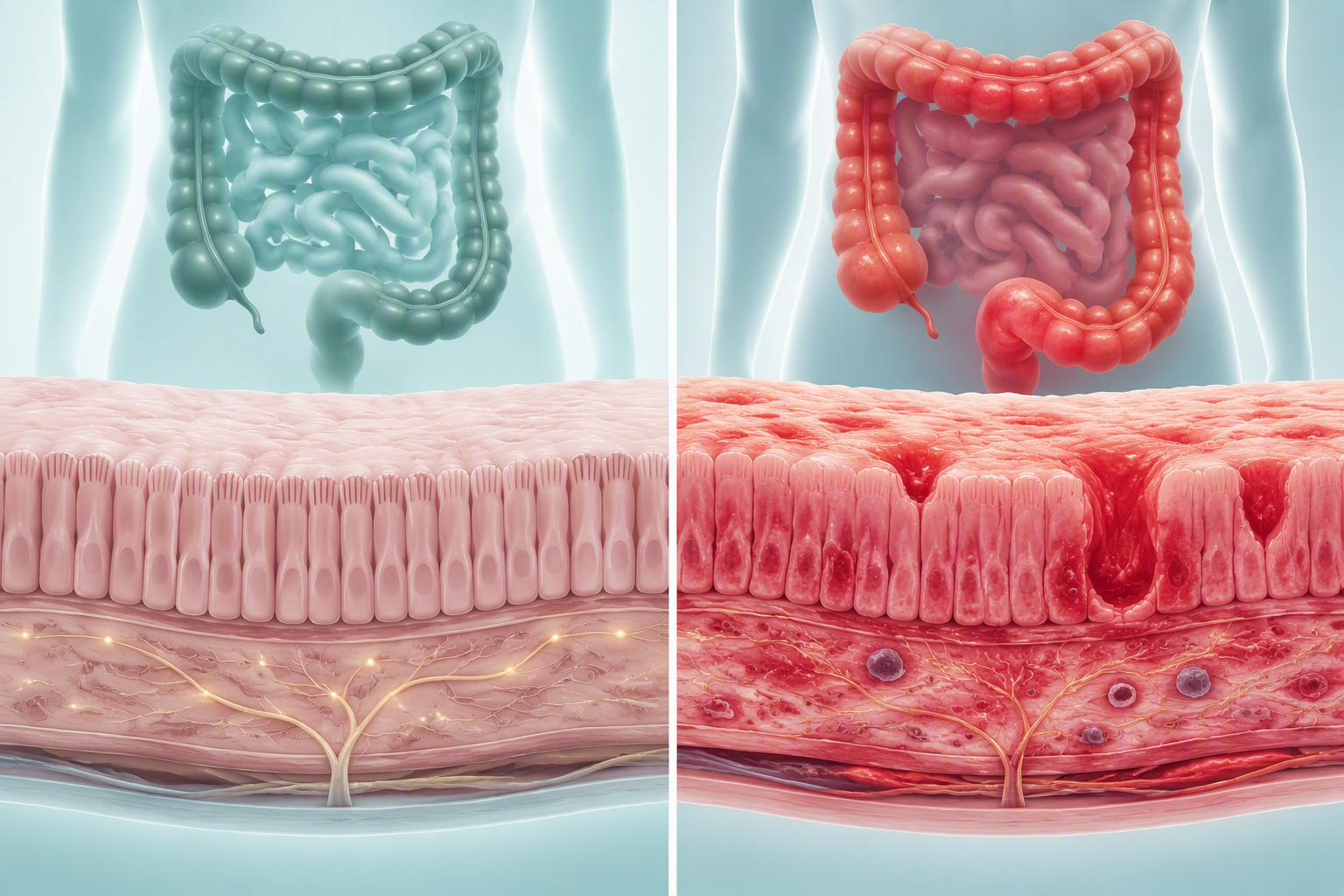
Clinical reviews describe IBS as a functional bowel disorder diagnosed by symptom criteria once other structural or biochemical diseases have been excluded, which is why it is often called a diagnosis of exclusion (source). Your symptom pattern fits IBS, and testing does not reveal another cause. Clinicians may use IBS tests and the Rome IV criteria while they rule out inflammatory bowel disease, infection, celiac disease, and other conditions that cause tissue injury.
The key difference between IBS and autoimmune disease is immune-driven damage. IBS can involve altered gut sensitivity or mild, temporary immune activation, but that does not make it a classic autoimmune disease.
Hallmark | Does IBS meet it? | Meaning |
|---|---|---|
Immune attack on healthy tissue | No | IBS does not destroy the bowel |
Autoantibodies targeting tissue | No | None are established for IBS |
Visible damage or ulcers | No | The lining usually looks normal |
Ongoing inflammation | No, or mild and temporary | Persistent inflammation suggests another cause |
Progressive untreated damage | No | IBS does not progressively injure the bowel |
Benefit from immune suppression | No | IBS is not treated that way |
IBS and IBD can feel similar, but objective findings separate them. Inflammatory bowel disease (IBD) covers Crohn's disease and ulcerative colitis, both of which involve chronic inflammation and possible structural damage.
Finding | IBS | IBD | What separates them |
|---|---|---|---|
Colonoscopy | Usually normal | Inflammation or ulcers may appear | Visible injury favors IBD |
Biopsy | No IBD-type inflammation | Inflammatory changes may appear | Tissue findings matter |
Bleeding or weight loss | Not typical | More concerning | Red flags shift concern |
Treatment target | Sensitivity, motility, and symptoms | Immune-driven inflammation | Treatment goals differ |
A normal colonoscopy does not mean nothing was found. It means the lining has no obvious inflammation or ulceration, while biopsies usually lack the changes seen in IBD. The colonoscopy for IBS resource explains why this result can support IBS.
Ask which findings would move the diagnosis toward IBD or another immune-driven condition. If those findings are absent and your pattern fits, IBS becomes more likely. New or worsening symptoms still warrant reassessment, especially bleeding, unexplained weight loss, fever, or nighttime symptoms.
Which Autoimmune Conditions Get Mistaken for IBS?

Most articles mention that autoimmune conditions can resemble IBS and leave it there. Naming the patterns helps you recognize what to discuss with a clinician. This is the practical value of the comparison, not a way to diagnose yourself.
One clarification before the list, because this page is about getting a classification right. Not every condition below is autoimmune in the strict sense. Celiac disease, lupus, rheumatoid arthritis, Sjögren's syndrome, and systemic sclerosis are, meaning the immune system produces antibodies against the body's own tissue. Crohn's disease, ulcerative colitis, and microscopic colitis are more accurately called immune-mediated, driven by an overactive immune response without that clear self-targeting. Behçet's disease and axial spondyloarthritis sit closer to autoinflammatory. Those distinctions matter for how each condition is treated, but they share the thing that matters here: every one of them produces objective findings, and IBS does not.
The symptom-to-suspect map looks like this:
Condition | Clues beyond typical IBS | Typical first test |
|---|---|---|
Celiac disease | Diarrhea with iron deficiency, weight loss, gluten-related symptoms, or family history | tTG-IgA and total IgA |
Crohn's disease and ulcerative colitis (IBD) | Blood in stool, nighttime symptoms, fever, weight loss, or mouth ulcers | Fecal calprotectin, then colonoscopy |
Microscopic colitis | Ongoing watery diarrhea, older age, or medication links | Colonoscopy with biopsies |
Autoimmune thyroid disease, including Hashimoto's | Constipation, fatigue, cold intolerance, and weight gain, or diarrhea with weight loss and palpitations | TSH |
Systemic lupus erythematosus | Joint pain, facial rash, mouth ulcers, or kidney problems | ANA and clinical assessment |
Rheumatoid arthritis | Symmetrical swollen joints and morning stiffness | Rheumatoid factor and anti-CCP |
Sjögren's syndrome | Dry eyes and dry mouth with gut symptoms | Anti-Ro and anti-La antibodies |
Systemic sclerosis (scleroderma) | Skin tightening, Raynaud's, reflux, or slowed-motility bloating | ANA and scleroderma-specific antibodies |
Behçet's disease | Recurrent mouth and genital ulcers with eye inflammation | Clinical diagnosis |
Axial spondyloarthritis, including ankylosing spondylitis | Back pain eased by movement and worsened by rest, sometimes with IBD | Imaging and HLA-B27 |
A note on that last column: these are the tests a clinician typically reaches for first when a specific condition is already suspected, not a panel to request for general gut symptoms. Several of them, ANA in particular, return positive results in healthy people and need specialist interpretation alongside your examination and history. Ordering them without a reason tends to create anxiety rather than answers.
The clearest shared signal is that symptoms reach beyond the digestive tract. Joint pain, rashes, dry eyes, mouth ulcers, unexplained fever, and hair loss are often more useful than bowel symptoms alone when distinguishing one of these conditions from IBS.
Microscopic colitis is a particular trap. The colon lining can look normal during colonoscopy, so only biopsies may reveal the condition. If persistent watery diarrhea continues after a "clear" colonoscopy, asking whether biopsies were taken is reasonable.
Not everything mistaken for IBS belongs in this table. Diverticulitis is inflammatory rather than autoimmune, and it tends to announce itself differently, with pain that stays in one place and often comes with fever, which is why IBS vs diverticulitis is worth reading separately if your episodes feel acute rather than chronic. At the other end of the evidence scale sit explanations with far less behind them. Candida overgrowth is the one readers meet most often, and the case for it is much weaker than the conditions listed above, as IBS and candida sets out.
IBS can occur alongside these conditions more often than chance would suggest. A confirmed diagnosis of one does not prove or exclude IBS, so both possibilities may need clinical review.
Because IBS is a diagnosis of exclusion, testing may be used to check for celiac disease or inflammatory bowel disease. Persistent, severe, worsening, or changing symptoms warrant medical care, especially alongside these IBS red flags and appropriate IBS tests.
Each condition in this table produces evidence such as antibodies, inflammation, or tissue damage. IBS can share the symptoms without producing those findings, which is why this question needs a clinician's assessment rather than symptom-based labeling.
What Immune Activation Might Happen in IBS Without Autoimmunity?
IBS is a functional gut disorder, not an autoimmune disease. Some people may have immune activation in the digestive tract, but that does not mean the immune system is making a continuing, body-wide attack on healthy tissue.
Researchers are studying immune system involvement in certain IBS patterns, especially after infection. The evidence varies:
What researchers have found | How strong the evidence is | What it does not mean |
|---|---|---|
Post-infectious IBS can begin after a significant stomach or intestinal infection. It is the clearest immune-related pattern, although most IBS does not follow an infection. | Well established | It is not a self-sustaining autoimmune illness. Any response appears local and time-linked. |
Some people with IBS show subtle immune or mast-cell changes in the gut lining. Mast cells can release chemicals that affect nearby nerves. | Emerging | These findings do not establish systemic immune activation or show that IBS is autoimmune. |
Intestinal permeability, sometimes called "leaky gut," may change when immune signals affect the protective lining. Irritants could then interact more easily with nerves involved in pain and movement. | Proposed but unproven | Barrier dysfunction is a possible mechanism, not a confirmed cause of IBS or proof of autoimmunity. |
IBS itself is classified as an autoimmune disease. | Not supported | Immune findings in some patients do not change how IBS is classified. |
When infection comes first, the gut may stay sensitive or mildly inflamed longer than expected. The IBS after gut infection resource covers that pattern in greater detail. This does not mean every case of IBS involves infection or long-term inflammation.
You may also encounter a biomarker theory involving antibodies. After food poisoning, some people develop antibodies to cytolethal distending toxin B, called anti-CdtB. Because the toxin resembles vinculin, a protein in the gut wall, the response may cross-react and produce anti-vinculin antibodies.
Blood tests based on these markers are marketed to help distinguish IBS with diarrhea, or IBS-D, from other causes. The proposed process is an infection-linked cross-reaction, not classic autoimmunity. These tests are not part of standard IBS diagnostic criteria, do not change typical treatment, and a positive or negative result does not make IBS autoimmune. More information appears in the IBS diarrhea guide.
Immune activity limited to the gut lining is different from the body-wide immune attack seen in systemic autoimmune disease. Worsening symptoms or signs outside typical IBS patterns call for medical evaluation.
What Should You Ask Your Doctor If You Suspect Autoimmune Disease?

A better appointment starts with a focused request. You're not asking to be tested for everything. You're asking what would support an IBS diagnosis, what would point away from it, and how your clinician plans to check for celiac disease and inflammatory bowel disease.
Bring this seven-question script to your visit:
- "Does my symptom pattern fit IBS, or does anything about it concern you?"
- "What findings would make you consider Crohn's disease, ulcerative colitis, or another autoimmune condition instead?"
- "Which tests make sense for me now, and what would each test rule out?"
- "Should I be screened for celiac disease, even if my symptoms resemble IBS?"
- "If my colonoscopy is normal, what does that tell us, and what does it not tell us?"
- "I have a family history of autoimmune disease. Does that change my evaluation?"
- "What symptoms should bring me back sooner instead of waiting for routine follow-up?"
Certain findings lead clinicians to look beyond IBS. The red flags that point beyond IBS page gives more detail, but warning signs include:
- Blood in the stool
- Persistent fever
- Symptoms that wake you from sleep
- Unintentional weight loss
- Anemia
- Severe or worsening pain
- Vomiting
- Joint pain or swelling
- Dry eyes or mouth
- Unexplained rashes
- Hair loss
- Severe fatigue
Whole-body symptoms matter because IBD involves abnormal immune responses, while autoimmune diseases may affect far more than the digestive tract. Immune system involvement does not, on its own, make IBS autoimmune.
Test | What it is looking for |
|---|---|
Fecal calprotectin | Inflammation in the gut lining |
tTG-IgA with total IgA | Celiac disease |
CRP or ESR | General inflammation |
Full blood count | Anemia |
TSH | Thyroid disease affecting constipation or diarrhea |
Colonoscopy with biopsies | Visible damage and microscopic colitis |
Microscopic colitis can require a biopsy even when the colon lining looks normal. Normal testing also doesn't mean your symptoms are imaginary. Colonoscopy and other evaluations commonly look normal with IBS, which can support the diagnosis rather than show that nothing is wrong.
Ask how an inflammation-related finding would change management, when you should return, and what would justify repeating a test later.
IBS Autoimmune Disease FAQs
These IBS autoimmune disease FAQs cover common questions about symptoms, immune system involvement, testing, and differences from other digestive conditions. They also address when persistent or changing symptoms warrant a conversation with a qualified healthcare professional.
1. Can IBS improve without treating an autoimmune process?
Yes. IBS can improve without treating an autoimmune process because it isn't considered an autoimmune disease or an ongoing immune attack on your tissues. It's a functional GI disorder and a disorder of gut–brain interaction, so care often targets diet, symptom relief, and gut–brain signals rather than immune suppression. After an infection, lingering immune activation may fade with standard IBS care. Seek medical evaluation for blood in stool, weight loss, fever, anemia, or worsening symptoms.
2. Which lab tests help rule out IBS autoimmune mimics?
Clinicians often approach IBS as a diagnosis of exclusion, using targeted tests to look for inflammation, anemia, nutrient-absorption problems, or immune-related disease rather than to confirm IBS. Blood work may include C-reactive protein, erythrocyte sedimentation rate, and anemia testing. Tissue transglutaminase (tTG) antibodies with total IgA can help rule out celiac disease, while stool tests may detect intestinal inflammation. Colonoscopy is usually reserved for red flags or abnormal results. A normal colonoscopy for IBS is common because IBS does not cause structural damage, unlike Crohn’s disease and ulcerative colitis, forms of IBD that can inflame and injure tissue.
3. Is fecal calprotectin ever elevated in IBS?
Usually not, and that's exactly why the test is useful. Fecal calprotectin measures inflammation in the gut lining, and in IBS it typically comes back normal. That normal result is what helps separate IBS from inflammatory bowel disease rather than confirming IBS on its own.
Mildly raised results do happen, and they are not automatically a sign of IBD. Recent gut infection, certain medications including NSAIDs, and other conditions can all nudge the number up, and reference ranges differ between laboratories. A modest elevation is a reason to look further, not a diagnosis in either direction.
Ask your clinician what your result means against their lab's range, whether it is worth repeating, and whether anything else in your picture points toward inflammation, such as weight loss, blood in your stool, anemia, or fever.
4. Can IBS turn into an autoimmune disease or IBD later?
No. IBS does not turn into an autoimmune disease or into IBD, including Crohn's disease or ulcerative colitis. IBS reflects gut and nerve sensitivity or changes in bowel habits, sometimes worsened by stress or certain foods, without ulcers, bleeding, or intestinal tissue damage. A later IBD diagnosis usually means the condition was present but not yet detected, or that both developed independently. That is reclassification, not transformation. New bleeding, unintentional weight loss, fever, anemia, or nighttime symptoms warrant evaluation for inflammatory bowel disease.
5. Is IBS more common if you already have an autoimmune disease?
Yes. IBS is reported more often among people with rheumatoid arthritis, lupus, celiac disease, or thyroid disease, but that association doesn't make IBS an autoimmune disease. Inflammation elsewhere in the body, medication effects, changes in gut movement, pain sensitivity, and stress may all contribute to digestive symptoms.
IBS is a functional gastrointestinal disorder that changes gut function without ulcers, bleeding, or tissue destruction. An existing autoimmune diagnosis doesn't automatically explain new gut symptoms, and it doesn't rule out IBS either. Both deserve to be assessed on your symptom pattern and test results rather than on the label already in your notes.
The bottom line
IBS is not an autoimmune disease, and no current evidence places it in that category. What is worth taking seriously is the reverse question: whether something autoimmune is being mistaken for IBS. The signal to watch for is symptoms that reach beyond your gut, such as joint pain, rashes, dry eyes, mouth ulcers, or unexplained fevers, alongside the red flags listed above. If that describes you, bring the seven questions to your next appointment rather than settling for the label you already have.
This content is for educational purposes only and is not a substitute for personalized medical advice. Digestive symptoms can have many causes, so consult a qualified healthcare professional for persistent, severe, or worsening symptoms.