


Low FODMAP meal delivery can take the hardest decision of the day off your plate, but the right service depends on three things that have nothing to do with the menu: where you live, what you can spend, and which phase of the diet you’re in.
The market is smaller than the roundups suggest. Only a handful of companies build menus around low FODMAP rules, and fewer still hold Monash certification, so this usually comes down to two or three realistic options. ModifyHealth ships nationwide with Monash Low FODMAP Certified meals, Epicured is chef-led but limited to a regional corridor, and MealPro trades certification for customization.
Below you’ll find those services compared side by side, what each format actually costs once shipping and subscription terms are counted, and how to use a delivery plan during elimination without letting it quietly extend the restrictive phase longer than it needs to run.
Low FODMAP Meal Delivery Key Takeaways
- ModifyHealth offers nationwide shipping and Monash-certified meals for a strict elimination phase.
- Epicured suits customers in its Boston-to-Washington, DC delivery corridor.
- MealPro provides customization but does not generally present meals as Monash certified.
- Thrive Market supplies low FODMAP groceries, not complete prepared meal plans.
- Prepared meals typically run about $12 to $20 per serving, varying by service and location.
- Check your ZIP code, subscription terms, and cancellation deadline before your first order.
- Keep tolerated meals available while introducing reintroduction foods one variable at a time.
Which Low FODMAP Meal Delivery Services Are Worth Considering?
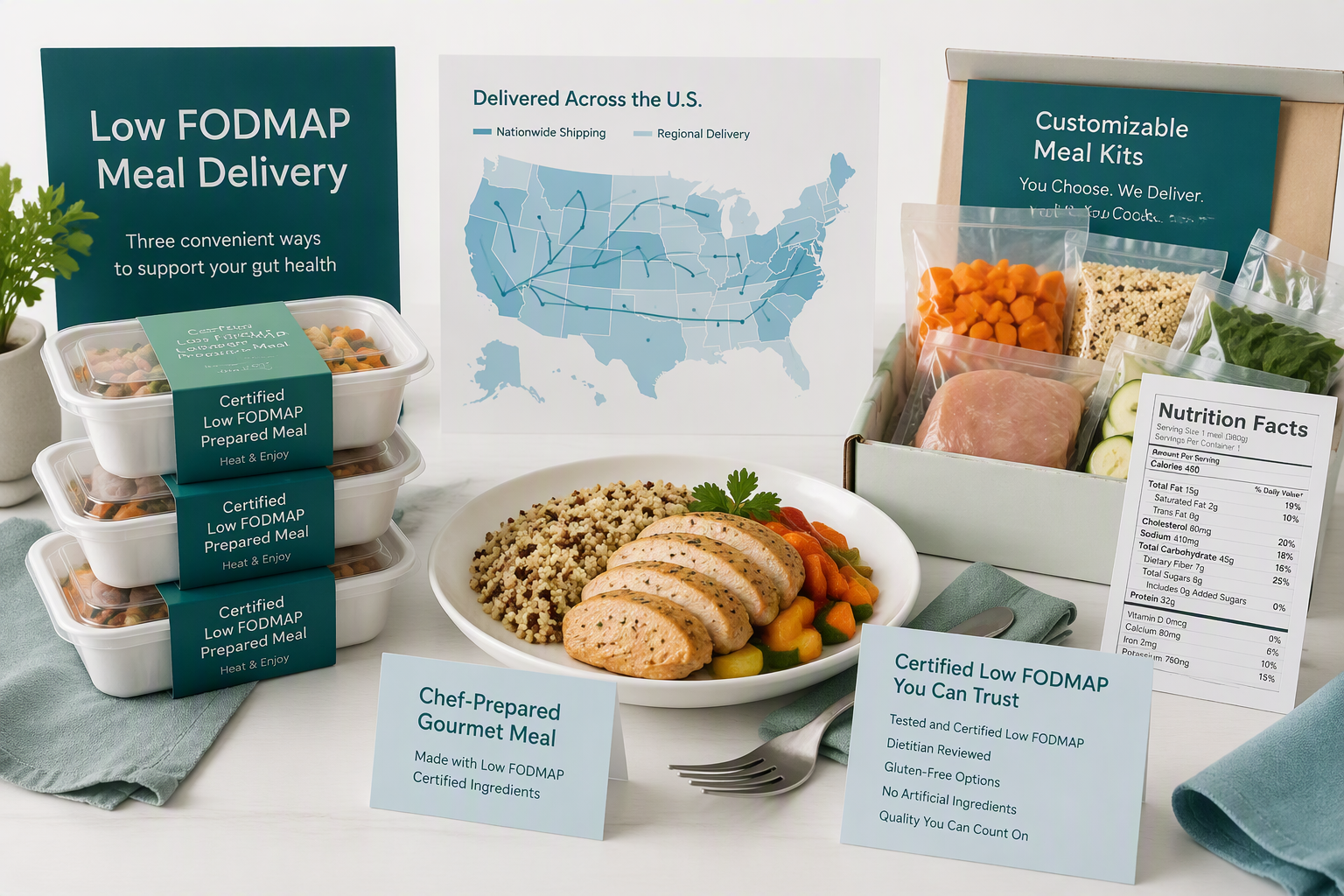
The low FODMAP meal delivery market is smaller than it appears. Only a few companies build menus around low FODMAP rules, and fewer hold formal certification. In practice, you may be comparing two or three realistic choices based on your location, budget, and symptom-management plan, not sorting through dozens of brands.
The main options differ in meal format, certification, delivery area, and flexibility:
Service | Format | Certification | Where it ships | Rough cost per meal | Best for |
|---|---|---|---|---|---|
Prepared, ready-to-heat meals | Monash Low FODMAP Certified meals | Nationwide across the continental United States, with shipping included | About $12 to $15 | A strict elimination phase with less ingredient guesswork | |
Chef-prepared, ready-to-eat or ready-to-heat meals | Low FODMAP-focused menu, with certification details varying by item | Regional service, roughly Boston to Washington, DC | About $14 to $20 | People in its service area who value food quality | |
Customizable prepared meals | Not generally presented as Monash certified | The 48 contiguous states, with shipping included in some western states and charged elsewhere | Published per-meal pricing varies by build | People managing low FODMAP needs alongside other dietary restrictions | |
Grocery delivery, not a prepared-meal service | Individual products vary | United States, subject to product and delivery availability | Varies by product | Shoppers building a pantry of low FODMAP staples |
Prices, certification details, and delivery areas last checked August 2026, in US dollars.
Treat every figure above as a planning range rather than a quote. Prices, menus, shipping zones, and minimum orders change, and totals differ by delivery address, order size, and any promotion running that week. Shipping is sometimes built into the meal price and sometimes charged separately, which can make two similar-looking services differ by several dollars per meal. Confirm the final total at checkout before comparing.
ModifyHealth is the clearest fit when strict elimination is your priority. Its Monash Low FODMAP Certified meals and nationwide shipping address two common concerns: uncertain serving sizes and whether delivery reaches your location. Breakfasts are typically cheaper than lunches and dinners, so a mixed order can land below the range above.
Epicured is more suitable if you live in its regional delivery area and care about chef-led meals. Its service corridor, which runs roughly from Boston to Washington, DC, is a practical screening factor. Outside that region, the menu may look appealing, but the company is unlikely to be a workable IBS meal delivery choice. It also sits at the higher end on price, and smaller orders may attract a shipping fee.
MealPro may fit households managing several food rules at once. Customization can help when low FODMAP eating overlaps with lactose concerns, allergies, higher protein needs, or disliked ingredients. Because meals are built to order, the per-meal price depends on what you choose, so check a full basket rather than a headline figure. The tradeoff is that customization alone does not establish formal low FODMAP certification, so review each meal’s ingredients and serving size rather than assuming every variation meets the same standard.
Thrive Market works better as a grocery source than as a low FODMAP prepared-meal provider. It can supply pantry staples, snacks, and cooking ingredients, but it does not replace a complete meal plan. Understanding how the low FODMAP phases work can help you place individual products within a broader dietary approach.
Monash University Low FODMAP certification is a stronger signal than a company describing its own menu as low FODMAP. It means a specific product or menu was laboratory tested against Monash thresholds at a defined serving size. Certification does not cover every product from that company, predict symptom relief, or confirm that a food suits every medical condition.
Outside the United States, the market becomes much thinner. In the United Kingdom, Australia, and Canada, you may mainly choose between local prepared-meal companies without FODMAP certification and cooking for yourself. Match the service format to your budget, kitchen access, and need for certainty before using it during elimination or reintroduction.
How do you compare prepared vs kit low FODMAP delivery models
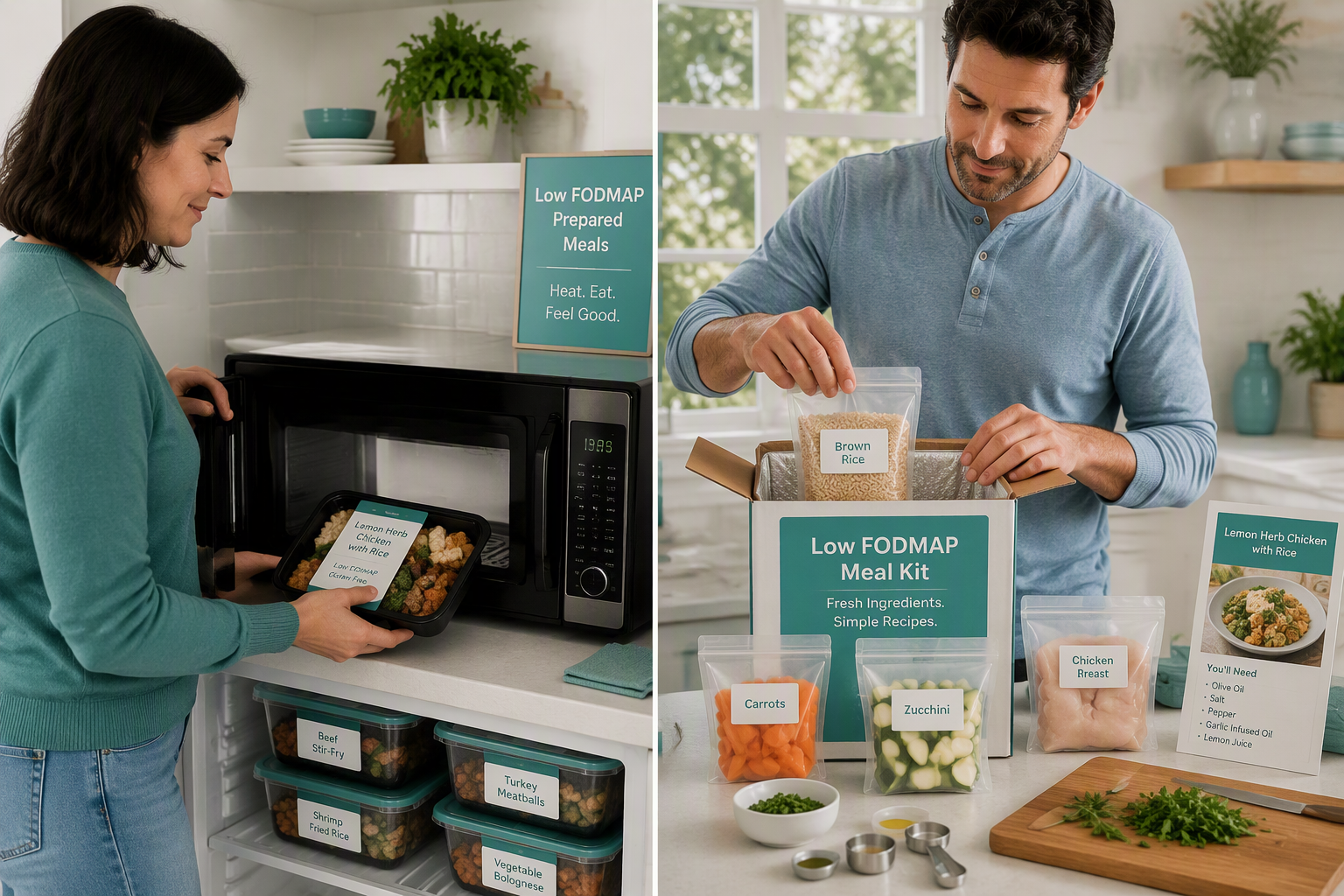
Prepared meals usually reduce the work between delivery and eating, while meal kits and virtual grocery models give you more control over ingredients and portions. During the low FODMAP elimination phase, the better choice is the format you can follow on a difficult symptom day without adding more guesswork.
Start with the job you need delivery to do. Low FODMAP prepared meals handle most cooking and plating, which can help when bloating, pain, diarrhea, constipation, or fatigue makes meal preparation stressful. Kits send ingredients for you to assemble, so they may suit you better when you want to adjust sauce amounts, control portions, or reheat components separately to reduce cross-contact concerns.
A side-by-side view makes the main tradeoffs easier to see:
Decision factor | Prepared meals | Kits or virtual grocery models |
|---|---|---|
Work required | Heat and serve, often with little cleanup | Assemble, cook, portion, and store ingredients |
Control | Less flexibility once the meal is made | More control over sauces, serving sizes, and ingredients |
Elimination fit | Helpful when energy and cooking capacity are low | Helpful when tracking tolerated foods matters most |
Main reliability risk | Labeling, packaging, storage, thawing, and heating details | Assembly mistakes, ingredient swaps, and storage errors |
Best match | A bad week when simplicity matters | A steadier week when cooking feels manageable |
Prep time deserves a reality check rather than a glance at the marketing headline. Prepared meals are usually built around a few minutes of heating, while kit and grocery models move more of the work into assembly and cooking. That difference matters during elimination. A meal that takes five minutes on an average day may still feel difficult when symptoms spike, while a longer kit may be manageable if its ingredients are familiar and easy to portion. Judge the format against your “bad week” capacity, not your best day. Stated prep times also leave out opening packaging, checking labels, washing tools, and storing leftovers.
Price comparisons need a full-cart view rather than a per-meal headline. Most plans cover lunches and dinners only, so breakfasts, snacks, drinks, and backup staples still come from your grocery budget. Kit and grocery models often add a shipping fee below a minimum order value, which can quietly change the economics of a small weekly box. Add the grocery layer to both sides before deciding which format is cheaper.
Shipping and storage affect reliability just as much as the recipe. Prepared meals still need consistent refrigeration or freezing, thawing, and reheating. Heating directions may feel unclear, especially when a meal is frozen, so a convenient product can become frustrating at the point of eating. Kits add cooking steps, but separate ingredients may feel easier to organize when you’re tracking tolerated foods.
Reliability during elimination means predictability from delivery to plate and enough room to avoid mistakes. Prepared meals reduce cooking variability, but you still need clear ingredient labels and dependable packaging. Kits shift more responsibility to your own assembly and storage. Choose prepared meals when minimizing effort is the main goal, and choose a kit when ingredient control is worth the added work.
This educational comparison isn’t personalized medical advice. Keep a small backup of familiar foods available, because the most reliable plan is the one that still works when symptoms suddenly make cooking or decision-making harder.
What Does Low FODMAP Meal Delivery Cost, and Can You Get It?
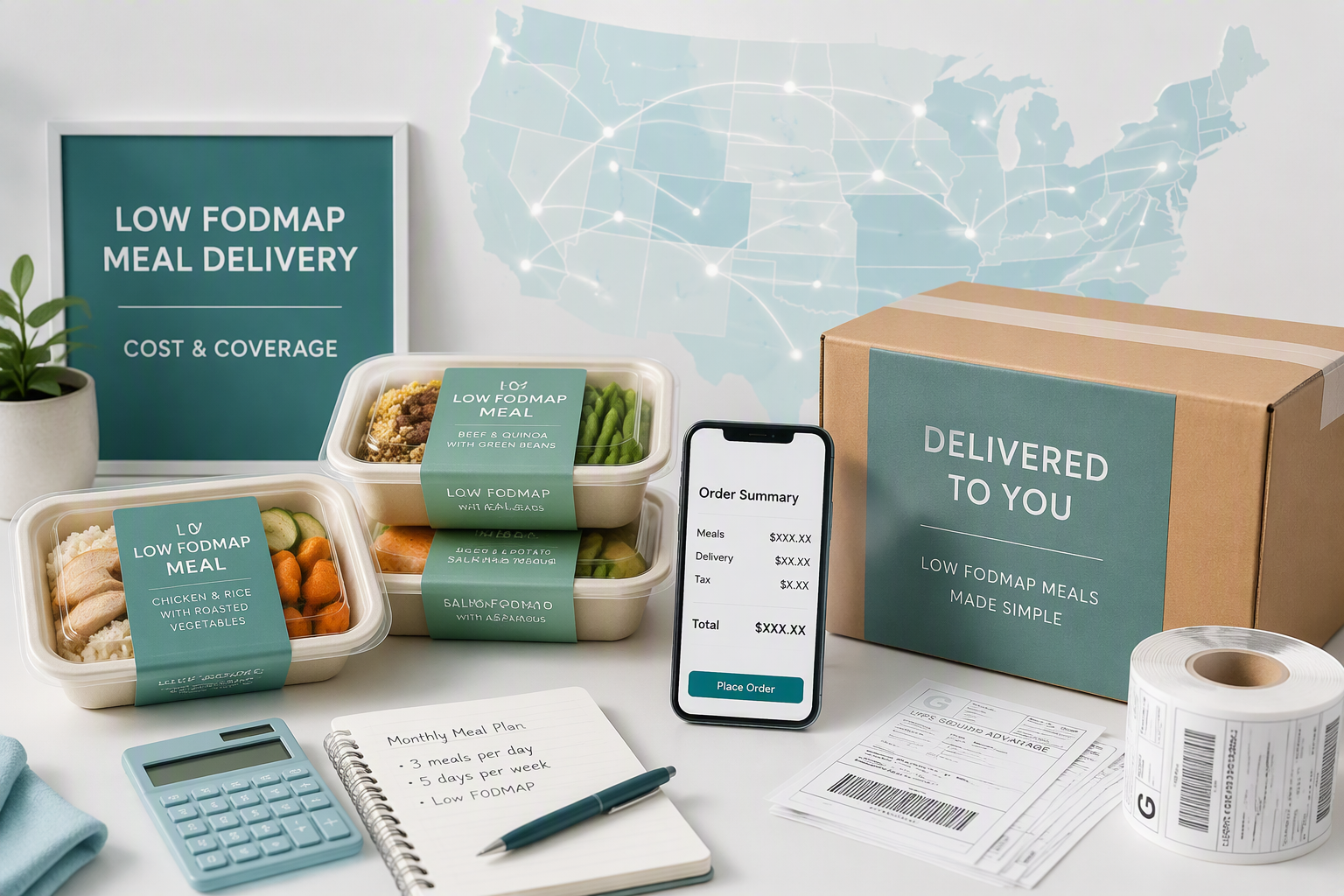
Low FODMAP meal delivery usually costs more than buying the same ingredients and cooking at home. The added cost can buy time, predictable portions, and less uncertainty during an elimination phase, when the wrong meal may bring uncomfortable symptoms and disrupt your day.
What you are buying | Typical price range | What drives the number |
|---|---|---|
Fully prepared certified meals | About $12 to $20 per serving | FODMAP testing, specialized recipes, preparation, and cold shipping |
Prepared meals without certification | About $10 to $17 per serving | Ingredients, preparation, menu size, and shipping method |
Meal kits requiring cooking | About $8 to $14 per serving | Raw ingredients, recipe development, packaging, and the time you provide |
Low FODMAP grocery staples | About $3 to $8 per serving | Store prices, brand choices, seasonal produce, and cooking from scratch |
Ranges last checked August 2026, in US dollars.
These ranges help with planning, not budgeting for a guaranteed final price. Location, serving size, shipping fees, promotions, and order size all affect the total. Certification testing adds cost that may be reflected in the meal price, while chilled or frozen shipping is often charged separately. Smaller orders also tend to cost more per meal, whereas many providers lower the unit price when you choose more meals each week. Breakfasts and lighter items usually sit below these ranges, so an order weighted toward those can bring your average down.
Delivery geography is a hard filter for low FODMAP meal delivery. Some companies ship throughout the United States, while others serve selected states or regional corridors. Outside the US, options are more limited. Enter your ZIP code or postcode before comparing menus, certifications, or reviews. A service that cannot reach your address is not an option, regardless of how appealing its gut-friendly meals appear.
Subscription terms can create costs that have nothing to do with the food. Before placing an order, check these details:
- Automatic renewal: Confirm whether the plan renews without a new order.
- Skip deadline: Find out how many days ahead you must skip a delivery.
- Minimum commitment: Check whether the first order or plan requires multiple weeks.
- Cancellation timing: Make sure cancellation takes effect before the next billing date.
- Skipped-week shipping: Verify whether shipping or other charges continue after you skip meals.
Save the cancellation deadline with your order confirmation. Symptoms, work demands, or caregiving responsibilities can make it easy to miss an account email.
A mixed approach often costs less without removing the convenience. A few low FODMAP prepared meals can cover demanding workdays, travel, or evenings when cooking feels unrealistic. Simple groceries can cover the remaining meals. The IBS meal planning basics can support the cooking side, while knowing the foods that commonly cause flares helps you build a more focused shopping list.
Meal delivery services for digestive disorders may justify the price when time pressure and food uncertainty are major barriers. The cost may not make sense when shipping is high, portions do not fit your needs, or simple home cooking is manageable. Choosing not to subscribe is a reasonable decision, and low FODMAP prepared meals can remain an occasional tool rather than a permanent expense.
How Do You Set Up Your First Delivery Week?
Once you have weighed the cost and chosen a service, place your first low FODMAP meal delivery order while you still have several days of food at home. The low FODMAP diet for IBS guide explains the broader FODMAP elimination protocol. Here, the focus is delivery timing and the practical details that keep your first week manageable.
Allow enough time for the provider’s delivery window, and keep several days of food at home as a buffer. Check each provider’s current order cutoff and delivery window before you pick a start date (source). Keep a few days of meals at home as a buffer in case the shipment arrives late, damaged, or incomplete.
When the box arrives, inspect it before storing or reheating the low FODMAP prepared meals:
- Temperature: Confirm that chilled meals arrived cold and frozen meals remain frozen or safely firm, following the company’s instructions.
- Order accuracy: Compare each meal and quantity with your confirmation so substitutions or missing items don’t catch you off guard.
- Ingredient details: Check the ingredient list on each package against the menu information you used when ordering.
- Dates and storage: Note use-by dates, freezing instructions, and reheating directions before putting meals away.
The package in your hand should take priority over an older menu page. Services rotate menus, and a meal that suited you last month may contain a different sauce, seasoning, sweetener, or other ingredient after reformulation. If the online listing and package disagree, pause before eating it and contact the provider for clarification.
A low FODMAP meal delivery plan also may not cover every eating occasion. Many services focus on lunch and dinner, leaving these gaps for you to handle:
- Breakfast: Keep simple options that fit your usual routine.
- Snacks and drinks: Plan these before delivery day because uncovered choices can create more guesswork than the delivered meals.
- Protein top-ups: Arrange extra protein when the meals alone won’t meet your needs. The low FODMAP protein powder for IBS guide can help you review ingredient details beyond the front label.
The main practical benefit is consistency because fewer meals become daily decisions. Use delivered meals within their storage window instead of saving them indefinitely, and keep a small backup at home for shipment gaps.
How Do You Avoid the Mistakes That Undo a Delivery Plan?
After your first delivery arrives, low FODMAP delivery plans can go off track when serving sizes, phase labels, add-ons, and changing recipes receive less attention than the meal’s headline. Treat low FODMAP prepared meals as products to check, not guarantees that every menu item fits your current phase or tolerance.
Mistake | What to do instead |
|---|---|
Assuming every menu item suits the strict elimination phase | Check whether the meal is intended for elimination, reintroduction, or a later phase. |
Eating two servings of a meal portioned as one | Follow the stated serving size, especially during elimination. |
Adding your own sauce, dressing, bread, or side without checking it | Review every added ingredient for possible FODMAP sources. |
Letting breakfast and snacks drift while delivered meals stay compliant | Keep the rest of the day consistent enough to spot possible triggers. |
Abandoning the plan after one difficult day | Record what happened, return to tolerated meals, and treat the flare as information. |
Portion size causes some of the most confusing reactions. FODMAP thresholds and certification claims apply to a defined serving, not an unlimited amount of a recipe. A meal may suit you at one portion but cause bloating, gas, or other gastrointestinal discomfort when you eat twice as much, even though the ingredients stay the same.
The extra amount can push a fermentable carbohydrate above the tested threshold or your personal tolerance, so before deciding that a meal failed, check how much you ate, whether you had seconds, and what else was on the plate. Check the listed portion alongside your symptoms and other foods on the plate.
Added foods create another common blind spot. An entrée with no hidden FODMAP triggers can become harder to assess after garlic dressing, regular wheat bread, onion-heavy sauce, or a high-lactose side is added. During elimination, review everything on the plate, including condiments and snacks. Guidance on IBS foods to avoid can help you question familiar extras that are easy to miss.
Menus rotate, and recipes can be reformulated. A meal that suited you three months ago may contain a different ingredient now, so read the ingredient list on the meal itself rather than relying only on the menu page used for ordering. Save the label or take a photo when a meal becomes part of your regular routine.
A flare doesn’t automatically mean the delivery plan has failed. Note what you ate, the portion, timing, and symptoms, then return to meals you already tolerate instead of restricting further. One difficult day is useful information, while over-restriction can reduce variety and make the plan harder to sustain.
Worsening symptoms, bleeding, unexplained weight loss, or fever need clinical attention rather than a menu change. Digestive symptoms can have many causes, so contact a qualified healthcare professional for persistent, severe, or worsening symptoms. This content is for educational purposes only and is not a substitute for personalized medical advice.
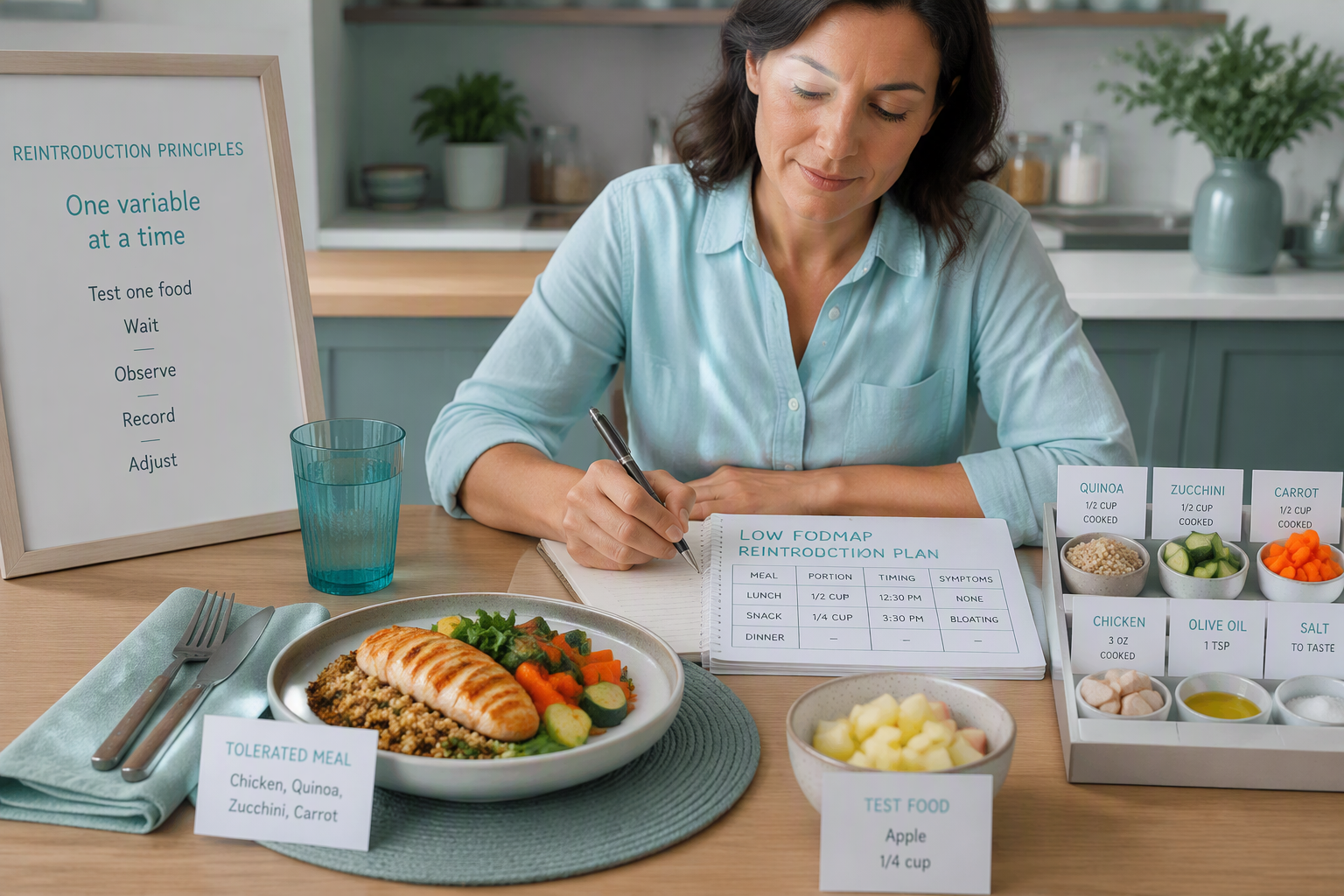
Reintroduction is a new chapter, not a return to square one. After the strict elimination phase, you test specific FODMAP groups instead of avoiding every high-FODMAP food. Notes about bloating, gas, stool pattern, and energy help you build a menu around meals your body already handled well.
A delivery service can provide a steady base while you test one change at a time. The goal isn’t a perfect menu. It’s learning which foods, portions, and FODMAP categories fit your body while avoiding flares and keeping daily life manageable.
Keep your daily routine as consistent as possible so each test is easier to interpret:
- Maintain a steady pattern: Keep meal timing, portion sizes, and meal frequency similar from day to day. Changing several parts of your routine at once makes it harder to connect symptoms with one food.
- Test one variable: Introduce one ingredient, FODMAP category, or portion change at a time. Several unfamiliar foods in one meal can blur the result, even when each item seems suitable by itself.
- Anchor your cart: During elimination, keep about 70 to 80% of your orders as low-FODMAP meals you already tolerate. Use the remaining 20 to 30% for one planned reintroduction variable at a time. This practical split gives you room to learn without giving up the meals that help you feel stable.
- Record the response: Write down the meal, portion, preparation, timing, and symptoms. Include bowel changes, bloating, gas, and energy because tolerance isn’t measured by stomach pain alone.
- Keep successful choices: When a test goes well, add that food or portion to your regular rotation. If symptoms increase, pause the new item and return to meals you previously tolerated.
Ingredient labels matter even more during this phase. A claim such as “Monash Low FODMAP Certified™” can support portion-based choices, but it doesn’t make unlimited servings appropriate for you. Even low-FODMAP options need to match the serving size listed on the meal page or package.
Check the full ingredient list for less obvious FODMAP sources:
- Onions and garlic: These may appear in sauces, spice blends, stocks, and flavor bases.
- Wheat: Its presence can change the meal’s FODMAP load, depending on the ingredient and serving size.
- Added fruit: Fruit ingredients, concentrates, and blends may affect tolerance even when the meal’s flavor seems familiar.
Similar flavors aren’t automatically interchangeable. Garlic-infused oil and a meal containing garlic pieces, for example, may produce different results during a structured test.
Your cart can also function as a safety net during busy workdays, caregiving demands, or uncertain symptom days. Keep several reliable meals available, then schedule testing during a calmer period when you can observe changes. Subscription flexibility, such as skipping a week or canceling without a long commitment, helps you time orders around your reintroduction plan rather than forcing a test during a stressful week.
A rotating order can keep one menu change from disrupting your reliable base:
- Anchor week: Choose mostly meals tolerated during elimination, with one planned test.
- Observation period: Keep other meals and routines steady while you watch for changes.
- Adjustment week: Keep successful additions, pause foods linked with symptoms, and choose a different portion or preparation for the next test.
A flare doesn’t mean you must abandon low-FODMAP eating or assume the entire plan failed. Pause the suspected meal and return to previously tolerated foods for a few days. A later retry with a smaller portion or different preparation may help distinguish the food from the serving size or recipe. Persistent, severe, or worsening symptoms warrant medical advice because digestive symptoms can have many causes. Keep your notes ready so the next order reflects what your body has actually shown you.
low FODMAP meal delivery FAQs
These low FODMAP meal delivery FAQs cover practical questions about comparing providers, reviewing ingredient details, and fitting IBS-friendly meals into your routine with greater confidence and less guesswork.
1. What does “FODMAP elimination” mean on delivery?
FODMAP elimination through IBS meal delivery means eating meals prepared without high-FODMAP fermentable carbohydrates that may cause bloating, gas, or irregular bowel habits. During the strict phase, follow the provider’s ingredients and portion sizes as listed rather than testing foods or making swaps. Lactose sensitivity and other personal triggers still require careful label checks. This FODMAP elimination protocol supports symptom management, not a permanent diet, and can help reduce bloating and gas. It differs from IBD meal delivery, while Crohn’s and ulcerative colitis meals require condition-specific medical guidance.
2. How long is the strict elimination delivery schedule?
A strict low FODMAP delivery schedule typically lasts about 6 to 8 weeks. Treat this as a temporary phase of elimination diets, not a permanent eating pattern. Follow the meals consistently rather than testing foods midway, then begin reintroduction when symptoms are stable and you have a step-by-step plan for changing one food at a time.
Before ordering, check whether every meal is labeled low FODMAP, how substitutions are handled, and whether deliveries arrive on schedule. Dairy-free and gluten-free meals aren’t automatically low FODMAP. Severe or worsening symptoms warrant advice from a qualified healthcare professional.
3. Which low FODMAP meal delivery services ship to my area?
Coverage should be your first filter when comparing low FODMAP meal delivery services, not an afterthought. Some providers ship throughout the US, while others serve only a regional corridor and remain unavailable elsewhere, regardless of their reviews or menus. Enter your ZIP code on each provider’s website before comparing meals, prices, or subscription terms because delivery areas can change.
Outside the US, certified prepared-meal delivery is less common. In the UK, Australia, Canada, and elsewhere, IBS meal delivery often means choosing a general service without FODMAP certification or preparing meals from a low FODMAP plan yourself.
4. How should I handle FODMAP cross-contact in deliveries?
Treat “low FODMAP” as meal-specific, not as a guarantee about the entire delivery facility. Before eating, open the exact meal page and compare it with what arrived, then check the ingredient list, allergen information, and Nutritional Information fields, including dietary fiber. Look for wheat, fish, shellfish, and “may contain” statements. A no-allergen label may not cover your personal triggers or confirm no hidden FODMAP triggers. If details changed or seem unclear, pause, skip the meal, and contact the provider. This routine provides useful nutrition information for GI symptoms.
5. Will reintroduction foods be included or separate deliveries?
Reintroduction foods may arrive with your low-FODMAP meals or in separate deliveries, depending on the provider. During strict elimination, which often lasts about 6 to 8 weeks, some services add these foods later. Confirm how new items are labeled and whether you can select low-FODMAP meals separately from reintroduction options, such as breakfast or entrées. Separate choices help you keep portions consistent, track possible triggers, and avoid changing too many foods when symptoms flare. Check the delivery schedule before ordering.