


Yes, you can fly with IBS, but a smoother trip depends on planning for your symptoms before you reach the airport. Familiar meals, accessible medication, extra restroom time, and an aisle seat can help manage diarrhea, constipation, bloating, urgency, or pain without relying on last-minute solutions.
Airport maps, security lines, gate changes, turbulence, and restricted lavatory access can complicate even a well-planned flight. The practical checklist covers what to keep in your personal item, where to find restrooms, how to handle meals and connections, and why Flush Toilet Finder can help identify backup facilities. It also explains when Imodium (loperamide) may be appropriate and why trying it for the first time before boarding is a poor plan.
Most travel symptoms can be handled with familiar routines and supplies, but severe pain, bleeding, fever, repeated vomiting, dehydration, or worsening symptoms need medical advice rather than self-management. A clear limit for postponing travel protects your health while keeping ordinary IBS-related uncertainty manageable.
Flying With IBS Key Takeaways
- Plan flights around your usual IBS triggers, routines, and symptom patterns.
- Keep medication, wipes, spare clothing, snacks, and documents in your personal item.
- Map restrooms near check-in, security, gates, connections, and destination terminals.
- Choose familiar, modest meals and sip water regularly before and during flights.
- Request an aisle seat and tell the flight attendant about restroom concerns.
- Use loperamide only when appropriate and according to professional or label directions.
- Postpone travel and seek medical advice for severe, unusual, or worsening symptoms.
How Can You Prepare to Fly With IBS?
Flying with IBS is easier when you plan around your own symptom patterns. Before booking or departing, review recent irritable bowel syndrome (IBS) episodes and note whether urgency, diarrhea, constipation, bloating, or pain followed:
- Food and drinks: Specific foods, large meals, caffeine, or alcohol.
- Daily changes: Stress, poor sleep, or a disrupted routine.
- Travel conditions: Time-zone changes, unfamiliar foods, or schedule pressure.
daily life with IBS can help you spot patterns to discuss with a qualified healthcare professional. Consider postponing nonessential travel during an active IBS flare-up, especially if symptoms are severe or worsening. symptom tracking apps may make this review easier.
Preserve the routines that usually keep symptoms steady by keeping meal timing, sleep, gentle movement, and prescribed treatment as consistent as practical. Avoid starting a new diet, supplement, or medication on travel day. Extra time for getting ready, reaching the airport, finding restrooms, passing security, and boarding can reduce pressure when urgency appears.
The brain-gut connection helps explain why stress can affect digestive symptoms. Use a familiar calming strategy, such as slow breathing, a short walk, or relaxing audio, before departure and during delays. When crossing time zones, adjust sleep and meals gradually when possible. Lower stress on vacation may make some foods easier to tolerate, but trying several unfamiliar foods at once can still trigger symptoms.
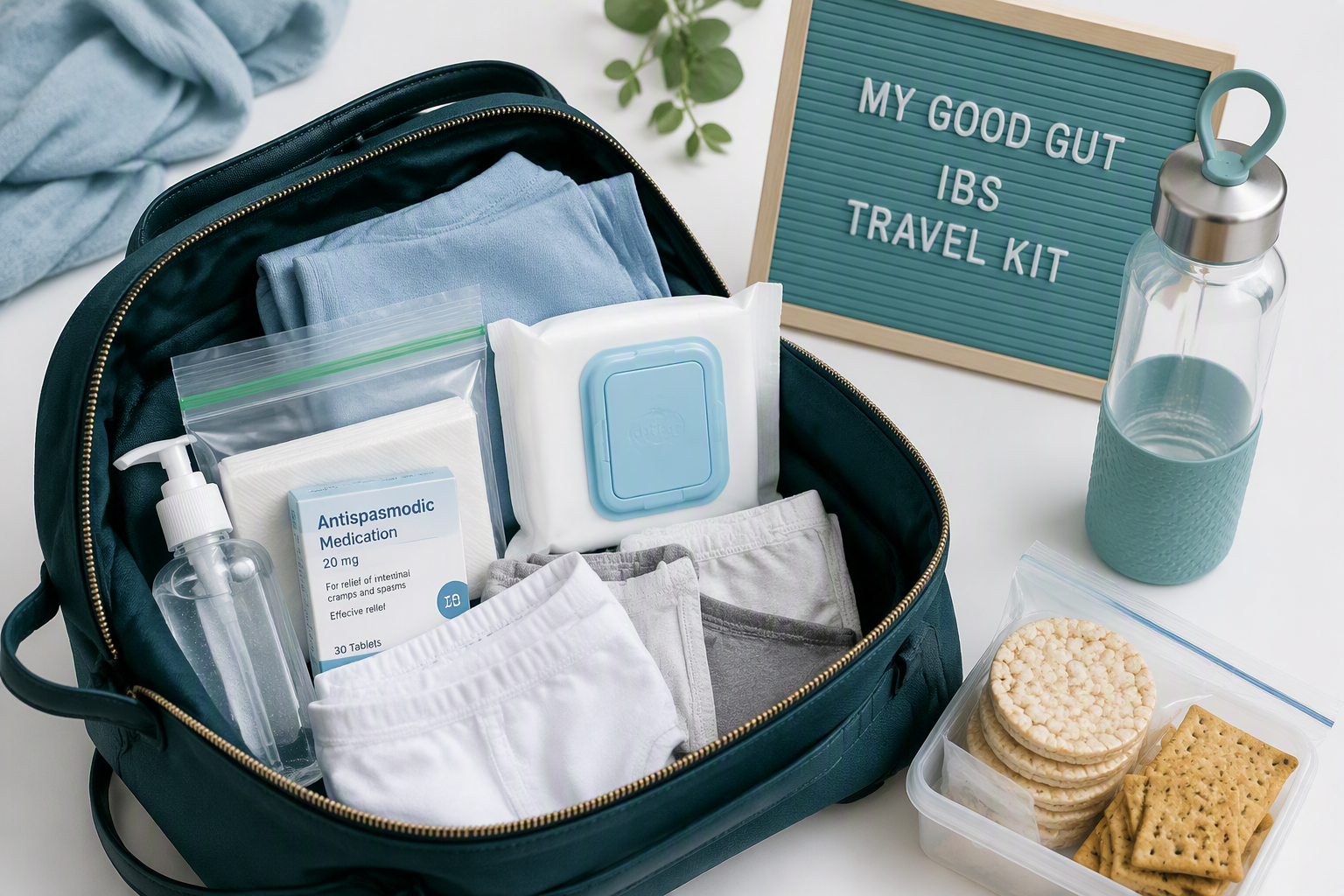
A practical kit makes travel and IBS easier to manage. Pack these items where you can reach them:
- Medication: Prescribed or previously approved over-the-counter medication in original packaging, with enough for delays.
- Clothing and cleanup supplies: Spare underwear, loose clothing, wipes, tissues, hand sanitizer, and a sealable bag.
- Familiar snacks: Foods you already tolerate, such as rice cakes, gluten-free crackers, granola bars, or trail mix.
These IBS travel tips apply to airplane travel with IBS as well as other trips. Familiar routines and supplies are safer than last-minute experiments.
How Can You Plan Restrooms and Airport Access?
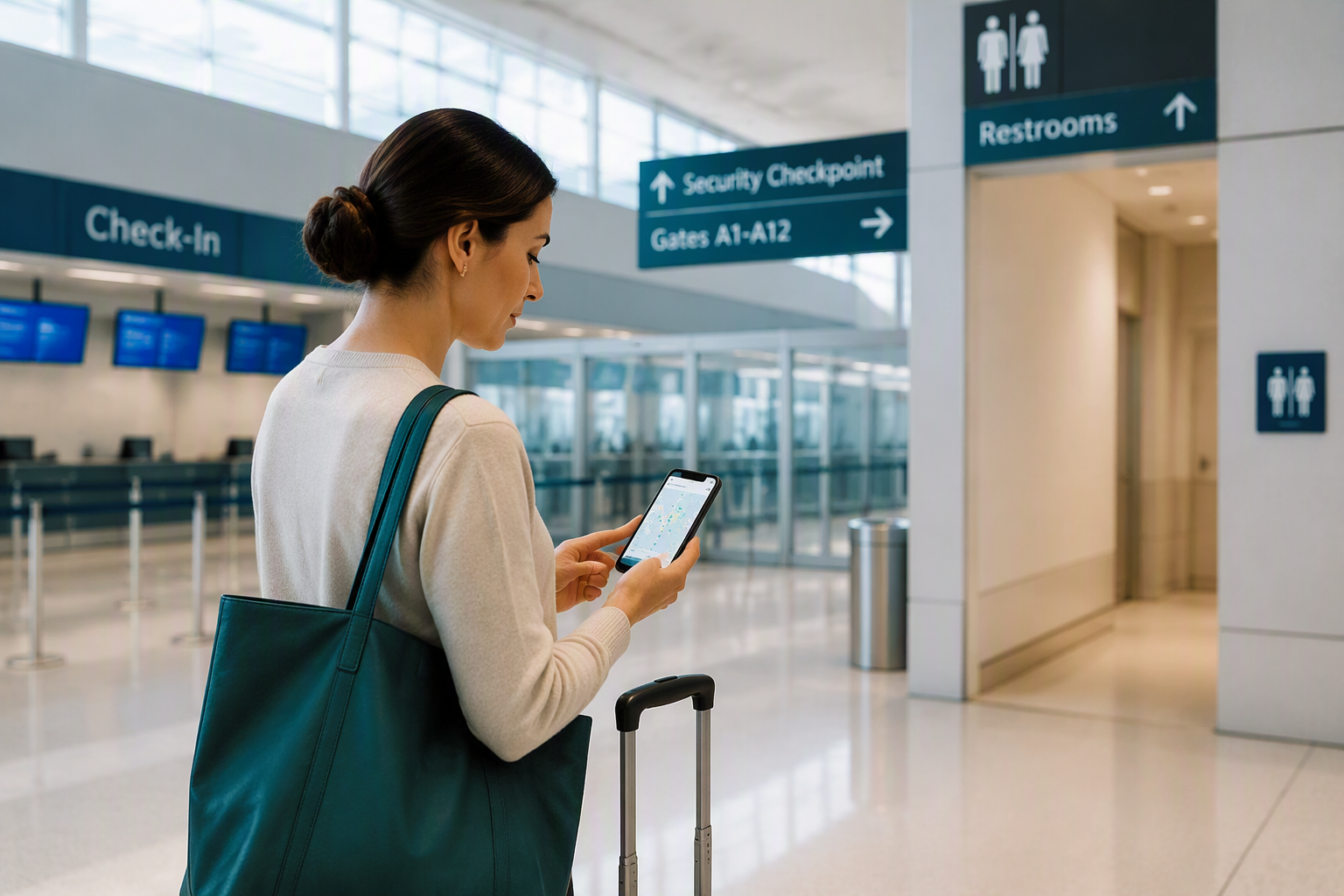
With your travel kit ready, plan restroom access before leaving home, and build extra time into every airport step. Arriving early gives you room for check-in, security, a restroom visit, and unexpected lines. If restroom anxiety and IBS affects your plans, a familiar route and backup options can make the airport feel more manageable.
Before departure, check airport maps and find public restrooms near check-in, security, your gate, and terminal transfer points. Confirm facilities in each terminal, along with any local customs that require payment. This detail matters during international travel with IBS, when restroom expectations may differ. A restroom-finder app can help you identify alternatives before leaving home. Flush Toilet Finder maps a crowdsourced database of more than 200,000 public toilets and works offline, which is useful when you land without a data connection (source).
A practical airport plan includes these steps:
- Add a time buffer: Allow extra morning time for check-in, security, and a restroom stop when symptoms are unpredictable.
- Map each terminal: Keep backup options for delays, gate changes, and transfers instead of relying on one restroom location.
- Choose an aisle seat: Request an aisle seat near the restroom when possible. A shorter walk can make urgency less stressful, although access may still be restricted at certain times.
- Use the airport restroom before boarding: Aircraft restrooms may be unavailable during boarding, taxiing, takeoff, landing, and any period when the seat-belt sign is illuminated.
- Pack for disruption: Keep toilet paper or wipes, hand sanitizer, spare underwear, and spare clothes in your personal item rather than checked luggage.
- Prepare for connections: Review restroom locations at connecting airports and allow time for long security lines and delays.
Discreetly tell a flight attendant about your concern when boarding. The crew can explain expected restroom restrictions and help you understand when access may be limited. Avoid assuming that an open restroom will remain available throughout the flight.
Checking only the destination airport is a common mistake. Tight connections, remote gates, and crowded security checkpoints can create more pressure than the flight itself, so keep essential supplies within reach until you arrive.
What Should You Eat and Drink Before Flying?
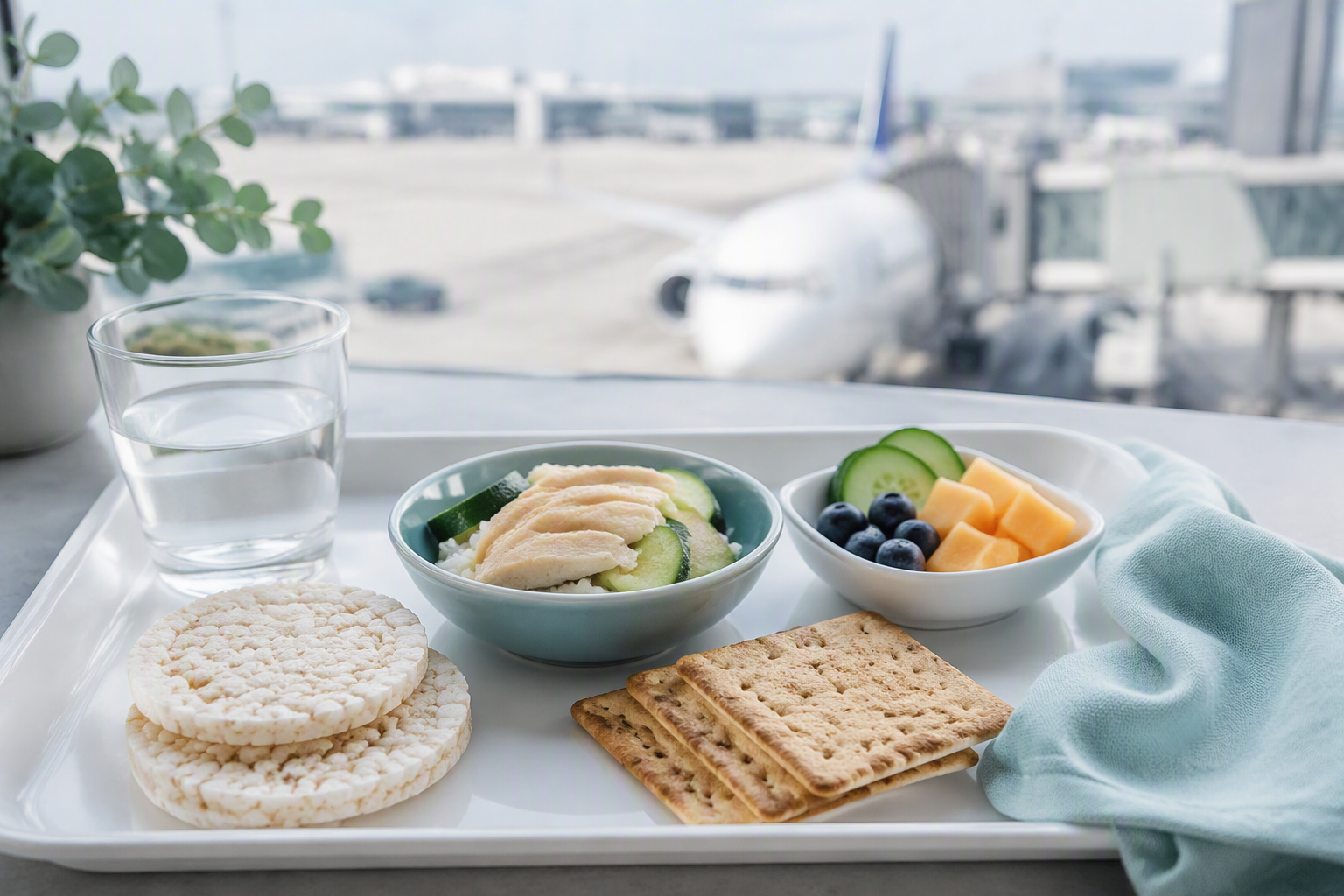
After planning restroom access, your best preflight meal is familiar, modest, and early enough to give your body time to respond before boarding. Choose foods you already tolerate with IBS instead of trying a new restaurant, snack, or supplement on travel day. A simple meal eaten slowly is usually easier to manage than a rich airport meal eaten quickly before the gate closes.
If you’ll eat at the airport, review the menu ahead of time or call to ask about sauces, seasonings, dairy, gluten, and cooking methods. Guidance on ordering food with IBS can help you spot less obvious ingredients. Food safety while traveling still matters, so favor properly chilled or freshly prepared items and skip food that has been sitting out.
A Low-FODMAP diet may help some people, but your own tolerance matters more than a label. If this approach has helped you, follow your established pattern before flying instead of starting a strict elimination plan immediately before the trip. Low-FODMAP foods can still be personal IBS food triggers, so test unfamiliar options at home rather than at the airport.
Keep portions smaller than a full dinner, especially when bloating, pain, or urgency is active, since common problems include high-fat foods, fried foods, heavily seasoned meals, and large portions eaten quickly. A practical plan includes:
- Eat a familiar meal well before boarding.
- Leave enough time for an unhurried restroom visit.
- Keep one or two tolerated snacks accessible during delays and connections.
- Drink water in small, regular amounts before departure and throughout the trip.
Coffee and caffeine can increase urgency or bowel activity for some travelers, so limit them if they affect you. Alcohol and IBS can also be a difficult combination because alcohol may worsen symptoms or interfere with hydration. If anxiety reduces your appetite, don’t force a meal, but continue taking small drinks so dehydration doesn’t add another problem.
Adjust portions according to your symptom history rather than a standard travel menu. A qualified healthcare professional can help when symptoms are changing or difficult to control. Familiar foods, steady hydration, and extra restroom time give you a more dependable plan than last-minute airport choices.
How Can You Manage IBS During Each Flight Stage?
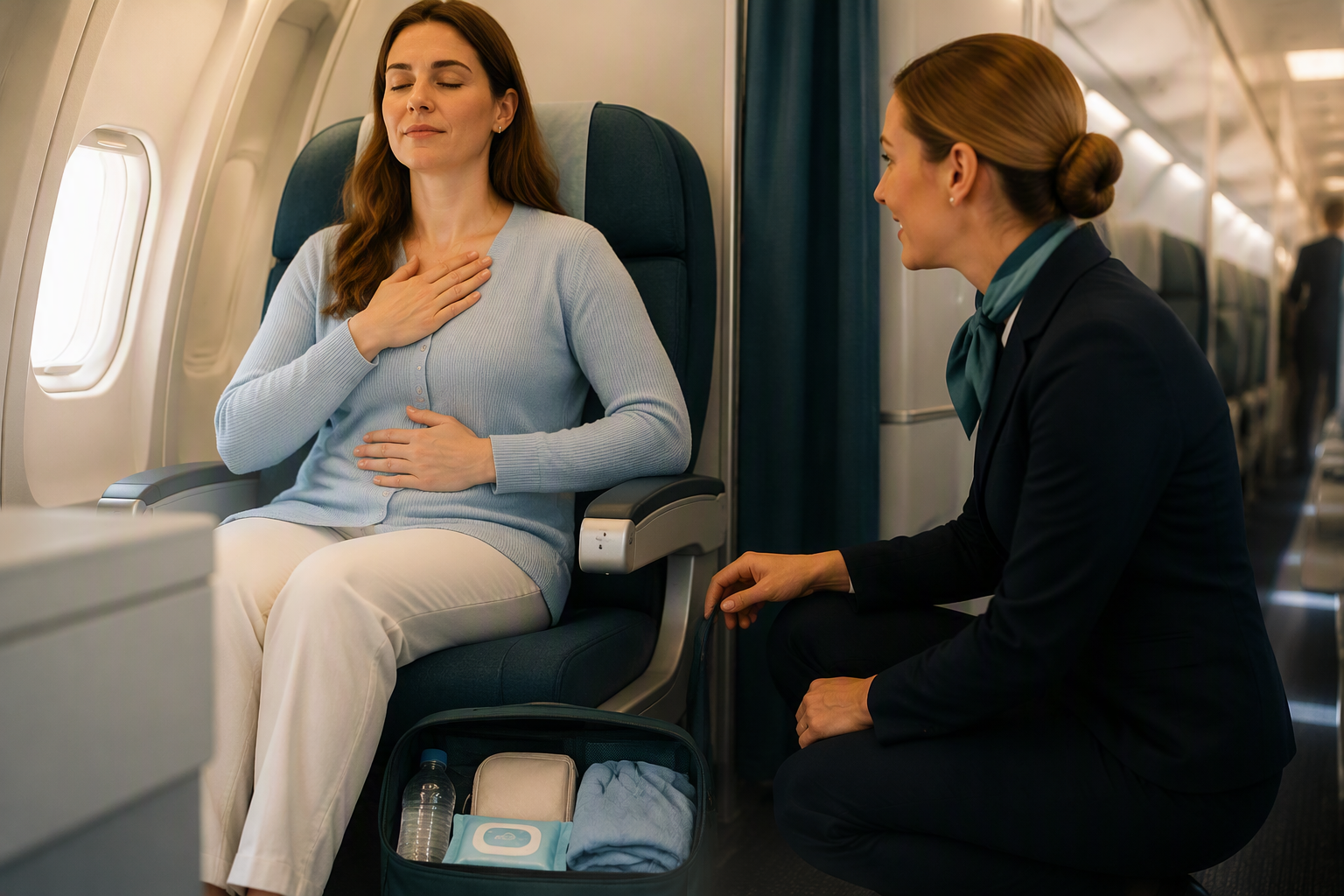
With your preflight food and restroom plan in place, a calm, timed routine makes airplane travel with IBS more manageable. Build extra time into each stage, keep essentials close, and use routines you’ve tested at home instead of trying new remedies in the air.
To avoid rushing, arrive early enough to find restrooms near check-in and your gate, then take a gentle terminal walk if movement feels comfortable. Loose clothing, a familiar meal, prescribed medication, and emergency supplies can make the airport feel more manageable.
During security and at the gate, discreetly tell airport staff if you need urgent restroom access. Use the restroom before boarding and choose an aisle seat near the restroom when possible. Sip water steadily, avoid unfamiliar foods and drinks, and use slow breathing, meditation, music, or relaxing imagery. These strategies may calm the brain-gut connection, which links emotional stress with digestive activity.
Before boarding, confirm your seat and available restroom access. Keep medication, wipes, spare underwear, and disposal bags within reach rather than in an overhead bin. A companion or flight attendant can assist if symptoms become difficult to manage. Loose layers and brief movement may also reduce IBS bloating, cramps, or urgency.
During takeoff and cruising, follow your familiar food, medication, and sleep routine. Avoid trying a new supplement, laxative, or antidiarrheal during the flight. When the seat-belt sign is off, change position or walk, drink fluids as tolerated, and don’t delay a bowel movement once urgency starts.
Turbulence and anxiety can intensify IBS symptoms while traveling. Stay seated with your seat belt fastened, loosen tight clothing, and use paced breathing until movement is safe. Tell a flight attendant early if you may need the lavatory, then use familiar treatments only as directed on the label or by your clinician.
An in-flight flare is easier to handle when your response is simple:
- Pause and breathe: Slow your breathing while keeping your body supported and your seat belt fastened.
- Communicate early: Notify the flight attendant if restroom access or assistance may soon become urgent.
- Use familiar care: Take only a treatment you’ve used safely and according to instructions.
- Protect your supplies: Keep wipes, medication, spare clothing, and disposal bags accessible.
Before descent, use the lavatory when permitted because access may be limited after landing. Find an airport restroom before collecting bags or starting a connection. Severe pain, bleeding, fever, repeated vomiting, dehydration, or unfamiliar or worsening symptoms call for prompt medical advice rather than self-management alone. This plan helps make flying with IBS more predictable without turning the trip into a list of restrictions.
Should You Take Imodium Before Flying?
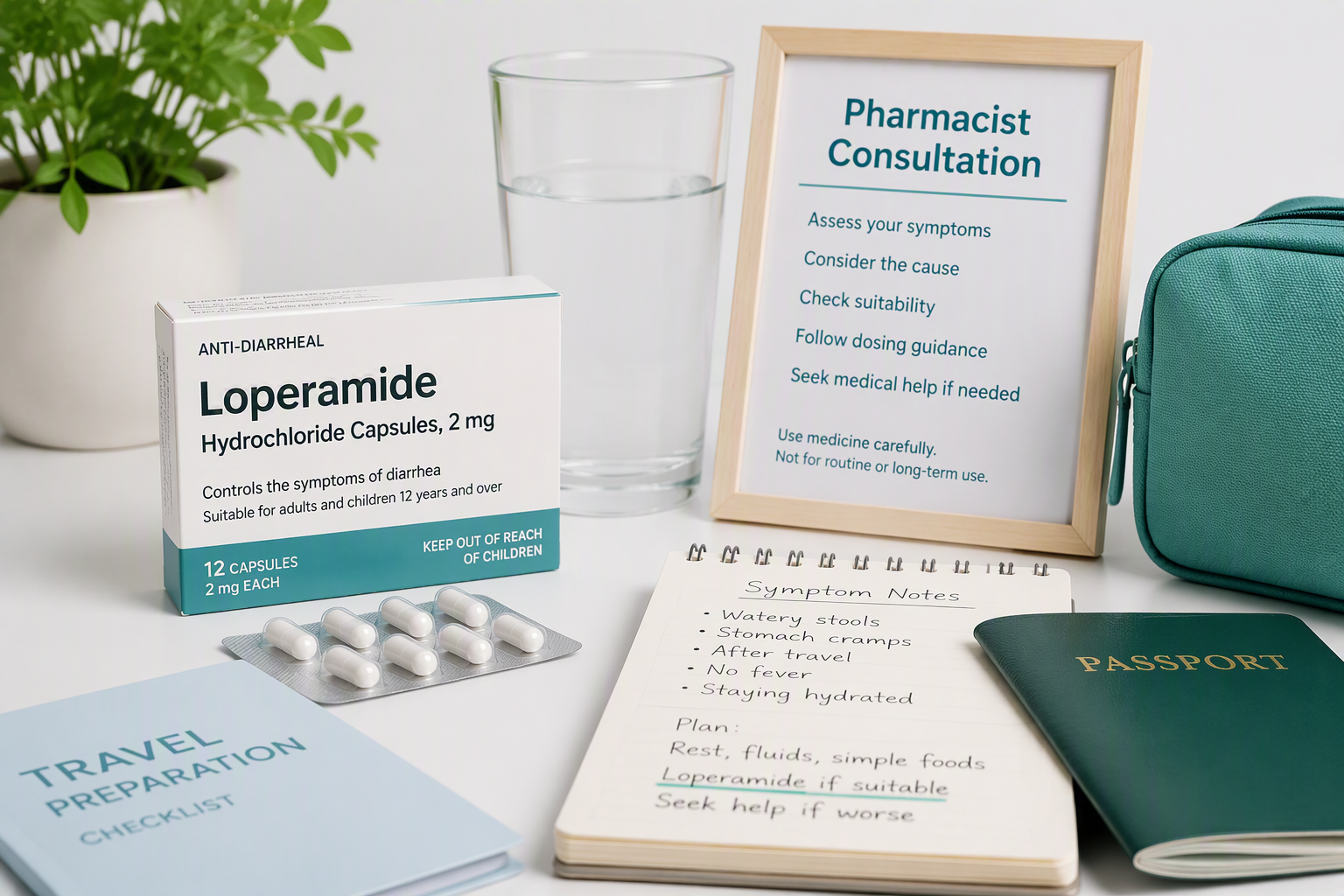
If in-flight routines are not enough, Imodium (loperamide) may help some adults with IBS diarrhea manage urgency and loose stools during a flight, but it isn't a routine preflight medication. Taking it "just in case" can cause constipation, cramping, or bloating when anxiety, unfamiliar food, or mild symptoms never progress to diarrhea.
Your usual bowel pattern matters. IBS-D differs from IBS-C, and loperamide may worsen infrequent or hard stools. With mixed IBS, base the decision on that day's symptoms and your previous response, not the diagnosis alone. This distinction is especially important when considering IBS constipation.
If a clinician or pharmacist confirms that loperamide is appropriate, use it cautiously:
- Avoid a first trial before boarding: Try a new medication when you have time to observe your response, not while rushing through the airport.
- Follow individualized directions: Use loperamide only as directed on the label or in your personalized plan, and do not combine it with other products unless a professional advises you (source, source).
- Pack practical supplies: Keep one labeled package in your carry-on with water, tolerated snacks, wipes, and a change of clothing. Imodium A-D and generic loperamide contain the same active medicine, so carry one rather than both. Preparation helps you respond to symptoms without assuming a flare will occur.
- Know the difference between conditions: Traveler's diarrhea can have causes that need medical assessment. Repeated preflight dosing could hide a changing illness or delay needed care.
Do not self-treat with loperamide if you have any of these warning signs:
- Fever, blood, or black stool
- Significant or worsening abdominal pain
- Marked abdominal swelling
- Repeated vomiting
- Suspected infection or dehydration
Pregnancy, inflammatory bowel disease, significant liver disease, and medicines that may interact with loperamide also call for professional advice before use. Information about IBS and pregnancy can help frame medication questions for a healthcare visit.
Individual guidance is worthwhile when symptoms are new, severe, rapidly changing, persistent, or difficult to classify, or when you have never used loperamide. A clinician can help determine whether it belongs in your IBS medication while traveling, whether as-needed use is suitable, and whether repeated use could delay evaluation of a more serious problem.
Use this limit to guide travel decisions. Digestive symptoms can have many causes, so consult a qualified healthcare professional for persistent, severe, or worsening symptoms.
When Should You Postpone Travel or Seek Medical Care?
Use your ability to eat, drink, sleep, and reach a restroom as the practical threshold for deciding whether to travel. Cramping, bloating, urgency, constipation, or diarrhea may become harder to manage during a flight because of stress, disrupted meals and sleep, dehydration, unfamiliar foods, time-zone changes, prolonged sitting, and limited bathroom access. Those are the usual travel triggers for IBS rather than anything specific to aircraft.
A preflight check can help you separate manageable IBS symptoms while traveling from signs that need medical attention:
- Dehydration: Repeated diarrhea or vomiting may cause intense thirst, a very dry mouth, dizziness, faintness, unusual weakness, confusion, or much less urination. Sip fluids as tolerated, but don't board if you can't keep liquids down or feel faint. Seek prompt medical care instead.
- Bleeding or fever: New, persistent, or dark blood in the stool, fever, unexplained weight loss, or unusual weakness needs medical advice before departure. Seek urgent medical care for heavy bleeding, fainting, severe weakness, or symptoms that are rapidly getting worse (source, source).
- Abdominal pain: Severe, sudden, steadily worsening, or unfamiliar pain should be assessed, especially with a rigid or swollen abdomen, repeated vomiting, fainting, or an inability to pass stool or gas. A new or changing pattern should not be dismissed as routine IBS.
- Persistent diarrhea: Contact a qualified healthcare professional if diarrhea continues despite hydration, interrupts sleep, or fails to improve as expected. Persistent, severe, or worsening symptoms may have causes beyond IBS, so last-minute travel planning may be less appropriate than a medical assessment.
If traveling with IBS still seems reasonable, keep your physician contact information with your medications and pack an emergency supplies for IBS. Stable symptoms that still allow normal eating, drinking, sleeping, and restroom access are different from symptoms that quickly change or prevent basic activities.
Travel and IBS planning works best when it includes a clear limit for postponing the trip. This content is for educational purposes only and is not a substitute for personalized medical advice. Symptoms outside your usual IBS pattern warrant medical assessment. Seek assessment when symptoms fall outside your usual pattern. Individualize dietary or supplement decisions with professional guidance.
What Belongs on Your IBS Flight Checklist?
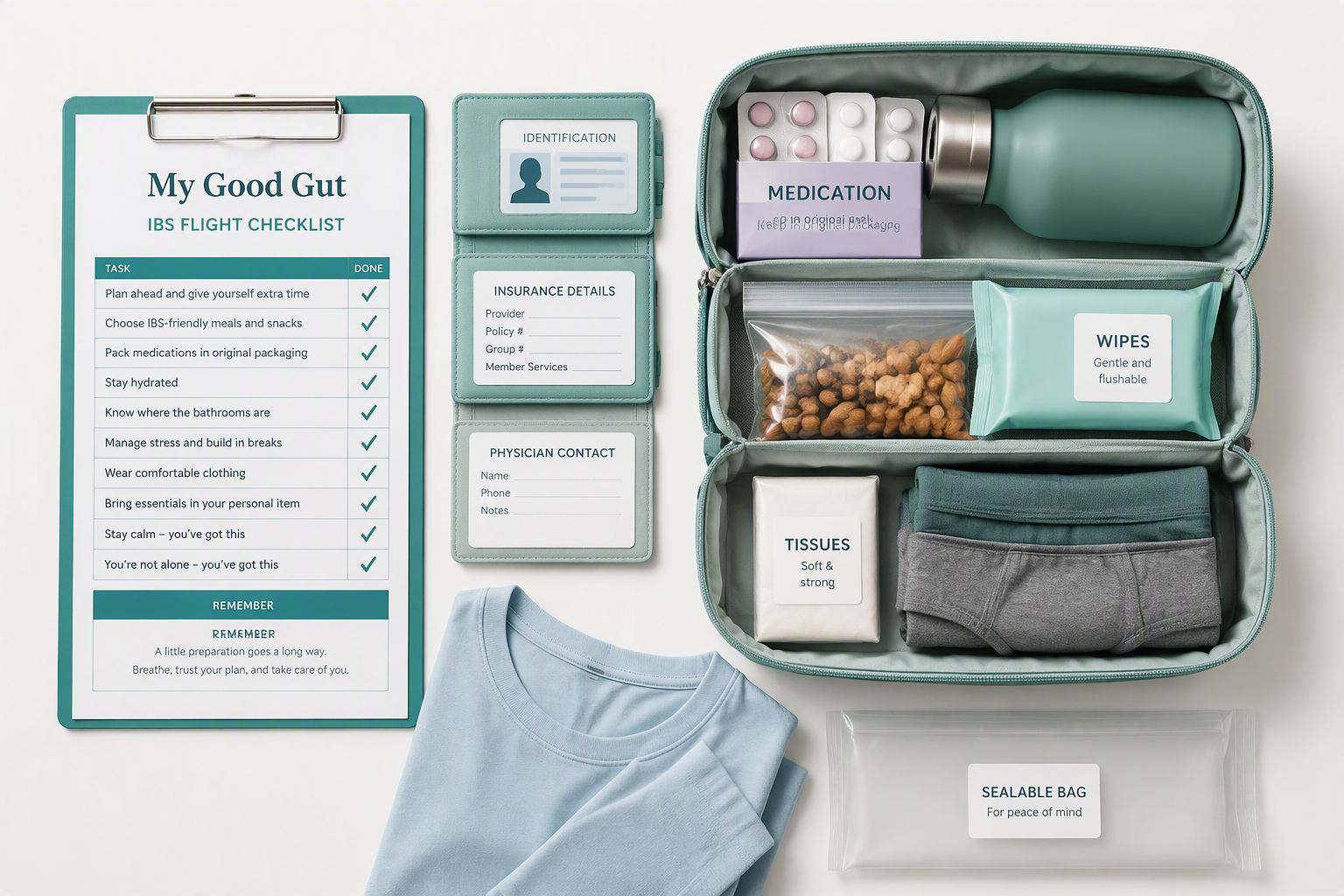
A practical IBS flight checklist keeps essential supplies in your personal item, never checked luggage. These IBS travel tips help you prepare for symptoms without restricting every meal or relying on last-minute solutions.
Pack a medication-and-documents pouch with:
- Documents: Identification, insurance details, physician contact information, and relevant medical information.
- Medication: Prescribed medicines in their original labeled containers, plus clinician-recommended treatment for diarrhea or constipation.
- Backup: Enough IBS medication while traveling for the full trip, along with a reasonable extra supply. Don’t test a new remedy on flight day.
Bring a refillable 1-liter water bottle in your carry-on and fill it after security. Add familiar snacks, tolerated tea, and usual nutrition items. Psyllium belongs in the plan only if you’ve discussed it with a clinician and already know how you respond. Departure day isn’t the time to start new fiber, supplements, or probiotics.
An IBS survival kit should stay easy to reach and include:
- Clothing: Spare clothes and underwear.
- Cleanup supplies: Tissues, unscented wipes, and a sealable bag for soiled items.
- In-flight essentials: Water, snacks, medication, and wipes kept under the seat instead of in an overhead bin.
Before leaving home, locate public restrooms at the departure, connection, and destination airports. Arriving early reduces rushing, while an aisle seat can make restroom access easier when available. Repeat the restroom check during every connection, even if symptoms have settled.
Save or print your itinerary, restroom locations, medication instructions, support contacts, and a brief contingency plan. Include food choices for a flare, who can help, and symptoms that warrant medical advice. Persistent, severe, or worsening symptoms require guidance from a qualified healthcare professional. A printed plan and accessible supplies can make an unexpected flare more manageable.
Flying With IBS FAQs
These Flying With IBS FAQs cover practical questions about meals, restroom access, urgency, medications, stress, and managing symptoms during air travel, including when to seek guidance from a qualified healthcare professional.
1. Can Cabin Pressure Worsen IBS Symptoms?
Cabin pressure can make IBS bloating feel worse because gas in your digestive tract expands at altitude. That added pressure may increase bloating, cramping, abdominal discomfort, or the urge to pass gas, although it doesn’t cause IBS and can only make familiar symptoms more noticeable during a flight. Mild symptoms are usually manageable.
Travel stress, delays, disrupted routines, and unfamiliar food or water can also trigger symptoms, so pressure is only one possible factor. Contact a qualified healthcare professional about severe, unusual, persistent, or worsening pain, vomiting, bleeding, fever, or marked abdominal swelling.
2. Does Flying Cause IBS Constipation?
Flying doesn’t directly cause IBS constipation, but dehydration, prolonged sitting, stress, disrupted sleep and meal routines, time-zone changes, and unfamiliar foods can slow bowel movements. The pattern is often temporary and doesn’t mean air travel has damaged your digestive system. Sip water regularly, move around when safe, choose familiar foods, and follow your existing IBS plan instead of starting a new laxative or supplement. Guidance on physical activity and IBS may help. Contact a qualified healthcare professional for persistent, severe, or worsening constipation, significant pain, vomiting, or inability to pass stool or gas.
3. How Do You Manage IBS on Connecting Flights?
Managing IBS on connecting flights is easier when you plan for restroom access and extra time. Use the airport restroom before boarding, even if urgency feels mild, and check locations near your departure gate and connection area. An aisle seat can provide easier access. Keep medications, wipes, spare underwear, and other symptom-management supplies in your personal item rather than overhead.
Arrive early enough to walk calmly to the next gate and handle an urgent episode without rushing. Wear loose clothing, pack familiar foods, and sip water regularly. Limit foods and drinks that usually trigger symptoms, especially during the connection.
4. Can Motion Sickness Medicine Affect IBS?
Yes, motion sickness medicine can affect IBS symptoms. Depending on the product, it may slow digestion and cause constipation or dry mouth, or worsen diarrhea, cramping, or nausea. Effects also depend on your IBS pattern, so an over-the-counter option isn’t automatically symptom-neutral.
Before traveling, show the exact medicine, dose, and your current medicines or supplements to a pharmacist or clinician. Interaction checks matter especially if you use treatment for diarrhea, constipation, pain, anxiety, or another condition. Try a new product well before your flight, not just before boarding.