


IBS bathroom anxiety is real, and it can develop when urgency, diarrhea, constipation, or pain makes public accidents seem possible. The fear may persist even when symptoms are quiet because the gut and brain influence each other, while anxiety can heighten attention to normal bowel sensations. It doesn't mean your symptoms are imaginary or "all in your head."
A 2019 meta-analysis of 73 studies found anxiety symptoms in about 39% of people with IBS (source), but that figure doesn't mean every person develops bathroom fear. Repeatedly checking for restrooms, skipping meals, staying home, or mapping every route can provide brief reassurance while making work, travel, and family plans harder. Practical preparation, steady breathing, and gradual changes to safety behaviors can help without dismissing physical symptoms.
Persistent, changing, or disruptive symptoms still deserve medical review because conditions such as celiac disease, inflammatory bowel disease, and colitis can resemble IBS. Seek urgent care for severe worsening pain, black or bloody stools, repeated vomiting, dehydration, fainting, unexplained weight loss, or persistent fever. When fear continues to narrow daily life, CBT and coordinated medical and mental health support can address both sides of the problem.
IBS Bathroom Anxiety Key Takeaways
- IBS bathroom anxiety can involve fear of urgency, accidents, embarrassment, or unavailable restrooms.
- The gut-brain connection can intensify symptoms without making them imaginary.
- Bathroom scanning, meal skipping, and avoidance may reinforce anxiety over time.
- Prepare once with practical restroom access and discreet emergency supplies.
- Reduce safety behaviors gradually through brief, manageable outings.
- CBT can help address persistent fear, avoidance, and catastrophic predictions.
- Seek medical care for red flags or symptoms that are persistent, severe, or changing.
What Is IBS Bathroom Anxiety?

Irritable bowel syndrome (IBS) bathroom anxiety is the fear that abdominal pain, bathroom urgency, diarrhea, constipation, or another symptom will occur when a restroom is unavailable, unfamiliar, or shared. Worries about sounds, odors, visible urgency, or an accident can make commuting, teaching, shopping, meetings, travel, and family activities feel unsafe.
IBS is a real gastrointestinal condition that involves recurrent abdominal pain with constipation, diarrhea, or both, and bloating and unpredictable bowel changes can make a fear of needing the toilet understandable. IBS bathroom anxiety, IBS toilet anxiety, and toilet anxiety do not mean your symptoms are imaginary or “all in your head.”
The gut-brain connection works in both directions. A sudden cramp, loose stool, or difficulty passing stool can trigger fear. Fear and close attention to your body may then make abdominal sensations feel more intense or distressing. Physical symptoms and emotional responses can coexist, and anxiety does not replace medical evaluation or invalidate what you feel.
Common safety behaviors may feel protective at first, but they can gradually restrict daily life:
- Bathroom scanning: Looking for restrooms as soon as you enter a new place.
- Route planning: Choosing commutes or errands based on restroom access.
- Food and drink restriction: Limiting what you consume before leaving home.
- Staying close: Avoiding travel, social events, or activities far from home.
- Constant monitoring: Watching for bowel changes or signs of fear of IBS accidents.
These habits can offer brief reassurance while making work, relationships, travel, and independence harder. If you’re coping with IBS day to day, ordinary plans such as restaurant eating and IBS may carry extra emotional weight.
Embarrassment, shame, feeling trapped, and staying constantly alert are understandable responses to unpredictable symptoms, not personal weaknesses. Use this information as a general starting point. Individual responses to dietary or supplement choices vary. A clinician can help distinguish IBS from other conditions and identify appropriate support.
How Can Anxiety Amplify IBS Symptoms?
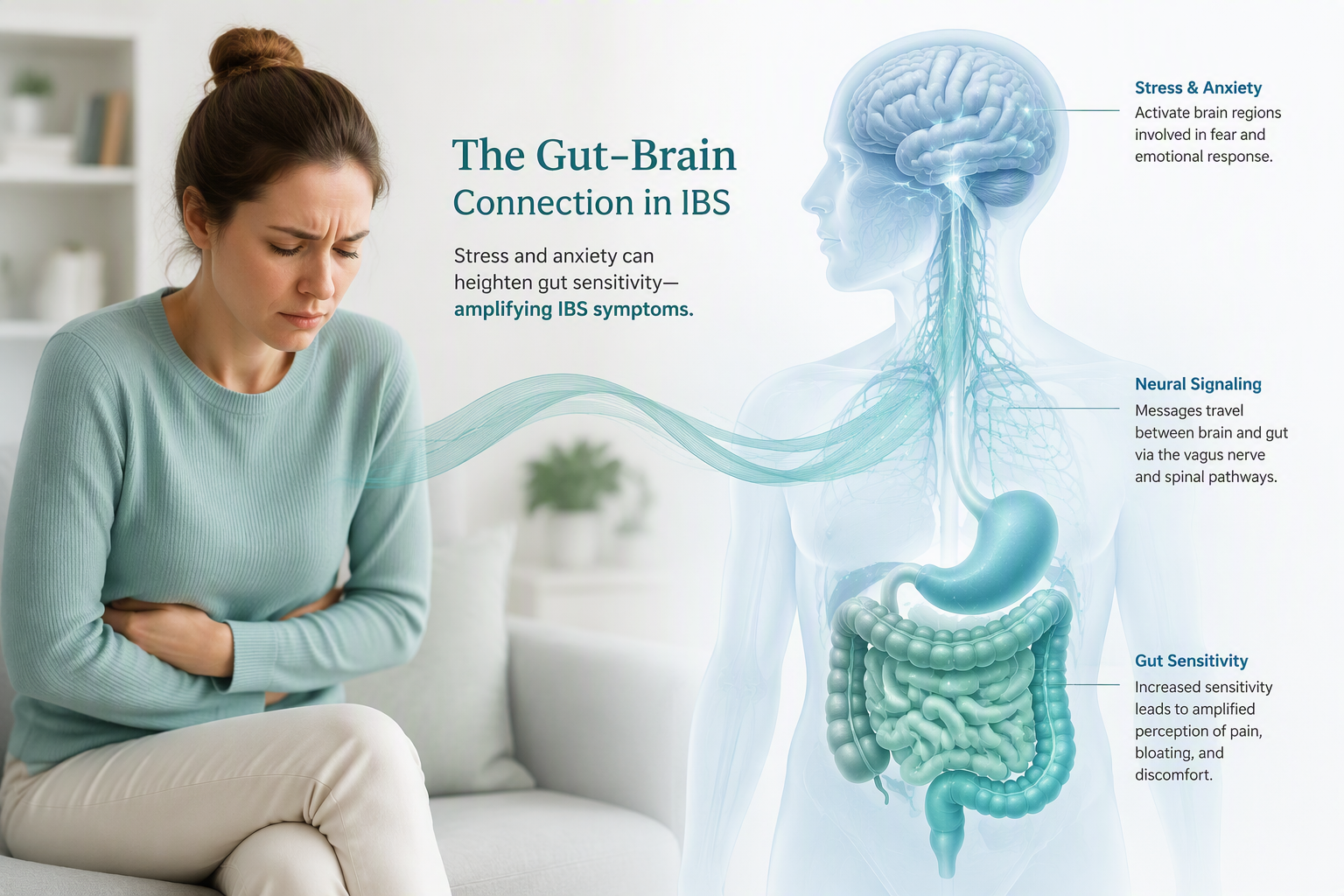
That two-way gut-brain connection helps explain how anxiety can amplify IBS symptoms, but symptom intensity still warrants attention. Digestive discomfort may trigger worry about bowel urgency in public, an accident, or finding a bathroom. In response, anxiety can activate the sympathetic nervous system, which may influence gut movement and make sensations feel stronger, making symptom management more difficult.
Hypervigilance means constantly scanning your body for possible danger. With hypervigilance and IBS, ordinary rumbling, cramps, nausea, bloating, gas, stretching, or bowel activity may feel unusually intense. Visceral hypersensitivity is the medical term for digestive nerves responding more strongly to normal movement or stretching. A sensation can therefore feel urgent even when there has been no major physical change.
Avoidance and repeated safety checks may lower fear briefly but keep the cycle going:
- Skipping meals with IBS: Eating less before an appointment may seem safer, but hunger can also make body sensations harder to interpret.
- Checking for bathrooms: Staying near a toilet or repeatedly reviewing bathroom locations can teach your brain that work, travel, or public places are unsafe.
- Limiting activities: Avoiding meetings, classrooms, errands, or family plans can shrink your routine and increase worry about situations you still need to attend.
Tracking patterns can help you prepare for a healthcare visit without treating every sensation as an emergency. apps for tracking IBS may help you record meals, stress, bowel habits, and symptoms.
Small calming practices, including deep breathing for IBS, may ease the body’s alarm response while you assess what you need. Anxiety is one influence among several, so symptom changes deserve prompt attention. A qualified healthcare professional can assess persistent, severe, or worsening symptoms. This content is for educational purposes only and is not a substitute for personalized medical advice.
How Is IBS Anxiety Different From OCD?
That symptom cycle does not make IBS-related bathroom anxiety automatically OCD. It can be a realistic response to urgency, diarrhea, constipation, bloating, or fear of public incontinence in a specific setting, such as a bus, meeting, store, or unfamiliar town. Avoiding places with uncertain restroom access may resemble agoraphobia, but that pattern alone does not confirm an anxiety disorder.
The key difference is what drives the fear. IBS-related worry usually focuses on a possible physical event, such as not reaching a bathroom in time. OCD more often involves persistent, unwanted thoughts, images, or doubts that are difficult to dismiss, even when the feared event is unlikely or unrelated to current digestive symptoms.
Practical preparation is not automatically a compulsion. Finding a restroom before travel, carrying medication, or packing spare clothing can be reasonable IBS safety behaviours. These actions may become compulsive when intrusive thoughts and rigid rules drive them, especially when you repeat them until things feel “just right.” Repeated toilet visits, sitting on the toilet too long, changing plans, or seeking reassurance can reflect either practical coping or a compulsive pattern, depending on their purpose and intensity.
A useful self-check looks at the pattern:
- Situation-linked fear: Worry stays tied mainly to urgency, pain, or places with limited restroom access.
- Persistent intrusions: Unwanted thoughts or doubts continue across settings, even when digestive symptoms are quiet.
- Ritual-like responses: Checking, washing, reassurance seeking, or avoidance follows strict rules instead of your actual physical needs.
- Body alarm: Sweating, a racing heart, abdominal discomfort, and rising fear can occur without becoming a panic attack.
IBS behaviour change may involve practical planning, gradual routine adjustments, and cognitive behavioral therapy for IBS. Deep breathing for IBS may ease physical tension, but it does not show that symptoms are “only anxiety.” A qualified professional can assess public restroom anxiety, OCD, agoraphobia, and other conditions without dismissing digestive symptoms. Persistent or worsening distress calls for personalized medical or mental health support.
How Can You Manage IBS Bathroom Anxiety Away From Home?

After distinguishing practical preparation from compulsive checking, a manageable plan for IBS bathroom anxiety relies on reasonable preparation, not constant checking. You can support physical symptoms while gradually reducing habits that keep fear in control.
- Prepare once before leaving: Use the bathroom if needed, pack discreet supplies such as wipes and spare underwear, and choose one reasonable restroom. An packing an IBS kit can make work, errands, and travel feel more manageable. Repeatedly checking symptoms, exits, or toilets can become a safety behavior that reinforces IBS anxiety.
- Choose practical access options: At work, note the nearest restroom and tell a trusted person only what's necessary. During travel, an aisle seat or a sensible stop may help. People managing IBS while flying often do better with one or two realistic options than with a detailed map of every bathroom. Immediate access isn't possible in every setting, so a flexible plan is more useful than a guarantee.
- Respond steadily when urgency rises: Pause and breathe slowly, making the exhale longer than the inhale. An intense bowel sensation is uncomfortable, but it doesn't always mean an accident is imminent. Walk steadily toward the planned restroom, ask staff calmly for help if needed, and follow your clinician's advice rather than adding unapproved medicine, IBS supplements, or other products. This approach also applies to IBS toilet anxiety, which can make normal sensations feel more urgent.
- Treat a near-accident as an event, not a verdict: Move somewhere private, use your prepared supplies, and give yourself time to settle. If you can, resume the activity or complete a smaller version of it. New, frequent, severe, or changing episodes need guidance from a qualified healthcare professional because anxiety may overlap with another digestive problem.
- Reduce safety behaviors gradually: Small changes are usually easier to maintain than abandoning every coping strategy at once. Try these adjustments:Extended toilet sitting: Shorten a one-hour sitting period by a small amount. Repeated visits: Delay one "just in case" trip briefly instead of returning four or five times. Meal skipping: Eat a familiar meal before attempting a less predictable food. Bathroom mapping: Keep one or two known options rather than searching for every restroom.
This form of IBS behaviour change focuses on reducing checking and avoidance, not achieving perfect symptom control.
- Build confidence through graded practice: Begin with a brief trip near a familiar restroom, then progress to a store, part of a workday, or public transportation. Record which safety behavior you reduced and what actually happened. CBT for IBS can provide structured support when avoidance, bathroom fears, or worry about body sensations remain difficult to change.
Pain can heighten fear, so comfort measures may have a place in your plan. A fitted, wrap-around abdominal heating pad may stay in position while you sit better than an oversized back-and-shoulder pad, and choosing a heating pad for IBS comes down to fit rather than size. A belted wrap with an adjustable strap holds heat against the abdomen while you stay upright, and an adhesive heat wrap is discreet enough to wear under clothing at work. Heat may support comfort, but it doesn't treat IBS or anxiety, and prolonged high heat can irritate skin.
Caution: Individual responses to dietary or supplement choices vary. Digestive symptoms can have many causes, so consult a qualified healthcare professional for persistent, severe, or worsening symptoms. Results vary by person, and any dietary or supplement advice should be individualized.
When Should You Seek Medical Or Mental Health Support?

Even with a practical plan for IBS bathroom anxiety, persistent, changing, or disruptive bowel symptoms deserve medical review, even when anxiety seems connected to them. Make an appointment if symptoms worsen, differ from your usual pattern, or affect work, sleep, eating, travel, intimacy, or relationships. Seek review sooner without a confirmed IBS diagnosis, when symptoms begin later in life, or when self-management stops helping. Ongoing digestive symptoms should not automatically be blamed on stress.
Before symptoms are attributed to IBS anxiety, a clinician may review your history, perform an examination, and order blood or stool tests. These checks can help assess inflammatory bowel disease, Crohn's disease, colitis, or celiac disease. Ruling out other conditions protects against dismissing physical illness as worry and helps guide appropriate treatment.
Urgent medical care is needed for:
- Severe or rapidly worsening abdominal pain
- Repeated vomiting, fainting, marked weakness, or dehydration
- A swollen or rigid abdomen
- Black or bloody stools, or bleeding that does not stop
- Unexplained weight loss or persistent fever
- Symptoms that repeatedly wake you from sleep
Call emergency or crisis services immediately if overwhelming distress includes thoughts of self-harm. Bleeding that continues, severe weakness, or rapid worsening should not wait for a routine appointment.
Mental health support can help when fear of urgency or an accident starts narrowing your life. Avoiding travel, social events, work, intimacy, or ordinary errands matters even when bowel symptoms seem manageable. Mapping every bathroom, checking your body repeatedly, staying home "just in case," or over-Googling IBS may signal that anxiety needs attention too.
Ask a qualified mental health professional about Cognitive Behavioral Therapy (CBT) when worry, embarrassment, or catastrophic predictions remain strong after medical guidance. CBT may use gradual behavioral experiments to test beliefs about bathroom access, accidents, and other people's reactions. This approach treats the fear cycle without suggesting that physical symptoms are imaginary.
If you want to read ahead of an appointment or work alongside therapy, Reclaim Your Life from IBS by clinical psychologist Melissa G. Hunt sets out the same cognitive model in workbook form, covering reframing catastrophic thoughts and reducing avoidance. It is a structured self-help resource and an adjunct to care, not a replacement for working with a clinician.
When bowel symptoms and avoidance occur together, coordinated care addresses both needs:
- Arrange medical review for persistent, unexplained, or changing symptoms.
- Consider anxiety-focused support when fear causes avoidance or daily impairment.
- Share symptom patterns and anxiety-related behaviors with primary care, gastroenterology, or qualified mental health professionals.
Information about IBS in the workplace and disability support for IBS may help when symptoms affect employment or daily function. Medical and mental health care work best together when digestive symptoms and bathroom fear reinforce each other.
IBS Bathroom Anxiety FAQs
These FAQs address common concerns about urgency, fear of public accidents, physical symptoms, and the brain-gut connection. They offer a calm, respectful starting point for understanding IBS bathroom anxiety and the support options discussed below.
1. How Common Is IBS Bathroom Anxiety?
Bathroom anxiety is common with IBS, but it isn't universal. A 2019 systematic review and meta-analysis of 73 studies found anxiety symptoms in about 39% of people with IBS, and diagnosable anxiety disorders in about 23% (source). That is meaningful overlap, not evidence that everyone with IBS develops a fear of accidents or of needing the toilet.
Urgency, unpredictable diarrhea or constipation, and bowel urgency in public may lead you to plan routes, avoid travel, limit social activities, or feel tense at work or school. Persistent anxiety looks different from occasional concern: it can involve fear of pooping in public, repeated toilet visits, or sitting on the toilet far longer than needed.
2. Can Fear Of Accidents Trigger Bathroom Anxiety?
Yes. Fear of a bowel accident can cause anticipatory anxiety before diarrhea or an accident occurs. When you’re leaving home, going to work, traveling, or entering an unfamiliar place, attention may stay focused on urgency and embarrassment. That can make ordinary activities feel unsafe, even when symptoms aren’t happening.
Repeated safety behaviors may keep the fear going, including sitting on the toilet for a long time, returning several times “just in case,” constantly locating bathrooms, or skipping meals. Proportionate preparation is more useful: identify a practical bathroom option, carry simple supplies if helpful, and continue your plans without repeated checking or avoidance.
3. Does IBS Bathroom Anxiety Affect Sleep?
Yes. IBS bathroom anxiety can disrupt sleep when worry about urgency or an accident keeps you alert. This hypervigilance and IBS may make normal sensations feel threatening, while IBS bloating, IBS constipation, cramps, or diarrhoea-predominant IBS can cause real discomfort. Poor sleep can increase fatigue and make digestive symptoms and anxiety harder to manage the next day, reinforcing the cycle.
Nighttime symptoms don’t automatically mean IBS is worsening. Seek qualified medical guidance if sleep problems, bathroom fears, or symptoms persist, become severe or worsen, or affect your concentration, work, mood, daily functioning, or safety.
4. Can Bathroom Anxiety Happen Without An IBS Flare?
Yes. Bathroom anxiety can occur even when your IBS symptoms are quiet. Learned fear, repeated checking, or hypervigilance may make normal rumbling, mild cramps, nausea, or urgency feel dangerous, while a hard-to-reach restroom at work, while traveling, in a lecture, or in a crowded marketplace can heighten that threat response. The sensation is real, but it doesn’t automatically signal an active IBS flare.
Anxiety shouldn’t explain away new bowel changes. Seek medical evaluation for persistent, severe, worsening, or unexplained symptoms, especially when they differ from your usual pattern. A qualified healthcare professional can assess physical causes, while mental health support may help reduce learned fear and avoidance.