


Reaching for a supplement instead of care that works is the real risk in this topic. Probiotics aren’t a treatment for anxiety or depression, though a few strains have shown modest effects on self-reported stress in short trials.
Study quality is what makes the honest answer so hedged. Trials differ so much in strains, doses, participants, and the questionnaires they use that reviewers often can’t pool the results, and the clearest signal sits with depression symptoms rather than mood in general. A four-week change on a stress questionnaire doesn’t predict how someone handles a difficult month.
IBS and mental health need separating too. A probiotic that eases gut symptoms may lift mood because the gut symptoms eased, which isn’t the same as acting on mood directly.
Probiotics and Mental Health Key Takeaways
- Probiotics are not a treatment for anxiety, depression, or low mood.
- The gut-brain axis is real, but it does not make probiotics psychiatric medicine.
- Trials vary so widely in design that reviewers often cannot pool results.
- The clearest signal is for depression symptoms rather than mood generally.
- Questionnaire changes over weeks do not predict long-term wellbeing.
- Evidence belongs to named strains, never to a species or CFU count.
- Persistent or worsening mental-health symptoms need qualified support, not a supplement.
Can Probiotics Support Mental Health?

Probiotics may support mental wellbeing for some people, but they are not a proven treatment for depression, anxiety, or low mood. Evidence on probiotics and mental health is mixed, so supplements should not replace therapy, prescribed medication, or prompt evaluation for symptoms that are persistent, severe, or worsening.
The gut-brain axis is the two-way communication system linking your digestive tract and brain. Researchers are studying whether gut microbes may affect:
- Immune activity: Inflammation-related signals can influence both digestive function and brain processes.
- Gut signaling: Nerves and hormones carry messages between the intestines and brain.
- Brain-related compounds: Gut microbes may influence substances involved in brain communication.
These pathways are plausible, but they do not mean that changing gut bacteria will predictably change your mood or emotional health.
Research does not treat probiotics as one interchangeable category. Studies have examined probiotic strains including Lactobacillus casei, Lactobacillus helveticus, Lactobacillus acidophilus, and Bifidobacterium longum. Many products combine several organisms, which makes it difficult to know whether one strain, the blend, or another part of a participant’s routine contributed to a result.
Some randomized trials have reported lower stress or depression questionnaire scores after several weeks. One eight-week study of 110 participants found a change in these self-reported measures, but it cannot show that every person, or every store-bought product, will have the same effect (source). Other trials have found little or no clear benefit, leaving the findings encouraging but preliminary.
A simple recommendation is not possible because studies differ in important ways:
- Participants: Research may include healthy adults, people experiencing stress, or people with digestive symptoms rather than people diagnosed with depression or anxiety.
- Products: Strain identity, dose, combinations, and product quality vary widely across studies and brands.
- Study length: Many trials last only a few weeks, so it is unclear whether any changes last.
- Other influences: Sleep, diet, counseling, medication, and life stress can affect mental health and make a probiotic’s role harder to isolate.
Research on irritable bowel syndrome (IBS) can help you evaluate a probiotic label, but it does not establish mental-health benefits. For example, a small study of Lactiplantibacillus plantarum 299v, formerly called Lactobacillus plantarum 299v, reported abdominal-pain resolution in all 20 people taking the strain compared with 11 of 20 taking placebo. That result concerns abdominal pain in a small IBS study, not anxiety, depression, or mood.
When considering a supplement, a named clinical strain code matters more than a large colony-forming unit (CFU) number. Codes such as 35624 or 299v let you match a product to the exact organism studied. A label that lists only Bifidobacterium longum, for example, may refer to a different organism from the one tested in a specific trial.
Food and supplements also serve different purposes. Yogurt and kimchi may contain live cultures and can fit a digestive-friendly eating pattern, but they are not mental-health treatments. Capsules and powders may identify probiotic strains more precisely, although their contents, doses, and quality can differ by brand and batch.
The health benefits of probiotics should be weighed separately from possible effects on mood. Claims about probiotics for belly fat also need their own evidence rather than conclusions drawn from gut-brain research.
In the United States, supplements are not regulated like prescription drugs by the U.S. Food and Drug Administration (FDA). A label does not confirm that a product has been tested for your specific symptoms or mental-health concern.
If stress and digestive symptoms seem connected, consider probiotics a possible adjunct with uncertain mental-health effects, not a shortcut to feeling better.
How Does the Gut-Brain Axis Work?
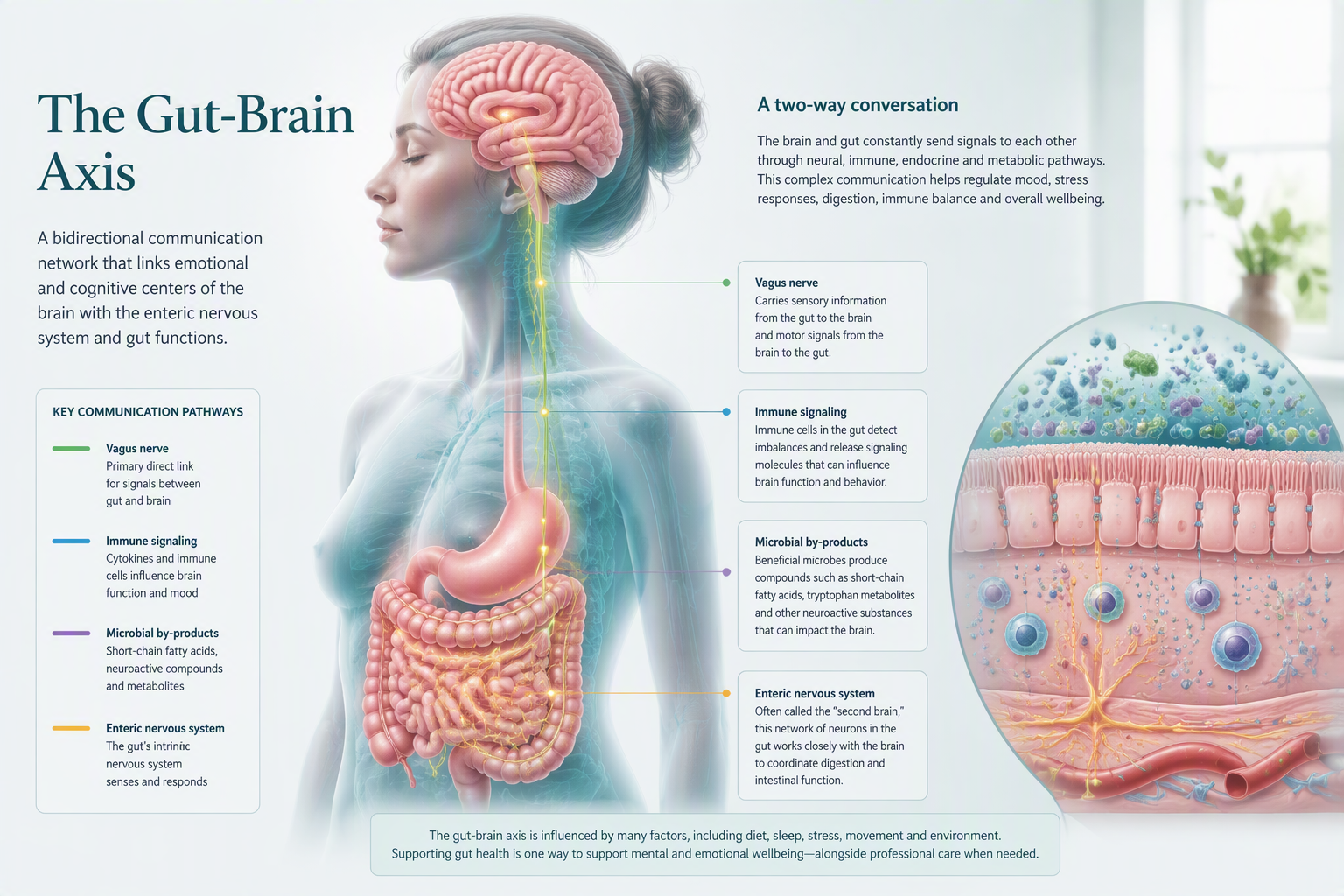
To explain why probiotics are being studied despite those uncertain effects, the gut-brain axis is a two-way communication network linking your digestive tract with your brain and spinal cord. It connects the enteric nervous system, the nerve network in the gut, with the central nervous system. Brain signals can affect digestion, appetite, pain sensitivity, and bowel habits, while messages from the gut can influence stress responses and mood regulation.
That connection does not mean digestive symptoms are “all in your head,” nor does it show that gut changes cause a mental-health condition. Digestive discomfort and emotional wellbeing may affect each other, but neither is a complete explanation for the other.
The vagus nerve is a major physical pathway between the gut and brain. Gut-to-brain messages include information about digestion and fullness, while brain-to-gut signals can change intestinal movement and digestive secretions. Stress can make this system more reactive, which may contribute to nausea, urgency, constipation, or abdominal discomfort during difficult periods.
Other body systems also carry signals between the digestive tract and the brain:
- Immune signaling: Immune cells and chemical messages related to inflammation can travel throughout the body. Prolonged stress, illness, and certain digestive conditions may affect immune activity, but everyday bloating or irregular bowel movements do not automatically mean harmful inflammation is present.
- The gut barrier: Also called the intestinal barrier, this lining helps regulate what passes from the intestines into the bloodstream. Researchers are studying changes in gut barrier function and intestinal permeability, but symptoms alone cannot diagnose a “leaky gut.”
- Microbial by-products: The gut microbiota, meaning the community of microbes in your digestive tract, ferment certain fibers into short-chain fatty acids. These small chemical by-products may help support the intestinal barrier and influence immune signaling.
- Bile acids and amino acids: Gut microbes can affect bile acids and tryptophan metabolism. Tryptophan is an amino acid involved in serotonin-related pathways, and inflammation can shift some processing toward kynurenine.
- Neurotransmitter-related activity: Cells in the gut and some microbes are associated with serotonin and gamma-aminobutyric acid (GABA). These substances do not simply travel into the brain and work like psychiatric medicines. Their effects are indirect and shaped by nerve signaling, immune activity, diet, sleep, medications, and your overall health.
This framework can help explain why digestive symptoms and mood sometimes seem closely connected. Anxiety, poor sleep, gastrointestinal illness, and ongoing discomfort can form a feedback loop. For example, abdominal pain may disrupt sleep, leaving you more stressed and more sensitive to discomfort the following day.
Many factors can affect bowel patterns, energy, motivation, and mood at the same time:
- Sleep loss: Poor sleep can heighten stress sensitivity and change digestive function.
- Dietary changes: A shift in fiber intake, meal timing, or trigger foods can affect symptoms without pointing to one underlying cause.
- Infections and medications: A stomach infection, antibiotics, and other medicines may affect digestion and how you feel overall.
- Hormones and chronic conditions: Hormone shifts and existing health conditions can influence both digestive symptoms and emotional wellbeing.
Probiotics and digestive health may matter for some digestive concerns, but a biological link between the gut and brain does not establish a treatment for anxiety, depression, stress, or other mental-health conditions. Research on whether probiotics boost immunity addresses a separate question from whether a specific strain changes mood or cognition.
Laboratory research, animal studies, and small human studies show that microbes, metabolites, immune signals, and nerve pathways can interact. Those findings make the gut-brain axis biologically plausible, but mechanisms alone do not show that changing the gut microbiota with a probiotic will reliably improve mood, anxiety, depression, stress, or cognitive function.
The more useful question is whether well-designed human trials of a named probiotic strain find consistent, meaningful benefits for a specific outcome. Results from one strain, dose, study group, or short trial cannot automatically apply to another product or to everyone with digestive symptoms. Broad claims about mood or stress deserve extra caution for that reason.
Persistent, new, severe, or worsening digestive symptoms need individualized assessment from a qualified healthcare professional. Significant anxiety, low mood, or thoughts of self-harm also need prompt professional support rather than self-treatment alone.
What Does Research Show for Mood and Stress?
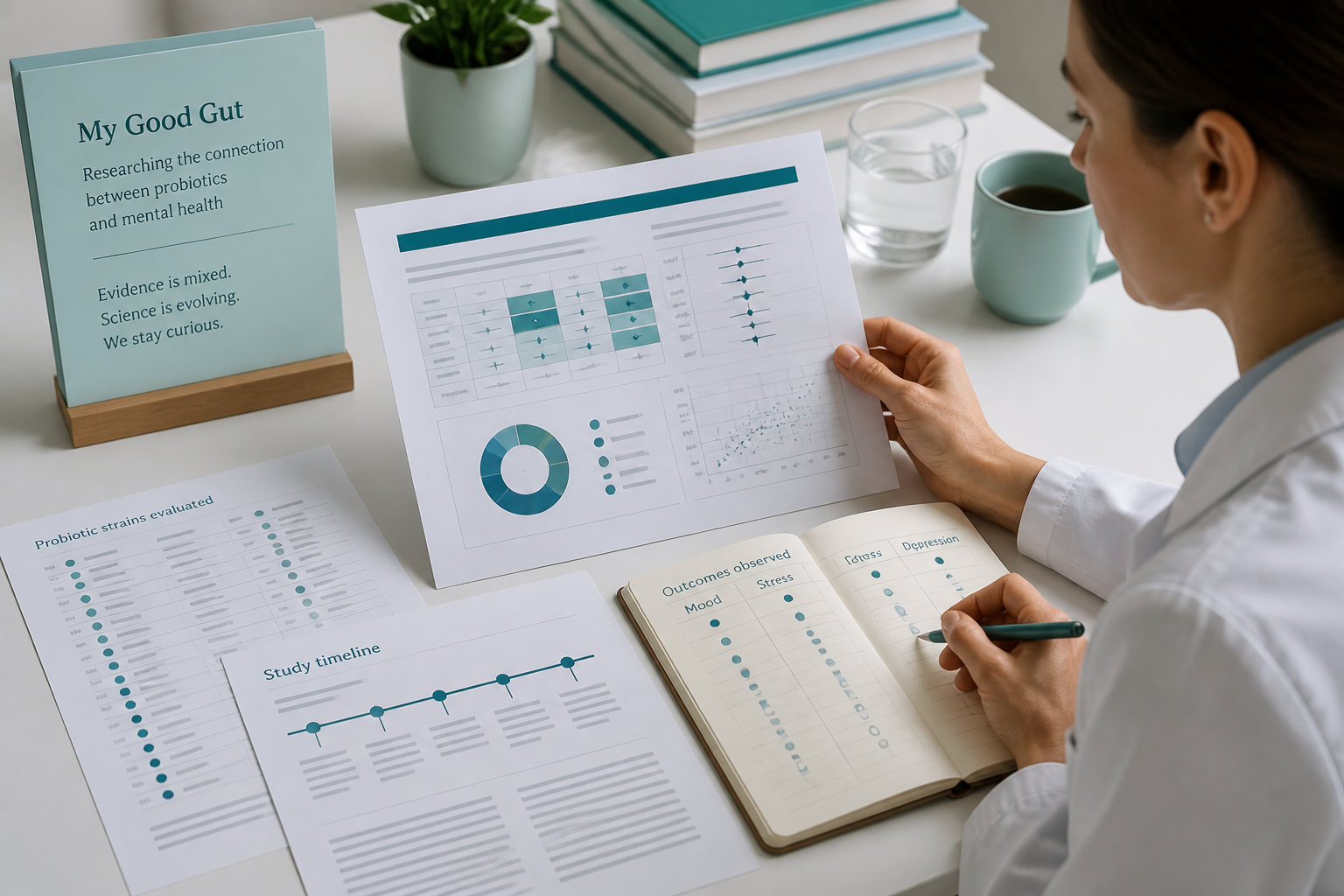
Although the gut-brain axis is biologically plausible, research suggests that certain probiotics may modestly affect self-reported mood or stress in some adults, but the findings are too mixed to support probiotics as treatment for depression, anxiety, or other mental-health conditions. A 2024 systematic review of randomized trials in adults with psychiatric and cognitive disorders covered 51 studies and 3,353 participants, and found the clearest signal for depression symptoms (source). Even so, the reviewers noted that variation in strains, treatment approaches, and clinical presentations limits how far those findings can be compared or generalized.
That limitation matters because mental health is not one outcome. A lower stress score does not automatically mean better day-to-day coping, fewer anxiety symptoms, a measurable gut-microbiome change, or improvement in a diagnosed disorder. Several studies also found no statistically significant benefit, which is important context alongside the more promising results.
Researchers used a wide range of questionnaires and tests:
- Depression measures: Several trials used the Beck Depression Inventory to assess depressive symptoms.
- Combined symptom measures: Others used the Depression Anxiety Stress Scales, which produce separate scores for depression, anxiety, and stress.
- Stress and anxiety measures: The Perceived Stress Scale and the State-Trait Anxiety Inventory both appear across this literature.
- Hospital-based screening: Some trials used the Hospital Anxiety and Depression Scale.
- Other outcomes: Some studies measured sleep quality, cognitive performance, psychological wellbeing, or negative mood with different tools.
Lower scores on these questionnaires can be useful research findings, but they do not establish that a supplement can replace an assessment, therapy, or prescribed medication. This distinction is especially important if symptoms are persistent, disruptive, or worsening.
Most of the studies were also brief, commonly running from four to twenty-four weeks. A short study can pick up changes in a questionnaire score over days or weeks, particularly for perceived stress or mood. It cannot show whether a benefit lasts, prevents relapse, or performs as well as established mental-health care.
The evidence is easier to interpret when each outcome stays separate:
Outcome | What some studies found | What the evidence cannot show |
|---|---|---|
Depression | Some trials reported lower depressive symptoms. | That probiotics treat major depressive disorder or replace mental-health care. |
Anxiety | A few studies found changes in anxiety symptoms or related questionnaire scores. | That probiotics are an established treatment for anxiety disorders. |
Stress and mood | Some short trials found modest changes in perceived stress or negative mood. | Better coping with life stressors or lasting emotional benefit. |
Sleep and cognition | A small number of trials reported gains on specific sleep or thinking tests. | That all probiotics improve sleep or sharpen thinking for adults. |
One randomized, placebo-controlled trial gave Lactobacillus rhamnosus HN001 to women during pregnancy and after birth, and reported lower postpartum depression and anxiety scores than placebo (source). That is a finding about one named strain in one specific population and time window, not evidence that probiotics treat major depression or anxiety disorders in general.
Earlier human research helped build interest in the gut-brain connection, but the same caution applies. Findings from one formula, participant group, and outcome measure cannot be assumed to fit another product or people with a diagnosed condition. A 2017 clinical study should be read as evidence for the specific strain and research design tested, not as a broad promise that probiotics improve mood for everyone (source).
Sleep, cognition, and psychological wellbeing remain secondary and unsettled outcomes. Some trials reported better sleep scores, higher wellbeing ratings, or improvement on a particular cognitive task. However, the populations, probiotic preparations, and tests varied substantially. A better score on one sleep survey does not mean a probiotic treats insomnia, and a short cognitive test cannot predict better concentration during a demanding workweek.
Strain identity is one reason broad claims fall apart. There is no single probiotic for mood and stress. Evidence for a named strain or multi-strain formula does not transfer to a product that shares only a genus or species name. Lactobacillus and Bifidobacterium are broad categories, so a label needs more detail than a species name to connect a product with a study.
If you are comparing probiotics, the details that matter include:
- Strain code: Look for letters and numbers, such as 35624, DDS-1, or 299v, rather than relying only on the species name.
- Full match: The genus, species, and strain code should match the product studied.
- Outcome studied: Research on IBS symptoms, stress, and mood answers different questions.
- Formula tested: Evidence for a multi-strain blend applies to that exact combination, not every product with similar species.
- Realistic expectations: Even a well-designed short trial cannot predict the same response for every person.
A high colony-forming unit, or CFU, count does not make up for missing strain information. Without a clinical strain code, it can be hard to tell whether a product matches the probiotic used in a study. That is particularly relevant if you have IBS, bloating, constipation, or irregular bowel habits and are considering a supplement for more than one concern.
Some short trials suggest modest self-reported benefits for mood or stress, while others show no meaningful difference. The mixed findings and major differences across studies do not support broad treatment claims for depression, anxiety, sleep problems, or cognitive concerns.
Persistent low mood, worsening anxiety, major sleep disruption, or thoughts of self-harm need qualified mental-health support rather than a supplement-only plan. Persistent, severe, or worsening digestive symptoms also deserve medical guidance because they can have many causes.
Why Must IBS and Mental Health Evidence Stay Separate?
Irritable bowel syndrome and mental-health symptoms can influence each other through gut-brain signaling, but they are still separate clinical outcomes. Less abdominal pain, bloating, or bowel urgency does not necessarily mean less anxiety or depression. In the same way, a better mood score does not show that an intervention treated IBS.
This distinction matters when weighing claims about prebiotics and mental health. People with IBS may experience anxiety and depression more often than people without IBS, so digestive studies and mental health studies should be read separately (source). Stress can make digestive symptoms feel harder to manage. Shared factors, including biology, sleep disruption, food concerns, and the daily burden of symptoms, may contribute to both. That overlap does not show that one condition causes the other or that changing the gut microbiome will reliably help manage either condition.
A study can support only the outcome it measured in the people it enrolled. When reading probiotic or prebiotic research, check the following details:
- Population: Whether participants had irritable bowel syndrome, diagnosed anxiety or depression, or another condition.
- Ingredient: The exact probiotic strain, prebiotic ingredient, dose, or combination tested.
- Outcomes: Whether researchers used validated measures of digestive symptoms, anxiety, depression, stress, cognition, or quality of life.
An IBS study that measures pain, stool pattern, rectal comfort, or digestive quality of life provides IBS-specific evidence. It cannot establish a mental-health benefit simply because the gut and brain communicate. Similarly, an anxiety score may be meaningful for mood research without showing that constipation, diarrhea, or abdominal discomfort improved.
One 79-participant IBS study of short-chain fructooligosaccharide found an approximately two-point reduction in anxiety scores, higher fecal bifidobacteria, and improved quality of life and rectal comfort. It was one prebiotic study in an IBS population, not evidence that all probiotics or prebiotics treat anxiety, depression, or IBS. The study result should also be read alongside its design, completion information, and funding details, which affect how confidently findings can be applied.
Possible biological pathways are not clinical proof. Changes in gut bacteria, short-chain fatty acids, inflammation-related signals, and gut-brain communication may help explain why researchers study these products. On their own, however, those changes cannot show meaningful improvement in diagnosed IBS, anxiety, or depression.
A mood result can stand even when stool consistency does not differ significantly between groups. The reverse is also true: a digestive result does not establish a mood benefit. Keeping these outcomes separate prevents a plausible mechanism from being mistaken for treatment evidence.
Strain identity matters just as much as the outcome. Evidence for Bifidobacterium longum subsp. infantis 35624 applies to that specific strain and the IBS symptoms studied, not to every product labeled Bifidobacterium longum. A species name alone is not enough to connect a supplement to a clinical trial.
The same caution applies to 299v. Labels may use either Lactobacillus plantarum or Lactiplantibacillus plantarum, but the 299v code is the consistent identifier. In a small IBS trial with 20 participants in each group, all 20 people taking 299v reported resolution of abdominal pain, compared with 11 of 20 taking placebo (source). That finding is limited by the small sample and does not show treatment for anxiety, depression, or every IBS symptom.
A label or study claim can be interpreted this way:
What the label or study identifies | What it may support | What it does not establish |
|---|---|---|
Bifidobacterium longum subsp. infantis 35624 studied for IBS symptoms | An IBS-specific discussion of that strain | That all Bifidobacterium longum products improve mood |
Lactiplantibacillus plantarum 299v studied for abdominal pain | A cautious finding for IBS pain with the tested strain | Treatment for anxiety, depression, or all IBS symptoms |
A CFU count without a strain code | The listed number of live organisms | A match to a clinical trial or a specific outcome |
Persistent digestive symptoms and low mood each deserve attention from a qualified healthcare professional. A strain-matched probiotic may be an individualized option to support your gut health, but it should not replace mental-health assessment, therapy, prescribed treatment, or prompt care for severe or worsening symptoms.
Individualized choices can account for both digestive and mental-health concerns.
How Do You Match a Strain to a Product?
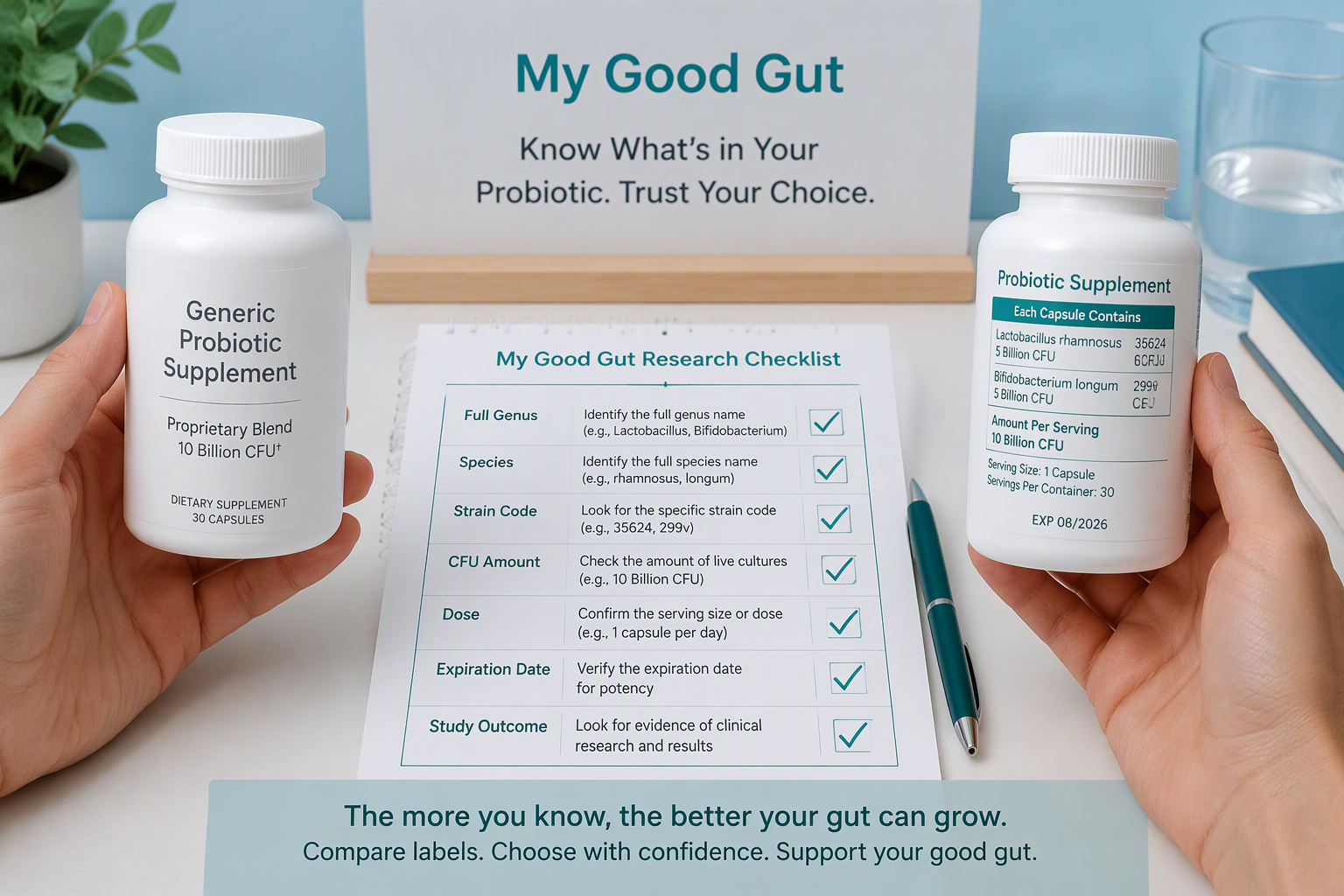
For individualized choices that keep IBS and mental-health evidence separate, a probiotic product matches a study only when the full strain identity is the same. Check the genus, species, subspecies when listed, and strain code. The code is the deciding identifier. For example, Bifidobacterium longum subsp. infantis 35624 is not interchangeable with a Bifidobacterium longum product that does not name 35624. Taxonomy can change over time, but codes such as 35624 and 299v remain the dependable way to connect research with a retail product.
Front-label claims are not enough for this comparison. Look in the Supplement Facts panel, ingredient list, manufacturer’s product page, or a product-specific certificate of analysis. A review of leading digestive products found that clinical strain codes were uncommon, so many products cannot be reliably linked to published studies. Labels that list only Lactobacillus, Bifidobacterium, Bifidobacterium infantis, or Lactobacillus plantarum do not provide enough detail to match a coded study.
A useful strain-to-product check includes the following:
- Full identity: Match the genus, species, subspecies if applicable, and exact strain code. A species match without the code is not a research match.
- Daily dose: Compare the colony-forming units, or CFUs, taken each day in the study with the product’s labeled serving. The same strain at a substantially different dose may not have the same effect.
- Schedule and format: Check how often participants took the product, for how long, and in what form. A capsule, powder, food, or delayed-release formula may not deliver organisms in the same way.
- Viability through expiry: A label may guarantee live organisms only at manufacture or through the expiration date. An expiry guarantee is more useful because probiotic activity can decline during storage.
- Product-specific details: Batch variation and label accuracy can affect what is actually in a supplement. A high CFU number or a familiar species name cannot fill gaps in strain-level information.
The same careful approach keeps digestive findings separate from mental-health claims. Research on the gut microbiota, gut microbiome, and gut barrier helps explain why scientists study the gut-brain axis. Those mechanisms do not show that a particular probiotic improves anxiety, depression, or another mental-health condition.
Before considering a product for mood or stress, separate direct human research on depression, anxiety, perceived stress, negative mood, or cognition from research on digestive outcomes. Studies of bloating, bowel habits, gut transit, and irritable bowel syndrome can matter if those are your symptoms. They do not automatically show a benefit for mental wellbeing.
Align Probiotic is a useful example of a valid product-to-strain connection because it identifies B. longum subsp. infantis 35624. Research on digestive symptoms and IBS can therefore be discussed in relation to that exact strain. Even so, digestive research on 35624 does not establish that Align Probiotic treats low mood, depression, or anxiety.
Lactobacillus plantarum 299v illustrates why the code matters as much as the species. A small IBS study reported abdominal-pain improvement with 299v, but that finding belongs to 299v and its study conditions. It does not transfer to an unspecified L. plantarum product or to a differently coded Lactobacillus acidophilus strain marketed for similar concerns.
Randomized controlled trials need more than a quick look at the headline result. The details below determine whether the findings are relevant to your situation:
- Participants: Check whether researchers studied people with IBS, healthy adults, or people receiving mental-health treatment. Results from one group may not apply to another.
- Treatment context: Note whether the probiotic was tested alone or alongside usual care, medication, diet changes, or another treatment.
- Outcome measured: Stool frequency, abdominal pain, perceived stress, and cognitive test scores are different outcomes. Improvement in one does not mean improvement in the others.
- Study length and completion: Short trials and substantial dropouts can limit how confidently a result applies outside the study.
- Funding and affiliations: Manufacturer funding or author ties do not automatically invalidate findings, but they provide important context.
Mixed and null findings deserve the same attention as positive ones. Probiotics may support your gut health in some circumstances, but they do not replace a mental-health assessment, prescribed treatment, or professional care for persistent anxiety, depression, or concerning mood changes.
Multi-strain blends require an even closer match. A trial result belongs to the exact formula tested, including every disclosed strain code, dose, schedule, and delivery format. Overlapping species are not enough. A blend may contain ten named probiotic strains while only a few have appeared in human randomized controlled trials, and those studies may involve unrelated outcomes such as childhood diarrhea or blood sugar measures rather than IBS or mental health.
When the code, dose, format, study population, and outcome all line up, you have a meaningful research match. When they do not, the benefit for your symptom or goal remains uncertain.
Persistent digestive symptoms may need professional evaluation.
How Can You Use Probiotics Safely?
Using probiotics safely starts with a product you can identify, the label-directed dose, and attention to symptom changes. Temporary gas, bloating, shifts in stool frequency, or mild abdominal discomfort can occur when you begin, especially with IBS or a sensitive digestive system.
Start with only one new digestive supplement at a time. That makes it easier to spot whether a probiotic, fiber product, enzyme, or another ingredient is affecting your symptoms, while more colony-forming units (CFUs) or a longer strain list does not automatically make a product safer or more effective.
Stop the product and contact a clinician if symptoms are intense, persistent, or getting worse. Severe new pain, ongoing diarrhea, or substantial bloating should not be brushed off as a normal adjustment, and a probiotic should not delay medical evaluation when symptoms may have another cause.
Probiotics are not risk-free, though serious events were uncommon in a 2023 review of 81 randomized controlled trials involving 9,253 participants. Raw adverse-event counts were 11.62% among people taking probiotics and 10.61% among those taking placebo (source).
Those figures are not a formal safety comparison. Many trials did not determine whether an event was caused by the probiotic, and some recorded ordinary IBS symptoms as adverse events without separating them from a flare. The results offer useful context, but they do not show that every probiotic product has the same safety profile.
A careful label check helps you match the product in your hand to the research behind it. Before trying a probiotic, look for:
- Full strain identification: The label should name the genus, species, and strain code, such as Bifidobacterium longum subsp. infantis 35624 or Lactiplantibacillus plantarum 299v.
- Live-organism amount through expiration: Look for a CFU amount guaranteed through the expiration date, rather than a count measured only when the product was made.
- Storage instructions: Refrigeration, room-temperature storage, and protection from heat or moisture can affect whether the organisms remain active.
- Traceable product details: A manufacturer contact method, lot number, and checkable expiration date make it easier to identify a product if concerns arise.
The U.S. Food and Drug Administration (FDA) framework makes product-specific verification especially important. That does not mean every probiotic is poor quality, but label accuracy and organism activity can vary between products and batches.
The strain code is often more useful than the broad name on the package. A scan of roughly 30 top-selling probiotics marketed for IBS and digestive concerns found that almost none displayed a clinical strain code. Without that code, it is difficult to know whether the bottle contains the exact organism studied for the use you have in mind.
Bacterial names can change when taxonomy is updated, but the strain number remains consistent. Match 35624 or 299v when comparing products, even if one label uses an older genus name and another uses a newer one. Products should not be treated as interchangeable simply because they both include Bifidobacterium or Lactobacillus.
This matters when you are considering a product for digestive symptoms and mood concerns. Research on a strain for IBS does not establish that the same product treats anxiety, depression, stress, or problems with cognition. A strain-specific label helps set appropriate expectations instead of relying on broad marketing claims.
Medication questions need individualized guidance. Evidence for routine interactions between probiotics and antidepressants is limited, but limited evidence does not prove that interactions cannot happen. Ask a pharmacist or clinician before combining a probiotic with prescription medicine, and do not change prescribed treatment because of a supplement label.
Extra caution is appropriate in these situations:
- Weakened immune system: Risks may differ from those for otherwise healthy adults.
- Serious illness, recent hospitalization, or major surgery: These circumstances call for medical guidance before using live microorganisms.
- Central venous catheter: A central line can raise concern about rare bloodstream infections.
- Pregnancy, childhood, or complex health conditions: A qualified clinician can help determine whether a product is appropriate.
Seek prompt medical care for fever, severe or escalating abdominal pain, repeated vomiting, dehydration, blood in the stool, unintentional weight loss, or major bowel-habit changes. These symptoms need assessment whether or not you have started a probiotic.
Request clinician review if digestive symptoms persist or worsen, or if anxiety or depression affects daily life. Probiotics do not replace diagnosis, therapy, or prescribed mental-health treatment.
When Should You Seek Mental Health Support?
Because probiotics cannot replace care for persistent symptoms, brief stress, low mood, worry, poor sleep, and irritability can happen during difficult periods without signaling a mental health condition. It can be reasonable to keep an eye on these feelings when they are mild, getting better, and not interfering with work, relationships, self-care, or other responsibilities. Regular meals, sleep, movement, and time with trusted people may support your daily routine, but you do not need to handle distress alone indefinitely.
Professional support is a good next step when symptoms last longer than a short rough patch, keep coming back, worsen, or limit daily life. This can include depression, depressive symptoms such as hopelessness or losing interest in activities you usually value, and anxiety symptoms such as persistent worry, panic, racing thoughts, or physical tension. Significant changes in sleep, appetite, concentration, energy, or motivation also deserve a conversation with a qualified healthcare or mental health professional.
The gut-brain axis can make these experiences harder to sort out because digestive symptoms and mood can affect each other. Bloating, bowel changes, and abdominal pain may add to stress, while anxiety can make digestive discomfort feel more intense. Still, neither symptom direction tells the whole story. An IBS flare, medication side effect, disrupted sleep, depression, or another medical condition can overlap, so a clinician can assess the full pattern rather than assuming stress or a supplement explains everything.
Probiotics do not replace an assessment, diagnosis, psychotherapy, prescribed medication, or established treatment for depression and anxiety. Some small studies of specific strains or synbiotics, which combine probiotics with prebiotics, have reported improved mood scores when used alongside medication. Those findings are mixed, and results apply only to the exact strain or product studied.
Digestive research and mental health research should be considered separately. Bifidobacterium longum subsp. infantis 35624 has evidence related to IBS symptoms, but that evidence does not show it treats depression or anxiety. A probiotic may be one part of a digestive-health plan, not a way to decide whether your mental health concerns warrant care.
Bring the exact probiotic strain code, along with every medication and supplement you use, to a healthcare appointment. Do not postpone therapy, a medication review, or medical assessment while waiting to see whether a supplement changes your mood.
Seek immediate help through local emergency services, an emergency department, or a local crisis service if any of the following apply:
- You May harm yourself or someone else.
- You Cannot stay safe.
- You Are in crisis or have severe confusion or agitation.
For a non-urgent visit, notes about your symptoms can help a clinician understand what is happening:
- When Symptoms began, how often they occur, and whether they are improving or worsening.
- Changes In sleep, appetite, energy, concentration, and interest in daily activities.
- Digestive Symptoms, including abdominal pain, bloating, bowel changes, and food patterns.
- Stressors, triggers, coping habits, and effects on work, relationships, self-care, or valued activities.
- Every Medication, supplement, and probiotic strain code you use.
Probiotics and Mental Health FAQs
These FAQs address what research suggests about probiotics and mental health, where the evidence is limited, and how gut-brain information can complement appropriate medical care.
1. What Are Psychobiotics?
Psychobiotics are live microorganisms, and sometimes related microbial interventions, studied for possible effects on the gut-brain axis, the communication system between your digestive tract and brain. Researchers are examining possible links with mood, stress, thinking, and emotional wellbeing, but the term does not describe a regulated product category or guarantee a mental-health benefit.
Results can vary by strain, dose, study population, and outcome measured. Evidence for one organism does not apply to another, and psychobiotics are not a replacement for therapy, prescribed treatment, or other mental-health care.
2. Can Probiotics Interact With Antidepressants?
No. Probiotics and synbiotics cannot replace antidepressants, so do not stop or reduce prescribed depression treatment for a supplement. In a randomized, double-blind, placebo-controlled eight-week trial of 50 adults with major depressive disorder, adding Lactobacillus helveticus R0052 and Bifidobacterium longum R0175 to fluoxetine lowered depression scores more than placebo (source). This small, single trial does not establish standalone treatment or apply to other strains. Discuss any combination with your prescriber before changing medication.
3. Can Fermented Foods Support Mental Health?
Fermented foods such as yogurt, kefir, kimchi, and sauerkraut contain microbes that vary by product and serving. In contrast, probiotic supplements provide identified strains at stated doses. These foods can support a nourishing eating pattern, but their cultures and effects are not standardized.
In one small four-week study, women eating probiotic yogurt twice daily appeared calmer while viewing angry or frightened faces and had lower insula activity on MRI. This stress-response finding does not show that fermented foods treat depression or anxiety, so they should complement, not replace, mental-health care.
4. Do Prebiotics Affect Mood?
Prebiotics are fermentable fibers that feed certain gut microbes, rather than live microorganisms like probiotics. Any connection between prebiotics and mental health is indirect, potentially involving microbial activity and compounds made during fermentation. In a small 79-person IBS trial, short-chain fructooligosaccharide increased fecal bifidobacteria and was associated with about a 2-point reduction in anxiety scores, plus better quality of life and rectal comfort. This does not establish that prebiotics directly improve mood or treat anxiety for everyone.