


You've bought the bottle and now you're staring at directions that don't quite answer your question. Most of taking a probiotic well comes down to four things: reading the label before the first dose, picking a time you'll actually keep, storing it the way the pack says, and knowing when to stop.
Antibiotics are the one situation with a firm rule attached. The U.S. Department of Veterans Affairs advises separating the antibiotic and the probiotic by two hours, and a 2017 review of 17 randomized trials found antibiotic-associated diarrhea in 8.0% of people taking a probiotic against 17.7% of controls.
Everything else is less prescriptive than the marketing suggests. Consistency does more for you than any particular hour of the day, and a product you forget on a shelf isn't working regardless of what the label promised.
Taking Probiotics Key Takeaways
- Read the strain code, dose, storage line, and food instruction before the first dose.
- There's no universal best hour, so pick a time you'll keep every day.
- Separate bacterial probiotics from each antibiotic dose by about two hours.
- Saccharomyces boulardii is a yeast, so that spacing generally doesn't apply.
- Follow the storage line on the pack, since some products need refrigeration.
- Mild gas or bowel changes when starting often settle without a dose change.
- Severe or worsening symptoms mean stopping and getting medical advice.
Step 1: Check The Product Label First
Before your first dose, confirm four label details. How to take probiotics depends on the specific product because strain combinations, serving sizes, food instructions, and storage needs can differ. How probiotic strains differ from each other explains why two products with the same CFU count can need different routines.
Check these points before you begin:
- Full strain code: Match the complete strain name and code, not only the species. The code connects the live bacteria in your product to research on that exact strain, and it guides much of the advice that follows.
- Serving size: Follow the labeled number of capsules, packets, or chews. No single dose fits every probiotic product.
- CFU guarantee through expiration: Look for colony-forming units (CFUs) guaranteed through the expiration date rather than only at manufacture.
- Food and storage instructions: Note whether the product should be taken with food, away from food, refrigerated, or kept at room temperature. Proper probiotic storage helps preserve potency.
Probiotic supplements are regulated as foods rather than drugs, so the Food and Drug Administration does not review their claims before sale and label quality can vary (source).
Our overview of what probiotics can and cannot do gives context on common uses and limits. Choosing a probiotic by its label covers how to read the rest of the panel and interpret CFU counts when comparing products.
Step 2: Choose When To Take Probiotics

After checking the label, there is no universal best hour for probiotics. When to take probiotics depends first on the label and formulation, while a routine you can maintain usually matters more than the clock. This applies whether your goal is general digestive support, bloating, or recovery after antibiotics.
Standard capsules and powders have less protection from stomach acid than enteric-coated, delayed-release, and spore-based products. That difference shapes probiotic timing instructions. Some products are intended as probiotics with food, since a meal may buffer stomach acid, while others are designed for probiotics on an empty stomach.
If the package does not explain how to take probiotics, taking it with a regular meal is a reasonable starting point. Probiotics before eating may fit certain formulations, but generic advice should never replace package directions. Because probiotics do not usually stay in the gut permanently, steady use matters more than finding a perfect hour.
The best time to take probiotics guide compares time of day, meal timing, and differences among Lactobacillus, Bifidobacterium, and Saccharomyces boulardii products.
Step 3: Build A Daily Probiotic Routine
Once you have chosen a workable time, a daily probiotic routine works best when it fits an activity you already do, such as eating breakfast, making coffee, or brushing your teeth. Consistent use also makes it easier to assess how probiotics fit your routine.
Keep the routine easy to repeat:
- Choose one daily cue: Take your capsule or probiotic powders with the same everyday activity.
- Put it where the habit happens: Keep the product near that activity while following its label’s storage instructions.
- Have a missed-dose plan: Return to your usual schedule instead of doubling the next dose unless a qualified healthcare professional gives different advice.
Capsules and probiotic powders provide a stated dose, while fermented foods can vary by batch, processing, and serving size. Yogurt probiotics and kefir probiotics can be nutritious choices, but they may not provide the same identified strain or dose as a supplement.
Prebiotic fibers in foods such as oats, bananas, onions, garlic, and asparagus may help support beneficial bacteria. Give your routine enough time for a fair assessment, then read how long do probiotics take to work for timing expectations. The guide to signs your probiotics are working can help you recognize meaningful changes versus normal day-to-day variation.
Step 4: Store Probiotics And Handle Food Pairings
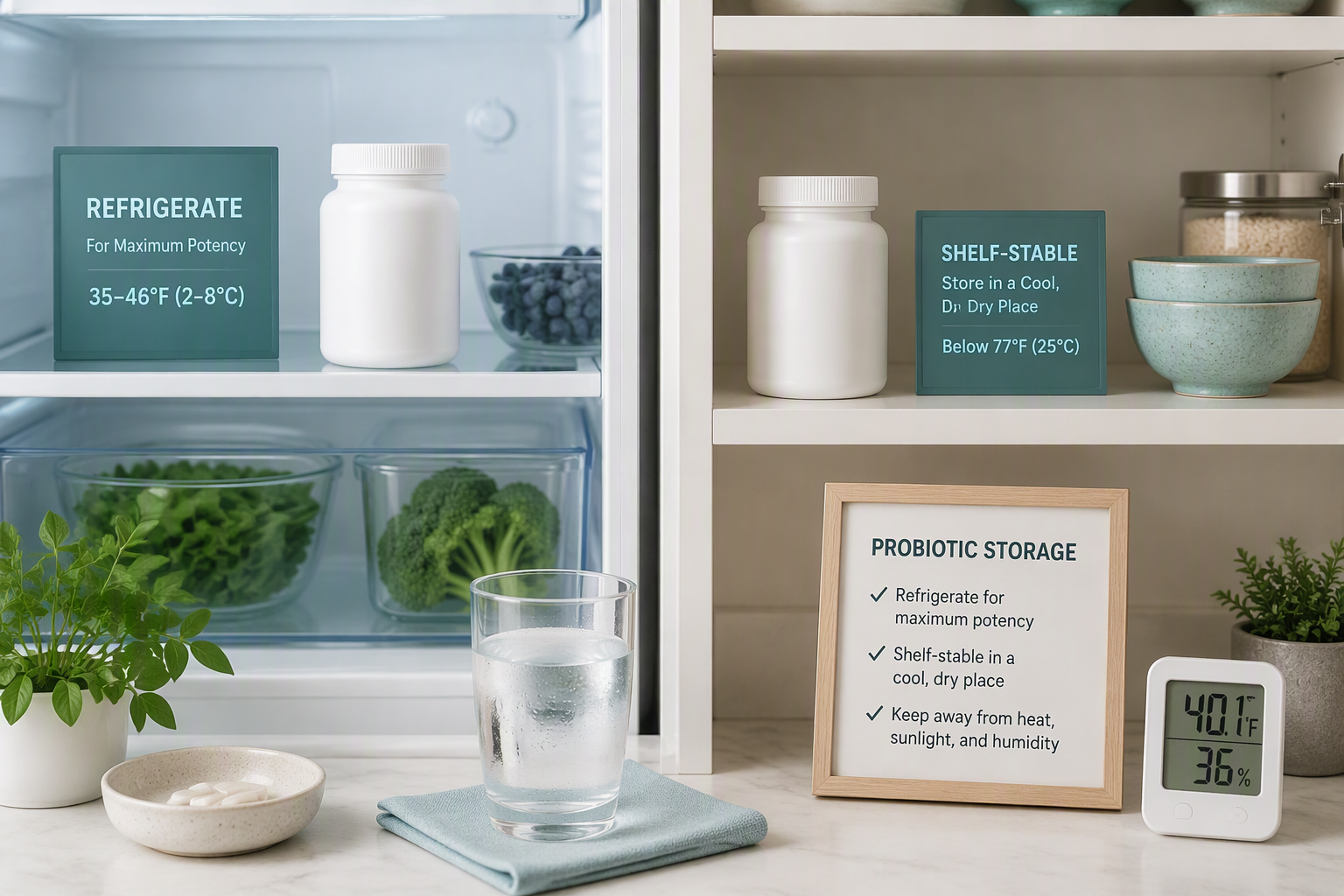
Probiotic storage helps preserve the live cultures in your supplement, and the product label should guide every storage and timing choice. Some refrigerated probiotics need continuous cold storage, while room-temperature probiotics can stay in a cupboard only if the package identifies them as shelf-stable.
Keep the container in the conditions it was designed for:
- Heat: Keep probiotics out of hot cars, direct sunlight, and areas near an oven. Heat also affects probiotics and hot drinks, including coffee, tea, and soup.
- Moisture: Keep capsules, powders, and gummies tightly sealed, ideally in their original packaging. Cabinets above the stove, beside the sink, and in a warm bathroom can expose them to humidity as well as heat.
- Temperature: Store refrigerated probiotics in the refrigerator according to the label. A cool, dry cupboard is appropriate for shelf-stable products only when room-temperature storage is permitted.
- Expiration: Check the expiration date before each dose, especially after a bottle has been open for several months. When possible, select a product with a stated live colony-forming units (CFU) guarantee.
Avoid using an expired probiotic unless a qualified healthcare professional advises otherwise. A product may still look and smell normal after its expiration date, but that does not show its cultures remain at the labeled amount.
Capsules are best swallowed with cold or room-temperature water rather than a hot beverage. Probiotics with cold water and probiotics with room-temperature water avoid exposing live cultures to direct heat before they reach your stomach.
Food timing depends on the specific strain, brand, and formulation. Enteric-coated capsules have an outer layer intended to provide extra protection from stomach acid, while other products are designed for use during meals. Some probiotics with food may be paired with foods containing fat or dairy, but the label for your own product takes priority over a general rule.
Research on meal timing is not uniform. One study found the lowest survival 30 minutes after a meal, which is a useful reminder not to apply another product’s instructions to yours. Follow the package directions for meals or empty-stomach use.
Fermented probiotic foods also need storage that matches their packaging, including refrigeration when required. If a supplement or food pairing worsens bloating, diarrhea, cramping, or another symptom, stop using it and review the ingredients with a qualified healthcare professional.
Step 5: Space Probiotics From Antibiotics
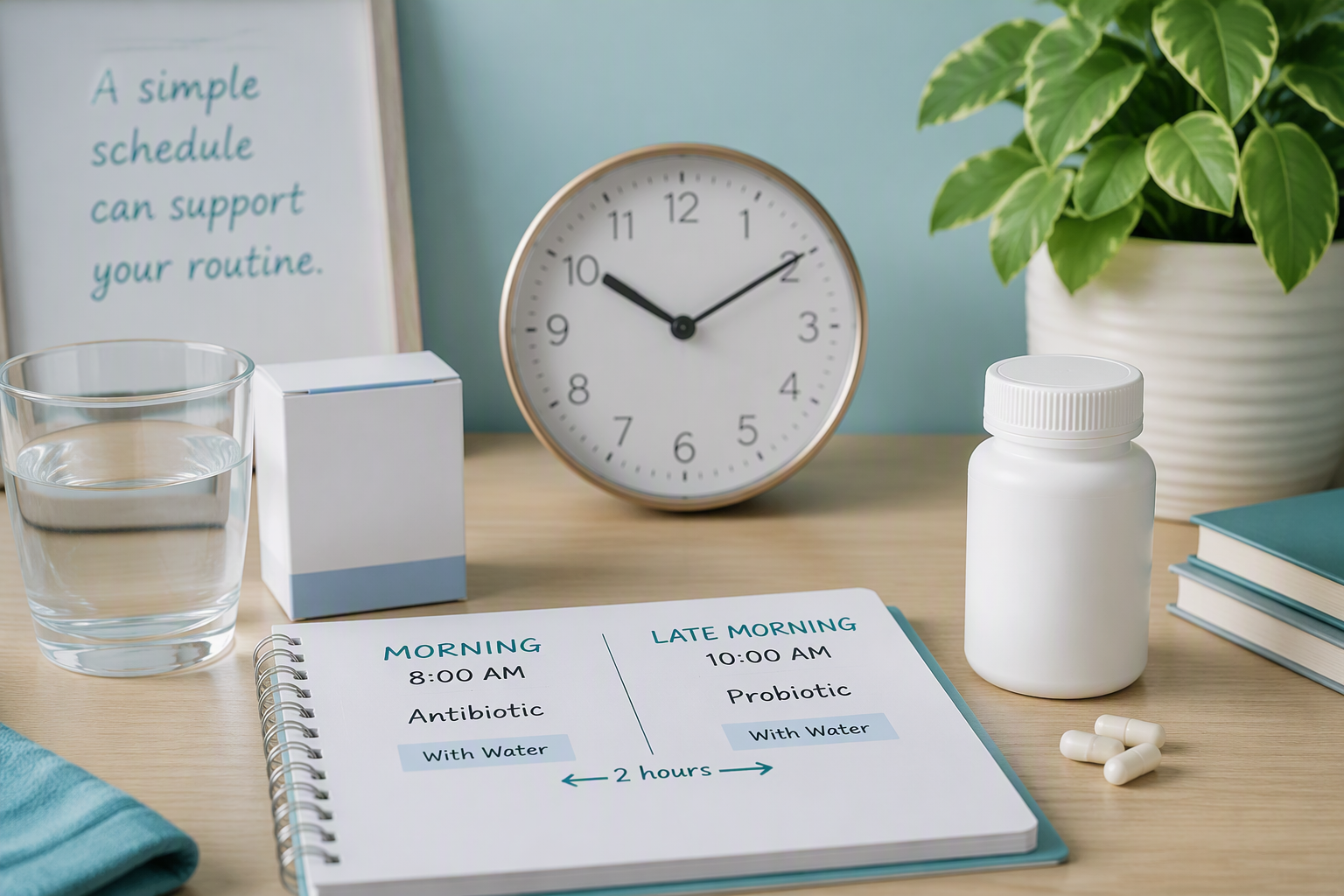
When antibiotics are part of your routine, never change your antibiotic schedule to fit a supplement.
A practical guideline is to separate most bacterial probiotics from antibiotics by about two hours. The U.S. Department of Veterans Affairs advises separating the antibiotic and probiotic doses by two hours (source). Saccharomyces boulardii is a yeast rather than a bacterium, so antibacterial antibiotics do not affect it the same way and that separation generally does not apply.
Evidence suggests that some probiotics may lower the risk of antibiotic-associated diarrhea. A 2017 review of 17 randomized trials involving 3,631 outpatients found antibiotic-associated diarrhea in 8.0% of the probiotic group, compared with 17.7% of the control group (source).
Whether a probiotic is worthwhile during treatment, which strains have evidence, how long to continue after antibiotics, and what recovery may involve are covered in probiotics for digestive issues. Keep taking antibiotics exactly as prescribed, and seek medical care for persistent, severe, or worsening symptoms.
Step 6: Match Strains To Your Digestive Goal
Choose a probiotic by its complete strain code and your specific digestive concern, not by the genus name on the package. Terms such as beneficial bacteria, live bacteria, and live cultures only describe what the product contains. They do not show which symptoms, if any, that exact strain has been studied for.
For instance, B. longum subsp. infantis 35624 has been tested in IBS trials. That finding belongs to 35624, not to every Bifidobacterium product. More colony-forming units (CFUs) or a longer strain list also does not automatically make a formula a better fit for bloating, irregular bowel habits, general gut health, or digestive concerns after antibiotics.
A useful label check includes:
- Complete strain code: Record the letters and numbers after the genus and species name when comparing products.
- Research tied to your goal: Strain-specific findings may help you choose a product, but they cannot predict whether it will help manage your symptoms.
- Dose and product format: Follow the label directions because recommended amounts differ across strains and formulations.
Probiotics are not the right category for every concern. Weighing them against prebiotics, digestive enzymes, postbiotics, and fermented foods means comparing probiotics with other supplement types before you commit. Persistent, severe, or worsening symptoms need evaluation from a qualified healthcare professional rather than repeated supplement changes.
Step 7: Track Symptoms And Recognize Safety Warnings
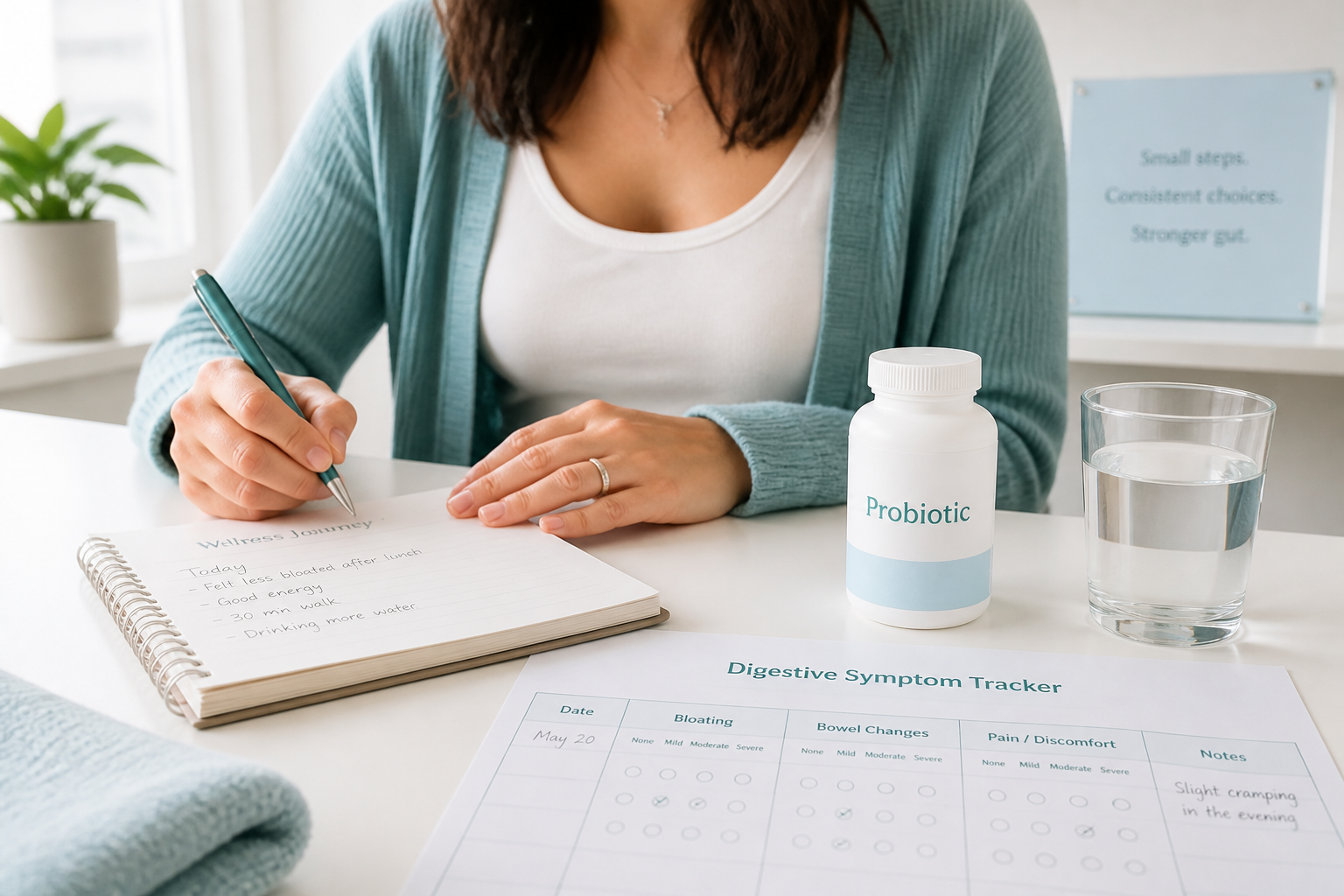
Even with a strain matched to your digestive goal, mild gas, bloating, or changes in bowel habits can happen when some people start a probiotic. These effects often settle, so note the change without trying to chase it or increasing the dose. If these symptoms are severe, worsening, or do not settle, contact a qualified healthcare professional before continuing (source).
Seek prompt medical advice rather than taking another dose if any of the following occur:
- Severe or rapidly worsening abdominal pain
- Repeated vomiting
- Significant diarrhea or signs of dehydration
- Blood in the stool
- Fever or faintness
- Signs of an allergic reaction, including hives, swelling, wheezing, or trouble breathing
Speak with a clinician or pharmacist before starting if you are immunocompromised, seriously ill, pregnant, breastfeeding, or taking medicines that affect the immune system. A supplement does not replace medical evaluation or prescribed treatment, especially when digestive symptoms are new, severe, persistent, or worsening.
IBS symptoms can naturally fluctuate, which can make an ordinary good or bad day seem like a probiotic effect. Signs probiotics are working can help you separate meaningful changes from normal variation.
Probiotic side effects, interactions, and risks deserve attention before continuing.
How To Take Probiotics FAQs
These FAQs cover practical questions about how to take probiotics, including timing, consistency, storage, side effects, and product choices when IBS symptoms are part of the picture.
1. Can You Take Probiotics With Coffee?
You can usually take a probiotic around the time you drink coffee, but use cold or room-temperature water to swallow the capsule rather than hot coffee. Don’t mix probiotic powder or an opened capsule into coffee or tea, since heat may harm live cultures. Taking it with water before or after coffee keeps the routine simple. Follow the product label first because timing, storage, and temperature directions vary, and hot drinks do not improve probiotic effectiveness.
2. What Should You Do After Missing A Dose?
If you miss a dose, follow the product label and take your next dose at the usual time. Unless the label or a qualified healthcare professional specifically instructs you to, don’t double up, because taking probiotics consistently matters more than trying to make up for one missed dose.
A daily probiotic routine is easiest to maintain when paired with a regular habit, such as breakfast or brushing your teeth. A phone reminder or approved storage spot near that routine can help you remember.
3. Can You Open Probiotic Capsules?
Only open probiotic capsules when the product label allows it. Because strains, doses, storage, food instructions, and capsule designs differ, ask a pharmacist if directions are unclear, especially for a child, older adult, or someone with a medical condition.
Probiotics and stomach acid can be a concern, so do not open delayed-release, enteric-coated, or acid-resistant capsules unless the manufacturer confirms it is safe. If permitted, mix the contents or probiotic powders immediately into a cool, compatible food or drink, not hot coffee, tea, or heated food.
4. Are Probiotic Gummies Taken Differently?
Probiotic gummies have their own directions, so follow the label for serving size, timing, and whether to chew one or more each day rather than using probiotic capsules as a guide. Powders, liquids, yogurt, and kefir also have format-specific routines because strains and recommended doses vary.
Check storage instructions, since some gummies need refrigeration, and review the sugar, sweeteners, allergens, gelatin, and other ingredients if you manage IBS symptoms or dietary restrictions. A format that suits your needs and is easy to take consistently is usually the most practical choice.