


A probiotic isn't automatically the best supplement for your gut when bloating, constipation, or IBS is the problem. The right choice depends on the symptom and goal, since psyllium often makes more sense for hard stools or irregularity, while vitamins and minerals primarily correct confirmed deficiencies. Probiotics are live microorganisms whose possible benefits depend on the exact strain, dose, and viability through the expiration date.
Shelf labels can make unlike products seem interchangeable, especially when a 60-billion-CFU claim sits beside vague digestive-health promises. Inulin and other fermentable prebiotics may worsen gas during a flare, while lactase is more relevant when lactose is the likely trigger. Strain codes such as 35624 and 299v provide more useful information than a high CFU count alone.
Trying several products at once can make new gas, stool changes, or improvement difficult to trace. Persistent, severe, or worsening symptoms, blood in the stool, unexplained weight loss, or repeated vomiting need medical evaluation rather than a self-directed supplement trial.
Probiotics vs Other Supplements Key Takeaways
- Probiotics add live microorganisms, while vitamins and minerals supply essential nutrients.
- Choose supplements by your specific symptom or health goal, not broad front-label claims.
- Psyllium is often a practical first option for constipation, hard stools, or irregularity.
- Probiotic benefits depend on the exact strain, dose, viability, and target symptom.
- High CFU counts do not prove a probiotic will help your symptoms.
- Inulin and other fermentable prebiotics can worsen gas and bloating for some people. Probiotics compared with prebiotic fiber explains which one suits which symptom.
- Seek medical care for persistent, severe, worsening, or concerning digestive symptoms.
What Makes Probiotics Different From Other Supplements?
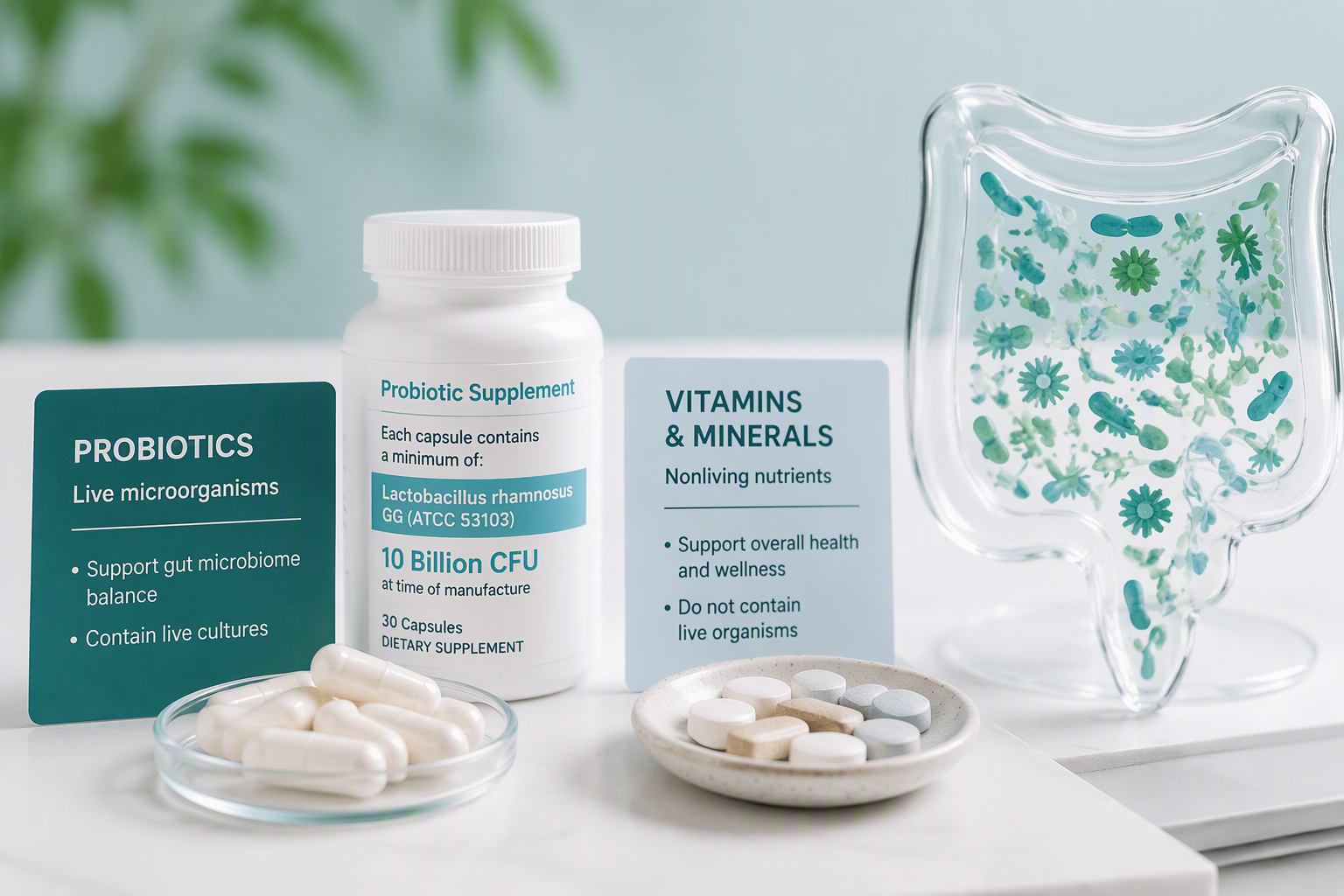
Probiotics are living microorganisms, including live beneficial bacteria and yeasts, that the Food and Agriculture Organization and World Health Organization (FAO/WHO) define, in wording later refined by the International Scientific Association for Probiotics and Prebiotics, as conferring a health benefit when administered in adequate amounts (source). Rather than supplying a nutrient, they are meant to interact with the gut microbiome, the community of microbes in your digestive tract. That makes probiotics vs vitamins a more detailed comparison than it first appears.
The difference between probiotics and vitamin supplements starts with what each product contains. Vitamins and minerals are nonliving essential micronutrients that support cell function, enzyme reactions, metabolism, and structural health. Vitamin C, vitamin D, iron, calcium, and magnesium are common examples. Vitamin and mineral supplements do not need to survive storage or arrive alive in the intestine to do their jobs.
A probiotic’s possible effects depend on factors that standard nutrient supplements do not share:
- Strain identity: A full probiotic name includes its genus, species, and strain code. Lactobacillus or Bifidobacterium alone does not identify the organism studied.
- Viability: The organisms must remain alive in an adequate amount through storage and use. Check storage directions, expiration dates, and the stated colony-forming units (CFUs).
- Personal context: Diet, genetics, medications, immune function, digestive conditions, lifestyle, and your existing microbiome can all shape your response.
A higher CFU amount is not automatically better. A product with a large count but no strain code may be less informative than one that identifies the organism and the health goal examined. The wider guide to what a probiotic actually is explains why this strain-level detail matters more than the broad word “probiotic,” and where probiotics do help differs strain by strain for the same reason.
Lacticaseibacillus rhamnosus GG, still printed as Lactobacillus rhamnosus GG on many labels, shows why the exact name matters. This specific strain has been studied for defined uses, including antibiotic-associated diarrhea. Those findings do not automatically apply to another L. rhamnosus strain, to bloating or irritable bowel syndrome (IBS), or to every product that contains Lactobacillus. A strain code works like a street address, while the genus is only the city.
There is no single ideal gut microbiome. Two people with similar symptoms may respond differently to the same probiotic because their bodies and daily circumstances differ. A focused goal, such as improving bowel regularity or addressing one IBS symptom, gives you a clearer way to judge whether a supplement is useful.
Digestive symptoms can have many causes. Seek guidance from a qualified healthcare professional when symptoms are persistent, severe, or getting worse.
Which Supplement Fits Your Digestive Health Goal?
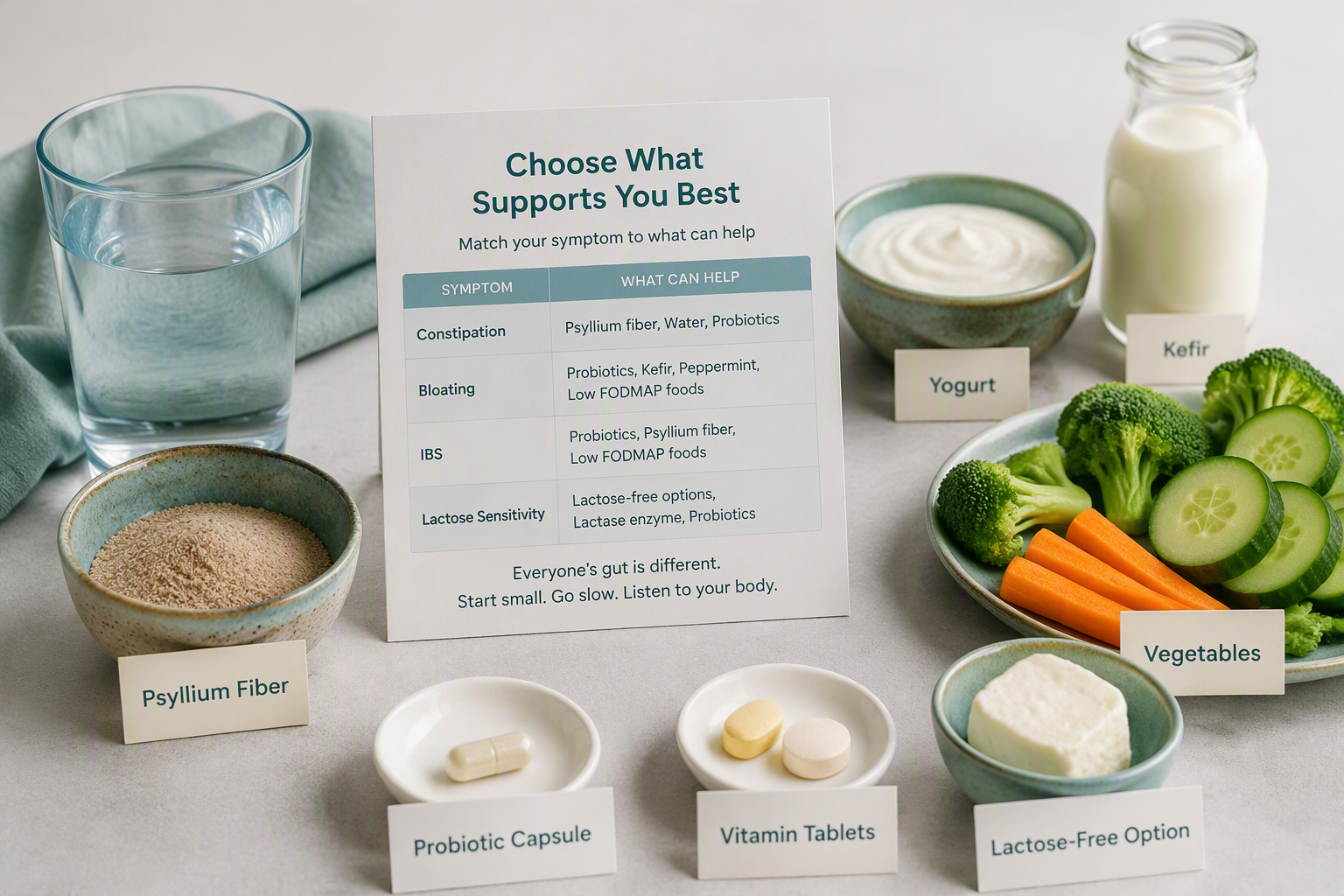
Given the strain-specific differences between probiotics and nutrients, choose a supplement by the health goal you want to address, not by the category on the shelf. Vitamin and mineral supplements are most useful for confirmed nutritional deficiencies, such as low iron or vitamin D. Multivitamins can offer broad coverage when meals are inconsistent, but additional nutrients are unlikely to fix bloating, constipation, diarrhea, or gut microbiome concerns when your nutrient levels are already adequate.
For constipation, irregularity, or mixed bowel habits linked with irritable bowel syndrome (IBS), fiber is often a better first step than probiotic supplements. Psyllium absorbs water and helps form softer, more regular stools. An unflavored product can make an IBS trial easier to interpret because it does not add sweeteners or flavorings that may trigger symptoms.
Use psyllium with a few practical safeguards:
- Start gradually: Increase the amount over time instead of beginning with a full serving.
- Take it with water: Drink at least 8 ounces of water with each serving.
- Separate medications: Leave about one to two hours between psyllium and oral medicines because fiber can reduce medication absorption.
- Consider another fiber if needed: Methylcellulose or partially hydrolyzed guar gum may suit you better if psyllium repeatedly causes gas.
Prebiotics and probiotics support the gut microbiome in different ways. Prebiotics are nondigestible fibers that feed microbes already in your digestive tract, while probiotics add live microorganisms. Fermentable prebiotics, including some inulin products, can make gas and bloating worse during a flare. Food sources or a simple fiber trial may be a gentler place to start, and setting prebiotics and probiotics side by side is worth doing before you choose between them.
Probiotics for irritable bowel syndrome work best as a focused, strain-specific trial for a defined goal, not as a general digestive-health product. Targeted probiotic action depends on the full genus, species, and strain designation, with research that matches your symptom goal, and the labeled colony-forming unit count should match the dose used in research for your symptom. IBS research includes Bifidobacterium longum subsp. infantis 35624 and Lactiplantibacillus plantarum 299v.
Live cultures also come from food rather than capsules. Yogurt, kefir, sauerkraut, kimchi, and miso supply live microbes alongside protein, calcium, and other nutrients, though they rarely name a studied strain or guarantee a dose at the moment you eat them. That trade-off between food and capsules is worth weighing on its own terms.
Postbiotics may be worth considering when you want a microbiome-related option without live microorganisms. These products contain nonliving microbial components or byproducts, including organic acids and peptides. They may have fewer storage concerns than live organisms, but preparations differ widely and do not substitute directly for probiotics. What postbiotics actually are sets out where the evidence currently stands.
Other goals may call for a different type of support:
- Omega-3 fatty acids: These may fit cardiovascular or triglyceride-related goals.
- Protein: This can support overall nutrition and muscle needs.
- Botanical products: Plant extracts may target discomfort, inflammation, or stress.
- Digestive enzymes: These are situation-dependent and can make a symptom trial harder to interpret when combined with several ingredients. How enzymes differ from probiotics covers when a targeted enzyme is the better fit.
Medication use, pregnancy, allergies, immune conditions, and persistent symptoms can change which supplement is appropriate. A qualified healthcare professional can help assess severe, worsening, or ongoing digestive symptoms and rule out causes that supplements cannot address.
How Do Probiotics Compare With Fiber For IBS?
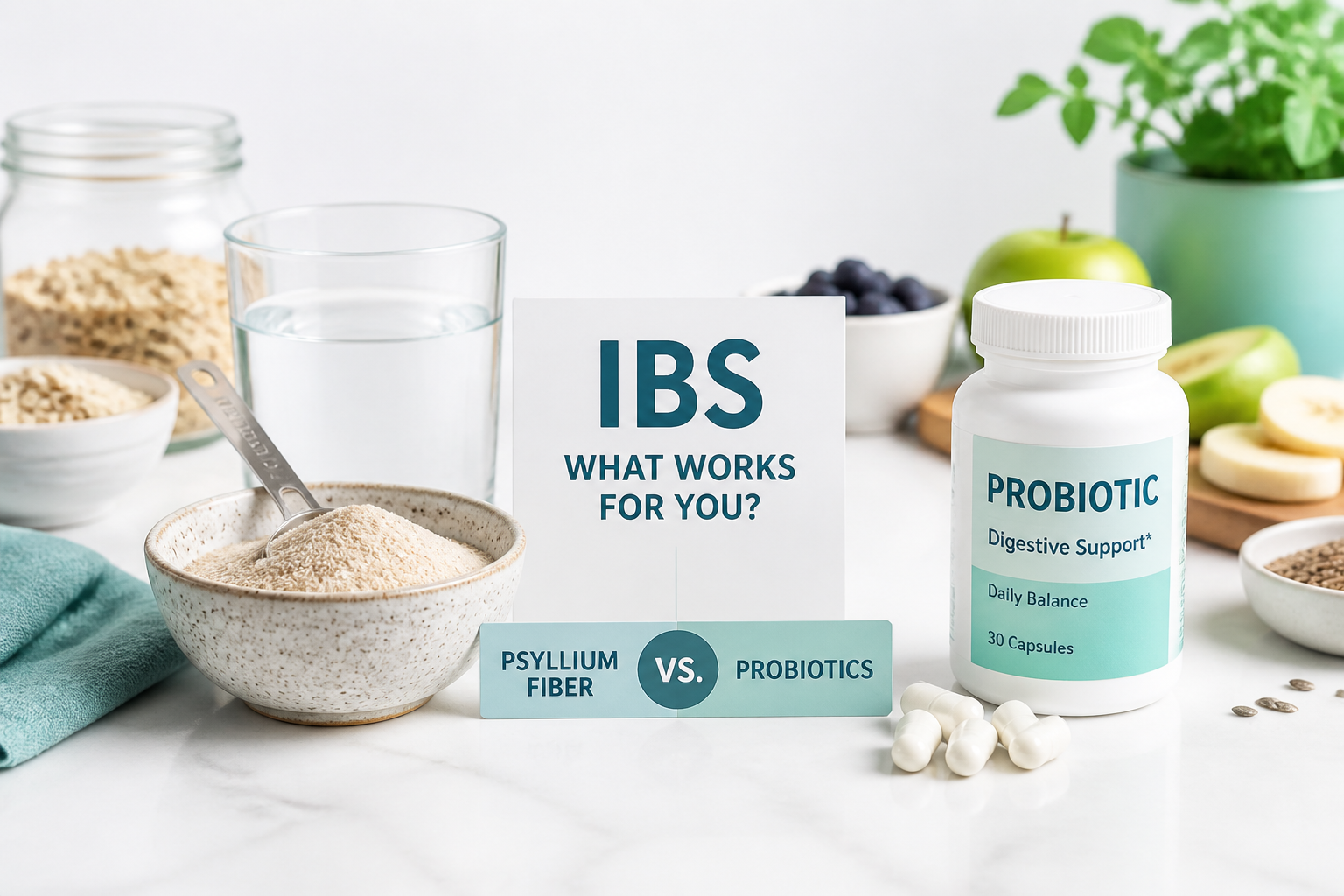
Psyllium is often a practical first choice when IBS symptoms include constipation, hard stools, or irregular bowel movements, because it can help support stool form and regularity (source). Its gel-forming, mostly non-fermentable properties help explain that effect. Probiotics for irritable bowel syndrome work differently. They are living microorganisms, and results depend on the strain, dose, formulation, and symptom you hope to address.
Fiber choices are not interchangeable:
- Whole-food fiber: Foods such as oats, beans, fruits, vegetables, and whole grains support overall bowel health, though a rapid increase can trigger gas.
- Psyllium: This fiber is often a practical fit for constipation-predominant IBS because it is less likely to ferment heavily. Start with a small amount and take each dose with at least 8 ounces of water.
- Inulin and other prebiotics: These fermentable carbohydrates feed gut microbes, but they can worsen bloating or gas in people with sensitive digestion.
- Methylcellulose or partially hydrolyzed guar gum: Methylcellulose does not ferment, while partially hydrolyzed guar gum does ferment but usually produces less gas. Either may be easier to tolerate when psyllium repeatedly causes discomfort. Introduce either one gradually rather than making a large fiber increase at once.
Unflavored, additive-free powders can make a personal trial easier to interpret and may cost less than branded blends. Combined fiber-and-probiotic products make it harder to identify whether fiber, probiotic strains, or added ingredients caused gas, bloating, or improvement.
Evidence for probiotics is mixed, and CFU amounts should be checked against the dose used in strain-specific research. Bifidobacterium longum subsp. infantis 35624, Lactiplantibacillus plantarum 299v, and Bifidobacterium bifidum MIMBb75 are examples with research tied to specific strain codes. A label may use the older Lactobacillus name for 299v, but the code is the more dependable identifier.
Different Bifidobacterium or Lactobacillus products can produce different results even when their species names look alike. Diet, age, antibiotic use, and your pattern of IBS symptoms can also shape targeted probiotic action. A probiotic studied for antibiotic-associated diarrhea should not be assumed to help constipation, mood, skin concerns, or every form of IBS.
A practical approach is:
- Consider psyllium first when constipation or hard stools are the main concern.
- Consider a strain-identified probiotic only when the available evidence matches your target symptom, looking beyond a front-label CFU claim.
- Separate psyllium from oral medicines by about 1 to 2 hours. A pharmacist can help with medication timing, especially if you take medicines that require consistent absorption.
- Stop and seek medical guidance if symptoms become severe or worsen. Probiotics can cause temporary digestive symptoms and may not be appropriate for some seriously ill or immunocompromised people.
How Can You Judge A Probiotic Label?
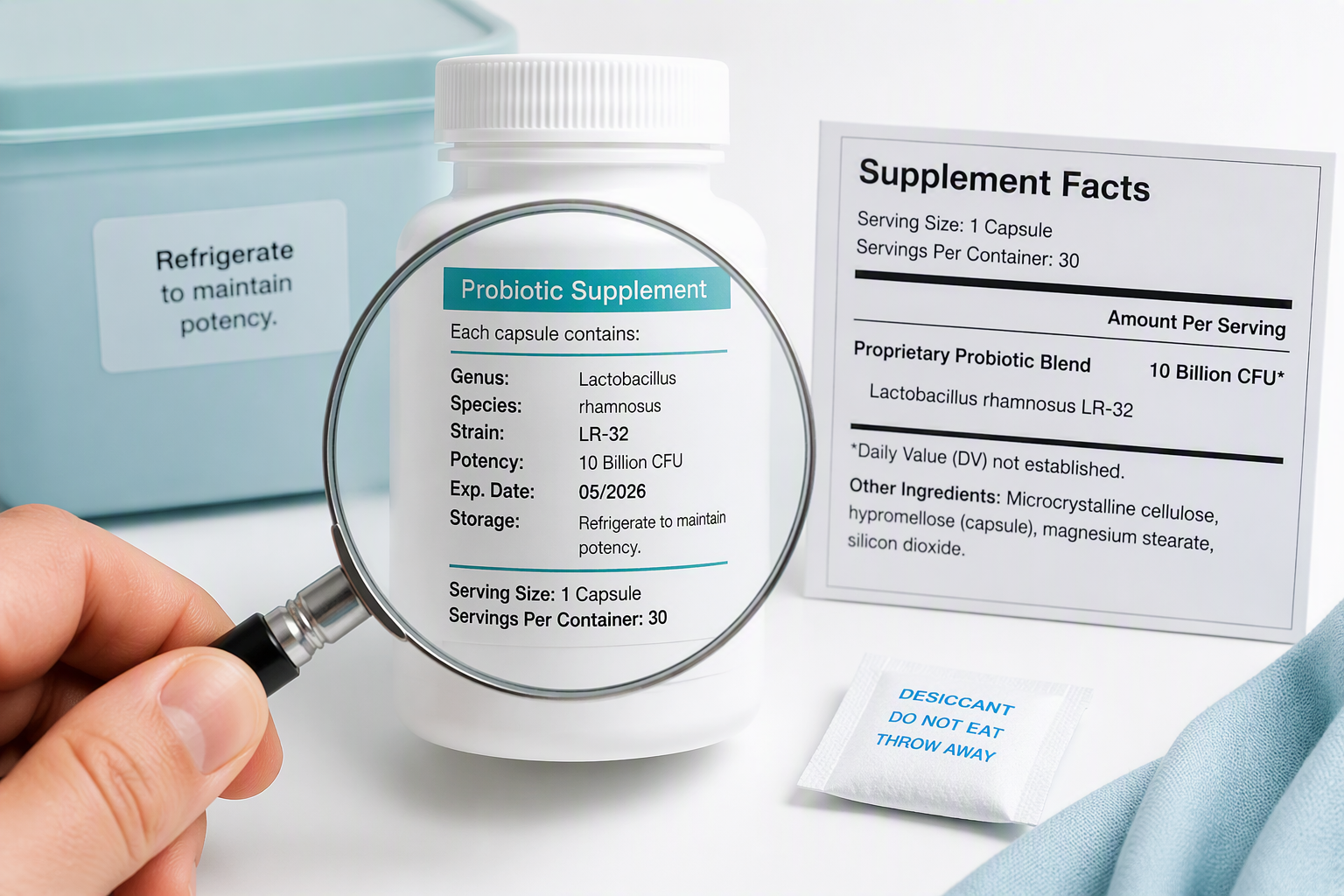
After matching a probiotic to a specific symptom goal, a useful probiotic label identifies the exact organism, the dose, and the health outcome studied. Look for a genus, species, and clinical strain code, such as Lacticaseibacillus rhamnosus GG, rather than a broad label like Lactobacillus or Bifidobacterium. Names may change as taxonomy is updated, but a stable code such as 35624 or 299v helps connect a product with the right research.
Before buying, compare the label with evidence that fits your goal:
- Exact strain: Findings for Bifidobacterium bifidum MIMBb75, Lactiplantibacillus plantarum 299v, or Bifidobacterium longum subsp. infantis 35624 apply to those strains, not automatically to another product with a similar species name.
- Daily dose and outcome: Compare the labeled daily amount with the dose used in research and the result you want to address, such as abdominal pain, overall IBS symptoms, or quality of life.
- Health goal: A strain studied for antibiotic-associated diarrhea or general bowel regularity should not be assumed to help with IBS, constipation, diarrhea, or bloating.
Colony-forming units (CFUs) show the number of live organisms intended per serving, but a larger number does not establish clinical benefit. A 60-billion-CFU claim may sound persuasive, yet the exact strain and evidence for your symptoms matter more. Check whether the stated dose is guaranteed through the expiration date, rather than only when the product was made. For worked examples, see how specific probiotic brands hold up against that standard.
Label transparency is a screening signal, not proof that a product works. Review the Supplement Facts panel, serving size, daily dose, inactive ingredients, dosage form, expiration date, and strain codes. A scan of roughly 30 leading digestive products found that many omitted clinical strain codes, including a 60-billion-CFU, 10-strain bestseller. Missing codes do not prove poor quality, but they make it harder to tell whether the product matches a clinical study.
Probiotic viability can fall during manufacturing, shipping, and storage. To reach your digestive tract, the organisms must remain alive, which is why probiotics and heat sensitivity, probiotics and moisture sensitivity, and probiotics and stomach acid all matter. Check the label for refrigeration needs, shelf-stability instructions, delayed-release capsules, and protective packaging such as a desiccant-lined container. A warm, humid bathroom is usually a poor storage spot for probiotic supplements.
Cost, dosing frequency, trial duration, convenience, and tolerability deserve equal attention. Probiotics can be less predictable than vitamins because they must stay viable, interact with your existing microbiome, and respond to individual physiology. Persistent, severe, or worsening symptoms need medical care, and knowing who should avoid probiotics helps you recognize situations that call for extra caution.
When Should You Choose Another Supplement Or Medical Care?

Label quality alone does not determine the next step: for mild symptoms or when testing has not identified nutritional deficiencies, food and daily routines are often a better first step than a random probiotic. Regular meals, tolerated fiber, hydration, sleep, movement, and stress support can influence bowel habits and comfort. Vitamins and minerals mainly address body-wide nutrient needs or deficiencies, while probiotics primarily affect the gut microbiome and its interaction with the immune system.
Match the option to the goal. A gradual increase in fiber, such as plain psyllium or an unflavored fiber powder, may be more directly useful for constipation or irregular stools, while a confirmed deficiency calls for the specific vitamin or mineral recommended through testing and professional guidance. Digestive enzymes, herbal supplements, omega-3 fatty acids, prebiotics, and probiotics serve different purposes and are not substitutes for one another. When enzymes are the open question, that distinction is worth working through before you buy. If you would rather get live cultures from meals than a capsule, fermented foods versus a supplement weighs that trade-off.
Early changes after starting a probiotic do not necessarily mean it is helping. Temporary gas, bloating, stool changes, or other discomfort can occur as the microbiome changes. Pause and reassess if a product clearly worsens your symptoms rather than assuming discomfort is part of the process. Responses can differ based on diet, age, recent antibiotic use, immune status, genetics, and other health factors.
Antibiotic-associated diarrhea affects about 5% to 30% of people taking antibiotics and can continue for up to two months after treatment ends (source). A clinician or pharmacist can help you decide whether a strain-specific product, such as Saccharomyces boulardii or Lacticaseibacillus rhamnosus GG, fits your medication plan and health history. Evidence for one strain does not automatically apply to another, even when product labels look similar.
Rare serious infections have been reported in vulnerable people. Supplements should never replace diagnosis, prescribed treatment, or medical monitoring.
Medical evaluation is more appropriate than a self-directed supplement trial when you have:
- Persistent, severe, worsening, or recurring digestive symptoms
- Unexplained weight loss, fever, or dehydration
- Blood in your stool or black stools
- Repeated vomiting or severe abdominal pain
- Symptoms that wake you at night
- A major change in bowel habits
This content is for educational purposes only and is not a substitute for personalized medical advice. Results vary by person, and any dietary or supplement advice should be individualized.
How Do Probiotics Compare With Other Supplements? FAQs
These FAQs compare probiotics with fiber, vitamins, digestive enzymes, and other supplements, helping you weigh your symptoms, evidence, and label details before choosing a practical option.
1. Are Prebiotics Better Than Probiotics?
Neither is automatically better. Prebiotics are nondigestible fibers that nourish microbes already in your gut, while probiotics add live microorganisms through probiotic foods such as yogurt and kefir or through supplements. For constipation or irregular bowel habits, psyllium may be more consistently useful than probiotics.
Start with varied whole foods, including beans, oats, whole grains, fruits, vegetables, nuts, seeds, bananas, onions, garlic, and asparagus. Increase inulin or chicory root gradually, since these fermentable fibers can worsen gas or bloating. Your symptoms, diet, and tolerance should guide the choice.
2. Can You Take Probiotics And Fiber Together?
Probiotics and fiber can often be used together because they do different jobs. Probiotics add live microorganisms, while fiber feeds gut microbes and can support bowel regularity and cholesterol management. Psyllium may be more consistently helpful for constipation than probiotics, though responses vary. Add one change at a time, increase fiber gradually, and drink enough fluids.
Inulin or a new probiotic may cause temporary gas, bloating, or bowel changes. Reduce the dose or pause the newest addition if symptoms worsen, and consult a qualified healthcare professional for persistent, severe, or concerning changes.
3. Do Digestive Enzymes Replace Probiotics?
No. Digestive enzymes act directly on food in your gastrointestinal tract, with lactase breaking down lactose and protease breaking down protein. If dairy reliably triggers symptoms, a probiotic cannot take lactase’s place when lactose digestion is the likely problem.
Probiotics interact with your existing microbiome, so their effects can vary by strain and individual physiology. Match the supplement to the suspected cause, not a broad digestive-support claim. Persistent, severe, or worsening symptoms need evaluation from a qualified healthcare professional.
4. Are Synbiotics More Effective Than Probiotics?
Synbiotics are not automatically more effective than probiotics. They combine a probiotic with a prebiotic fiber, and evidence applies only to the tested strain, fiber, dose, and population. Effects also depend on viability through the use-by date and your individual physiology, so labels that name only Lactobacillus or Bifidobacterium cannot predict benefits. Choose a synbiotic when its specific pairing matches your goal and you tolerate fermentable fiber. Otherwise, a strain-specific probiotic may be easier to assess. Results vary, and persistent, severe, or worsening symptoms need medical evaluation.