


A jar of kimchi isn't automatically a probiotic, even when it is refrigerated and naturally fermented. Kimchi may add live microorganisms, fiber, and flavor, but its digestive benefits are uncertain and vary by product and person. Probiotics are identified strains shown to provide a health benefit at an appropriate amount.
Heat treatment, storage time, and even the recipe can change which microbes remain alive, so a "live cultures" label doesn't establish a dose or symptom benefit. The main human trial gave 90 adults with IBS 210 grams of kimchi a day for 12 weeks, but every group received kimchi, so it compared recipes rather than testing kimchi against no kimchi. Yogurt and strain-identified supplements offer different levels of certainty than kimchi.
Starting with 1 to 2 tablespoons alongside a meal makes it easier to judge tolerance. Kimchi can be high in sodium, with about 747 milligrams in a 150-gram serving, and garlic, onion, chile, or acidity may worsen reflux or IBS symptoms for some people. A modest portion and careful storage support a safer, more realistic place for kimchi in your meals.
Kimchi Probiotics Key Takeaways
- Refrigerated, unpasteurized kimchi may contain live microorganisms, but it is not automatically a probiotic.
- Pasteurization and cooking can reduce or eliminate kimchi's live cultures.
- Kimchi provides vegetables and fiber, but evidence for dependable digestive symptom relief remains limited.
- Kimchi rarely lists strain codes or CFU amounts, unlike some probiotic supplements.
- Start with 1 to 2 tablespoons daily and increase only if symptoms remain manageable.
- Sodium, garlic, onion, chile, and acidity may worsen IBS, reflux, or bloating.
- Choose sealed, refrigerated kimchi, store it properly, and discard packages with mold, leaks, or unusual odors.
Are There Probiotics In Kimchi?
Kimchi may contain live microorganisms, but it is not automatically a probiotic treatment. These Korean fermented vegetables can add live cultures to your diet, while a probiotic requires an identified microbial strain shown to provide a health benefit at an appropriate amount.
Traditional kimchi is commonly made with napa cabbage or Korean radishes, garlic, ginger, gochugaru, scallions, onions, and salt. Some versions include anchovies or fish sauce. Recipes, salt levels, fermentation conditions, and storage differ, so two jars can contain different microorganisms and acidity levels. Other fermented foods, including miso, a fermented soybean paste, and tempeh’s live cultures, also vary based on their ingredients and preparation.
Kimchi fermentation starts when salt draws moisture from the vegetables. The salty setting favors lactic acid bacteria that naturally occur on produce. As the bacteria use vegetable carbohydrates, they produce lactic acid, which lowers pH, creates kimchi's sour taste, and helps preserve the food. Garlic, ginger, and chili shape both flavor and the fermentation environment.
Live cultures in kimchi are more likely in refrigerated, unheated products. Still, a label that says it contains live cultures does not necessarily meet the probiotic definition. By definition, a probiotic meets stricter criteria than a live-cultures claim. Many kimchi products are not tested or labeled with that degree of detail.
That difference matters when bloating, constipation, irregular bowel habits, or irritable bowel syndrome (IBS) disrupt your routine. Bacterial populations can change with the recipe, fermentation time, temperature, storage, and individual batch. Kimchi probiotics in a jar do not establish predictable symptom relief. A probiotic food guide can help you compare kimchi with other food sources without treating fermented foods as interchangeable with strain-identified supplements.
Processing also changes how many microorganisms remain alive:
- Raw or refrigerated kimchi: May retain live microorganisms when it has not been heat-treated after fermentation.
- Pasteurized or heat-treated kimchi: Heating can reduce viable bacteria, although the vegetables still provide fiber, flavor, and fermentation-related acids.
- Cooked kimchi dishes: Stir-frying, baking, or simmering may further reduce live bacteria, depending on cooking temperature and time.
Check the package for refrigeration and pasteurization details rather than assuming every kimchi product contains the same live cultures. Sodium can be high, and spicy or fermented foods may aggravate symptoms for some people, so start with a modest serving and pay attention to your tolerance.
Kimchi can be an enjoyable fermented food, not a guaranteed answer for digestive symptoms. Results vary by person, and persistent, severe, or worsening symptoms should be discussed with a qualified healthcare professional.
How Does Kimchi Fermentation Support Gut Health?
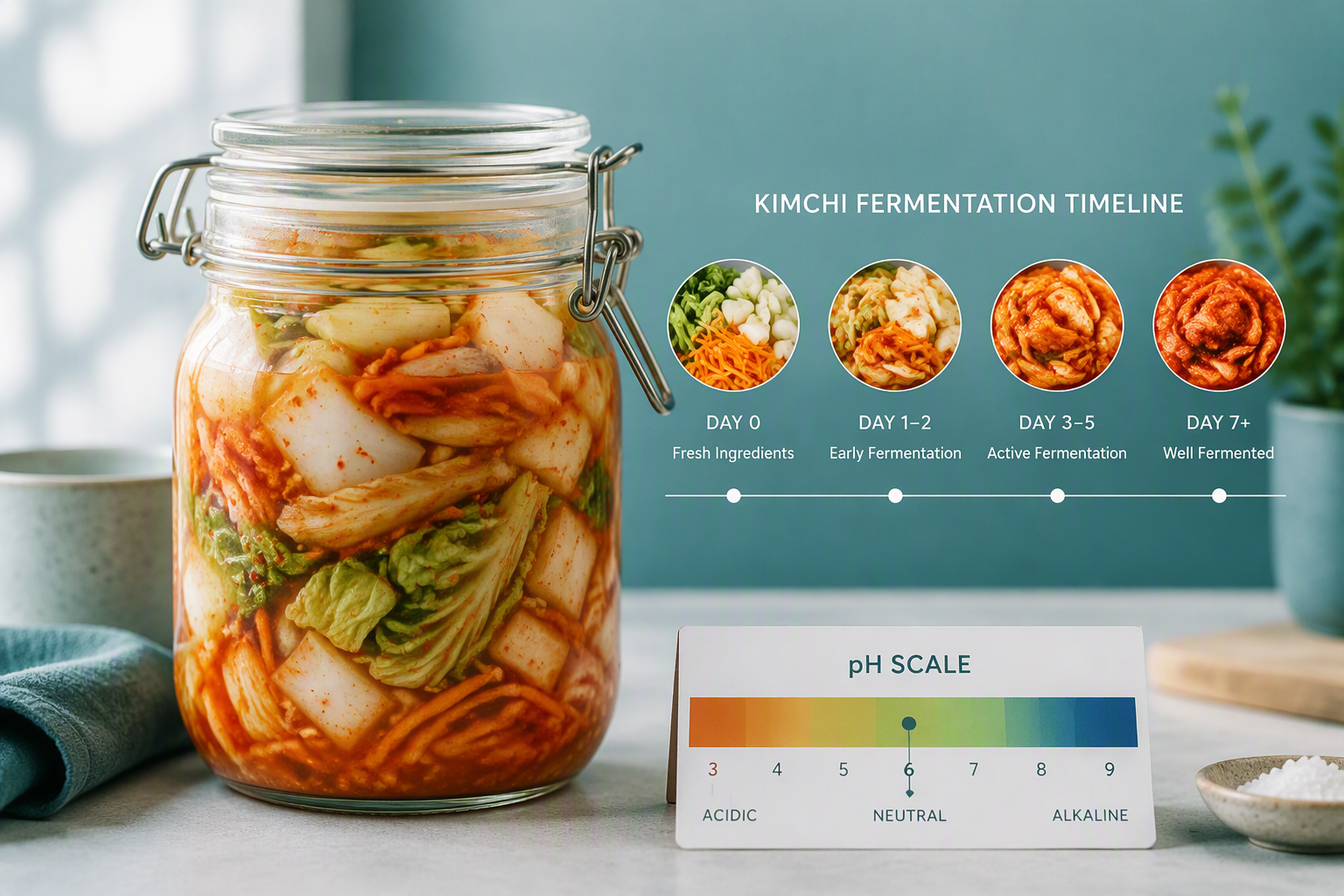
That distinction begins with kimchi fermentation, which creates a salty, acidic environment that can support certain living microbes, but it does not guarantee that every jar contains probiotics that affect your gut health. Brining draws water from the vegetables, limiting the growth of many unwanted microbes while favoring salt-tolerant lactic acid bacteria, including Lactobacillus species.
During lacto-fermentation, microorganisms use sugars from cabbage, radish, garlic, and seasonings to make lactic acid and other compounds. As kimchi ferments, acid builds up and pH falls. That shift can make the food less favorable for many harmful organisms and can help preserve it longer (source).
This process creates kimchi's sour flavor and gradually changes its texture. A scientific review notes that fermented foods are shaped by microbial activity, while their effects can vary by food and by person (source).
Lactobacillus in kimchi can occur with other lactic acid bacteria, but the final microbial mix differs from one product to another. Ingredients, salt concentration, fermentation temperature, preparation methods, and storage conditions all matter. Kimchi that ferments longer often becomes more acidic and sharp-tasting, yet the sourest or oldest jar is not automatically easier to digest.
Several factors shape whether live cultures remain in the food:
- Refrigeration: Cold storage slows fermentation and may help maintain product quality and viable microorganisms, though it does not stop all change.
- Storage history: Long storage, repeated warming and cooling, and rising acidity can reduce the number of living organisms.
- Processing: Pasteurization uses heat and may reduce or eliminate living microorganisms. Vinegar-acidified kimchi can taste sour without going through the same microbial fermentation process.
- Labeling: A refrigerated jar alone does not confirm live cultures. Packaging that specifically mentions "live" or "active" cultures offers a better clue, although the types and amounts may still vary by batch and storage history.
Like kimchi, sauerkraut, a fermented cabbage, can contain microbes created through fermentation, but ingredients, salt levels, and preparation methods can produce different microbial profiles.
Even if a kimchi product has live cultures when you buy it, those organisms must pass through stomach acid, bile, and the rest of digestion. Some may be damaged before reaching the intestines, and those that survive are not guaranteed to settle there or improve a specific symptom. Kimchi gut health benefits are best viewed as a possible contribution within your overall eating pattern, not as treatment for constipation, bloating, or IBS.
For people with IBS or a sensitive digestive system, kimchi can be a mixed experience. Sodium, chili heat, garlic, onion, and fermentable carbohydrates may worsen symptoms, particularly during a flare. A small serving can help you judge tolerance without assuming that stronger kimchi fermentation will produce a gentler response.
Persistent, severe, or worsening symptoms need attention.
What Digestive Benefits Does Kimchi Actually Provide?

Given the limits on which live microorganisms remain and survive digestion, kimchi may support digestive health through fiber and, when it is traditionally fermented, live microorganisms. It is not a reliable treatment for IBS, reflux, bloating, constipation, or other digestive conditions, and your response can depend on the recipe, serving size, and personal tolerance.
Cabbage, radish, and other vegetables in kimchi contain dietary fiber, which adds bulk to stool and may support regular bowel movements. Fiber amounts differ by recipe and portion, so kimchi benefits may vary from one meal to the next. Increasing fiber too quickly can cause temporary gas or bloating, especially when your digestion is already sensitive.
A gradual approach makes it easier to judge whether kimchi suits you:
- Start small: Eat a modest serving alongside a familiar meal rather than adding a large portion at once.
- Monitor symptoms: Pay attention to stool changes, abdominal pain, bloating, and reflux over several days.
- Reduce or stop if needed: Cut back or avoid kimchi if symptoms become more frequent or more intense.
Traditionally fermented, refrigerated kimchi can contain live lactic acid bacteria. These organisms may affect the kimchi microbiome and kimchi gut microbiota after you eat them, but kimchi does not provide a consistent probiotic dose. Bacterial strains, amounts, survival through digestion, and activity can all differ based on ingredients, fermentation time, storage, pasteurization, and other processing.
The most relevant human research is a 12-week randomized, double-blind trial in which 90 adults with irritable bowel syndrome were divided into three groups of 30 and ate 210 grams of kimchi daily, in three 70-gram servings. Researchers tracked dietary intake, serum inflammatory markers, fecal enzyme levels, and microbiome changes across the study period (source).
Read that trial carefully before drawing conclusions from it. Every group received kimchi of some kind, so it compared three kimchi recipes against each other rather than against a true no-kimchi control. A daily 210-gram portion is also far larger than most people eat, and it carries a correspondingly large sodium load. The trial suggests kimchi is worth studying for IBS; it does not establish that kimchi relieves symptoms.
Be skeptical of stronger-sounding claims. Much of the research often cited for kimchi and stomach health, including work on Helicobacter pylori and precancerous gastritis, was done in animal models rather than people (source). Animal findings can point to a mechanism, but they cannot tell you what a serving of kimchi will do for your symptoms.
The health benefits of kimchi should not be treated as equal to the effects of a strain-specific probiotic supplement. Studies of probiotics for IBS identify the exact microorganism and strain code tested, while a kimchi label may only note that live cultures are present. Evidence for one supplement strain does not automatically apply to fermented foods, even when both are discussed for gut health.
Kimchi and live-culture yogurt can both fit into a gut-friendly eating pattern when they agree with your symptoms and preferences. Kimchi may be less comfortable when spicy foods trigger reflux, sodium needs to be limited, or fermented foods worsen IBS symptoms. Preparation and portion size often matter as much as the food itself.
Kimchi gut health depends on food-and-tolerance factors. Persistent, severe, or worsening digestive symptoms need attention.
Should You Choose Kimchi, Yogurt, Or Supplements?
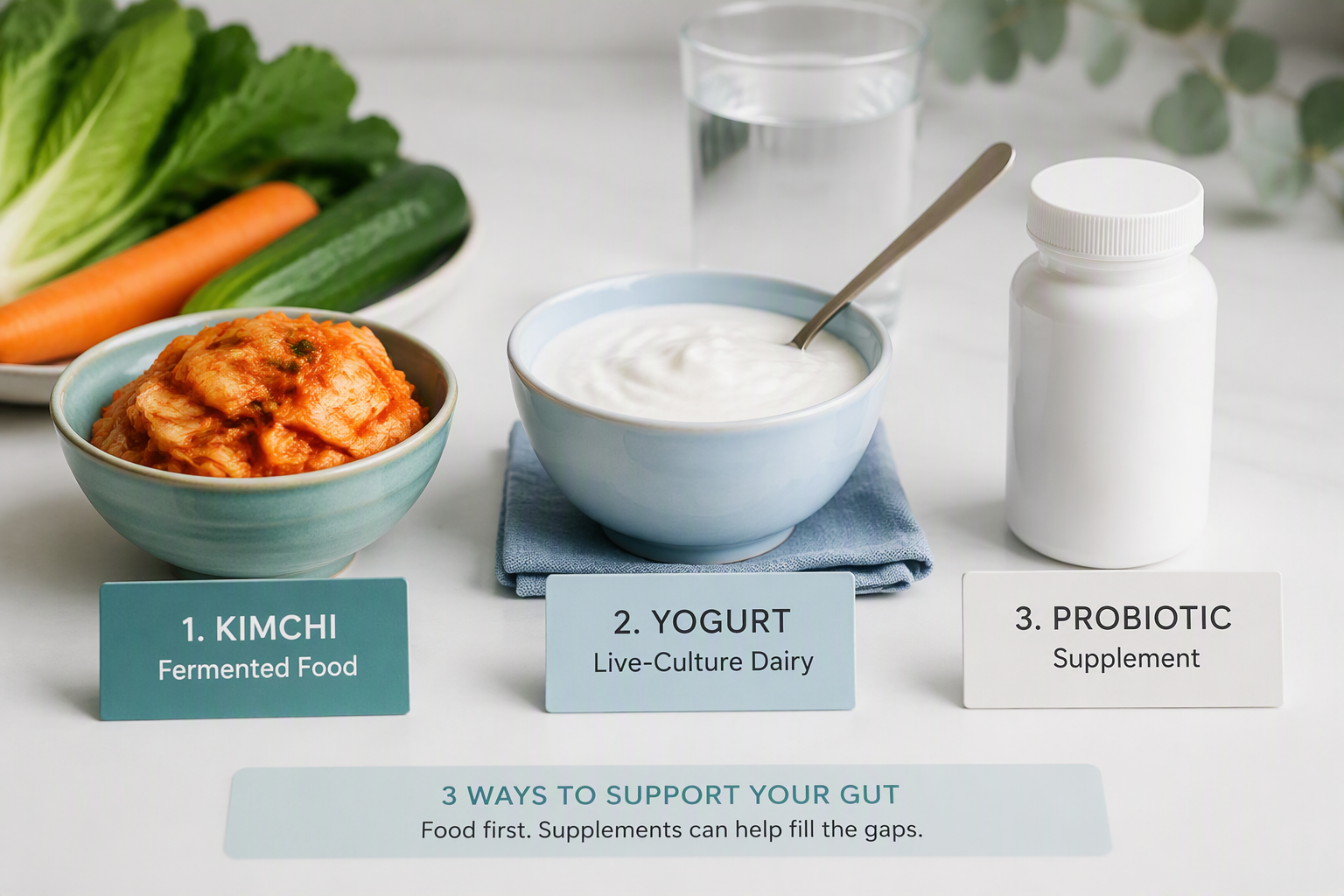
Because kimchi's possible digestive benefits do not make it a standardized treatment, kimchi, yogurt, and supplements can all fit into a digestive-health routine, but they offer different levels of certainty. Refrigerated, unpasteurized kimchi and yogurt may contain living microorganisms, while heat treatment, storage time, and brand practices can reduce what survives until you eat them. A “contains live cultures” claim does not confirm a measured dose, a named strain, or research for a specific symptom.
Option | What it may offer | Practical limitation |
|---|---|---|
Kimchi | Vegetables, fiber, plant nutrients, and possible live cultures | Usually does not provide strain codes or standardized CFU amounts |
Yogurt | Protein, calcium, and a familiar food serving with cultures | Culture types and amounts vary and may not match research for your concern |
Probiotic supplement | A defined strain and stated dose in some products | Quality varies, and it does not replace medical care or a nutrient-rich diet |
That standard matters when you compare options for a specific health goal. Kimchi can be a valuable probiotic food without offering that level of proof for symptom relief.
Strain identity and dose usually matter more than a large number on the front label. Kimchi rarely identifies microbes by genus, species, and strain code, or states the colony-forming units (CFU) in a serving. A clinically studied supplement is easier to assess because its specific strain code can be matched to the dose and population used in research.
A useful supplement-label check includes:
- Strain identity: The label names the genus, species, and strain code, not only a broad species name.
- Dose disclosure: Each named strain has its own amount instead of appearing only within a combined total.
- Evidence match: Research involves the same strain, formulation, dose, health concern, and population.
- Expiration guarantee: Potency is guaranteed through the expiration date, not only measured when the product was made.
A high CFU total or a long strain list does not answer these questions by itself. Evidence for one strain cannot be assumed to apply to another, even when the species names look similar. Product-by-product comparisons belong in a broader probiotic foods resource, where strain details can be reviewed without treating a kimchi article like a supplement roster.
Kimchi may suit you if you enjoy it, tolerate it, and want vegetables, fiber, and plant nutrients as part of regular meals. Sodium, spice, garlic, and fermentable carbohydrates can worsen bloating, pain, diarrhea, or urgency for some people with IBS or sensitive digestion.
Yogurt is often a practical middle option because it provides protein and calcium alongside cultures in a predictable food serving. If lactose triggers symptoms, lactose-free yogurt may be easier to tolerate, although its cultures still may not match strains studied for your specific concern.
A defined supplement can be easier to evaluate when strain identity, dose, storage, and study evidence matter for a clear goal. Probiotic food may be the better fit when you want nourishing meal habits rather than a standardized intervention. Persistent, severe, or worsening digestive symptoms deserve individualized advice from a qualified healthcare professional.
How Much Kimchi Should You Eat Daily?
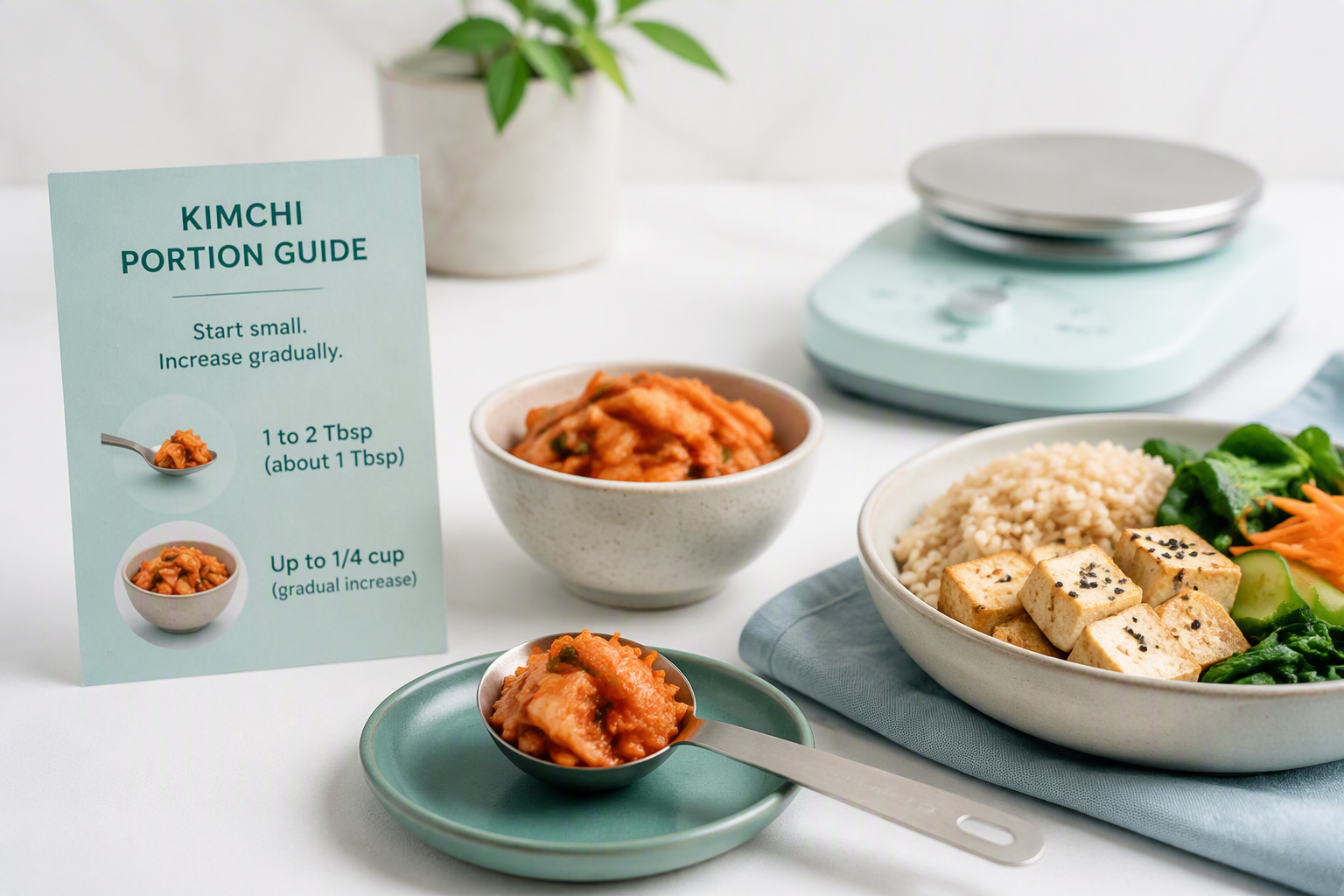
If kimchi is the option that suits your routine, start with 1 to 2 tablespoons, or 15 to 30 grams, of kimchi once a day with a meal. This small amount is a sensible starting point if you are new to fermented foods or manage IBS-related bloating. Keep that portion for several days before changing it, so any shift in symptoms is easier to connect to the food.
If your symptoms remain manageable, gradually work toward about ¼ cup, or 35 to 40 grams, daily. Small nutrition studies have used roughly 100 to 150 grams a day, but those larger amounts are not personal targets. Recipes, fermentation methods, study participants, and measured outcomes differed, so a research portion cannot tell you what your gut will tolerate.
A brief food-and-symptom record can help you settle on an amount that fits your routine:
- Eat it with a meal: Having kimchi alongside other food may feel easier than eating it on an empty stomach.
- Hold each increase: Stay at the same portion for several days before adding more.
- Track changes: Note the amount you ate and any bloating, cramping, diarrhea, constipation, reflux, or urgency.
- Reduce or pause: Cut back or stop eating kimchi if it makes symptoms worse.
Kimchi nutrition can add vegetables, flavor, and some fiber to a varied eating pattern that supports digestive health. A 150-gram, or 1-cup, serving contains about 23 calories, 2.4 grams of fiber, and 1.65 grams of protein. That does not make kimchi a complete source of fiber, so increase total fiber gradually through foods such as:
- Fruits and vegetables
- Legumes and whole grains
- Nuts and seeds
A serving of kimchi cannot be converted into a standard probiotic dose. The number and types of live microorganisms can change with the ingredients, salt level, fermentation, storage temperature, and heat treatment. Portion size alone cannot establish colony-forming units (CFU), show whether organisms survive digestion, or make kimchi equal to a strain-identified probiotic supplement.
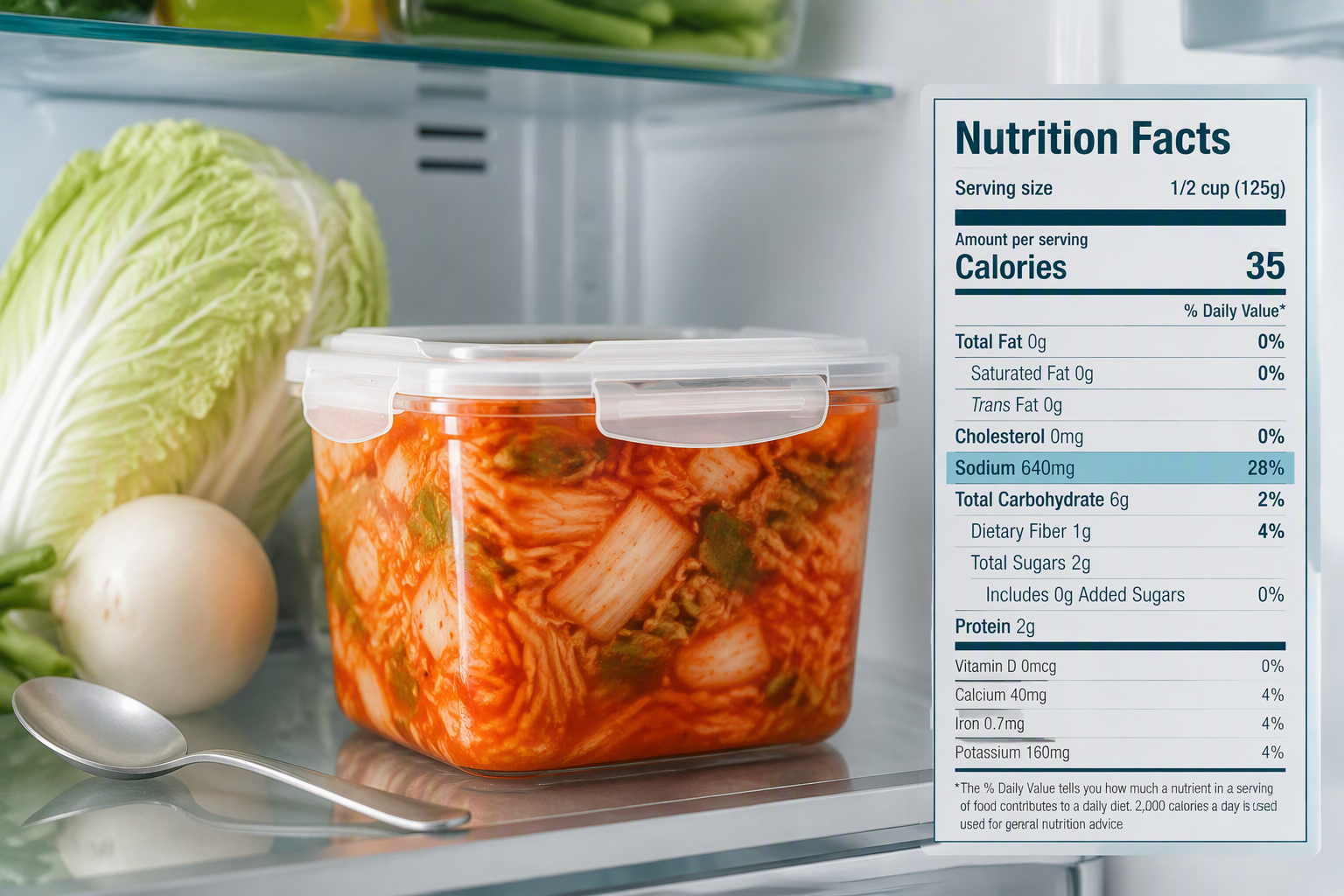
Kimchi sodium deserves equal attention when you choose a daily amount. A 150-gram serving contains approximately 747 milligrams of sodium, though brands and recipes differ. Check the label, especially if you have hypertension, heart disease, kidney disease, or follow a sodium-restricted diet. Kimchi for heart health is not a simple yes-or-no choice because its vegetable base can fit a balanced diet while its sodium may call for a smaller portion and lower-sodium foods elsewhere in the day.
Persistent, severe, or worsening digestive symptoms need attention. Individual tolerance is the best guide to a sustainable kimchi portion.
How Can You Eat Kimchi Safely?
Safe kimchi use starts with a sealed, chilled package, careful storage, and a small first serving. Fermented foods may fit into your meals, but food safety and your own digestive response should guide how much and how often you eat them.
Use these checks when buying and storing kimchi:
- Choose a cold, sealed package: Pick kimchi from a properly refrigerated section, check the use-by date, and avoid containers that are leaking, swollen, or damaged.
- Store it as labeled: Refrigerate it promptly after purchase and follow the package directions. After opening, use clean utensils and keep the vegetables under the brine to help protect their quality.
- Check for spoilage: Discard kimchi with visible mold, leaking packaging, or a smell that is noticeably different from its usual sour, fermented aroma.
- Read the fermentation label: Raw or unpasteurized kimchi may contain live microorganisms. Pasteurized or heat-treated kimchi can still be safe and flavorful, but heat may reduce or eliminate live cultures.
Review both the ingredient list and nutrition panel before adding kimchi to your routine. Kimchi commonly includes napa cabbage or radish, garlic, ginger, peppers, and chile flakes, and sodium can vary widely by product. A lower-sodium option may suit you better if you manage blood pressure or heart health, while chili, garlic, ginger, and spicy ingredients may worsen reflux, gastritis, burning, or abdominal discomfort for some people.
Start with a small amount alongside a familiar meal rather than making a large serving your first test. Increase the portion only if symptoms remain settled over the next day or two. This gradual approach can help separate a reaction to kimchi from symptoms related to another food, stress, or a routine change.
Pay attention to these changes after eating kimchi:
- Bloating or gas: A clear increase may mean the portion or ingredients do not agree with you.
- Abdominal pain or burning: Chile, garlic, and acidic foods can trigger discomfort for some people.
- Loose stools or constipation: Either change is worth tracking when it happens repeatedly after kimchi.
- Reflux: Fermented or spicy foods may aggravate heartburn in some people.
Kimchi may feel uncomfortable even when it is stored safely if you have gastritis, SIBO, intestinal candidiasis, or a highly sensitive gastrointestinal system. If the same symptoms repeatedly follow kimchi, pause it instead of increasing your portion.
Individualized guidance is a good idea before eating kimchi regularly if you have a diagnosed digestive condition, significant food sensitivities, a sodium restriction, or treatment affected by dietary changes. Seek care for unexplained weight loss, bleeding, fever, or ongoing vomiting.
Kimchi Probiotics FAQs
These FAQs give you clear, practical answers about kimchi probiotics, live cultures, fermentation, and what they may mean for your digestive routine.
1. Does Cooking Kimchi Destroy Its Live Cultures?
Cooking kimchi can reduce or eliminate live cultures because heat inactivates microorganisms, and the loss depends on both temperature and cooking time. If kimchi probiotics are your goal, enjoy it raw and cold as a side dish or topping rather than counting on kimchi fermentation in stew, fried rice, or pancakes.
Cooked kimchi still provides vegetables, fiber, and the tangy acids and flavor created during fermentation. It can be a nourishing, satisfying ingredient, but it is not a dependable source of live cultures.
2. Does Store-Bought Kimchi Contain Live Cultures?
It depends on processing and storage. Refrigerated, unpasteurized kimchi is more likely to contain live cultures in kimchi, while shelf-stable or heat-treated jars generally do not. Look for “raw,” “unpasteurized,” or “naturally fermented,” and choose products soured through salt-based fermentation rather than added vinegar.
Kimchi probiotics are not a measured dose. Even when a refrigerated jar contains live cultures, strains and amounts are not standardized, so view kimchi as a fermented food rather than a probiotic supplement.
3. How Should You Store Kimchi?
Keep kimchi refrigerated in a sealed container, following the package directions. Cold slows kimchi fermentation without stopping it, so live cultures can keep making it more sour, softer, fizzy, or pressurized over time. Those changes are usually normal, but the flavor and texture will continue to shift.
Use a clean utensil and keep the vegetables beneath the brine. Discard the jar if you notice fuzzy or colored mold, a leaking or bulging package, or an off smell that seems unusual for fermented food.
4. Can Kimchi Probiotics Survive Stomach Acid?
Some kimchi probiotics may pass through stomach acid and bile, but survival differs among organisms. Some lactic acid bacteria from fermented vegetables tolerate these conditions better than others. Because kimchi’s live microorganisms are seldom identified or counted by strain, no product-specific survival estimate is available.
Reaching the intestines does not mean the organisms will settle there or produce a health benefit. Still, kimchi can contribute fermented-food exposure as part of a varied diet.