


Adding more fiber can sound like a simple answer to bloating or constipation, yet a large dose of inulin may worsen gas and cramping. Prebiotic benefits are real but specific: these nondigestible fibers feed selected gut microbes, with the strongest evidence supporting short-chain fatty acid production and, for some people, more regular bowel movements.
Popular claims about immunity, weight loss, cholesterol, and IBS relief go further than the research supports. A 2019 review of 11 IBS trials found no overall symptom improvement, while a 2022 analysis of 1,251 adults found certain fiber supplements improved constipation outcomes. The gap between those two results is where most of the confusion about prebiotics lives.
Food-based changes usually work best when they begin slowly with tolerated options such as oats, firm bananas, lentils, or cooled potatoes. Persistent or worsening digestive symptoms, blood in stool, severe pain, or unexplained weight loss need medical assessment rather than more fiber.
Prebiotic Benefits Key Takeaways
- Prebiotics are nondigestible fibers that selected gut microbes ferment in the colon.
- Fermentation reliably produces short-chain fatty acids, including butyrate, which supports colon cells.
- Some prebiotic fibers may improve stool frequency and consistency in chronic constipation.
- Prebiotics have not shown overall relief of IBS symptoms and inulin-type fructans can increase flatulence.
- Evidence for immune, weight, cholesterol, and infection benefits remains mixed or limited.
- Start gradually with tolerated foods such as oats, firm bananas, lentils, or cooled potatoes.
- Reduce portions and seek professional advice when symptoms persist, worsen, or include warning signs.
What Are Prebiotics and How Do They Differ?
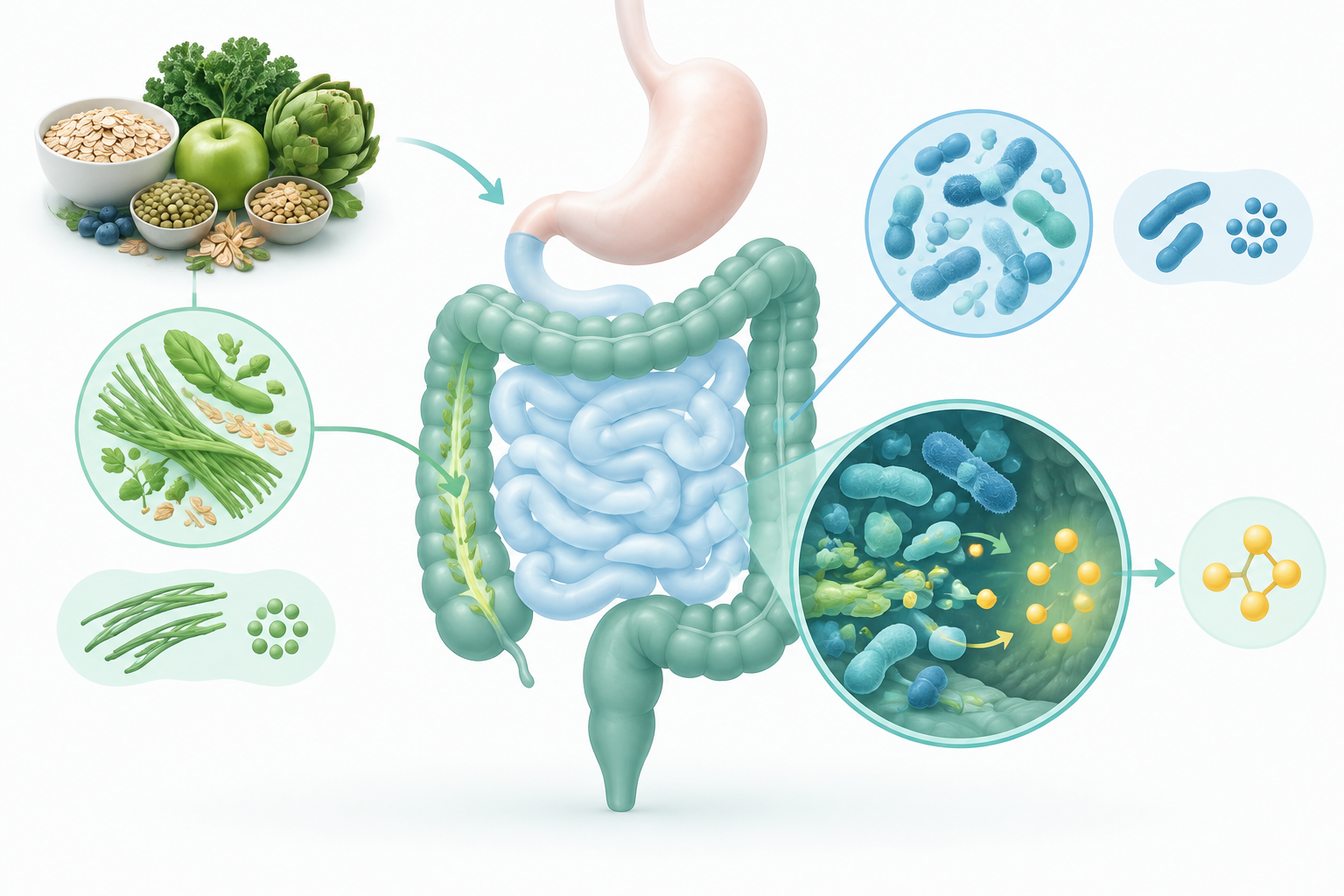
Prebiotics are non-digestible food components, usually specialized fibers, that pass through the small intestine without being fully broken down. Once they reach the colon, selected members of the gut microbiome use them in ways associated with a health benefit. The prebiotic fiber guide connects that definition with practical food choices.
Established prebiotic compounds share this route through digestion:
- Inulin and fructooligosaccharides: These fermentable carbohydrates are used by certain gut microbes.
- Galactooligosaccharides: These are another type of selectively used carbohydrate.
- Some resistant starches: These starches resist digestion in the small intestine and can reach the colon.
The International Scientific Association for Probiotics and Prebiotics defines a prebiotic as a substrate selectively used by host microorganisms that provides a health benefit (source). Bifidobacteria and Lactobacilli are among the microbes that may use particular prebiotics, but a larger bacterial count alone does not explain their potential effects.
Fermentation is the process the benefits depend on. Colon microbes break down these materials and produce metabolites, especially short-chain fatty acids, which can influence the colon's environment and processes elsewhere in the body. Your usual diet, existing microbiome, and individual tolerance all affect this response, so the same fiber may feel different from one person to another.
Prebiotics feed microbes already in your digestive tract, while probiotics are live microorganisms consumed in foods or supplements. Neither takes the place of the other, and neither is automatically a better choice for every digestive concern.
Increasing fermentable fiber too fast can bring on gas or bloating, particularly with irritable bowel syndrome (IBS). That reaction does not necessarily mean prebiotics are harmful, but it can signal that the type, amount, or pace of change needs adjustment. Evidence for specific benefits varies, so gradual, symptom-aware changes are usually more useful than trying to increase beneficial microbes quickly.
Which Prebiotic Benefits Have Strongest Evidence?
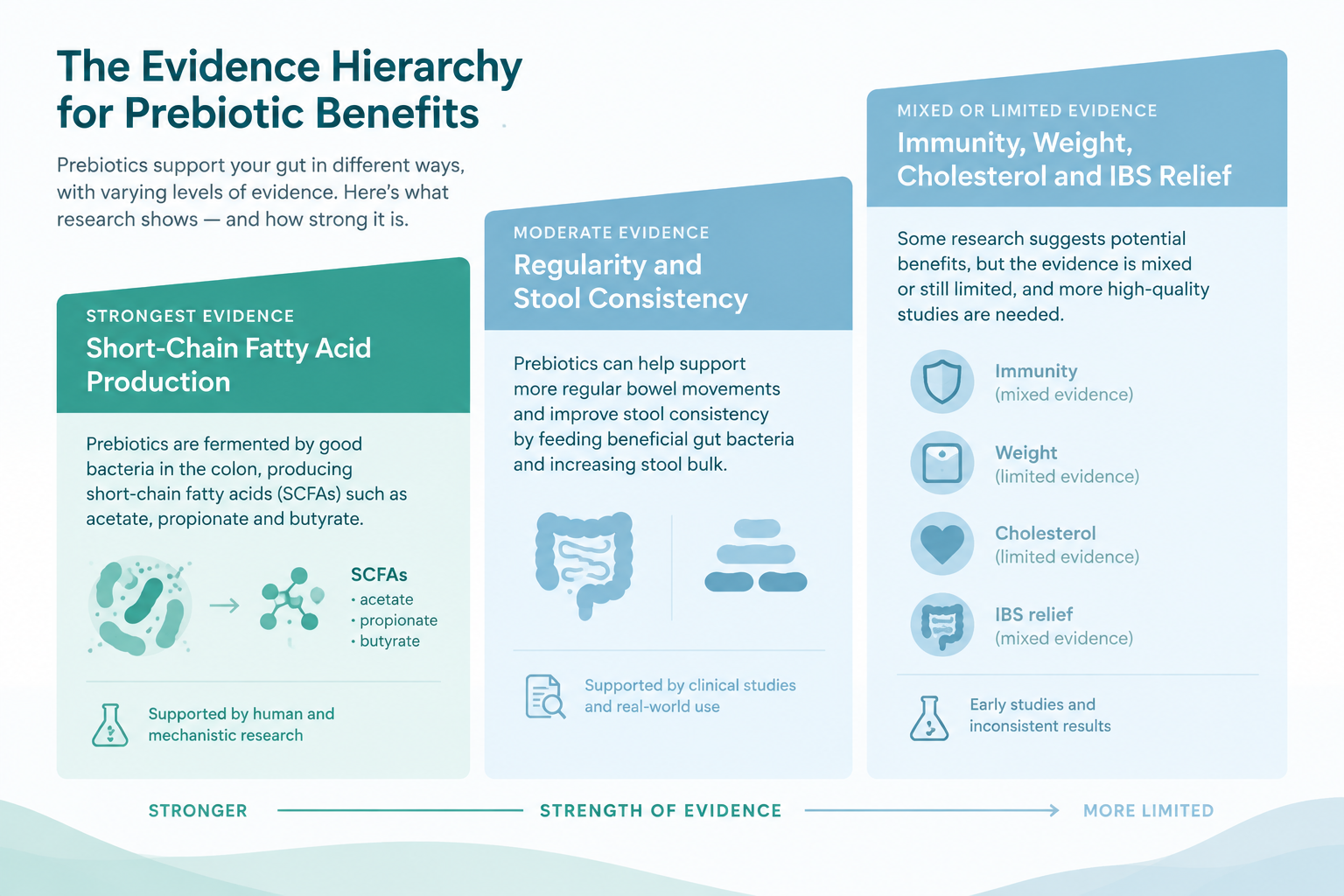
With those distinctions and tolerance limits in mind, the most dependable prebiotic effects are colonic fermentation and, for some people with chronic constipation, more regular bowel movements. Evidence for other outcomes varies with the fiber used, dose, usual diet, gut microbiome, and study population.
Evidence tier | Potential benefit | What the evidence supports |
|---|---|---|
Tier 1: Well supported | Short-chain fatty acids (SCFAs) | Prebiotic fermentation reliably increases these compounds. |
Tier 1: Well supported | Colon-cell nourishment and gut barrier support | Butyrate is a key SCFA linked with colon cells and the gut barrier. |
Tier 1: Well supported | Chronic constipation | Some people have more regular bowel movements. |
Tier 2: Promising, variable | Calcium absorption | Absorption may improve at higher doses, mainly shown in adolescents. |
Tier 2: Promising, variable | Blood-sugar markers | Some studies in people with prediabetes or type 2 diabetes report improved markers. |
Tier 3: Emerging or mixed | Immune and inflammation markers | Changes in lab markers have not shown clear health outcomes. |
Tier 3: Emerging or mixed | Appetite and body weight | Findings are inconsistent. |
Tier 3: Emerging or mixed | Cholesterol | Effects are mixed and may be small. |
Tier 3: Emerging or mixed | Infection risk | Evidence does not show reliable protection from illness. |
Tier 3: Emerging or mixed | Irritable bowel syndrome (IBS) symptoms | Trials have not shown overall symptom relief. |
A Tier 1 biological effect does not make a Tier 3 health outcome likely. Similarly, an improved lab marker does not necessarily mean fewer symptoms or illnesses, particularly when bloating or IBS is involved.
The next two sections give the figures behind each tier, including where results are strongest and where expectations should stay modest.
How Do Prebiotics Support Regularity and Colon Health?
Prebiotics may support regular bowel movements for some people in two related ways. Certain fibers hold water and add bulk to stool, while resident gut microbes ferment them. Together, these effects may make stool easier to pass and encourage a more regular pattern when intake rises gradually.
Fermentation creates short-chain fatty acids (SCFAs), mainly acetate, propionate, and butyrate. Butyrate fuels colon cells, and SCFAs may support the gut barrier, which helps keep gut contents and microbes separated from the bloodstream. These processes matter for colon health, but they do not mean that one food or supplement will relieve constipation or bloating for everyone.
Your response can vary for several reasons:
- Fiber type: Water-holding fibers may add stool bulk, while rapidly fermented fibers may produce more gas.
- Fluids and usual diet: Fiber generally works best alongside adequate fluids, and a sudden increase can be uncomfortable.
- Microbiome and symptoms: Your existing mix of gut microbes may affect how strongly a fiber ferments and whether it changes stool, gas, or cramping.
Evidence on prebiotics for constipation is encouraging, but the details matter. A 2022 meta-analysis of 16 randomized trials involving 1,251 adults with chronic constipation found that fiber supplements improved treatment response, stool frequency, and consistency. Results were clearest with psyllium, doses above 10 grams daily, and at least four weeks of use, although flatulence also increased (source). A 2024 meta-analysis of 17 trials found that fructooligosaccharides increased bowel-movement frequency and softened stools, with mild bloating as the most common side effect (source).
Comfortably regular movements matter more than meeting a forced daily schedule. The best amount depends on the specific fiber, your overall diet, fluid intake, baseline bowel habits, and microbiome, so more fiber is not automatically better.
For IBS, prebiotics should not be treated as an IBS treatment. A 2019 systematic review and meta-analysis of 11 randomized trials involving 729 people found no improvement in overall symptoms, abdominal pain, bloating, or quality of life. Inulin-type fructans increased flatulence, while non-inulin prebiotics at 6 grams daily or less slightly improved flatulence (source).
Gas, bloating, cramping, or looser stools can occur when fermentable fibers are added too quickly, especially for some people with diarrhea-predominant IBS. Use the gradual-introduction plan in the parent prebiotics guide, and pause increases until symptoms settle. Seek care if symptoms persist.
What Do Mineral, Immune, and Metabolic Studies Show?
Beyond regularity and colon health, prebiotics may affect mineral handling, immune activity, and metabolic health, but they do not ensure stronger bones, fewer infections, or lower blood sugar. Responses differ from person to person, particularly when IBS, bloating, or other digestive symptoms make certain fibers harder to tolerate.
Mineral absorption may improve because of bacterial fermentation in the colon. Fermentation lowers colonic pH, which can make calcium and magnesium easier to absorb (source). This is a possible mechanism, not proof that prebiotics alone correct a deficiency or build stronger bones.
The strongest human example came from a year-long randomized trial in growing adolescents. Participants who took 8 grams daily of mixed inulin-type fructans absorbed more calcium after eight weeks and one year, and they gained more bone mineral than the placebo group. Vitamin D receptor genotype also affected the response, and the tested supplement amount is higher than most people get from food (source). Gradually adding fiber-rich foods is often a more practical first step.
Immune effects remain an early area of research. Because much of the body's immune activity is connected to the gut, prebiotics may influence immune signaling through changes in the gut barrier. Evidence on inflammation is also limited, so these findings do not show that prebiotics prevent infections.
One pediatric trial offers a narrow but useful result:
- Participants: Children ages 3 to 6 took 6 grams daily of inulin-type fructans for 24 weeks, with 219 children completing the study.
- Observed changes: The prebiotic group had higher fecal Bifidobacterium levels, softer stools, and fewer fever episodes that needed medical attention.
- Important limit: Parent-reported infections occurred with similar frequency and duration in both groups, so these results should not be applied to adult immune support or infection prevention (source).
Metabolic findings also need careful interpretation. A 2019 meta-analysis of 33 randomized trials involving 1,346 people found that inulin-type fructans improved fasting glucose, HbA1c, fasting insulin, and insulin resistance, with the clearest results among people with prediabetes or type 2 diabetes. The analysis suggested 10 grams daily for at least six weeks, but its findings do not extend to every fiber, dose, or person with normal blood sugar (source). Prebiotics can complement a diabetes-care plan, not replace it.
Evidence on appetite hormones and body weight is small and mixed. Prebiotics and weight loss examines those claims without treating higher fiber intake as a weight-loss guarantee.
Persistent, severe, or worsening digestive symptoms warrant advice from a qualified healthcare professional.
Which Foods Provide Prebiotic Fibers?
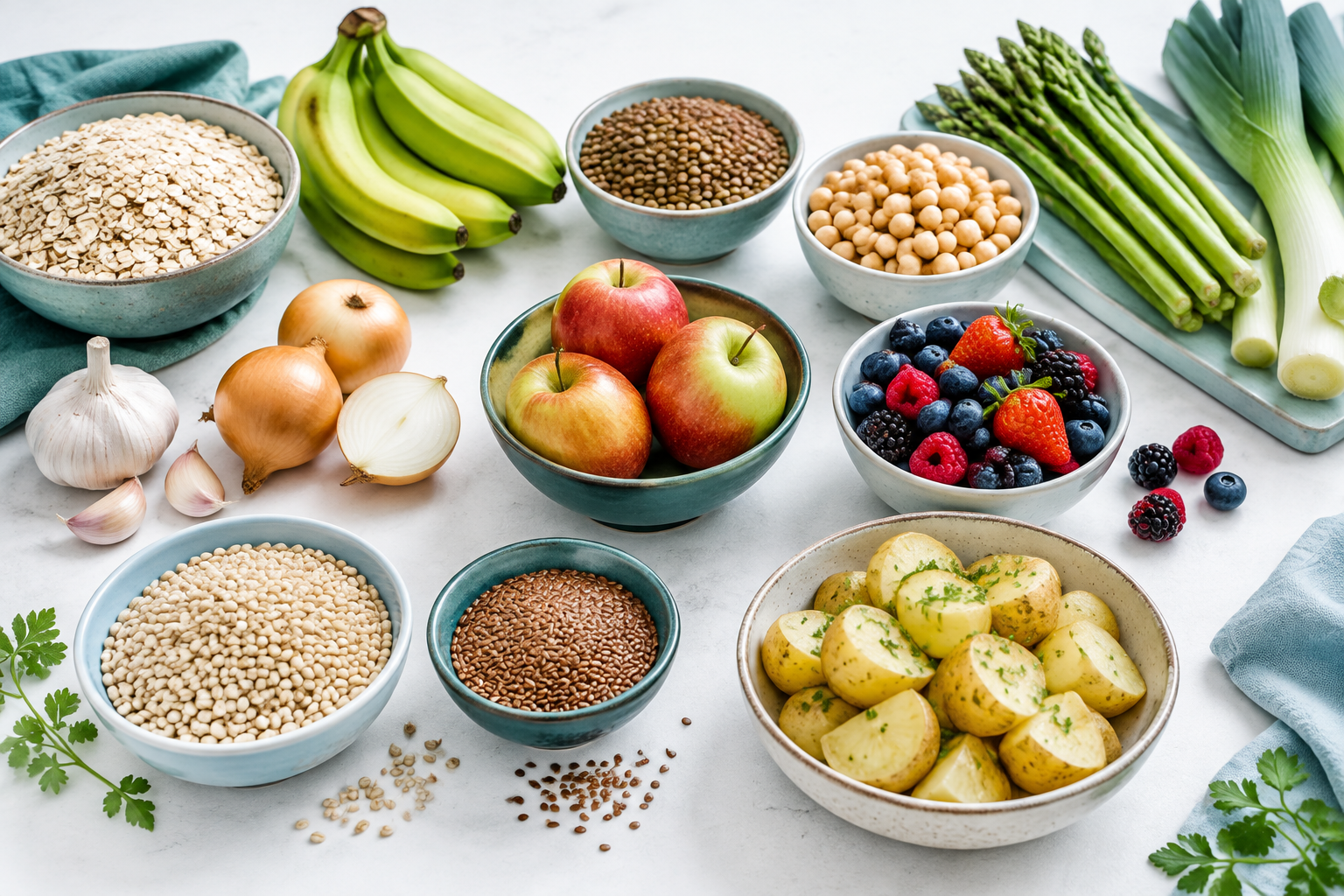
To translate the evidence into everyday choices, the prebiotic foods that fit you best depend on the benefit you want and how your gut responds. Specialized fibers feed beneficial gut bacteria in different ways, and a food’s total fiber content does not automatically make it a strong prebiotic source.
These food-and-fiber pairings can help you choose:
- Inulin-type fructans: Garlic, onions, leeks, asparagus, chicory root, and Jerusalem artichokes contain inulin or fructooligosaccharides. These fibers are common in studies of healthy gut bacteria, calcium absorption, and blood sugar, but they are also more likely to trigger gas, particularly with IBS.
- Galactooligosaccharides: Lentils, chickpeas, and beans contain fibers that generally ferment more slowly than fructans.
- Resistant starch: Slightly green bananas, oats, whole grains, and cooked then cooled potatoes or rice provide resistant starch, which also ferments more gradually.
- Beta-glucan and pectin: Oats and barley provide water-holding beta-glucan, while apples with skin and berries supply pectin. Both can add bulk and support regular bowel movements. Flaxseeds also contain mucilage and fiber that may help with stool consistency.
Prebiotic foods for gut health includes serving sizes, preparation ideas, and My Good Gut Food and Fiber Chart values. Start with foods you tolerate well, especially when bloating is already a concern.
How Much Prebiotic Fiber Do You Need for These Benefits?
The dose of prebiotic fiber is a range to recognize on a label, not a number you need to reach. In the trials discussed above, findings related to constipation, calcium absorption, and blood sugar generally used about 8 to 10 grams or more of one specific prebiotic fiber daily for at least four to six weeks. Better-tolerated IBS trials used 6 grams a day or less.
Research pattern | Amount and timeframe | Practical meaning |
|---|---|---|
Constipation, calcium, and blood-sugar findings | About 8 to 10+ g daily for 4 to 6+ weeks | This is a study dose, not a personal target. |
Better-tolerated IBS trials | 6 g daily or less | A lower amount may suit a symptom-sensitive gut. |
Food-based starting point | Several grams spread across meals | Mixed fibers avoid one large, highly fermentable dose. |
That difference matters because a full trial dose of inulin-type fructans can be several times the fermentable fiber in a typical meal. It is also the amount most likely to bring on gas, bloating, or loose stools, especially if you have IBS.
Consistency matters more than taking the largest dose possible. These fibers work through fermentation in the colon, and taking more does not make that process happen faster. The useful amount is the one you can keep eating without disruptive symptoms.
A serving each of oats, a firm banana, and a half-cup of lentils over the day provides several grams of mixed fermentable fiber. For most people, that is a sensible place to begin alongside the gradual approach in the parent prebiotics guide. Increase food changes slowly and drink enough water, since a sudden jump in fiber can make temporary abdominal discomfort more noticeable.
Prebiotics may help with constipation, but worsening bloating is a sign to ease back rather than push through. When food intake is low or you want a measured amount of one fiber, choosing a prebiotic supplement can clarify the available options without replacing meals or medical care.
If bloating becomes disruptive, return to the last comfortable amount and stay there longer. If fermentable oligosaccharides, disaccharides, monosaccharides, and polyols (FODMAPs) trigger symptoms, reduce that specific trigger while keeping tolerated fiber sources.
When Should You Seek Help for Digestive Symptoms?

Even with the gradual approach to food and dosage, mild gas, bloating, or a change in stool frequency can be a normal adjustment as you add prebiotics or prebiotic foods. Gut microbes ferment these carbohydrates, which may produce gas while supporting beneficial microbes and digestion. Symptoms should remain manageable and ease if you reduce the portion or increase it more gradually.
A dietary adjustment should not progressively disrupt meals, sleep, work, or daily life. Talk with a qualified healthcare professional about bloating, constipation, diarrhea, cramps, or bowel-habit changes that persist, worsen, or continue after you pause the dietary change. Digestive symptoms have many possible causes, so it is not always accurate to blame fiber or the gut microbiome.
Prompt medical assessment is needed for these warning signs:
- Severe or worsening abdominal pain: Intense, escalating, or unfamiliar pain needs timely evaluation.
- Blood or black stools: Red blood, black tar-like stools, or vomiting blood can be signs of bleeding.
- Persistent vomiting, fever, fainting, or dehydration: Very dry mouth, little urine, dizziness, or an inability to keep fluids down can become serious.
- Unexplained weight loss or trouble swallowing: These changes need medical attention rather than more fiber.
- Abdominal swelling with no stool or gas: Stop experimenting with prebiotic foods, fiber powders, or supplements and seek urgent care.
New bowel changes without a clear food trigger also deserve attention, particularly with fatigue, appetite loss, anemia, or a family history of colorectal cancer, inflammatory bowel disease, or celiac disease. A simple record can help a clinician see the pattern. Include:
- Symptoms: Note when they occur and how long they last.
- Bowel habits: Record changes in stool frequency or appearance.
- Recent changes: Include foods, portion sizes, medications, vitamins, and supplements.
IBS often makes tolerance more individual. Prebiotics may help some people support a balanced gut microbiome, but limited, low-quality evidence does not support them as a universal IBS treatment. If gradual increases repeatedly cause substantial pain, urgency, diarrhea, or constipation, stop pushing through symptoms and seek personalized guidance from a clinician or registered dietitian.
Most healthy adults can generally add prebiotic-containing foods to meals, but broad health benefits and safety have not been established for everyone. People with a diagnosed digestive condition, a recent significant gastrointestinal illness, or prescribed treatment should ask a qualified healthcare professional how dietary changes fit their care plan. Results vary by person, and any dietary or supplement choice should be individualized.
Prebiotic Benefits FAQs
These FAQs address common questions about prebiotic benefits, including the changes you may notice, why digestive symptoms differ, and how prebiotic-rich foods may fit into your routine.
1. How Long Do Prebiotic Benefits Take?
Prebiotic fibers begin fermenting once they reach the colon, so gas, bloating, or stool changes can occur during the adjustment period. This process produces short-chain fatty acids, including acetate, propionate, and butyrate, but early symptoms do not necessarily signal an immediate benefit.
Improved regularity and other measurable changes often take longer and depend on the fiber type, amount, usual diet, and your digestive response. Fermentation may affect fullness hormones such as peptide YY and GLP-1, but it does not predict quick appetite or weight changes. Add fiber gradually, especially if bloating is a concern.
2. Can You Take Prebiotics Every Day?
Many healthy adults can eat food-based prebiotics daily. These nondigestible plant fibers and resistant starches reach the colon, where gut microbes ferment them. Start with a small serving and increase gradually if it feels comfortable, especially if you have bloating or IBS, while drinking enough water and watching for gas, cramping, or bowel-habit changes. Mild symptoms may occur as your gut microbiome adjusts, but scale back or pause if they disrupt daily life. Persistent, severe, or worsening symptoms need advice from a qualified healthcare professional.
3. Should You Take Prebiotics With Antibiotics?
Prebiotic-rich foods can usually remain part of a balanced diet during antibiotics if you tolerate them, but starting a high-dose supplement at the same time is not automatically appropriate. Because antibiotics differ in instructions, interactions, and digestive side effects, ask your prescriber or pharmacist about your specific medicine and health history.
Research suggests prebiotics may nourish beneficial gut bacteria and support the gut barrier, with possible effects on immune signaling. The clearest human evidence for an immune-related effect comes from the fructan study in children described above, while evidence on infections remains limited. No trial shows that every adult should take a prebiotic supplement with antibiotics or that it prevents antibiotic side effects.
4. Are Prebiotic Supplements Safe During Pregnancy?
Food-based prebiotic fiber is usually the more practical place to start during pregnancy. Tolerable portions of oats, barley, beans, lentils, firmer bananas, apples with skin, onions, garlic, leeks, asparagus, whole grains, and ground flaxseed add variety without concentrated powders, gummies, or supplements.
Pregnancy-specific safety evidence for concentrated prebiotic or synbiotic products is less certain, and tolerance varies. Adding fermentable fiber too quickly can cause gas, bloating, or temporary discomfort. Begin with small food portions, increase gradually, drink enough water, and discuss concentrated products with your obstetric clinician, especially if you have ongoing digestive symptoms or dietary restrictions.