


Adding a prebiotic powder or loading up on chicory-root bars won't cause meaningful fat loss on its own. Prebiotics may support modest weight loss, averaging about 2 pounds in clinical trials, but they work indirectly and can aggravate bloating or IBS symptoms when increased too quickly. These nondigestible plant fibers reach the colon, where they feed certain beneficial gut microbes.
Oligofructose studies have linked changes in ghrelin and PYY with small weight differences, while pooled research found no significant fat-mass change. That gap matters because appetite signals and gut bacteria don't override meals, activity, sleep, medications, or health conditions. Food-first choices, gradual portions, and a simple symptom record can help identify fibers that support fullness without triggering gas, cramping, diarrhea, or constipation.
A supplement isn't required, and high research doses of 5 to 21 grams daily may be poorly tolerated. Persistent or worsening digestive symptoms, blood in the stool, vomiting, or unexplained weight loss need medical evaluation.
Prebiotics and Weight Loss Key Takeaways
- Prebiotics may support small weight changes but do not directly burn fat.
- Trials averaged about 2 pounds of additional weight loss versus placebo.
- Evidence does not show significant prebiotic-related fat-mass loss.
- Fermentation may influence fullness hormones such as GLP-1 and PYY.
- IBS symptoms can worsen when fermentable fibers are increased too quickly.
- Start with tolerated foods, one change at a time, and increase gradually.
- Seek care for persistent or severe symptoms, blood in stool, vomiting, or unexplained weight loss.
Can Prebiotics Help You Lose Weight?
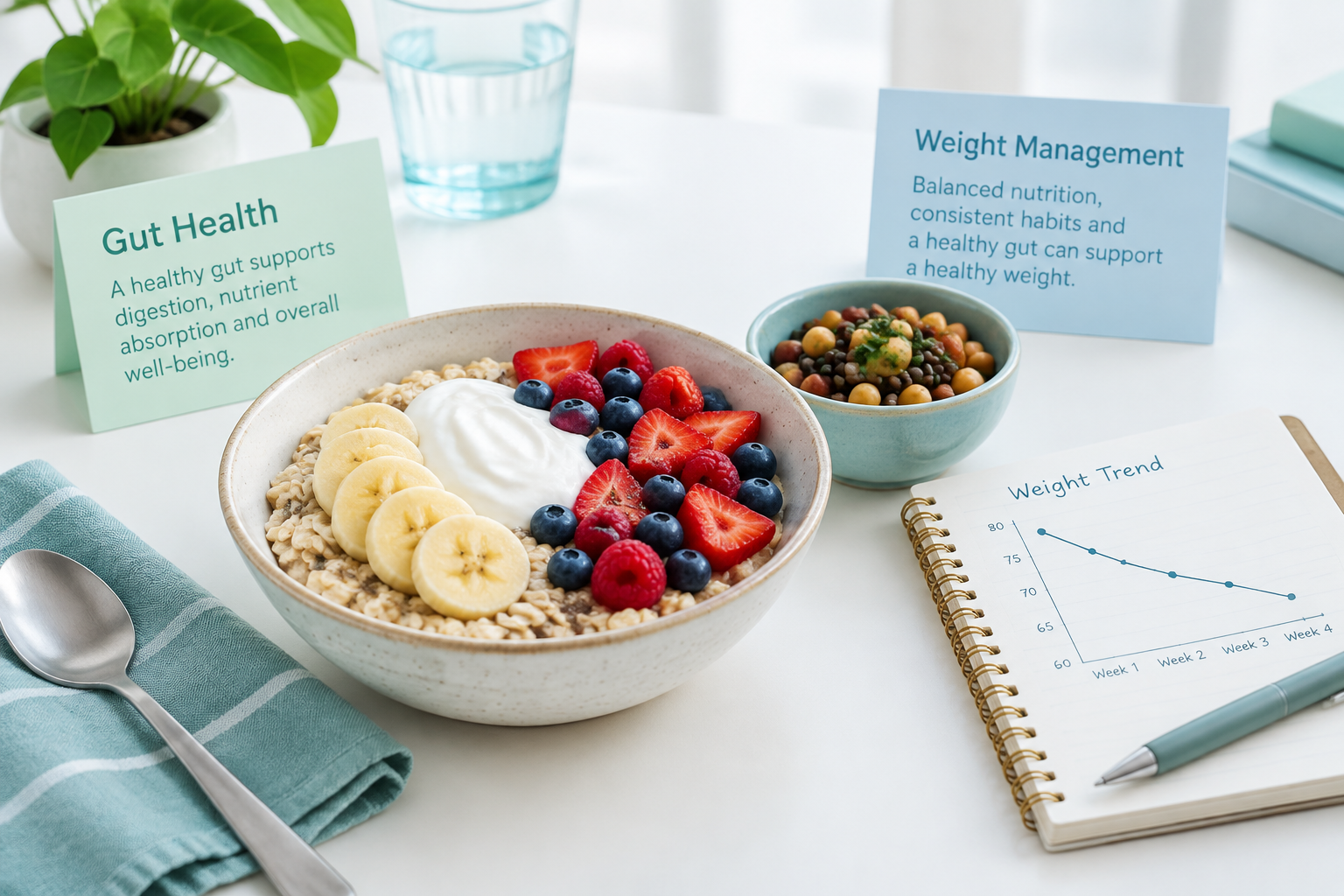
Prebiotics may support a small amount of additional weight loss, about 0.9 kilograms or roughly 2 pounds on average in clinical trials, but they do not burn fat, block calories, or replace a broader weight-management plan. If you have digestive symptoms, using prebiotics with IBS calls for a cautious approach because tolerance varies. Prebiotics are nondigestible plant fibers that reach the colon and selectively feed beneficial gut microbes, including bifidobacteria.
A 2018 systematic review and meta-analysis in adults with overweight or obesity found that prebiotic supplements, across five study arms, were linked to about 0.9 kilograms of additional weight loss compared with placebo. The review found only a trend toward lower body mass index (BMI), which compares weight with height, and no significant change in fat mass (source). That is a modest group average, not a reliable prediction of your individual results.
Any benefit appears to be indirect. Although changes in gut bacteria may affect appetite- and metabolism-related signals, they cannot outweigh food intake, activity, sleep, medications, or an underlying health condition, and the next section covers the role of these signals.
Prebiotic foods and supplements fit best as one supportive part of a healthy diet and active lifestyle. Satisfying balanced meals, portions that match your energy needs, regular movement, and a sustainable calorie deficit when weight loss is appropriate remain the main drivers of progress.
Start gradually, particularly if you have irritable bowel syndrome (IBS), constipation, or frequent bloating. A food that supports one person's bowel habits may cause gas, cramping, diarrhea, or worse constipation for someone else. Digestive tolerance and weight response vary, so persistent, severe, or worsening symptoms deserve evaluation from a qualified healthcare professional.
How Do Prebiotics Affect Appetite and Metabolism?
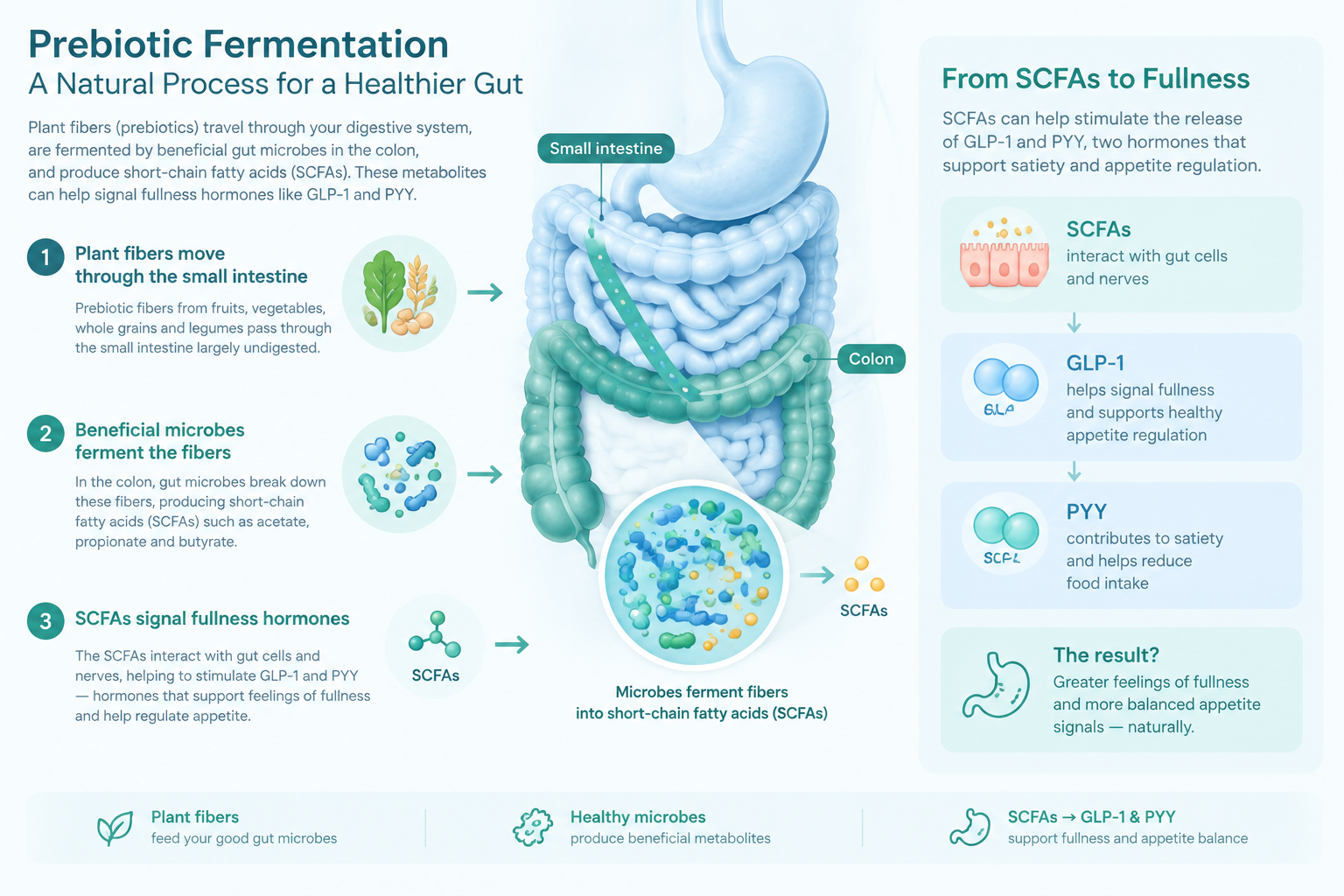
Because any weight benefit is indirect, prebiotics may support appetite signals and metabolic health, but they do not directly burn fat or guarantee weight loss. Many prebiotic fibers pass through the small intestine without being digested and reach the colon, where gut microbes ferment them into short-chain fatty acids, mainly acetate, propionate, and butyrate. This established process helps explain broader prebiotic health benefits.
Several mechanisms may contribute to fullness:
- Appetite signaling: Short-chain fatty acids may stimulate glucagon-like peptide-1 (GLP-1) and peptide YY (PYY), fullness hormones that can slow stomach emptying. They may also affect ghrelin, a hormone that helps regulate hunger.
- Meal fullness: Prebiotic-rich foods can add bulk and slow digestion, which may increase feelings of fullness after eating. This can support appetite control within an overall weight-management eating pattern, but it does not automatically reduce calorie intake or cause meaningful weight loss.
- Colon and metabolic pathways: Butyrate provides fuel for colon cells. Short-chain fatty acids may also influence insulin sensitivity, fat metabolism, and cholesterol handling, although evidence that microbiome changes make the body absorb far fewer calories or burn substantially more fat remains weak.
Human research is limited, and results differ from person to person. In a 12-week study of 48 adults taking oligofructose, weight loss occurred alongside lower ghrelin, higher PYY, and lower self-reported calorie intake, while active GLP-1 did not change, according to researchers in the American Journal of Clinical Nutrition (source). That result does not mean the same response will occur for you.
A fiber-supported microbiome may help maintain the intestinal barrier, the protective lining between the gut and the rest of the body. It is also associated with lower low-grade inflammation, which often occurs alongside insulin resistance and obesity. Lower bacterial diversity seen in some people with obesity is an association, not proof that it causes weight gain.
Your eating pattern, activity level, medications, health conditions, and digestive tolerance all shape the outcome. With irritable bowel syndrome (IBS), increasing fermentable fiber too quickly can worsen gas, pain, or bloating. Start with small food portions, increase gradually, and seek qualified healthcare guidance if symptoms persist, become severe, or worsen.
What Do Human Weight-Loss Studies Actually Show?
Against these proposed appetite and metabolic mechanisms, human trials suggest that prebiotics may lead to small average changes in weight when they are part of a balanced eating pattern, not dramatic or predictable fat loss. Results reflect group averages in randomized studies, so they cannot forecast your outcome. Fiber type, dose, usual diet, starting weight, and digestive tolerance all shape the result.
Across the five prebiotic study arms in the 2018 meta-analysis cited above, the average difference was about 0.9 kilograms, body mass index showed only a trend toward improvement, and fat mass did not change in the three arms that measured it. The results do not show a body-composition change or direct fat burning.
Research on broader dietary fiber is somewhat more favorable, but it addresses more than prebiotics alone. A 2017 meta-analysis of 12 randomized trials in 609 adults with overweight or obesity lasted 2 to 17 weeks and did not require calorie restriction. Isolated soluble-fiber supplements were associated with about 2.5 kilograms lower body weight and a 0.84 lower BMI than placebo, although findings varied considerably between studies (source). Because soluble fiber includes fibers that are not prebiotics, the findings cannot show that every prebiotic food or supplement affects weight in the same way.
Two small, short trials show both the potential and the limits:
- Oligofructose trial: In a 12-week randomized trial, 48 adults with overweight or obesity received 21 grams of oligofructose daily or placebo. The oligofructose group lost about 1 kilogram, while the placebo group gained about 0.45 kilograms. Lower ghrelin and higher peptide YY accompanied the group difference (source).
- Yacon syrup trial: A 120-day trial in women with obesity used yacon syrup that supplied about 0.14 grams of fructooligosaccharides per kilogram of body weight daily. Weight, waist circumference, BMI, and reported fullness improved, but a higher dose caused gastrointestinal side effects (source).
The studies behind these findings used roughly 5 to 21 grams of a specific prebiotic daily for 2 to 17 weeks. That can be more than a person with bloating, constipation, or IBS can comfortably tolerate at first. Building fiber gradually through foods can help you notice whether extra gas, pain, or bowel changes settle or indicate poor tolerance.
Gut health and weight are related, but they are not the same goal. Some studies find modest changes in weight or waist measures, while others do not, and pooled evidence remains uncertain for BMI and fat mass. Prebiotics are one supportive dietary tool, not a standalone weight-management strategy.
Digestive symptoms can have many causes, so consult a qualified healthcare professional for persistent, severe, or worsening symptoms. Results vary by person, and dietary or supplement choices should be individualized.
How Strong Is the Evidence Behind Gut Mechanisms?
The strongest human evidence shows what fermentable fibers do in the digestive tract, not that microbiome changes produce meaningful, lasting fat loss. Gut bacteria produce short-chain fatty acids, including acetate, propionate, and butyrate. These compounds may affect appetite signals, insulin sensitivity, and fat metabolism, but a plausible pathway does not prove weight loss.
That distinction matters when you read claims about gut bacteria and body weight. Greater microbial diversity may be linked with health in some settings, yet diversity itself is not a weight-loss outcome. Improvements in metabolic health can still matter even if body fat stays the same.
The evidence falls into separate categories:
- Direct prebiotic findings: Inulin-type prebiotics can change bacterial activity and fermentation in the colon.
- Soluble-fiber findings: Soluble fibers may slow digestion and support fullness, but results from one fiber, food pattern, or supplement do not automatically apply to another.
- Preliminary mechanism research: Fermentation products may support the intestinal barrier and blood-sugar handling, with possible effects on inflammation. This is a proposed route to better health, not a demonstrated route to fat loss.
A brain-imaging trial offers an interesting but narrow example. In a crossover design, 59 young adults with overweight took 30 grams daily of chicory-derived inulin or an equal-calorie placebo for 14 days each. Functional MRI showed lower activity in the ventral tegmental area and orbitofrontal cortex, brain regions involved in reward, when participants viewed high-calorie foods they wanted. The inulin period also coincided with a shift toward short-chain-fatty-acid-producing bacteria (source).
Lower reward-related brain activity may reflect a change in food decision-making, but the study did not show that participants ate less, sustained different choices, or lost body fat. It therefore cannot establish whether inulin affects weight through this pathway.
The 30-gram dose is also far above what many people with IBS tolerate. Starting with prebiotic foods in amounts that fit your symptoms gives you more useful information than copying a brief, high-dose research protocol.
Do Probiotics or Synbiotics Help More With Weight?
Probiotics are live microorganisms rather than fiber, and the evidence on probiotics and weight points to small, strain-specific effects rather than a reliable way to lose weight. In the 2018 meta-analysis cited earlier, probiotic study arms had statistically significant yet modest reductions in body weight, body mass index, and fat mass, while the three available synbiotic arms showed no weight effect.
One strain example shows the scale. A 2010 randomized trial of fermented milk containing Lactobacillus gasseri SBT2055 found that 87 adults with obese tendencies had about 4.6% less abdominal visceral fat and 1.4% lower body weight after 12 weeks (source). Those findings apply only to SBT2055 in that fermented-milk product, not to other probiotics or products marketed for gut health.
Synbiotics combine a probiotic with a prebiotic such as inulin or fructooligosaccharides, but adding both has not shown a stronger weight benefit in the limited evidence. If you have IBS, the fermentable ingredient may increase gas or bloating. Prioritize tolerated foods, balanced meals, and regular activity over stacking products, since neither probiotics nor synbiotics directly burn fat.
Which Prebiotic Foods Suit Your Digestive Tolerance?
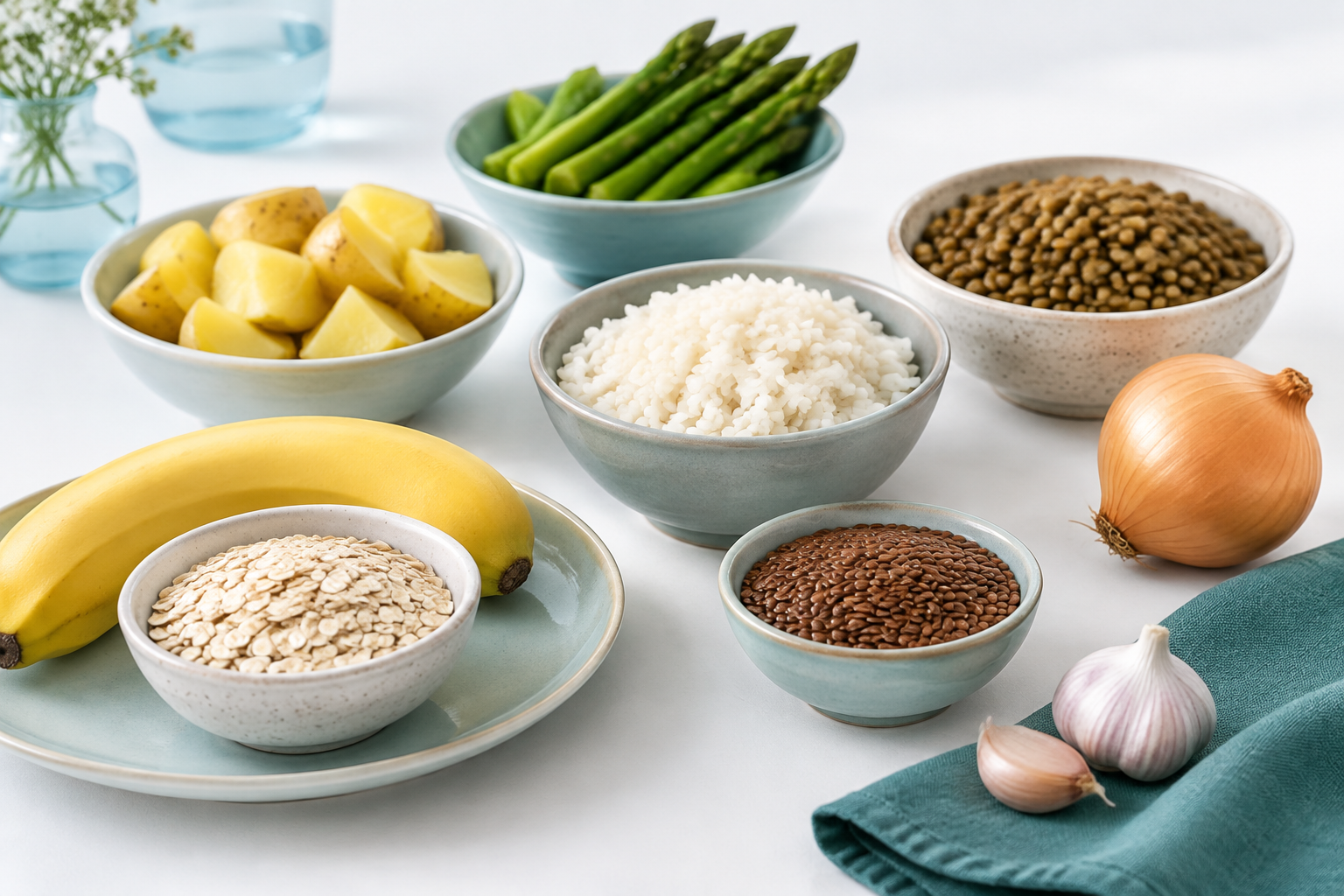
Prebiotic foods are not inherently good or bad for digestion. The better fit depends on which fermentable carbohydrate they contain and whether you can eat them comfortably as part of a satisfying meal.
Some prebiotic foods ferment quickly and can worsen gas or bloating. Inulin and fructooligosaccharides, also called FOS or oligofructose, are found in chicory root, Jerusalem artichokes, garlic, onions, leeks, asparagus, and wheat. Galactooligosaccharides in beans, lentils, and chickpeas can also ferment heavily, although legumes provide useful fiber and protein.
For many people with IBS or frequent bloating, a satiety-focused eating pattern may lean more on foods that ferment gradually:
- Resistant starch: Firmer bananas, oats, legumes, and cooked-and-cooled potatoes or rice often ferment more slowly than inulin-rich foods.
- Tolerated legumes: Small, well-rinsed servings can provide fiber and protein while being easier to tolerate than a large serving.
- Meal-based choices: Oats at breakfast or cooled rice with lunch may support fullness more comfortably than chicory-fortified bars or large allium-heavy meals.
Apples, barley, and flaxseeds also contain prebiotic compounds, but their digestive effects still vary by food, amount, and your individual tolerance. Resistant dextrin is another prebiotic compound, though it is more often added to packaged fiber products than found naturally in whole foods.
The foods high in prebiotic fiber guide compares these choices with serving sizes and My Good Gut food-and-fiber chart values. Fullness is most useful for weight management when the meal does not leave you uncomfortable afterward.
Should You Try a Prebiotic Supplement?
Prebiotic foods are the practical foundation when you tolerate a varied diet. A supplement can be useful when your usual intake is low, food options are limited, or you want to test one named fiber at a measured dose. An inulin or oligofructose product is optional support, not a weight-loss treatment, and changes in appetite, regularity, or metabolism are usually modest and individual.
Research doses can exceed what a sensitive digestive system handles comfortably. Weight-focused studies used roughly 5 to 21 grams daily of a specific prebiotic, such as oligofructose or inulin, while the brain-imaging study used 30 grams. Starting that high may bring gas, cramping, or urgent bowel changes, especially with IBS. A dose you cannot take consistently offers little practical value.
A supplement trial may fit when these conditions apply:
- Food intake is low: Your meals rarely include tolerated fermentable fiber sources.
- The fiber is specific: You want to assess one ingredient instead of a broad digestive blend.
- Symptoms are stable: Adding several foods or supplements at once makes reactions harder to identify.
Check the Supplement Facts panel for the named ingredient and grams per serving. Inulin and oligofructose are closely related fructans commonly derived from chicory root. Fructooligosaccharides are shorter-chain fructans, while galactooligosaccharides are a distinct prebiotic. Avoid proprietary blends and synbiotics that hide the fiber dose.
Prebiotic supplement labels compares fiber types and includes a gradual titration plan that puts digestive tolerance first.
How Can You Test Prebiotics Without Worsening Symptoms?

Treat prebiotics as a personal tolerance test, not a quick weight-loss strategy. Any effect on weight is likely modest and indirect, so digestive comfort comes first. Change only one food or supplement at a time, keep meals, activity, and medications broadly consistent, and increase fermentable fiber gradually while drinking enough water.
For two to four weeks, track symptoms alongside weight-related changes:
- Digestive response: Note gas, bloating, cramping, stool frequency, and stool consistency.
- Appetite cues: Record fullness after meals, changes in cravings, and between-meal snacking.
- Weight trend: Check your weight weekly under similar conditions. Fermentable fiber can shift fluid balance and gut contents, so daily scale changes do not show changes in body fat.
A prebiotic may be worth continuing when your gut feels settled and fullness becomes more consistent. Hold the same amount rather than increasing simply because a food or supplement seems healthy. A simple diary can also help distinguish a helpful change from a flare caused by something else.
Persistent bloating, cramping, diarrhea, or worsening constipation suggests the amount or source is not working for you. Return to the last comfortable amount or pause, then retry more slowly or consider a slower-fermenting fiber such as methylcellulose or partially hydrolyzed guar gum. Avoid blends with probiotics, digestive enzymes, sweeteners, or several fibers during a targeted trial because they can obscure the trigger.
Stop and contact a qualified healthcare professional for severe, persistent, or worsening pain, vomiting, blood in stool, unexplained weight loss, or significant ongoing diarrhea or constipation.
When Should You Seek Professional Weight-Loss Support?
When symptoms or weight concerns need more than a personal tolerance test, prebiotics may play a small supporting role, but they do not cause fat loss on their own. By feeding certain gut microbes, they may help support the gut barrier and blood-sugar handling. Weight-related effects are modest and vary from person to person, so they work best as part of a healthy diet and active lifestyle, adequate sleep, and care tailored to your needs.
Adding more fiber is not the right response when digestive symptoms are persistent, severe, or worsening. Seek prompt medical assessment for:
- Ongoing or severe abdominal pain
- Major changes in bowel habits
- Vomiting or blood in the stool
- Symptoms that interfere with eating, work, or daily activities
- Unexplained weight loss or rapid weight gain
Weight-loss support is particularly important when weight concerns occur with high blood pressure, abnormal blood sugar, sleep apnea, mobility limitations, or other obesity-related health risks. A clinician can check for contributing medical issues and discuss safe, evidence-based options beyond increasingly restrictive dieting.
A registered dietitian can tailor calorie, meal, and fiber goals to your digestive tolerance, especially if you have IBS, constipation, or bloating. If gradual food-first changes have not helped, or fermentable fibers repeatedly increase gas, a different fiber approach may fit better. Methylcellulose or partially hydrolyzed guar gum may be easier to tolerate than highly fermentable prebiotic fibers for some people.
Speak with a clinician or dietitian before using a prebiotic supplement or making major diet changes if you take prescription medication, are pregnant, manage a digestive condition, or have a history of disordered eating. Supplements can worsen symptoms for some people and do not replace diagnosis, prescribed treatment, or medical care.
Prebiotic Weight Loss FAQs
These FAQs cover what prebiotics may and may not contribute to weight management, how digestive symptoms can shape your approach, and what to consider before changing your diet or trying a supplement.
1. How Long Before Prebiotics Affect Your Weight?
Digestive changes such as gas or altered bowel habits can appear within days, while appetite-related effects, if they happen, tend to develop slowly. Prebiotics are not a quick weight-loss treatment, and tolerance varies widely with IBS. Studies finding small weight differences lasted 12 weeks to about four months, with pooled results averaging less than one kilogram. Judge progress by weekly patterns over one to three months rather than daily scale changes.
2. Can Prebiotics Cause Temporary Weight Gain?
A small early increase on the scale after adding prebiotics does not automatically mean body-fat gain. Fermentable fiber can add intestinal bulk, hold water, and create gas during fermentation, so bloating, fullness, or constipation may make you temporarily heavier. Focus on the pattern rather than one weigh-in. Inulin can be difficult to tolerate when increased quickly, so add it gradually over two to three weeks and drink enough water. Seek guidance from a qualified healthcare professional if symptoms or weight changes persist or worsen.
3. Do Prebiotics Work Better With Protein?
Pairing a prebiotic food you tolerate with protein can help you build a more satisfying meal, but there is no strong evidence of a special prebiotic-protein weight-loss effect. Fermentable fibers may produce short-chain fatty acids that influence fullness hormones, including GLP-1 and PYY, while protein can support feelings of fullness. A modest serving of lentils or beans alongside eggs, fish, or tofu may improve diet quality. Weight change still depends on portions, total energy intake, and regular movement.
4. Can Prebiotics Help Reduce Cravings?
Possibly, for some people. When gut microbes ferment prebiotics, they make short-chain fatty acids that may stimulate GLP-1 and PYY, fullness hormones that support appetite control, which may help some people feel satisfied longer. Early brain-imaging research also suggests sugary, high-calorie food cues may seem less rewarding with higher prebiotic intake. The evidence is still preliminary, results vary, and reduced cravings do not directly cause fat loss or replace consistent eating habits.