


When your belly feels tight after meals but looks different from day to day, it is easy to assume trapped gas is the whole problem. Bloating is an internal feeling of pressure or fullness, while abdominal distension is visible or measurable enlargement of the abdomen. They can occur together, but either can appear alone.
Constipation, lactose or fermentable carbohydrates, swallowed air, and IBS can all contribute, while a downward-moving diaphragm and relaxed abdominal wall can cause visible swelling with little extra gas. Imaging research found only a 22 mL rise in intestinal gas during marked protrusion, so a rounder abdomen does not necessarily mean gas is trapped. A dated 7-to-14-day symptom diary with meals, Bristol Stool Chart type, and waist measurements at navel level can show whether food, bowel habits, or timing repeat.
Persistent or progressively enlarging swelling deserves medical assessment, especially with unintentional weight loss, blood in stool, or fluid buildup. Seek urgent care for severe or worsening pain, repeated vomiting, high fever, or a swollen abdomen when you cannot pass stool or gas.
Bloating and Distension Key Takeaways
- Bloating is an internal sensation, while distension is visible or measurable abdominal enlargement.
- Constipation, meal habits, food intolerance, and IBS commonly contribute to bloating.
- Visible swelling can result from altered diaphragm and abdominal-wall movement, not excess gas.
- Change one food or habit at a time to identify repeatable symptom patterns.
- Increase fiber gradually when constipation contributes, since rapid increases can worsen gas.
- Track meals, symptoms, bowel habits, and waist measurements for 7 to 14 days.
- Seek care for persistent swelling or urgent symptoms like severe pain, vomiting, fever, or inability to pass gas.
What Is the Difference Between Bloating and Distension?
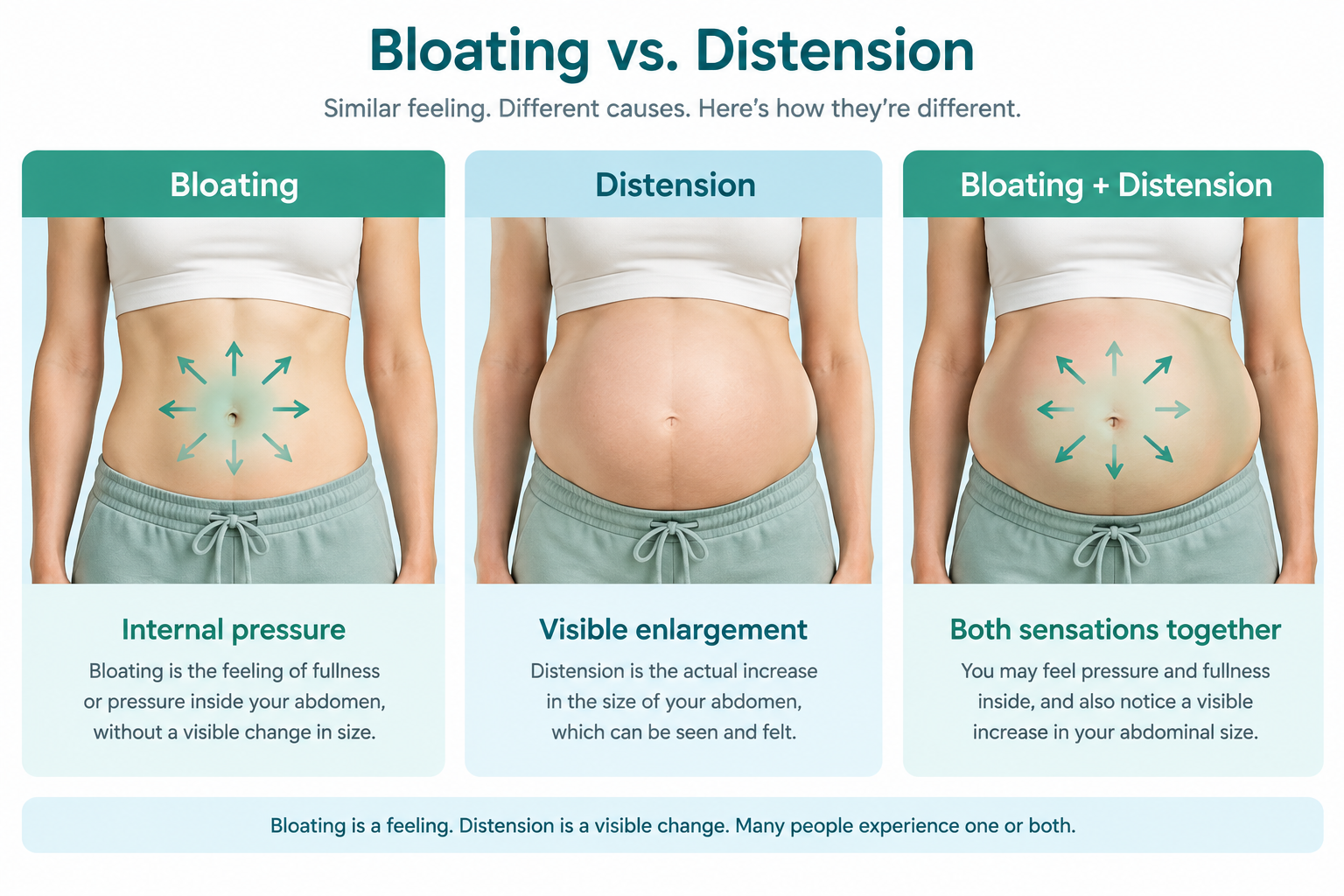
Bloating is the internal feeling that your belly is overly full, tight, pressured, uncomfortable, or filled with trapped gas. Along with other common digestive symptoms, it can be difficult to describe because it is a sensation, not a measurement. You may feel very bloated even when your abdomen looks the same and your waist size has not changed.
Abdominal distension is different because it is an observable physical change. The abdomen becomes visibly rounder or measurably larger in girth, and your skin or waistband may feel tight. A distended abdomen can be noticed by someone else or confirmed by measuring around the same area of your waist at different times.
The bloating vs distension difference matters because the symptoms can occur separately or together:
- You may have strong bloating without any visible change in belly size.
- You may experience bloating and abdominal distension together, with internal pressure and outward swelling.
- You may notice abdominal distension with little discomfort, particularly when the change develops gradually.
Noting your usual pattern can help a healthcare professional better understand what you are experiencing. Visible swelling also does not automatically mean excess gas. Visible abdominal enlargement is often caused by factors other than excess gas, and marked gas-related distension is less common in conditions such as bowel obstruction or pseudo-obstruction (Rome Foundation).
Constipation, food or meal-related triggers, hormonal changes, and the body's gut and abdominal-wall response can also affect how your abdomen looks and feels. In some people, the diaphragm moves downward while the abdominal wall relaxes, which pushes the belly outward without a large rise in intestinal gas.
Neither bloating nor temporary distension alone shows the cause or seriousness of a digestive problem. Track whether symptoms are mainly a feeling, visible swelling, or both, and note swelling that becomes persistent, progressive, or worse over time for discussion with a qualified healthcare professional.
What Causes Bloating and Abdominal Distension?
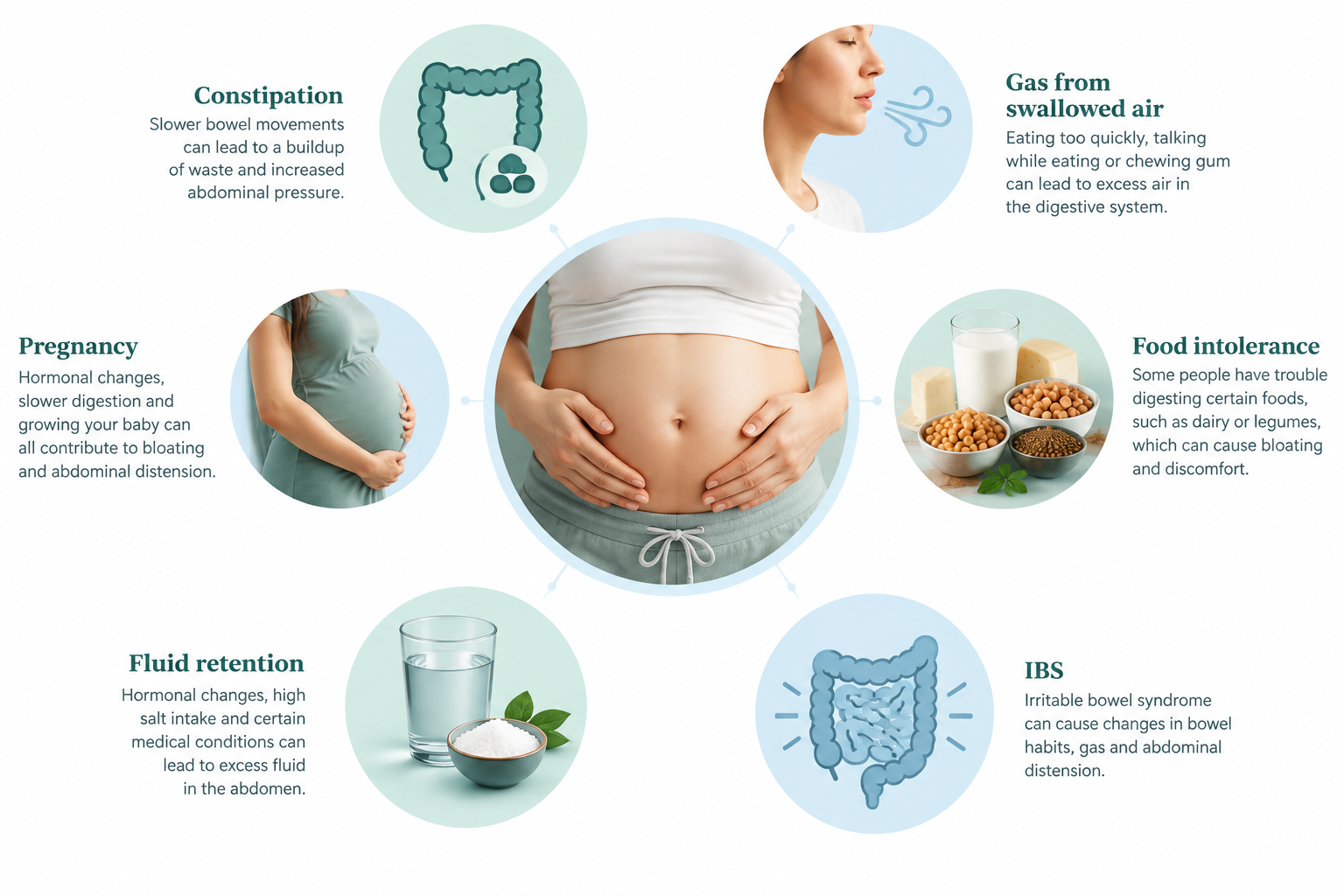
Because these symptoms can occur separately or together, bloating and abdominal distension have functional or organic causes. Functional causes create real symptoms without a structural disease found on testing, while organic causes come from an underlying physical condition. The causes of abdominal distension often overlap, so a swollen belly can have more than one contributor.
Clinicians sometimes use the five Fs to describe visible abdominal enlargement:
- Flatus: Gas can cause pressure, fullness, and temporary swelling. Swallowed air and bacterial breakdown of carbohydrates can both contribute (NIDDK on gas symptoms and causes).
- Fetus: Pregnancy enlarges the abdomen and may slow digestion.
- Feces: Stool buildup is a common cause of constipation and bloating.
- Fluid: Abdominal fluid buildup, called ascites, needs medical assessment.
- Fat: Gradual weight gain can increase abdominal size but does not explain sudden swelling or discomfort.
Constipation and bloating often occur when infrequent or difficult bowel movements allow stool and trapped gas to build up. A tight, full abdomen that improves after a bowel movement fits this pattern more than symptoms closely tied to meals or steadily progressive swelling. Constipation may occur alone or with irritable bowel syndrome (IBS), which includes abdominal pain with changes in stool frequency or form.
Other common functional causes include:
- Irritable bowel syndrome: IBS can involve constipation, diarrhea, or both. In diarrhea-predominant IBS, bloating may occur with urgent loose stools after meals. Diarrhea right after eating can also have causes beyond IBS.
- Food intolerance: Lactose, fructose, and fermentable carbohydrates may cause predictable gas and discomfort after certain foods. Food intolerance differs from a food allergy.
- Functional dyspepsia: This condition more often causes upper-abdominal discomfort, early fullness, or prolonged fullness after a normal-sized meal.
Because some causes need clinical assessment rather than repeated self-treatment, small intestinal bacterial overgrowth (SIBO) can cause gas, bloating, and distension. Gastroparesis, or delayed stomach emptying, may cause lingering fullness after meals, nausea, and bloating. Chronic intestinal pseudo-obstruction can resemble a blockage despite no physical obstruction.
A bowel or gastric outlet obstruction needs prompt medical assessment. Warning signs include:
- Marked or worsening distension.
- Cramping or severe pain.
- Vomiting.
- Inability to pass stool or gas.
New, persistent, or worsening bloating may also relate to celiac disease, inflammatory bowel disease, pancreatic insufficiency, thyroid disease, urinary retention, organ enlargement, menstrual-cycle fluid retention, ascites, or, less commonly, malignancy. Gas symptoms can overlap with other digestive conditions (NIDDK on gas in the digestive tract).
Progressive swelling, unexplained weight loss, blood in stool, or fluid buildup should be evaluated rather than assumed to be IBS.
How Can Gut Sensitivity Cause Visible Swelling?
The intensity of bloating does not always match the amount of gas in your bowel. In visceral hypersensitivity, nerves carrying signals between the digestive tract and brain react strongly to ordinary stretching from a meal, constipation, or normal gas. Pressure, fullness, and a swollen belly can feel very real even when testing does not show unusually high gas volumes.
This helps explain why IBS bloating can disrupt your day. Altered brain-gut signaling can act like a volume control set too high: the gut sends stronger sensation signals, and the brain may not filter or settle them as effectively. Stress, anxiety, low mood, close symptom monitoring, and expecting discomfort can increase awareness of gut sensations, but they do not mean symptoms are “all in your head.”
Abdominophrenic dyscoordination, also known as abdomino-phrenic dyssynergia, can contribute to swelling after meals. In this pattern, the diaphragm contracts and moves downward while the front abdominal wall relaxes. That change in muscle position allows the abdomen to push forward after a meal.
Imaging research has shown marked forward abdominal-wall protrusion and downward diaphragm movement with only a small, 22 mL rise in intestinal gas. This small gas change points to a mechanism beyond intestinal gas volume. A rounder-looking abdomen does not automatically mean that a large amount of food, gas, or swallowed air is trapped inside.
This response may occur in people with irritable bowel syndrome and other functional digestive symptoms. It can explain why your abdomen looks flatter in the morning but becomes more prominent after meals, even without a larger-than-usual meal.
Do not self-diagnose recurrent bloating or temporary protrusion as a sensitivity or muscle-reflex problem. Medical evaluation matters when swelling is persistent, progressively enlarging, or occurs with warning signs such as:
- Severe or worsening abdominal pain
- Repeated vomiting
- Unintentional weight loss
- Blood in the stool
- Fever or other new symptoms that do not settle
Which Foods and Habits Affect Bloating?
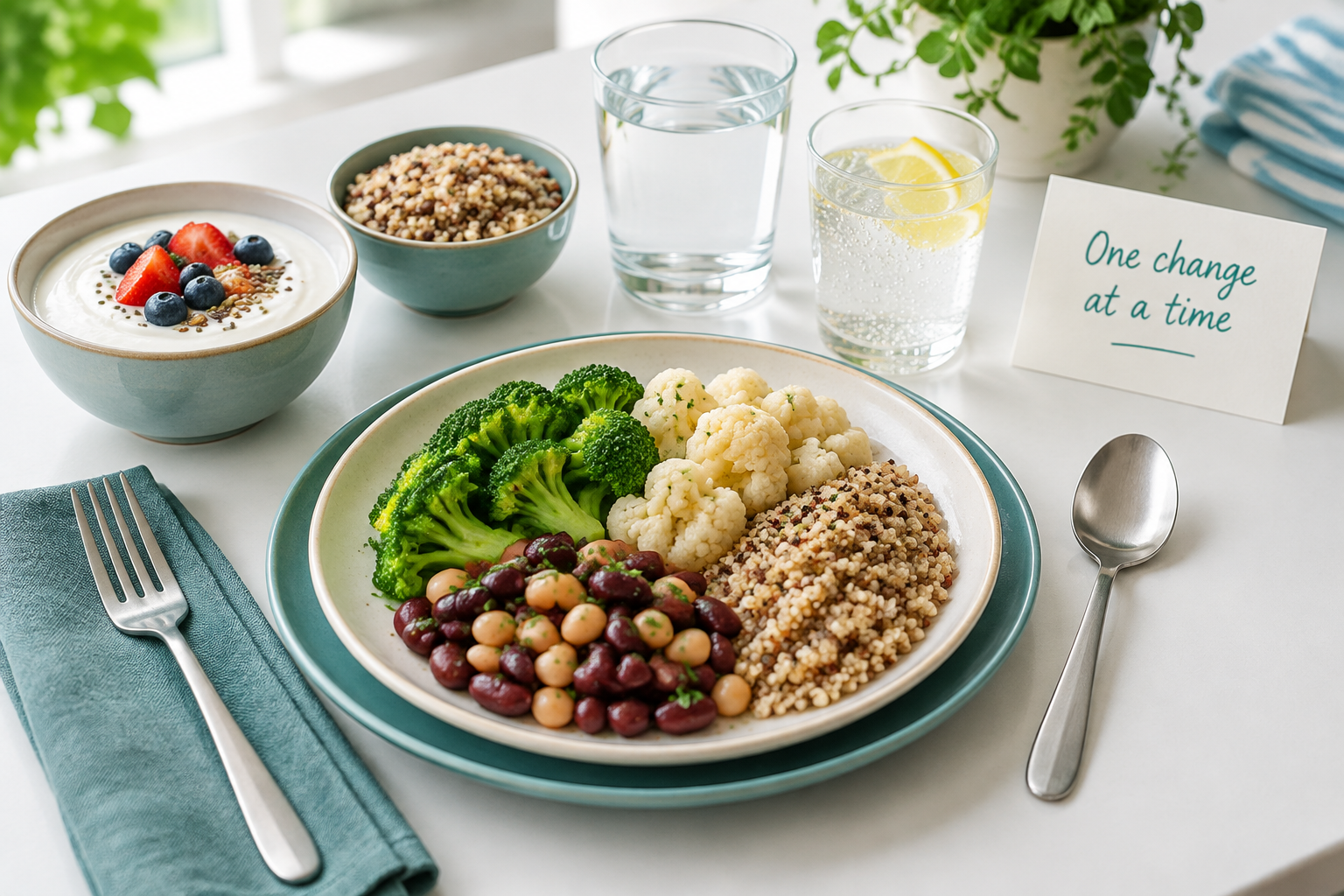
Alongside the medical and functional causes already discussed, bloating after eating can come from meal size, eating speed, and swallowed air, not only from specific foods. Before removing several foods that cause bloating, adjust one habit at a time so you can tell whether portions or eating patterns are contributing.
These habits can increase the amount of air in your digestive tract:
- Large or rushed meals: Smaller portions, slower eating, and thorough chewing may ease pressure after meals.
- Gum, hard candy, and straws: These can lead you to swallow more air without noticing.
- Foamy or carbonated drinks: Frothy coffee drinks, sparkling water, soda, and beer may increase belching and pressure. Frequent sulfur burps with other digestive changes may warrant medical advice.
A food intolerance is more likely when the same food and portion repeatedly bring on symptoms. Dairy, beans and other legumes, high-fiber foods, and cruciferous vegetables such as broccoli, cauliflower, and cabbage contain fermentable carbohydrates that can create more gas for some people. That does not make them automatic foods to avoid.
A simple elimination-and-reintroduction approach is more useful than cutting many foods at once:
- Reduce one likely trigger for a short period while noting symptoms and bowel changes.
- Bring that food back in a usual portion to see whether the same pattern returns.
- Try another possible trigger only after the first test is clear.
When constipation is part of the pattern, fiber can help, but quickly adding bran, supplements, or large servings of high-fiber foods can increase gas. Increase fiber gradually, drink enough fluids, and consider nonfermentable methylcellulose if more fermentable fiber remains uncomfortable.
Milk, ice cream, and other lactose-containing foods deserve a separate trial before you exclude all dairy. Lactose-free options or a lactase enzyme may help digest lactose, but they do not treat every cause of bloating. A registered dietitian can help protect calcium intake if dairy remains difficult.
For beans and legumes, alpha-galactosidase targets galacto-oligosaccharides (GOS). In a small IBS study, it reduced bloating among people sensitive to GOS, while about one-third were not sensitive. Testing a single-target enzyme with a bean-based meal gives a clearer answer than using a multi-ingredient blend.
Foods that relieve gas and bloating differ from person to person, so avoid long-term restriction without guidance. Persistent, severe, progressive, or worsening swelling needs medical evaluation rather than more food trials.
How Can You Track Your Symptom Pattern?
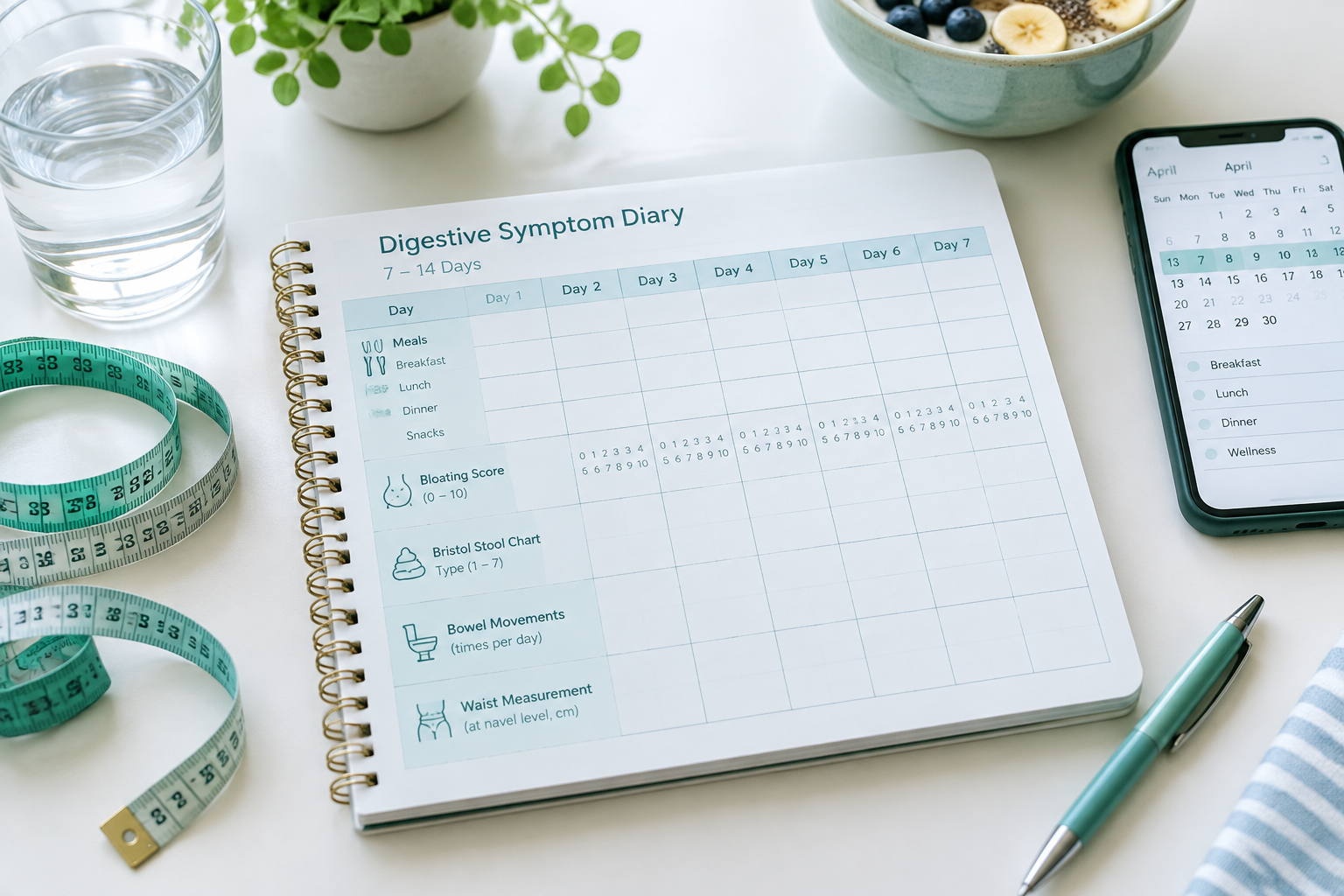
To clarify whether foods, habits, or bowel changes are contributing, a dated 7- to 14-day diary can reveal symptom patterns without assuming that any one food is the cause. A paper log, phone note, or printable template can work, as long as entries are consistent. The record may help a clinician consider causes of abdominal distension, including constipation, food-related symptoms, hormone changes, and small intestinal bacterial overgrowth (SIBO).
Use the same format each day:
- Record meals and drinks: Note the time, approximate portion, key ingredients, and preparation method for every meal, snack, and drink. Flag beans, dairy, carbonated drinks, high-fat meals, and sugar alcohols as possible clues rather than confirmed triggers.
- Rate symptoms after meals and at day’s end: Score bloating discomfort from 0 to 10. Include when it began, how long it lasted, whether clothing felt tighter, and whether passing stool or gas changed the sensation. A stomach that feels tight or hard may occur without visible swelling, so note whether abdominal size changes.
- Measure visible swelling consistently: Use a flexible tape measure at navel level while standing relaxed. Record a waking baseline and another measurement when abdominal distension peaks, using the same body location each time. Add the meal and time before the higher measurement, with waistband or clothing tightness as a backup observation.
- Include bowel habits and daily context: Record bowel movement timing, frequency, Bristol Stool Chart type, straining, urgency, incomplete emptying, constipation, and diarrhea. Menstrual timing, medicines or supplements, sleep, stress, activity, illness, and travel can also shape symptoms.
Review the dated diary for repeated links among ingredients, skipped bowel movements, and swelling. A pattern after beans differs from one that appears with constipation, and neither confirms SIBO or another diagnosis. If a clinician or registered dietitian recommends testing a food or supplement, change only one variable at a time. MedlinePlus advises medical evaluation for concerning abdominal swelling (MedlinePlus on abdominal swelling).
When Should You Seek Care for Distension?
Although a symptom diary can clarify patterns, a brief increase in abdominal size after a meal can be common. Book a routine appointment if swelling keeps returning, does not improve after ordinary food or habit changes, steadily increases, or has no clear trigger. New distension should not automatically be blamed on gas or IBS, especially when it differs from your usual pattern.
A short symptom record can help a clinician spot patterns. For several days, note:
- Timing: When the swelling starts, how long it lasts, and how it changes through the day.
- Meals and drinks: What and when you ate or drank, including carbonated beverages and foods that seem to worsen symptoms.
- Bowel changes: Constipation, diarrhea, stool frequency, and whether passing stool or gas eases the swelling.
- Other details: Menstrual timing, medicines, supplements, pain, nausea, appetite changes, and fatigue.
Recurring distension can have many causes, including constipation, food intolerance, celiac disease, delayed stomach emptying, SIBO, thyroid or metabolic conditions, fluid buildup, or a blockage. Although cancer is less common, unexplained enlargement still needs assessment. This is not a self-diagnosis checklist, and symptoms alone cannot confirm the cause.
Seek urgent medical care if swelling occurs with any of these signs:
- Severe or rapidly worsening abdominal pain.
- A hard or very tender swollen abdomen.
- Repeated vomiting or an inability to keep fluids down.
- High fever, bloody stools, or black stools.
- Fainting, confusion, or increasing swelling when you cannot pass stool or gas.
The American College of Gastroenterology advises urgent assessment for these warning signs (ACG on belching, bloating, and flatulence).
Arrange a prompt, non-emergency visit for unintentional weight loss, reduced appetite, unusually early fullness, persistent diarrhea or constipation, fatigue that may suggest anemia, yellow skin or eyes, or symptoms that begin later in adulthood. Persistent enlargement with shortness of breath, leg swelling, or a fluid-moving sensation also needs timely care, particularly with a history of liver, heart, kidney disease, or cancer.
At the first visit, a clinician may ask about symptom timing, diet, bowel habits, medical and family history, pregnancy possibility when relevant, and medicines or supplements. The exam may involve looking at your abdomen, listening for bowel sounds, gently pressing for tenderness or a mass, and tapping for fluid. Depending on those findings, testing may include blood work, breath tests, imaging, endoscopy, or motility studies.
Bloating and Abdominal Distension FAQs
These FAQs cover common concerns about bloating and abdominal distension, including what the symptoms may feel like and when they warrant medical attention. Clear answers can help you recognize patterns and decide on sensible next steps.
1. Can Bloating Cause Temporary Weight Gain?
Bloating can briefly raise the number on the scale or make your belly look bigger, but it does not create body fat. Food and drink moving through digestion, stool buildup from constipation, and short-term fluid retention can all affect size or weight. Abdominal distension means the abdomen is measurably larger than usual. Fat gain develops from stored excess energy over time, not after one meal. Changes that ease after gas or a bowel movement are usually temporary. Seek medical care for rapid, unexplained, persistent, or worsening changes, especially with severe pain, vomiting, blood in stool, shortness of breath, swelling elsewhere, or unintentional weight loss.
2. Is Bloating Normal During Pregnancy?
Pregnancy can commonly cause bloating and visible abdominal distension. Hormonal changes may slow digestion, leading to gas and constipation, while the growing uterus leaves less room in the abdomen. Foods that cause bloating, including some fermentable carbohydrates, may also feel less tolerable.
Contact your maternity clinician promptly for swelling that is new, severe, sudden, persistent, or worsening, especially with significant pain, vomiting, bleeding, fever, or trouble breathing. Trust your instincts instead of assuming every abdominal change is routine pregnancy bloating.
3. Can Probiotics Make Bloating Worse?
Yes. A probiotic can briefly increase gas and bloating, trapped gas, or abdominal discomfort, especially if it includes fermentable prebiotics such as inulin or chicory root. If IBS bloating persists or worsens, stop assuming the supplement is helping.
Probiotics and prebiotics are not reliable remedies for gas-related symptoms overall, and responses vary by strain, formula, and person. Discuss the product and symptom timing with a clinician or registered dietitian, particularly after a product change, to consider ingredients, constipation, diet, or another cause.
4. Can Bloating Occur Without Excess Gas?
Yes. Gas and bloating can happen without excess or trapped gas. In irritable bowel syndrome, a sensitive gut may register normal stretching from food or gas as pressure or fullness. Constipation and slow digestion can keep stool and food in the intestines longer, while stress can increase symptom awareness through the brain-gut connection. Temporary swelling can also result when the diaphragm and abdominal muscles do not coordinate normally, even with a typical amount of gas.