


Black specks in stool don't automatically mean parasites or internal bleeding. When brown stool contains a few separate dark flecks, food remnants, iron supplements, or bismuth medicines are often the cause.
A 24- to 48-hour look-back at meals, supplements, and OTC remedies can often explain the change. Blueberry skins, black beans, activated charcoal, Pepto-Bismol, and some Kaopectate products can leave dark particles or temporarily darken stool. That pattern differs from stool that is black throughout, sticky, shiny, and tar-like.
Tarry stool can be melena, which occurs when blood from the upper digestive tract is broken down. The National Institute of Diabetes and Digestive and Kidney Diseases lists black or tarry stool as a possible sign of gastrointestinal bleeding, especially when it occurs with dizziness, weakness, severe abdominal pain, or vomiting blood.
Black Specks in Stool Key Takeaways
- Separate black flecks in otherwise brown stool are often food particles or medicine effects.
- Berry skins, seeds, black beans, and dark food coloring can leave visible dark fragments.
- Iron, activated charcoal, and bismuth medicines can temporarily darken stool.
- Review foods, supplements, and medicines from the previous 24 to 48 hours.
- Uniformly black, sticky, tar-like stool may indicate melena and needs prompt assessment.
- Seek emergency care for tarry stool with fainting, severe dizziness, vomiting blood, or severe abdominal pain.
- Persistent unexplained specks or recurring stool changes warrant clinical evaluation.
Are They Specks or Black Tarry Stool?
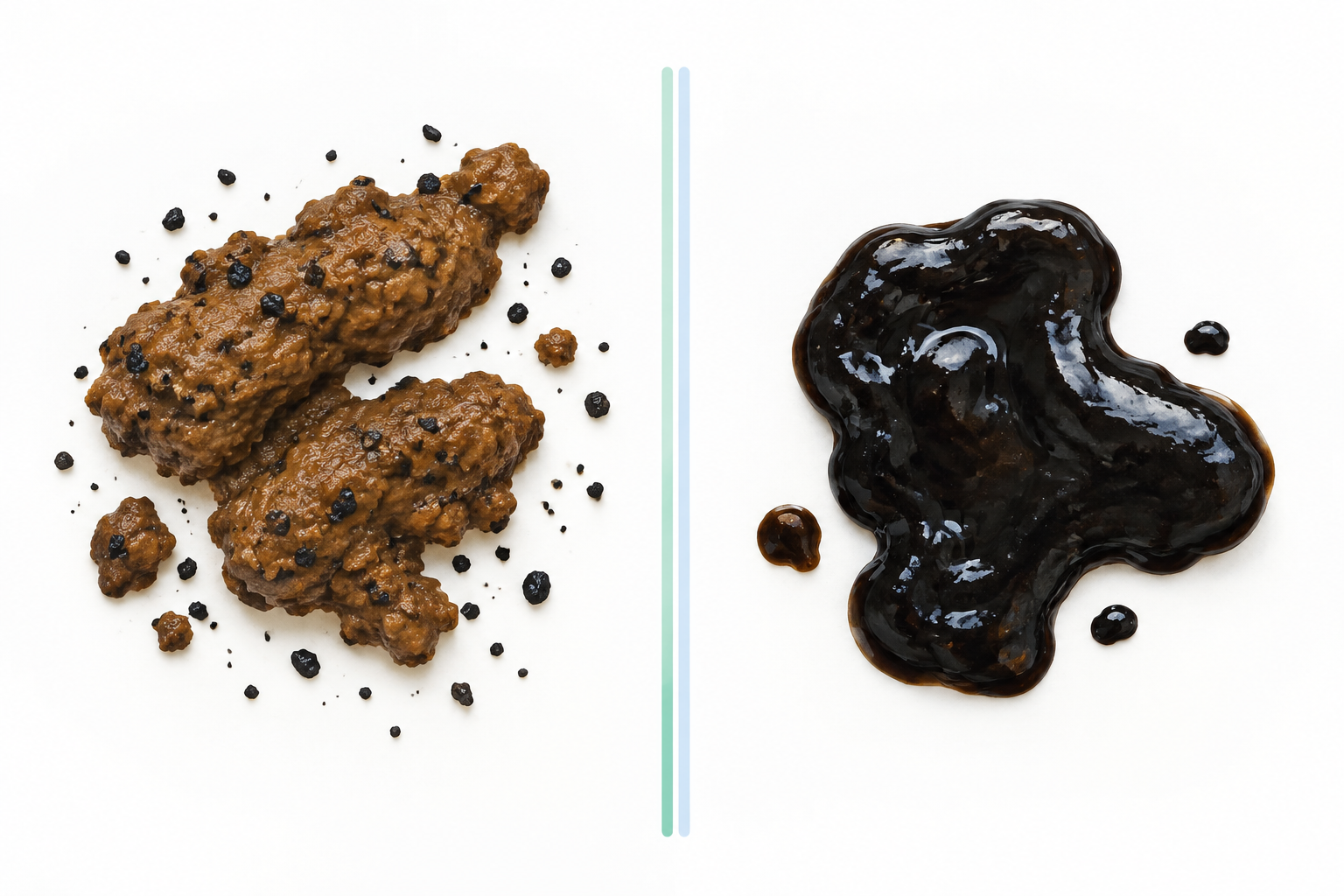
Black specks in stool are often separate food particles or a medication effect, while black tarry stool changes the look and feel of the entire bowel movement. A few black flecks in poop or black spots in stool within otherwise brown stool do not, by themselves, suggest bleeding.
What you notice | More consistent with scattered specks | More concerning for melena |
|---|---|---|
Color pattern | Dark grains or irregular fragments in brown stool | Stool is black throughout |
Texture | Usual stool texture | Thick, sticky, shiny, and tar-like |
Other clues | May follow dark foods, iron, or bismuth medicine | Often has an unusually foul odor and is hard to wipe or flush |
Food remnants usually keep an uneven shape. For example, berry skins, seeds, or other dark particles may remain visible rather than turning the whole stool black. Iron supplements and bismuth medicines can also darken stool, so think about what you ate or took during the past day or two.
Melena can occur when blood from the upper digestive tract is broken down while moving through the intestines. This type of gastrointestinal bleeding differs from separate dark fragments, especially when the fragments fit a recent food, iron, or bismuth exposure.
Prompt medical assessment is important when black tarry stool occurs with any of the following:
- Faintness, unusual weakness, dizziness, or shortness of breath.
- Vomiting blood or material that resembles coffee grounds.
- Significant abdominal pain.
- A history of ulcers, liver disease, bleeding disorders, or medicines that can raise bleeding risk.
The National Institute of Diabetes and Digestive and Kidney Diseases includes black or tarry stool among possible signs of gastrointestinal bleeding (NIDDK on GI bleeding symptoms).
For a calm self-check, note whether stool was brown with a few specks or black throughout, along with recent meals, supplements, medicines, and new symptoms. What different digestive symptoms usually mean can help you put one episode into a broader digestive context.
Check Foods, Supplements, and Medicines First

Because scattered specks often have a benign explanation, a recent food, supplement, or medicine can explain scattered black specks in stool, especially if the change follows iron, activated charcoal, or bismuth medicine in the past day or two (MedlinePlus on black or tarry stools). A brief look-back can help you separate harmless material from stool changes that need prompt care.
Use this self-check:
- Review recent food and drinks: Note meals, snacks, beverages, and anything unusually dark. Blueberries, blackberries, plums, black beans, grape juice, black licorice, and heavily colored foods may change stool color. Skins, seeds, and fiber can show up as recognizable flecks.
- Match the timing and appearance: Foods that cause black specks in stool usually cause scattered bits after you eat them, then fade as the food passes. Undigested food showing up in stool is common with berry skins and seeds. It does not explain stool that is evenly black, sticky, or tar-like.
- Check medicines and supplements: Review multivitamins, prenatal products, and nonprescription stomach remedies. Iron supplements can cause black stool at the labeled dose. Activated charcoal and bismuth medicines, including Pepto-Bismol and some Kaopectate products containing bismuth subsalicylate, can also darken stool temporarily. Note the product, timing, and last dose.
Caution: Too much iron can cause poisoning, especially if a child may have swallowed tablets. Contact Poison Control or seek emergency care immediately rather than watching stool color.
Food or medicine is not a safe explanation when no recent exposure fits, specks continue after avoiding the suspected item, or stool is black and tar-like. Dizziness, weakness, abdominal pain, vomiting blood, or tarry stool need prompt medical assessment.
Track Whether the Specks Go Away
If a recent food, supplement, or medicine seems likely, a short, dated record can help you tell common stool color changes from a pattern that needs medical attention. If you notice black specks in stool after dark foods, iron, or bismuth medicine, look back at the prior 24 to 48 hours.
A safe self-check over the next several bowel movements can help:
- Avoid the suspected food for a few days and note the date, meals, medicines, and any black flecks in poop.
- Pause a nonessential over-the-counter product only if it is safe. If you pause a bismuth product such as Pepto-Bismol, note whether the stool change fades. Do not stop prescribed iron or other prescribed medicine without speaking with your prescriber or pharmacist.
- Watch for change. If the specks disappear within a few days and no warning signs appear, that pattern supports a common food or medicine cause. Knowing when to worry about black stool includes recognizing stool that is uniformly black, sticky, and tar-like rather than scattered particles.
Seek prompt medical assessment for these warning signs:
- Black, sticky, tar-like stool
- Weakness or dizziness
- Severe abdominal pain
- Vomiting blood
Bring your notes to the appointment, since a clear pattern is more useful than one bowel movement alone.
Note Other Stool Changes and Rare Causes
When tracking does not reveal a clear food or medicine link, black flecks can occasionally be digested blood, but they are not the only explanation. Black stool causes can include stomach or small-intestinal ulcers linked to nonsteroidal anti-inflammatory drugs (NSAIDS), including ibuprofen and naproxen, as well as gastritis or a tear in the esophagus. Upper GI bleeding warrants prompt assessment when stool changes extend beyond a few separate specks.
Prompt medical assessment is important when dark stool occurs with any of these warning signs:
- Severe upper-abdominal pain
- Dizziness, fainting, or unusual weakness
- Vomiting blood or vomit that looks like coffee grounds
- Repeated black, tarry stools
- New blood in stool along with feeling unwell
Known liver disease calls for added caution because enlarged veins in the esophagus or stomach, called varices, can bleed. Varices are unlikely to explain one isolated fleck when you otherwise feel well, but new black stool changes with liver disease need prompt medical advice.
Parasites in stool are a common concern, yet isolated black specks do not confirm worms or another infection. Infection is more likely with persistent diarrhea, abdominal symptoms, relevant travel or exposure, or unusual visible material. Stool appearance and photos cannot diagnose a parasite, so a clinician may order stool testing and sometimes blood tests.
Some stool color changes point to fat digestion rather than bleeding. Greasy stool that sticks to the bowl and pale yellow diarrhea can have causes unrelated to blood.
For newborns, thick dark greenish-black meconium is normal during the first few days of life. Young infants may also pass dark material after swallowing blood during delivery or from a bleeding nipple during breastfeeding. Black stool beyond expected meconium, especially when a baby seems unwell, needs pediatric guidance.
Know When to Seek Medical Care

Even after considering other stool changes and rare causes, a single black fleck that clearly follows a dark food, an iron supplement, or a bismuth medicine and disappears can often be monitored if you feel well. Black tarry stool is different and may indicate melena, so it needs urgent assessment.
Use this calm self-check:
- Look for a likely cause: Consider foods, iron, or bismuth taken in the past day or two.
- Check the full stool appearance: Separate specks are not the same as stool that is uniformly black and sticky.
- Notice how you feel: New pain, weakness, or other symptoms matter as much as color.
When deciding when to worry about black stool, avoid diagnosing the cause from appearance alone. MedlinePlus lists black or tarry stools as a reason to contact a health professional (MedlinePlus on black or tarry stools).
Seek emergency care immediately if black or tarry stool occurs with any of the following:
- Vomiting blood or material that resembles coffee grounds.
- Fainting, severe dizziness, confusion, profound weakness, or an inability to stay upright.
- Severe or worsening abdominal pain.
- Rapid heartbeat, sweating, shortness of breath, or a sudden feeling of serious illness.
These symptoms can signal significant gastrointestinal bleeding and should not be managed at home.
Arrange prompt clinical evaluation for repeated unexplained black specks, ongoing stool-color changes, unexplained weight loss, or upper abdominal pain, even without emergency symptoms. Peptic ulcers are a common cause of acute upper gastrointestinal bleeding, so repeated self-treatment can delay needed care.
The need for prompt assessment is higher if you regularly use nonsteroidal anti-inflammatory drugs, including ibuprofen or naproxen, take blood-thinning medicine, or have liver disease. Keep a brief record of recent foods, supplements, medicines, stool changes, and accompanying symptoms to help the clinician assess the situation.
Black Specks in Stool FAQs
These FAQs cover common concerns about black specks in stool and the details that may matter. They can help you consider recent changes without drawing conclusions from a single bowel movement.
1. Can Colonoscopy Prep Cause Black Stool Flecks?
Colonoscopy prep usually causes frequent, loose stools that become watery yellow or clear as your bowel empties. A few dark flecks early in the process may be leftover stool or food residue, but the laxative is not a usual cause of ongoing black specks. Follow your endoscopy team’s instructions and contact them if your stool does not clear enough for the procedure.
Black, sticky, tar-like stool may signal digested blood. Seek prompt medical advice if it continues after prep or occurs with dizziness, weakness, fainting, severe abdominal pain, vomiting blood, or other bleeding symptoms.
2. Can Constipation Cause Black Specks in Stool?
Constipation itself rarely causes black specks. Hard stool may make undigested food in stool, such as dark fruit skins, seeds, or fiber from blueberries, blackberries, plums, and black beans, easier to spot. Consider whether these foods that cause black specks in stool were part of a recent meal.
Scattered flecks in brown stool differ from stool that is uniformly black, sticky, and tar-like. Seek prompt medical care if black stool persists or occurs with abdominal pain, weakness, dizziness, or vomiting blood.
3. Can Parasites Look Like Black Specks?
Black specks alone rarely point to parasites in stool. Bits of dark food, seeds, spices, iron supplements, or bismuth medicines are more common causes, and neither a photo nor one bowel movement can diagnose an infection. Parasites become more likely with persistent diarrhea, cramping, nausea, unexplained weight loss, or exposure to contaminated food or water, an infected person, or travel. A clinician can then determine whether stool tests, blood tests, or both are appropriate.