


A stool that is hard to wipe after a rich meal is usually tacky, not a sign that your body cannot absorb fat. Sticky stool can come with constipation, diarrhea, IBS, extra mucus, or a short-lived diet change, while greasy poop has an oily sheen, may float, and can be difficult to flush.
A smear on toilet paper and an oily film on the water can look similar at first. Repeated pale, foul-smelling, greasy stools deserve medical attention because celiac disease or exocrine pancreatic insufficiency can interfere with fat digestion. A fecal elastase-1 stool test may help assess pancreatic enzyme function when a clinician suspects exocrine pancreatic insufficiency.
Briefly reducing high-fat foods, drinking fluids regularly, and adding soluble fiber slowly may help diet-related tacky stool. Ongoing changes, weight loss, blood or black stool, jaundice, substantial pain, fever, or dehydration need prompt medical assessment.
Sticky Stool Causes Key Takeaways
- Tacky stool is often temporary and may follow diet changes, constipation, diarrhea, mucus, or IBS.
- Greasy stool may look oily, float repeatedly, smell unusually foul, and resist flushing.
- Floating stool alone often reflects trapped gas rather than fat malabsorption.
- Persistent greasy stool can occur with celiac disease, infections, or exocrine pancreatic insufficiency.
- A fecal elastase-1 test can help assess pancreatic enzyme function.
- For diet-related tackiness, reduce high-fat foods briefly, hydrate, and add soluble fiber gradually.
- Seek care for persistent changes, weight loss, blood, black stool, jaundice, severe pain, fever, or dehydration.
Why Is My Poop Sticky?

Sticky stool can cling to the toilet bowl, feel tacky or paste-like, take extra wiping, or be harder to flush. the range of digestive symptoms includes sticky stool among the bowel changes that can occur with digestive symptoms. One unusual bowel movement matters less than a change that keeps happening or gets worse.
If you’re wondering, why is my poop sticky, first consider whether it is simply messy to clean or looks oily. Soft, brown, formed or loosely formed sticky poop can follow a diet change, constipation, diarrhea, a brief stomach upset, or irritable bowel syndrome (IBS). These are common causes of sticky stool, and poop that is hard to wipe does not automatically mean there is a serious problem.
A stool that sticks to the toilet may be temporary after a rich or high-fat meal, especially while excess dietary fat is moving through your gut. Changed eating habits or a short digestive illness can have a similar effect. A shift that lasts only a few days is often not serious.
Greasy stool is different because it may point to poor fat digestion or absorption. Signs that deserve attention include:
- Oily residue: An oily film in the toilet water or on the stool.
- Repeated floating: Stool that floats often and is difficult to flush.
- Color or odor changes: Pale or clay-colored stool with an unusually foul smell.
Visible plant material can also be mistaken for grease. Food pieces in your stool can help distinguish undigested fiber from oily residue.
Persistent greasy stool can occur with celiac disease, pancreatic conditions, or certain infections. A clinician may consider a fecal elastase-1 stool test if exocrine pancreatic insufficiency is suspected.
Is Your Stool Tacky or Greasy?
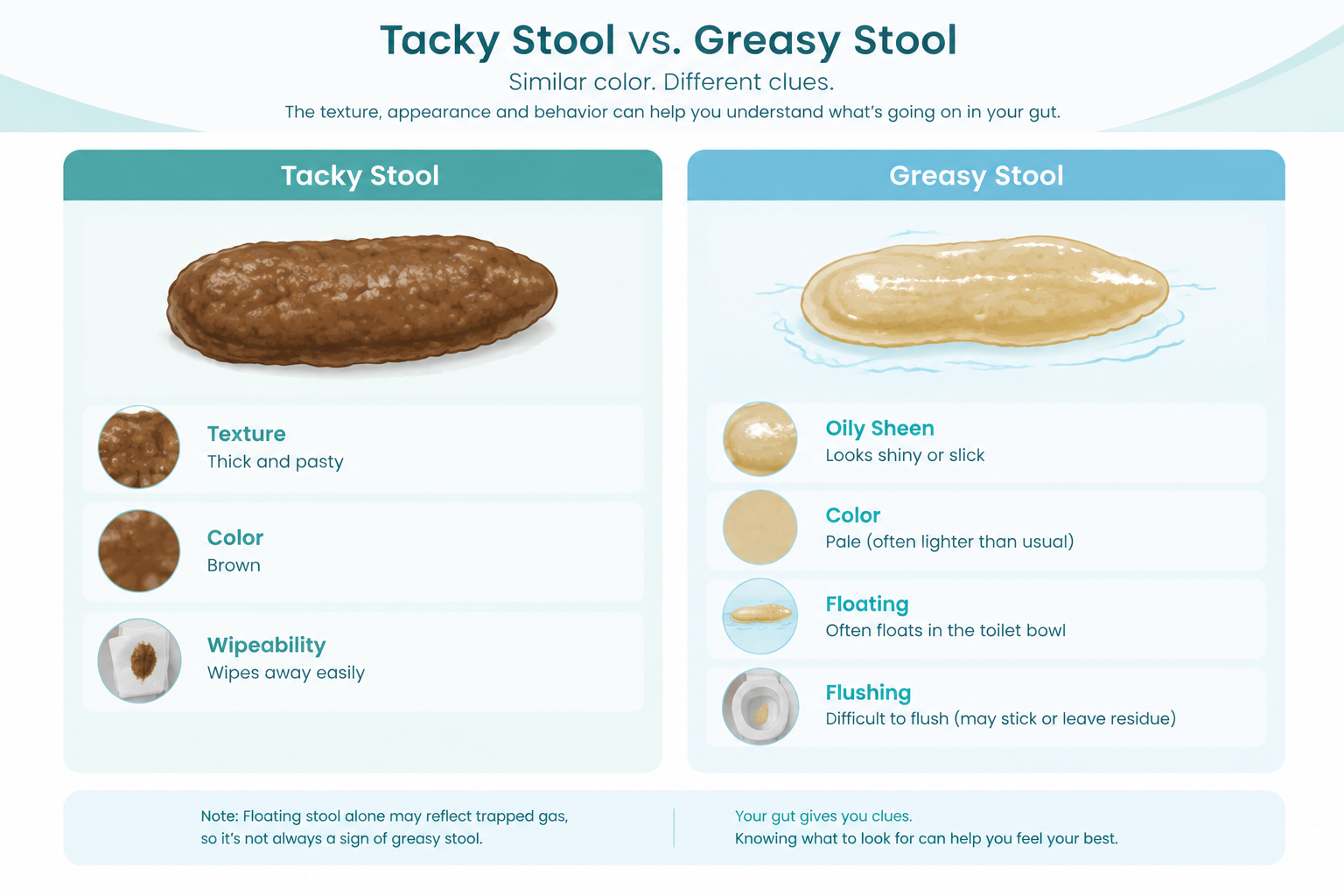
Tacky stool and greasy stool can both be difficult to clean, but they usually look different. Tacky stool tends to be thick, pasty, clay-like, or peanut-butter-like. It may remain brown and smear on toilet paper, leaving poop that is hard to wipe. Sticky stool or sticky poop alone cannot identify its cause.
Feature | Tacky stool | Greasy stool |
|---|---|---|
Surface and water | Thick or pasty, without an oily sheen | Oily or shiny, sometimes leaving droplets or a film on the water |
Toilet bowl | Often smears during wiping | May cling to the bowl, resist flushing, or leave residue |
Other clues | Often brown and formed or partly formed | More often loose, pale or yellowish, unusually foul-smelling, and may float |
A greasy stool, sometimes described as oily stool, can point to trouble digesting fat when the pattern keeps happening. Floating alone is common and often reflects trapped gas rather than poor fat digestion.
Track whether stool that sticks to the toilet recurs after a richer, higher-fat meal. Yellow diarrhea and fat digestion may offer added context when stool color changes too.
Appearance is only one clue, so the overall pattern and accompanying symptoms matter more than any single bowel movement.
What Causes Tacky Stool?
When stool looks tacky rather than oily, tacky stool is often temporary, linked to a change in eating habits, low fluid intake, slower bowel transit, or a high-fat diet. These factors can leave stool soft, pasty, and harder to wipe. Constipation may also make mucus more noticeable. A one-time change that resolves is usually less concerning than stool that repeatedly floats, appears oily, leaves a greasy film, or is difficult to flush.
Common causes of sticky stool include:
- Extra mucus: The bowel normally produces a small amount of this slippery substance. More mucus can coat stool and make it seem gluey. Constipation and IBS can increase mucus, along with bloating, abdominal discomfort, diarrhea, or changing bowel habits.
- Food intolerance: Lactose intolerance happens when the body does not make enough lactase to digest lactose in dairy foods. Gas, bloating, diarrhea, and sometimes tacky stool may follow. Other foods can affect stool consistency, but a repeated food-and-symptom pattern matters more than one unusual meal.
- Infection: Sudden mucus-coated stool with diarrhea, cramps, nausea, fever, or exposure to contaminated food or water may point to a gastrointestinal infection. Giardiasis is one possible cause after contaminated water exposure.
- Digestive disease: Inflammatory bowel disease (IBD), including Crohn’s disease and ulcerative colitis, may cause diarrhea, pain, mucus, or blood. Celiac disease can also change stools after gluten exposure.
Sticky poop treatment should fit the pattern, not rely on one remedy. For mild constipation-related changes, fluids and gradually added soluble fiber may help, though increasing fiber too quickly can worsen gas or bloating.
Keep a brief record of meals, bowel changes, pain, and other symptoms before avoiding dairy or whole food groups.
How Can You Relieve Diet-Related Sticky Stool?
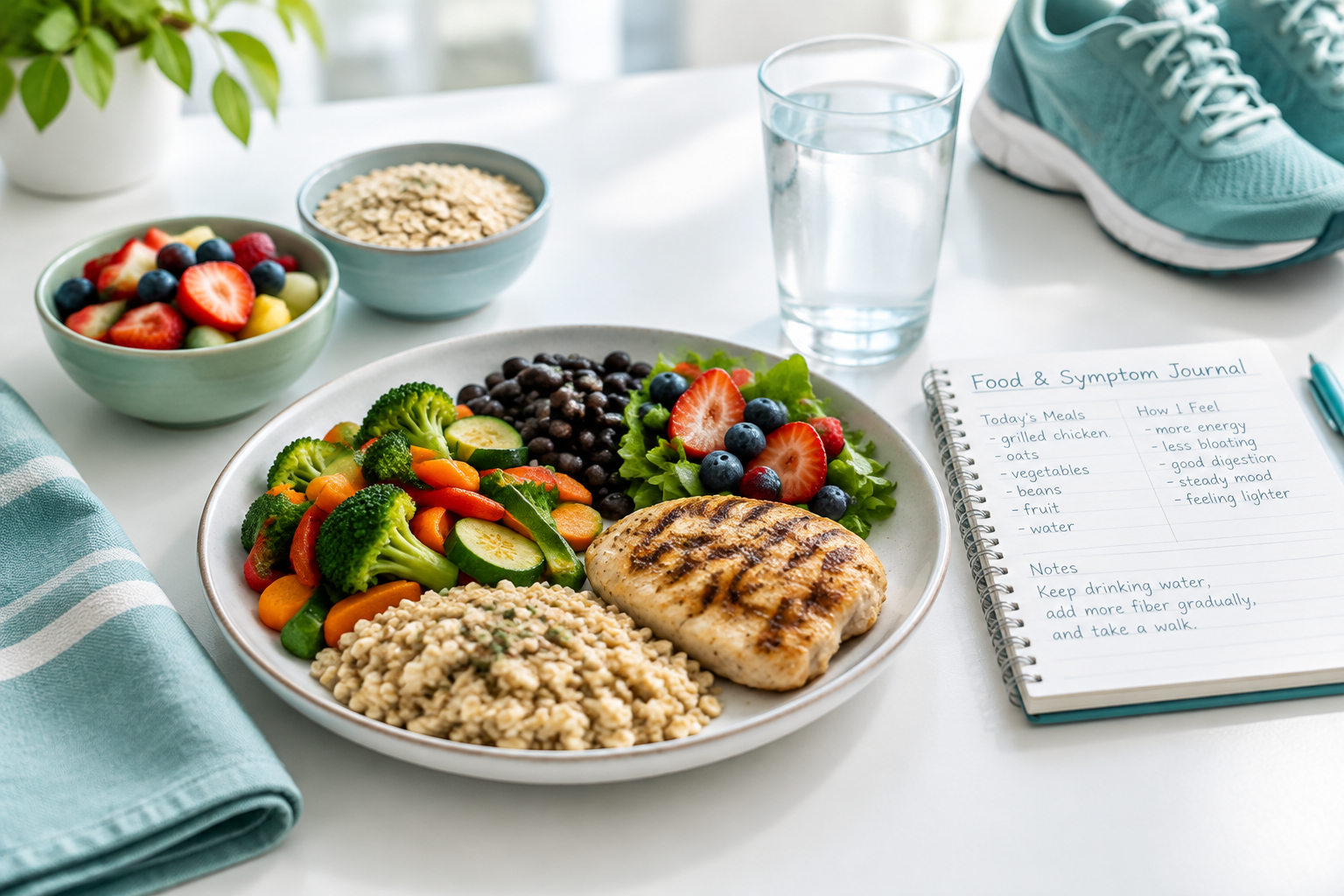
When tacky stool follows richer meals without warning signs, a brief, lower-fat reset can be a reasonable sticky poop treatment. For a few days, limit fried foods, fatty meats, added oils, butter, whole-milk dairy, and heavily processed foods. Choose simpler meals with lean protein and less added fat, then bring foods back one at a time as stools become easier to manage.
A high-fat diet may make stool tackier or harder to wipe for some people. Persistent pale, greasy, oily, or floating stool needs medical evaluation rather than more diet experiments.
A few daily habits may support more formed stools:
- Drink fluids regularly: Water helps prevent dehydration and helps fiber work as intended. Loose stools can increase fluid loss.
- Add soluble fiber gradually: Oats, beans, fruits, and vegetables can help stool hold together. Increasing fiber too quickly can cause gas or bloating.
- Move comfortably each day: Walking or other gentle activity may support regular bowel habits without pushing through discomfort.
Keep a dated food-and-symptom record for several weeks that includes meals, stool appearance and wipeability, bowel frequency, urgency, pain, bloating, and suspected triggers. This can separate an occasional reaction to a heavy meal from a pattern a healthcare professional should assess.
Don’t remove gluten automatically. Avoiding it before celiac testing can affect results and make meals more restrictive than necessary. Look first for high-fat or processed-food patterns, then ask a qualified healthcare professional about celiac testing or a targeted elimination plan if symptoms continue.
Contact a healthcare professional if stool changes persist, become oily or floating, or occur with:
- Weight loss, ongoing diarrhea, or substantial pain
- Jaundice, blood, or black stool
- Fever or dehydration
Digestive symptoms can have many causes, and persistent, severe, or worsening changes deserve individualized care.
What Causes Greasy Stool and Steatorrhea?
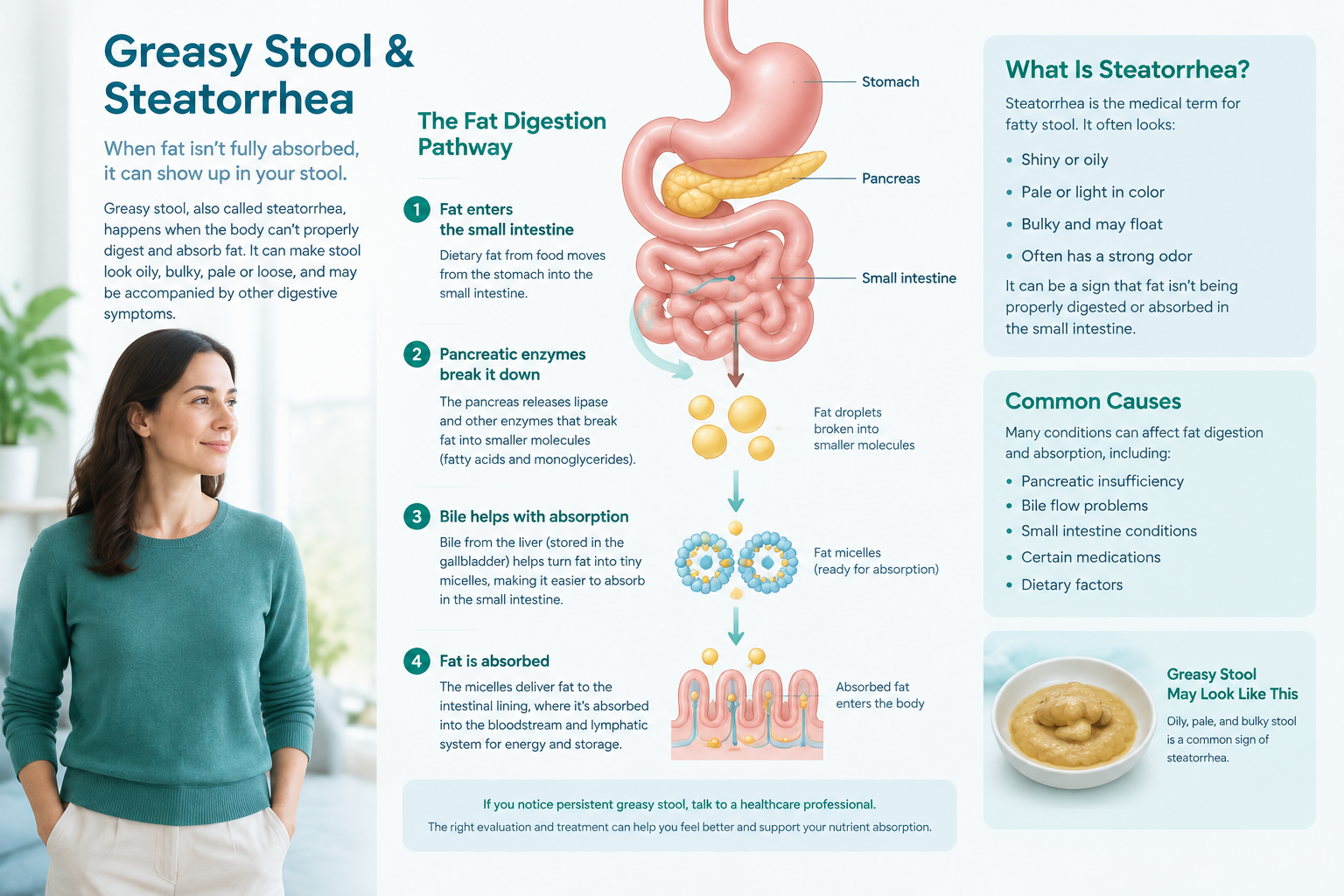
When oily stool persists beyond a brief dietary trigger, steatorrhea is a recurring form of greasy stool caused by fat malabsorption, when dietary fat passes through the body without being fully digested or absorbed. One unusual bowel movement after a rich meal is common, but persistent oily stool can point to a problem affecting the small intestine or pancreas.
A fatty stool may have these features:
- Oily or shiny appearance: Stool may leave a film on the water, toilet bowl, or toilet paper.
- Pale, bulky, or floating appearance: Extra fat can make stool lighter in color, larger, and more likely to float.
- Strong odor or flushing difficulty: Stool may smell unusually foul, stick to the bowl, or be difficult to flush.
For context on short-lived diet-related stool changes, see NIDDK’s page on diarrhea symptoms and causes (source). If the change resolves after that food passes through, it is usually different from ongoing steatorrhea. Repeated greasy stool with diarrhea, poor appetite, unintentional weight loss, or fatigue needs more attention.
Celiac disease can cause fat malabsorption because gluten damages the small-intestinal lining in people with the condition. Diarrhea, sticky or greasy stool, weight loss, and poor nutrition may follow. The National Institute of Diabetes and Digestive and Kidney Diseases describes the symptoms and causes of celiac disease (source). Intestinal infections and inflammatory bowel disease can also interfere with absorption, especially when symptoms include:
- Abdominal pain
- Fever
- Blood in the stool
- Reduced appetite
The pancreas makes enzymes that break down dietary fat. In exocrine pancreatic insufficiency, too few enzymes reach the intestine, which may cause oily, floating, foul-smelling bowel movements. Among adults, chronic pancreatitis is a common underlying cause, while cystic fibrosis is more frequent in children. Diabetes, celiac disease, inflammatory bowel disease, and pancreatic cancer can also raise the risk. The National Institute of Diabetes and Digestive and Kidney Diseases explains exocrine pancreatic insufficiency and its digestive effects (source). Greasy stool does not automatically mean a serious condition.
How Is Fat Malabsorption Evaluated?
Clinicians evaluate fat malabsorption by considering your full symptom pattern, not stool appearance alone. Repeated pale, bulky, greasy, foul-smelling, floating, or hard-to-flush stools matter more when diarrhea, weight loss, fatigue, poor appetite, or signs of poor nutrition occur too. The history also includes how long the change has lasted and whether it began after an infection.
Diet, alcohol intake, supplements, and medications can change digestion or stool color. Personal and family history of digestive, pancreatic, liver, or gallbladder conditions also shapes the evaluation. Blood work may identify nutrient deficiencies or clues to an underlying condition, while stool tests can check for excess fat or reduced digestive function.
Further testing depends on the overall findings, with celiac blood tests potentially appropriate when celiac disease is suspected and imaging able to examine the pancreas, bile ducts, liver, or other abdominal structures. Sticky stool alone does not mean you need every test.
Fecal elastase-1 measures a pancreatic enzyme in stool and can help assess exocrine pancreatic insufficiency:
Result | General interpretation |
|---|---|
Above 200 mcg/g | Usually normal |
100 to 200 mcg/g | May need follow-up for possible mild to moderate insufficiency |
Below 100 mcg/g | Can be consistent with severe insufficiency |
A watery diarrhea sample can dilute elastase and cause a falsely low result, so a clinician interprets it alongside your symptoms and other test results. Blood in stool and other warning signs affect when to see a doctor, while test results help identify the cause.
Other Stool Changes Worth Noting
Dark specks in stool usually come from undigested food, iron supplements, or bismuth-containing medicines. Uniformly black stool that looks tarry is different and can signal bleeding, so it needs prompt medical care as described in the seek-care guidance below.
Pale or clay-colored stool with dark urine can occur with problems affecting bile flow or fat absorption and needs a clinician’s assessment. MedlinePlus provides additional context on floating stool (source).
When Should You Seek Medical Care?
In contrast to persistent oily, pale, or dark changes, a single tacky stool after a richer meal or a diet change is usually not urgent. Contact a healthcare professional if sticky, greasy, unusually pale, or otherwise changed stools last longer than one week. Diarrhea or loose stools that continue for more than one week also need assessment rather than ongoing self-treatment.
Make a routine appointment sooner if constipation does not improve with your usual measures, stools repeatedly float or look greasy, or your bowel habits keep changing. Unexplained weight loss and persistent fatigue also deserve attention. These symptoms do not confirm a diagnosis, but they can suggest a digestion or nutrient-absorption problem and help a clinician rule out serious causes, including cancer.
Prompt medical assessment is needed when symptoms may signal gastrointestinal bleeding or another urgent condition:
- Blood mixed with stool: This should be assessed promptly.
- Black, tarry stool: This can indicate bleeding higher in the digestive tract.
- Coffee-ground-like stool or vomit: This appearance needs urgent medical advice.
- Severe abdominal symptoms: Worsening pain, fever, repeated vomiting, or a swollen, tender abdomen should not be treated as ordinary sticky stool at home.
Diarrhea and vomiting can cause dehydration quickly, especially in children, older adults, and people with chronic health conditions. Seek same-day medical advice if you notice any of the following:
- Very little or dark urine
- Marked thirst or a dry mouth
- Dizziness, fainting, confusion, or unusual weakness
- An inability to keep fluids down
A brief record of stool changes, pain, foods, fluids, and other symptoms can help make a medical visit more useful.
Sticky Stool FAQs
Common sticky stool questions focus on what changes in appearance may mean, which everyday factors can contribute, and when it makes sense to speak with a healthcare professional. These FAQs offer clear context to reduce guesswork around an uncomfortable symptom.
1. Can Fatty Liver Cause Sticky Poop?
Fatty liver alone usually does not cause sticky poop. Tacky, hard-to-wipe stool more often follows diet changes, constipation, or a temporary bowel-habit shift. Oily, floating, foul-smelling stool may signal fat malabsorption linked to bile problems, pancreatic conditions, or celiac disease. Seek medical care if greasy stool persists or occurs with jaundice, dark urine, pale stool, upper-right abdominal pain, unexplained weight loss, fever, or ongoing diarrhea.
2. Can Antibiotics Cause Sticky Stool?
Yes. Antibiotics can temporarily alter gut bacteria, leading to loose stools, diarrhea, or stool that is tacky and harder to wipe during or soon after treatment. This differs from oily, floating stool linked to fat malabsorption, so ongoing changes should not automatically be blamed on antibiotics. Seek prompt medical care for severe or worsening diarrhea, very dark urine, dizziness, little urination, blood or black stool, fever, severe abdominal pain, or marked weakness.
3. Can IBS Cause Sticky Stool?
IBS can make stool tacky or hard to wipe during flares involving diarrhea, constipation, or extra mucus. Mucus may give stool a gluey look without indicating excess fat. Persistent pale, oily, floating, foul-smelling stool, a greasy film, or difficulty flushing is less typical of IBS and may signal fat malabsorption. Contact a healthcare professional if these changes come with unintended weight loss, ongoing pain, blood in stool, fever, or worsening bowel changes.