


Eating a late dinner doesn't automatically harm digestion, but it can worsen reflux and disrupt sleep when a full stomach meets bedtime. Late-night eating affects digestion differently depending on portion size, fat content, personal triggers, and how soon you lie down.
A large, rich meal can remain in the stomach longer, which gives acid more opportunity to move upward when you recline. GERD can make that pattern especially uncomfortable, while IBS, stress, and a disrupted meal schedule may add bloating or a late bathroom trip. A short evening log of meals, bedtime, symptoms, and sleep can show whether timing, food choices, or portion size is the pattern worth changing.
Late-Night Eating and Digestion Key Takeaways
- Late eating does not automatically cause digestive problems.
- Large, high-fat meals may stay in the stomach longer.
- Reclining after dinner can make reflux symptoms more likely.
- GERD symptoms may be more noticeable after bedtime meals.
- A late meal can contribute to fullness, bloating, or disrupted sleep.
- Skipping dinner is not always the most comfortable solution.
- Track meal timing, portions, symptoms, and bedtime to identify patterns.
Why Does Timing Change How a Meal Digests?
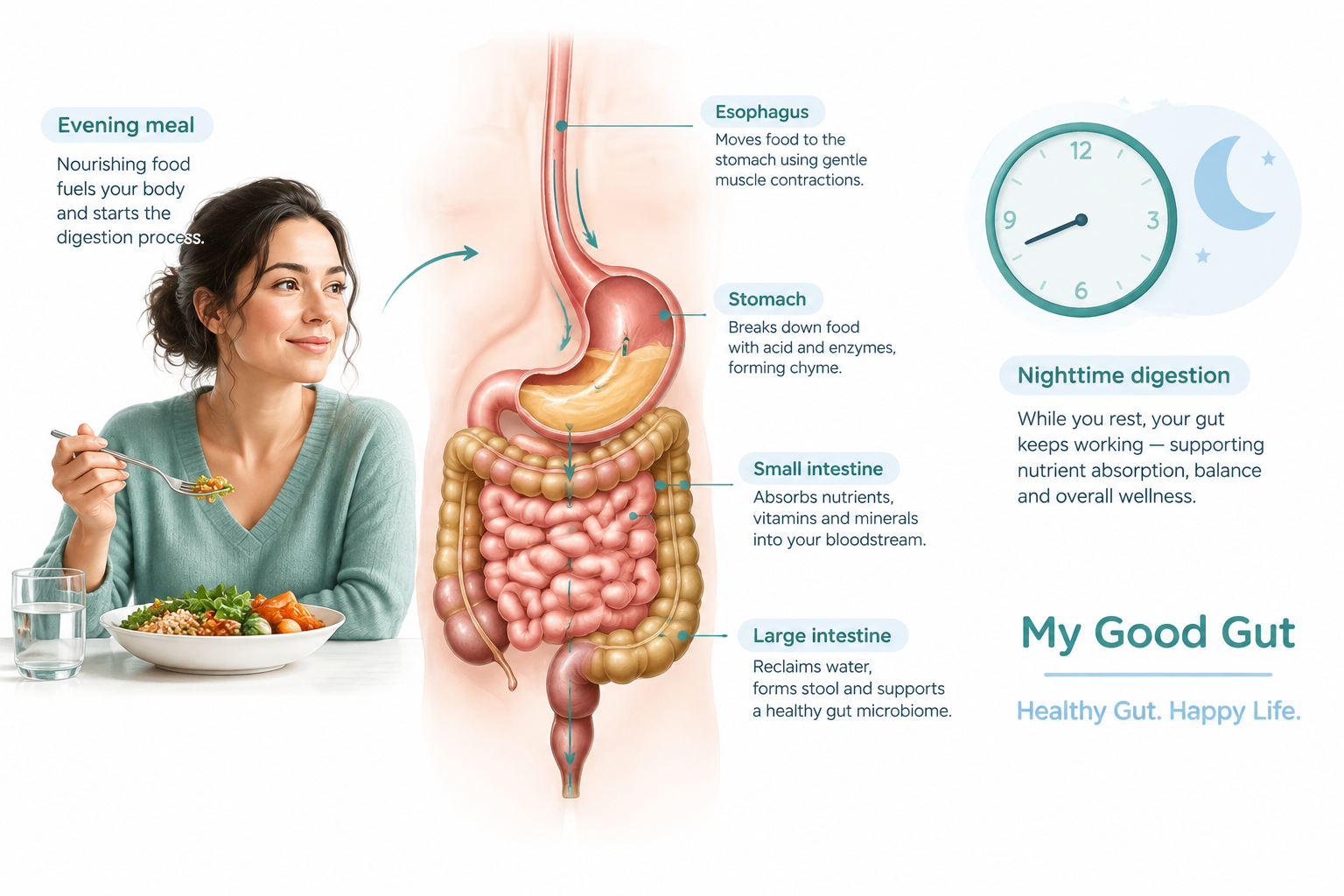
A meal keeps moving through your digestive tract while you sleep. Late-night digestion may feel different because meal size, food type, bedtime, and your circadian rhythm can affect comfort, an area researchers call chrononutrition.
Chewing breaks food into smaller pieces and combines it with saliva. After you swallow, food passes through the esophagus into the stomach, where muscular contractions mix it with digestive juices into a semi-liquid form. How the digestive system processes a meal includes the steps that follow.
During gastric emptying, the stomach gradually releases this mixture into the small intestine, and food leaves in small amounts rather than all at once. Larger, higher-fat meals often remain in the stomach longer than lighter meals, so stomach emptying during sleep can contribute to fullness or reflux when you lie down soon after dinner.
In the small intestine, bile and pancreatic enzymes break food down further. Most nutrients and much of its water are absorbed there. What remains enters the large intestine, which takes back more water while gut bacteria act on undigested food components.
Circadian rhythm and digestion are connected, so the body’s daily timing patterns can affect intestinal movement and how food is handled. Slow digestion at night does not mean digestion stops. In healthy women, a supper eaten at 11:00 p.m. took longer to travel from the mouth to the beginning of the large intestine than an earlier supper, although total gut transit was not meaningfully different (late supper and digestion, J Physiol Anthropol 2013).
Digestion and sleep affect people differently. Reflux, irritable bowel syndrome (IBS), activity, portion size, fat content, and your usual eating schedule can all shape symptoms. Practical adjustments to notice include:
- Eating dinner earlier when your schedule allows.
- Choosing a smaller evening portion.
- Staying upright for a while before bed.
These changes can help you identify a routine that feels more comfortable without relying on one rigid cutoff time.
What Changes When You Eat Late?
Late night eating and digestion are not automatically a problem. Your usual schedule, meal size, food choices, and the time between eating and lying down all matter. A large, rich dinner before bed affects you differently than a small, familiar snack after a late shift or a busy family evening.
For people prone to heartburn, eating late at night can make acid reflux more likely because a full stomach has less time to empty before you recline. Stomach contents can then move upward into the esophagus, the tube that carries food to your stomach. Large portions and high-fat, spicy, acidic, or alcoholic foods may cause burning at any hour, but bedtime can make symptoms harder to ignore.
Late-night eating can also affect sleep without ruining it for everyone. Fullness, bloating, heartburn, or bowel urgency may delay sleep or wake you during the night, especially after a substantial meal containing foods that already trigger symptoms. In a controlled comparison, the same meal eaten at 10 p.m. rather than 6 p.m. was linked with higher blood glucose and slower overnight fat breakdown (J Clin Endocrinol Metab 2020 late-dinner trial). Evening glucose tolerance is naturally lower than in the morning, so late meals and metabolism interact even when calories before bed match an earlier meal. Late suppers were linked with higher blood glucose after breakfast (health impact of nighttime eating, Nutrients 2015).
Is eating late at night bad for digestion? Not necessarily. Reflux after a late meal, bloating after a late snack, and poor sleep often reflect the meal and your personal triggers as much as the clock. Does eating late cause indigestion? It can, particularly when a large or fatty meal meets an already sensitive digestive system.
A short evening log can help you spot a repeat pattern:
- Note when you ate and when you went to bed.
- Record the meal size and key foods or drinks.
- Track burning, bloating, nausea, bowel urgency, and sleep disruption.
This record can separate an occasional uncomfortable night from a pattern worth changing.
Why Does Reflux Get Worse Lying Down?

When late eating causes discomfort, lying down after eating makes reflux more likely because gravity no longer helps keep stomach contents below the lower esophageal sphincter, the valve between your stomach and esophagus. After a substantial meal, lying flat can allow acidic contents to move upward and irritate the esophagus. Stomach acid is normal, but it causes trouble when it reaches the wrong place. What stomach acid does helps explain why that irritation can feel painful.
Eating late at night acid reflux often shows up as heartburn after late-night eating, with burning in the chest or throat. Other signs of acid reflux after eating can include sour-tasting fluid, indigestion, bloating, stomach discomfort, or an overly full feeling. Though symptoms and food triggers differ from person to person, reflux is the clearest digestive concern tied to bedtime meals.
Several evening habits can make acid reflux at night more likely and may also disturb sleep:
- Large meals: A very full stomach can make upward flow more likely once you recline.
- Rich foods: Meat, cheese, dairy, and eggs may feel harder to tolerate close to bed.
- Late caffeine or alcohol: Both may worsen reflux and interfere with sleep.
- Going flat soon after dinner: Staying upright gives gravity more time to help keep stomach contents down.
If you are hungry later in the evening, a vegetable-based snack or a small serving of nuts or nut butter may be easier than another heavy meal. Portion size can matter as much as the food itself.
There is no universal rule for how long to wait to lie down after eating or how long to wait after eating before bed. When practical, avoid eating immediately before bed and allow roughly two to three hours before lying down. With gastroesophageal reflux disease (GERD), earlier timing matters more: eating about two hours before bed has been associated with more nighttime reflux than eating six hours before bed. GERD guidance also emphasizes identifying personal triggers (acid reflux and GERD, NIDDK).
Change one factor at a time, such as portion size, food richness, or dinner timing, so symptom patterns are easier to spot.
Does Late Eating Interrupt the Gut's Night Shift?
Beyond reflux, eating close to bedtime can delay the longest fasting period your digestive tract usually has. Circadian rhythm and digestion tend to slow activity overnight, so your stomach and small intestine may stay in meal-processing mode rather than shifting into their usual between-meal cleaning cycle, so nighttime gut motility runs a different program than it would on an empty stomach, and sleep quality can suffer along with it. Portion size, food type, your regular meal pattern, and how soon you lie down can all affect the experience.
Individual responses vary. The gut microbiome and stress, reflux, and other gut health concerns can also shape how you feel after an evening meal. If discomfort repeatedly follows dinner or a bedtime snack, learn more about the migrating motor complex at night.
Why Can a Late Meal Mean a Late Bathroom Trip?
As overnight digestive activity changes, a large late meal can bring on a late bathroom trip because a full stomach can prompt the colon to move. The urge may feel stronger after a large or fatty dinner, particularly when bedtime follows soon after. Digestion often slows during the evening and overnight, even though food continues moving through your system.
Whether this happens depends on your usual meal schedule, what and how much you ate, and when you go to bed. Higher morning blood sugar is a separate concern from this bowel-focused response. If you’re wondering, does eating late cause indigestion, reflux or fullness may occur alongside it, but the bowel urge relates to the reflex that moves your bowels after a meal.
Is Skipping Dinner the Answer?

Even when late meals bring bowel symptoms, skipping dinner is not always the best first response to late-night eating concerns. For many people, a lighter dinner or an earlier meal may be a more practical change than removing dinner altogether. An empty stomach can leave you with acid discomfort, hunger that interrupts sleep, or a much larger breakfast the next morning. Eating late at night can make dinner timing worth adjusting, especially after a large, sugary, or high-carbohydrate meal.
The effect varies with your portion, food choices, regular schedule, and bedtime.
If you're wondering, is eating late at night bad for digestion, focus on a dinner routine you can sustain. A modest meal with protein, fiber, and less added sugar may sit better than a heavy late-night eating habit close to bed. For more on irregular meal timing and symptoms, see the effects of skipping meals.
If you must eat late, choose easily digestible foods before bed, such as yogurt, a banana, or toast, rather than fried or very fatty food. Regularly waking to eat, or taking in most of your calories after dinner, can be night-eating syndrome, which deserves a conversation with a clinician rather than another timing rule.
Late Night Eating and Digestion FAQs
These FAQs cover common concerns about late night eating and digestion, including reflux, sleep, hunger, and recurring bowel symptoms. They can help you spot patterns that may be affecting your evening routine.
1. What Time Should You Stop Eating Before Bed?
Aim to finish a substantial meal two to three hours before lying down. Eating before bed does not cause symptoms for everyone, but reflux symptoms such as heartburn, sour-tasting fluid, or discomfort when reclining often call for about three hours, with some guidance suggesting three to four hours after a major meal. Move dinner earlier if a two-hour gap still leaves you uncomfortable. When eating before sleep is necessary, a small low-fat snack before bed may sit better than a full meal.
2. Should You Eat at 2 A.M. If Hungry?
If you’re genuinely hungry at 2 a.m., a small, light snack is usually more comfortable than staying awake hungry or forcing a strict fasting rule. Keep it low in fat and avoid spicy or heavy protein-rich foods, especially when lying down after eating instead of staying upright after eating. Bloating after eating late can relate to portion size, food choice, bedtime, or eating too little earlier. Ongoing or unusual nighttime hunger may also be tied to exercise, habits, emotions, or a health condition.
3. How Can You Ease Digestion After Late Eating?
If late eating is unavoidable, choose a light meal, serve a modest portion on a plate or bowl, and eat slowly instead of grazing in front of the TV. For gut health, stay upright afterward by sitting comfortably or taking a gentle walk rather than slumping on the couch or going straight to bed. When lying down soon after eating is unavoidable, raising the head of your bed by about six inches may limit acid moving upward.
Try one change at a time and note whether reflux, fullness, bloating, or sleep disruption improves. Reflux or other digestive symptoms that persist, worsen, or regularly disturb sleep deserve a conversation with a healthcare professional.
4. Can Late-Night Eating Cause Morning Bloating?
A large late-night meal can leave you feeling full or bloated in the morning because digestion and gut movement often slow overnight. Food still moves through your stomach and intestines while you sleep, but a large meal may take longer, and fermentable foods can create extra gas. The effect also depends on portion size, meal contents, and how soon you go to bed. A lighter or earlier dinner often helps, while breakfast and gentle movement can help the discomfort ease.
5. Which Bedtime Snacks Are Easiest to Digest?
If you’re hungry, a small low-fat snack before bed may feel better than a full meal. Plain oatmeal, a banana, yogurt or Greek yogurt if dairy suits you, broth-based soup, toast with a modest protein topping, or rice with cooked vegetables can work for eating before sleep. Almonds may be filling but can feel rich.
Foods to avoid before bed include fried, spicy, tomato-based, citrus, heavily processed, and sugary choices, especially if eating before bed brings reflux, fullness, or a nighttime stomach ache. Test one snack at a time, noting portion size, timing, bloating, bowel changes, and sleep.