


You don't need a bowel movement every day for your stool and habits to be normal. A healthy pattern is comfortable for you, with soft, formed, usually brown stool that passes without major straining. A bowel movement is the final step of digestion, and most of what shapes it happens well before the bathroom.
The Bristol Stool Chart helps track consistency over time instead of judging a single bathroom trip. Slower transit through the colon can make stool harder as more water is removed, which is why texture changes along with pace.
An urge after eating usually reflects a normal digestive response called the gastrocolic reflex. Repeated straining, ongoing loose stools, blood, black tar-like stool, or a lasting change from your usual pattern deserves attention.
Bowel Movement Basics Key Takeaways
- Normal bowel habits vary, and comfort matters more than following a daily schedule.
- Healthy stool is usually soft, formed, brown, and easy to pass.
- Slow transit can dry stool, while faster transit may cause loose or watery stool.
- The Bristol Stool Chart helps identify stool consistency patterns over time.
- Fiber, fluids, movement, and responding to urges can support regular bowel movements.
- Track stool form, color, timing, straining, urgency, and changes in routine.
- Blood, black tar-like stool, severe pain, or persistent changes need prompt medical attention.
Where Do Bowel Movements Fit in Digestion?
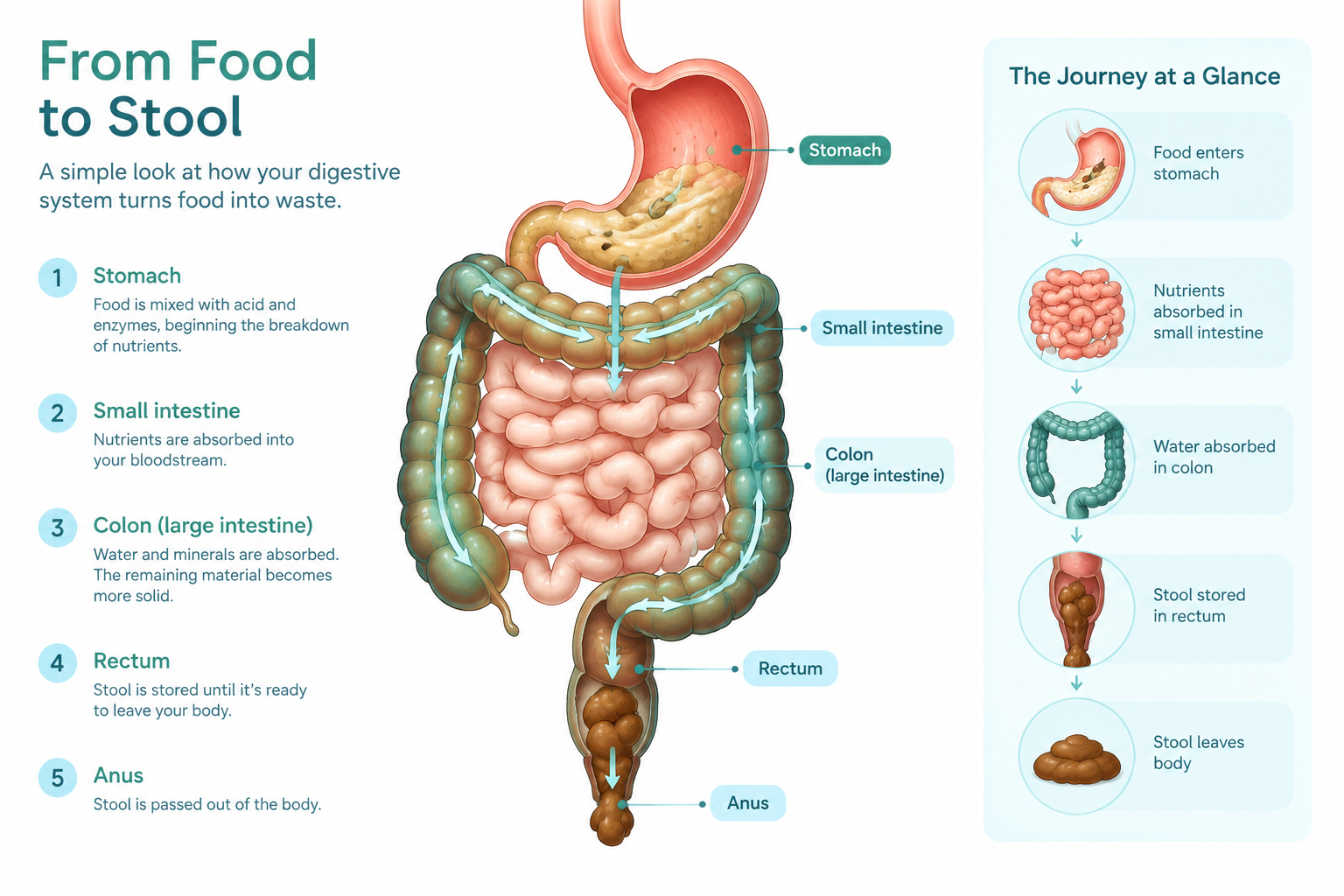
A bowel movement is digestion's final step, when your body gets rid of stool. Digestive system basics can make the food-to-waste process easier to picture.
After food is broken down, the small intestine absorbs most nutrients. The large intestine, also called the colon, takes in much of the water that remains, while the leftover material becomes stool, also called feces or poop. It contains:
- Undigested food material
- Bacteria from the digestive tract
- Other waste your body is ready to remove
The colon, coordinated by the enteric nervous system, moves formed stool into the rectum, where it is stored until your body signals that it is time to go. Stool then leaves through the anus. This is how a bowel movement works, and it is a routine body process.
If you are wondering what is a normal bowel movement or how often should you poop, there is no required daily schedule. Normal bowel movement frequency for healthy adults can range from three times a day to three times a week (bowel movements, MedlinePlus). Your usual pattern and whether stool passes comfortably matter more than meeting a daily target.
A healthy bowel movement is usually soft, formed, and medium to dark brown. A bowel movement should feel comfortable and should not require prolonged sitting or excessive straining. If it regularly takes a long time or causes pain, it may be worth discussing with a clinician (MedlinePlus on bowel retraining). Occasional changes are common, but a persistent difference from your normal bowel movement is worth discussing with a healthcare professional.
How Does Bowel Transit Time Shape Stool?
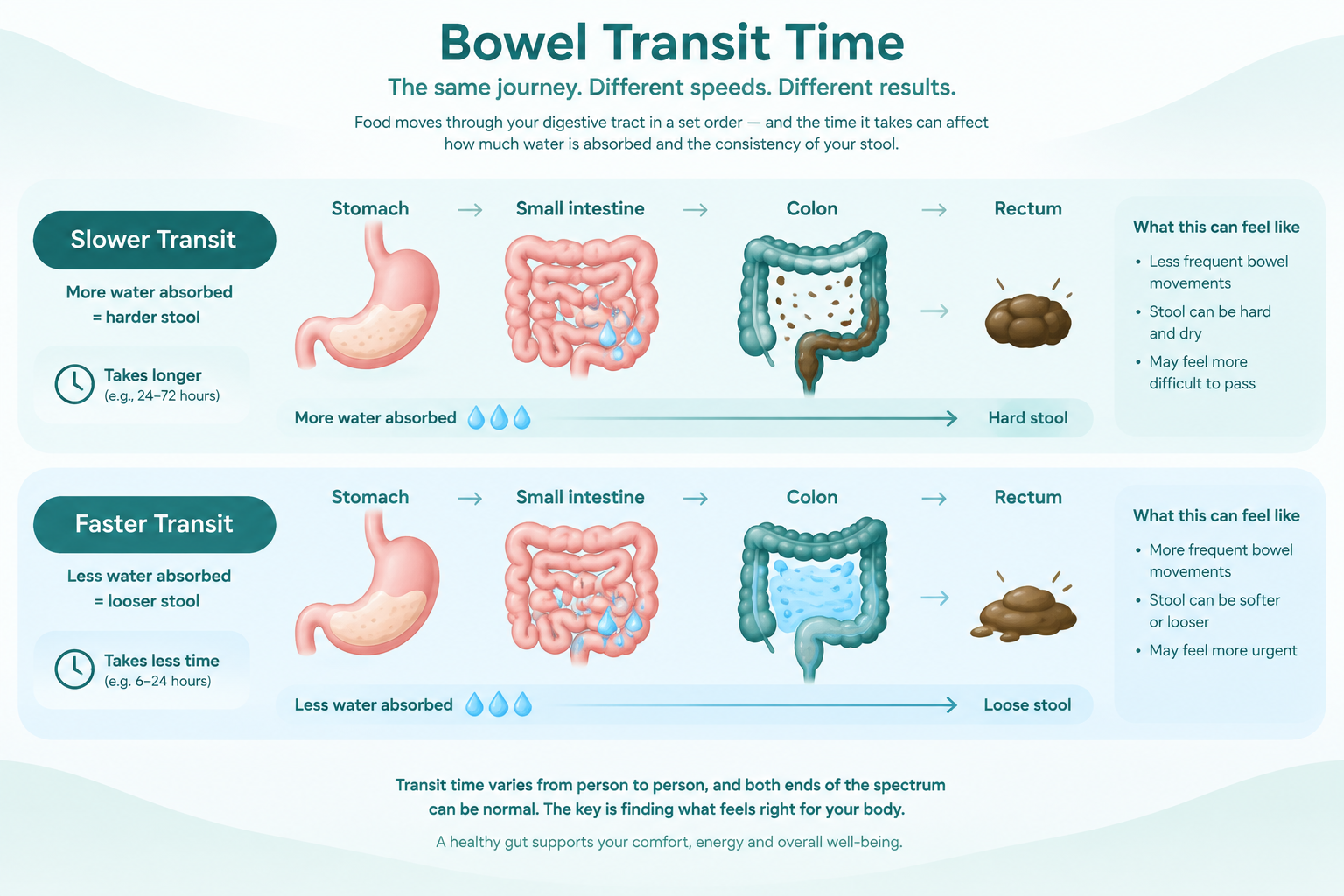
Because comfort and frequency depend partly on how quickly stool travels, Bowel transit time is the journey from eating to passing unused material. Food moves through the stomach and small intestine, where most nutrients and some water are absorbed, then into the colon and rectum, where the remaining waste forms stool. The full trip through the digestive tract often takes one to three days. In the colon, typical transit is 30 to 40 hours, though up to 72 hours can still be normal (UCSF Health on bowel transit time).
When movement through the large intestine is slow, the colon absorbs more water. Stool consistency may become hard and dry, making bowel movements difficult or painful. Constipation can mean fewer than three bowel movements a week or a lasting feeling that you have not fully emptied.
Faster transit leaves less time for water absorption, so stool may be soft, loose, or watery. Diarrhea generally means loose or watery stool three or more times a day, or far more often than usual for you.
Stool patterns can also shift with:
- Diet and hydration
- Medications
- Activity and stress
One unusual bowel movement is common. A persistent change from your usual pattern is the signal worth noticing.
How Does the Colon Form Stool?
After transit time shapes stool consistency, stool forms as the digestive tract completes digestion. Once your stomach and small intestine break down food and absorb most nutrients, leftover material enters the colon. How the colon forms stool depends on absorbing water and salts. Water absorption gives stool its final texture. Changes in colonic movement can affect stool texture.
The rectum temporarily stores stool rather than signaling constantly. As it stretches, nerves create fullness and the urge to defecate. The nerve-rich anal canal helps tell gas from stool, giving you time to reach a toilet. The internal anal sphincter stays closed automatically, including during sleep, while the external anal sphincter provides voluntary control. When you are ready, the pelvic floor relaxes and lowers slightly to help stool pass comfortably. InformedHealth describes how a bowel movement works in how bowel movements work, InformedHealth.
A more comfortable bowel routine often includes:
- Responding to the urge when practical.
- Relaxing instead of straining for a long time.
- Using a small footstool to raise your knees above your hips.
Stress, travel, and routine changes can affect gut-brain signals and bowel habits. Bowel changes are worth discussing without embarrassment.
Why Do You Need to Poop After Eating?
An urge to defecate soon after a meal is often the gastrocolic reflex, a normal response to your stomach filling. The colon may increase peristalsis, moving stool toward the rectum. This feeling can be stronger after a large or fatty meal. Persistent urgency or constipation with abdominal pain can also be part of irritable bowel syndrome, and pelvic floor problems can make emptying difficult even when stool is soft, which is where pelvic health physical therapy or biofeedback may come up with a clinician.
Constipation can make bowel habits less predictable, especially with low fiber, inadequate hydration, little physical activity, travel, routine changes, stress, or certain medications. Stress can also affect the gut-brain signals that influence your bowel pattern. Learn more about why you need to poop after eating.
What Does Normal Stool Look Like?
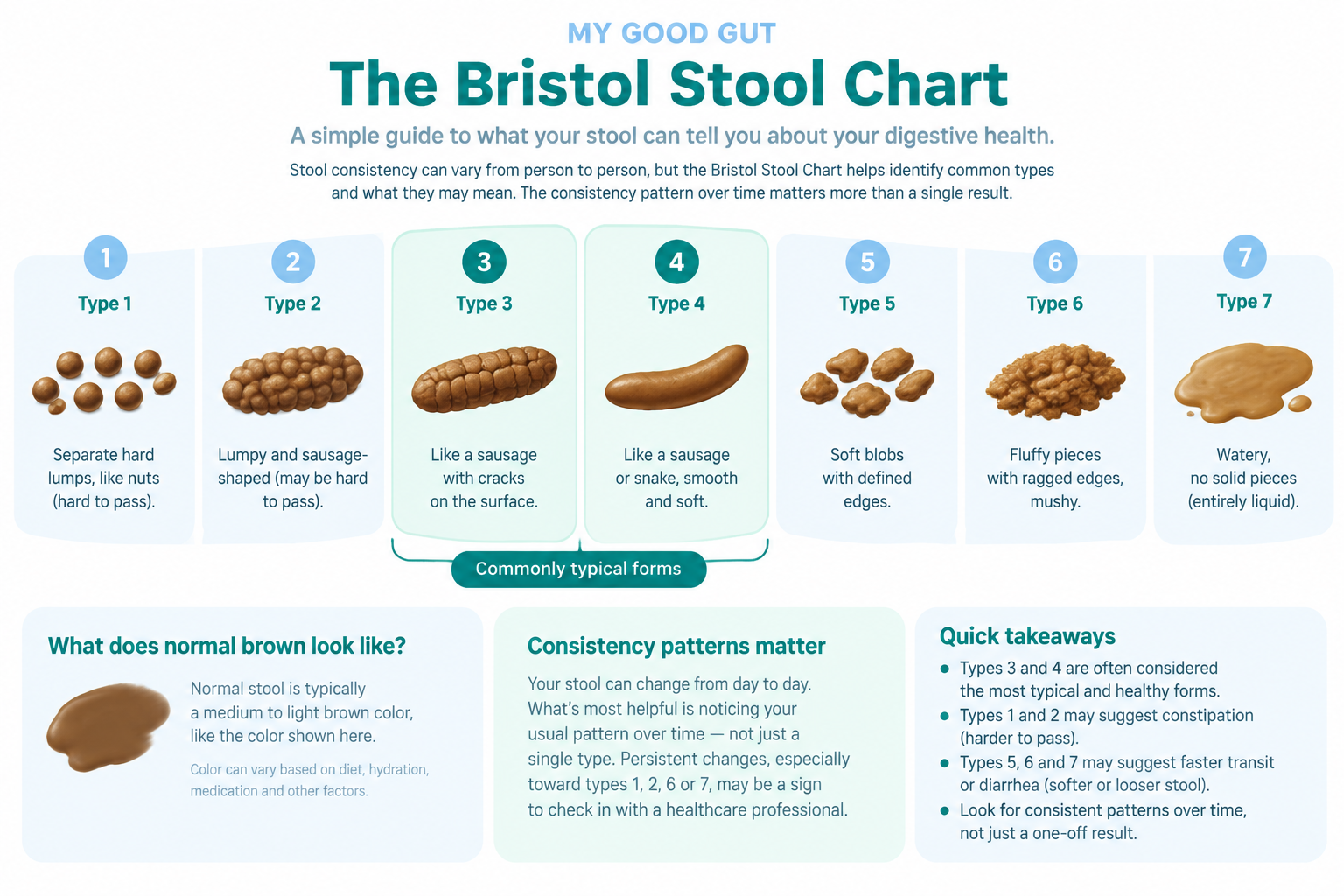
Normal stool appearance can add context to your usual pattern. Frequency alone does not define healthy stool. The signs of a healthy poop include a pattern that feels typical for your body, easy passage, and no lasting change from your baseline.
A healthy bowel movement usually produces stool that feels easy to pass. It should pass within a few minutes without pain, major straining, leakage, or a lingering feeling that you have not fully emptied your bowels. Healthy stool can vary somewhat from day to day, especially with changes in food, fluids, activity, or stress.
The Bristol Stool Chart, also called the Bristol stool form scale, is a useful tool for tracking stool consistency over time rather than judging one trip to the bathroom:
- Type 1: Separate, hard lumps that often occur with constipation.
- Type 2: A lumpy, sausage-shaped stool that can also suggest constipation.
- Type 3: Sausage-shaped stool with surface cracks.
- Type 4: Smooth, soft, sausage-shaped stool.
- Type 5: Soft blobs with clear edges, which can be normal for some people.
- Type 6: Fluffy or mushy pieces with ragged edges.
- Type 7: Entirely watery stool with no solid pieces.
Types 3 and 4 are often the typical target forms. Frequent types 6 or 7, especially when they are new for you, fit more closely with diarrhea and are worth tracking.
Brown is expected because bile, a fluid made by the liver, changes as food moves through your digestive tract. Beets may briefly make stool look red, leafy greens can make it green, and some medications may also affect color. Persistent color changes, or color changes with other symptoms, warrant a conversation with a healthcare professional.
How Can You Support Regularity?

To support the easy passage and typical stool forms described above, regularity often improves with steady habits rather than force. Food, hydration, movement, and a relaxed bathroom routine can support easy bowel movements and digestive health.
Build a food-first dietary fiber routine with high-fiber foods such as vegetables, fruits, beans and other legumes, and whole grains. Soluble fiber holds water to produce soft, well-formed stool, while insoluble fiber adds bulk and helps the intestines move it along. Adults generally need 22 to 34 grams daily, depending on age and sex (eating, diet, and nutrition for constipation, NIDDK). Increase fiber slowly, since a sudden change can bring gas, bloating, or worse constipation.
Hydration helps keep stool soft. Start with six to eight glasses of water daily, spread across the day, then adjust for climate, activity, and health conditions. Adding more fiber without enough fluid can make constipation worse (constipation, NIDDK).
A simple daily routine can help your colon move waste along:
- Move comfortably: Walking or another activity you enjoy can encourage the colon’s natural contractions.
- Respond to urges: Waiting too long may leave stool drier and harder to pass.
- Make time without forcing it: Eat regular meals and sit on the toilet for about five minutes once or twice daily, even if nothing happens.
As you lean forward slightly, relax your belly, and breathe normally. Lean forward slightly, relax your belly, and breathe normally. Straining during bowel movements can make pain-free bowel movements less likely. Persistent straining, incomplete emptying, or a lasting change in your usual pattern merits a conversation with a clinician.
Which Bowel Changes Are Worth Tracking?

Even with steady supportive habits, a brief change is easier to assess over several days. Going twice a day or every other day can both be normal, and one hard, loose, urgent, or differently colored stool is rarely an emergency. Red flag bowel symptoms such as blood, black stool, unexplained weight loss, or pain that wakes you are the exception and deserve prompt attention.
A simple seven-day record can make changes in bowel habits easier to spot and describe. It cannot diagnose a condition, but it can show whether a change is brief or persistent. Include:
- Timing and frequency: Note when you had a bowel movement and whether the pattern differed from usual.
- Stool form and color: Record whether stool was hard, lumpy, loose, watery, or unusually shaped, along with its color.
- Bathroom experience: Include urgency, straining during bowel movements, pain, and a feeling of incomplete emptying.
- Possible influences: Note symptoms and changes in food, fluids, medicines, movement, travel, stress, or routine.
Pay attention to a new shift in frequency, repeated hard stools with straining, ongoing loose stools or urgency, or incomplete emptying that does not improve. Tracking can show whether supportive habits make a difference, so make changes gradually while you track their effects.
Normal stool color often includes brown, green, and yellow shades, which may reflect food choices or how quickly stool moves through the gut. These changes need medical evaluation rather than home observation:
- Bright-red or maroon blood
- Black, tar-like stool
- Pale, clay-colored, or chalky stool
Contact a healthcare professional if constipation or diarrhea lasts longer than two weeks, or if a substantial change from your usual pattern continues. Seek prompt medical attention for blood or rectal bleeding, unexplained weight loss, persistent or severe abdominal pain or cramping, fever, dehydration signs, or worsening symptoms. Recurring or embarrassing bowel concerns deserve support.
Bowel Movement Basics FAQs
Questions about bowel movements are common when your usual pattern changes or feels hard to read. These FAQs cover everyday concerns so you can better understand what you notice without embarrassment.
1. Why Does Poop Float?
Floating stool is usually harmless and often comes from gas trapped in the stool after fiber-rich or gas-producing foods. One floating bowel movement does not define healthy stool, so the overall pattern matters more than the toilet-water test.
Stool that repeatedly floats and is greasy, pale or yellow, hard to flush, and unusually foul-smelling may signal poor fat absorption. Speak with a healthcare professional if it occurs with unexplained weight loss, ongoing diarrhea, or abdominal pain.
2. Can Medications Change Bowel Movements?
Yes. Medicines and supplements can affect stool frequency, firmness, color, and how quickly stool moves through the colon. Changes in bowel habits can also stem from low fiber or fluid intake, less activity, stress, travel, or a disrupted routine, so a medicine is not always the only cause.
A brief shift after starting or changing a medicine may pass, but persistent, bothersome, or concerning symptoms warrant a conversation with your healthcare professional or pharmacist. Don’t stop a prescribed medicine on your own.
3. Can Periods Affect Bowel Movements?
Yes. Hormone shifts before and during your period can affect bowel movement speed, leading to looser or more frequent stools, constipation, bloating, or cramps at a similar point in each cycle. Stress, poor sleep, and routine changes may add to these symptoms through the gut-brain connection. A brief, predictable pattern can be common, but seek medical evaluation for severe changes, symptoms that continue after your period, a major change from usual, blood or black stool, severe pain, or dehydration.
4. Why Do Bowel Movements Smell Different?
Stool odor can vary with food, gut bacteria, how quickly waste moves through your intestines, and certain medications. Like normal stool color, a smell change by itself is often temporary. Seek advice from a healthcare professional if an unusually foul odor persists with diarrhea, abdominal pain, unexplained weight loss, or a lasting change in your bowel pattern. Yellow, greasy, foul-smelling stool can sometimes suggest poor digestion.