


Fiber that helps constipation but leaves you more bloated can feel like a bad trade. A methylcellulose fiber supplement may support softer, bulkier stool with less bacterial gas than fermentable fibers, though it cannot promise less gas for everyone. Methylcellulose is a processed, water-soluble fiber that holds fluid in stool without substantial fermentation by gut bacteria.
Psyllium has stronger evidence for constipation-predominant IBS, while methylcellulose may be worth considering when psyllium repeatedly worsens gas. A comparison table sets methylcellulose beside psyllium, inulin, and PHGG, and practical steps cover the lowest labeled dose, a full glass of water with each dose, and medication spacing.
Taking powder or caplets with too little fluid can create choking or blockage risks, so hydration is essential rather than optional. Trouble swallowing, vomiting, rectal bleeding, or an inability to pass stool or gas calls for medical assessment instead of more fiber.
Methylcellulose Fiber Supplement Key Takeaways
- Methylcellulose is a water-soluble, bulk-forming fiber used for occasional constipation.
- It holds water in stool, which can make hard, dry stool easier to pass.
- Its non-fermentable profile may produce less bacterial gas than fermentable fibers.
- Methylcellulose may also add form to occasional loose stools.
- Psyllium has stronger support for constipation-predominant IBS and mixed bowel habits.
- Follow the exact product label and take every dose with sufficient fluid.
- Avoid self-starting methylcellulose with swallowing problems, obstruction symptoms, or PKU-related ingredient concerns.
What Is Methylcellulose Fiber?
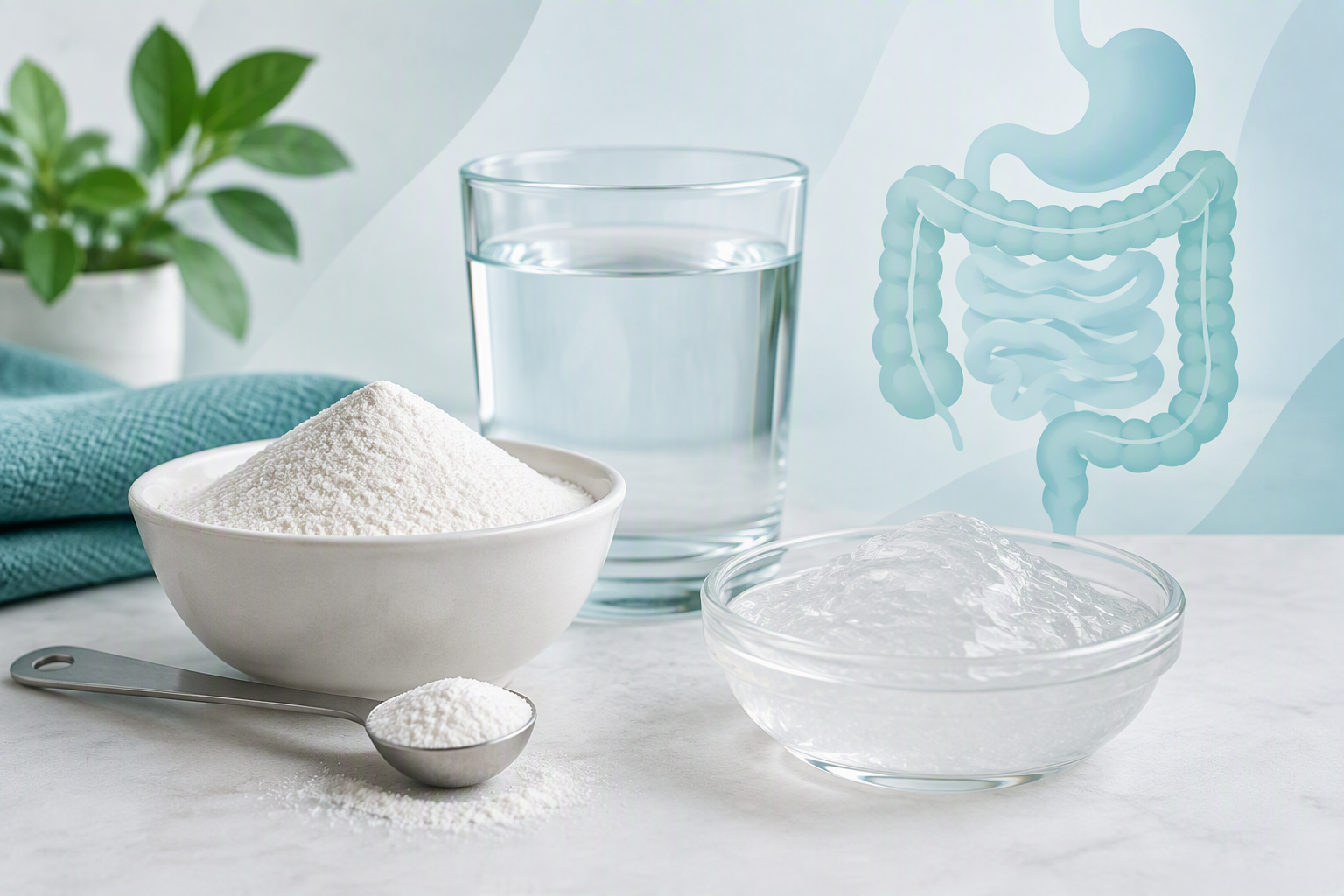
Methylcellulose fiber is a synthetic, non-digestible fiber made by modifying plant-derived cellulose, sold as methylcellulose fiber therapy for occasional constipation. Unlike fiber that remains naturally present in foods, methylcellulose is processed into a water-soluble ingredient used in over-the-counter bulk-forming laxatives.
So, what is methylcellulose in everyday terms? A methylcellulose fiber supplement passes through your digestive tract without being digested or absorbed. Because methylcellulose is hydrophilic, it pulls in and holds water, adding moisture and bulk to stool as it moves through the bowel.
Hydration matters because the fiber needs liquid to do its job. Common formats include:
- Powder: Mixed with water or juice.
- Caplets or tablets: A measured option if you prefer not to drink a fiber mixture.
These concentrated products are intended for bowel-related use. They do not replace the vitamins, minerals, and range of fibers found in fruits, vegetables, beans, and whole grains.
Methylcellulose is a non-fermentable fiber, also called a non fermentable fiber. Gut bacteria do not substantially break it down, which may mean less bacterial gas than with fibers that ferment more readily. Gut microbiome basics explains why different fibers can affect the colon differently.
This can be useful if psyllium has repeatedly worsened gas, including for some people with irritable bowel syndrome (IBS). Still, bloating has many possible causes, so no fiber can guarantee a gas-free experience.
A common methylcellulose powder is labeled as a non-allergenic fiber and a bulk-forming laxative (source). For constipation with ongoing gas sensitivity, this type of fiber may be a practical option to consider.
How Does Methylcellulose Support Stool Regularity?
As a bulk-forming option for occasional constipation or irregularity, methylcellulose for constipation changes the stool's texture and volume rather than forcing the bowel to contract. This bulk-forming, non-stimulant laxative is used for occasional constipation or irregularity and can support regular bowel movements, which is why it is often suggested as fiber for sensitive stomachs. The National Institute of Diabetes and Digestive and Kidney Diseases includes bulk-forming agents among constipation treatments because they add bulk and can make stool easier to pass (source).
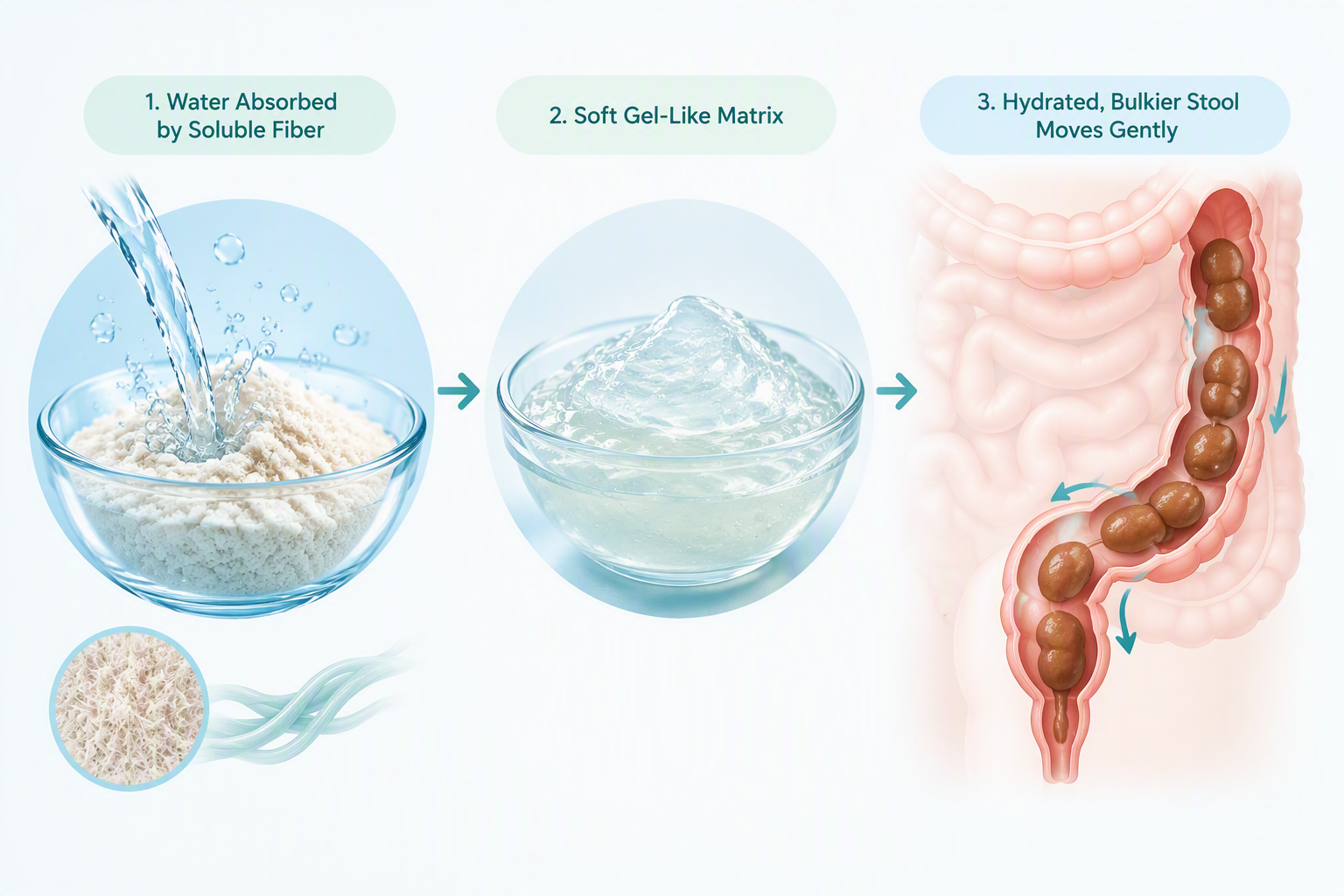
How methylcellulose works begins with fluid. When taken with enough water, methylcellulose absorbs water in the intestines and forms a soft, gel-like matrix. That gel helps stool retain moisture while adding bulk, which may make dry, hard stool easier to pass.
These stool changes support normal movement through the bowel:
- More moisture: Hydrated stool is less likely to be hard or difficult to pass.
- More bulk: A larger stool can gently stretch the intestinal wall.
- Natural movement: This stretch can prompt peristalsis, the coordinated muscle contractions that move stool through the bowel.
Unlike stimulant laxatives, bulk-forming fiber works gradually and should not cause an urgent effect. Methylcellulose usually produces a bowel movement in 12 to 72 hours (source). A slower response is expected, but new, worsening, or ongoing bowel symptoms merit a discussion with a healthcare professional.
For IBS, methylcellulose may suit you if psyllium consistently increases gas. It is non-fermenting, so gut bacteria do not break it down in the same way as fibers that can contribute to gas, though you should introduce it gradually and drink enough fluid, since insufficient water can leave a bulk-forming fiber working against the goal of softer stool.
Which Digestive Symptoms May It Fit?
Beyond supporting regularity, methylcellulose may suit constipation, occasional loose stools, or gas-sensitive IBS when other fibers make bloating worse. As a bulk-forming fiber, methylcellulose may help when bowel movements are hard, dry, infrequent, or difficult to pass.
With methylcellulose for constipation, relief is gradual rather than immediate. Hydration and a slow starting pace matter more than taking extra doses, so follow the product directions and drink the recommended amount of water.
Soluble fiber can absorb excess water and add form to occasional loose stools. Methylcellulose is not a self-treatment for persistent diarrhea, infection, inflammatory bowel disease, or an unexplained change in bowel habits.
For people prone to gas, methylcellulose offers a non-fermenting option. Fermentable fibers feed bacteria that support a diverse gut ecosystem, but fermentation can also produce gas.
It may be a fiber that causes less gas if psyllium, inulin, or other sources consistently worsen bloating or discomfort, making it a reasonable fiber for bloating reduction, although any fiber change can still cause symptoms. People dealing with fermentable fiber side effects may find its non-fermenting profile easier to tolerate.
For daily fiber or IBS, methylcellulose can be an option when psyllium is poorly tolerated. It is not a proven remedy for persistent pain, bloating, or every IBS symptom, particularly when symptoms may point to an unsettled microbiome. The right amount and timing also depend on your goal, medications, and health conditions.
Do not use methylcellulose for constipation for more than 7 days unless a healthcare professional advises it. Seek medical care for no bowel movement after use, recurring constipation or bowel-habit changes, abdominal pain, nausea, vomiting, or rectal bleeding.
How Does Methylcellulose Compare With Psyllium?
Methylcellulose versus psyllium is mainly a choice between gentleness and broader IBS evidence. Both are bulk-forming fibers that hold water in stool, but methylcellulose is a non-fermentable fiber, while psyllium is mostly soluble and breaks down somewhat in the gut. The main non-fermentable fiber benefit is less gas, and the same logic applies against wheat dextrin or inulin powders, which ferment readily. Psyllium has stronger support for constipation-predominant IBS.
If bloating is a concern, methylcellulose may be a reasonable fiber to try first, but it is not guaranteed to cause less gas than psyllium. Because gut bacteria do not substantially break it down, it may be a fiber that causes less gas than psyllium or inulin. Any fiber can still cause discomfort if you increase it too quickly.
Fiber option | Fermentability | May fit best when | Common formats |
|---|---|---|---|
Methylcellulose | Not substantially fermented | Gas sensitivity or occasional constipation | Powder, caplets, tablets |
Psyllium | Ferments to some degree | Constipation-predominant IBS, constipation, or loose stools | Powder, husk |
Inulin | Highly fermentable | Prebiotic fiber is the goal and gas is well tolerated | Powder, added ingredient |
Partially hydrolyzed guar gum (PHGG) | Low-FODMAP-designated alternative | Psyllium repeatedly worsens gas | Powder |
Psyllium can also help firm loose stools, making it useful when bowel habits shift between constipation and diarrhea. Methylcellulose's main advantage is tolerance, not equal support for every digestive or cardiometabolic goal. If psyllium still worsens bloating after a gradual start, methylcellulose or PHGG may be a better fiber for bloating reduction to discuss with your clinician.
Formats matter during an IBS trial. Unflavored psyllium makes ingredient review simpler, while sugar-free flavored powders can still contain sweeteners and flavorings that affect tolerance.
Mix powder thoroughly and drink it promptly with at least 8 ounces of water (source) or another beverage. Enough fluid helps bulk-forming fiber move through the digestive tract instead of adding to constipation. Persistent, severe, or worsening abdominal discomfort calls for medical guidance rather than further dose increases.
How Should You Start Methylcellulose?
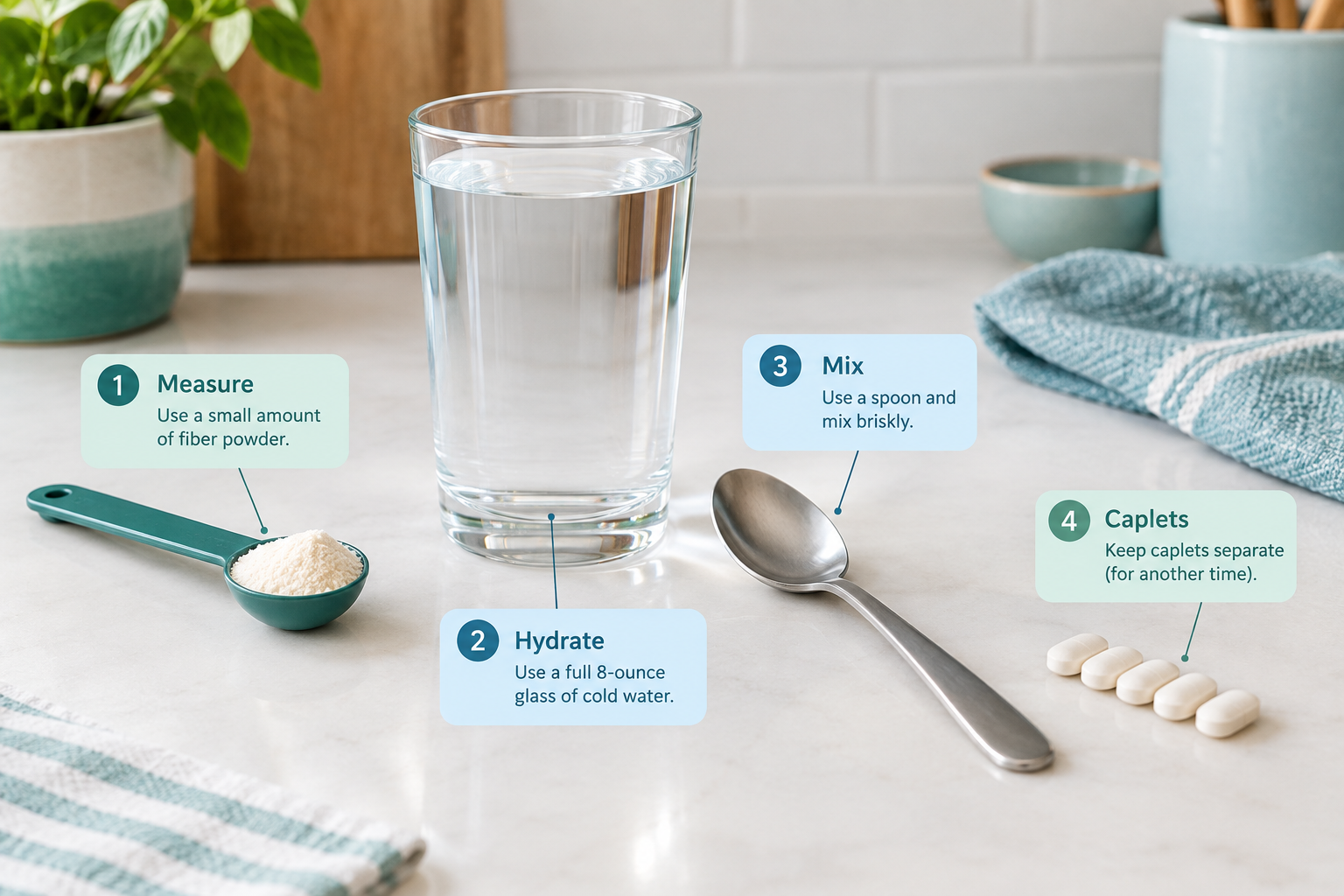
Start with the lowest labeled methylcellulose dosage for the exact product you buy, and plan how much water to take with methylcellulose before the first dose: adequate fluid with fiber is the single most important safety step. Powder and caplets are not interchangeable, so do not convert a scoop amount into a caplet dose. A common methylcellulose powder provides about 2 grams per labeled serving, and standard and sugar-free powders can have different measuring directions (source).
A gradual trial can help you see how the fiber affects your symptoms without changing several things at once:
- Choose one format: Use either methylcellulose powder or caplets and follow that product’s label. Powder may be easier to adjust in small steps, while caplets can be more convenient away from home.
- Mix powder with enough liquid: Take methylcellulose powder as a fiber supplement with water or another suitable cold liquid. Mix the lowest labeled serving into at least 8 ounces, or one full glass, stir briskly, and drink it immediately. Never take dry powder or use too little liquid. Because methylcellulose absorbs water and expands, this can raise the risk of choking or an esophageal blockage.
- Swallow caplets whole: Do not chew, crush, or split caplets. Take the labeled serving with at least 8 ounces of water. Caplet directions commonly pair a 2-to-4-caplet serving with a full glass, but your product’s serving size and daily maximum control (source)).
- Increase slowly if needed: Adults and children age 12 and older may increase powder by one serving at a time, up to three daily doses when the label allows. Pause increases if fullness, bloating, constipation, or loose stools get worse.
Fiber supplement hydration matters throughout the day, not only when you take a dose. Relief may take time. Stop self-treatment if symptoms worsen, last longer than seven days, or include concerning symptoms, and seek medical care.
What Side Effects Can Methylcellulose Cause?

Even when you start gradually, methylcellulose side effects are usually mild and temporary, and methylcellulose medication interactions come down to timing rather than chemistry, but taking it with too little fluid can create a choking or blockage risk. Because it adds bulk and holds water in stool, your digestive system may need time to adjust. Early effects can include:
- Fullness or mild cramping
- Gas or bloating
- Nausea
- Temporary changes in stool frequency, size, or consistency
These symptoms can be frustrating when you already have IBS or a sensitive gut. Methylcellulose is non-fermentable, so it may cause less gas than fibers broken down by gut bacteria, though adjustment symptoms can still happen.
The label provides timing guidance for your specific product. Don’t take extra doses if relief is delayed, and use methylcellulose only as directed on the label for your specific product.
Fiber supplement hydration is a safety requirement, not just a comfort measure. Take every powder or caplet dose with at least 8 ounces, or one full glass, of water or another fluid. Without enough liquid, methylcellulose can swell in your throat or esophagus, which can cause choking and may contribute to an intestinal blockage.
Contact a healthcare professional if you notice any of the following:
- Worsening symptoms or persistent changes in bowel habits
- Ongoing abdominal pain, nausea, or vomiting
- Rectal bleeding
- No bowel movement after using methylcellulose
- Constipation lasting more than seven days
Constipation that continues despite treatment may have an underlying cause that needs evaluation rather than more fiber.
Who Should Avoid Methylcellulose?

Because choking or blockage risk warrants extra caution, methylcellulose is not a good self-start option if swallowing is difficult, constipation may have a more serious cause, or warning symptoms are present. Those are the main methylcellulose contraindications on the label. Adding bulk-forming fiber in these situations can delay care that matters more.
Do not start methylcellulose powder, tablets, or capsules on your own if you have trouble swallowing. The fiber expands when mixed with fluid, and an improperly swallowed dose can lodge in the throat or cause choking. A healthcare professional can help you decide whether another approach or formulation is a better fit.
Possible bowel obstruction or another urgent digestive problem needs prompt medical assessment before you add bulk-forming fiber. Warning signs include:
- Significant or worsening abdominal pain.
- Nausea or vomiting.
- Severe bloating or a swollen abdomen.
- Inability to pass stool or gas.
- Unexplained rectal bleeding.
- A new bowel-habit change that lasts longer than two weeks, especially if it differs from your usual digestive symptoms, should be checked by a healthcare professional.
Constipation that lasts longer than a week, does not improve with methylcellulose, or leaves you without a bowel movement after use also needs medical review. More fiber is not always the answer. Medication effects, pelvic floor problems, thyroid conditions, and other causes can initially resemble ordinary constipation.
People with phenylketonuria (PKU) should read the inactive-ingredient list and warning label closely. Some sugar-free flavored methylcellulose powders contain phenylalanine, so sugar-free does not automatically mean a flavor fits a PKU diet.
If you have IBS and gas has made other fibers difficult to tolerate, it can be tempting to keep switching supplements during a flare. Pause when a warning sign appears, and bring your symptom pattern and the exact product label to a healthcare professional.
Methylcellulose Fiber Supplement FAQs
These FAQs address whether methylcellulose fiber supplements may suit constipation, loose stools, bloating, or IBS symptoms, including practical concerns about hydration, side effects, and medication timing.
1. Can Methylcellulose Affect Medication Absorption?
Methylcellulose may affect how quickly or fully your body absorbs oral medicines because fiber can bind with them in the digestive tract. Take prescription medicines, over-the-counter medicines, and oral supplements at least 2 hours before or after your fiber dose. This is a scheduling issue, not a reason to stop a prescribed medicine. If you take medication regularly or need precise timing, confirm the best schedule with a pharmacist or clinician.
2. Can You Mix Methylcellulose Into Hot Drinks?
No. Mix methylcellulose powder with at least 8 ounces of cold water or another appropriate cold liquid, then stir briskly and drink it promptly rather than letting it thicken. A fiber supplement with water needs a full glass because methylcellulose absorbs fluid and expands.
Too little liquid with powder or caplets can allow the fiber to swell in your throat or esophagus, raising the risk of choking or an intestinal blockage. If you have trouble swallowing, speak with a healthcare professional before using methylcellulose.
3. Is Methylcellulose Gluten-Free?
Methylcellulose itself is generally gluten-free and is described on drug labels as a non-allergenic bulk-forming fiber laxative. That may make it a useful option if you avoid gluten or react to common food allergens.
The complete formula still matters. Check the current ingredient list and gluten-free label, especially for flavored powders, gummies, and combination products that may contain sweeteners, flavorings, or other added ingredients.
4. Which Methylcellulose Supplement Form Is Best?
Neither option is best for everyone. Methylcellulose powder mixes into water or juice and offers more flexibility, while caplets can be easier when you do not want to prepare a drink. Choose the methylcellulose fiber supplement you can use consistently with enough liquid.
Forms are not interchangeable. Follow the exact product label for serving size, mixing, and water directions. Caplets should be swallowed whole with a full glass of water, and some labels specify at least 8 ounces for a 2-to-4-caplet serving.