


More fiber isn't automatically better when a new bowl of beans or bran cereal leaves you bloated. For digestion without more bloating, increase fiber in small steps, spread it across meals, and keep fluids steady so your gut has time to adjust. Fiber can add bulk and hold water in stool, but the type and amount that feel comfortable vary from person to person.
Inulin and fructooligosaccharides can ferment quickly and trigger gas or cramping for some people, especially with IBS. Soluble fiber may help form softer, more consistent stools, while a rapid increase in insoluble fiber can worsen fullness or bloating. Tracking new foods, portions, fluids, and stool changes helps identify a pace that supports regularity without pushing through discomfort.
Increase Fiber for Digestion Key Takeaways
- Raise fiber gradually instead of making a sudden dietary change.
- Spread higher-fiber foods across meals and snacks to limit fullness.
- Keep fluids steady because fiber needs water to soften and bulk stool.
- Soluble fiber may help shape both hard and loose stools.
- Fermentable fibers can temporarily increase gas as gut bacteria break them down.
- Scale back the newest fiber addition when bloating or cramping persists.
- IBS symptoms may improve with a slower pace and different fiber sources.
How Does Fiber Support Digestion?
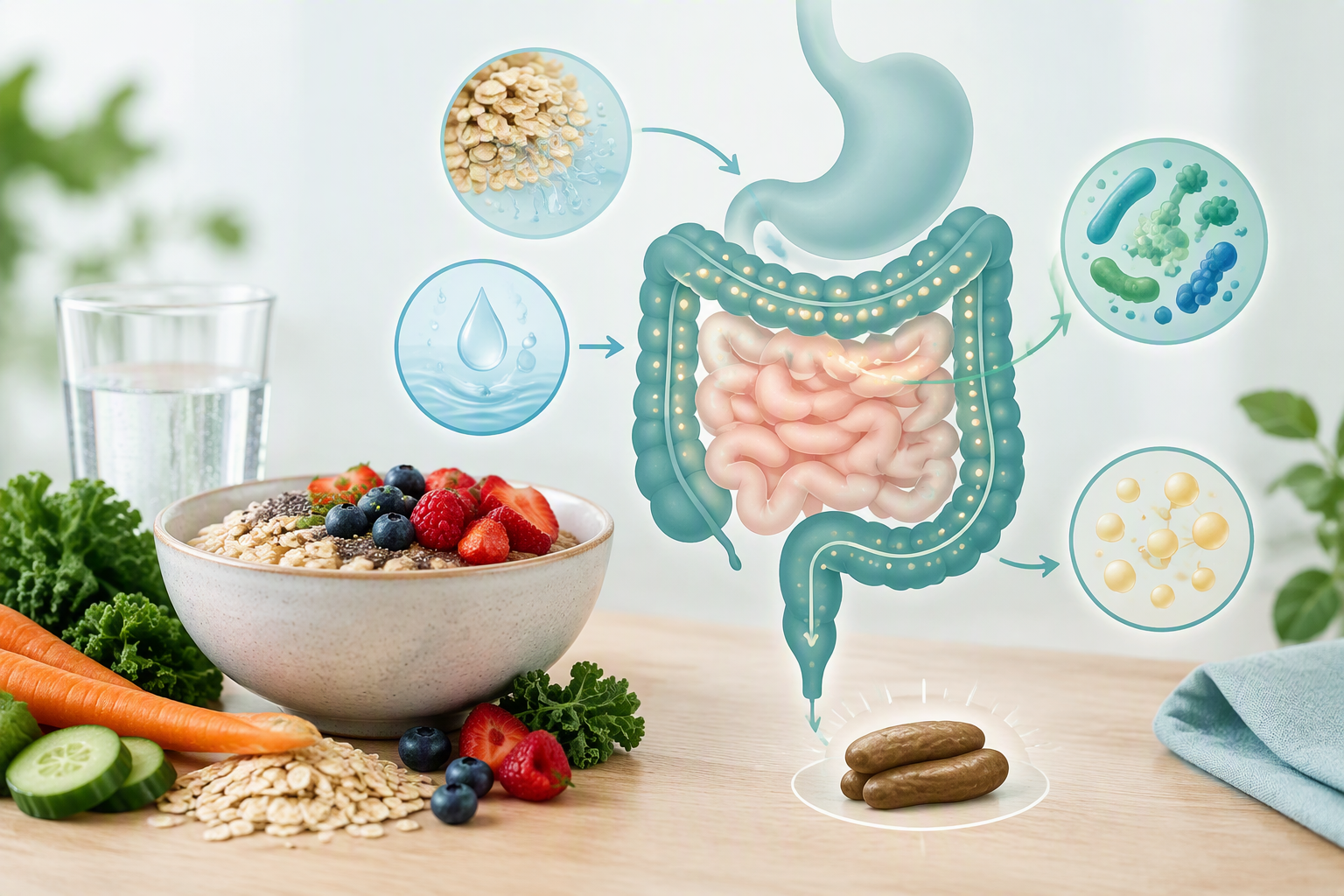
Dietary fiber supports digestion by passing through the stomach and small intestine without being fully digested or absorbed. In the large intestine, it can affect stool texture, transit time, and fiber and bowel movements. These dietary fiber benefits come from plant foods working with water in your digestive tract, not from a restrictive eating plan (source).
Fiber and stool bulk can be especially helpful when stools are hard or infrequent. Some fibers add bulk, while water-holding fibers can make stool softer and easier to pass. That fuller, hydrated stool may help support normal intestinal movement. the wider gut health diet includes the everyday eating patterns that can shape digestive comfort over time.
Fluids matter for fiber intake for digestion. Regular drinks help fiber hold water and move through the gut more comfortably. Raising fiber quickly without enough fluid may worsen constipation, pressure, bloating, or discomfort, so gradual changes make it easier to notice how your body responds.
Some fermentable fiber also feeds gut bacteria in the colon. As microbes break it down, they produce short-chain fatty acids, including:
- Acetate: A product of fiber fermentation.
- Propionate: Another short-chain fatty acid made by gut microbes.
- Butyrate: A fatty acid that fuels cells lining the colon.
This connection between fiber and healthy gut bacteria can support the gut microbiome, though a change in fiber intake can temporarily increase gas.
Fiber and digestive health are personal. The source and amount that help constipation may not feel best during loose stools, bloating, or irritable bowel syndrome (IBS). Adjusting fiber type, pace, and hydration based on symptoms gives you a practical place to start.
The health benefits of fiber reach past the gut: fiber and blood sugar, fiber and cholesterol, and fiber and gut bacteria are all part of the same story, since the types of dietary fiber that form gels slow sugar absorption and bind bile acids, while the ones that ferment work as prebiotic fiber for the colon (source). Fiber and digestion is the part this page stays on.
How Much Fiber Do You Need Daily?
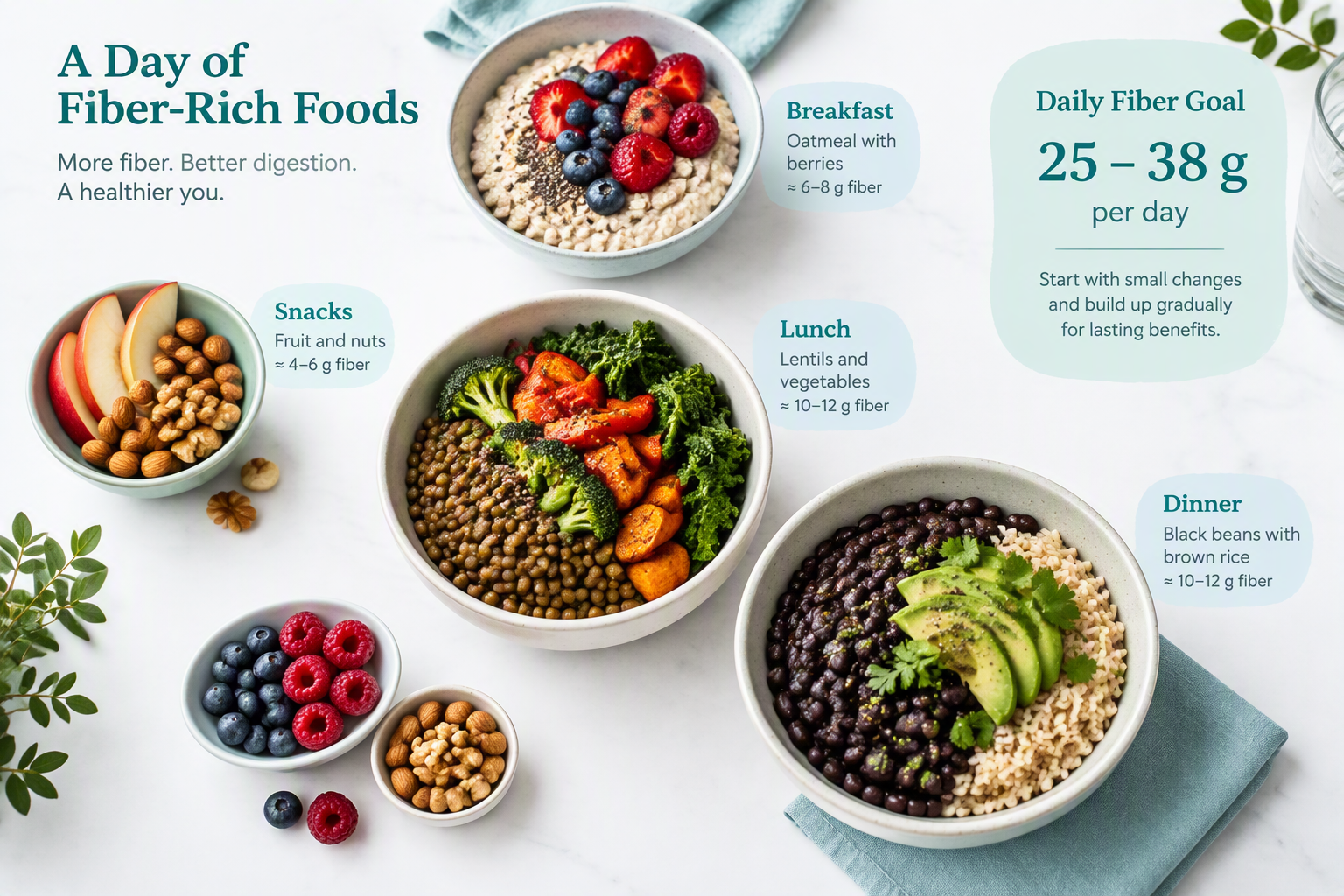
For most adults, the daily fiber recommendation is based on age and sex, and it serves as a useful benchmark rather than a judgment about how you eat. The recommended fiber intake for adults is 25 grams for women age 50 and younger, 21 grams for women age 51 and older, 38 grams for men age 50 and younger, and 30 grams for men age 51 and older.
If you are wondering how much fiber per day to aim for, 25 to 30 grams from food is a practical destination for many people (source). The wider reference range of 25 to 38 grams of fiber daily can help you set a longer-term direction without trying to make every change at once.
Many Americans get about 15 grams of fiber a day, which is below recommended intake (source). That shortfall is common, and gradual progress is usually more comfortable than a sudden jump in fiber intake.
Everyday meals and snacks can make fiber intake for digestion easier to build, and these portions show how everyday foods can help build fiber intake for digestion.
Food and serving | Fiber |
|---|---|
Black beans, 1/2 cup | 6.1 grams |
Cooked artichoke, 1 medium | 6.5 grams |
Blackberries, 3/4 cup | 6 grams |
Bloating, constipation, ongoing irregular stools, and IBS can affect both the amount and type of fiber that feels manageable. Use your target as a direction, increase slowly, and speak with a healthcare professional if symptoms persist or worsen.
The Dietary Reference Intakes set the recommended daily fiber intake at 25 grams of fiber for women and 38 grams of fiber for men, and the fiber recommendations by age and gender step down after age 50, which is why fiber intake for older adults is usually quoted a little lower. Daily fiber intake from food is the target, not a supplement count.
How Do Fiber Types Affect Your Stool?
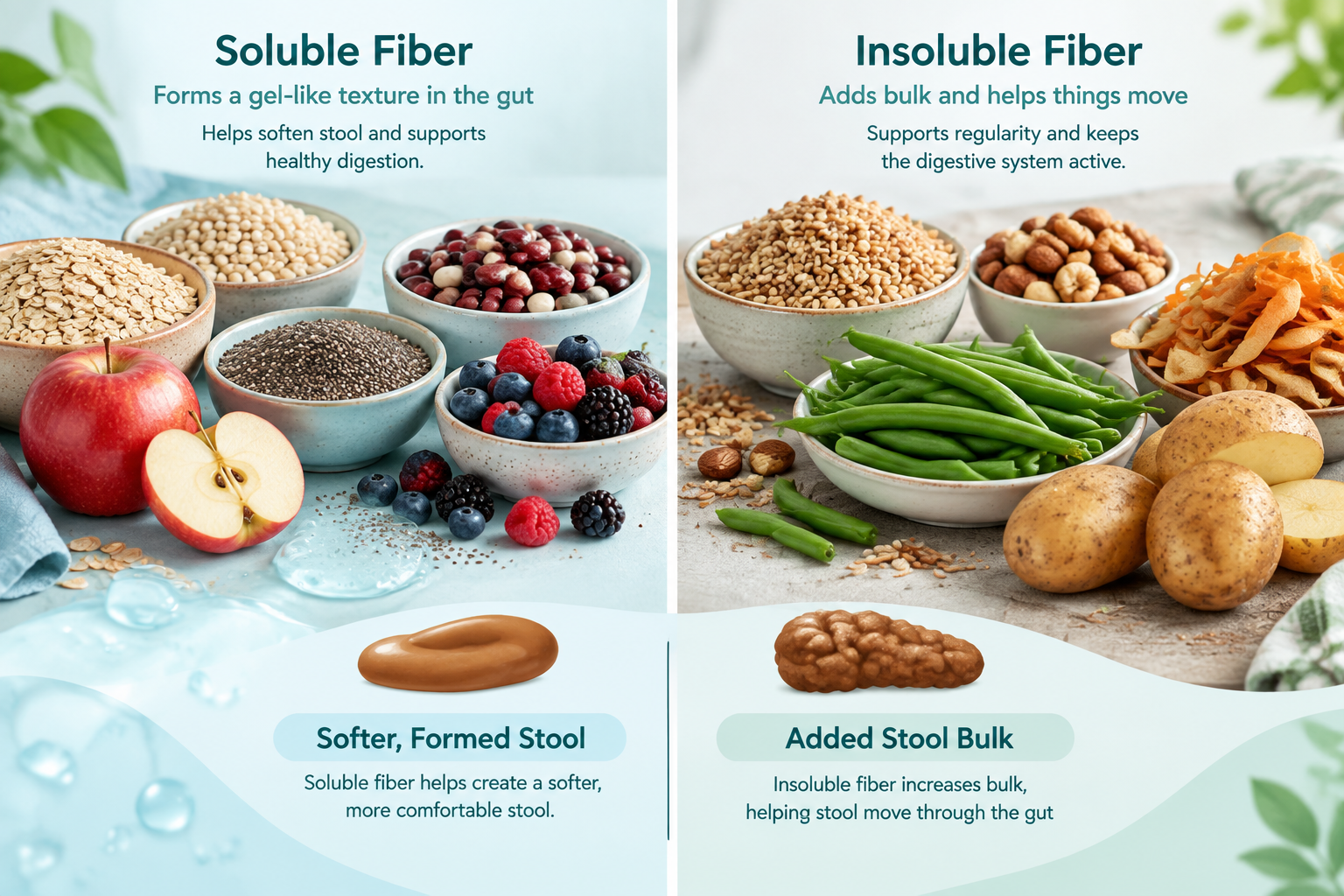
After setting a daily target, soluble fiber and insoluble fiber influence stool differently, and most plant foods contain some of both. A varied mix is often more useful than relying on one high-fiber food, especially when constipation, bloating, or IBS symptoms come and go.
Soluble fiber dissolves in water and forms a gel in the digestive tract. This may slow digestion and stomach emptying, soften post-meal blood sugar rises, and modestly lower total and low-density lipoprotein (LDL) cholesterol. Soluble fiber benefits can include softer, more formed stools, although it will not solve every case of constipation, bloating, or IBS. Soluble fiber and where to find it covers common choices.
Everyday soluble fiber foods include:
- Oats and barley
- Beans, lentils, and peas
- Chia seeds, apples, citrus fruit, carrots, and berries
For perspective, one small apple with skin provides 2.8 grams of total fiber, including about 1 gram of soluble fiber (source). Whole foods are rarely just one type of fiber, which is why an apple can support both stool softness and bulk.
Insoluble fiber does not dissolve in water. It passes through the digestive tract mostly intact, adding structure and helping stool retain water as it moves along. These insoluble fiber benefits may help when stools are hard or infrequent, but a fast increase can worsen gas, bloating, or cramping.
Common insoluble fiber foods include:
- Whole-wheat flour, wheat bran, and other whole grains
- Nuts, seeds, and fruit or vegetable skins
- Cauliflower, green beans, and potatoes with their skins
One-quarter cup of dry bran provides 6 grams of fiber, nearly all insoluble, while one-half cup of cooked green beans provides 2.8 grams total, including about 1.7 grams of insoluble fiber. Fiber and stool bulk depend on the food, portion, and how quickly you increase it.
Rotate legumes, whole grains, fruits, vegetables, nuts, and seeds, such as black beans, brown rice, quinoa, raspberries, pears, broccoli, almonds, flax, and pumpkin seeds. Gradual changes make it easier to notice which foods support comfortable, consistent stools.
Fiber for constipation is mostly a water story: foods high in soluble fiber hold water for softer stool, while insoluble fiber adds bulk, and fiber and diarrhea is the reverse case, where gel-forming fiber gives loose stool more form (source). Fiber and water intake go together on both sides, so a fiber increase without extra fluid can stall.
How Should You Increase Fiber Gradually?
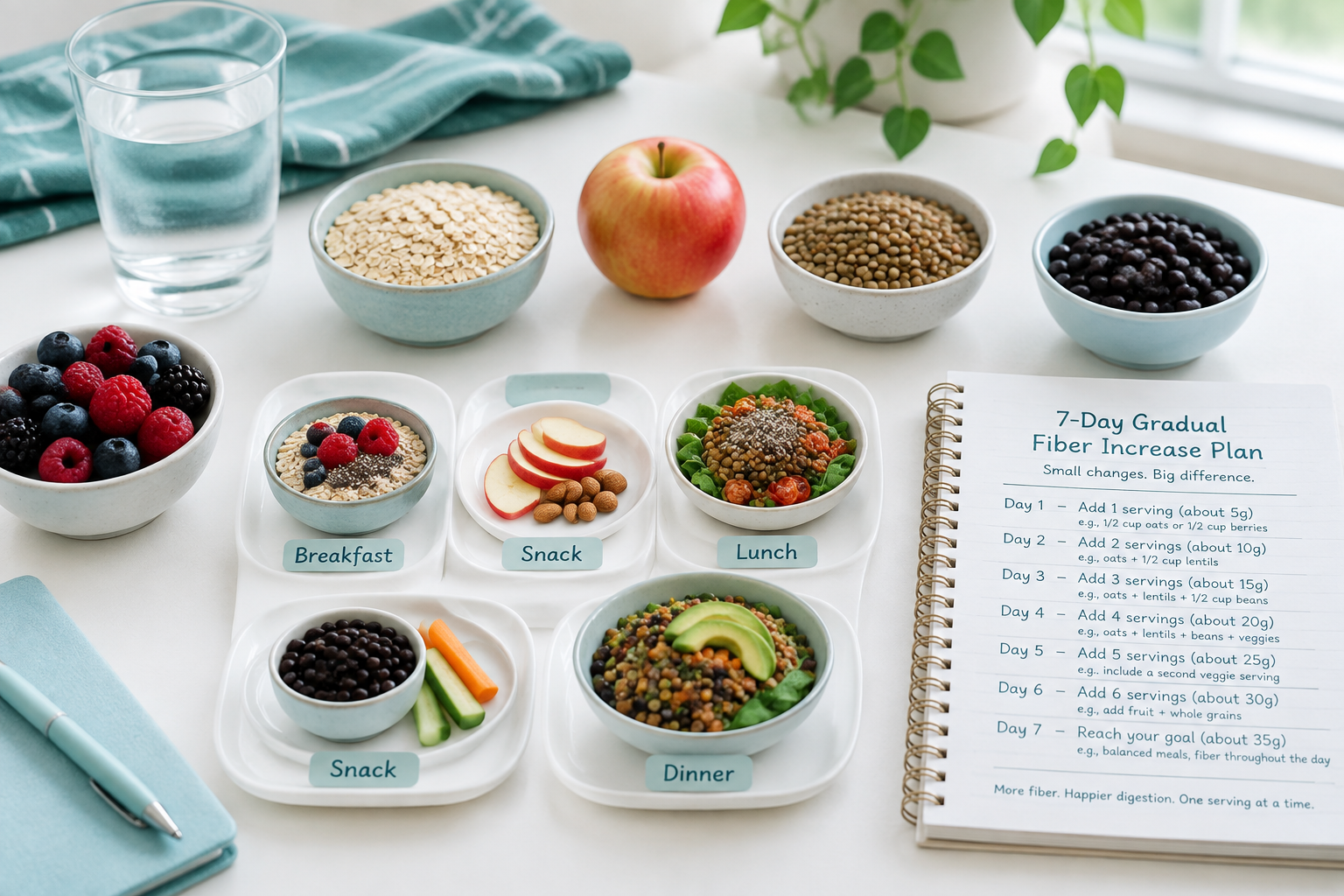
With the stool effects of different fiber types in mind, start with a baseline: track the fiber in your meals and snacks for several typical days. That record gives you a practical starting point and helps you avoid making a large change all at once.
A gradual plan is easier on your digestive system:
- Add a small amount: Increase your usual intake by a small amount, about one new serving. Keep that level for several days to a week before making another change.
- Give your gut time: Allow a few weeks for digestion to adjust, particularly if your starting intake was low. Increasing fiber slowly can reduce the chance that gas or fullness becomes disruptive.
- Divide the addition across the day: Add modest portions at breakfast, lunch, dinner, or snacks instead of putting a large serving into one meal. A small apple with skin provides 2.8 grams of fiber, while one-half cup of cooked lentils provides 5.2 grams. Three-quarters cup of blackberries provides 6 grams, and one-half cup of black beans provides 6.1 grams, so smaller portions may better fit a planned increase).
Food variety matters as much as the total amount. Rotate fruits, vegetables, whole grains, legumes, nuts, and seeds rather than relying on one high-fiber cereal or supplement. The foods highest in fiber can help you choose food-based portions that suit your routine.
Fiber and hydration work together. Sip fluids regularly with meals, snacks, and throughout the day because fiber absorbs water, helping form softer, bulkier stool that can move through the digestive tract. Drinking a large amount only after symptoms start may feel less comfortable than steady intake.
Mild gas or fullness can happen as you increase fiber gradually. If bloating, cramping, or stool changes interfere with daily life, pause at the current amount or return to the last portion that felt comfortable. Smaller additions spread across meals are often better tolerated, and ongoing or worsening symptoms deserve healthcare guidance.
How to increase fiber intake comes down to three habits: increase fiber intake slowly, spread fiber across meals rather than loading one, and let fiber intake and digestive symptoms guide the next step.
What Changes Should You Expect First?
As you raise your fiber intake gradually, mild gas, fullness, and bloating are common early changes. Fermentable fibers reach the large intestine, where gut bacteria break them down. This process produces gas and short-chain fatty acids that help support the gut microbiome.
Bloating from fiber does not automatically mean fiber is a poor fit. It often reflects a temporary adjustment, particularly if several high-fiber foods enter your meals at once. Over time, fiber and healthy gut bacteria work together, but your digestive system may need a slower pace. That pace is also the first test of when a fiber supplement makes sense, since a powder is easier to dose in small steps than a plate of beans.
Stool changes can happen early, too. Because fiber holds water and adds bulk, stools may become softer, more formed, and easier to pass. At first, you might notice larger stools, more frequent bowel movements, or briefly looser stools. A sudden increase in fiber can cause bloating, cramping, gas, or diarrhea, so a slower change is usually easier to tolerate (source).
A comfort-first approach can make the adjustment easier:
- Make one change at a time: Add a single higher-fiber food or meal change before introducing another.
- Keep fluids steady: Fiber needs fluid to soften and bulk stool. Too little fluid can worsen constipation, bloating, or dehydration.
- Give the change time: Watch for patterns across several meals rather than deciding after one serving.
A gradual increase helps you tell the difference between a normal adjustment and a food that consistently leaves you uncomfortable.
How Can You Adjust Fiber for Symptoms?
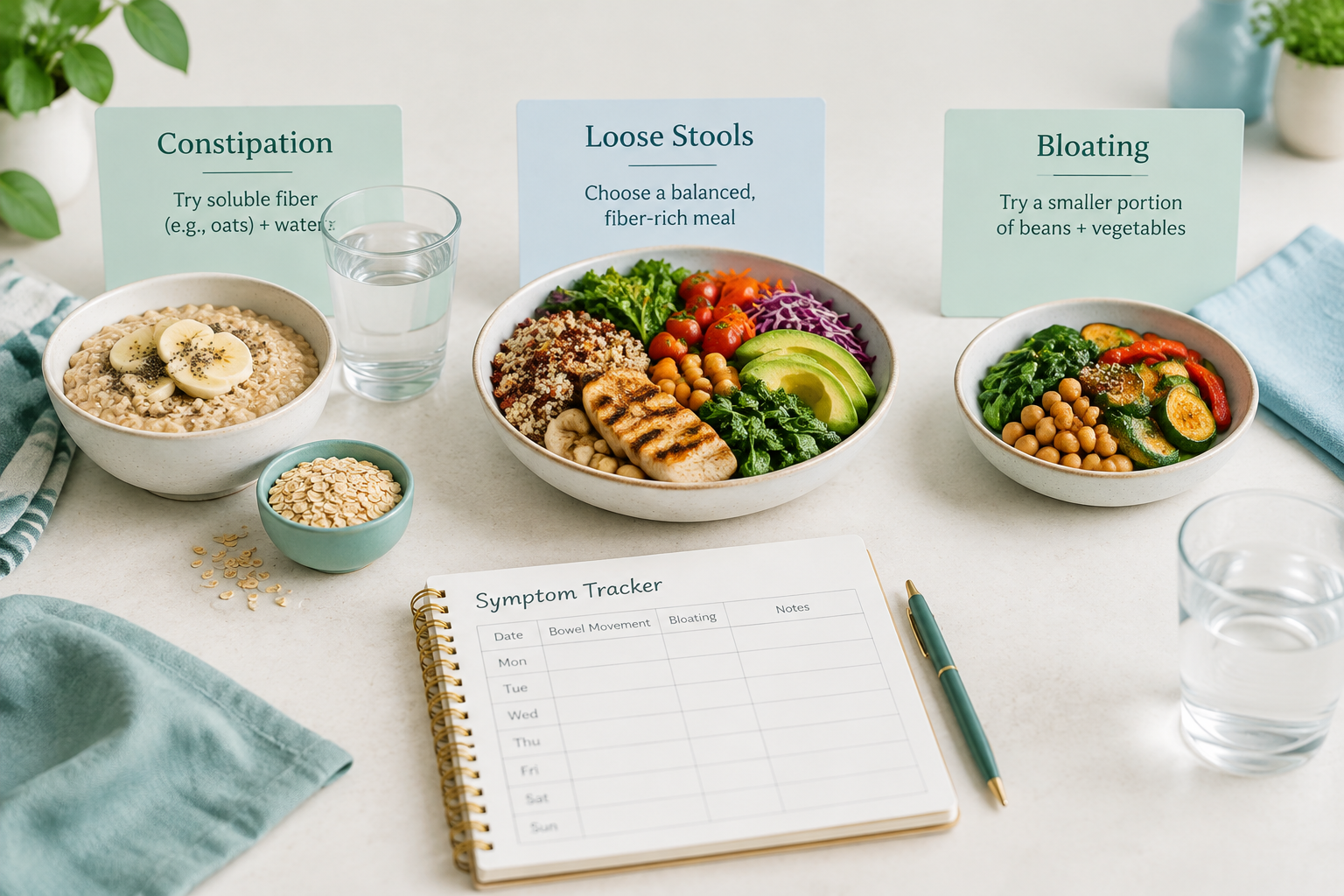
Adjust fiber to the symptom you want to manage rather than chasing a single daily target. For constipation and irregular stools, fiber-rich foods can add bulk and help stool hold water. With loose stools, soluble fiber benefits include absorbing water and forming a gel that can add shape. A mix of whole-food sources also adds vitamins and minerals to meals and snacks you already enjoy.
Symptom-led adjustments can look like this:
- Constipation: Add small portions of fiber-containing foods and keep fiber and hydration in step.
- Loose stools: Emphasize soluble fiber and avoid adding several high-fiber foods at once.
- Bloating or gas: Scale the newest fiber food back to a comfortable portion, let symptoms settle, then increase at a slower pace.
- General digestive support: Spread fiber foods and fluids through the day instead of eating one large serving that causes fullness or gas.
If psyllium repeatedly causes gas, forcing a daily target can make symptoms harder to interpret. Methylcellulose or partially hydrolyzed guar gum may be worth discussing with a clinician, particularly if you have irritable bowel syndrome, also called IBS.
Take each psyllium dose with at least 8 ounces, or 240 milliliters, of water, and avoid taking it just before bed. Whether you need one at all depends on your usual food intake, symptoms, and medication timing.
A short food-and-symptom record can reveal patterns that memory misses:
- Meals and additions: Note usual meals, new fiber sources, and portion sizes.
- Fluids and stool changes: Record drinks, stool consistency, and bowel frequency.
- Symptoms: Track gas, bloating, and abdominal discomfort after foods such as an apple with skin or black beans.
Pause fiber increases and seek healthcare advice for worsening pain, ongoing diarrhea or constipation, unexplained weight loss, blood in the stool, or symptoms that disrupt daily life. A clinician or pharmacist can help you choose a supplement if medicines may be affected.
When Can Fiber Worsen IBS Symptoms?
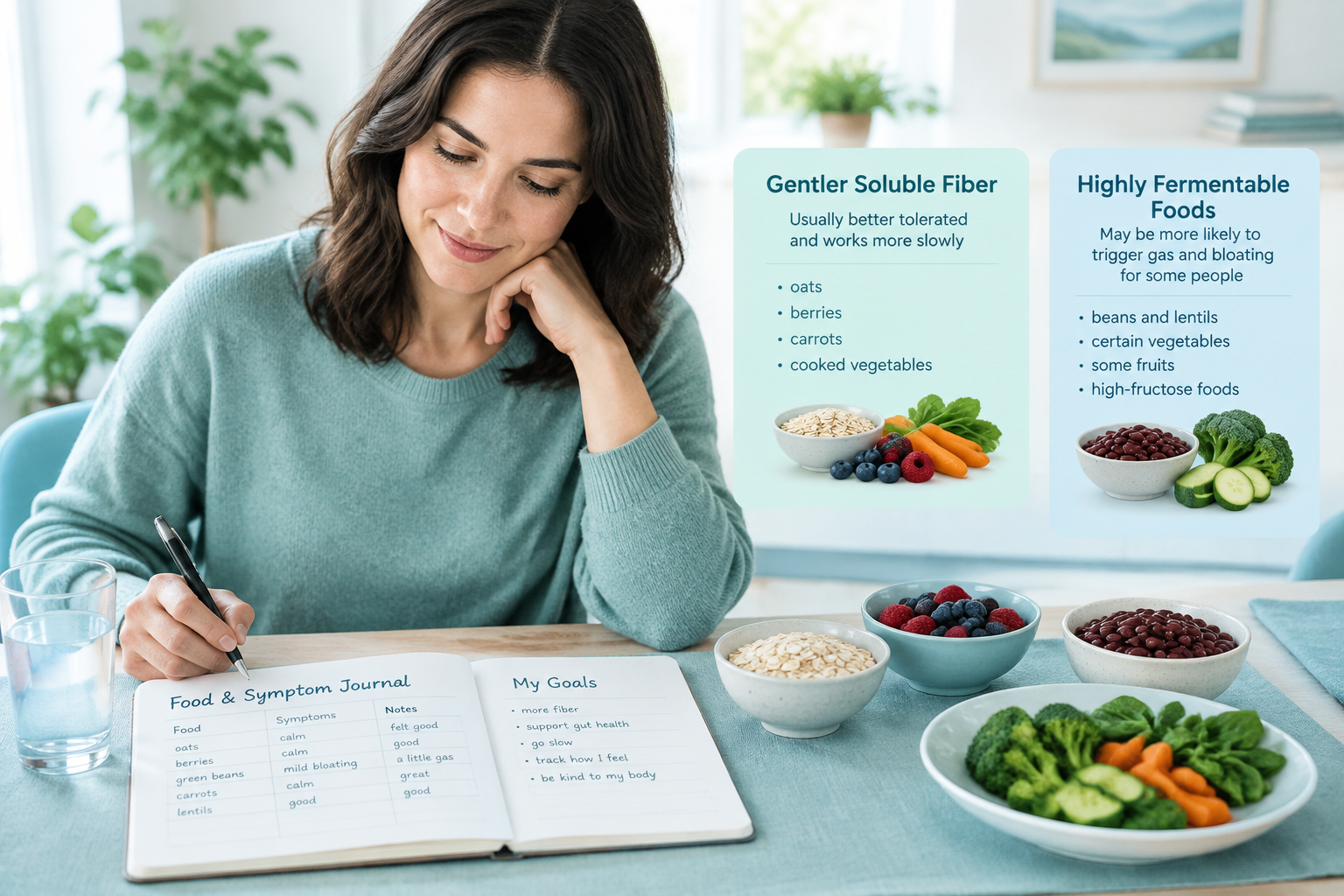
For people whose symptoms include irritable bowel syndrome (IBS), more fiber is not always better. If your usual intake is low, a large jump can give gut bacteria much more material to ferment, leading to bloating from fiber, gas, cramping, urgency, or looser stools.
The type of fiber matters as much as the total amount. Highly fermentable ingredients, including inulin and fructooligosaccharides, can cause too much fiber bloating for some people. Psyllium often improves overall IBS symptoms, but persistent gas after a careful trial may be a reason to discuss non-fermenting methylcellulose or partially hydrolyzed guar gum with a clinician or dietitian.
Increasing fiber slowly gives your gut time to adjust. Add roughly a small amount, then allow one to two weeks to assess the change:
- Pause at the new amount if bloating, diarrhea, or cramping becomes worse.
- Use a smaller increase when symptoms flare instead of pushing toward a universal target.
- Try a different food or fiber source if the same one repeatedly causes symptoms.
Adequate fluids are part of the process when you increase fiber gradually. Without enough liquid, added fiber can harden stools, worsen constipation, and, in severe cases, contribute to a blockage. Stool consistency, pain, gas, and urgency offer more useful feedback than a target that does not match your symptoms (source).
Routine fiber adjustments are not enough when you have any of these concerns:
- Inflammatory bowel disease: Fiber changes may need individualized guidance.
- Prior bowel narrowing or obstruction: Added bulk can be risky.
- Unexplained weight loss, rectal bleeding, persistent severe pain, or a major change in bowel habits: These signs need medical attention beyond dietary changes.
Fiber and IBS are not a simple pairing. Gel-forming fiber for softer stool tends to be tolerated, while fermentable fiber feeds gas, so fiber and bloating in IBS usually points to the fermentable kind rather than to fiber itself (source).
When Should You Pause a Fiber Increase?
Mild, short-lived gas, a sense of fullness, and bulkier stools can be part of adjusting to more fiber. If symptoms become stronger or do not settle, go back to the last amount that felt comfortable rather than pushing through severe discomfort.
Treat stronger symptoms as a cue to pause your increase. Slower changes make it easier to tell whether the amount and type of fiber work for your digestion.
Pause the increase when you notice any of the following:
- Worsening constipation: Fiber needs enough fluid to help stools stay soft and move through the digestive tract. Adding more dietary fiber when stools are hard or less frequent can make constipation worse and, in severe cases, may contribute to a blockage.
- Persistent pain or pronounced bloating: Brief discomfort can pass, but pain or swelling that continues, intensifies, or disrupts normal activities is not a routine adjustment.
- Significant diarrhea: Frequent loose stools can cause fluid loss and may mean the change is not agreeing with your system.
- Dehydration signs: Dizziness, very dark urine, unusual thirst, or weakness need prompt attention, particularly with diarrhea or constipation.
Stop increasing fiber and contact a clinician promptly for severe or persistent abdominal pain, vomiting, a swollen abdomen, or an inability to pass stool or gas. These symptoms can signal a problem beyond a normal fiber response and may need urgent care.
Persistent constipation also warrants medical assessment instead of repeated fiber increases. A symptom-aware approach helps you find an amount your body can tolerate without feeling worse.
Fiber Intake for Digestion FAQs
These FAQs cover fiber intake for digestion, from daily needs and gradual changes to hydration and symptom shifts. They address bloating, constipation, and IBS while recognizing that your best fiber approach may differ from someone else's.
1. Which Foods Give the Most Fiber per Serving?
Legumes are especially fiber-rich foods: a half-cup of cooked black beans has 6.1 grams, kidney beans 6.9 to 7.9 grams, and lentils 5.2 grams. One cup of raspberries has about 8 grams, a small apple with skin 2.8 grams, a cooked artichoke 6.5 grams, and one-half cup of barley 4.2 grams. Add beans, lentils, or chickpeas to soups, salads, and stews, and use almonds, walnuts, chia, flax, or pumpkin seeds as toppings. Nutrition Facts labels best compare packaged high-fiber foods.
2. Is an Apple Enough Fiber Daily?
No. A small apple with its skin provides 2.8 grams of fiber, so it supports your daily total but usually cannot meet your full daily fiber target alone. Wash apples thoroughly and eat the edible skin if it feels comfortable, as fruit and vegetable skins often contain fiber (source). Add whole grains, beans or lentils, vegetables, nuts, seeds, and other fruit across the day. Fiber needs vary by age and sex.
3. Which Fiber Supplement Supports Digestion?
Psyllium is often a practical first supplement for irregular stools because its gel-forming soluble fiber holds water and may help with both hard and loose stools. Start with a small amount, increase gradually, and drink plenty of fluid with each dose to reduce bloating or discomfort. Soluble fiber can also slow digestion and affect blood sugar and cholesterol absorption. If gas persists or IBS symptoms worsen, discuss methylcellulose or partially hydrolyzed guar gum with a clinician or dietitian.
4. How Can I Reach 25 Grams Daily?
Build toward the daily fiber recommendation by spacing fiber-rich foods through the day instead of adding a large amount at one meal. For how much fiber per day, many adults aim for 25 to 38 grams of fiber daily. Start with your usual meals, then add high-fiber foods gradually: oatmeal for breakfast, lentils or chickpeas at lunch, and vegetables with protein at dinner. Plain oatmeal, lentils, black beans, and blackberries provide 2.7, 5.2, 6.1, and 6 grams per serving, respectively. Replace refined grains slowly and ease back if bloating worsens.
5. How Much Fiber Should Older Adults Eat?
Daily fiber intake by age and sex drops a little after 50: about 21 grams for women and 30 grams for men, compared with 25 and 38 grams for younger adults (source). The foods do not change, only the total, and fiber and water intake matter more with age because thirst signals weaken.
6. Does Fiber Help With Constipation, Diarrhea, and Bloating?
Fiber for constipation, diarrhea, and bloating works differently in each case. Fiber for regular bowel movements usually means more of both types plus water. Dietary fiber for loose stools means gel-forming fiber that adds form. Fiber and bloating usually means slowing the increase and favoring less fermentable foods.