


A bowl of oats may help with constipation, while the same soluble fiber can give loose stools more form. Soluble fiber foods support digestion by dissolving in water and forming a gel that holds fluid in the digestive tract. That action can make hard stool easier to pass without acting like a stimulant.
Beans, inulin-rich foods, and some fruit fibers can also ferment in the colon and cause gas, especially after a quick increase. Oats and psyllium tend to be less fermentable options for many people with bloating or IBS. Practical food choices and gradual portion changes can help you find a routine that supports bowel regularity without adding unnecessary discomfort.
Soluble Fiber Foods Key Takeaways
- Soluble fiber forms a gel that holds water in the digestive tract.
- It may soften hard stools and add form to loose stools.
- Oats, barley, beans, fruit, and psyllium provide soluble fiber.
- Fermentable fibers can cause gas and bloating when intake rises quickly.
- Oats and psyllium may cause less gas than beans or inulin-rich foods.
- Gradual increases and regular fluids can improve fiber tolerance.
- Most plant foods contain both soluble and insoluble fiber.
How Does Soluble Fiber Support Digestion?
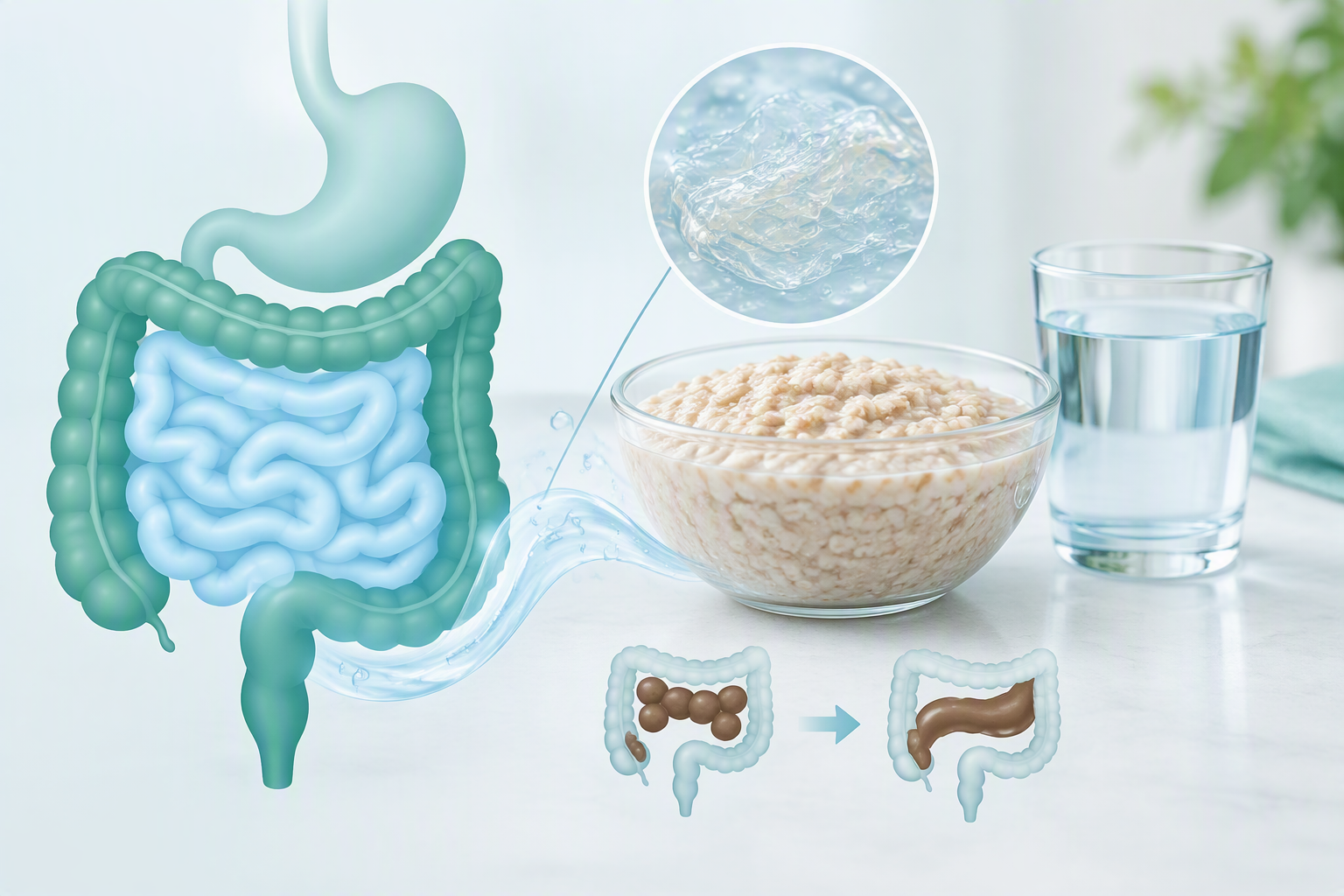
Soluble fiber supports digestion by dissolving in water and becoming a thicker, gel-like material in your stomach and upper small intestine. This gel-forming fiber changes the texture of digestive contents instead of working as a harsh stimulant.
That thicker texture is central to how soluble fiber works. Soluble fiber and stomach emptying are related because the gel can slow how quickly food leaves the stomach and how rapidly nutrients, including glucose, are absorbed. The effect varies with the fiber source, portion size, and the rest of the meal. Soluble fiber can also bind fats in the digestive tract, which is why soluble fiber and cholesterol are often discussed together (source)).
eating for everyday gut comfort helps connect food choices with the symptoms that interrupt your day, rather than treating all high-fiber foods alike.
Soluble fiber and digestion may look different when your bowel habits shift. The gel holds water in hard, dry stool, which may make it easier to pass. It can also absorb excess fluid in loose stool, helping stool take on more form. Insoluble fiber stays more intact and mainly adds bulk, supporting regularity in a different way. Most plant foods contain a mix of both types.
Fiber type | Main digestive role | Possible stool effect |
|---|---|---|
Soluble fiber | Forms a gel and may be fermented in the colon | May soften dry stool or add form to loose stool |
Insoluble fiber | Adds bulk to material moving through the digestive tract | May support regular bowel movements |
Food sources vary in the amount and mix of fiber they provide. One-half cup of cooked barley contains about 0.9 grams of soluble fiber, while one-half cup of dark kidney beans contains about 2.8 grams, and both foods also provide insoluble fiber (source)).
Some soluble fiber reaches the colon, where gut bacteria ferment it and may influence gut microbiome activity (source)). Add fiber gradually and pay attention to hydration and tolerance, especially if constipation, loose stools, bloating, or irritable bowel syndrome symptoms are part of your routine.
What is soluble fiber, in one line: the part of plant food that dissolves in water and forms a gel, which is why soluble fiber absorbs water, slows digestion, and delays stomach emptying. The benefits of soluble fiber for digestion follow from that gel: soluble fiber and stool consistency improve in both directions, and soluble fiber and satiety go together because the gel helps you feel full longer.
What Happens When Soluble Fiber Ferments?
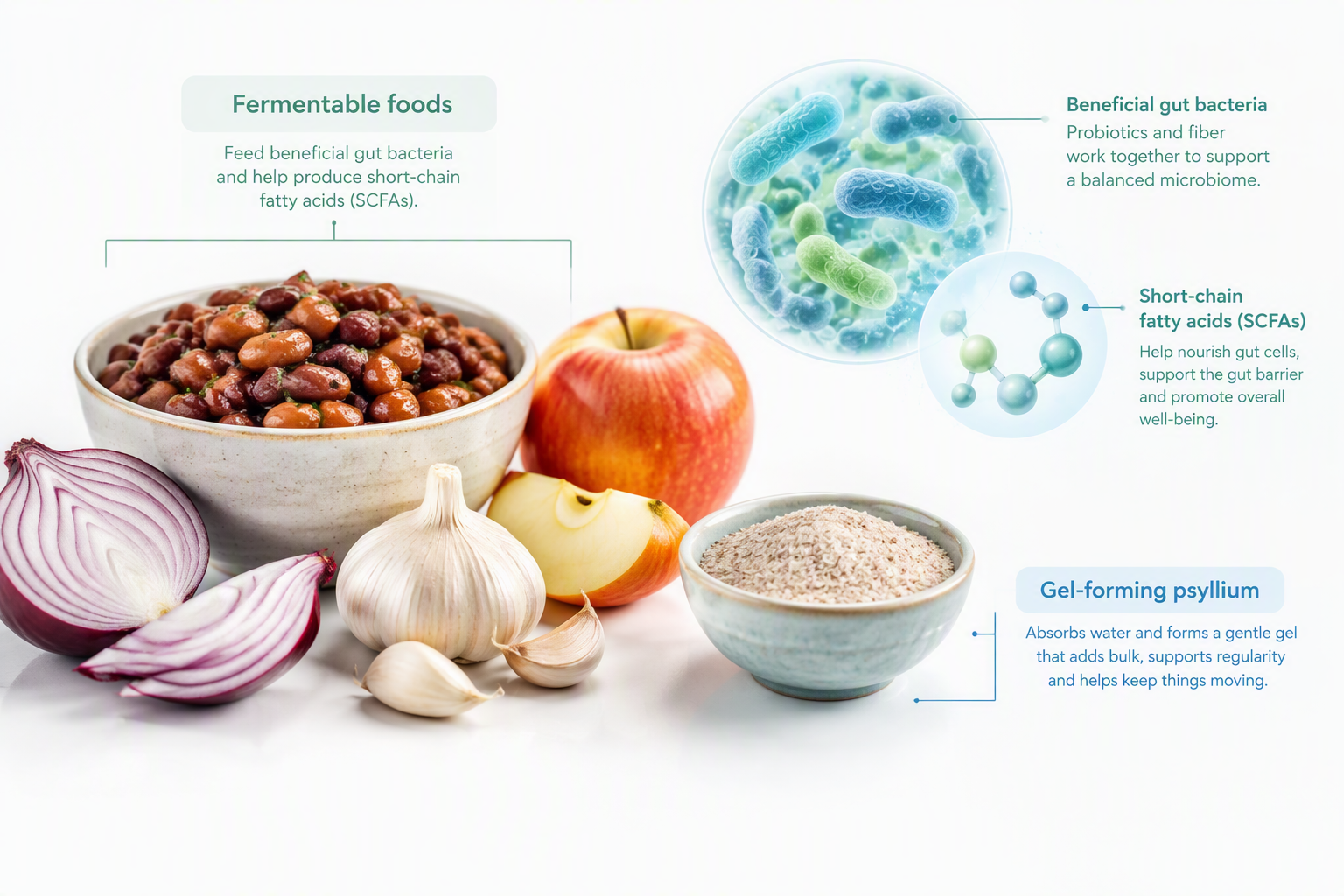
In the colon, gut bacteria break it down through soluble fiber fermentation, producing short-chain fatty acids that fuel cells in the colon lining and help support normal bowel function (source)). As gut bacteria there break it down through soluble fiber fermentation, they produce short-chain fatty acids that fuel cells in the colon lining and help support normal bowel function.
Gas is a normal result of this process. A quick increase in fermentable fibers can bring bloating, pressure, or more gas during the first few weeks, especially if your gut is not used to them.
More fermentable soluble fibers include:
- Inulin: Found in foods such as onions, garlic, and chicory root. – Beans and other legumes: Nutritious choices that can produce more gas as bacteria ferment their fiber. – Some fruit pectins: Present in fruits such as apples and citrus.
Feeling gassy after eating these foods does not automatically mean they are a poor fit. Often, the portion size or speed of change is the issue.
A gel-forming fiber behaves differently. Psyllium, and oat beta-glucan to some degree, form a thick gel with water and are largely nonfermented, so they tend to cause less gas than inulin or beans for many people. That gel can also help stool move more comfortably when you drink enough fluids.
Viscous soluble fiber can bind bile acids in the gut, which may modestly lower low-density lipoprotein (LDL) cholesterol.
If gas is your main concern, begin with a small serving of psyllium or oats before adding larger portions of beans or inulin-rich foods. Gradual changes are usually easier on a sensitive digestive system.
This is also how soluble fiber works as a prebiotic: gut bacteria ferment soluble fiber and the short-chain fatty acids they make support colon cells, so soluble fiber and gut microbiome health are one process (source). Soluble fiber and cholesterol management and soluble fiber and blood sugar sit on the gel side rather than the fermentation side, since viscous fiber slows glucose absorption and binds bile acids.
Which Soluble Fiber Foods Fit Your Symptoms?
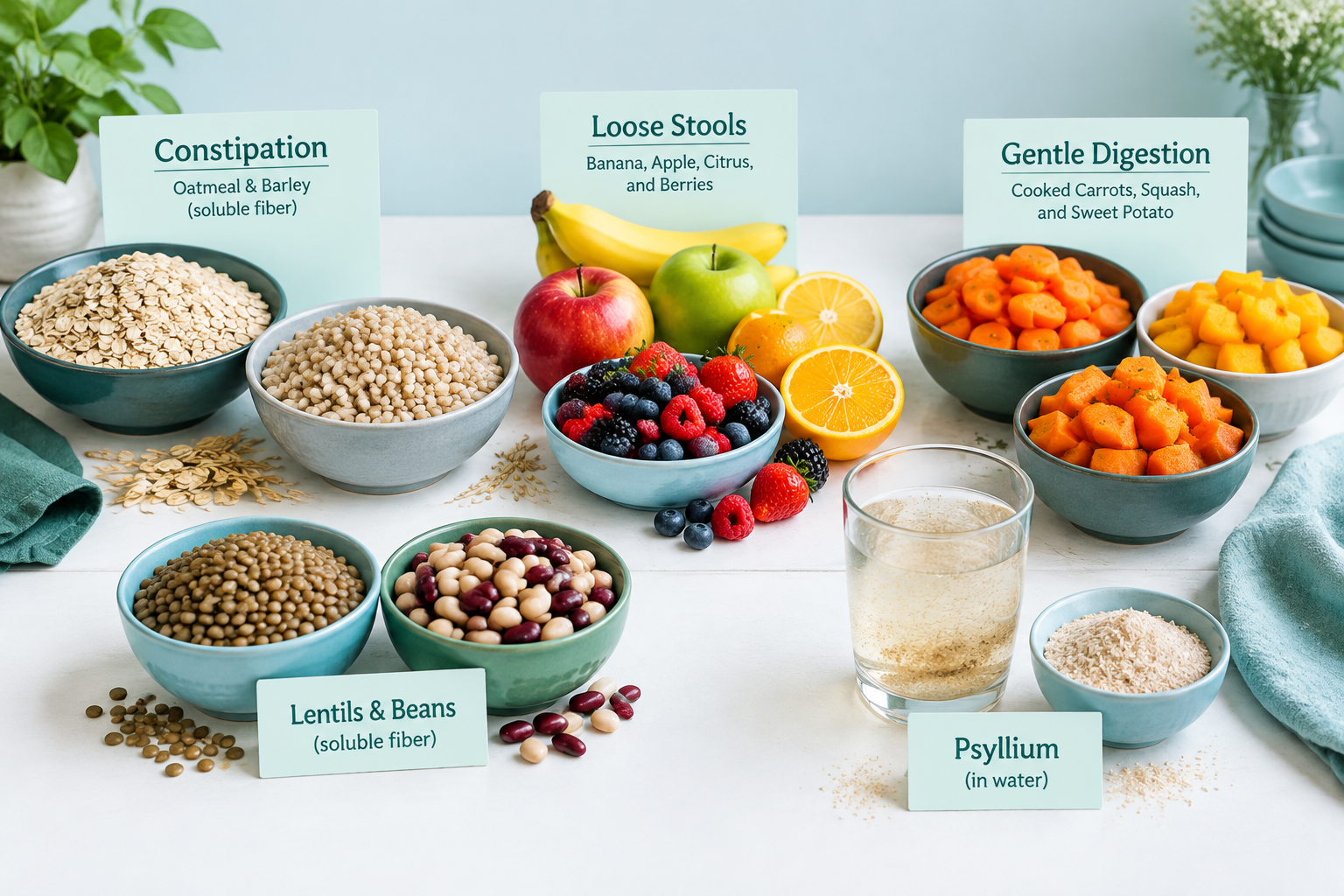
Because fermentation and gas tolerance vary, choose soluble fiber foods by the symptom you want to support, rather than by a single “best” food. Match the portion to your symptoms and tolerance, and with IBS, start with one familiar choice and a modest portion because tolerance matters as much as fiber content.
USDA FoodData Central lists the following soluble-fiber amounts for common foods:
Food | Portion | Soluble fiber |
|---|---|---|
Plain oatmeal | 1/3 cup | 1.4 grams |
Oat-bran cereal | 3/4 cup | 2.2 grams |
Apple with skin | 1 small | 1 gram |
Applesauce | 1/2 cup | 0.7 gram |
Blackberries | 3/4 cup | 2 grams |
Avocado | 1/8 fruit | 0.5 gram |
Banana | 1/2 small | 0.3 gram |
Black beans, cooked | 1/2 cup | 2.4 grams |
Kidney beans, cooked | 1/2 cup | 2.8 grams |
Chickpeas, cooked | 1/2 cup | 1.3 grams |
For constipation or irregularity, oats and soluble fiber make an easy breakfast routine. Plain oatmeal, rolled oats, steel-cut oats, and oat-bran cereal contain beta-glucan. Cooked barley also works, but it contains gluten.
Soluble fiber for diarrhea can include pectin-rich apples, pears, citrus, bananas, strawberries, blueberries, and blackberries, plus psyllium mixed with plenty of fluid. Skins add fiber, while peeled apples and applesauce still provide pectin.
Beans, lentils, and peas, including chickpeas, split peas, and edamame, are nutritious sources of soluble fiber and insoluble fiber. Start below a full serving, especially with well-cooked, rinsed canned legumes, if gas is a concern.
For bloating, preparation can matter more than choosing foods high in soluble fiber. Cooked carrots, soft-cooked broccoli or Brussels sprouts, sweet potato, winter squash, fruit, and oats may feel easier to manage. Fiber-rich foods to build meals around can help you vary meals without relying on one food.
Chia seeds and flax seeds fit easily into oatmeal, yogurt, or smoothies. Soak chia with plenty of fluid, and choose ground flaxseed over whole seeds. Most plant foods contain both fiber types, so a varied mix you tolerate consistently is the practical goal.
The best soluble fiber foods for a gentle start are oats, barley, beans, lentils, apples, pears, citrus fruits, berries, carrots, chia seeds, and flaxseeds. Fruits high in soluble fiber and vegetables high in soluble fiber tend to be the pectin carriers, while legumes high in soluble fiber bring the most per serving and the most gas.
How Can You Add Soluble Fiber Gently?
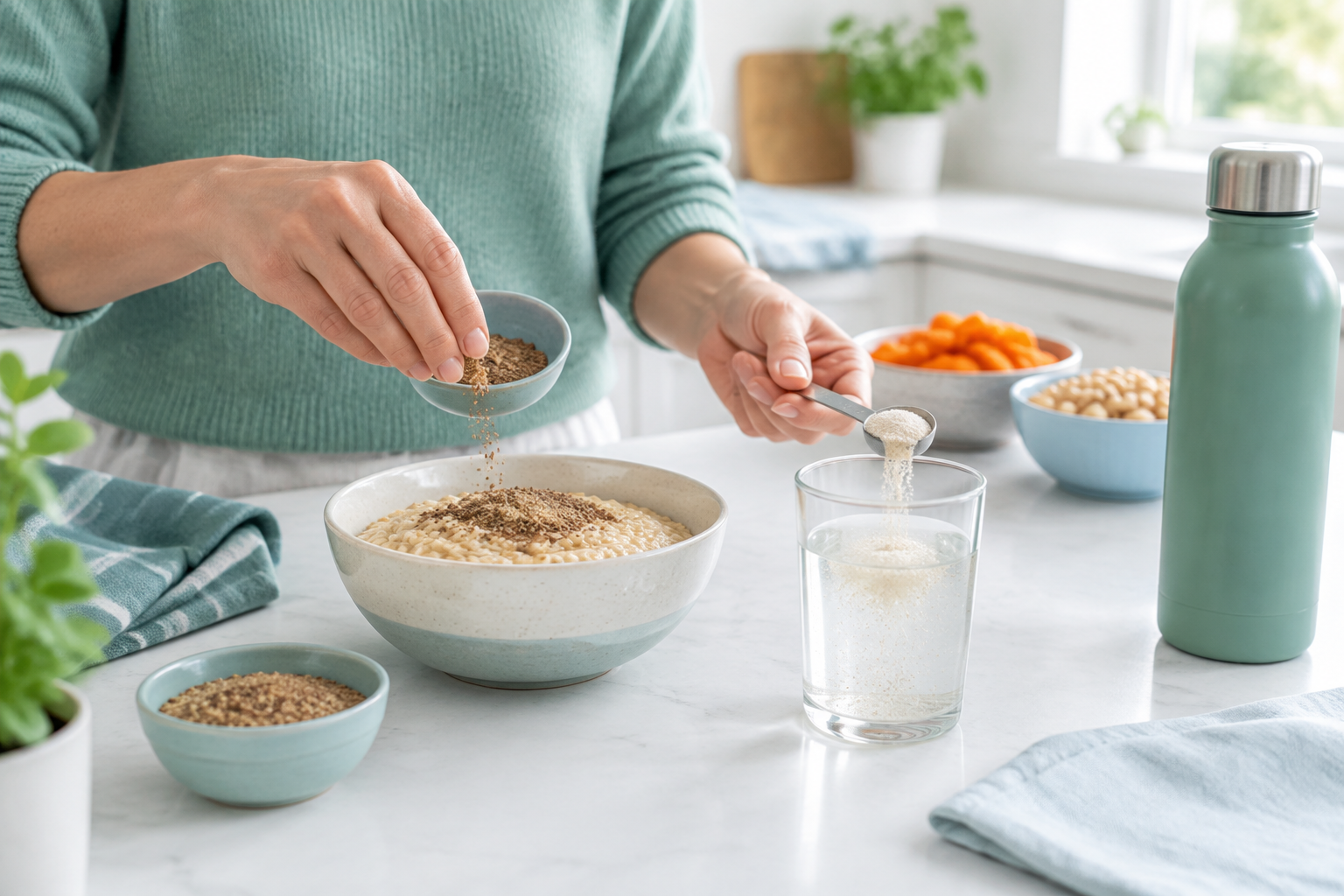
After choosing foods that fit your symptoms, start with a single, familiar source of soluble fiber instead of changing several foods at once. Try cooked oatmeal at breakfast, an apple or orange, or a few spoonfuls of beans, then keep that portion steady for several days before adding more.
A low-and-slow approach can make foods high in soluble fiber easier to tolerate:
- Choose softer foods: Begin with cooked oats, barley, lentils, beans, carrots, or soft fruit rather than large servings of raw, coarse foods. Soak dried beans, rinse canned beans, and cook them until soft.
- Drink fluids regularly: Gel-forming fiber draws in water, which can help stools stay softer and more regular. Water is a practical default, while too little fluid may worsen constipation or abdominal discomfort (source).
- Match the portion to your symptoms: Soluble fiber for constipation is most helpful when increases are gradual and paired with enough fluid. With loose or watery stools, modest amounts may absorb extra moisture and add form.
Gas, bloating, or cramping does not necessarily mean fiber is a poor fit. Go back to the last comfortable amount, hold there longer, and increase more slowly. Oats or cooked vegetables may be easier than beans or certain fruits when soluble fiber and IBS make food tolerance less predictable. Chia seeds and flax seeds can add fiber too, but introduce them separately and in small portions.
If food changes are not enough, psyllium as a soluble fiber can be an optional next step. Psyllium is a gel-forming fiber that retains water and may soften and bulk stool. Use the smallest label-directed amount, mix it thoroughly with fluid, and never take it dry.
Personal guidance can help with IBS, ongoing constipation or diarrhea, major food restrictions, or worsening symptoms. Seek prompt medical care for blood in stool, unexplained weight loss, severe or persistent pain, vomiting, fever, or bowel-habit changes that last more than a few weeks (source).
Soluble fiber for bloating and gas is a portion question: gradually increase fiber, keep hydration and fiber together, and choose gel-forming foods over the most fermentable ones while a flare settles (source).
How Does Soluble Fiber Compare With Insoluble Fiber?
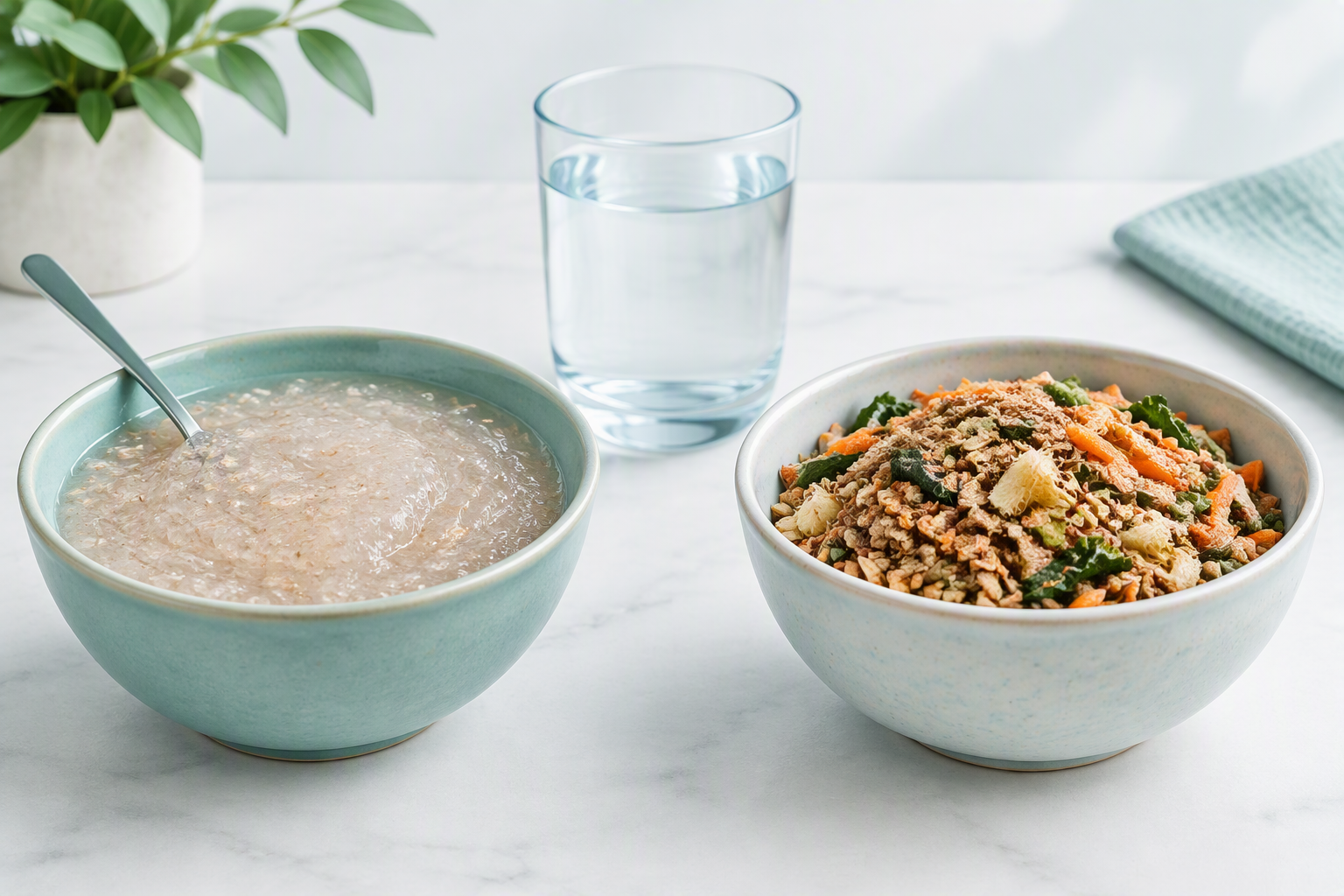
When choosing between fiber types, soluble fiber can be especially useful when stool consistency is your main concern. By holding water, it can soften hard stool and give loose stool more form. That is why soluble vs insoluble fiber is not a choice between “good” and “bad” fiber. The type that feels more helpful may depend on whether constipation, loose stools, or an irregular pattern is bothering you most).
Insoluble fiber is often more useful when your goal is to increase stool bulk and support movement through the digestive tract. Most plant foods contain both forms of fiber, so a food’s balance matters more than its label. Beans provide a mix of soluble and insoluble fiber, and apples contain both in the flesh and skin. A wider range of insoluble fiber sources can help you identify foods that are more likely to add bulk than form a gel.
Psyllium husk can provide a consistent, measured source of soluble fiber. Whether fiber comes from food or a supplement, a rapid increase can cause gas, bloating, or cramping, particularly if your usual intake is low. Add small amounts gradually and drink enough fluids for the fiber to hold water. A modest change that you repeat consistently is usually easier on digestion than a sudden large serving.
The difference between soluble and insoluble fiber is water: one dissolves and gels, the other stays intact and adds bulk. Soluble fiber for loose stools and fiber for stool regulation in general lean on the gel, while insoluble fiber leans on transit.
Soluble Fiber Foods Digestion FAQs
Common questions about soluble fiber foods and digestion focus on symptoms, portion sizes, and gradual dietary changes. These FAQs address constipation, loose stools, bloating, and practical food choices that can fit your routine.
1. Which Food Has the Most Soluble Fiber?
No single food ranks highest without defining the serving size and type of soluble fiber. Psyllium is a concentrated, gel-forming fiber often used to help regulate bowel movements. For everyday foods, 3/4 cup of oat-bran cereal provides 2.2 grams of soluble fiber, while 1/2 cup of kidney beans provides 2.8 grams. Soaked chia forms a gel and needs plenty of fluid, while ground flaxseed mixes easily into foods. Choose the option you tolerate and add it gradually if symptoms are sensitive.
2. Is Soluble or Insoluble Fiber Better for Constipation?
Neither type is best for everyone. Soluble fiber for constipation may be a good starting point when stools are dry or hard because soluble fiber dissolves in water, holds fluid, and forms a gel that can soften and shape stool for easier passage. Adequate fluids help this process.
Insoluble fiber passes through the digestive tract largely unchanged, adding bulk that may help with slow transit. If bloating is common or fiber feels hard to tolerate, increase it gradually and adjust the mix based on stool consistency and comfort.
3. Can Soluble Fiber Cause Gas?
Yes. A sudden increase in soluble fiber can lead to gas, bloating, or cramping, especially when fermentable fiber is hard for you to tolerate. Soluble fiber and IBS can be a tricky combination because gut bacteria ferment some fibers and create gas.
Smaller portions, gradual increases, well-cooked beans, and rinsed canned beans may be easier on your system. Drink enough fluids so soluble fiber can form its gel, since too little fluid may worsen constipation. Ongoing severe or disruptive symptoms warrant a conversation with a healthcare professional.
4. What Are Signs of Low Soluble Fiber?
Hard, dry stools, straining, or irregular bowel habits can suggest low dietary fiber, but they cannot confirm low soluble fiber alone. Soluble fiber forms a gel in water, while insoluble fiber largely passes through the digestive tract and adds stool bulk. A diet that often misses beans, oats, barley, fruits, and vegetables may lack variety. General targets are about 25 grams daily for women and 38 grams for men, though needs vary by age and energy intake. Persistent, new, or troubling symptoms need medical assessment.
5. Does Soluble Fiber Lower Cholesterol and Blood Sugar?
Yes, modestly. Viscous soluble fiber binds bile acids so the body draws on circulating cholesterol to replace them, and the same gel slows glucose absorption after meals, which helps soluble fiber prevent blood sugar spikes. Oats, barley, beans, and psyllium are the foods studied most.
6. How Much Soluble Fiber Do You Need Daily?
There is no separate target. The recommended daily fiber intake of 25 grams for women and 38 grams for men covers both types, and most fiber-rich diets land at roughly a quarter to a third soluble. Increase daily fiber intake as a whole, and the soluble share follows.