


Skipping breakfast, grazing through the afternoon, then eating a large late dinner can leave bloating, reflux, and irregular stools feeling harder to predict. Gut-friendly meal timing usually means regular, satisfying meals with breaks between them, not a rigid fasting schedule. The MMC is a between-meal pattern of gut movement that helps clear residual material after eating.
A fixed meal rule cannot account for a rushed commute, family dinner, true hunger, or symptoms that vary with IBS. Small adjustments to meal size, snack timing, and dinner timing can protect comfortable gaps without turning food into a schedule to police. An earlier moderate dinner and time upright after eating may be especially helpful when reflux disrupts sleep.
Gut-Friendly Meal Timing Key Takeaways
- Regular meals can support the gastrocolic response and more predictable bowel urges.
- Leave 3 to 5 hours between meals when appetite and symptoms allow.
- Avoid continual grazing when possible to preserve meal-free periods for the MMC.
- Choose satisfying portions, since oversized meals can worsen fullness, bloating, and reflux.
- Finish dinner 2 to 3 hours before lying down to reduce reflux discomfort.
- Use a planned snack when hunger or a late dinner makes a long gap impractical.
- Change meal timing, portions, or snacks one at a time to identify symptom patterns.
How Do Regular Meals Support the Gastrocolic Response?
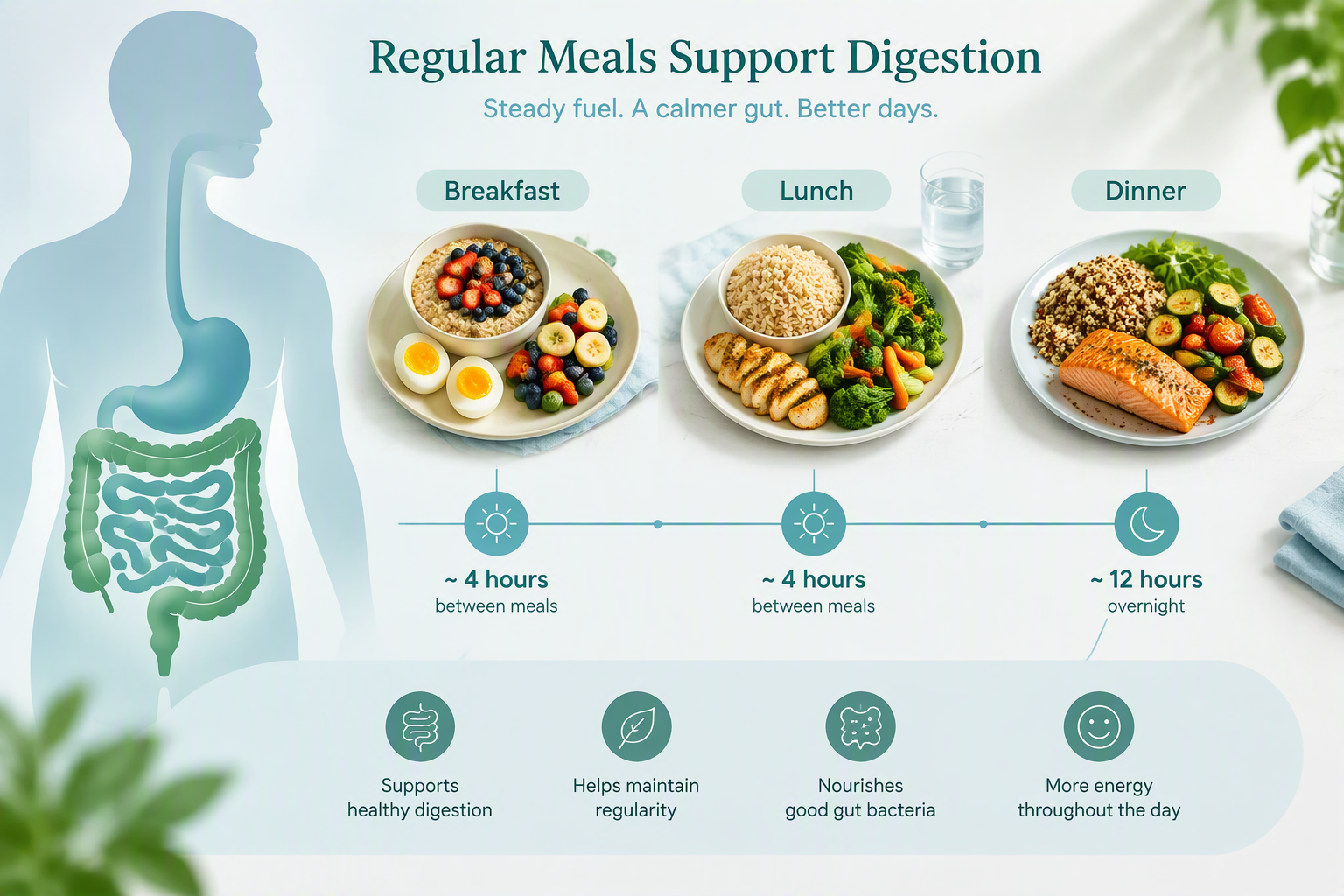
A regular meal pattern can make digestive signals feel less random, but the best routine follows your appetite and symptoms rather than a rigid clock. The gastrocolic response is the colon’s natural reaction to eating. A meal can prompt colon contractions and a bowel urge, so predictable eating occasions may support smoother digestion and more regular stools without putting bowel movements on a fixed timetable.
Meal timing and digestion can benefit from repeated cues, even when breakfast or dinner shifts with real life. the gut health diet meal by meal places meal timing alongside food choices that can affect bloating, reflux, and stool changes. Repeated meals may also help your stomach prepare digestive secretions and movement.
A three-to-five-hour gap between meals is a flexible starting point when your day allows. This gives the stomach and small intestine time to process food and allows the migrating motor complex (MMC), a between-meal clearing wave, to move leftover material along, while avoiding grazing can help protect these fasting periods because frequent or substantial snacks may interrupt them.
Comfortable portions matter as much as spacing. Large meals can cause uncomfortable fullness, bloating, reflux, or an urgent bowel response, while very small meals throughout the day can become near-continuous eating and still leave you unsatisfied.
When deciding how often you should eat, use your body’s patterns as the guide:
- Feeling heavy before a meal: Lengthen the gap a little or reduce the prior portion.
- Reflux or intense hunger: Avoid routinely delaying food past hunger, which can worsen acidity and lead to overeating later.
- Bloating, fullness, or bowel urges: Adjust timing gradually and build a consistent daily eating schedule around meals that leave you comfortably hungry, not shaky, painfully hungry, or still overly full.
Drinking water with meals and getting adequate fiber from tolerated foods can support stool bulk and regularity. Digestive activity generally slows later at night, so an earlier, moderate dinner may better support optimal digestion than a large late meal.
Meal timing for gut health starts here: a gut-friendly meal schedule with regular gaps trains the gastrocolic response, so meal timing for constipation often means a real breakfast at the same hour (source).
How Can You Protect the Migrating Motor Complex?
Those meal-free intervals support the migrating motor complex, which supports normal gut motility during fasting periods. Although it is often called the MMC gut housekeeping wave, the migrating motor complex helps maintain normal gut motility, and you do not need to feel it working or try to make it happen.
Time between meals digestion can matter when you are building a practical routine. Rather than grazing continuously, aim for three to five hours between meals when that fits your appetite, medications, symptoms, and family schedule. Meals with protein and fiber-containing foods you tolerate may keep you satisfied longer, though preventing hunger and eating enough matter more than following a strict clock.
A flexible routine may include:
- Substantial meals: Build meals that are filling enough to reduce the urge for repeated nibbling.
- Plain water between meals: Water fits a meal-free interval, while foods and calorie-containing drinks generally restart digestion.
- One planned snack when needed: A snack can make sense with hunger, exercise, pregnancy, medications, or a demanding day. One satisfying choice is often easier on your routine than frequent grazing.
Avoiding grazing means creating breaks from eating, not restrictive fasting. Some households may find that an earlier dinner and later breakfast create a longer overnight fasting window, but possible benefits for the intestinal lining or microbiome remain promising rather than established. Regular spacing does not require a long daily fast or a narrow eating window.
Frequent snacking can shorten fasting time, but it does not cause, diagnose, or confirm small intestinal bacterial overgrowth (SIBO). Bloating and gas can also relate to food intolerance, constipation, reflux, or irritable bowel syndrome (IBS).
Persistent bloating, abdominal pain, diarrhea, constipation, unintended weight loss, or a marked bowel-habit change deserves healthcare assessment. A steady, realistic meal pattern can help you notice symptom patterns without making meals feel rigid.
Healthy meal spacing means four to five hours between meals so the cleaning wave can run (source). Meal spacing is the science-backed meal timing lever most people have never heard of.
What Does a Gut-Friendly Eating Schedule Look Like?
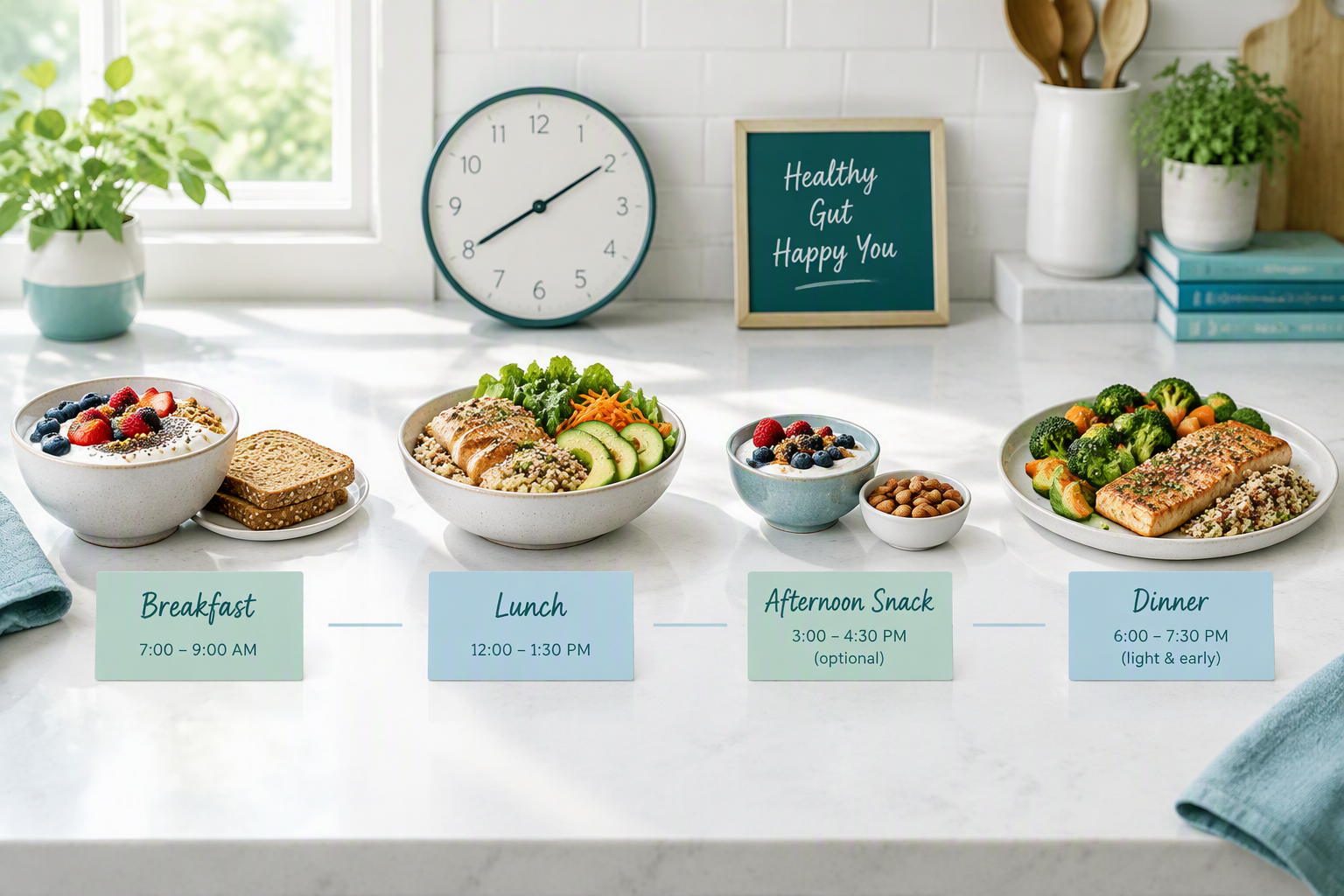
With fasting breaks protected between meals, a consistent daily eating schedule is more useful than a perfect clock. Have your first meal within one to two hours of waking, then leave roughly three to five hours between meals when appetite, work, and symptoms allow. A disrupted day is part of life, not a failure.
Breakfast timing ends the overnight break without asking your stomach to handle a heavy meal. A balanced breakfast with protein and fiber might be eggs with whole-grain toast and fruit, Greek yogurt with oats and berries, or a smoothie made with milk or yogurt, fruit, oats, and nut butter. Even a small breakfast can be enough on a rushed morning.
A flexible daytime rhythm can look like this:
Meal | Typical timing | Practical approach |
|---|---|---|
First meal | Within one to two hours of waking | Choose a protein- and fiber-containing breakfast. |
Lunch | Around 12:00 to 1:30 p.m. | Make this your most substantial meal when practical. |
Optional snack | Around 3:00 to 4:00 p.m. | Eat when hunger, a late dinner, or evening overeating calls for it. |
Dinner | Around 5:30 to 7:00 p.m. | Keep it lighter than lunch when reflux or fullness is an issue. |
Lunch timing often falls four to five hours after breakfast. A nutrient-dense lunch built around protein, a complex carbohydrate, and cooked vegetables can shift more of your intake earlier in the day. Chicken or tofu with rice or potatoes and roasted carrots or zucchini is a practical option.
An afternoon snack is optional, not automatic:
- Fruit with nuts offers a small protein-and-fiber pairing.
- Yogurt with berries can fit easily into a workday.
- Whole-grain crackers with cheese can bridge a long gap without replacing dinner.
Dinner usually lands three to five hours after lunch, though commutes and family meals may shift it. Baked fish or tofu with cooked vegetables and modest rice, or soup with a sandwich, may feel easier than a rich catch-up meal before lying down.
A night fasting window means pausing routine grazing after dinner until breakfast, with water or other non-caloric drinks if desired. This spacing may support the migrating motor complex between meals. Persistent hunger, worsening symptoms, or medical dietary needs may call for a more individualized routine.
An example gut-friendly meal schedule: breakfast within an hour of waking, lunch four to five hours later, dinner at least three hours before bed, water between meals. That is the ideal daily meal schedule for digestion for most people, and a gut-healthy meal plan is just food fitted into it.
How Should You Adjust Timing for Bloating or Reflux?

When bloating or reflux disrupts a consistent schedule, meal timing for bloating or reflux should fit your workday, hunger, bedtime, and the symptom that disrupts you most. A regular rhythm is often more useful than a strict fasting plan, since skipping meals and bloating, stomach discomfort, or pain can occur together for some people.
For meal timing for acid reflux, finish eating before bed by leaving at least 2 to 3 hours between dinner and lying down (source). If nighttime heartburn is frequent, allow a longer gap between dinner and lying down, and read up on heartburn that keeps coming back, since frequent symptoms are a condition in their own right.
Late night eating and digestion can be uncomfortable after a very large or rich meal. A smaller dinner, or an earlier meal followed by a modest familiar snack, may feel better than saving most of your food for nighttime.
These adjustments can support a regular meal schedule IBS routine without treating every symptom alike:
- Reflux or poor sleep: Choose a lighter dinner with foods you tolerate, such as a simple protein and cooked vegetables, and remain upright after eating.
- Bloating or IBS pain: Start by reducing oversized portions, especially when your abdomen feels sensitive to fullness.
- Constipation: Keep daytime meals consistent and leave unhurried time after a meal for a bathroom visit.
- Diarrhea: Smaller portions may be easier before commuting, exercise, or bed, when urgency would be most disruptive.
An afternoon snack can prevent a long workday from leading to an oversized dinner. If mild hunger appears near bedtime, water or non-caffeinated herbal tea may be enough, while real hunger may call for a small, familiar snack.
Change dinner time, portion size, or snack timing one at a time, then use a food and symptom log to spot patterns. Meal timing for better sleep remains personal, particularly with IBS (source)).
Seek medical evaluation for persistent reflux, worsening bloating, unexplained weight loss, trouble swallowing, bleeding, or ongoing bowel changes.
Meal timing to reduce bloating means smaller, evenly spaced meals. Meal timing for reflux means an earlier dinner. Meal timing for IBS combines both, since IBS meal timing problems usually come from long gaps followed by a large meal.
How Can You Keep a Meal Routine on Busy Days?

When work or travel shifts symptom-based meal adjustments, busy days call for a flexible rhythm rather than a rigid meal clock. Meal timing and digestion may feel steadier when the gaps between meals stay fairly consistent, even if an early meeting, flight, or night shift moves the whole pattern. Base your first meal on when you wake, not on a standard breakfast hour. Frequently shifting both sleep and eating times can create social jet lag and disrupt your body clock.
Portable food helps you avoid an overly long stretch without eating during commutes, meetings, and travel delays. Snacks that fit a meal schedule can pair a tolerated fiber source with protein and satisfying fat before hunger becomes urgent. Useful options include:
- Oats with yogurt, if both suit your digestion.
- A banana with peanut butter.
- A certified low-FODMAP snack bar.
- Leftovers packed as a small meal.
Skipping meals and bloating can become linked when intense hunger leads to rushed eating or an oversized late meal. Keep dietary fiber in your routine, adjusting the type and amount to your own tolerance instead of avoiding food altogether.
When dinner is much later than usual, move more of your food earlier in the day or have a substantial whole-food snack. A light dinner may feel better than making a late meal your largest, particularly when reflux or bloating tends to flare. Earlier meals also give you more time to remain upright and active afterward.
Late meals often feel easier with a few practical adjustments:
- Sit down when possible and eat at a slower pace.
- Chew thoroughly instead of eating while rushing between tasks.
- Give yourself 15 to 20 minutes to eat, then optionally take a short walk of about 20 minutes or stand while tidying afterward (source).
- Avoid lying down immediately after eating, especially when reflux is a concern.
A routine that works with your job, family meals, sleep, and symptoms is the one you can maintain.
Work schedule and meal timing collide most days. A flexible eating window of ten to twelve hours, anchored by breakfast and dinner, survives a busy week better than exact meal times. Sleep schedule and meal timing go together, since circadian rhythm and digestion run on the same clock.
Gut-Friendly Meal Timing FAQs
These FAQs cover practical meal-timing concerns, helping you fit regular meals around work, family routines, and changing digestive symptoms without relying on a rigid schedule.
1. What Is the 3-3-3 Meal Rule?
The informal 3-3-3 meal rule means eating 3 meals about 3 hours apart without continual snacking. It is not a medical standard or a treatment for IBS, bloating, or constipation. The time between meals for digestion matters because the migrating motor complex, a fasting “housekeeping” pattern, may begin after about 3 to 4 hours without food. Three to five hours between meals suits many people, but how often should you eat also depends on reflux, medication, exercise, and your symptoms.
2. Is Dinner at 5:30 Too Early?
No. A 5:30 p.m. dinner can work well when it suits your schedule, leaves you satisfied, and helps you finish eating before bed. A light dinner may be more comfortable than late night eating and digestion challenges, particularly if you remain upright afterward. For meal timing for acid reflux and meal timing for better sleep, avoid lying down soon after eating. If hunger returns, adjust the meal’s balance or plan a light snack rather than following a schedule that leaves you overly hungry.
3. Should You Eat Before Morning Exercise?
A small, familiar snack can help before a longer or high-intensity morning workout, especially if exercising fasted leaves you shaky, nauseated, light-headed, overly hungry, or worsens symptoms. For a brief, easy session, delaying breakfast may feel more comfortable if you can eat afterward. Shape breakfast timing around your sleep, work routine, and reflux, bloating, constipation, or IBS symptoms. A balanced breakfast with protein and fiber after your workout can include eggs, yogurt, or a simple smoothie.
4. Does Intermittent Fasting Affect Gut Motility?
Intermittent fasting may affect gut motility by allowing the migrating motor complex, an MMC gut housekeeping wave, to move residual food and bacteria between meals after 3 to 4 hours without food and during an overnight fast (source). A 12-hour fasting window, such as dinner at 7:00 p.m. and breakfast at 7:00 a.m., can be a moderate starting point for eating window and gut health. Adapt a regular meal schedule for IBS to your sleep, work, and symptoms. Longer gaps may worsen reflux, pain, bloating, constipation, diarrhea, or gut microbiome concerns.
5. What Is the Best Time to Eat Meals for Digestion?
The best time to eat meals for digestion is a regular time. Breakfast within an hour of waking, meals four to five hours apart, and dinner at least three hours before bed is a healthy eating schedule for most guts. What to eat and when to eat it matter together, so a gut-friendly meal timing plan pairs each slot with a real meal.
6. Does Meal Timing Help With Weight Management?
Meal timing for weight management overlaps with digestion: eating earlier in the day and keeping a consistent window supports metabolism as well as regularity. Gut health and weight management share the same schedule.