


When bloating or bowel changes show up after a meal, it's easy to blame the last thing you ate. A food symptom diary can reveal patterns without jumping to a trigger, but it needs more than a list of meals. Recording meal times, portions, drinks, symptoms, sleep, stress, and medicines puts a difficult day in context.
The same breakfast may seem responsible for discomfort on a rushed, poorly slept morning, then cause no trouble another day. The Bristol Stool Chart can make bowel changes easier to describe consistently, while symptom timing and duration help separate observations from assumptions. Repeated patterns can support a more focused conversation and prevent unnecessary food restrictions.
Food Symptom Diary Key Takeaways
- Record meals, drinks, portions, ingredients, and timing as soon as possible.
- Note symptoms, onset, duration, severity, and bowel changes separately.
- Include sleep, stress, activity, alcohol, medicines, and supplements when relevant.
- Use the Bristol Stool Chart for more consistent stool descriptions.
- Look for repeated circumstances instead of blaming one uncomfortable meal.
- Compare portions, meal combinations, timing, and symptoms under similar conditions.
- Bring a complete diary to a doctor or registered dietitian when symptoms persist.
How Do You Start a Food Symptom Diary?
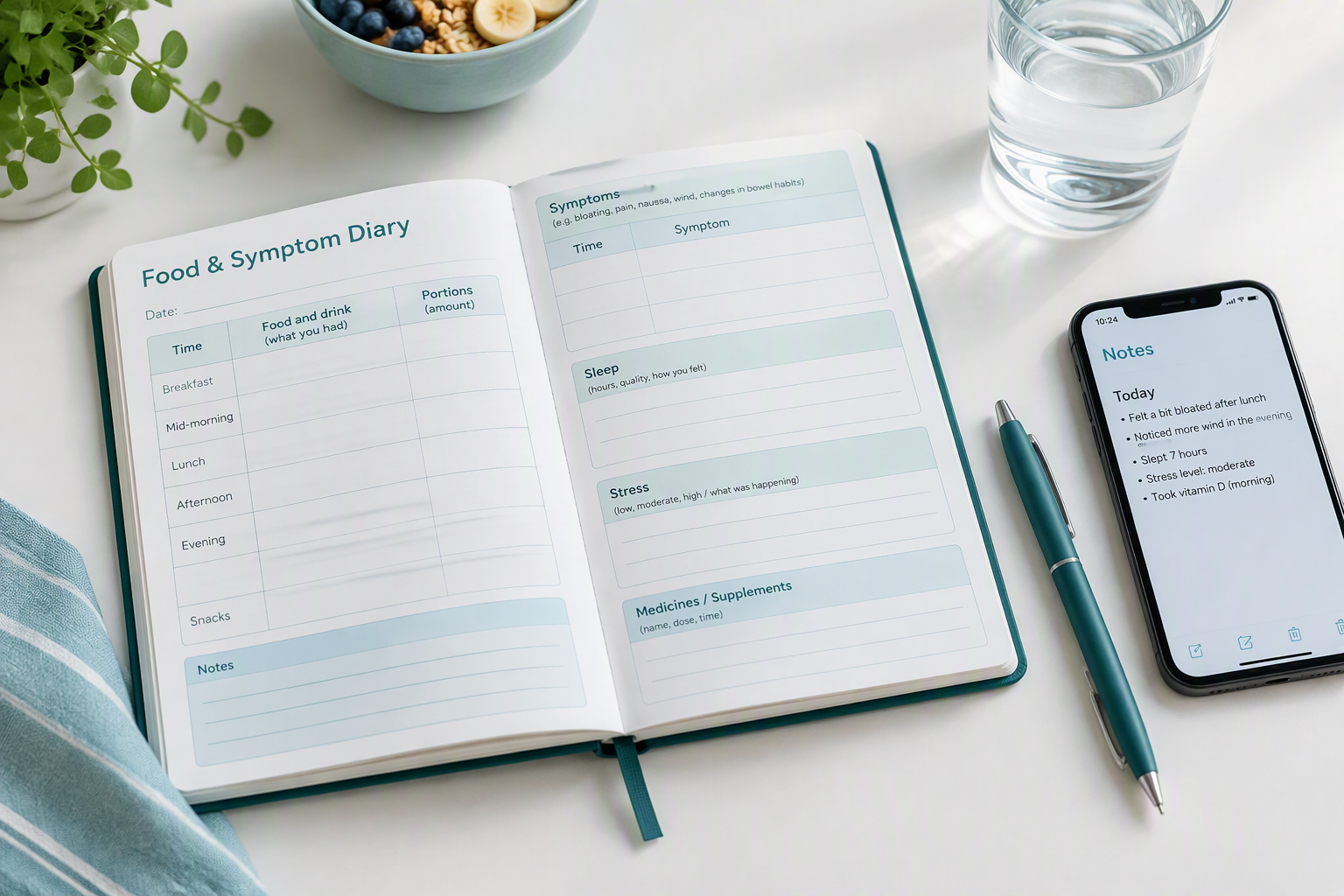
A food and symptom diary is a dated, time-stamped record of what you eat and drink, symptoms that follow, and factors that may affect digestion. It helps you track food and symptoms without treating one meal as proof of a reaction. Choose the simplest format you can use every day, such as a printable chart, phone note, interactive Portable Document Format (PDF), or compact paper food diary.
A one-page food diary template on the fridge or desk is easy to scan, while a searchable PDF works well for typed entries. An A5 diary is easier to carry to work, on commutes, or when eating out. The gut health diet your diary feeds becomes clearer when meals, bowel movements, sleep, and symptoms appear in the same record.
Use the same fields each day:
- Date and time: Note when you ate, drank, or had a symptom.
- Food and drink: Include approximate portions, recipe ingredients, brands when relevant, and extras such as dressings, sweeteners, supplements, or medicines.
- Symptoms: Record the symptom, when it began, intensity from 0 to 10, and how long it lasted. Bloating, cramping, nausea, gas, urgency, constipation, loose stools, tiredness, headaches, and rashes can all be useful to note.
- Context: Add poor sleep, stress, exercise, alcohol, a rushed meal, or a new medicine when relevant.
- Log meals promptly: A basic entry should take under a minute. Recording food and drinks soon after eating makes it less likely that snacks, coffee, water, or small ingredients will be missed.
- Include enough detail: “Chicken salad” leaves out useful clues. Note the chicken, greens, onions, dressing, dairy such as cheese, and a rough portion size. Clear recall matters more than exact measurements.
- Add symptoms as they happen: For example: “12:30 p.m.: two eggs, two slices of toast, butter, coffee, 2:30 p.m.: bloating, 4/10, lasted about two hours.” Record bowel movements promptly for more consistent stool tracking, using the Bristol Stool Chart if it helps.
A 56-day A5 hardcover diary can hold an eight-week record, while a spiral symptom diary with preprinted meal, bowel movement, sleep, and Bristol Stool Chart prompts reduces setup. Pre-label pages or duplicate your preferred layout, then use the same fields before considering food restrictions.
A food diary for IBS and a food diary for gut health in general are the same tool: a food and symptom log kept for a few weeks. IBS symptom diary entries record what you ate, when, and what happened, and a digestive symptom tracker on paper works as well as one on a phone.
What Should You Record After Eating?
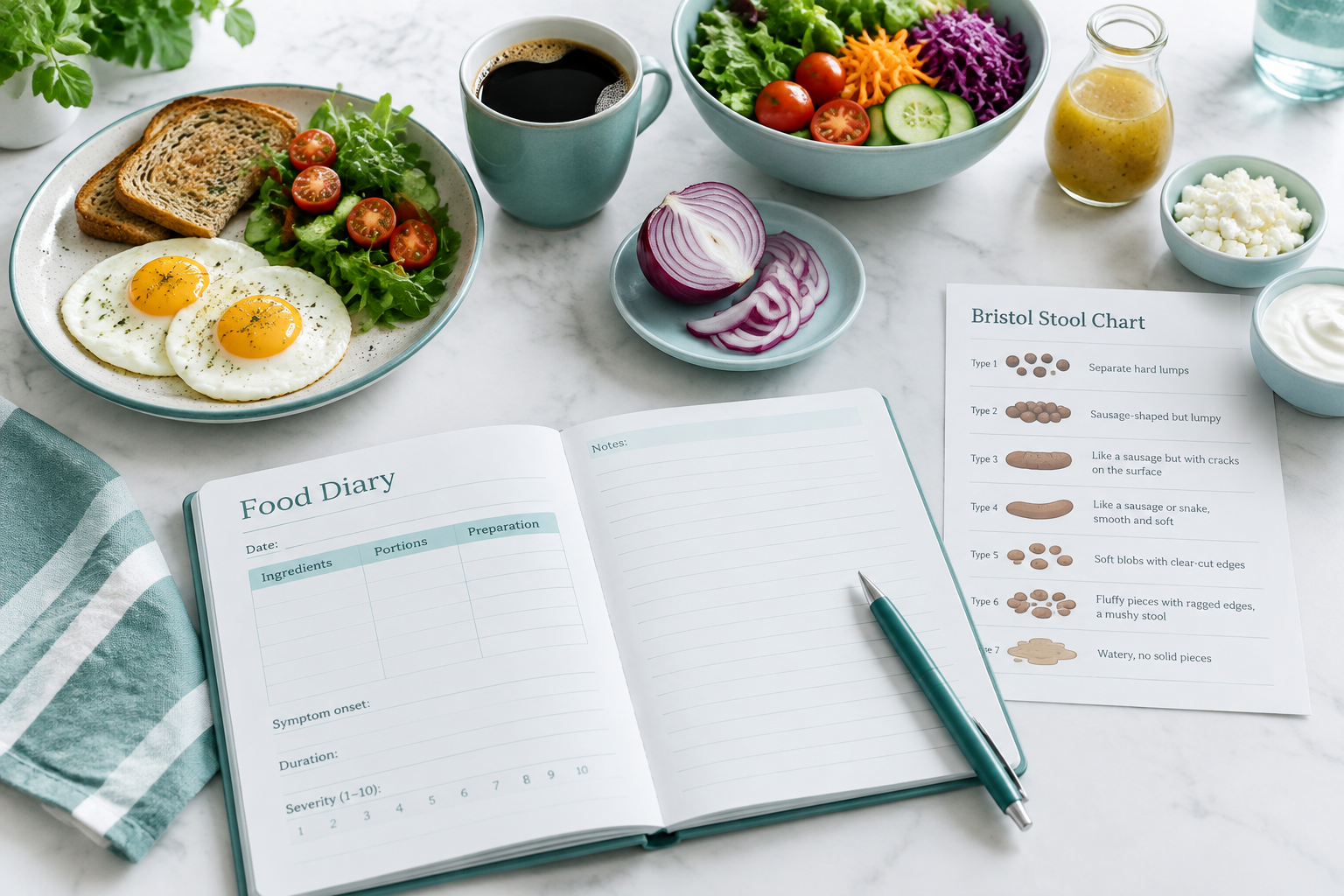
Once you have a consistent layout, a useful food and symptom diary captures the whole day, not only the meal before discomfort began. Consistent meal tracking, fluid tracking, stool tracking, and a short context note can turn a frustrating week into a clearer record for a healthcare professional.
For every meal, snack, and drink, note the date, exact time, and a familiar portion estimate, such as a bowl, slices, or a restaurant-sized serving. Include water, coffee, tea, juice, alcohol, and added sugars. Meal timing patterns in a diary can make entries easier to compare on busy days.
What to record in a food diary goes beyond a broad meal name:
- Ingredients: Include main foods, cooking oils, sauces, dressings, condiments, sweeteners, and ingredients that may be easy to miss, including onion, garlic, or dairy.
- Preparation: Note whether food was fried, baked, raw, cooked, spicy, leftover, homemade, or eaten out.
- Packaging details: Add a useful brand name and save a label photo when the ingredient list may matter later.
Symptoms are most useful as observations, not verdicts about a specific food. Record bloating, abdominal pain, gas, nausea, fatigue, headache, rash, urgency, or appetite changes. Include the symptom onset time, duration, and symptom severity using the same simple scale each day. “Crampy pain after lunch” gives more useful context than deciding lunch caused it.
Keep bowel movements in a separate entry, noting timing, urgency, incomplete emptying, stool appearance, gas, staining or smearing, leakage or accidents, and the daily total when relevant. The Bristol Stool Chart can help you describe stool consistently. Track constipation and diarrhea separately, since both can occur during the same week.
Medications and supplements belong in the diary as well. Include prescription and over-the-counter medicines, vitamins, herbs, the dose, and the time taken, especially after starting or changing something.
Finish with a brief context note about sleep quality, stress, exercise, illness, menstrual-cycle timing, travel, dining out, and unusual exposures. These factors can overlap with irritable bowel syndrome symptoms, so repeated patterns carry more weight than a single difficult day.
Bowel movement tracking, constipation tracking, and stomach pain tracking belong in every entry, with symptom duration tracking for each. Specific ingredient tracking catches onion powder and sweeteners that a meal name hides. Record symptoms the same day, since contemporaneous symptom recording is what makes a diary useful.
How Long Should You Keep Your Diary?
With those details recorded each day, a seven-day starter log is enough to build the habit, capture a typical workweek, and create a useful food diary for doctor visits. A one-page paper chart or phone note keeps a daily food log realistic, so you can collect a fuller record before drawing conclusions (source).
For most people, a few weeks of diet and symptom tracking is a practical window for spotting possible patterns. Complete entries daily instead of filling gaps from memory, using the same details each time:
- Date and time: Keep timing entries consistent throughout the tracking window.
- Food and drink: Keep portion notes consistent enough to compare meals over time.
- Symptoms: Use the same severity scale throughout the tracking window.
- Context: Note major routine changes that could affect week-to-week comparisons.
A two-week diary should include at least two weekends, since meal timing, alcohol, activity, stress, and sleep may differ from weekday routines. When several factors shift together, a flare may look food-related even when the cause is less clear.
A longer observation period can be more helpful when symptoms come and go or early records are incomplete. Longer tracking may also be recommended by a doctor, dietitian, or registered dietitian when meals, sleep, stress, and exercise all appear to affect symptoms.
Bring the completed record to a healthcare professional to support a more focused discussion. Repeated observations give that conversation a clearer starting point and can help prevent unnecessary restrictions.
How long to keep a food diary depends on how often symptoms show up. A two-week food diary catches daily symptoms. A four-week food diary is better for symptoms that come and go. Meal and symptom tracking past a month rarely adds much.
How Can You Spot Patterns Fairly?

With a completed record in hand, a useful diary review looks for repeated circumstances, not proof from a single uncomfortable day. Identifying food triggers means noticing whether the same meal, ingredient, or meal combination appears before a similar symptom pattern more than once. Food intolerance tracking can raise a useful question, but diet and symptom tracking cannot establish that a food caused an allergy, intolerance, sensitivity, or digestive symptom (source).
Consistent details make entries easier to compare. Use the same symptom scale every time, and record the time symptoms begin, how long they last, and what you ate before they started. A diary is most useful when it shows repeated timing and symptom patterns rather than one isolated meal (source). Brief bloating belongs in the diary, but it should not carry the same weight as an episode that disrupts sleep, work, or meals.
A fair comparison includes the surrounding context:
- Food and amount: Record the ingredient, recipe, portion, and whether it was eaten alone or with other foods.
- Timing: Work backward from the symptom. Digestive symptoms may begin shortly after eating, several hours later, or the following day, so the last food you ate is not automatically responsible.
- Meal circumstances: Note fluids, meal size, alcohol, rushed eating, sleep quality, and stress levels.
- Symptom details: Include the symptom itself, when it began, how long it lasted, and how much it affected your day.
For example, an entry could note eggs, toast, and coffee, followed by bloating that began 2 hours after breakfast and lasted 2 hours. Another might record grilled chicken salad with olive-oil dressing, mild bloating rated 3/10 at 1:15 p.m., and tiredness at 8:30 p.m. after the bloating had passed. Symptoms that occur at different times should be recorded separately.
A pattern becomes more convincing when the same exposure repeatedly precedes similar symptoms with comparable timing, duration, and severity, while symptoms are less noticeable without that exposure under similar conditions. Spotting onion and garlic triggers also means comparing portions and the rest of the meal, not simply whether either ingredient appeared.
When the evidence is unclear, continue recording instead of cutting out several foods at once. A fuller record can help you have a more focused conversation with a doctor or dietitian.
Identify food symptom patterns by looking for repeats across the whole diary, not for one bad meal. Honest food logging matters more than neat logging. Food trigger identification takes several exposures, and a food intolerance diary read too early finds triggers that are not there.
Track symptoms after eating for every meal, not only the bad ones, so the diary can show a food you tolerated ten times and reacted to once. A food trigger diary that only records reactions cannot identify digestive triggers, because it has no baseline. A digital food diary and a food diary chart on paper both work as long as you track foods eaten completely. The clearest example of this is a diary during FODMAP reintroduction, where each challenge is written down before the verdict is drawn.
When Should a Dietitian Review Your Diary?

When repeated observations need clinical context, a food diary for doctor visits or registered dietitian review is most useful when symptoms keep returning, interfere with work or family life, or have led you to cut out several foods. Your notes can guide a focused conversation about IBS, a food intolerance, or an allergy.
A clinically useful record captures several days or weeks of detail:
- Meals and portions: Record foods, drinks, and approximate amounts.
- Timing: Note when you ate, when symptoms began, and when they eased.
- Body changes: Include bowel movements, stool appearance, symptom severity, sleep, stress, medicines, and supplements.
- Detailed entry: Link the meal to symptom timing and duration.
A dietitian looks for patterns that repeat under similar conditions, not a single suspected culprit. The same food, portion, timing, and symptoms may need to show up more than once, while meal size, rushed eating, constipation, poor sleep, and stress can also fit an irritable bowel syndrome pattern and may explain symptoms better than one food note.
Food allergy symptom tracking needs medical assessment when a reaction occurs quickly or includes symptoms beyond the digestive system. Bloating or discomfort after one meal does not establish an allergy. Review can help avoid unnecessary restrictions, nutrition gaps, and missed causes of similar symptoms.
Food intolerance tracking also takes patience with fermentable oligosaccharides, disaccharides, monosaccharides, and polyols, called FODMAPs. Because these carbohydrates occurred in 77.6 percent of meals in one dietary study, a symptom-associated meal alone cannot identify them as the cause. Portions, food combinations, and tolerance over time matter.
When a FODMAP-related pattern seems plausible, a diary during FODMAP reintroduction can support a limited trial and systematic reintroduction. Registered dietitian guidance keeps meals adequate and workable while helping you identify personal tolerance and appropriate medical next steps.
A food diary for a dietitian or a food diary for medical visits should be the raw entries, not your conclusions. An elimination diet diary or a GERD food diary follows the same rule. Bring the diary to the appointment and let the dietitian read the pattern.
Food Symptom Diary FAQs
These FAQs cover practical food symptom diary questions, including how to track patterns without blaming a single food too soon. They can help you prepare for more focused conversations about digestive symptoms.
1. Can an App Track Food Symptoms?
Yes. A food symptom tracker app, simple notes app, or paper notebook can help you track food and symptoms while details are fresh. Record meals, drinks, and small snacks after eating, then note symptoms or bowel changes when they start, including the date, time, ingredients or brand, approximate amount, intensity, duration, sleep, stress, activity, and medication changes. Consistent entries matter more than perfect detail. An organized timeline helps your clinician or dietitian spot repeated patterns without treating one food as the definite cause.
2. Can Children Keep Food Symptom Diaries?
Children can keep a food and symptom diary with a parent or caregiver making entries brief, neutral, and age-appropriate. Record what they ate and drank, when they ate, stomach or bowel symptoms, and their own words for how they feel. For younger children, an adult can add prescription or over-the-counter medicines, vitamins, supplements, doses, and timing. Review the diary with a doctor or registered dietitian before restricting foods, since it may reveal patterns but cannot diagnose a food intolerance (source).
3. Can Food Diaries Help Identify IBS Triggers?
Yes. An IBS food diary can help with identifying food triggers by revealing repeated associations among meals, portions, timing, bowel changes, symptom severity, sleep, stress, activity, and daily pressures. It cannot diagnose IBS, confirm an allergy or sensitivity, or prove that a single food caused a flare.
Review consistent notes over a few weeks rather than judging one uncomfortable meal. FODMAP-containing foods may coincide with symptoms, while poor sleep or stressful days can contribute too, so bring repeat patterns to a registered dietitian or healthcare professional to avoid unnecessary food restrictions.
4. Can Food Diaries Worsen Disordered Eating?
A food and symptom diary can worsen disordered eating if tracking becomes rigid, fuels guilt or anxiety, or makes you label foods as good or bad. Keep entries brief and neutral, noting meals and symptoms rather than calories, rules, or judgments. Pause the diary if it increases food-related stress or urges to restrict.
Your notes may reveal patterns involving foods, sensitivities, allergies, or symptoms, but they cannot prove a single food caused a reaction. Avoid self-directed elimination diets or major changes based on a few entries, since restriction can create nutrition gaps and miss other causes. A doctor or registered dietitian can review the diary with you.
5. Is There a Simple Food Symptom Diary Template?
A food symptom diary template needs five columns: time, food and drink with portions, other factors (sleep, stress, medicines), symptoms with a 0 to 10 score, and stool. A printable food diary template with those columns beats a detailed one you stop filling in.
6. Can a Food Diary Identify Food Sensitivities?
A food sensitivity tracker finds patterns, not diagnoses. Identifying food symptom patterns over a few weeks tells you what to test next, and a validated diet and symptom diary has been shown to capture IBS symptoms reliably. Tracking food and symptoms is the start of the work, not the end.