


Drinking a huge bottle of water at once won't flush your system or reliably end constipation. Hydration for digestion works best when steady fluids support fiber, stool softness, and regular movement through the gut.
The National Institute of Diabetes and Digestive and Kidney Diseases recommends drinking water and other liquids as you add fiber. Small sips, meal timing, carbonation, and beverage choices can matter when bloating, reflux, or IBS make a large drink uncomfortable. Diarrhea and vomiting are different, since an oral rehydration solution replaces both fluids and electrolytes.
Hydration for Digestion Key Takeaways
- Steady fluid intake supports saliva, nutrient absorption, and softer stool.
- Fiber works best when increased gradually alongside regular fluids.
- Large drinks at once can worsen fullness, bloating, or reflux.
- Water with meals does not meaningfully weaken stomach acid or digestive enzymes.
- Carbonation, straws, and fast drinking can add air and worsen gas.
- IBS symptoms may improve with slower fiber changes and comfortable sipping patterns.
- Oral rehydration solution better replaces fluid and salts during repeated diarrhea or vomiting.
How Does Hydration Support Digestion?
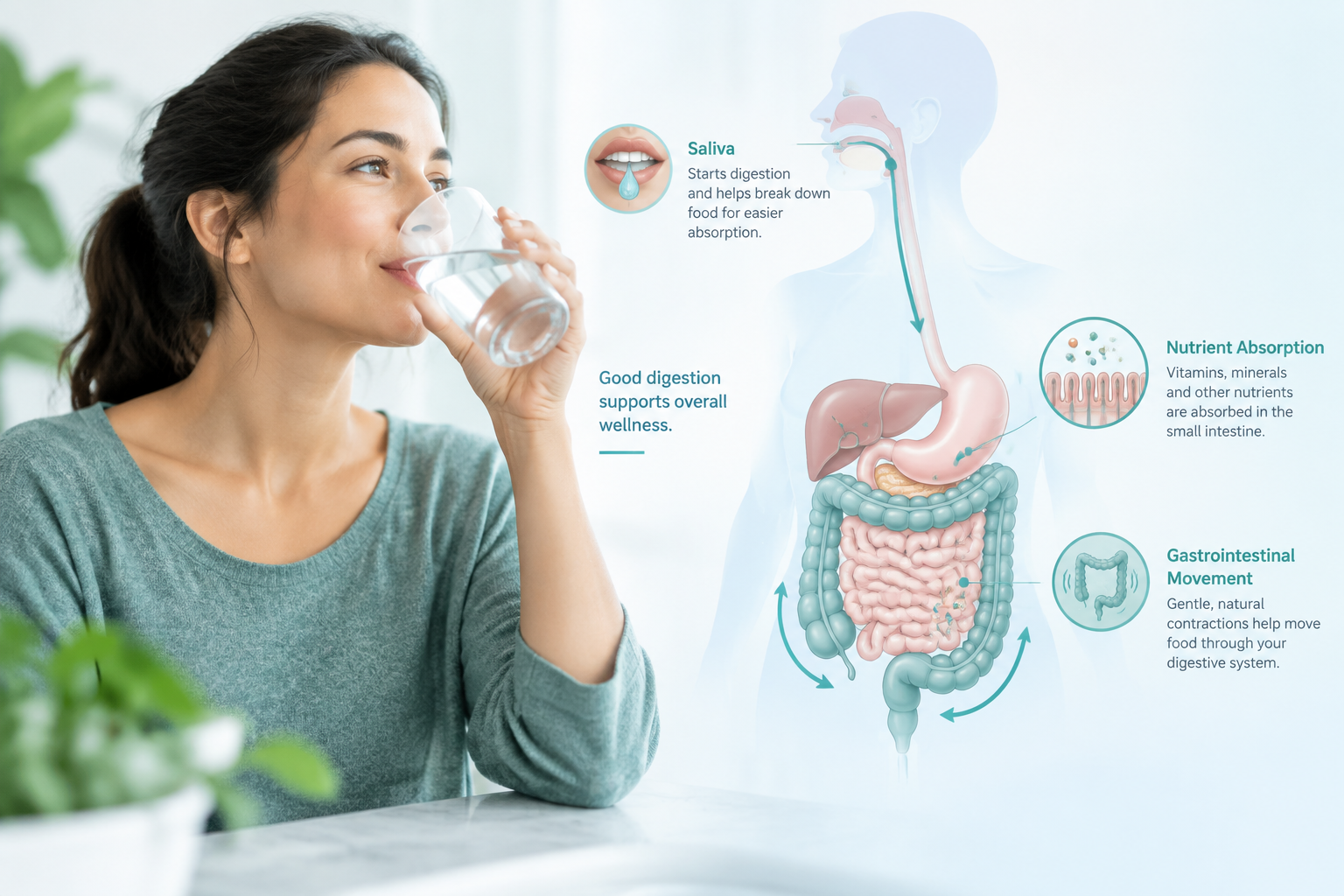
Hydration and digestion begin working together in your mouth. Water and saliva production moisten food for easier chewing and swallowing, while salivary digestive enzymes start breaking down carbohydrates. MedlinePlus notes that water is a major component of saliva and supports normal body functions, including digestion (source). Regular fluids support this process, but persistent dry mouth or trouble swallowing needs medical attention.
Fluids also help dissolve vitamins, minerals, soluble fiber, and other food components so they can move across the intestinal wall and into the bloodstream. Eating and drinking for gut health includes practical meal and beverage choices that support this work. Hydration supports nutrient absorption and digestive enzymes, but it cannot replace a balanced diet that provides the nutrients your body needs.
Water and digestive health also rely on movement through the gastrointestinal tract. Peristalsis is the wave-like muscle action that moves food and waste forward. When fluid intake is low, stool can become drier and harder to pass, which may add to constipation (source).
Hydration helps maintain digestive secretions and a manageable food consistency as meals travel through the body. This supports a smooth digestive process and helps keep waste from becoming overly dry. Still, food choices, medications, illness, stress, and underlying conditions can affect symptoms and the digestive lining. Research on fluid intake and constipation suggests the relationship is more complex than simply drinking more water (source).
For adults and families, regular fluid intake can support digestion from swallowing through bowel movements. It cannot guarantee relief from reflux, abdominal pain, diarrhea, bloating, or irritable bowel syndrome (IBS). Severe, persistent, or concerning digestive symptoms need medical care.
Water and digestion are linked at every step: saliva, stomach acid, the water pulled into the intestine to move food, and the water the colon reclaims. How hydration affects digestion is mostly about that last step, since hydration and bowel movements rise and fall together (source). Water and gut health also includes hydration and gut microbiome balance, which one animal study tied to sufficient water intake.
How Much Fluid Supports Digestion?
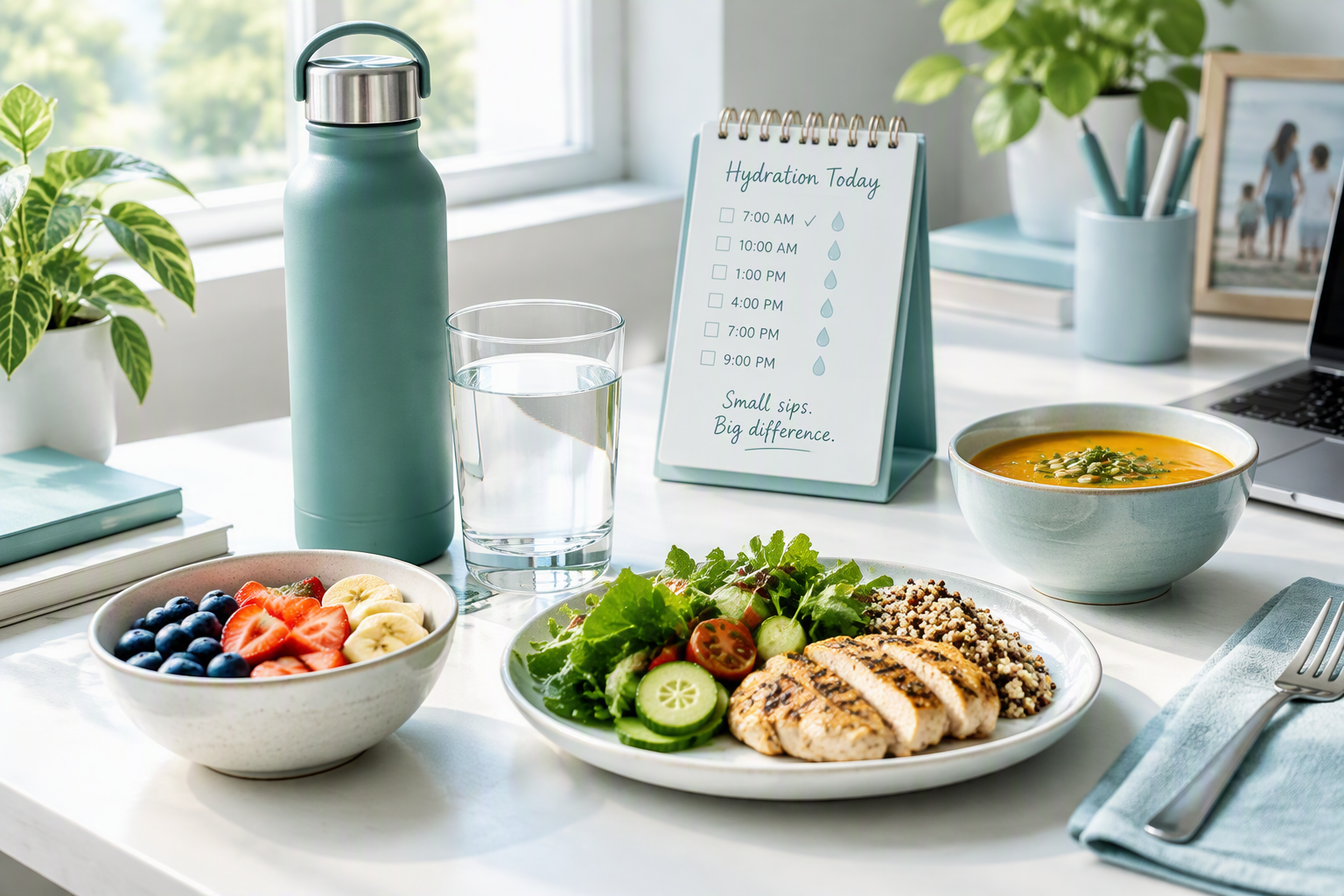
For the regular fluid intake that supports digestion, the Dietary Reference Intake is 91 to 125 fluid ounces (2.7 to 3.7 liters) a day for adults, counting water from drinks and food, and that is a starting range, not a universal target or a digestive reset. Plain water is an easy default for how much water for digestion, especially when intake is spread through meals, snacks, work breaks, and evening routines instead of saved up for nighttime.
Your needs can rise with a larger body size, exercise, physically active work, hot or humid weather, fever, or a higher-fiber diet. Pregnancy, breastfeeding, kidney, heart, or liver conditions, and medicines that affect fluid balance call for individualized guidance rather than a forced daily goal.
Small, regular drinks are usually easier on your stomach than a large volume all at once. Spacing meals and fluids can make a difference when rushed meals or missed breaks throw off your routine. Drinking excessive amounts will not flush the digestive system, and too much water too quickly can leave you uncomfortably full or be unsafe in some circumstances.
A few simple habits can support adequate hydration during busy days:
- Keep a refillable bottle where you work, drive, or spend time with family.
- Have a beverage with meals and snacks, before thirst becomes intense.
- Use a reminder during long meetings, school pickup, or other routines that make breaks easy to miss.
Water-rich foods also count toward your fluid intake. Cucumbers, watermelon, strawberries, oranges, celery, broths, and soups support digestive health while fitting naturally into meals and snacks. If you are adding fiber to help stools pass more regularly, increase fluids gradually rather than relying on beverages alone.
Dry mouth, fatigue, frequent headaches, and dark yellow or amber urine can signal that your body needs more fluid. Persistent thirst, marked changes in urination, or ongoing constipation, bloating, reflux, or irritable bowel syndrome (IBS) symptoms may have causes that hydration alone will not address.
Daily hydration tips are simpler than a target: a glass on waking, a glass with each meal, and water within reach at work. Fluid needs by body size and fluid needs by activity level change the total, so thirst and pale urine are better guides than a number.
How Do Fluids and Fiber Prevent Constipation?
When constipation is the concern, fiber and water help keep stool soft enough to pass comfortably. When fluid intake is low, the colon pulls more water from waste, which can leave dry stool that contributes to hard stools and painful bowel movements. This link between dehydration and constipation is common, but stool softening comes from steady habits, not one extra glass of water.
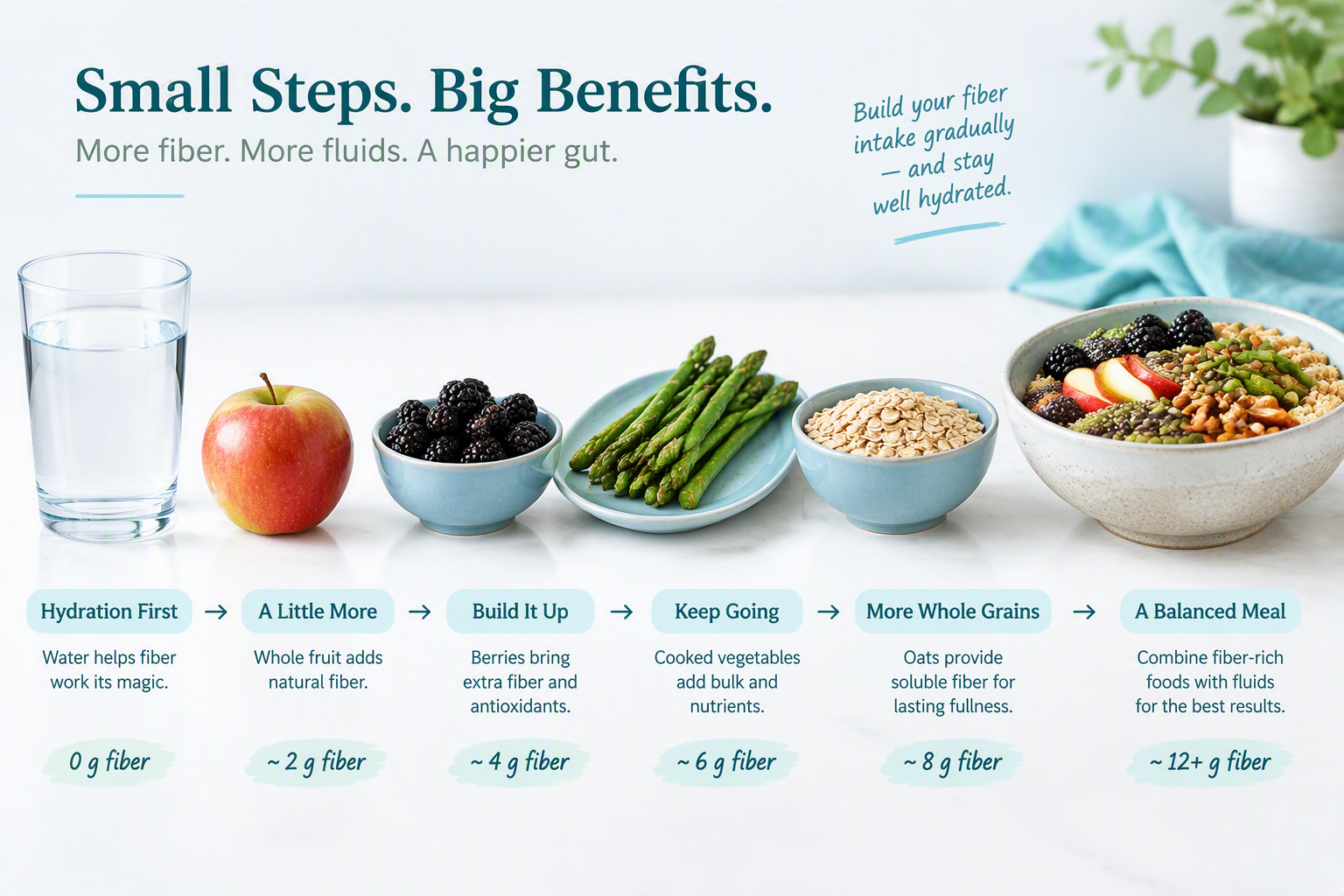
Water and constipation are closely connected because fiber needs fluid to hold water, add bulk, and help stool move through the digestive tract. Pair a tolerated drink with fiber-rich meals and snacks. Raising fiber too quickly without enough fluid can cause gas, bloating, cramping, or worse constipation.
A gradual, food-first increase is usually easier on your gut:
- Start small: Add one modest serving, such as a small apple with skin, which provides 2.8 grams of fiber according to USDA FoodData Central (source).
- Choose another option: Three-quarters cup of blackberries provides 6 grams of fiber according to USDA FoodData Central.
- Include vegetables: One-half cup of cooked asparagus provides 2.8 grams of fiber according to USDA FoodData Central.
- Hold the change: Keep the new serving for several days before increasing further, and reduce the newest addition if symptoms flare.
The National Institute of Diabetes and Digestive and Kidney Diseases recommends drinking water and other liquids when you add fiber, and constipation that includes fewer than three bowel movements per week deserves a closer look.
IBS can make fiber changes more sensitive. Temporary bloating or gas may settle when you slow the increase rather than giving up on fiber altogether. If fermentable fibers repeatedly aggravate symptoms, methylcellulose or partially hydrolyzed guar gum may be less bothersome options to discuss with a clinician or dietitian.
Persistent constipation, severe abdominal pain, bleeding, vomiting, or unexplained weight loss needs timely medical care. A slower routine helps you find the fluid and fiber pattern your digestion can handle.
Hydration for constipation works only with fiber, and hydration and dietary fiber fail separately: fiber without water makes hard stool harder (source). Water for stool softening is the mechanism, and water when increasing fiber is the habit. Constipation and hydration is the most common reason a fiber increase backfires.
How Should You Hydrate for Bloating and IBS?
For Irritable Bowel Syndrome (IBS), hydration works best when it follows your symptoms rather than a universal daily target. Small, comfortable sips during and between meals are often easier on hydration and bloating than finishing a large bottle quickly. Water does not need to be consumed in huge amounts to “flush” your digestive system.
Water and constipation are closely connected, but IBS requires you to watch how gradual changes affect your symptoms. Increase fiber and water gradually, then watch stool comfort, abdominal pressure, and gas for several days. If symptoms worsen, pause the increase or try gentler fibers such as methylcellulose or partially hydrolyzed guar gum.
For gas, bloating, or indigestion, drink pace, timing, and temperature may matter more than simply drinking more. Helpful adjustments include:
- Sip slowly rather than gulping, especially with meals.
- Notice whether carbonated drinks, straws, or large drinks with food add air, fullness, or gas.
- Compare cool, room-temperature, and warm drinks to find what feels most comfortable.
- Keep fluids steady through the day and adjust based on your symptoms.
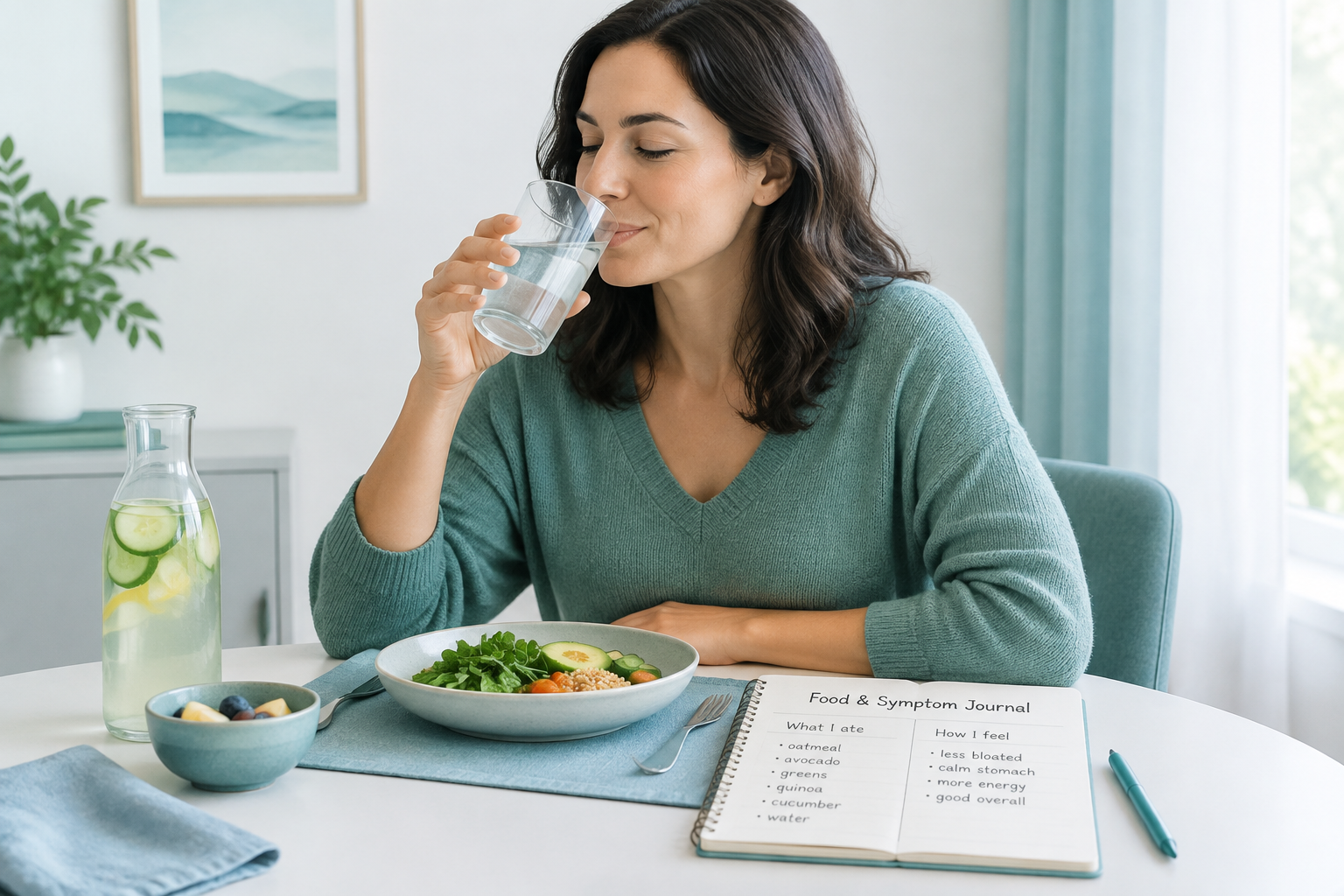
Swallowed air and certain carbohydrates can both contribute to gas, so beverage habits are worth testing alongside food choices (source). Logging fluids alongside food can help identify whether timing, carbonation, meal size, or a food is linked to discomfort. Consistent hydration may support gastrointestinal movement, which can help with backed-up bloating or indigestion, without directly changing the gut microbiome.
Acid reflux, early fullness, and slow digestion often feel better with modest drinks spread across the day. Avoid very large volumes before lying down or with a heavy meal.
Diarrhea and vomiting require a different approach to gut health. An oral rehydration solution may replace water and salts more effectively than a sports drink. Seek prompt medical care for marked dizziness, very little urine, confusion, or inability to keep fluids down.
Water for bloating helps when the bloating is constipation, and does nothing when it is gas. Hydration for slow digestion means sipping through the day rather than large volumes at once, which can add to fullness.
What Should You Drink With Meals?
For everyday digestion outside diarrhea and vomiting, drinking water with meals is generally easy on digestion. It does not meaningfully weaken stomach acid or digestive enzymes. Instead, water with meals can fit comfortably into normal digestion.
Comfort matters more than a strict schedule. A glass of water with food can add calorie-free fullness and help you meet your fluid needs. If it leaves you bloated, overly full, or aggravates acid reflux, try smaller sips with meals and drink more between them. People trying to gain weight may prefer most beverages between meals, since drinks can curb appetite without adding calories.
Water can become your usual meal drink with a few practical habits:
- Keep a glass nearby and sip steadily rather than chugging.
- Add lemon, lime, cucumber, mint, or berries if flavor helps you drink more.
- Count soups, yogurt, cooked grains, fruits, and vegetables toward overall fluid intake.
- Choose foods and flavors that fit your personal IBS, reflux, or bloating triggers.
Some people enjoy fermented drinks like kefir and kombucha with meals. Carbonation, acidity, lactose, or other ingredients can trigger indigestion in some people, so your usual symptoms should guide the choice.
Drinking about 8 to 12 ounces of water after waking may help establish a consistent habit and prompt digestive activity before breakfast. It is not a treatment for constipation or ongoing digestive symptoms, and steady intake across the day is usually more comfortable than forcing a large drink at once (source)).
Clinician-directed fluid limits take priority if you have heart failure, kidney disease, liver disease with fluid retention, or a similar condition. Repeated meal-related pain, vomiting, trouble swallowing, persistent bloating, or early fullness needs medical attention rather than further changes to beverage timing.
Drinking water and digestion get along fine at meals. Water and intestinal absorption are not harmed by a glass with dinner, and water for indigestion is a matter of temperature and amount, not timing.
When Do Electrolytes Matter During Diarrhea?
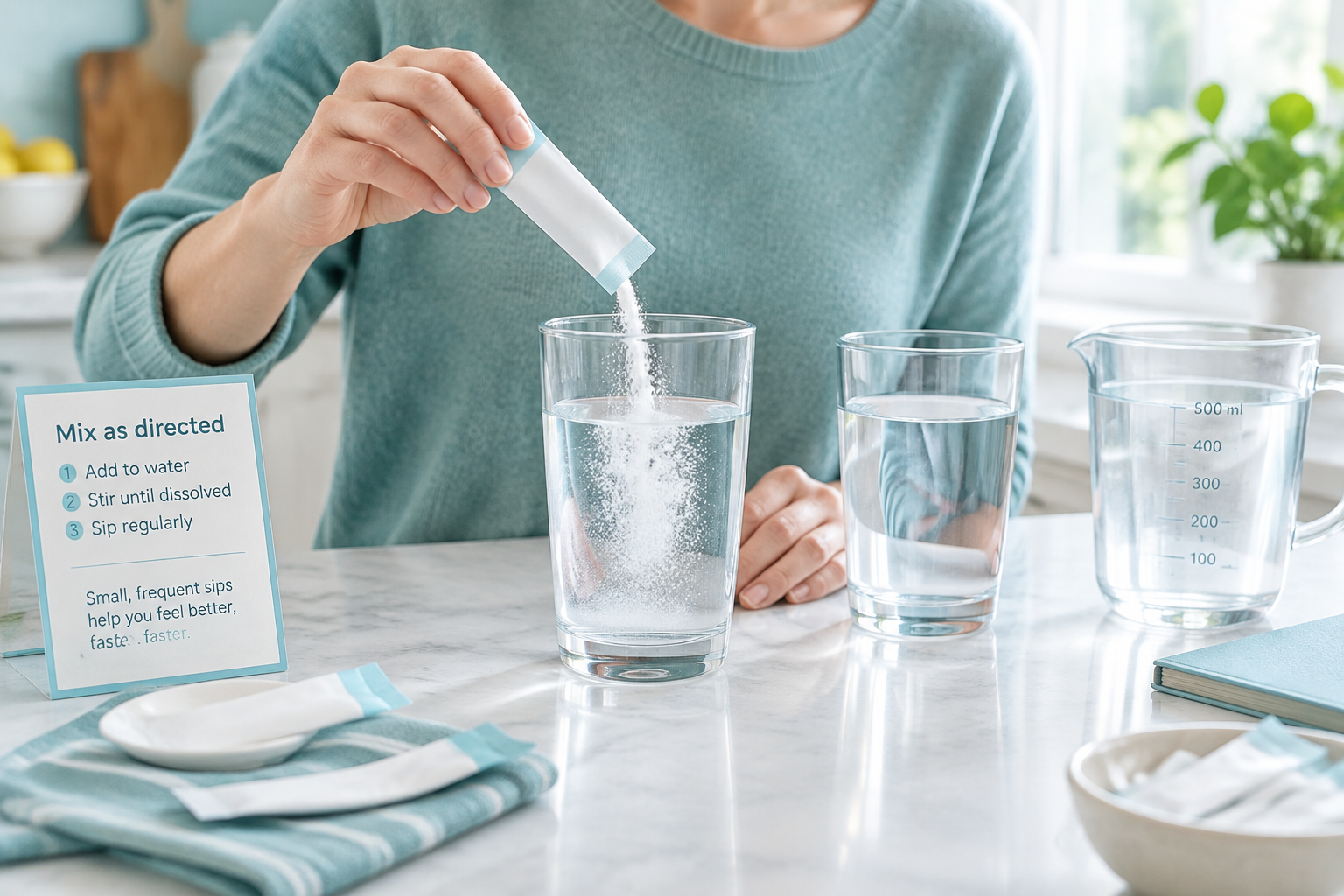
When diarrhea or vomiting changes the picture, everyday hydration supports electrolytes and digestion, but illness-related rehydration has a different purpose. During illness, hydration still supports normal intestinal function. When fluid intake is low, slower transit, cramping, bloating, and discomfort can follow.
Diarrhea or vomiting can rapidly deplete both fluid and salts, which may lead to an electrolyte imbalance that plain water does not fully replace. An oral rehydration solution, or ORS, is a good fit for repeated watery stools, vomiting, trouble keeping fluids down, or diarrhea that is more than a brief mild episode. ORS contains glucose and electrolytes that help replace losses during diarrhea (source).
Mix ORS packets exactly as directed. Small, frequent sips are often easier when nausea makes a full drink unappealing, and single-serve packets can be useful at home or while traveling.
Sports drinks and zero-sugar exercise electrolyte mixes are designed mainly to replace sweat losses, not substantial gastrointestinal fluid loss. They may not contain the sodium and glucose balance an ORS provides, and very sweet drinks can worsen diarrhea, while sorbitol or xylitol may trigger loose stools for people with IBS or sensitive digestion. Alcohol can also worsen dehydration and irritate an already unsettled digestive system.
Get prompt medical care if dehydration signs appear:
- Urine changes: Very little urine or unusually dark urine.
- Thirst and mouth symptoms: Marked thirst or a dry mouth.
- Brain and balance symptoms: Dizziness, fainting, confusion, or unusual sleepiness.
- Fluid intolerance: An inability to keep fluids down.
Blood or black stool, fever, severe or worsening abdominal pain, and severe or persistent diarrhea also need medical attention. Infants, older adults, and people with heart, kidney, or liver disease may need individualized fluid guidance.
An oral rehydration solution such as Pedialyte electrolyte powder packets mixed into water is the simplest way to replace both the water and the salts when diarrhea is heavy.
Hydration for Digestion FAQs
These FAQs cover how hydration for digestion can affect constipation, bloating, reflux, diarrhea, and IBS symptoms, helping you separate everyday fluid habits from concerns that may need a different approach.
1. Can Dehydration Cause Digestive Symptoms?
Yes. When you’re dehydrated, the colon absorbs more water from waste, which can lead to dry stool and hard stools that are difficult to pass. That connection between dehydration and bowel movements can also mean dehydration and constipation, especially when slowed intestinal motility adds bloating, cramps, or indigestion. Dry mouth, fatigue, headaches, and dark yellow urine can occur too. Because these symptoms have many causes, persistent, severe, or worsening discomfort needs medical attention.
2. Does Water Speed Up Stomach Emptying?
Water does not reliably speed stomach emptying. Meal size, calorie content, fat, fiber, and your digestive function matter more, so water will not make a heavy meal leave your stomach faster. Drinking water with meals does not usually disrupt digestive fluids. Instead, fluids help dissolve vitamins, minerals, soluble fiber, and other nutrients for absorption. If a large drink leaves you overly full or bloated, take smaller sips with food and drink more between meals.
3. Is Cold Water Bad for Digestion?
Cold water does not generally harm digestion or prevent your body from digesting food properly. Water with meals can add to your daily fluid intake without calories, so choose the temperature that feels best.
If icy drinks seem to worsen cramping, reflux discomfort, or bloating, cool or room-temperature water may be more comfortable. Sipping between meals can help you stay hydrated without feeling overly full at mealtime.
4. Which Drinks Support Gut Health?
Water is the best everyday choice for water and digestive health. Water-rich foods, including cucumbers, watermelon, strawberries, oranges, celery, broths, and soups, add fluid but should supplement regular drinks. Unsweetened beverages you enjoy and tolerate, including coffee, can also fit your routine.
Lemon, lime, cucumber, mint, or berries can make plain water more appealing and support adequate hydration. This supports gut health, but no single drink has been shown to directly boost the gut microbiome or relieve symptoms on its own.
5. How Much Water Should You Drink for Constipation?
Water for constipation prevention means meeting the daily fluid reference, 91 to 125 fluid ounces from drinks and food, while eating enough fiber. Water and bowel regularity improve together, and extra water beyond that point does not add much.
6. Does Dehydration Cause Digestive Symptoms?
The effects of dehydration on digestion are hard stools, less frequent bowel movements, and sometimes a heavy, slow feeling after meals. Adequate fluid intake reverses those within days, and water and peristalsis, the muscle waves that move food, depend on it.