


Not every bout of bloating after meals calls for a SIBO test, and digestive breath testing cannot identify every cause of gas, constipation, diarrhea, or reflux. It measures hydrogen, methane, or labeled carbon dioxide in timed exhaled samples after a specific drink, helping answer focused questions about SIBO, IMO, sugar malabsorption, or H. pylori. The right test depends on the symptom pattern and the digestive question being investigated.
A sweet test drink and a two- to three-hour appointment may sound straightforward, but recent antibiotics, laxatives, probiotics, food choices, and fasting can all affect the result. Glucose and lactulose tests can produce different SIBO patterns, and rapid intestinal transit can resemble an early rise in gas. Results matter most when the baseline, timing, preparation, symptoms, and medical history are considered together.
Digestive Breath Testing Key Takeaways
- Breath tests measure gases in exhaled air after a specific test drink.
- Hydrogen and methane testing can support evaluation for SIBO, IMO, and sugar malabsorption.
- A urea breath test checks for active H. pylori infection, not SIBO.
- Test preparation often includes dietary restrictions, fasting, and medication instructions.
- Recent antibiotics, probiotics, laxatives, and altered transit can affect results.
- Clinicians interpret breath-test patterns over time, not a single gas reading.
- Positive or negative results do not explain every digestive symptom.
What Does Digestive Breath Testing Measure?
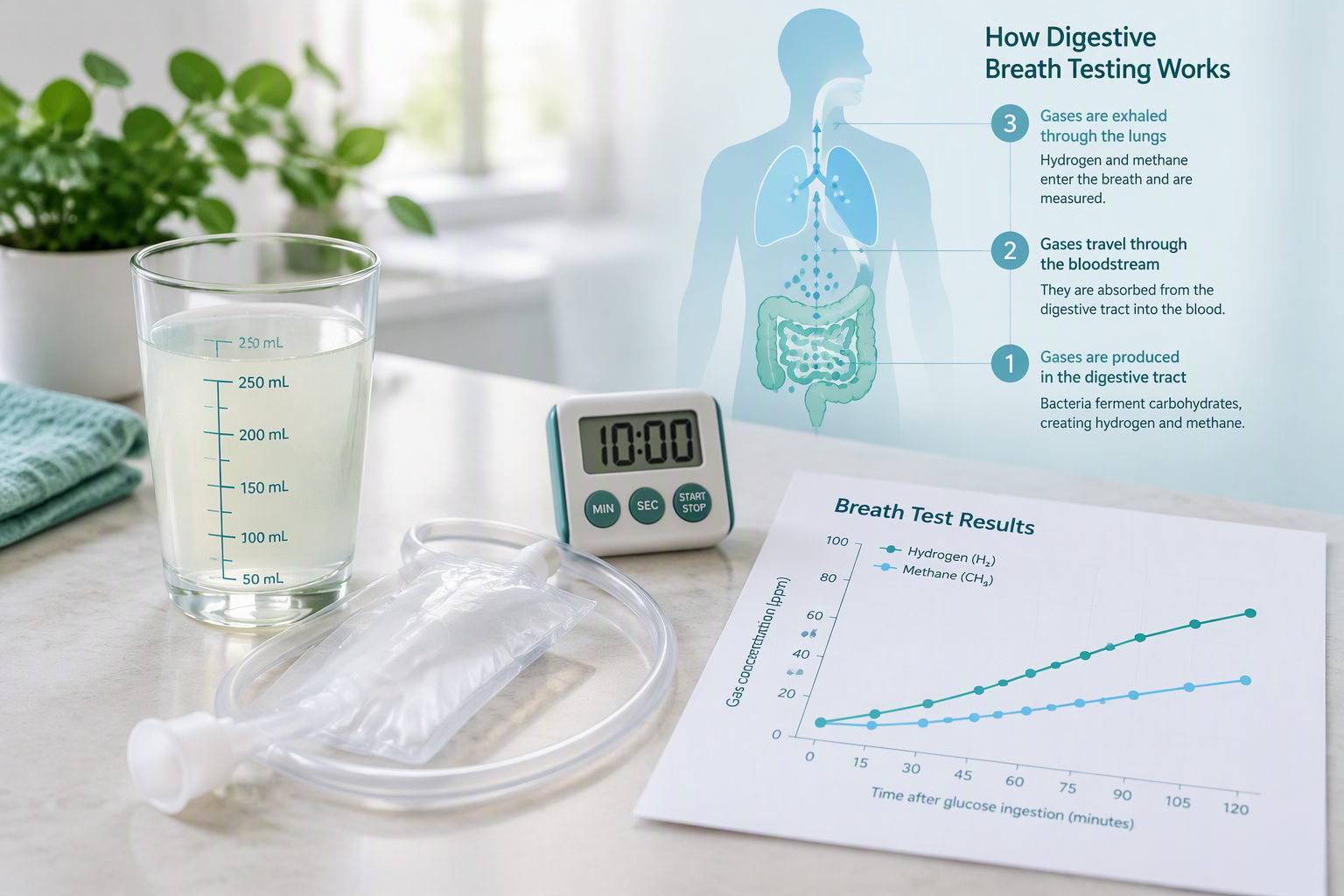
Digestive breath testing is a non-invasive diagnostic test that measures gases in repeated samples of your exhaled air. With no needles or scopes, it can be a manageable early evaluation for digestive symptoms that disrupt daily life.
A gastrointestinal breath test investigates a focused digestive question rather than explaining every possible cause of symptoms. The full range of gut health tests includes other options that assess different parts of digestion when breath testing does not match your symptom pattern.
During breath testing for digestion, you drink a specific sugar solution and provide breath samples over time. When a carbohydrate is not fully absorbed, gut microbes may ferment it and produce hydrogen and methane gases. The gases enter the bloodstream, travel to the lungs, and leave your body as you exhale, allowing the test to measure changes in those gases (source).
A hydrogen breath test can help investigate carbohydrate malabsorption, which means a sugar is not fully absorbed. Common carbohydrate challenges include:
- Lactose: May help connect symptoms with trouble absorbing milk sugar.
- Fructose: May help assess absorption of the sugar found naturally in fruit and added to some foods.
- Sucrose or sorbitol: May be used when your symptom history points to these sugars.
A rise in gas after a challenge can help link cramping, bloating, gas, or diarrhea to that carbohydrate instead of broadly blaming entire food groups. Test timing, preparation, symptoms, and health history all shape what a GI breath test result may mean.
Breath testing may also support evaluation for small intestinal bacterial overgrowth (SIBO) and intestinal methanogen overgrowth (IMO), and what a positive SIBO breath test means is covered on the SIBO hub. Methane comes from methane-producing organisms rather than bacteria, and a methane-positive pattern may be relevant when constipation is present. Still, positive and negative results do not explain every case of bowel changes or rule out other digestive conditions, so your symptom pattern remains important when discussing the findings with a clinician.
Which Breath Test Fits Your Symptoms?
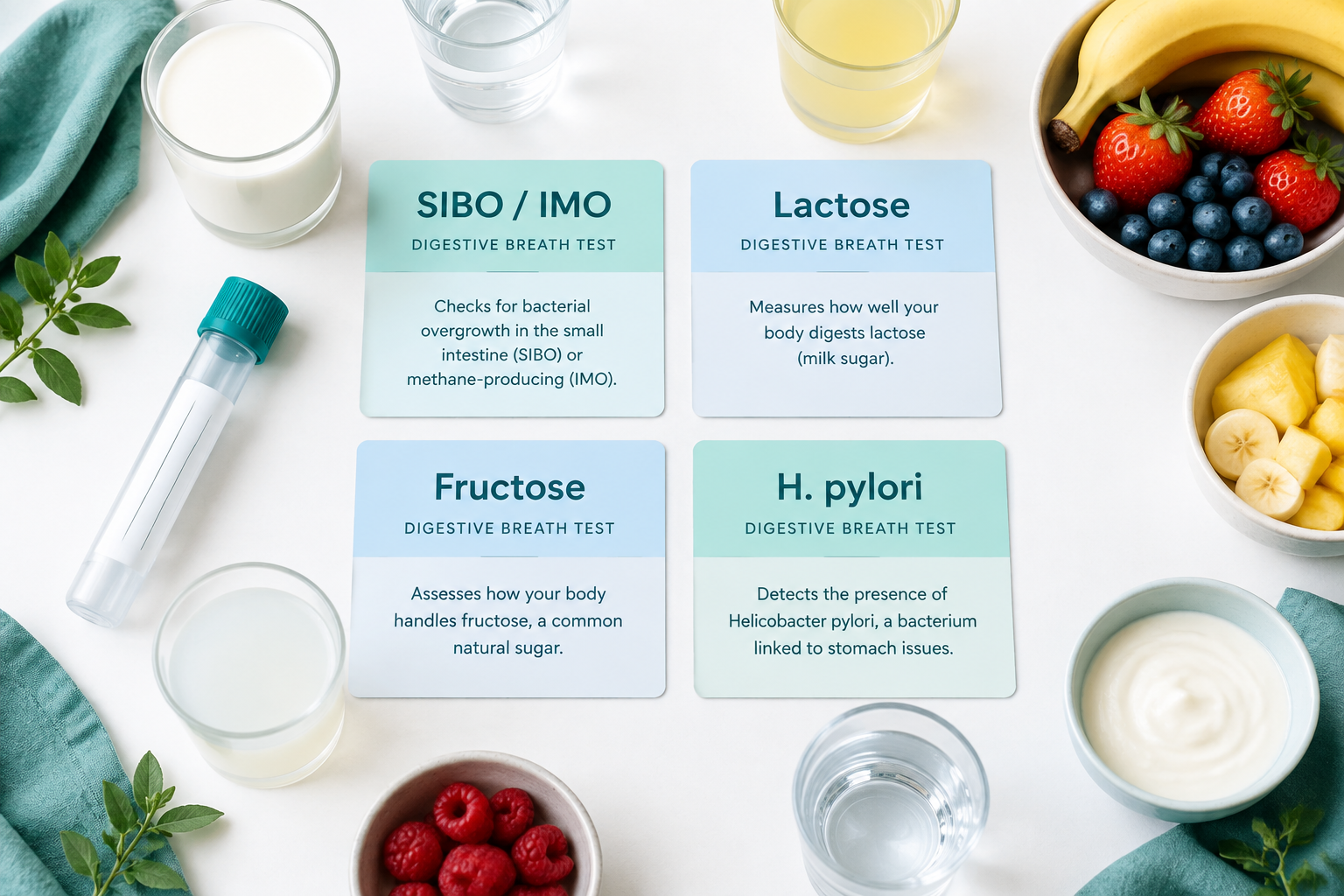
Given that distinct gas patterns can point to different digestive questions, breath-test choice should follow the clinical question, symptom timing, and healthcare evaluation, not symptoms alone. Bloating, gas, abdominal discomfort, diarrhea, constipation, and reflux can have overlapping causes.
Different breath tests look for distinct digestive patterns:
- Small intestinal fermentation: A SIBO breath test collects repeated hydrogen and methane samples after a glucose or lactulose drink. Small intestinal bacterial overgrowth involves excess bacteria in the small intestine. IMO involves methane-producing organisms and is especially relevant when constipation is prominent.
- Sugar malabsorption: A lactose intolerance breath test may fit gas, cramping, bloating, loose stools, or discomfort that reliably follows dairy. A higher hydrogen rise can suggest that lactose was not fully digested or absorbed, but it cannot explain every reaction to dairy (source). A fructose malabsorption breath test, sucrose testing, and sorbitol testing use the matching sugar. Poorly absorbed sugars can reach the colon, where fermentation may produce hydrogen, gas, and discomfort.
- Upper-digestive concerns: A urea breath test detects Helicobacter pylori, a bacterium linked to many stomach ulcers and considered with persistent upper-abdominal symptoms. Specialized carbon-13 testing may assess delayed gastric emptying when early or lasting fullness occurs with nausea or vomiting.
For SIBO diagnosis, symptoms and single-food reactions cannot confirm the cause. Persistent bloating, pain, diarrhea, or constipation that does not consistently follow one food may prompt testing. A glucose breath test is absorbed relatively quickly and often assesses fermentation earlier in the small intestine. A lactulose breath test moves farther through the digestive tract and can produce a different fermentation pattern, so neither is a universal winner.
At-home microbiome kits compared address a different question than targeted breath testing. Neither urea nor carbon-13 testing evaluates SIBO or food malabsorption.
How Does the Urea Breath Test Work?
A Helicobacter pylori breath test detects active H. PYLORI infection by measuring labeled carbon dioxide after urea is swallowed. This bacterium is associated with many stomach ulcers. Unlike hydrogen-methane testing, an H. pylori breath test focuses on stomach infection rather than SIBO, intestinal methanogen overgrowth, lactose, or fructose concerns.
The urea breath test begins after you complete the preparation instructions from the testing provider:
- Baseline breath sample: You breathe into a bag, tube, or other collection device before taking the test substance. This sample measures the starting amount of labeled carbon dioxide in your breath.
- Labeled urea: You swallow provider-supplied urea, usually with water. If H. PYLORI is present, its urease enzyme breaks down the urea and produces labeled carbon dioxide. The labeled gas enters your bloodstream and is released when you exhale.
- Repeat breath samples: After the laboratory’s specified waiting period, you provide one or more additional samples. The laboratory compares these samples with your baseline breath chemistry.
A meaningful increase in labeled carbon dioxide supports an active H. PYLORI infection. A healthcare professional interprets the result alongside your symptoms, medical history, and recent treatments that may affect testing.
Hydrogen-methane breath tests use measured carbohydrate drinks, such as lactulose, glucose, lactose, or fructose, and what a positive lactose breath test means is covered on the lactose intolerance hub. Serial samples show hydrogen and methane patterns linked to fermentation, which can help assess SIBO, intestinal methanogen overgrowth, lactose malabsorption, or fructose malabsorption. They do not diagnose H. PYLORI.
Stool tests for infection or inflammation may also come up when a clinician is considering another way to check for active H. PYLORI or a different digestive cause.
How Should You Prepare for Testing?
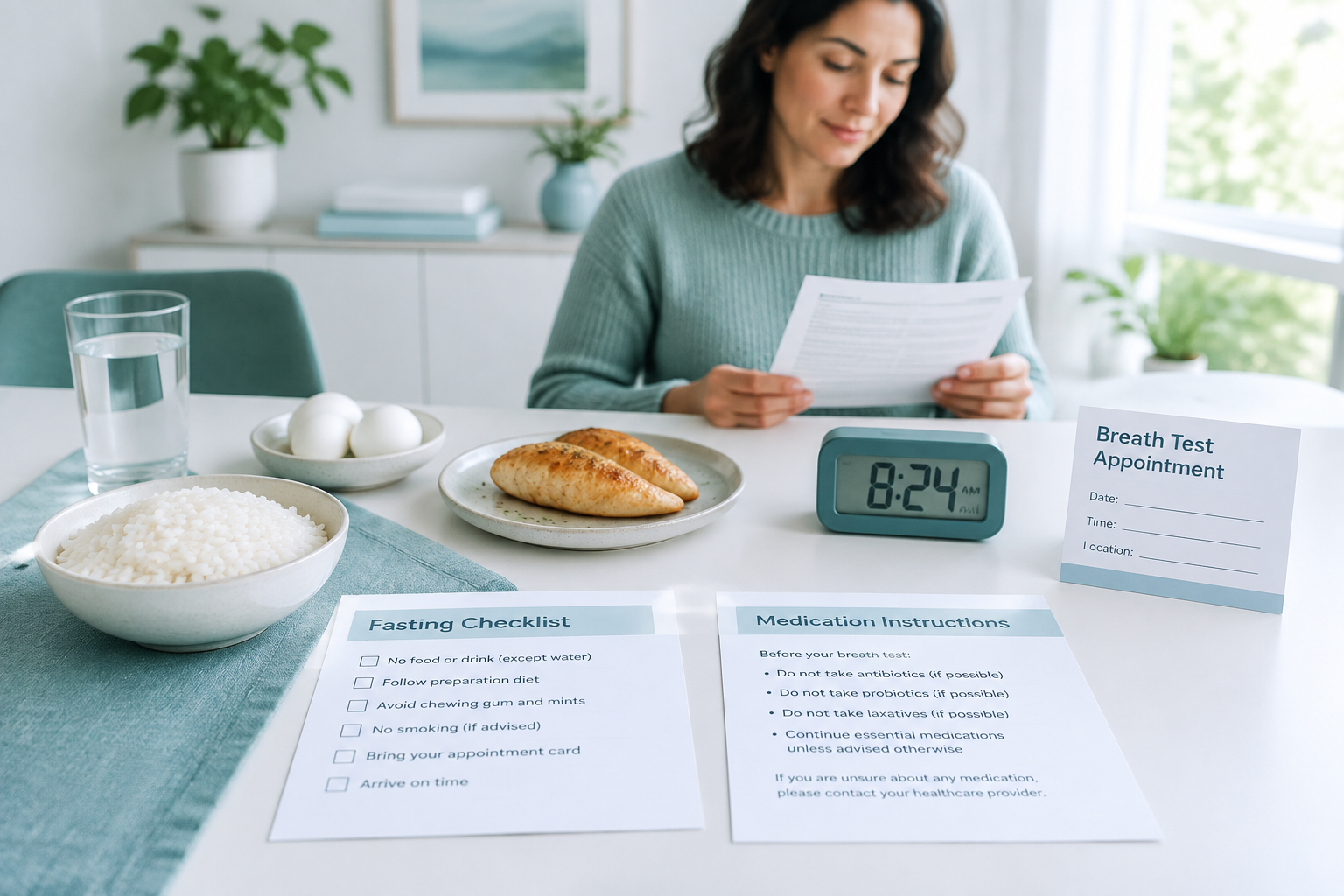
Because the different breath-test protocols rely on timed gas samples, preparation affects whether breath samples reflect your usual digestion rather than recent food, medicines, or activities. These factors can change fermentation, intestinal transit, or the sample itself, leading to a false-positive or false-negative result. Breath test preparation differs for SIBO, lactose or fructose malabsorption, and urea breath tests, so your clinician’s and testing provider’s instructions outweigh any general timeline.
Many hydrogen and methane tests require a low-residue or low-fermentation diet the day before. The approved-food list varies, but common options include:
- Plain white rice, eggs, baked chicken or fish, and water.
- Avoidance of high-fiber foods, beans, whole grains, dairy, and other foods that may cause gas before testing.
An overnight fast is also common. Water may be allowed until a stated cutoff, while coffee, tea, flavored drinks, mints, and supplements are often restricted unless the site approves them. If you eat or drink outside the plan, contact the testing site before your appointment.
Medication instructions need careful attention. Antibiotics, probiotics, laxatives, fiber supplements, motility medicines, antacids, and prokinetic medicines may need a temporary pause because they can affect gut microbes or transit time. Never stop a prescribed medicine without direction from the prescriber. Instructions for acid-suppressing medicines can differ for an H. PYLORI urea breath test, and MedlinePlus notes that medicines can affect H. PYLORI test instructions (source).
During the test, protect the timed sampling schedule:
- Do not eat, smoke, chew gum, sleep, or do vigorous exercise unless the site instructs otherwise.
- Follow the site’s oral-care directions and bring only approved water and required paperwork.
- Share all prescriptions, over-the-counter medicines, vitamins, probiotics, fiber products, and digestive supplements before testing.
Knowing how to prepare for a breath test means reporting any preparation issue before samples begin. The provider can decide whether testing can proceed or needs a different preparation window.
Preparation only matters once the test is the right test, and whether a gut test is worth it is the question to settle before you clear your calendar for one.
Hydrogen breath test preparation is the same for a lactose hydrogen breath test and a SIBO test: the low-residue day, the overnight fast, and the antibiotic gap your center specifies.
What Happens on Test Day?
After completing the required fast and preparation, expect a noninvasive appointment that lasts about two to three hours. You'll drink a measured test solution and give breath samples on your testing center's schedule, which takes priority over general guidance.
Before the drink, staff collect a baseline sample by having you breathe into a bag, tube, or other collection device. The laboratory measures starting hydrogen and methane levels, then compares later samples with that reference point (source).
The test drink depends on the question being checked. A glucose breath test or lactulose test may be used for SIBO, while a lactose intolerance breath test or fructose test checks how your body handles those sugars, whereas a Helicobacter pylori breath test, also called an H. pylori breath test or urea breath test, uses urea instead of a sugar. The solution may taste sweet, but it is not a meal.
Fresh breath samples are collected at set times after you finish the drink. Many centers use 15- to 30-minute intervals. Analysis may happen during the visit or after you leave.
Keeping the waiting period simple helps protect sample quality:
- Do not eat or chew gum unless the testing center gives different instructions.
- Do not smoke, sleep, or exercise vigorously.
- Confirm medication directions before the appointment. Some centers allow scheduled medicines with small sips of water.
These limits reduce changes in breathing, digestion, and metabolism that can make results harder to interpret (source). Quiet activities can make the waiting time easier, but the center's instructions should guide every step.
That sequence is how digestive breath tests work in practice: a baseline sample, a test drink, then timed samples.
What Do Positive and Negative Results Mean?
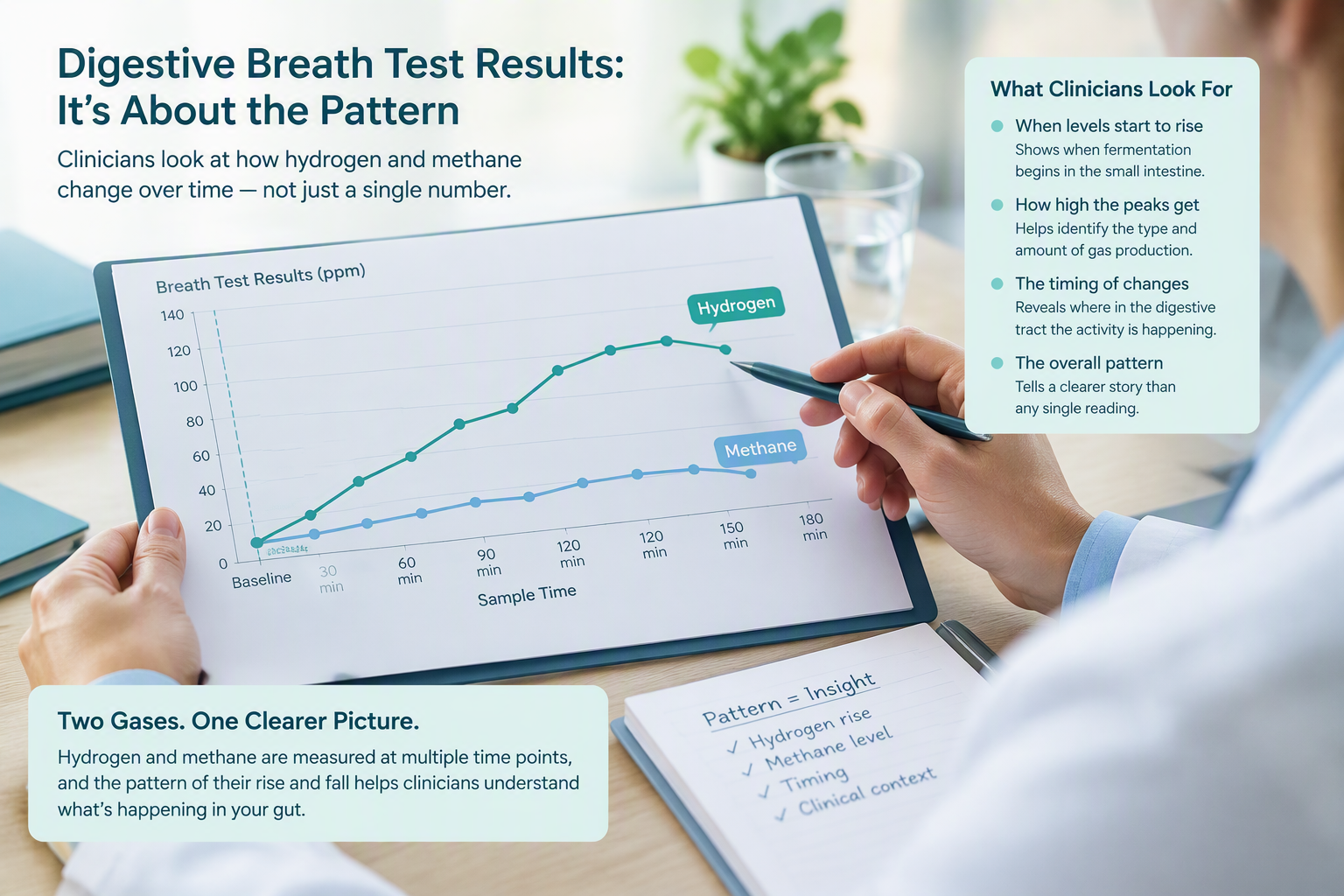
With the timed samples collected on test day, breath test results are most useful as a pattern over time, not as one high or low reading. Clinicians interpret the baseline, timing of any rise, and size of the change across repeated breath samples. In that interpretation, clinicians consider the baseline, the timing of any rise, and the size of the change.
An early hydrogen rise on a SIBO breath test can suggest fermentation in the small intestine before the sugar reaches the colon. That pattern may support hydrogen-predominant small intestinal bacterial overgrowth, but it is only one part of a SIBO diagnosis and cannot confirm what is causing every symptom.
A methane breath test identifies a different finding. Methane-producing organisms may be present in the small or large intestine, so methane-positive intestinal methanogen overgrowth, or IMO, is distinct from hydrogen-predominant SIBO. When constipation or slow bowel movements are also present, methane findings can be more meaningful rather than serving as a single explanation for bloating, reflux, or pain.
A later rise on a hydrogen breath test after lactose or fructose may point to carbohydrate malabsorption. The tested sugar may have reached the colon without being fully absorbed, where colonic microbes fermented it. This result can help connect symptoms to a particular carbohydrate, but it cannot prove that food causes every digestive flare.
Some patterns need extra care when interpreted:
- High baseline levels: Recent fermentation, incomplete preparation, smoking, or other factors can make the result harder to interpret.
- A flat line: Low hydrogen may occur when methane production is predominant, though test limitations can also contribute.
- An early lactulose rise: Because lactulose is not absorbed, its pattern also reflects orocecal transit, or movement from the mouth to the beginning of the colon. Rapid transit can resemble an early SIBO pattern.
A negative result makes the tested condition less likely, but it does not rule out other causes of gas, bloating, abdominal pain, diarrhea, constipation, or reflux. Positive findings should be considered alongside your symptoms, diet, medicines, preparation, and medical history. Persistent or disruptive symptoms are worth discussing with a healthcare professional or gastroenterologist.
Hydrogen breath test results are read as a rise above baseline. A hydrogen rise points to bacterial fermentation. A methane rise on a SIBO hydrogen methane test points to intestinal methanogen overgrowth, which is often tied to slow transit. That is why constipation and methane testing go together, and why a breath test for diarrhea looks at hydrogen first.
When Should You Postpone or Skip Testing?
Because preparation and transit can complicate result interpretation, postpone a breath test when the required preparation cannot be completed. Breath test preparation can include a temporary diet, fasting, oral care, and medication timing. Requirements differ by test and symptom pattern, so incomplete preparation can lead to false-positive or false-negative results.
Testing is best rescheduled in these situations:
- Recent antibiotics: Antibiotics can temporarily change the gut bacteria that produce hydrogen and methane, which may affect the sample.
- Gut-altering products: Probiotics, fiber supplements, laxatives, and medicines that affect intestinal movement may need to be paused. Do not stop a prescribed medicine unless the clinician managing it gives you specific guidance.
- Acute illness: Severe vomiting, diarrhea, or another illness can make fasting and repeated timed samples difficult. Waiting until you can complete the test as directed gives the result a better chance of being useful.
- Test-day conflicts: Unavoidable conflicts with the testing center's instructions may require rescheduling.
Changes in digestive transit can also make SIBO breath-test results harder to interpret. Fast movement through the intestines may cause a false-positive result, while slow transit may contribute to a false negative. Gastroparesis or gastric outlet obstruction can create added uncertainty.
Whether the test is worth doing depends on the clinical question, not only on how to prepare for a breath test. Persistent or disruptive bloating, abdominal pain, gas, diarrhea, or constipation deserves a conversation with a healthcare professional, possibly a gastroenterologist, who can review bowel changes, recent infections, and medicines before testing.
A gastroenterologist breath test order usually comes after simpler steps have been tried. Intestinal transit time and SIBO testing also interact, since a slow gut can delay the sugar reaching the colon and blur the result.
Digestive Breath Testing FAQs
Common digestive breath testing FAQs can clarify what these tests measure, how to prepare, and where results may have limits. They can also help you have a more focused conversation with your clinician about symptoms and next steps.
1. Can Breath Tests Diagnose Every Gut Problem?
No. Breath tests answer targeted questions, not every possible cause of digestive symptoms. Hydrogen and methane measurements can support evaluation for SIBO and IMO, including methane-producing organisms, while other protocols assess poor absorption of lactose, fructose, sucrose, or sorbitol that may trigger gas, bloating, or diarrhea. A urea breath test can check for H. PYLORI, and specialized testing may assess gastric emptying. Ongoing bloating, bowel changes, pain, reflux, or diarrhea can have causes these tests do not detect, so broader evaluation may be needed.
No. Gastrointestinal breath testing covers carbohydrate malabsorption testing (a lactose breath test, a fructose test, or a sorbitol breath test), a breath test for SIBO, and the urea test for H. pylori. A gastric emptying breath test exists but is far less common. There are no breath tests for gastrointestinal disease such as celiac disease or inflammatory bowel disease. Those need blood, stool, or endoscopy.
2. Are Home SIBO Breath Tests Reliable?
Home SIBO breath tests are convenient, noninvasive options when the collection kit and laboratory use validated methods. After you drink the test solution, timed breath samples measure hydrogen and methane. Gut microbes make these gases while fermenting carbohydrates, and the gases travel through the bloodstream to the lungs.
Results depend on following diet, fasting, medication, and sample-timing instructions closely. Lactulose testing can also be affected by intestinal transit speed, so an early gas rise cannot prove SIBO is causing your symptoms. Discuss the result alongside your symptoms and medical history with a clinician.
A breath test for bloating done at home follows the same lactulose breath testing protocol, but sample timing and shipping delays can distort results.
3. Does Insurance Cover Digestive Breath Testing?
Coverage for digestive breath testing varies by the test, the reason it was ordered, your health plan, and whether the laboratory or clinic is in network. Before you schedule, ask your insurer and testing site about coverage, prior authorization, billing codes, deductible, copay, coinsurance, and any out-of-pocket lab fee. Ongoing bloating, abdominal pain, gas, diarrhea, or constipation may warrant a conversation with a healthcare professional, who can determine whether this noninvasive test fits your symptoms and support needed documentation.
4. Can Children Have Digestive Breath Tests?
Children can have digestive breath tests when a pediatric clinician believes one fits symptoms such as bloating, gas, stomach pain, constipation, diarrhea, reflux, or discomfort after dairy or fruit. Lactose testing assesses lactose digestion, while fructose testing checks for possible fructose malabsorption. The clinician selects the test that best fits the suspected cause.
A caregiver can help with the preparation diet, fasting, sample collection, and supervision during the appointment. After a baseline breath sample, the child receives an age-appropriate dose of lactose, fructose, glucose, or lactulose mixed with water, or urea for an Helicobacter pylori (H. pylori) test. Results are interpreted with symptoms and gas patterns, not alone.
5. How Often Can SIBO Testing Be Repeated?
There’s no set schedule for repeating a SIBO breath test. The timing should reflect why you were tested, whether symptoms changed or returned, your response to treatment, and recent antibiotics, probiotics, or shifts in gut motility. Retesting only for reassurance may add confusion, so discuss whether another result would meaningfully guide your next steps with your healthcare professional.
A repeat test is only as useful as its preparation and interpretation. Instructions can differ by test and clinical situation, and incomplete preparation may cause false-positive or false-negative results. Lactulose testing can also be affected by fast or slow intestinal transit, so a positive result does not automatically mean SIBO explains ongoing symptoms.