


A broad stool test is rarely the best first answer for bloating, constipation, or diarrhea. The stool tests that match digestive symptoms are targeted to a specific concern, such as infection, intestinal inflammation, hidden bleeding, fat malabsorption, or low pancreatic enzyme output.
New diarrhea with fever, vomiting, recent travel, untreated-water exposure, or antibiotics may call for a pathogen panel, Giardia testing, or C. difficile testing. Persistent diarrhea with blood, mucus, or weight loss may lead to calprotectin or lactoferrin testing, while greasy, floating, hard-to-flush stools can point toward fecal fat testing or fecal elastase-1.
Consumer microbiome reports cannot diagnose IBS, IBD, infection, bleeding, or pancreatic insufficiency. Matching the test to the symptom pattern and relevant exposures keeps the next step focused.
Digestive Stool Tests Key Takeaways
- Stool tests answer specific medical questions, not overall gut-health scores.
- Fever, travel, unsafe water, or sick contacts can support infection or parasite testing.
- Diarrhea after antibiotics may warrant targeted C. difficile testing.
- Calprotectin and lactoferrin assess intestinal inflammation but cannot diagnose IBS or IBD alone.
- FIT detects hidden lower digestive tract bleeding, not digestion or microbiome health.
- Fecal elastase-1 helps assess pancreatic insufficiency when malabsorption is suspected.
- Consumer microbiome reports cannot identify the cause of digestive symptoms.
How Is Gut Health Testing Organized?
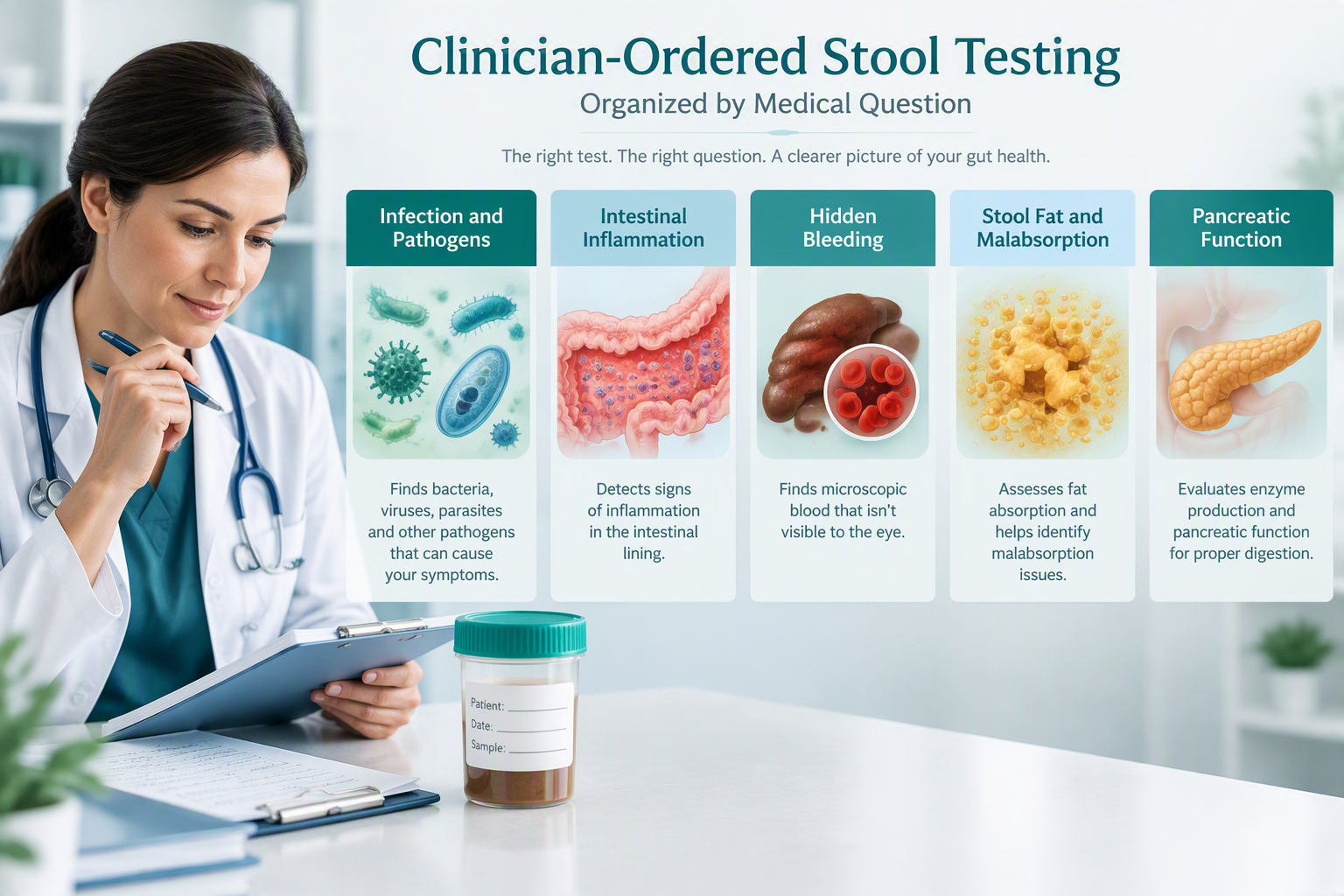
Stool testing for gut health is a group of clinician-ordered analyses, not a single score for your whole digestive system. How gut health testing is organized depends on the specific question behind your symptoms, including infection, intestinal inflammation, hidden bleeding, trouble digesting food, low pancreatic enzyme output, or nutrient malabsorption.
A doctor-ordered stool test takes your symptom pattern and context into account. Clinician-ordered stool tests can be appropriate when diarrhea, fever, vomiting, abdominal pain, or blood in stool raises concern for infection, bleeding, or another digestive disease (source). Persistent diarrhea or pain, unexplained weight loss, possible malabsorption, medicines, recent travel, and food, water, or sick-contact exposures also help determine whether medical stool tests are useful.
Clinical stool tests may examine several distinct concerns:
- Pathogens: These tests look for bacteria, viruses, or parasites that may cause an infection.
- Inflammation: Marker tests can show whether intestinal inflammation may be present.
- Occult blood: These tests detect bleeding that cannot be seen in the stool.
- Stool fat: Excess fat can suggest a problem with digestion or absorption.
- Pancreatic function: Fecal elastase-1 is an enzyme marker used when pancreatic insufficiency is a concern.
Digestive health testing may be more relevant if stools are pale, oily, floating, difficult to flush, or accompanied by ongoing diarrhea, weight loss, or trouble maintaining nutrition. A watery stool sample can dilute fecal elastase-1 and produce a falsely low result, so results need to be read alongside your symptoms and other clinical information.
Bloating, gas, constipation, reflux, food-related discomfort, and irregular bowel habits do not automatically require every stool sample analysis. Overlapping symptoms cannot confirm one cause, and consumer microbiome reports differ from clinical stool tests because they do not answer defined questions about infection, inflammation, bleeding, or digestion. In some situations, what a breath test measures may better match the concern.
How Do You Match Symptoms to Tests?

To distinguish those overlapping symptoms from concerns that may fit breath testing, choosing a stool test for digestive problems starts with your symptoms, their duration, medical history, medicines, recent travel, and food or water exposures. Because bloating, gas, constipation, food-related discomfort, and diarrhea overlap, consumer microbiome reports cannot replace clinical stool tests.
Persistent or recurrent diarrhea may call for targeted testing:
- Inflammation: A calprotectin stool test or lactoferrin test can look for intestinal inflammation. A stool test for gut inflammation may help distinguish an inflammatory pattern from symptoms more consistent with irritable bowel syndrome (IBS). MedlinePlus explains that calprotectin measures a protein linked to intestinal inflammation (source).
- Infection: A stool test for infections may include a stool culture or molecular pathogen test when an infection is plausible. Giardia or other parasite testing may fit after travel, untreated-water exposure, or daycare contact. Targeted results often return within one to three days, depending on the method.
- After antibiotics: New or worsening diarrhea after antibiotics calls for timely clinical advice and discussion of Clostridioides difficile (C. difficile) testing. Timing, fever, abdominal pain, and healthcare exposure can shape the need for other infection tests.
Medical evaluation matters more than routine testing if you have bleeding and weight loss warning signs such as:
- Blood or mucus in stool
- Rectal bleeding
- Unintentional weight loss
- Diarrhea that wakes you from sleep
- Recurring fever with abdominal pain
- A sudden, sustained bowel-habit change
A stool test for bowel inflammation may be part of the workup, though endoscopy or colonoscopy may be needed to find bleeding, inflammation, or another cause. Symptoms that justify testing can help you recognize when prompt attention is appropriate.
Greasy, floating, hard-to-flush stools, ongoing loose stools, weight loss, or trouble maintaining nutrition can suggest malabsorption. Stool fat testing and fecal elastase assess digestion and pancreatic enzyme function when malabsorption is a concern. Celiac blood testing fits better when celiac disease is suspected.
Without warning signs, IBS-like symptoms may need symptom-based assessment and limited rule-out testing. Inflammatory features can point toward inflammatory bowel disease (IBD), infection testing, or specialist care. Consumer microbiome reports provide context, not a diagnosis, because diet, stress, medicines, and lifestyle can all change microbiome composition.
None of these tests is a consumer kit. What a microbiome kit reports is a description of organisms, which is a different thing from an answer to a symptom.
Medically useful stool tests answer one question each. A stool test for diarrhea that has lasted more than a few days is a pathogen panel. Gut inflammation markers are calprotectin and lactoferrin. An H. pylori stool antigen test answers an ulcer question.
How Do Culture and Pathogen Panels Help?

When symptom matching points to a possible infection, a stool culture or stool test for infections is most useful when diarrhea feels like a new illness rather than part of your usual bowel pattern. Sudden or persistent diarrhea with fever, vomiting, cramping, blood or mucus in stool, sick contacts, unsafe food or water, or recent travel can point to an infection with a specific cause. These tests look for a cause of illness, not a general gut-health score.
Signs that make clinician-ordered testing more relevant include:
- Abrupt illness: Diarrhea that begins quickly with fever, vomiting, or cramps may warrant testing for bacterial or viral causes.
- Possible exposure: Sick household contacts, daycare exposure, recent travel, or unsafe water can raise concern for Giardia and other infections.
- Recent antibiotics: Diarrhea during or after antibiotic use may prompt targeted testing for Clostridioides difficile, commonly called C. difficile.
- Lingering symptoms: Prolonged diarrhea after travel or exposure may make a stool test for parasites, including an ova and parasite test, appropriate.
Traditional stool culture grows selected living bacteria from a sample. It can find organisms such as Salmonella or Campylobacter, but only when the lab includes them and they remain viable during collection and transport.
A multiplex pathogen polymerase chain reaction (PCR) panel searches for genetic material from several preselected bacteria, viruses, and parasites at once. Depending on the panel, it may identify Salmonella, Campylobacter, C. difficile, rotavirus, or Giardia. The National Institute of Diabetes and Digestive and Kidney Diseases notes that stool testing can help identify blood, bacteria, or parasites in people with diarrhea.
Neither approach finds every organism or explains every digestive symptom. A positive PCR result needs to fit your symptoms, timing, and medical history because it detects only the organisms or genes included on that panel.
Broader comprehensive or functional panels may combine quantitative polymerase chain reaction (qPCR), microscopy, culture, and microbiome measures to report bacteria, parasites, fungi, or yeast. Culture detects only organisms that can grow, while DNA testing targets known organisms or genes. With chronic diarrhea, diagnostic stool testing may be paired with fecal calprotectin or lactoferrin to check for intestinal inflammation rather than assuming infection is the cause.
Stool pathogen testing takes two forms. Stool culture testing grows organisms. PCR stool testing detects their DNA and returns faster, but it can flag organisms that are present without causing disease.
When Is an Ova and Parasite Test Used?
Chronic watery diarrhea often calls for targeted Giardia testing before a broad ova and parasite test. Giardia is a treatable parasite that a wider examination can miss, and testing may be ordered on its own or within an infection-focused stool panel. Broader parasite testing is generally reserved for cases where travel or an exposure raises the likelihood of infection (source).
A stool test for parasites is not routine screening for bloating, gas, constipation, or everyday changes in bowel habits. A broader ova and parasite test is most helpful after exposures such as:
- Travel with uncertain food or water safety.
- Drinking untreated water or swimming in potentially contaminated freshwater.
- Close contact with someone with a suspected parasitic infection.
- A known outbreak in a household, childcare setting, or community.
- A weakened immune system, which can make infections more concerning.
Testing beyond Giardia may also fit when diarrhea continues after an initial evaluation or starts after a relevant trip or exposure. Clinicians match the organisms tested to the timing and pattern of symptoms, plus your medical history and possible exposures. Mention sick contacts, immune conditions, recent antibiotic use, and food or water concerns when discussing testing.
Parasite testing is only one part of a diarrhea evaluation. Fecal calprotectin or lactoferrin can check for intestinal inflammation, while diarrhea after antibiotics may prompt testing for Clostridioides difficile, also called C. difficile.
Prompt clinical guidance is important when blood or mucus appears in stool, fever develops, abdominal pain is substantial, vomiting persists, or diarrhea continues long enough to raise concern for infection or another digestive problem. A brief symptom and exposure timeline can help keep testing focused on the question most likely to explain what is happening.
Parasite stool testing is the everyday name for this exam.
How Does Fecal Occult Blood Testing Help?
When bleeding rather than the infections or parasites just discussed is the concern, a fecal occult blood test checks a stool sample for hidden blood in stool, meaning blood that is present in amounts too small to see. The fecal immunochemical test (FIT) is a common doctor-ordered stool test that detects human blood from the lower digestive tract. It may be used for colorectal cancer screening or when gastrointestinal bleeding is suspected, not to assess digestion, the microbiome, or overall gut health (source).
A positive result suggests bleeding may be occurring, but it cannot diagnose cancer or pinpoint the cause. Your clinician considers the result alongside your symptoms and health history and may recommend a colonoscopy or endoscopy to locate the source.
Commercial microbiome reports examine patterns of microbes, so they cannot detect or rule out occult bleeding. Depending on what is going on, targeted testing may look for:
- Bacteria, viruses, or parasites linked to infection.
- Inflammation in the digestive tract.
- Excess stool fat, which can suggest trouble digesting fat.
- Altered DNA used in colorectal cancer screening.
- Pancreatic function, including fecal elastase-1.
Careful collection helps the laboratory interpret the sample accurately:
- Follow the collection instructions that come with the test.
- Keep urine, toilet water, and other contaminants out of the specimen.
- Ask the ordering clinician about preparation, collection timing, and return instructions before you collect it.
Those warning signs need prompt medical evaluation. Targeted stool testing and, when appropriate, colonoscopy or endoscopy can help identify the underlying cause.
How Do Calprotectin and Lactoferrin Guide Care?

Fecal calprotectin and fecal lactoferrin are clinician-ordered stool markers that can show whether active intestinal inflammation may be contributing to persistent diarrhea. A calprotectin stool test, or another stool test for gut inflammation, cannot diagnose a condition on its own and is not the same as a consumer microbiome report or at-home diagnostic test.
These markers can be useful when diarrhea continues or your symptoms fall outside a typical IBS pattern. Signs that warrant a closer look include:
- Persistent diarrhea with abdominal pain or cramping
- Blood or mucus in stool
- Fever or symptoms outside the digestive tract
- Bowel changes that are getting worse instead of coming and going
Calprotectin and lactoferrin reflect inflammatory activity, including markers linked to white blood cells in stool. IBS can bring urgent diarrhea, constipation, cramping, and disruptive bowel changes, but it typically does not cause intestinal inflammation. Higher results make inflammatory bowel disease, including Crohn’s disease and ulcerative colitis, more important to evaluate.
A low stool test for bowel inflammation makes active inflammation less likely, but it cannot confirm IBS or distinguish Crohn’s disease from ulcerative colitis. Results help shape the next conversation rather than provide a final answer. Elevated markers may lead your clinician to review symptoms, medications, and health history before considering further evaluation, while normal results can support an IBS discussion when the overall pattern fits.
Chronic diarrhea can also call for tests that answer different questions. Recent antibiotic use may make Clostridioides difficile testing relevant. Travel, untreated-water exposure, or other risks may point to Giardia or other parasite testing. Broad consumer stool panels can blur these distinctions instead of identifying the most relevant cause.
A fecal elastase test has a different role. It may be considered when pancreatic insufficiency is suspected rather than when inflammatory bowel disease is the main concern. Clinicians interpret fecal elastase alongside your symptoms and sample quality.
Inflammatory bowel disease testing starts with these IBD stool markers, then moves to endoscopy if they are raised.
Intestinal inflammation testing with either marker is a safer first step than a scope.
How Does Fecal Elastase Check Pancreatic Function?
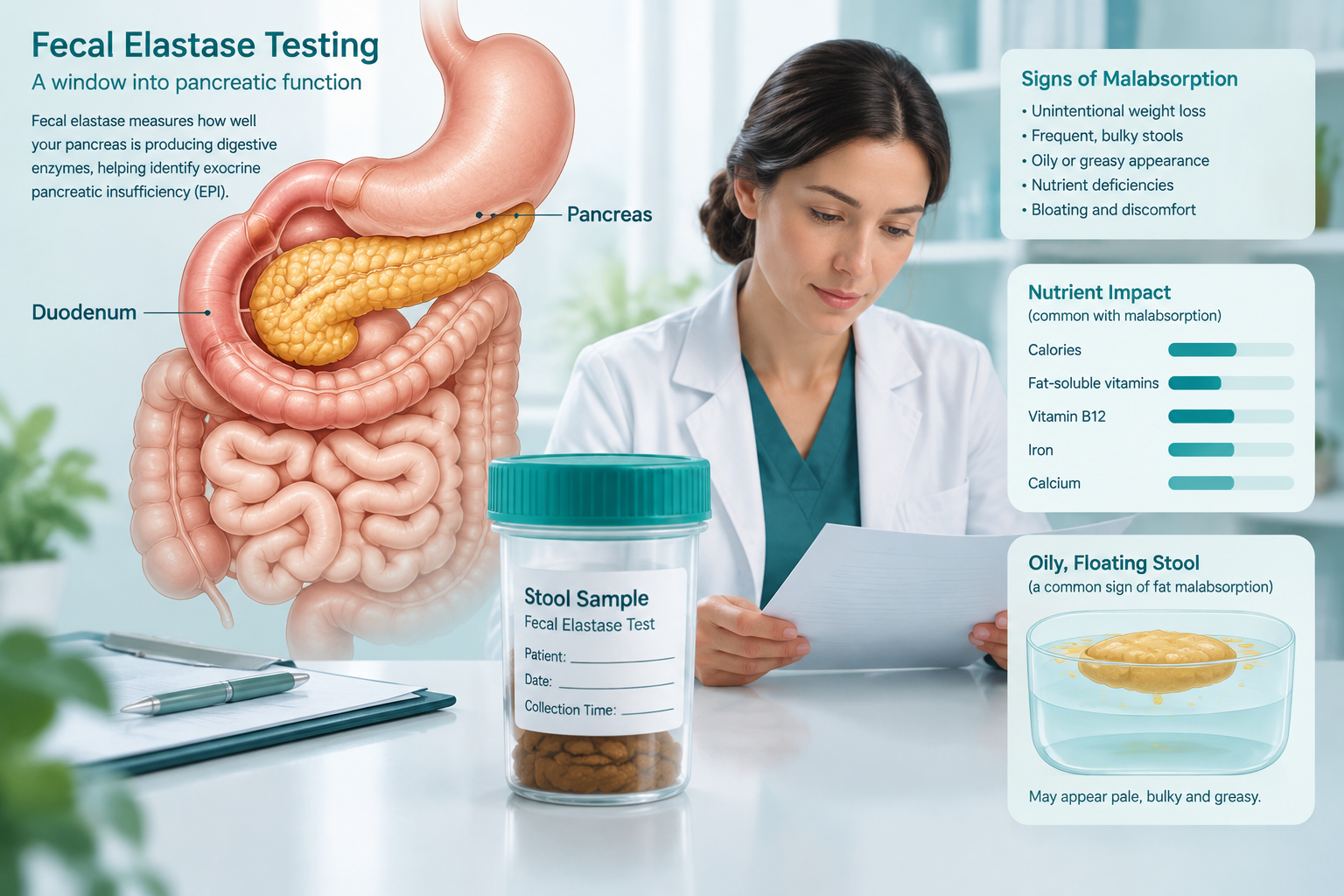
For the pancreatic concern distinguished from intestinal inflammation, a fecal elastase test measures elastase, a digestive enzyme made by your pancreas, in a stool sample. This stool test for pancreatic function helps assess exocrine pancreatic insufficiency when poor digestion or malabsorption is suspected. It measures pancreatic enzyme output, not overall microbiome health.
Results are interpreted with your symptoms, medical history, and, when needed, other tests:
- Above 200 mcg/g: Pancreatic enzyme output is generally considered normal.
- 100 to 200 mcg/g: This range may suggest mild to moderate exocrine pancreatic insufficiency.
- Below 100 mcg/g: This result is consistent with severe exocrine pancreatic insufficiency (source, source).
Sample consistency affects fecal elastase interpretation. An abnormal result during a diarrhea-predominant flare does not confirm pancreatic insufficiency on its own. If repeat testing is appropriate, a more formed sample may give a clearer result.
Bloating or diarrhea alone does not point specifically to a pancreatic problem. Greasy or floating stools, unintended weight loss, trouble maintaining nutrition, or possible nutrient deficiencies can make impaired fat digestion more likely. Fecal fat testing can add evidence about fat digestion and absorption, while fecal calprotectin or lactoferrin may better fit concerns about intestinal inflammation. Celiac disease can also affect absorption, and the National Institute of Diabetes and Digestive and Kidney Diseases includes blood testing in its diagnostic process (source).
Knowing how to collect a stool sample helps protect result quality:
- Follow the collection kit's instructions, including storage requirements.
- Keep urine, toilet water, and cleaning products out of the specimen.
- Return the sample promptly, since some laboratories reject delayed specimens.
The right stool test depends on your symptom pattern, medical and exposure history, and the question being investigated. Persistent greasy stools, weight changes, or nutrition concerns warrant clinician-guided follow-up.
When Do Celiac Blood Tests Belong?
Celiac blood tests can be part of a clinician-directed evaluation when ongoing symptoms suggest celiac disease, malabsorption, or another gluten-related problem. They are blood tests, not stool tests, but targeted stool testing may be used at the same time if infection, inflammation, blood in the stool, or reduced pancreatic function are also possible.
Symptoms that can make celiac testing appropriate include:
- Persistent diarrhea or constipation
- Ongoing bloating, gas, or abdominal pain
- Unexplained weight loss
- Greasy, pale, bulky, or difficult-to-flush stools
- Fatigue or food-related discomfort without a clear cause
Symptoms cannot diagnose celiac disease on their own. Bloating, changing bowel habits, and tiredness can also occur with infections, IBS, medication effects, and other digestive conditions. A healthcare professional looks at the duration and pattern of symptoms, family and medical history, medications, usual diet, and recent travel or infection exposure when deciding whether celiac blood tests, stool tests, or both are the best fit.
Keep eating gluten until you have discussed testing with a healthcare professional. Celiac blood tests measure immune markers linked with celiac disease, and they are most reliable while gluten is still part of your diet. Other blood factors may also be checked to make the results easier to interpret.
A positive or strongly suspicious result may lead to an upper endoscopy with small-intestine biopsies to confirm celiac disease. A negative blood test does not explain persistent symptoms, and further evaluation may include targeted stool tests, endoscopy, or colonoscopy.
Consumer microbiome testing serves a different purpose. A microbiome kit report may offer general wellness information, but it cannot answer a specific medical question behind ongoing symptoms.
How Do Consumer Microbiome Reports Differ?
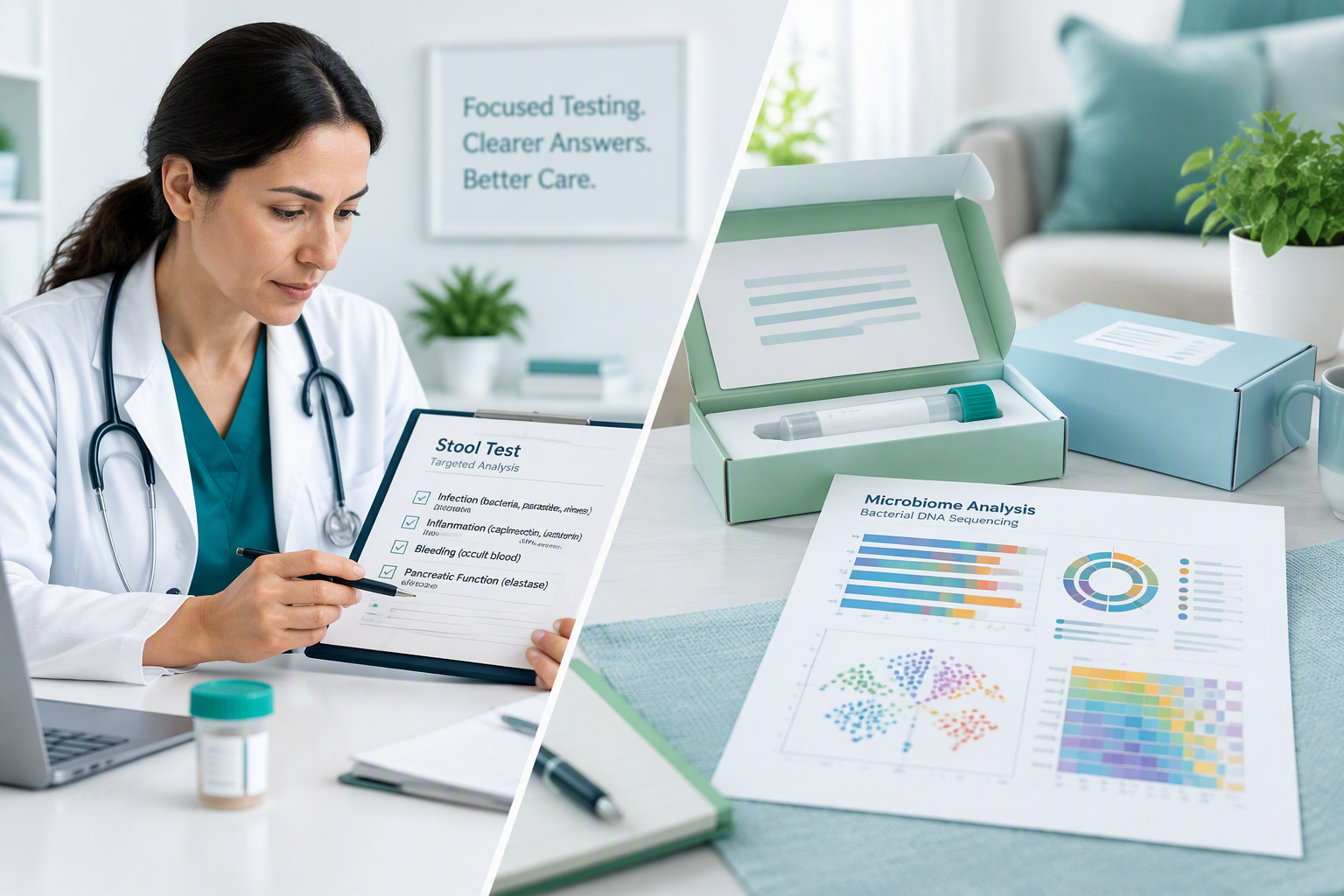
Consumer microbiome reports provide a wellness-oriented view of bacteria in a mailed sample, while clinician-ordered stool tests address defined medical questions such as infection, parasites, intestinal inflammation, bleeding, or low pancreatic enzyme output. A stool test for microbiome patterns may be interesting, but an organism list or diversity score is not a diagnosis with established clinical ranges or a treatment plan.
Most kits use bacterial DNA sequencing to estimate the groups present and their microbial diversity, and some also report fungi or archaea. Those findings can describe patterns, but they cannot show that one microbe is causing bloating, constipation, diarrhea, abdominal pain, reflux, or IBS.
One sample is a temporary snapshot of your gut microbiome, not a permanent map of gut health. Your previous day’s food, usual diet, stress, sleep, illness, travel, antibiotics, other medicines, and ordinary day-to-day variation can all affect what appears in stool. A result cannot prove that your microbiome is damaged or needs correction.
Reports may also conflict because companies use different sequencing methods, reference databases, organism names, and scoring formulas. In a National Institute of Standards and Technology comparison, seven companies analyzed identical samples from one donor and returned different results. That makes a single company’s imbalance label, score, or food recommendation hard to interpret medically.
No universal healthy microbiome exists. Age, diet, environment, and medication use naturally shape microbial communities, so a low level of one bacterial group does not automatically mean poor health, leaky gut, or a need for supplements.
Consumer reports cannot diagnose IBS or independently identify the cause of digestive symptoms. Clinician-guided evaluation and targeted testing matter when you have:
- Blood in your stool
- Fever
- Unintended weight loss
- Ongoing diarrhea
Avoid choosing probiotics, prebiotics, restrictive diets, or supplements based on one organism result alone.
Panels sold as comprehensive stool analysis or functional stool testing come from specialty laboratories, often through functional medicine practices. They bundle gut microbiome analysis with markers such as sIgA and zonulin, marketed as leaky gut testing or intestinal permeability testing, that have no agreed reference ranges. A microbiome health report with a general gut health score is a wellness product. A stool test for gut health, as consumer kits market it, describes organisms rather than answering a symptom, and microbiome test accuracy is the open question, since the same sample can come back different from two labs. Stool tests worth getting are the ones above, ordered as clinically indicated stool testing rather than as a wellness screen.
Stool Testing for Gut Health FAQs
These FAQs address common questions about stool testing for gut health, helping you understand what different tests assess and which digestive symptoms may be worth discussing with a clinician.
1. How Should You Collect a Stool Sample?
You’ll usually collect a stool sample at home using the container and directions from the laboratory. To collect it accurately, pass stool into a clean, dry device, transfer the requested amount with the supplied scoop, and seal the container. Keep urine, menstrual blood, toilet water, toilet paper, and cleaners out, as contamination can affect testing. Return the labeled sample as instructed. Refrigerate it only if the laboratory allows it, since delayed samples may not be accepted.
2. How Long Do Stool Test Results Take?
Many targeted, clinician-ordered stool tests return within one to three days, though timing varies by laboratory and test. A result needing prompt follow-up may lead to an earlier call, while other findings are reviewed at a scheduled visit. For microbiome testing, a stool test can take several weeks because mailed samples undergo bacterial DNA sequencing to estimate gut microbiome patterns, microbial diversity, and relative amounts of bacterial groups, sometimes including fungi or archaea. The longer wait does not necessarily mean it will better explain your symptoms.
3. Can Medications Affect Stool Test Results?
Yes. Antibiotics can change or suppress gut bacteria, affecting infection and microbiome-related stool results. Probiotics, laxatives, antidiarrheal medicines, acid-reducing drugs, and digestive supplements may affect interpretation. Share recent use with the clinician who ordered the test, and do not stop prescribed medication unless they specifically tell you to.
A stool sample captures one point in time. The prior day’s diet, food changes, stress, sleep, travel, illness, and collection technique can influence findings, especially in microbiome testing. This background helps interpret results and decide whether repeat testing could help.
4. Does Insurance Cover Stool Testing?
Coverage depends on why your clinician orders a stool test and the details of your health plan. A targeted test for infection, gastrointestinal bleeding, inflammation, or pancreatic function may be covered when your symptoms and medical history support it. Deductibles, copays, in-network rules, and prior authorization can still affect your bill.
Comprehensive functional stool panels are rarely covered by standard insurance because they often focus on broad wellness or microbiome insights rather than a defined medical need. These panels are commonly paid out of pocket, so review the laboratory’s estimate and your plan benefits before submitting a sample.
5. Can Stool Tests Diagnose Irritable Bowel Syndrome?
A stool test cannot diagnose IBS on its own. IBS assessment centers on your symptom pattern and medical history, while targeted stool testing may look for an infection or inflammation that needs different care.
Consumer microbiome testing cannot confirm IBS, leaky gut, or an ideal microbiome. There is no universal definition of a healthy microbiome, and these reports are not FDA-approved diagnostic tools. If you are only curious and have no symptoms, a general health score rarely justifies the expense. Persistent, worsening, disruptive, or unusual symptoms warrant a clinician’s evaluation.
Stool microbiome testing cannot diagnose IBS either.