


Eliminating every dairy food after bloating, gas, or urgency isn't usually necessary. A dairy challenge can help you find your personal lactose threshold, the largest portion of a specific dairy food you can eat without meaningful symptoms. Begin after symptoms settle, then use a lactose-free baseline to make dairy-related patterns easier to spot.
Pizza, sweetened yogurt, and rich restaurant meals can contain several triggers besides lactose. Testing one measured dairy food at a time, increasing from a small serving over three days, and recording symptoms in a diary gives you a clearer result. A two- to three-day washout period also helps separate a delayed response to milk from a reaction to the next food you test.
Repeated symptoms at a larger portion do not mean all dairy is off limits. Yogurt with live cultures and aged hard cheese may be easier to tolerate, while hives, throat swelling, wheezing, or repeated vomiting point to a possible milk allergy rather than lactose intolerance.
Personal Lactose Threshold Key Takeaways
- Use a lactose-free baseline after symptoms have settled before testing dairy.
- Test one measured dairy food at a time with familiar meals.
- Increase portions gradually, from small to moderate to your usual serving.
- Record food, portion, timing, symptoms, bowel changes, sleep, and stress.
- Allow two to three days between foods to identify delayed symptoms.
- Your threshold can vary by portion, dairy type, and meal context.
- Stop home testing after hives, swelling, wheezing, faintness, or repeated vomiting.
Choose the Right Digestive Food Challenge
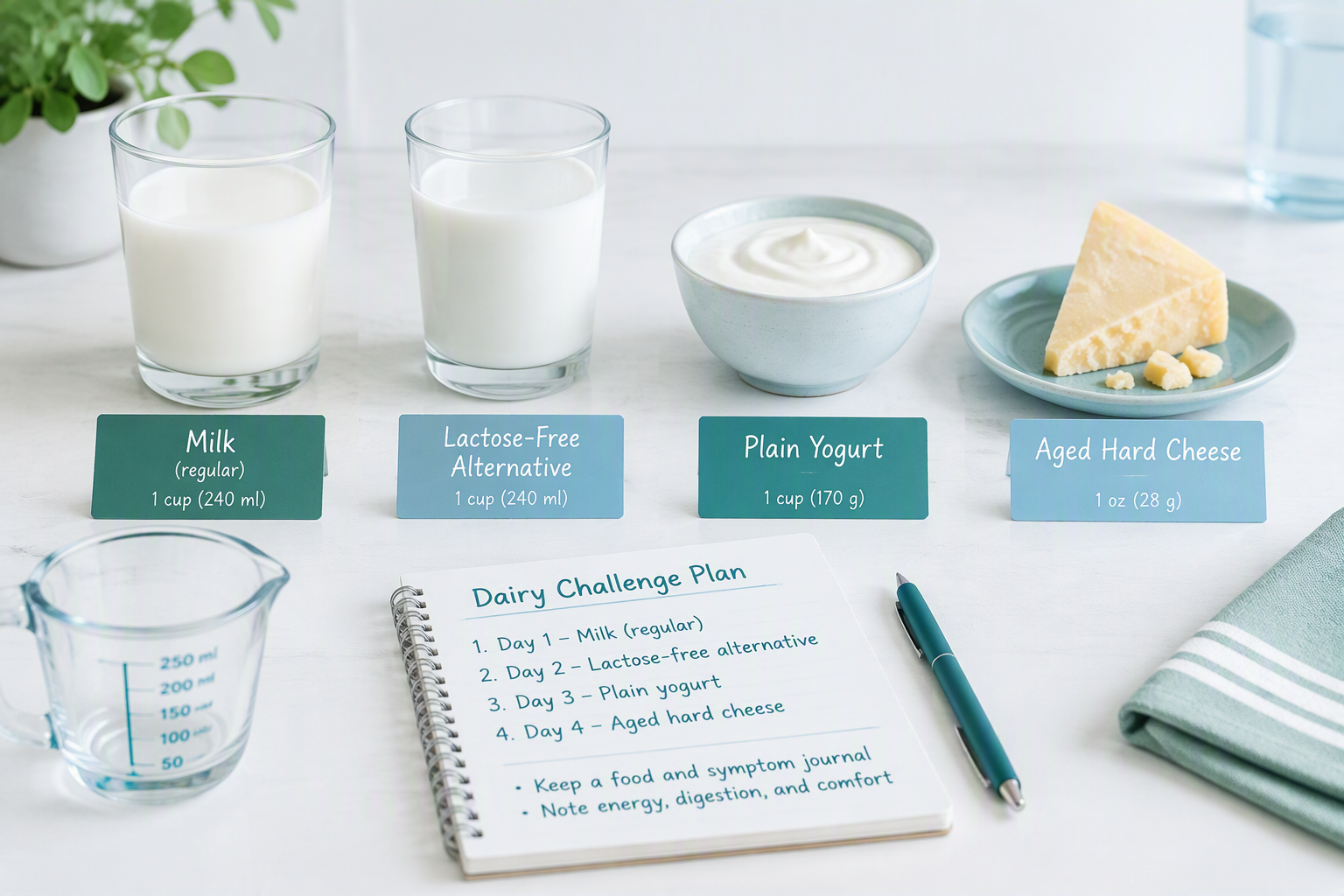
Digestive trigger food challenges are calm, structured elimination-and-reintroduction processes, not speed-eating stunts or viral restaurant contests. Eating an unusually large amount of food, fat, or spice can upset anyone's digestive system, so the symptoms cannot reliably point to lactose. The lactose intolerance hub explains the common pattern of lactose-related symptoms.
The best approach depends on the question you need answered:
- A lactose challenge: You temporarily remove lactose-containing dairy, then add measured portions back while keeping the rest of your usual diet as consistent as practical. This focused food challenge can help you identify whether dairy is a likely trigger and the amount you may tolerate in everyday meals.
- A food elimination diet: This broader approach removes several possible triggers linked with bloating, gas, diarrhea, constipation, abdominal pain, or reflux before systematic reintroduction. Elimination diets done properly explains why these plans need a clear structure.
- Clinical evaluation: A clinician-supervised food challenge uses precise doses when an allergy or serious reaction is possible. A hydrogen breath test is a different type of lactose challenge test. After you drink a lactose-containing beverage, breath samples are collected at set intervals to check for hydrogen, which can suggest that lactose was not fully digested and absorbed.
A low-FODMAP diet is another broader option for people with irritable bowel syndrome (IBS). A low-FODMAP plan temporarily limits fermentable oligosaccharides, disaccharides, monosaccharides, and polyols for two to six weeks before reintroduction, depending on symptoms and clinician guidance (source). That process can help sort through several IBS triggers, but it is more restrictive than needed when lactose is the main question.
A dairy-focused challenge fits best when lactose intolerance is diagnosed or strongly suspected and you want practical guidance for meals. When symptoms vary widely or triggers remain unclear, professional guidance can prevent unnecessary food restrictions. Stop self-testing rather than pushing through concerning or severe reactions.
Prepare for a Dairy Challenge

Once a dairy-focused challenge fits your situation, wait to test dairy until your usual bloating, abdominal pain, diarrhea, or urgency has substantially improved or settled. Reintroducing dairy before symptoms are under control can make it hard to tell whether dairy caused a reaction.
Keep your usual routine as consistent as practical during this short baseline. A lactose-free diet can help create a clear starting point, but a food elimination diet should not become more restrictive than necessary.
Consistency matters most in these areas:
- Meals: Keep familiar meal times and portion sizes.
- Drinks: Avoid major changes in caffeine or alcohol intake.
- Supplements and routines: Continue established supplements, sleep habits, and symptom-management practices unless a healthcare professional has advised otherwise.
Build meals around familiar lactose-free foods you already tolerate. Whole foods are often easier to track than heavily processed dairy alternatives. Building a low-lactose diet can help you plan satisfying meals without cutting out foods you do not need to avoid.
A simple baseline plate may include:
- Protein: Chicken, turkey, fish, or another tolerated protein source.
- Starches: Rice or quinoa.
- Produce: Leafy greens, carrots, cucumbers, berries, bananas, or other familiar choices.
- Nutrient sources: Calcium- and vitamin D-fortified plant milk or other dairy alternatives that fit your preferences.
Plan for protein, vitamin D, and calcium intake rather than simply removing dairy from meals. This is especially important if the baseline lasts longer than a brief trial.
Read ingredient labels every time, including on foods that do not seem dairy-based, and avoid milk, lactose, whey, casein, milk solids, cream, and butter during the baseline. Sauces, seasoning blends, baked goods, and snacks may contain them. Natural flavors and soy lecithin do not automatically mean a food contains milk, but choose another option if the label says “contains milk” or is unclear.
A registered dietitian or healthcare professional can help if dairy avoidance continues, you manage several food restrictions, you are pregnant, you are feeding a child, or you have unintentional weight loss. They can also consider whether celiac disease or inflammatory bowel disease (IBD) may explain symptoms that persist.
Do not run a challenge if you are losing weight without trying, since weight loss alongside dairy symptoms needs a clinician first.
For the occasional ice cream, a lactase enzyme before dairy covers the gap.
Create a Useful Symptom Diary

With a consistent lactose-free baseline in place, a useful diary helps you spot patterns by separating dairy exposure from other factors that can affect digestion. Use paper, a notes app, or a printable table, and date every entry. Consistent symptom tracking is more useful than a vague note that dairy caused a problem.
A completed entry might look like this:
Date and meal | Food and portion | Timing and symptoms | Bowel changes and context |
|---|---|---|---|
May 14, lunch at 12:30 p.m. | Two slices of cheddar in a turkey sandwich, with chips and coffee | Bloating began at 1:20 p.m. and peaked at 5/10 for 90 minutes. Mild gas, no nausea. | Bowel movement at 2:15 p.m., urgent and looser than usual. Poor sleep and a stressful morning. |
For each challenge, record the exact food or drink, preparation or brand when relevant, estimated portion, meal time, and foods eaten alongside it. “Two slices of cheddar at lunch” gives you a clearer comparison point than “dairy.”
Track lactose intolerance symptoms in the same way each time:
- Timing: Note when symptoms begin and how long they last.
- Severity: Rate each symptom from 0 to 10.
- Digestive symptoms: Record bloating, gas, nausea, abdominal pain or cramps, reflux, diarrhea, urgency, and bowel frequency.
Larger portions may bring a stronger response, so the portion field matters as much as the dairy food itself. For bowel movements, note the time, urgency, and whether stool was looser, harder, or more frequent than your usual pattern. A Bristol Stool Chart-style description can make these notes more consistent.
Same-day factors can muddy the pattern:
- Body and mood: Sleep quality, stress, mood, illness, and menstrual-cycle changes when relevant.
- Routine: Physical activity, medications, alcohol, caffeine, and unusually large or rich meals.
- Other symptoms: Headache, brain fog, fatigue, joint aches, and skin flare-ups, which are not specific signs of lactose intolerance.
A repeatable pattern tied to a dairy food and portion is more meaningful than one difficult day with several possible triggers. The diary supports observation, not diagnosis. Stop the challenge and seek urgent care for hives, throat or tongue swelling, or trouble breathing. Intense abdominal pain or other severe symptoms need prompt medical attention.
If the diary stays ambiguous after a full challenge, formal lactose testing answers the question.
Food symptom tracking is the whole method, so keep the diary honest rather than neat.
How to identify food triggers without a diary is guesswork.
Test One Dairy Food at a Time

A lactose challenge is easiest to interpret when only one dairy food changes and your baseline diet, meal timing, and usual routine stay steady. Testing dairy tolerance at home can reveal patterns, but it cannot diagnose lactose intolerance or rule out other digestive conditions.
Choose a measured food, such as plain milk or a defined scoop of ice cream, instead of a mixed dish. Wheat, onions, sweeteners, and rich sauces may cause symptoms on their own. To keep the test controlled, use the same brand, recipe, and add-ons and avoid lactase enzyme tablets, new supplements, and broad digestive-enzyme blends during the test so they do not affect lactose digestion or blur the result.
Use a cautious portion progression:
- Day 1: Have a small portion of the selected dairy food with a familiar meal.
- Day 2: If symptoms are manageable, eat a moderate or typical portion of the same food.
- Day 3: If Day 2 goes well, try the full portion you would usually eat. Stop increasing the amount if clear symptoms occur.
A dietitian or clinician may recommend a different schedule based on your symptoms, medical history, or current diet. Their individualized plan should guide your lactose challenge.
Symptom tracking matters as much as the amount you test. Record the following after each exposure:
- Food and amount: Write down the exact dairy food, portion, and time you ate it.
- Symptoms: Note bloating, gas, abdominal pain, diarrhea, urgency, and bowel changes.
- Timing: Record immediate effects, symptoms later that day, and changes over the following days.
- Daily context: Include other meals, bowel movements, sleep, unusual stress, or illness that could affect digestion.
Day | Dairy food and portion | Time eaten | Symptoms and timing | Bowel movements | Sleep |
|---|---|---|---|---|---|
1 | |||||
2 | |||||
3 |
Some digestive reactions are delayed by a day or more, so return to your established baseline diet for a few days after the final serving, or sooner after clear recurring symptoms, before testing another dairy food. Wait until symptoms return to their usual level, which helps prevent a delayed reaction to milk from being mistaken for a reaction to yogurt.
No meaningful symptoms through the challenge and washout suggest that portion of that specific food is likely tolerated. Repeated, clear symptoms suggest the amount exceeds your current lactose tolerance, not that all dairy needs to be eliminated. Return to baseline and use the result to guide later threshold testing with a smaller portion.
Use Yogurt and Hard Cheese Wisely
Plain yogurt with live, active cultures and aged hard cheese are useful lower-lactose foods to try after earlier single-food challenges. Small portions of plain yogurt with live cultures and aged hard cheese may be easier to tolerate (source). Product type, portion size, and meal context can still change your response.
Lactose tolerance varies, so start with a small, measured serving of either plain yogurt or hard cheese alongside a familiar meal. Repeat the same amount before increasing it, and only move up after a symptom-free trial. Some people tolerate up to 4 ounces, or 118 milliliters, of milk, though your dairy tolerance threshold may be lower or higher (source). This gradual approach helps identify how much lactose a lactose intolerant person can have without avoiding dairy more than necessary.
Keep each food challenge simple:
- Test one food: Choose yogurt or cheese, not both, and use an unflavored version without mix-ins.
- Record the response: Note the serving size, timing, and any gas, bloating, abdominal discomfort, diarrhea, or urgency.
- Check ingredients: Whey can add lactose, while natural flavors and soy lecithin may introduce other possible triggers.
Lactase tablets or drops may improve dairy digestion, but using them during an initial trial measures tolerance with lactase support. Starting a probiotic at the same time can also blur the result because changes in gas, bloating, or bowel habits may not come from the dairy food alone.
When a small portion feels comfortable, keep that amount in your usual meals. Tolerated dairy or suitable alternatives can help maintain calcium, fiber, and vitamin intake as you restore food variety.
Lactose is one FODMAP category, so a FODMAP challenge for lactose follows the same one-category-at-a-time rule as low-FODMAP diet reintroduction.
The FODMAP challenge process tests one FODMAP category at a time, and Monash FODMAP guidance is the standard reference for it.
Find Your Personal Lactose Threshold
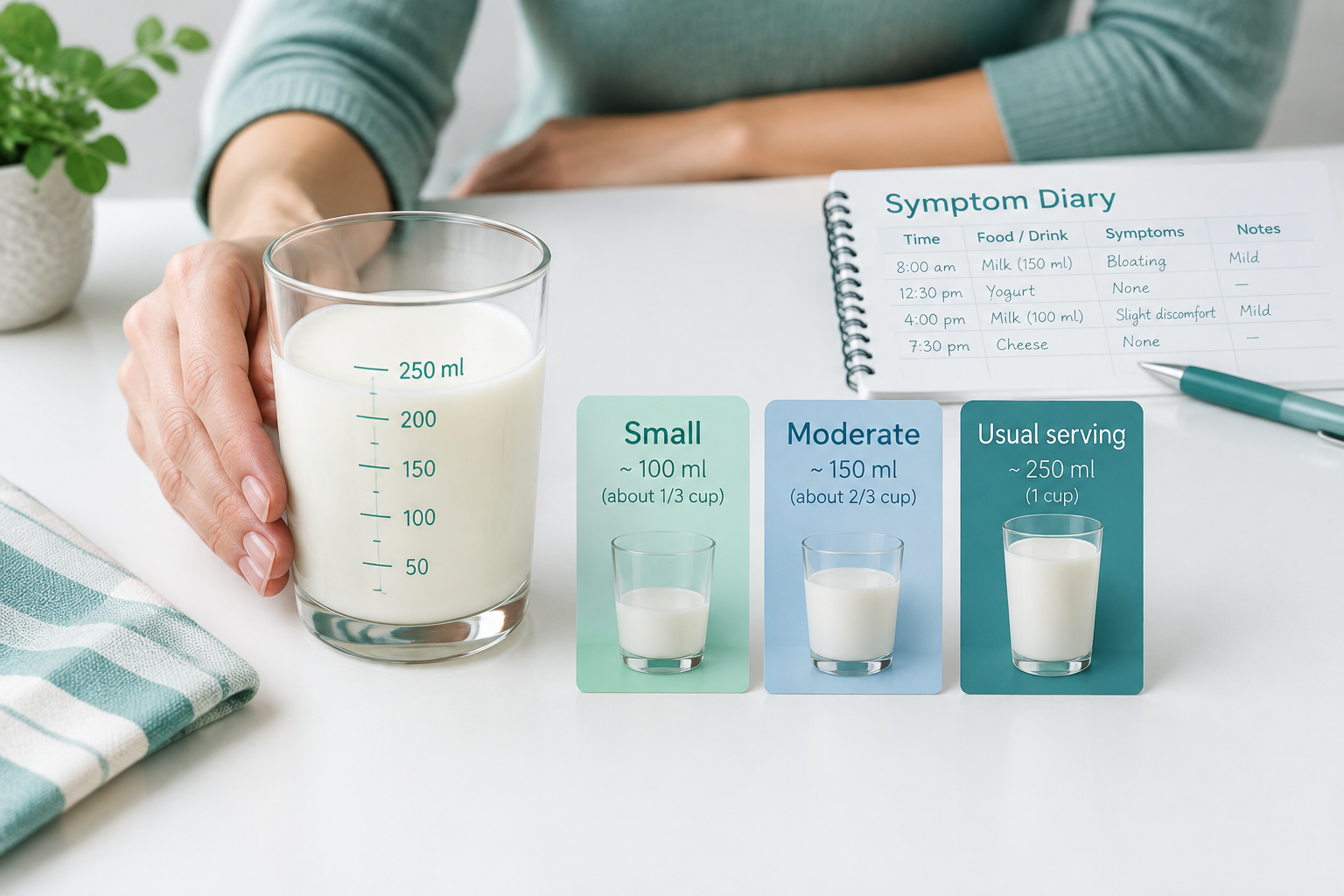
After identifying dairy foods that feel comfortable, your dairy tolerance threshold is the largest portion of a specific dairy food you can eat without meaningful symptoms. Lactose tolerance varies by dose and food type, so one-half cup may sit well while a larger amount causes trouble. The amount of lactose a lactose intolerant person can have is personal, not an all-or-nothing rule.
Keep the dairy food, meal context, and symptom diary the same so portion size is the main change. Start with up to 4 ounces (118 milliliters), or about one-half cup, of milk or a comparable portion of your chosen dairy food. After symptoms have settled, test moderate and larger portions on separate days.
- Record the dairy food, portion, meal details, timing, symptoms, bowel movements, and sleep after the small serving.
- If symptoms remain absent or insignificant through the observation and washout periods, try a moderate portion on another day.
- Test a larger portion only if the earlier amount was comfortable. Compare several diary entries rather than relying on memory.
A simple diary makes dose patterns easier to see:
Test day | Dairy food and portion | Symptoms and timing |
|---|---|---|
Small serving | Record the food and amount | Note symptoms, bowel changes, and urgency |
Moderate serving | Use the same food and meal setting | Compare with the small serving |
Larger serving | Test after symptoms settle | Watch for a stronger repeat pattern |
A portion is likely tolerated when it does not cause meaningful symptoms. Repeated gas, bloating, abdominal cramps, nausea, diarrhea, or urgency after the same or larger serving points to a more meaningful reaction, especially when it occurs more than once.
Pause the challenge for persistent, severe, or worsening symptoms and discuss them with a healthcare professional. Otherwise, return to foods that feel comfortable until symptoms settle, then consider retrying the same dairy food in a smaller amount. Your diary can help you retain tolerated dairy while avoiding portions that reliably cause symptoms.
Your FODMAP tolerance threshold for lactose is a dose, and lactose absorption improves when lactose comes with a meal.
Decide What to Eat Next
With your personal lactose threshold in mind, your challenge result can guide reintroducing dairy without turning dairy avoidance into a lifelong rule. Bring back the foods and portions that felt comfortable, then broaden food reintroduction slowly. Keep track of both dose and food type, since milk, yogurt, and cheese may not affect you the same way.
If dairy remains uncomfortable, nutrient-dense dairy alternatives can protect variety in your meals. Lactose-free foods often make familiar dishes easier to keep, while less processed choices can add calcium, fiber, and vitamins:
- Lactose-free choices: Use lactose-free milk or yogurt in meals you already enjoy.
- Fortified plant options: Choose plant milks and yogurts with calcium and key vitamins listed on the label.
- Calcium-rich foods: Include calcium-set tofu, canned fish with edible bones, leafy greens, beans, nuts, seeds, and whole grains.
A home lactose challenge test shows your response to one dairy food at one portion, but it also cannot assess milk allergy or every possible cause of bloating, diarrhea, abdominal pain, or urgency. A registered dietitian or healthcare professional can help when symptoms continue after lactose changes, the pattern is unclear, or you are avoiding several food groups.
Formal lactose testing may include a hydrogen breath test. NIDDK says doctors may order it to diagnose lactose malabsorption and lactose intolerance, and MedlinePlus describes it as the preferred method (source, source). It can help clinicians assess whether lactose malabsorption explains your symptoms. Medical teams determine when supervised food challenges are appropriate for suspected milk allergy or severe reactions.
Do not repeat a home challenge after symptoms that may signal an allergic reaction or another urgent problem:
- Hives, facial or throat swelling, or wheezing
- Faintness or feeling as though you may pass out
- Repeated vomiting
Before clinical testing, tell the clinician about laxatives, antacids, stool softeners, and other medicines. Keep taking prescribed medicine unless your clinician tells you otherwise. A lasting eating pattern includes the dairy you tolerate while keeping meals varied and nourishing.
How to test for lactose intolerance formally is covered on the diagnosis page. A lactose intolerance genetic test shows the tendency only.
Lactose tolerance tests, the clinical kind, come in breath and blood versions.
Digestive Food Challenge FAQs
These FAQs cover common questions about a Digestive Food Challenge, from interpreting symptom patterns to deciding whether a more structured approach may help. They can help you move forward with clearer expectations and less guesswork.
1. Who Should Avoid a Dairy Challenge?
Avoid a home dairy challenge if you may have a milk allergy, especially if dairy has caused hives, swelling, wheezing, throat tightness, faintness, or repeated vomiting. A clinical food challenge uses carefully measured food doses under medical supervision, so it is not the same as testing lactose at home.
If you have Crohn’s disease, another inflammatory bowel disease, uncontrolled or unexplained digestive symptoms, or a flare, speak with a clinician or registered dietitian before testing dairy. They can check for conditions such as celiac disease, support adequate nutrition, and help you wait until symptoms are stable.
Identifying food intolerance by challenge works well for lactose. Where IBS and lactose overlap, an elimination diet for IBS under a dietitian is the safer route.
Commercial food intolerance testing kits do not replace a challenge.
2. When Should I Contact a Doctor?
Contact a healthcare professional if lactose intolerance symptoms continue after the challenge, disrupt daily life, or do not ease when you avoid lactose. A mild, clear reaction may mean pausing that food and retesting later with a smaller portion. A clinician can help confirm whether lactose is the trigger and whether a hydrogen breath test is appropriate.
Prompt medical care is needed for intense abdominal pain, ongoing diarrhea, rectal bleeding, unexplained weight loss, fever, or symptoms that wake you at night. Hives, throat or tongue swelling, or trouble breathing after dairy need urgent care because they may indicate an allergy rather than lactose intolerance.
3. Can Medications Affect Challenge Results?
Lactase tablets or drops may ease symptoms for some people, but they can blur a dairy challenge. Laxatives, antacids, stool softeners, fiber products, probiotics, and digestive-enzyme blends can also change gas or bowel habits. Record anything you take, avoid adding several aids at once, and check labels for whey, soy lecithin, or natural flavors.
A home reintroduction is not a medically supervised clinical food challenge using precise doses. Clinical lactose testing may require an overnight fast and a gap after any recent antibiotics. Tell your provider about all medicines, and never change prescribed medication without medical advice.
Lactose test preparation for the clinical version includes pausing some medicines. A home challenge needs nothing beyond a steady baseline.
4. What If Symptoms Become Severe?
Lactose malabsorption symptoms, including gas, bloating, cramps, nausea, diarrhea, or urgency, usually begin within about 30 minutes to two hours after dairy (source). Stop the challenge if symptoms are stronger than expected, and do not push through or try a larger serving to confirm your threshold.
Trouble breathing, wheezing, throat or tongue swelling, widespread hives, fainting, or severe abdominal pain are not typical lactose-malabsorption symptoms and may signal a milk allergy or another urgent problem. Seek urgent care for these signs, persistent vomiting, choking, severe heartburn, or dehydration.