


Cutting out every dairy food isn't usually necessary when lactose seems to cause bloating, gas, or diarrhea. A low-lactose diet helps you find the types and portions of dairy you tolerate, so milk in coffee, cheese at lunch, or yogurt at breakfast don't have to be automatic off-limits foods.
Regular milk is often harder to tolerate than yogurt with live cultures or aged hard cheeses such as cheddar and Parmesan, but the amount eaten at one time matters too. Hidden lactose in protein powders, sauces, soups, and baked goods can also obscure the pattern. A structured food-and-symptom log and a gradual lactose threshold test can separate a likely dairy trigger from symptoms that continue regardless of what you eat.
Lactose-free milk and fortified plant milks can help maintain calcium and vitamin D while you adjust meals. Persistent symptoms may have another cause, including celiac disease, inflammatory bowel disease, or a gastrointestinal infection.
Low-Lactose Diet Key Takeaways
- A low-lactose diet reduces lactose without requiring complete dairy avoidance.
- Personal tolerance depends on portion size, food type, and whether dairy is eaten with meals.
- Yogurt with live cultures and aged hard cheeses are often lower-lactose options.
- Check labels for hidden lactose in sauces, baked goods, protein powders, and prepared foods.
- Lactose-free dairy retains milk nutrients but still contains milk proteins.
- Use a food-and-symptom log to identify your personal lactose threshold gradually.
- Maintain calcium and vitamin D with fortified drinks, tolerated dairy, tofu, beans, greens, or canned fish.
What Is a Low-Lactose Diet?

A low lactose diet reduces lactose, the natural sugar in milk and dairy foods, without automatically cutting out all dairy. It is a flexible, symptom-focused approach that keeps the dairy foods and portion sizes you tolerate. Low-lactose eating can help you notice whether lactose may be one trigger, but it is not a diagnosis by itself.
The lactase enzyme in the small intestine breaks lactose into smaller sugars your body can absorb. When lactase levels are low, undigested lactose reaches the large bowel, where bacteria ferment it and the sugar draws in water. Symptoms can include:
- Bloating or stomach rumbling
- Gas
- Cramps or nausea
- Diarrhea
The National Institute of Diabetes and Digestive and Kidney Diseases notes that many people can tolerate some lactose, especially when they eat it with a meal (source).
Tolerance is personal and often depends on the amount you eat at one time. Dairy on a low-lactose diet may mean a small serving with lunch for one person, while another person needs lower-lactose choices more often. A lactose free diet is not the automatic goal. Keeping meals flexible while identifying a realistic personal limit is usually more workable than removing every dairy food at once.
Low-lactose foods can support a varied eating pattern. Fresh fruits and vegetables are naturally lactose-free, and tolerated dairy can still fit into breakfast, packed lunches, and family meals. Changing one food or portion at a time can make symptom patterns easier to spot.
Lactose intolerance differs from a milk allergy. Lactose intolerance involves difficulty digesting a sugar, while a milk allergy is an immune reaction to milk proteins that can affect more than the digestive system. These symptoms need prompt medical attention rather than food restriction alone:
- Hives
- Swelling
- Wheezing
- Trouble breathing
lactose intolerance, from causes to treatment explains the condition, testing, and treatment options in more detail.
How Much Lactose Is in Common Dairy?
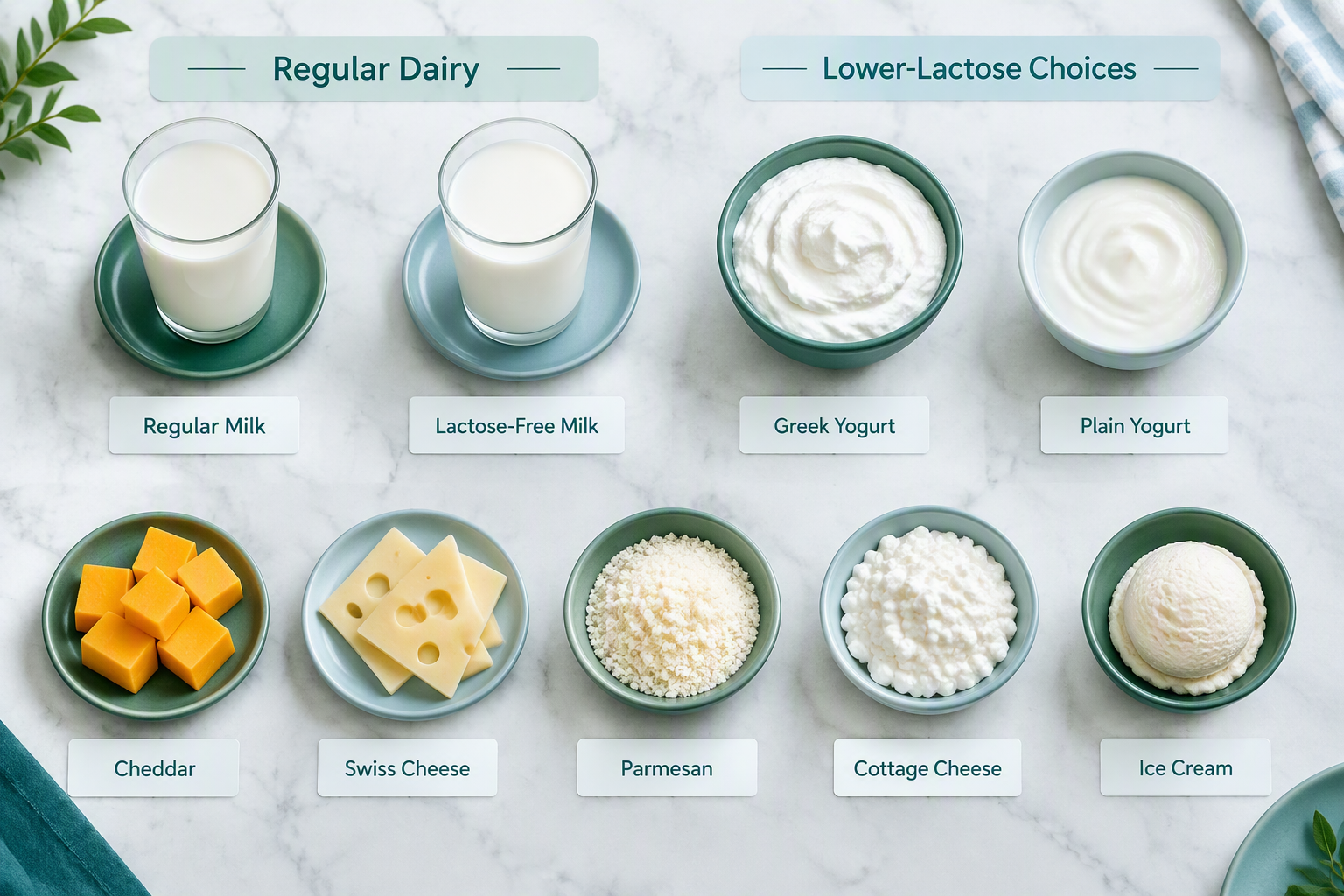
For practical food choices, lactose levels depend more on the dairy food and serving size than on whether milk is fat-free, low-fat, or whole. The lactose in milk is substantial in regular cow’s, goat’s, and sheep’s milk, while cream, coffee creamer, condensed milk, and evaporated milk can add up in drinks, recipes, and desserts. The National Institute of Diabetes and Digestive and Kidney Diseases identifies milk and milk-based foods as common foods containing lactose (source).
These patterns can help you spot foods high in lactose while keeping dairy choices practical:
Dairy food | Typical lactose pattern | Practical approach |
|---|---|---|
Regular milk | High | Choose lactose-free milk for cereal, coffee, or cooking. |
Yogurt with live cultures | Often easier than milk | Start with a modest serving of plain yogurt. |
Fresh or soft cheese | Often higher | Try smaller portions of ricotta, cottage cheese, cream cheese, mozzarella, feta, or brie. |
Aged hard cheese | Usually very low | Hard cheeses low in lactose include cheddar cheese, Swiss cheese, Parmesan cheese, pecorino, and Colby. |
Butter | Trace to very small amounts | Small amounts may work, though butter-based dishes can also contain milk or cream. |
Dairy desserts | Often high | Keep servings modest because ice cream, custard, pudding, and milkshakes may combine several dairy ingredients. |
Lactose-free or lactose-reduced dairy | Low or reduced | Use these familiar options in meals and snacks. |
Yogurt may sit better than milk because live bacterial cultures break down some lactose. Tolerance still varies by brand, serving size, and person, so plain yogurt in a modest portion can be a simpler first test than a flavored variety with several mix-ins.
Fresh cheeses generally retain more lactose than aged varieties. During aging, whey removal and time leave many hard cheeses with very little lactose, but low lactose does not guarantee a symptom-free meal. A small amount of Swiss cheese on a sandwich may feel different from a large, cheese-heavy dinner.
Restaurant dishes and baked goods made with butter may also contain milk or cream. Desserts can be harder to tolerate for the same reason: a restaurant-sized milkshake or bowl of ice cream may deliver several dairy ingredients at once.
Lactose-free and lactose-reduced dairy keep the nutrients in milk because the lactose is broken down rather than removed. Smaller portions spaced across the day may be easier to manage than one large serving, and lactose-free milk can keep cereal, coffee drinks, and yogurt snacks on the menu.
Is Greek Yogurt Lactose-Free?
With yogurt already one potentially easier dairy choice, Greek yogurt is usually not lactose-free, though straining removes some lactose-containing whey and often leaves it lower in lactose than regular yogurt. Lactose levels still differ by brand, recipe, serving size, and added milk or whey, so check the Nutrition Facts panel and ingredient list rather than assuming every container is alike.
Greek yogurt may still fit your eating pattern in a portion you tolerate. Yogurt, cheddar, and Swiss offer useful comparison points, while other cultured dairy foods vary more: Other cultured dairy foods vary more:
- Regular yogurt: Lactose content differs by product and portion.
- Buttermilk and sour cream: Fermentation does not make either food lactose-free.
- Kefir: Some people tolerate it well, but its lactose content can vary substantially.
Live and active cultures are one factor to consider with Greek yogurt. Look for products labeled “live and active cultures,” while keeping in mind that cultures may improve tolerance without preventing symptoms for everyone.
A small, repeatable test can help you find your limit:
- Eat a small serving of plain Greek yogurt with a full meal rather than by itself.
- Note the portion, meal timing, other foods, digestive symptoms, and bowel changes through the day.
- If you feel comfortable, try a slightly larger serving on a different day.
Many people tolerate up to about 12 grams of lactose, but personal limits vary. Smaller portions spread across the day may be easier on your gut than one large serving.
How Do You Spot Hidden Lactose?

Hidden lactose in foods can make a meal seem dairy-free when it is not. Packaged breads, breakfast cereals, instant meals, soups, sauces, salad dressings, baking mixes, snacks, candies, and milk chocolate may contain milk ingredients. Make checking food labels a routine for unfamiliar packaged foods, especially when symptoms follow a meal that seemed free of dairy.
A quick ingredient scan can catch common sources:
- Milk ingredients: Milk, cream, curds, yogurt, cheese, milk solids, dry milk, skim milk powder, milk by-products, and malted milk can add lactose.
- Whey: Whey is a milk component often used in baked goods, meal mixes, processed snacks, and protein products.
- Milk-based additions: Cheese sauces, creamy dressings, and prepared foods with milk-based sauces may contain lactose even when dairy is not the meal’s main feature.
The Food and Drug Administration explains how to use packaged-food ingredient lists and allergen information (source). For lactose intolerance, read the full ingredient panel because lactose amounts can differ widely between products.
Protein powders deserve extra attention. Whey protein concentrate and blends that include milk powder can contain substantial lactose, even when the front label emphasizes protein or fitness. Check the protein source and full ingredient list, then use your own tolerance patterns to choose a portion that fits.
Not every milk-derived term signals lactose. Casein is a milk protein, not lactose itself, so casein alone does not automatically make a food unsuitable for lactose intolerance. It is still a milk allergen and does not fit a milk-allergy or dairy-free diet.
Lactose free milk is not the same as dairy-free milk: lactose-free milk, yogurt, ice cream, and cottage cheese are dairy foods treated with lactase, an enzyme that breaks down lactose. They still contain milk proteins and generally have nutrient profiles similar to regular cow’s milk.
Lactose can also appear outside the kitchen. Tablets, liquid and cough medicines, vitamins, mineral supplements, and other supplements may use it as an inactive ingredient. Review inactive ingredients or ask a pharmacist about an unclear product, particularly when regular use may help explain symptoms that persist.
If hidden lactose never seems to explain your symptoms, that is a reason for confirming lactose intolerance first before restricting further.
How Can You Eat Out With Less Lactose?

Beyond checking labels for hidden dairy, restaurant meals can fit a lower-lactose routine when you make a few targeted swaps. For coffee, tea, smoothies, or cereal-based dishes, ask whether lactose-free cow’s milk or plant milks are available. Almond milk, oat milk, soy, coconut, and rice beverages are lactose-free, but the specific product can vary by location. If you order them regularly, choose calcium-fortified options when available.
Hidden dairy often causes more trouble than the main ingredient. Ask about creamers, soups, scrambled eggs, mashed potatoes, dressings, gravies, marinades, and sauces, since they may contain milk, cream, butter, cheese, sour cream, or whey. Request dairy ingredients separately, or choose grilled foods prepared with oil, herbs, or a dairy-free sauce.
Many foods safe for lactose intolerance are naturally lactose-free until restaurant additions change them:
- Grilled meat, poultry, or fish: Pair it with rice, potatoes, vegetables, or grains, and confirm the cooking fat and seasoning.
- Beans, tofu, or eggs: Check whether butter, milk, or cheese is used during preparation.
- Fruit, vegetables, nuts, seeds, oats, pasta, bread, and rice: These choices work when no dairy-containing ingredients have been added.
- Bean-and-grain bowls or tomato-based pasta: Skip cheese and creamy dressings or toppings, and confirm the sauce is dairy-free.
Dairy on a low-lactose diet does not always require complete avoidance. Lactose-free or reduced-lactose dairy, plus plant-based yogurts and cheeses made from coconut, nuts, soy, or plant oils, can give you flexible options. If you choose regular dairy, a small serving with a meal may be easier to tolerate than a large dairy-heavy order.
When a lactase supplement helps depends on your usual response to dairy. Lactase supplements, including tablets, chewables, and drops, are taken immediately before the first bites or sips of dairy. They may help some people, but they do not make a large serving risk-free or address milk allergy. With a diagnosed or suspected milk allergy, tell staff about cross-contact and avoid milk proteins.
How Do You Find Your Lactose Threshold?
Lactose tolerance is dose-dependent, and most people can identify a personal threshold through a structured home dairy challenge.
The step-by-step guide to finding your lactose threshold can help you test what works without assuming all dairy causes symptoms.
When testing your threshold, include Lactose-free milk, also labeled lactose free milk, or fortified plant milks such as almond milk and oat milk as familiar options.
How Do You Protect Calcium and Vitamin D?
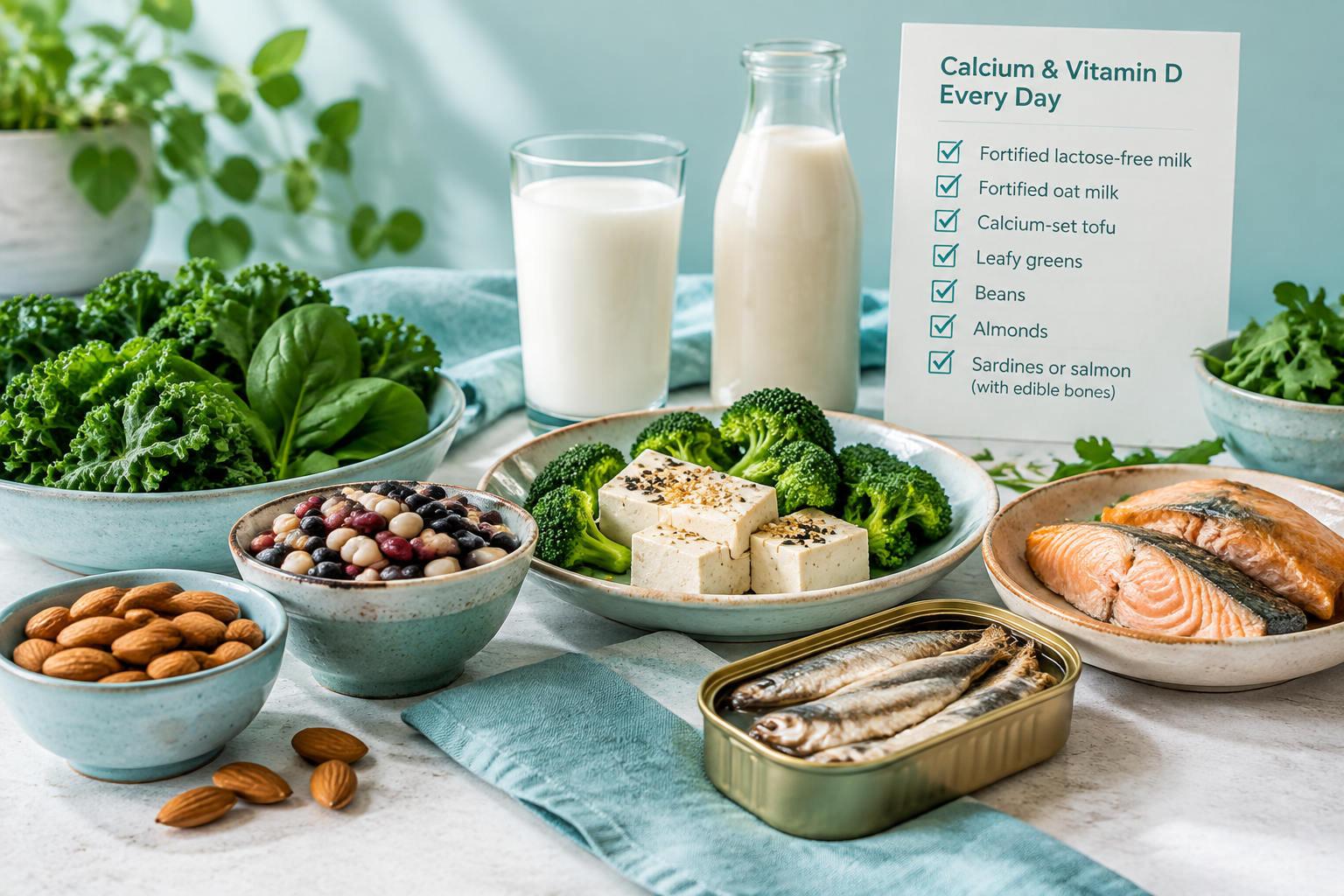
A low lactose diet can still provide the calcium and vitamin D your body needs. Lactose-free milk, yogurt, cottage cheese, and ice cream can fit a low lactose diet, and fortified lactose-free milk is a practical choice when calcium and vitamin D are priorities. The NHS notes that lactose-free dairy products can help supply these nutrients (source).
A lactose free diet does not require choosing dairy or plant drinks as an all-or-nothing rule. Lactose-free dairy can be one practical option. Soy, oat, almond, coconut, hemp, and rice drinks can also work, but calcium and vitamin D levels vary substantially by brand. The practical choice is one you tolerate and can use regularly in meals and snacks.
The Nutrition Facts panel matters more than front-label claims. Compare calcium and vitamin D per serving in plant drinks and other dairy alternatives, then shake cartons as directed because added minerals can settle. Use the same approach with fortified cereal and juice instead of assuming that plant-based packaging means a product provides calcium without dairy.
A weekly pattern spreads calcium sources across familiar meals:
- Breakfast: Pour fortified lactose-free milk or a fortified plant drink over cereal or stir it into oatmeal.
- Lunch: Add beans to a grain bowl, or have sardines on toast if you enjoy fish with soft, edible bones.
- Dinner: Rotate calcium-set tofu in stir-fries with broccoli or leafy greens, and include canned salmon with bones when it suits your meals.
- Snacks: Choose almonds or other nuts alongside foods that fit your digestion.
Lactase supplements can help with an occasional lactose-containing food, but they do not replace a steady calcium and vitamin D pattern. Fortified lactose-free milk or a fortified plant drink can make those nutrients easier to include consistently, while tofu, beans, greens, nuts, and canned fish add variety.
If you are cutting back on dairy extensively, look at what your usual week provides, especially during pregnancy or with a restrictive eating pattern. Ongoing symptoms or uncertainty about lactose are reasons for confirming the diagnosis first and discussing your food pattern with a healthcare professional or registered dietitian.
Calcium on a low-lactose diet comes from calcium-rich lactose-free foods: lactose-free milk and yogurt, canned fish with bones, tofu, and fortified plant milks. Vitamin D and lactose intolerance is the same story, fortified foods and sunlight.
What If Symptoms Continue?
If symptoms continue despite protecting calcium and vitamin D intake, persistent symptoms call for a broader look, especially if limiting high-lactose foods has not made a clear difference. Low lactase levels are only one possible explanation for persistent symptoms. Still, those symptoms alone do not confirm that dairy is the cause, and not every meal-related symptom should be blamed on lactose.
Prompt medical care is important when symptoms are severe, worsening, new, or interfering with daily life. Warning signs include:
- Severe or increasing abdominal pain
- Persistent diarrhea or vomiting
- Signs of dehydration, such as dizziness or very dark urine
- Blood in the stool
- Fever
- Unexplained weight loss
- Symptoms that wake you during the night
Secondary lactose intolerance can occur when another condition affects the small intestine's ability to digest lactose. Celiac disease, inflammatory bowel disease, a gastrointestinal infection, and abdominal surgery may reduce lactase production for a short time or longer. Finding and treating the underlying cause may improve lactose tolerance and prevent unnecessary long-term dietary restriction.
An evaluation often begins with your food-and-symptom pattern. Notes on the lactose-containing food, portion size, timing, other foods eaten, symptoms, and bowel habits are more useful than trying to recall whether a meal "felt bad" days later. If symptoms continue, a clinician may suggest a short lactose-free trial or a hydrogen breath test to check whether lactose is the cause (source).
Long-term food planning should protect calcium and vitamin D intake. After other conditions have been considered, a registered dietitian can help you reintroduce tolerated dairy types and portion sizes while protecting calcium and vitamin D intake. An NIDDK-informed evaluation can help shape a clearer plan with the fewest restrictions needed.
A low-lactose food list is short. Hard cheeses for lactose intolerance, lactose-free yogurt, butter, and naturally lactose-free foods, which means every fruit, vegetable, grain, meat, and egg. High-lactose foods to avoid or limit are milk, ice cream, soft cheeses, and cream sauces. Kefir and lactose intolerance get along better than milk does, because the cultures digest part of the lactose. Building lactose tolerance gradually, with lactose taken with meals rather than alone, is realistic for many people.
Low-Lactose Diet FAQs
These FAQs cover common low-lactose diet questions, from dairy choices and symptom patterns to meal planning that fits your routine and tolerance.
1. Is Butter Low in Lactose?
Butter is almost entirely milk fat, with only trace lactose remaining, so most people with lactose intolerance tolerate usual portions. Butter on toast or in cooking often works well, though symptoms can depend on the total amount of dairy in the meal. If discomfort follows a meal with butter, note the portion and other dairy foods before treating butter as the likely cause.
2. Does Lactose-Free Milk Taste Different?
Lactose-free milk can taste slightly sweeter than regular milk, even without added sugar. Lactase splits lactose into simpler sugars that taste sweeter to many people, while the milk keeps the same protein, calcium, and other core nutrients as its regular counterpart. Vitamin D depends on whether the milk is fortified. If the flavor seems different at first, using it in coffee or cereal can help you decide whether it fits your usual routine.
3. Can You Be Lactose Intolerant and Still Eat Cheese?
Often, yes. Aged hard cheeses such as cheddar, Swiss, and Parmesan contain less lactose after aging, so many people with lactose intolerance can tolerate modest portions. Fresh, soft cheeses, including ricotta, cottage cheese, and cream cheese, usually have more lactose and may be more likely to trigger symptoms. Tolerance varies by person and portion size, so start with a small amount alongside a meal and note how you feel.
Soft cheeses and lactose go together, which is why lactose-free cottage cheese exists.
4. How Do You Get Enough Calcium Without Milk?
You can meet your calcium needs without regular milk by combining a few reliable foods. Lactose-free dairy, fortified plant milks, tofu set with calcium, canned salmon or sardines with bones, and leafy greens can all contribute. Check plant-milk labels, since calcium fortification varies by product. If your usual meals still fall short over time, a calcium supplement may help fill the gap.