


You don't have to stop eating dairy after a few bad meals. Lactase supplements can reduce lactose intolerance symptoms when you take them with the first bites or sips of dairy, though they won't work equally well for every food or portion.
A tablet taken after pizza or ice cream has little lactose left to break down, while a dose taken at the start of the meal can help before lactose reaches the colon. Many people tolerate about 12 grams of lactose, roughly one cup of milk, especially with a meal. Label directions matter because products vary in enzyme strength, often measured in FCC units.
Lactose-free milk is usually the more predictable option for dairy you have often, while supplements can suit occasional meals or coffee with milk. Ongoing symptoms despite careful timing may point to a larger lactose portion or another condition, such as IBS or celiac disease.
Lactase Supplements With Dairy Key Takeaways
- Take lactase with the first bites or sips of dairy, not afterward.
- Lactase breaks down lactose but does not restore your body's long-term lactase production.
- Start with the label-directed dose and match it to your dairy portion.
- Compare enzyme strength by FCC or ALU units, which are not interchangeable.
- Lactose-free milk is often more reliable for dairy consumed regularly.
- Lactase does not prevent reactions to milk proteins in people with milk allergy.
- Persistent symptoms may reflect IBS, celiac disease, or another digestive condition.
Could Lactase Supplements Help You?
Lactase supplements may help when dairy foods reliably trigger symptoms, offering more flexibility for occasional meals without requiring complete dairy avoidance. They can help manage lactose intolerance, but they do not restore your intestine’s long-term lactase production.
Available over the counter, lactase supplements supply lactase, an enzyme normally produced in the small intestine. Common forms include:
- Tablets
- Capsules
- Liquid drops
Lactase helps you digest lactose, the natural sugar in milk, by breaking it into glucose and galactose, which are easier to absorb. When the small intestine makes too little lactase, undigested lactose can move into the large intestine, where bacteria ferment it. That process may contribute to:
- Gas
- Bloating
- Abdominal cramps or pain
- Diarrhea
Whether lactase pills work depends on your dairy portion, the food itself, your remaining lactase activity, and the supplement’s formulation. Taking lactase with milk, ice cream, or soft cheese may lower the chance of symptoms, but it cannot reliably prevent lactose intolerance symptoms for everyone.
A simple trial can clarify your pattern. Use lactase with one dairy food that has caused symptoms before instead of changing several foods or trying a multi-ingredient enzyme product at the same time. That makes it easier to tell whether the supplement helps you digest lactose.
Many people do not need to avoid all dairy. The National Institute of Diabetes and Digestive and Kidney Diseases notes that many people tolerate about 12 grams of lactose, roughly one cup of milk, especially when they have it with a meal (source). Your symptom pattern can help you choose between smaller portions, lactose-free foods, and lactase supplements.
Living with lactose intolerance often means finding workable portions without making family meals unnecessarily complicated.
Lactase alone is not enough for new, persistent, severe, or unexplained digestive symptoms. If lactose intolerance follows a small-intestinal injury or another condition, treating the underlying problem may improve lactose digestion, so discuss these symptoms with a healthcare professional rather than self-treating with lactase alone.
What Is Lactase and How Does the Supplement Work?
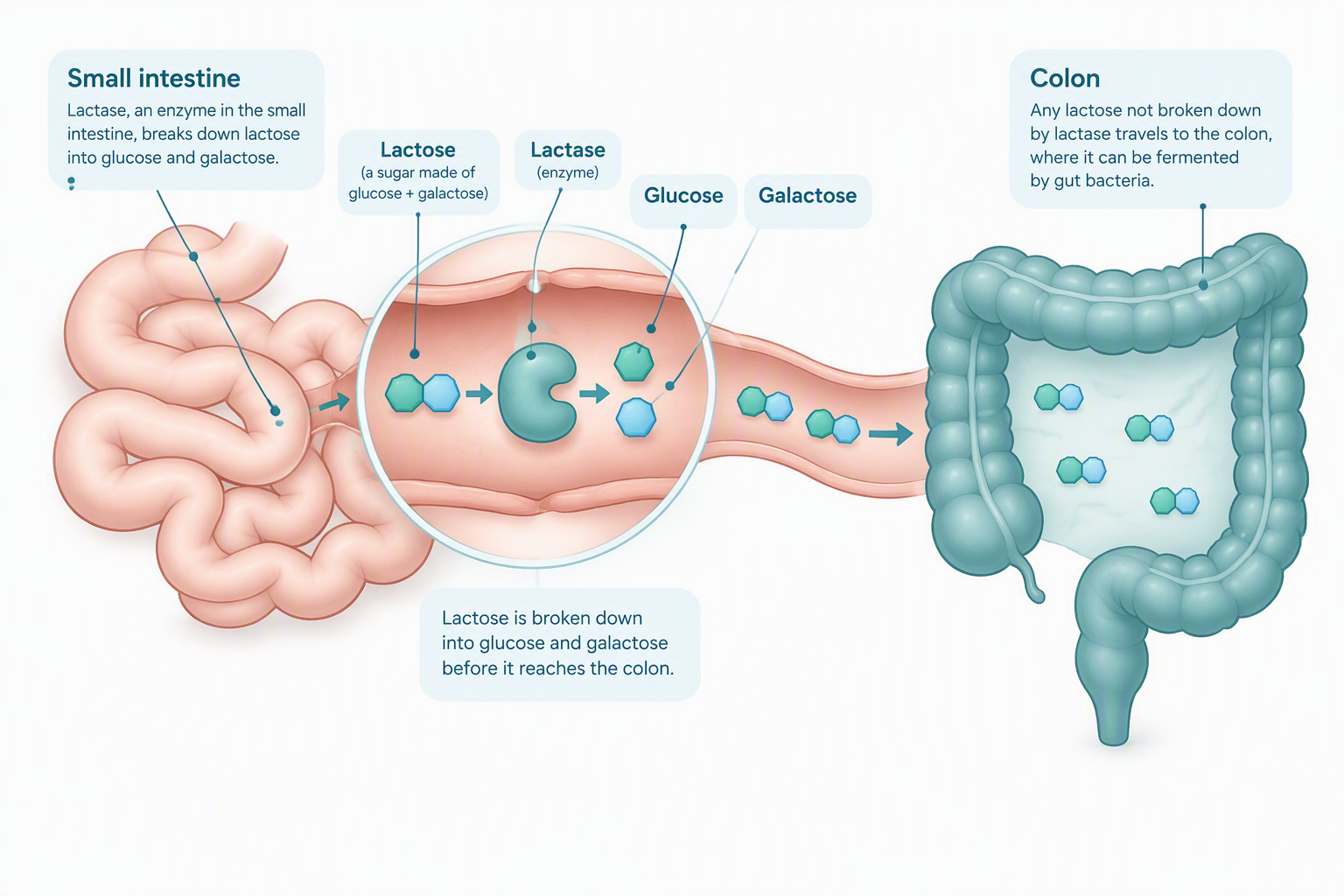
To explain how supplements can help with dairy, lactase acts on lactose during digestion. It splits lactose into glucose and galactose, two simpler sugars your body can absorb.
When your body makes too little lactase for the lactose in a meal, the remaining lactose moves into the colon. Bacteria then ferment it, which may cause:
- Gas
- Bloating
- Abdominal cramping
- Diarrhea
A lactase enzyme supplement supplies the same type of enzyme from a microbial source. When you take it with the first bites or sips of a dairy-containing meal, it begins breaking down lactose in the stomach and upper gut before more reaches the colon. It works like bringing extra scissors to a task your body may not fully complete on its own.
Timing matters because lactase must be present when the lactose arrives. A tablet taken well before or after eating has little lactose to break down. If you eat dairy over a longer period, such as during a drawn-out restaurant meal or with dessert later, package directions may call for another dose.
Lactase supplements fit best with dairy meals that trigger your symptoms. Testing one dairy trigger at a time can help you judge whether the supplement fits your usual meals.
Do Lactase Supplements Actually Work?

Because the enzyme must reach lactose during digestion, lactase supplements help many, but not all, people with lactose intolerance. A 2019 review in Gut reported that lactase reduced breath hydrogen, a gas measured after lactose digestion, and may lessen symptoms after a lactose load (source). How well it works varies with the amount of lactose, the enzyme dose, and when you take it.
Lactase works only when it is present alongside the lactose in food or drink. Taking it with the first bites or sips of a dairy-containing meal is generally more useful than taking it afterward. A tablet or drops may be practical for coffee with milk or an unplanned slice of pizza. A larger dairy-heavy meal can exceed what a given dose handles, so digestive symptoms may still occur.
For dairy you use routinely, lactose-free milk is the more reliable choice. It is treated with lactase before you drink it, so much of its lactose has already been broken down. That removes the need to time a supplement and can simplify regular breakfasts, family dinners, and workday meals. Supplements fit best when dairy is occasional or unpredictable rather than as the main approach for foods that repeatedly cause symptoms.
If a supplement changes nothing, getting tested for lactose intolerance before supplementing further is the sensible next step.
What Are the Side Effects and Who Should Be Careful?
Lactase supplements are generally well tolerated, and possible side effects are usually uncommon and mild (source). If discomfort occurs, it can be difficult to separate the supplement's effects from symptoms caused by lactose itself.
Extra care matters in a few situations:
- Milk allergy: Lactase breaks down lactose, the sugar in milk, but it does not alter milk proteins that can trigger an allergic reaction. A lactase supplement does not make dairy appropriate for someone with a milk allergy.
- Pregnancy or breastfeeding: Product labels can differ in their ingredients and guidance, so check the label before use.
- Children: Follow the package's age recommendations. Products intended for adults may not be suitable for children.
- Diabetes: Chewable or flavored products may contain added sugars or other ingredients relevant to your eating plan, so review the label carefully.
Keep your lactase test limited to one familiar trigger at a time. Adding several new foods or a broad digestive enzyme blend at the same time can make it harder to identify what made a difference.
What About Lactase Drops for Milk?

For milk you use more regularly, lactase drops can be added to milk before you drink it, and they break down the lactose in the milk so it may be easier to tolerate. This option can suit households that use milk often and prefer to prepare it ahead of time rather than take a lactase tablet with each serving.
Add the drops directly to the milk, then refrigerate it for the preparation period on the package. Product directions vary, so follow the label for both the amount of drops and the time needed before using the milk. Once prepared, it can be used in coffee, cereal, cooking, or children's meals like other refrigerated milk.
Pretreated milk is less practical for an unplanned restaurant meal or a single scoop of ice cream. In those situations, a lactase tablet or lactose-free option may be easier. Preparing a container in advance can make daily milk use feel less disruptive.
How Do You Take Lactase With Dairy?

How to take lactase is simple: take lactase with the first bite of dairy or the first sip of a dairy drink. Swallow a caplet or tablet with water if needed, rather than taking it well before eating or after the meal ends. The enzyme needs to be present as lactose moves through digestion. Cleveland Clinic advises taking lactase capsules or tablets with dairy-containing food or drink and following the product directions.
Knowing when to take lactase supplements can make dairy meals easier to plan. Begin with the label-directed lactase dosage, then factor in both the portion and your usual sensitivity. A little milk in coffee may need less support than a glass of milk, ice cream, or a meal built around cheese and cream. Tracking symptoms can help clarify how much lactose you can handle and whether a label-permitted adjustment makes sense next time.
Compare products by enzyme units instead of tablet count. Labels may use Food Chemicals Codex (FCC) units or acid lactase units (ALU), but FCC and ALU are not interchangeable without manufacturer guidance. Standard servings often contain about 3,000 to 4,500 FCC units, while maximum-strength options commonly provide about 9,000 to 14,500 FCC units or more. Serving sizes differ, so the package directions remain the best guide to lactase supplement dosage. Evidence on lactase supplements has also been reviewed.
The format should fit your meal and routine:
- Caplets or tablets: These work well for sit-down meals when water is handy.
- Lactase chewables: These may be more convenient in the car, at a restaurant, or while traveling. Chewable products are not automatically stronger or faster-acting.
- Lactase drops for milk: These make regular milk a practical option when you can plan ahead. Labels direct you to add drops to a container of milk and refrigerate it overnight, though the amount, storage conditions, and waiting time vary by product.
If a dairy meal runs long, another dose may be needed, but only within the product’s label directions. This matters more for long restaurant meals, shared desserts, or grazing than for a quick coffee.
A plain, high-count option such as Vitamatic Lactase Enzyme 9000 FCC tablets (4.6 stars, 1,600+ reviews) covers the common case of a supplement taken with the first bite of a dairy meal.
When Should You Choose Another Approach?
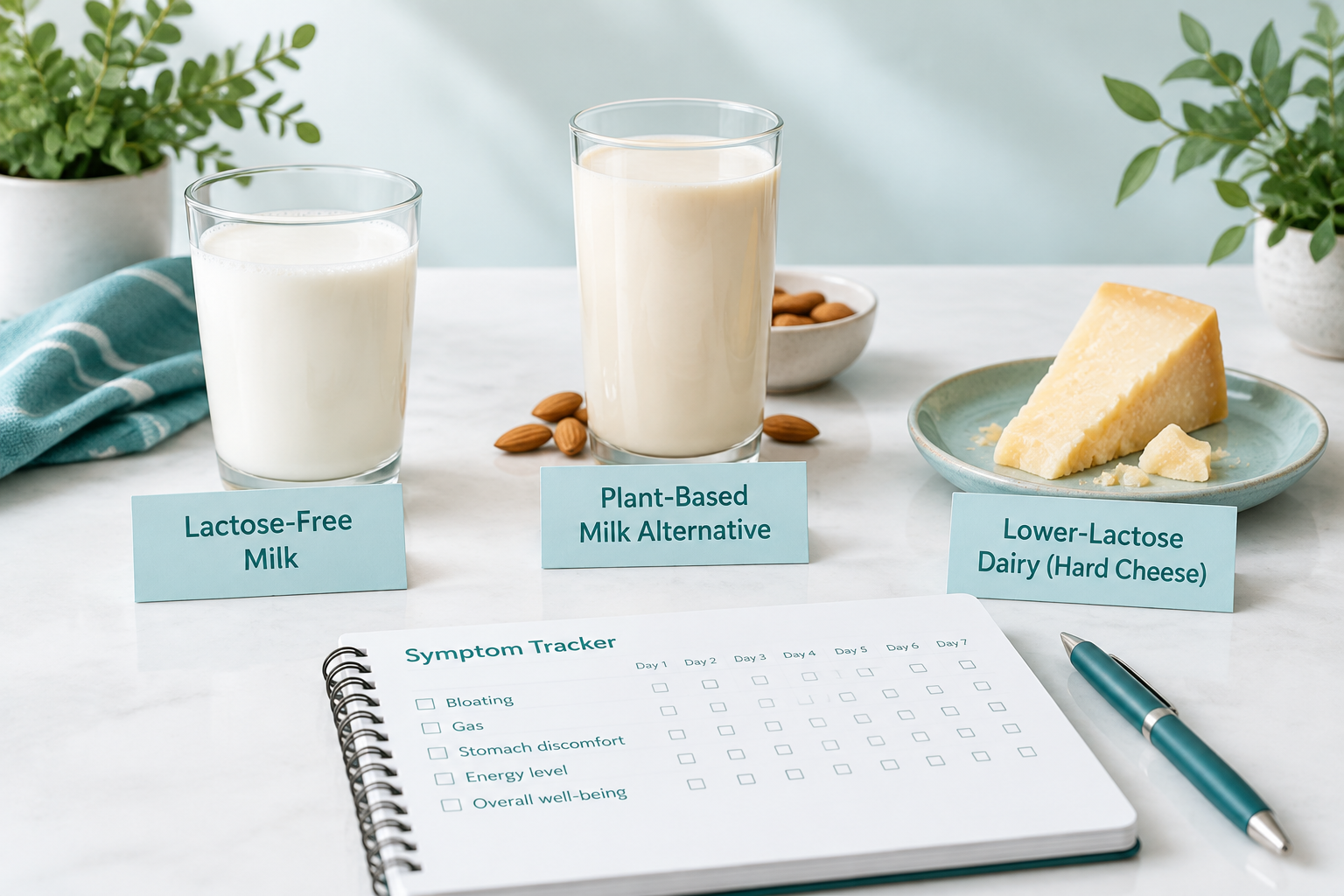
Beyond timing tablets or preparing milk with drops, lactose-free foods can be simpler than tablets when dairy consumption is frequent, you want more predictable symptom control, or remembering a supplement feels burdensome. Lactose-free milk can have a similar nutrient profile to regular milk, and low-lactose or lactose-free dairy products can help people meet dairy intake goals. Depending on your tolerance, smaller portions of lower-lactose foods may be enough, while avoiding certain foods entirely works better for others. Cutting lactose without cutting dairy can help you build a routine that keeps meals manageable.
Plant milks are another choice, although their protein and nutrient content varies by type.
For a cow's-milk allergy, Lactase is not the right approach. The enzyme breaks down lactose, the sugar in milk, but cannot prevent reactions to milk proteins. Do not test dairy on your own if a past reaction included:
- Hives, itching, or a widespread rash
- Swelling of the lips, face, tongue, or throat
- Wheezing, throat tightness, or trouble breathing
Severe reactions need urgent care, and a rash, itching, or swelling after a lactase product also needs prompt medical attention. A possible allergic reaction to a lactase product should not be ignored.
For ongoing but non-severe symptoms, a focused trial is more useful than changing several things at once:
- Choose one dairy food that reliably seems to cause symptoms.
- Keep the serving size and meal setting similar each time.
- Use a lactase-only product at the label-directed strength and timing.
- Log the product form, food amount, timing, symptoms, and result.
- Change only one variable at a time.
Broad enzyme blends, probiotics, and unfamiliar foods make the results hard to interpret. Matching one enzyme to one suspected trigger gives you a clearer answer.
Frequent, severe, or unchanged symptoms may have another cause, including IBS, celiac disease, or another digestive condition. Getting tested before supplementing can help clarify the cause. Check with a clinician before use for young children or during pregnancy or breastfeeding. If you have severe mold or fungal sensitivity, review labels because many lactase products are fungal-derived.
People managing diabetes should also account for glucose and galactose from treated dairy, especially with larger servings.
Lactase and IBS overlap. If a lactase enzyme supplement does nothing, IBS may be the real driver. Lactase supplements for milk allergy are useless and unsafe, since an allergy is not about lactose. Lactase and blood sugar are not a concern either, because splitting lactose into simpler sugars does not change the carbohydrate count.
Lactase Supplements FAQs
These FAQs cover practical decisions about lactase supplements, including meal timing and whether lactose-free foods may be a better fit. Clear answers can make dairy easier to plan for and less stressful to enjoy.
1. Can You Take Lactase Every Day?
For most people, taking lactase every day with dairy is reasonable. Lactase works in your digestive tract to break down lactose and is not absorbed into the bloodstream, while lactose-free milk, yogurt, or cheese may be a simpler routine than daily tablets if dairy is part of most meals. Ongoing bloating, gas, pain, or diarrhea despite taking lactase with dairy may mean the portion contains more lactose than the enzyme can handle or that another digestive issue is involved.
Over-the-counter lactase supplements need no prescription, and how to take lactase supplements is simple: with the first bite of dairy, every time.
2. How Much Lactase Should You Take?
Lactase dosing depends on the amount of lactose in your food or drink, not your body weight. Begin with the label dose for a typical serving, such as a glass of milk or small portion of ice cream, then follow the product directions if a larger dairy-heavy meal may require more. Keep your trial simple by changing only the lactase amount, rather than adding other digestive supplements at the same time, so it is easier to tell what helps your symptoms.
Lactase dosage by meal size is the rule, so adjust lactase dose upward for a large dairy meal, never by body weight. Lactase caplets, chewable lactase tablets, and drops all work the same way.
3. Do Lactase Pills Help With Cheese and Yogurt?
Lactase pills may help with cheese and yogurt, but they often make less difference than they do with milk or ice cream. Hard cheeses are naturally low in lactose, and yogurt with live cultures can be easier to digest because the cultures break down some lactose. A pill may still help if you eat a large serving or react to small amounts. Soft cheeses, regular milk, and ice cream usually contain more lactose, making lactase more useful with those foods.
Lactase for gas and bloating works only when lactose is the cause.
4. Can Children Take Lactase Supplements?
Children can generally take lactase supplements, though young children should use them with guidance from their pediatric clinician. The best form and timing depend on your child’s age, symptoms, and the dairy food involved. For infants, lactase drops added to formula or expressed breast milk are usually more appropriate than chewable tablets or capsules. Persistent diarrhea, vomiting, poor weight gain, or symptoms after many foods need prompt medical evaluation because lactose intolerance may not be the only cause.
Pre-treat milk with lactase drops for children who drink it daily.